What to check on a Distress Signals (Pyrotechnics).
1 models from Daniamant in Distress Signals (Pyrotechnics). Below: the full model list.
What this equipment covers
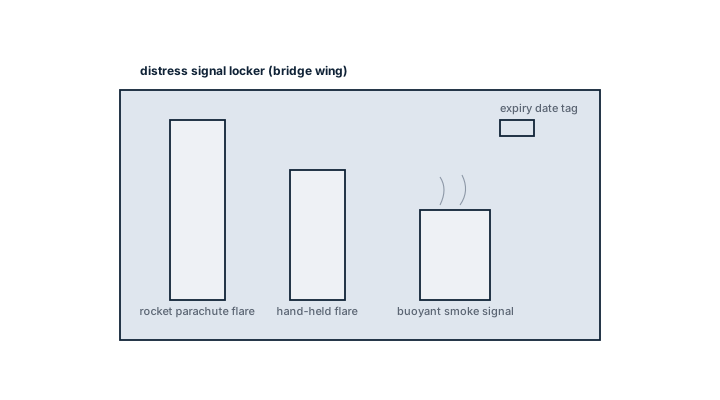
Pyrotechnic distress signals are self-contained combustion devices, not electronics, and that is their entire value: they work with no power supply, no GPS fix and almost no operator training beyond reading the label. SOLAS groups three types under this heading, each suited to a different phase of distress: rocket parachute flares for attracting attention from long range, red hand-held flares for pinpointing position once a rescue unit is close, and buoyant orange smoke signals for daylight signalling, particularly to aircraft.
Read the full guide
Main components
Rocket parachute flares
Fired from a hand-held launcher tube, they climb to roughly 300 metres and burn red for around 40 seconds while descending on a small parachute, giving the widest visibility range of the three types.
Hand-held red flares
Held at arm's length away from the body and burn for about one minute, used once a search unit has visual or radar contact and needs a precise final bearing.
Buoyant smoke signals
Thrown overboard, they float and emit dense orange smoke for several minutes, effective only in daylight and calm conditions since wind disperses the smoke plume quickly.
Selection and sizing
SOLAS sets minimum carriage numbers by ship type rather than leaving quantity to owner discretion — cargo ships and passenger ships carry a set minimum of each type in the lifeboat and liferaft equipment plus a bridge stock. The relevant variable for the buyer is manufacture date margin against the ship's next survey window, since pyrotechnics expire and replacement lead time needs to be planned around dry dock or annual survey dates, not discovered at the survey itself.
Regulations and class
SOLAS Ch. III and the LSA Code set the carriage requirement, construction standard and shelf life, typically three years from manufacture, stamped on each unit. Class and flag state surveys check expiry dates against the ship's inventory list at every annual and renewal survey, and expired stock found on board is a recordable deficiency even if replacement stock is also present.
Typical faults
- Expired stock retained on board — cause: replacement not ordered ahead of survey; consequence: survey deficiency and, in a real emergency, a signal that may misfire
- Water ingress into storage canister — cause: damaged seal on the lifeboat or bridge locker; consequence: corroded firing mechanism, signal fails to ignite
- Wrong signal type used first — cause: crew unfamiliar with the sequence of rocket for range, hand-held for precision, smoke for daylight; consequence: wasted signal, delayed rescue response
- Damaged launcher tube — cause: rough handling in storage; consequence: rocket flare cannot be fired safely
What to look for in a supplier
- SOLAS/LSA Code type approval certificate matched to flag state acceptance, not just a generic CE mark
- Manufacture date spread across a batch, so an entire locker does not expire in the same month
- Storage canister sealing rated for the ship's actual deck exposure, not a minimum bench-test standard
- Documented disposal route for expired pyrotechnics, since they cannot go into general waste
Rotate expiring pyrotechnics into training and familiarisation use before they lapse rather than storing them until disposal, because a crew that has actually fired one under supervision reacts far faster than one that has only read the instructions.