Foam Fire Suppression
Fixed foam systems flood a compartment or blanket a deck with AFFF or protein foam concentrate mixed with water, smothering a flammable-liquid fire by cutting off the oxygen the flame needs rather than cooling it the way water alone does.
Read more — Foam Fire Suppression explained ▾
What sets foam apart from CO2 and water mist
Foam earns its place specifically on flammable and combustible liquid fires — engine room bilges, cargo pump rooms on tankers, and helicopter decks — where a CO2 flood risks reflash once the gas disperses and plain water can spread a burning liquid rather than extinguish it. Foam works by forming a blanket over the liquid surface that separates fuel from air and, with aqueous film-forming foam (AFFF), also lays down a thin film of water under the foam that continues sealing the surface even if the foam blanket is disturbed. That reflash resistance is why foam remains the standard for tanker deck protection even where other fixed systems have been adopted elsewhere on the same ship.

Main components
Foam concentrate tank
Stores the concentrate, typically 1%, 3% or 6% proportioning depending on the product, that gets mixed with seawater or fresh water at the point of application — concentrate does not work neat and has a shelf life that needs checking, not assuming.
Proportioner
Meters concentrate into the water stream at the correct ratio, either by a fixed orifice (balanced pressure) or an in-line eductor. Getting the ratio wrong in either direction produces a foam that either will not form a stable blanket or wastes concentrate without added benefit.
Foam monitors and pourers
Deck monitors on tankers throw foam at range onto the cargo deck or a specific tank fire; foam pourers on helidecks deliver foam locally and fast, since a helideck fire has to be knocked down within the response time built into the helideck's own approval.
Distribution piping and pump
A dedicated foam pump or the fire main, pressurised to the system's design pressure, delivers water to the proportioner and on to the monitors or pourers — foam system performance is only as good as the fire pump behind it.
Selection and sizing
- Foam type matched to the cargo or fuel risk — AFFF for hydrocarbon fires, alcohol-resistant foam (AR-AFFF) where polar solvent cargoes are carried, since ordinary AFFF breaks down against alcohols and ketones
- Application rate and duration required by the applicable code for the protected area, deck area, pump room volume, helideck size
- Proportioning ratio matched to the concentrate product — mixing concentrate brands or ratios without re-calibrating the proportioner is a common yard error
- Monitor throw range versus deck length, to confirm full coverage without dead zones between monitor positions
Regulations and class
Fixed foam fire-fighting systems for cargo deck protection on tankers are required under SOLAS Ch. II-2 Reg. 10 and detailed in the FSS Code, which sets minimum application rates, foam solution supply duration and monitor coverage. Helideck foam provision follows IMO MSC circulars on helicopter facilities in addition to the flag state's aviation authority requirements where applicable. Class surveys check concentrate quantity and condition, proportioner calibration and monitor function as part of the periodic fire safety survey, and concentrate that has degraded past its shelf life is a common survey finding rather than a rare one.
Typical faults
| Fault | Consequence |
|---|---|
| Foam concentrate past shelf life or improperly stored | Degraded foam quality, blanket collapses faster than design duration |
| Proportioner miscalibrated for the concentrate in use | Wrong mix ratio, ineffective or wasted foam application |
| Standard AFFF used against a polar solvent cargo fire | Foam blanket breaks down rapidly, fire re-ignites |
| Monitor or pourer nozzle blocked or corroded shut | No or reduced foam delivery exactly when the system is called on |
What to look for in a supplier
- Concentrate compatible with the specific cargoes or fuels the ship carries, including AR-AFFF where polar solvents are in the cargo list
- Concentrate batch testing or a documented shelf-life and storage temperature range
- Proportioner calibration service matched to the concentrate actually supplied
- Monitor and pourer spares availability, since these are the parts most exposed to weather and corrosion on deck
Check the concentrate, not just the pump — a foam system that pressure-tests perfectly on water alone can still fail on the day if the concentrate in the tank has quietly gone past useful life.
5 manufacturers · 5 models
Dr. Sthamer
1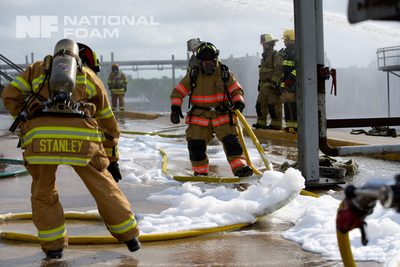
- Foam concentrate degradation
- Proportioner calibration drift
- Tank corrosion
- SOLAS‑approved for mandatory maritime fire protection
- German design heritage with over a century of foam expertise
- PFAS‑free foam concentrate options available
- Integrated proportioner provides automatic dosing
- Robust tank construction suited to marine environments
- Foam concentrate can degrade if storage conditions are poor
- Proportioner may drift and require periodic recalibration
- Metal tanks are prone to corrosion in high‑humidity service
- System complexity increases maintenance workload
Kidde
1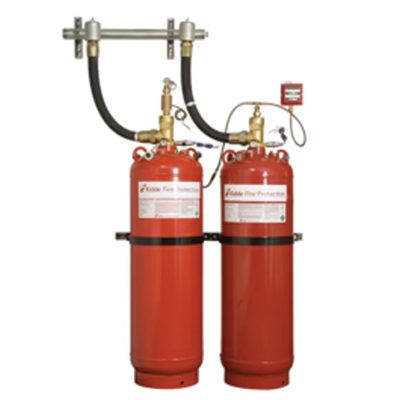
National Foam
1
- AFFF concentrate aging
- Proportioning valve failure
- Distribution pipe corrosion
- Proven rapid knock‑down of fuel‑oil fires
- Meets SOLAS fire‑extinguishing standards for oil‑carrying vessels
- Low water usage compared with CO₂ or water mist systems
- Can be integrated into existing fixed piping networks
- Simple manual activation in emergencies
- Foam concentrate degrades over time, requiring strict age control
- Proportioning valve failures can lead to incorrect foam‑to‑water ratios
- Steel distribution pipes are prone to corrosion if not stainless or protected
- Contains PFAS chemicals that face increasing regulatory restrictions
- Annual foam‑quality testing and regular maintenance increase operational cost
Solberg
1
- Foam concentrate shelf life
- Proportioner failure
- Nozzle blockage
- PFAS‑free formulation meets increasing environmental regulations
- Re‑healing nozzle design self‑seals after activation, reducing post‑fire repair time
- SOLAS‑approved for marine use on a wide range of vessel classes
- Fast knock‑down capability on flammable liquid fires typical of tankers and bulk carriers
- Foam concentrate has a limited shelf life requiring regular replacement checks
- Proportioner units have documented failure modes that demand frequent testing
- Nozzle blockage can occur if the system is not kept clean or if water ingress happens
- Higher maintenance interval compared with dry‑chemical systems
VIKING Life-Saving
1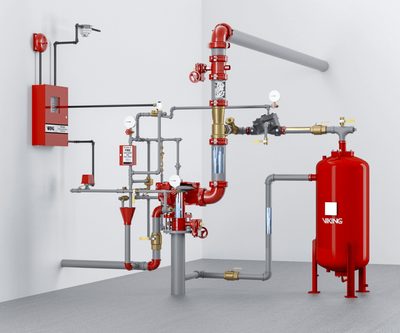
- Foam concentrate degradation
- Proportioner malfunction
- Foam maker blockage
- Pump seal failure
- SOLAS‑compliant fixed system for mandatory safety standards
- Integrated proportioner with annual test capability simplifies verification
- Foam concentrate service interval of 10–15 years reduces long‑term consumable costs
- Twin‑agent design minimizes pipe runs and provides quick discharge coverage
- Viking brand reputation for reliability in marine fire protection
- Foam concentrate can degrade over time, requiring scheduled replacement
- Proportioner malfunctions have been reported, necessitating regular testing
- Pump seal failures and foam‑maker blockages can occur if maintenance is lax
- Fixed installation lacks the flexibility of portable extinguishers for evolving fire scenarios
- Annual proportioner test adds to routine maintenance workload