Insulated Immersion Suit
An insulated immersion suit is a SOLAS life-saving appliance, not a survival suit in the generic sense: it must meet a defined body-cooling limit in cold water on its own, without a separate thermal protective aid, which is what separates it from the lighter, uninsulated immersion suits carried on some vessel types.
Read more — Insulated Immersion Suit explained ▾
What defines an insulated immersion suit
SOLAS distinguishes between an immersion suit and an insulated immersion suit by thermal performance, not by cut or material alone. Both are one-piece waterproof garments donned over normal clothing that give buoyancy and protect against immersion. An insulated immersion suit must, when tested on a person in calm circulating water at 5 degrees Celsius, limit the drop in the wearer's core body temperature to no more than 2 degrees Celsius after six hours; an ordinary (uninsulated) immersion suit is not required to meet this test and is instead normally issued together with a separate thermal protective aid. The practical difference is where the suit is carried: vessels operating on colder or longer-exposure routes are far more likely to carry the insulated type as standard.
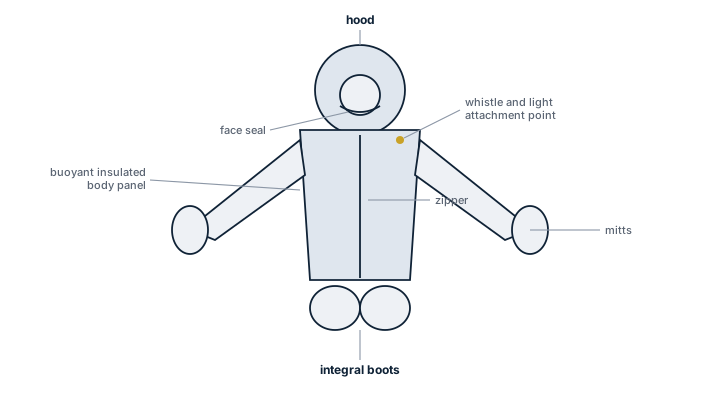
Main components
Outer waterproof shell
A single-layer or laminated waterproof fabric, cut to allow a full range of movement, sealed at every seam so the suit stays airtight and watertight when worn correctly.
Insulation layer
Built-in thermal insulation, integral to the suit rather than added separately, is what allows the insulated type to meet the 2-degree core temperature test on its own.
Closure and face seal
A watertight zip, usually self-donning and reachable by the wearer without assistance, plus a face seal or hood that keeps water off the head and neck while leaving the airway clear.
Buoyancy and righting
Built-in buoyancy sufficient to turn an unconscious wearer face-up in the water within a defined time, combined with a light and, on suits intended for lifeboats, retro-reflective tape for visibility.
Hand and foot protection
Integral boots or foot pockets and either integral gloves or a means of protecting the hands, since bare-hand exposure is one of the fastest routes to incapacitation in cold water.
Selection and sizing
Suits are sized to fit the full range of crew body sizes carried onboard, and SOLAS requires that a suit be donned, unassisted, within two minutes including time to don over normal clothing and a lifejacket where worn together. Selection therefore has to check donning time for the smallest and largest crew members expected to use each stowed suit, not just an average fit. Sizing also has to account for whether the suit is worn with or without a lifejacket underneath, since some designs integrate buoyancy and others rely on a separate lifejacket.
Regulations and class
SOLAS Ch. III requires immersion suits or thermal protective aids for every person on certain ship types and areas of operation, with the insulated immersion suit standard set out in the LSA Code. Suits must carry wheelmark or equivalent type approval, a stated shelf or service life from the manufacturer, and are subject to periodic servicing intervals — commonly annual inspection with a more thorough service at intervals set by the manufacturer, often around ten years, after which replacement rather than further servicing is usually required. Stowage location and marking are checked at every safety equipment survey.
| Requirement | Detail |
|---|---|
| Core temperature test | Max 2 deg C drop after 6 hours at 5 deg C water |
| Donning time | Unassisted, within 2 minutes |
| Approval | Wheelmark/type approval under the LSA Code |
| Service interval | Annual inspection, manufacturer-set overhaul or replacement cycle |
Typical faults
- Zip corrosion or seizure — a zip that will not close fully defeats the whole suit's watertight integrity, and is the single most common defect found at inspection.
- Seam or fabric degradation — UV exposure and age embrittle the material over years of stowage, leading to leaks that only show up under a proper pressure or immersion check.
- Face seal perishing — a hardened or torn face seal lets water in around the head, undermining thermal protection even if the rest of the suit is sound.
- Incorrect stowage size mix — a locker holding only mid-size suits leaves the smallest or largest crew unable to don a suit within the required time.
What to look for in a supplier
- Current wheelmark or flag-recognised type approval certificate for the insulated immersion suit standard specifically, not the lighter uninsulated type.
- A stated manufacturer service life and clear servicing instructions, since replacement timing is set by the manufacturer, not a fixed SOLAS number.
- A size range that genuinely covers the crew list, including any known outliers in height or build.
- Servicing agent availability at the ship's normal ports of call, since suits requiring workshop service cannot always travel with the vessel.
Check the zip and face seal on every suit at every drill, not just the sealed bag date: a suit that looks fine in its stowage bag can still have a seized zip that only fails when someone tries to get into it in a hurry.

11 manufacturers · 27 models
VIKING Life-Saving
7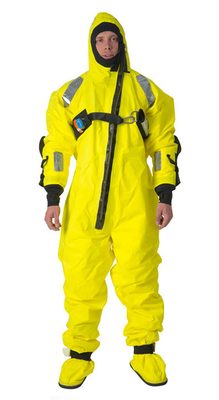
- Zipper failure/stiffness
- Neoprene degradation from UV
- Glove seam leak
- Reflective tape peeling
- SOLAS type‑approved immersion suit
- Rated for approximately 6 hours of thermal protection in 0 °C water
- Full‑body coverage with sealed seams to minimise water ingress
- Integrated reflective tape for high visibility during rescue
- Zipper mechanisms reported to become stiff or fail
- Neoprene material can degrade when exposed to prolonged UV radiation
- Glove seam leaks observed in field service
- Reflective tape may peel after repeated use or harsh cleaning
- Zipper mechanism failure
- Neoprene cracking
- Seam tape delamination
- SOLAS compliant – meets mandatory safety regulations
- Six‑hour thermal protection rating suitable for prolonged exposure
- Integrated insulated neoprene construction offers reliable heat retention
- Standardised annual inspection and donning drill procedures simplify maintenance
- Reported zipper mechanism failures can impede rapid egress
- Neoprene material may develop cracking after extended service life
- Seam‑tape delamination has been observed, affecting water tightness
- Relatively bulky compared with newer lightweight alternatives
- Zipper corrosion
- Fabric UV degradation
- Wrist seal leak
- Dual SOLAS and USCG type approval eliminates the need for separate certifications
- Insulated neoprene construction provides thermal protection in water temperatures down to 0 °C for extended periods
- Integrated hood, gloves and wrist seals reduce heat loss and improve survivability
- Robust zipper design with corrosion‑resistant coating (when maintained) facilitates rapid donning
- Annual inspection schedule aligns with regulatory requirements
- Zipper assemblies can corrode if not inspected and lubricated regularly
- Outer fabric is susceptible to UV degradation when stored exposed to sunlight
- Wrist seal leaks have been reported, requiring careful maintenance of the sealing system
- Heavier than non‑insulated suits, affecting stowage space and crew mobility
- Requires strict annual inspection; missed service can compromise performance
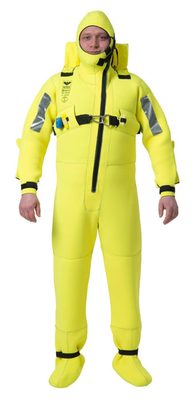
- Area: Pressure seal integrity and air leakageCheck: Conduct air pressure test per manufacturer specifications (typically 20-25 mbar). Apply soapy water solution to all seams, zippers, face seals, and closures. Monitor for 10-15 minutes to detect pressure drop and bubble formation indicating leaks.
- Area: Zipper functionality and watertightnessCheck: Visual inspection: verify smooth operation by sliding zipper up and down multiple times. Check for damage, corrosion, or misalignment. Apply manufacturer-recommended lubricant to zipper tracks. Verify complete seal closure and absence of gaps.
- Area: Face seal, glove, and boot deteriorationCheck: Visual and tactile inspection: check for cracks, tears, hardening, or loss of elasticity in neoprene/rubber components. Verify proper adhesion of glued seams and glove attachments. Test flexibility of glove fingers and boot construction.
- Area: Material degradation from age and environmental exposureCheck: Visual assessment of neoprene surface for brittleness, discoloration, UV damage, or adhesive deterioration. Check for salt residue, mold, or water stains. Inspect stored suits annually if over 10 years old and biennially if under 10 years; conduct pressure tests per schedule.
- Area: Reflective tape and safety equipment attachment integrityCheck: Verify retro-reflective tape adhesion and visibility (minimum 400 cm² SOLAS requirement). Check attachment of whistle, light pocket, buddy line, and inflatable components. Test inflation mechanisms quarterly for head support/buoyancy rings.
Typ-universelle Inspektionspunkte fuer Insulated Immersion Suit (verifiziert, 2026-06).
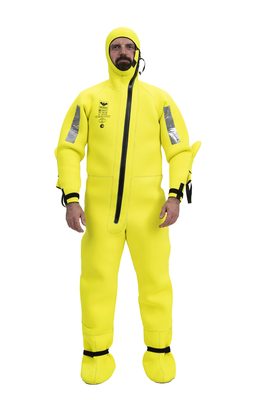
- Area: Pressure seal integrity and air leakageCheck: Conduct air pressure test per manufacturer specifications (typically 20-25 mbar). Apply soapy water solution to all seams, zippers, face seals, and closures. Monitor for 10-15 minutes to detect pressure drop and bubble formation indicating leaks.
- Area: Zipper functionality and watertightnessCheck: Visual inspection: verify smooth operation by sliding zipper up and down multiple times. Check for damage, corrosion, or misalignment. Apply manufacturer-recommended lubricant to zipper tracks. Verify complete seal closure and absence of gaps.
- Area: Face seal, glove, and boot deteriorationCheck: Visual and tactile inspection: check for cracks, tears, hardening, or loss of elasticity in neoprene/rubber components. Verify proper adhesion of glued seams and glove attachments. Test flexibility of glove fingers and boot construction.
- Area: Material degradation from age and environmental exposureCheck: Visual assessment of neoprene surface for brittleness, discoloration, UV damage, or adhesive deterioration. Check for salt residue, mold, or water stains. Inspect stored suits annually if over 10 years old and biennially if under 10 years; conduct pressure tests per schedule.
- Area: Reflective tape and safety equipment attachment integrityCheck: Verify retro-reflective tape adhesion and visibility (minimum 400 cm² SOLAS requirement). Check attachment of whistle, light pocket, buddy line, and inflatable components. Test inflation mechanisms quarterly for head support/buoyancy rings.
Typ-universelle Inspektionspunkte fuer Insulated Immersion Suit (verifiziert, 2026-06).

- Area: Pressure seal integrity and air leakageCheck: Conduct air pressure test per manufacturer specifications (typically 20-25 mbar). Apply soapy water solution to all seams, zippers, face seals, and closures. Monitor for 10-15 minutes to detect pressure drop and bubble formation indicating leaks.
- Area: Zipper functionality and watertightnessCheck: Visual inspection: verify smooth operation by sliding zipper up and down multiple times. Check for damage, corrosion, or misalignment. Apply manufacturer-recommended lubricant to zipper tracks. Verify complete seal closure and absence of gaps.
- Area: Face seal, glove, and boot deteriorationCheck: Visual and tactile inspection: check for cracks, tears, hardening, or loss of elasticity in neoprene/rubber components. Verify proper adhesion of glued seams and glove attachments. Test flexibility of glove fingers and boot construction.
- Area: Material degradation from age and environmental exposureCheck: Visual assessment of neoprene surface for brittleness, discoloration, UV damage, or adhesive deterioration. Check for salt residue, mold, or water stains. Inspect stored suits annually if over 10 years old and biennially if under 10 years; conduct pressure tests per schedule.
- Area: Reflective tape and safety equipment attachment integrityCheck: Verify retro-reflective tape adhesion and visibility (minimum 400 cm² SOLAS requirement). Check attachment of whistle, light pocket, buddy line, and inflatable components. Test inflation mechanisms quarterly for head support/buoyancy rings.
Typ-universelle Inspektionspunkte fuer Insulated Immersion Suit (verifiziert, 2026-06).

- Area: Pressure seal integrity and air leakageCheck: Conduct air pressure test per manufacturer specifications (typically 20-25 mbar). Apply soapy water solution to all seams, zippers, face seals, and closures. Monitor for 10-15 minutes to detect pressure drop and bubble formation indicating leaks.
- Area: Zipper functionality and watertightnessCheck: Visual inspection: verify smooth operation by sliding zipper up and down multiple times. Check for damage, corrosion, or misalignment. Apply manufacturer-recommended lubricant to zipper tracks. Verify complete seal closure and absence of gaps.
- Area: Face seal, glove, and boot deteriorationCheck: Visual and tactile inspection: check for cracks, tears, hardening, or loss of elasticity in neoprene/rubber components. Verify proper adhesion of glued seams and glove attachments. Test flexibility of glove fingers and boot construction.
- Area: Material degradation from age and environmental exposureCheck: Visual assessment of neoprene surface for brittleness, discoloration, UV damage, or adhesive deterioration. Check for salt residue, mold, or water stains. Inspect stored suits annually if over 10 years old and biennially if under 10 years; conduct pressure tests per schedule.
- Area: Reflective tape and safety equipment attachment integrityCheck: Verify retro-reflective tape adhesion and visibility (minimum 400 cm² SOLAS requirement). Check attachment of whistle, light pocket, buddy line, and inflatable components. Test inflation mechanisms quarterly for head support/buoyancy rings.
Typ-universelle Inspektionspunkte fuer Insulated Immersion Suit (verifiziert, 2026-06).
Mullion PFD
4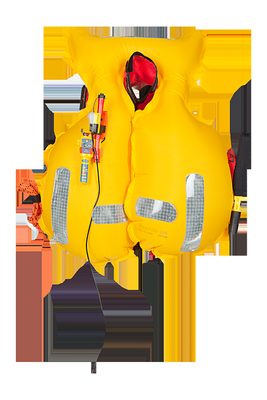
- Area: Pressure seal integrity and air leakageCheck: Conduct air pressure test per manufacturer specifications (typically 20-25 mbar). Apply soapy water solution to all seams, zippers, face seals, and closures. Monitor for 10-15 minutes to detect pressure drop and bubble formation indicating leaks.
- Area: Zipper functionality and watertightnessCheck: Visual inspection: verify smooth operation by sliding zipper up and down multiple times. Check for damage, corrosion, or misalignment. Apply manufacturer-recommended lubricant to zipper tracks. Verify complete seal closure and absence of gaps.
- Area: Face seal, glove, and boot deteriorationCheck: Visual and tactile inspection: check for cracks, tears, hardening, or loss of elasticity in neoprene/rubber components. Verify proper adhesion of glued seams and glove attachments. Test flexibility of glove fingers and boot construction.
- Area: Material degradation from age and environmental exposureCheck: Visual assessment of neoprene surface for brittleness, discoloration, UV damage, or adhesive deterioration. Check for salt residue, mold, or water stains. Inspect stored suits annually if over 10 years old and biennially if under 10 years; conduct pressure tests per schedule.
- Area: Reflective tape and safety equipment attachment integrityCheck: Verify retro-reflective tape adhesion and visibility (minimum 400 cm² SOLAS requirement). Check attachment of whistle, light pocket, buddy line, and inflatable components. Test inflation mechanisms quarterly for head support/buoyancy rings.
Typ-universelle Inspektionspunkte fuer Insulated Immersion Suit (verifiziert, 2026-06).
- Area: Pressure seal integrity and air leakageCheck: Conduct air pressure test per manufacturer specifications (typically 20-25 mbar). Apply soapy water solution to all seams, zippers, face seals, and closures. Monitor for 10-15 minutes to detect pressure drop and bubble formation indicating leaks.
- Area: Zipper functionality and watertightnessCheck: Visual inspection: verify smooth operation by sliding zipper up and down multiple times. Check for damage, corrosion, or misalignment. Apply manufacturer-recommended lubricant to zipper tracks. Verify complete seal closure and absence of gaps.
- Area: Face seal, glove, and boot deteriorationCheck: Visual and tactile inspection: check for cracks, tears, hardening, or loss of elasticity in neoprene/rubber components. Verify proper adhesion of glued seams and glove attachments. Test flexibility of glove fingers and boot construction.
- Area: Material degradation from age and environmental exposureCheck: Visual assessment of neoprene surface for brittleness, discoloration, UV damage, or adhesive deterioration. Check for salt residue, mold, or water stains. Inspect stored suits annually if over 10 years old and biennially if under 10 years; conduct pressure tests per schedule.
- Area: Reflective tape and safety equipment attachment integrityCheck: Verify retro-reflective tape adhesion and visibility (minimum 400 cm² SOLAS requirement). Check attachment of whistle, light pocket, buddy line, and inflatable components. Test inflation mechanisms quarterly for head support/buoyancy rings.
Typ-universelle Inspektionspunkte fuer Insulated Immersion Suit (verifiziert, 2026-06).
- Area: Pressure seal integrity and air leakageCheck: Conduct air pressure test per manufacturer specifications (typically 20-25 mbar). Apply soapy water solution to all seams, zippers, face seals, and closures. Monitor for 10-15 minutes to detect pressure drop and bubble formation indicating leaks.
- Area: Zipper functionality and watertightnessCheck: Visual inspection: verify smooth operation by sliding zipper up and down multiple times. Check for damage, corrosion, or misalignment. Apply manufacturer-recommended lubricant to zipper tracks. Verify complete seal closure and absence of gaps.
- Area: Face seal, glove, and boot deteriorationCheck: Visual and tactile inspection: check for cracks, tears, hardening, or loss of elasticity in neoprene/rubber components. Verify proper adhesion of glued seams and glove attachments. Test flexibility of glove fingers and boot construction.
- Area: Material degradation from age and environmental exposureCheck: Visual assessment of neoprene surface for brittleness, discoloration, UV damage, or adhesive deterioration. Check for salt residue, mold, or water stains. Inspect stored suits annually if over 10 years old and biennially if under 10 years; conduct pressure tests per schedule.
- Area: Reflective tape and safety equipment attachment integrityCheck: Verify retro-reflective tape adhesion and visibility (minimum 400 cm² SOLAS requirement). Check attachment of whistle, light pocket, buddy line, and inflatable components. Test inflation mechanisms quarterly for head support/buoyancy rings.
Typ-universelle Inspektionspunkte fuer Insulated Immersion Suit (verifiziert, 2026-06).
- Area: Pressure seal integrity and air leakageCheck: Conduct air pressure test per manufacturer specifications (typically 20-25 mbar). Apply soapy water solution to all seams, zippers, face seals, and closures. Monitor for 10-15 minutes to detect pressure drop and bubble formation indicating leaks.
- Area: Zipper functionality and watertightnessCheck: Visual inspection: verify smooth operation by sliding zipper up and down multiple times. Check for damage, corrosion, or misalignment. Apply manufacturer-recommended lubricant to zipper tracks. Verify complete seal closure and absence of gaps.
- Area: Face seal, glove, and boot deteriorationCheck: Visual and tactile inspection: check for cracks, tears, hardening, or loss of elasticity in neoprene/rubber components. Verify proper adhesion of glued seams and glove attachments. Test flexibility of glove fingers and boot construction.
- Area: Material degradation from age and environmental exposureCheck: Visual assessment of neoprene surface for brittleness, discoloration, UV damage, or adhesive deterioration. Check for salt residue, mold, or water stains. Inspect stored suits annually if over 10 years old and biennially if under 10 years; conduct pressure tests per schedule.
- Area: Reflective tape and safety equipment attachment integrityCheck: Verify retro-reflective tape adhesion and visibility (minimum 400 cm² SOLAS requirement). Check attachment of whistle, light pocket, buddy line, and inflatable components. Test inflation mechanisms quarterly for head support/buoyancy rings.
Typ-universelle Inspektionspunkte fuer Insulated Immersion Suit (verifiziert, 2026-06).
Survitec (Crewsaver)
4
- Area: Pressure seal integrity and air leakageCheck: Conduct air pressure test per manufacturer specifications (typically 20-25 mbar). Apply soapy water solution to all seams, zippers, face seals, and closures. Monitor for 10-15 minutes to detect pressure drop and bubble formation indicating leaks.
- Area: Zipper functionality and watertightnessCheck: Visual inspection: verify smooth operation by sliding zipper up and down multiple times. Check for damage, corrosion, or misalignment. Apply manufacturer-recommended lubricant to zipper tracks. Verify complete seal closure and absence of gaps.
- Area: Face seal, glove, and boot deteriorationCheck: Visual and tactile inspection: check for cracks, tears, hardening, or loss of elasticity in neoprene/rubber components. Verify proper adhesion of glued seams and glove attachments. Test flexibility of glove fingers and boot construction.
- Area: Material degradation from age and environmental exposureCheck: Visual assessment of neoprene surface for brittleness, discoloration, UV damage, or adhesive deterioration. Check for salt residue, mold, or water stains. Inspect stored suits annually if over 10 years old and biennially if under 10 years; conduct pressure tests per schedule.
- Area: Reflective tape and safety equipment attachment integrityCheck: Verify retro-reflective tape adhesion and visibility (minimum 400 cm² SOLAS requirement). Check attachment of whistle, light pocket, buddy line, and inflatable components. Test inflation mechanisms quarterly for head support/buoyancy rings.
Typ-universelle Inspektionspunkte fuer Insulated Immersion Suit (verifiziert, 2026-06).
- Area: Pressure seal integrity and air leakageCheck: Conduct air pressure test per manufacturer specifications (typically 20-25 mbar). Apply soapy water solution to all seams, zippers, face seals, and closures. Monitor for 10-15 minutes to detect pressure drop and bubble formation indicating leaks.
- Area: Zipper functionality and watertightnessCheck: Visual inspection: verify smooth operation by sliding zipper up and down multiple times. Check for damage, corrosion, or misalignment. Apply manufacturer-recommended lubricant to zipper tracks. Verify complete seal closure and absence of gaps.
- Area: Face seal, glove, and boot deteriorationCheck: Visual and tactile inspection: check for cracks, tears, hardening, or loss of elasticity in neoprene/rubber components. Verify proper adhesion of glued seams and glove attachments. Test flexibility of glove fingers and boot construction.
- Area: Material degradation from age and environmental exposureCheck: Visual assessment of neoprene surface for brittleness, discoloration, UV damage, or adhesive deterioration. Check for salt residue, mold, or water stains. Inspect stored suits annually if over 10 years old and biennially if under 10 years; conduct pressure tests per schedule.
- Area: Reflective tape and safety equipment attachment integrityCheck: Verify retro-reflective tape adhesion and visibility (minimum 400 cm² SOLAS requirement). Check attachment of whistle, light pocket, buddy line, and inflatable components. Test inflation mechanisms quarterly for head support/buoyancy rings.
Typ-universelle Inspektionspunkte fuer Insulated Immersion Suit (verifiziert, 2026-06).
- Area: Pressure seal integrity and air leakageCheck: Conduct air pressure test per manufacturer specifications (typically 20-25 mbar). Apply soapy water solution to all seams, zippers, face seals, and closures. Monitor for 10-15 minutes to detect pressure drop and bubble formation indicating leaks.
- Area: Zipper functionality and watertightnessCheck: Visual inspection: verify smooth operation by sliding zipper up and down multiple times. Check for damage, corrosion, or misalignment. Apply manufacturer-recommended lubricant to zipper tracks. Verify complete seal closure and absence of gaps.
- Area: Face seal, glove, and boot deteriorationCheck: Visual and tactile inspection: check for cracks, tears, hardening, or loss of elasticity in neoprene/rubber components. Verify proper adhesion of glued seams and glove attachments. Test flexibility of glove fingers and boot construction.
- Area: Material degradation from age and environmental exposureCheck: Visual assessment of neoprene surface for brittleness, discoloration, UV damage, or adhesive deterioration. Check for salt residue, mold, or water stains. Inspect stored suits annually if over 10 years old and biennially if under 10 years; conduct pressure tests per schedule.
- Area: Reflective tape and safety equipment attachment integrityCheck: Verify retro-reflective tape adhesion and visibility (minimum 400 cm² SOLAS requirement). Check attachment of whistle, light pocket, buddy line, and inflatable components. Test inflation mechanisms quarterly for head support/buoyancy rings.
Typ-universelle Inspektionspunkte fuer Insulated Immersion Suit (verifiziert, 2026-06).
- Area: Pressure seal integrity and air leakageCheck: Conduct air pressure test per manufacturer specifications (typically 20-25 mbar). Apply soapy water solution to all seams, zippers, face seals, and closures. Monitor for 10-15 minutes to detect pressure drop and bubble formation indicating leaks.
- Area: Zipper functionality and watertightnessCheck: Visual inspection: verify smooth operation by sliding zipper up and down multiple times. Check for damage, corrosion, or misalignment. Apply manufacturer-recommended lubricant to zipper tracks. Verify complete seal closure and absence of gaps.
- Area: Face seal, glove, and boot deteriorationCheck: Visual and tactile inspection: check for cracks, tears, hardening, or loss of elasticity in neoprene/rubber components. Verify proper adhesion of glued seams and glove attachments. Test flexibility of glove fingers and boot construction.
- Area: Material degradation from age and environmental exposureCheck: Visual assessment of neoprene surface for brittleness, discoloration, UV damage, or adhesive deterioration. Check for salt residue, mold, or water stains. Inspect stored suits annually if over 10 years old and biennially if under 10 years; conduct pressure tests per schedule.
- Area: Reflective tape and safety equipment attachment integrityCheck: Verify retro-reflective tape adhesion and visibility (minimum 400 cm² SOLAS requirement). Check attachment of whistle, light pocket, buddy line, and inflatable components. Test inflation mechanisms quarterly for head support/buoyancy rings.
Typ-universelle Inspektionspunkte fuer Insulated Immersion Suit (verifiziert, 2026-06).
Hansen Protection AS
3
- Area: Pressure seal integrity and air leakageCheck: Conduct air pressure test per manufacturer specifications (typically 20-25 mbar). Apply soapy water solution to all seams, zippers, face seals, and closures. Monitor for 10-15 minutes to detect pressure drop and bubble formation indicating leaks.
- Area: Zipper functionality and watertightnessCheck: Visual inspection: verify smooth operation by sliding zipper up and down multiple times. Check for damage, corrosion, or misalignment. Apply manufacturer-recommended lubricant to zipper tracks. Verify complete seal closure and absence of gaps.
- Area: Face seal, glove, and boot deteriorationCheck: Visual and tactile inspection: check for cracks, tears, hardening, or loss of elasticity in neoprene/rubber components. Verify proper adhesion of glued seams and glove attachments. Test flexibility of glove fingers and boot construction.
- Area: Material degradation from age and environmental exposureCheck: Visual assessment of neoprene surface for brittleness, discoloration, UV damage, or adhesive deterioration. Check for salt residue, mold, or water stains. Inspect stored suits annually if over 10 years old and biennially if under 10 years; conduct pressure tests per schedule.
- Area: Reflective tape and safety equipment attachment integrityCheck: Verify retro-reflective tape adhesion and visibility (minimum 400 cm² SOLAS requirement). Check attachment of whistle, light pocket, buddy line, and inflatable components. Test inflation mechanisms quarterly for head support/buoyancy rings.
Typ-universelle Inspektionspunkte fuer Insulated Immersion Suit (verifiziert, 2026-06).
- Area: Pressure seal integrity and air leakageCheck: Conduct air pressure test per manufacturer specifications (typically 20-25 mbar). Apply soapy water solution to all seams, zippers, face seals, and closures. Monitor for 10-15 minutes to detect pressure drop and bubble formation indicating leaks.
- Area: Zipper functionality and watertightnessCheck: Visual inspection: verify smooth operation by sliding zipper up and down multiple times. Check for damage, corrosion, or misalignment. Apply manufacturer-recommended lubricant to zipper tracks. Verify complete seal closure and absence of gaps.
- Area: Face seal, glove, and boot deteriorationCheck: Visual and tactile inspection: check for cracks, tears, hardening, or loss of elasticity in neoprene/rubber components. Verify proper adhesion of glued seams and glove attachments. Test flexibility of glove fingers and boot construction.
- Area: Material degradation from age and environmental exposureCheck: Visual assessment of neoprene surface for brittleness, discoloration, UV damage, or adhesive deterioration. Check for salt residue, mold, or water stains. Inspect stored suits annually if over 10 years old and biennially if under 10 years; conduct pressure tests per schedule.
- Area: Reflective tape and safety equipment attachment integrityCheck: Verify retro-reflective tape adhesion and visibility (minimum 400 cm² SOLAS requirement). Check attachment of whistle, light pocket, buddy line, and inflatable components. Test inflation mechanisms quarterly for head support/buoyancy rings.
Typ-universelle Inspektionspunkte fuer Insulated Immersion Suit (verifiziert, 2026-06).
- Area: Pressure seal integrity and air leakageCheck: Conduct air pressure test per manufacturer specifications (typically 20-25 mbar). Apply soapy water solution to all seams, zippers, face seals, and closures. Monitor for 10-15 minutes to detect pressure drop and bubble formation indicating leaks.
- Area: Zipper functionality and watertightnessCheck: Visual inspection: verify smooth operation by sliding zipper up and down multiple times. Check for damage, corrosion, or misalignment. Apply manufacturer-recommended lubricant to zipper tracks. Verify complete seal closure and absence of gaps.
- Area: Face seal, glove, and boot deteriorationCheck: Visual and tactile inspection: check for cracks, tears, hardening, or loss of elasticity in neoprene/rubber components. Verify proper adhesion of glued seams and glove attachments. Test flexibility of glove fingers and boot construction.
- Area: Material degradation from age and environmental exposureCheck: Visual assessment of neoprene surface for brittleness, discoloration, UV damage, or adhesive deterioration. Check for salt residue, mold, or water stains. Inspect stored suits annually if over 10 years old and biennially if under 10 years; conduct pressure tests per schedule.
- Area: Reflective tape and safety equipment attachment integrityCheck: Verify retro-reflective tape adhesion and visibility (minimum 400 cm² SOLAS requirement). Check attachment of whistle, light pocket, buddy line, and inflatable components. Test inflation mechanisms quarterly for head support/buoyancy rings.
Typ-universelle Inspektionspunkte fuer Insulated Immersion Suit (verifiziert, 2026-06).
Hansen Protection
2
- Zipper stiffness
- Neoprene cracking
- Glove leak
- Provides thermal insulation for prolonged exposure in cold water
- Meets SOLAS requirements for immersion protection
- Manufactured by Norwegian firm Hansen Protection known for quality craftsmanship
- Integrated hood and glove system for full-body coverage
- Zipper can become stiff, hindering rapid donning
- Neoprene material may develop cracks over time if not properly maintained
- Glove seams are prone to leaking under pressure

- Heavy-duty zipper mechanism wear
- Insulation compression over time
- Boot sole separation
- SOLAS‑approved and meets IMO requirements for cold‑water survival
- High thermal insulation suitable for sub‑zero sea temperatures
- Integrated sealed boot reduces water ingress risk
- Durable outer fabric resistant to abrasion and UV exposure
- Designed for easy donning with a high‑visibility zipper system
- Heavy‑duty zipper mechanism prone to wear after repeated use
- Insulation can compress over time, reducing thermal performance
- Boot sole may separate if not regularly inspected
- Higher acquisition cost compared with basic immersion suits
- Requires annual inspection and pressure testing to remain compliant
Mustang Survival
2
- Zipper corrosion in salt environment
- Neoprene UV degradation
- Face seal leak
- USCG Type Approval – meets U.S. regulatory requirements for commercial vessels
- Robust neoprene construction provides up to 30 minutes of thermal protection in 0‑5 °C water
- Integrated hood and sealed zipper reduce water ingress risk
- Designed for quick donning (under‑arm pull‑on) even with gloves
- Standard on many U.S. flag tankers and offshore supply vessels, facilitating crew familiarity
- Zipper corrosion can occur in high‑salinity environments if not regularly maintained
- Neoprene material degrades under prolonged UV exposure, limiting service life in tropical regions
- Face seal may develop leaks after repeated use or improper storage
- Relatively heavy and bulky compared with newer lightweight dry‑suit technologies
- Limited size range; custom sizing required for very tall or short crew members
- Area: Pressure seal integrity and air leakageCheck: Conduct air pressure test per manufacturer specifications (typically 20-25 mbar). Apply soapy water solution to all seams, zippers, face seals, and closures. Monitor for 10-15 minutes to detect pressure drop and bubble formation indicating leaks.
- Area: Zipper functionality and watertightnessCheck: Visual inspection: verify smooth operation by sliding zipper up and down multiple times. Check for damage, corrosion, or misalignment. Apply manufacturer-recommended lubricant to zipper tracks. Verify complete seal closure and absence of gaps.
- Area: Face seal, glove, and boot deteriorationCheck: Visual and tactile inspection: check for cracks, tears, hardening, or loss of elasticity in neoprene/rubber components. Verify proper adhesion of glued seams and glove attachments. Test flexibility of glove fingers and boot construction.
- Area: Material degradation from age and environmental exposureCheck: Visual assessment of neoprene surface for brittleness, discoloration, UV damage, or adhesive deterioration. Check for salt residue, mold, or water stains. Inspect stored suits annually if over 10 years old and biennially if under 10 years; conduct pressure tests per schedule.
- Area: Reflective tape and safety equipment attachment integrityCheck: Verify retro-reflective tape adhesion and visibility (minimum 400 cm² SOLAS requirement). Check attachment of whistle, light pocket, buddy line, and inflatable components. Test inflation mechanisms quarterly for head support/buoyancy rings.
Typ-universelle Inspektionspunkte fuer Insulated Immersion Suit (verifiziert, 2026-06).
Datrex
1
- Area: Pressure seal integrity and air leakageCheck: Conduct air pressure test per manufacturer specifications (typically 20-25 mbar). Apply soapy water solution to all seams, zippers, face seals, and closures. Monitor for 10-15 minutes to detect pressure drop and bubble formation indicating leaks.
- Area: Zipper functionality and watertightnessCheck: Visual inspection: verify smooth operation by sliding zipper up and down multiple times. Check for damage, corrosion, or misalignment. Apply manufacturer-recommended lubricant to zipper tracks. Verify complete seal closure and absence of gaps.
- Area: Face seal, glove, and boot deteriorationCheck: Visual and tactile inspection: check for cracks, tears, hardening, or loss of elasticity in neoprene/rubber components. Verify proper adhesion of glued seams and glove attachments. Test flexibility of glove fingers and boot construction.
- Area: Material degradation from age and environmental exposureCheck: Visual assessment of neoprene surface for brittleness, discoloration, UV damage, or adhesive deterioration. Check for salt residue, mold, or water stains. Inspect stored suits annually if over 10 years old and biennially if under 10 years; conduct pressure tests per schedule.
- Area: Reflective tape and safety equipment attachment integrityCheck: Verify retro-reflective tape adhesion and visibility (minimum 400 cm² SOLAS requirement). Check attachment of whistle, light pocket, buddy line, and inflatable components. Test inflation mechanisms quarterly for head support/buoyancy rings.
Typ-universelle Inspektionspunkte fuer Insulated Immersion Suit (verifiziert, 2026-06).
Grand Ocean Marine
1
- Area: Pressure seal integrity and air leakageCheck: Conduct air pressure test per manufacturer specifications (typically 20-25 mbar). Apply soapy water solution to all seams, zippers, face seals, and closures. Monitor for 10-15 minutes to detect pressure drop and bubble formation indicating leaks.
- Area: Zipper functionality and watertightnessCheck: Visual inspection: verify smooth operation by sliding zipper up and down multiple times. Check for damage, corrosion, or misalignment. Apply manufacturer-recommended lubricant to zipper tracks. Verify complete seal closure and absence of gaps.
- Area: Face seal, glove, and boot deteriorationCheck: Visual and tactile inspection: check for cracks, tears, hardening, or loss of elasticity in neoprene/rubber components. Verify proper adhesion of glued seams and glove attachments. Test flexibility of glove fingers and boot construction.
- Area: Material degradation from age and environmental exposureCheck: Visual assessment of neoprene surface for brittleness, discoloration, UV damage, or adhesive deterioration. Check for salt residue, mold, or water stains. Inspect stored suits annually if over 10 years old and biennially if under 10 years; conduct pressure tests per schedule.
- Area: Reflective tape and safety equipment attachment integrityCheck: Verify retro-reflective tape adhesion and visibility (minimum 400 cm² SOLAS requirement). Check attachment of whistle, light pocket, buddy line, and inflatable components. Test inflation mechanisms quarterly for head support/buoyancy rings.
Typ-universelle Inspektionspunkte fuer Insulated Immersion Suit (verifiziert, 2026-06).
Kent Safety Products
1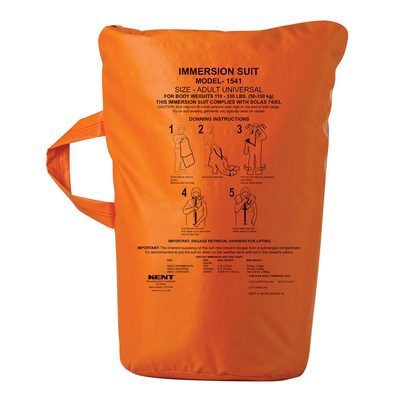
- Area: Pressure seal integrity and air leakageCheck: Conduct air pressure test per manufacturer specifications (typically 20-25 mbar). Apply soapy water solution to all seams, zippers, face seals, and closures. Monitor for 10-15 minutes to detect pressure drop and bubble formation indicating leaks.
- Area: Zipper functionality and watertightnessCheck: Visual inspection: verify smooth operation by sliding zipper up and down multiple times. Check for damage, corrosion, or misalignment. Apply manufacturer-recommended lubricant to zipper tracks. Verify complete seal closure and absence of gaps.
- Area: Face seal, glove, and boot deteriorationCheck: Visual and tactile inspection: check for cracks, tears, hardening, or loss of elasticity in neoprene/rubber components. Verify proper adhesion of glued seams and glove attachments. Test flexibility of glove fingers and boot construction.
- Area: Material degradation from age and environmental exposureCheck: Visual assessment of neoprene surface for brittleness, discoloration, UV damage, or adhesive deterioration. Check for salt residue, mold, or water stains. Inspect stored suits annually if over 10 years old and biennially if under 10 years; conduct pressure tests per schedule.
- Area: Reflective tape and safety equipment attachment integrityCheck: Verify retro-reflective tape adhesion and visibility (minimum 400 cm² SOLAS requirement). Check attachment of whistle, light pocket, buddy line, and inflatable components. Test inflation mechanisms quarterly for head support/buoyancy rings.
Typ-universelle Inspektionspunkte fuer Insulated Immersion Suit (verifiziert, 2026-06).
Lalizas
1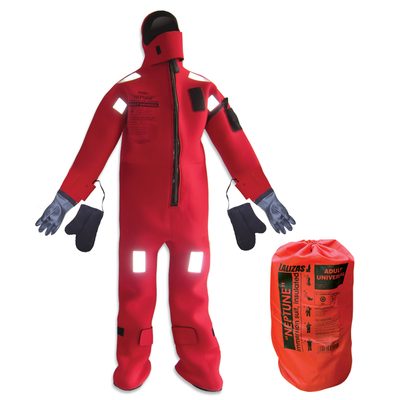
- Area: Pressure seal integrity and air leakageCheck: Conduct air pressure test per manufacturer specifications (typically 20-25 mbar). Apply soapy water solution to all seams, zippers, face seals, and closures. Monitor for 10-15 minutes to detect pressure drop and bubble formation indicating leaks.
- Area: Zipper functionality and watertightnessCheck: Visual inspection: verify smooth operation by sliding zipper up and down multiple times. Check for damage, corrosion, or misalignment. Apply manufacturer-recommended lubricant to zipper tracks. Verify complete seal closure and absence of gaps.
- Area: Face seal, glove, and boot deteriorationCheck: Visual and tactile inspection: check for cracks, tears, hardening, or loss of elasticity in neoprene/rubber components. Verify proper adhesion of glued seams and glove attachments. Test flexibility of glove fingers and boot construction.
- Area: Material degradation from age and environmental exposureCheck: Visual assessment of neoprene surface for brittleness, discoloration, UV damage, or adhesive deterioration. Check for salt residue, mold, or water stains. Inspect stored suits annually if over 10 years old and biennially if under 10 years; conduct pressure tests per schedule.
- Area: Reflective tape and safety equipment attachment integrityCheck: Verify retro-reflective tape adhesion and visibility (minimum 400 cm² SOLAS requirement). Check attachment of whistle, light pocket, buddy line, and inflatable components. Test inflation mechanisms quarterly for head support/buoyancy rings.
Typ-universelle Inspektionspunkte fuer Insulated Immersion Suit (verifiziert, 2026-06).
Stearns
1
- Area: Pressure seal integrity and air leakageCheck: Conduct air pressure test per manufacturer specifications (typically 20-25 mbar). Apply soapy water solution to all seams, zippers, face seals, and closures. Monitor for 10-15 minutes to detect pressure drop and bubble formation indicating leaks.
- Area: Zipper functionality and watertightnessCheck: Visual inspection: verify smooth operation by sliding zipper up and down multiple times. Check for damage, corrosion, or misalignment. Apply manufacturer-recommended lubricant to zipper tracks. Verify complete seal closure and absence of gaps.
- Area: Face seal, glove, and boot deteriorationCheck: Visual and tactile inspection: check for cracks, tears, hardening, or loss of elasticity in neoprene/rubber components. Verify proper adhesion of glued seams and glove attachments. Test flexibility of glove fingers and boot construction.
- Area: Material degradation from age and environmental exposureCheck: Visual assessment of neoprene surface for brittleness, discoloration, UV damage, or adhesive deterioration. Check for salt residue, mold, or water stains. Inspect stored suits annually if over 10 years old and biennially if under 10 years; conduct pressure tests per schedule.
- Area: Reflective tape and safety equipment attachment integrityCheck: Verify retro-reflective tape adhesion and visibility (minimum 400 cm² SOLAS requirement). Check attachment of whistle, light pocket, buddy line, and inflatable components. Test inflation mechanisms quarterly for head support/buoyancy rings.
Typ-universelle Inspektionspunkte fuer Insulated Immersion Suit (verifiziert, 2026-06).