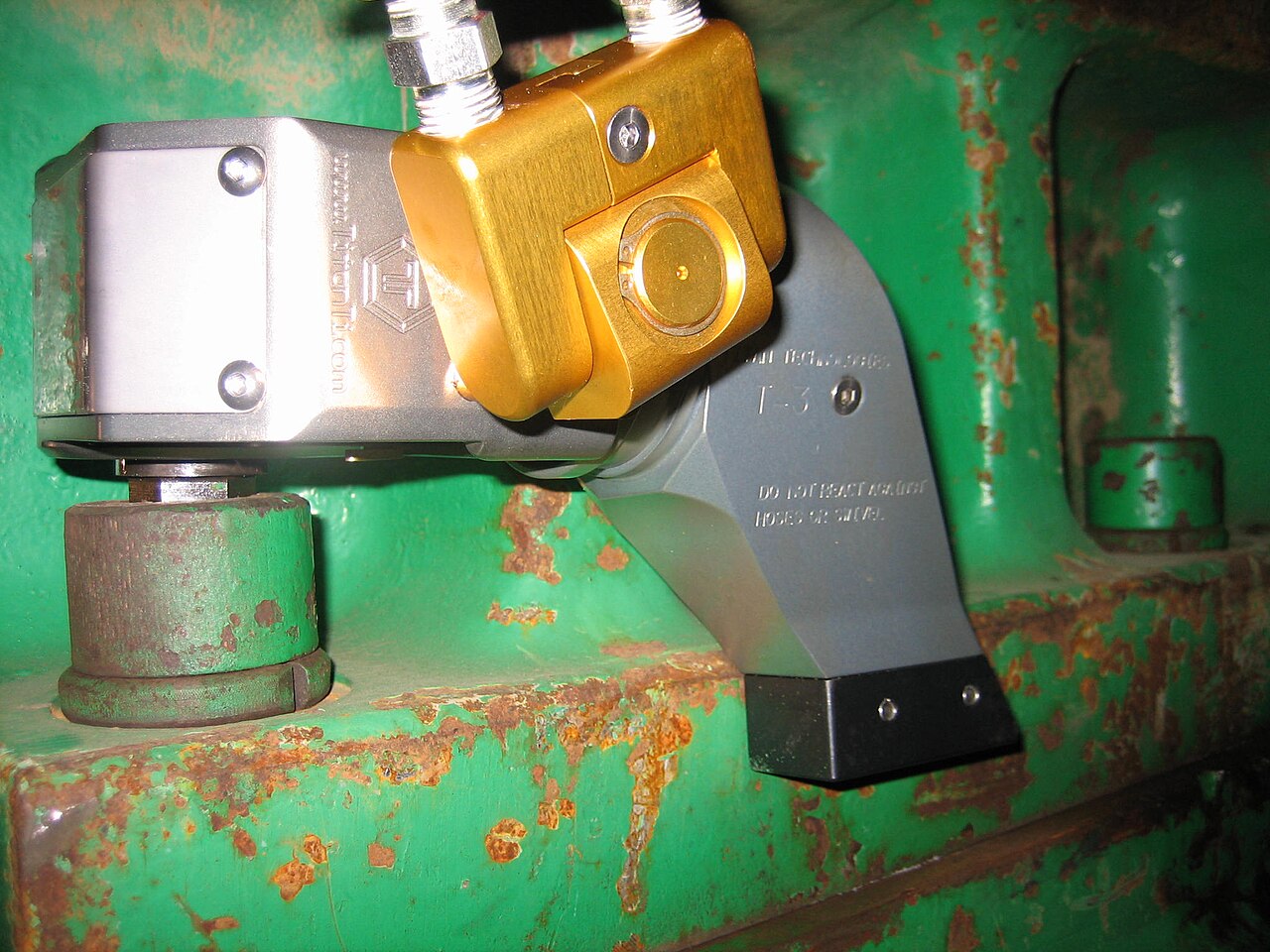
What to check on a Hydraulic Torque Tools.
A hydraulic torque wrench does not spin a nut with rotational speed the way an impact wrench does; it applies a slow, controlled swing through a reaction arm and hydraulic cylinder, multiplying force to reach torque values an impact tool cannot repeat accurately. Most engine room sets use an air-driven hydraulic pump rather than an electric one, which is why the tool sits in the workshop air tools group even though the wrench head itself works on oil pressure, not air pressure directly. The air supply only drives the pump…
What sets hydraulic torque tools apart
A hydraulic torque wrench does not spin a nut with rotational speed the way an impact wrench does; it applies a slow, controlled swing through a reaction arm and hydraulic cylinder, multiplying force to reach torque values an impact tool cannot repeat accurately. Most engine room sets use an air-driven hydraulic pump rather than an electric one, which is why the tool sits in the workshop air tools group even though the wrench head itself works on oil pressure, not air pressure directly. The air supply only drives the pump; the actual tightening force comes from hydraulic fluid pushed into a cylinder that turns the reaction arm through a fixed angle per stroke.

Main components
Hydraulic pump unit
Air-driven, electric or hand pumps generate pressure typically up to 700 bar. Air-driven pumps are preferred in engine rooms for the same reason as other air tools: no ignition source and tolerance of an oily, damp environment.
Torque wrench head
A square drive head with an integral hydraulic cylinder and reaction arm that bears against an adjacent bolt or a fixed point. Cassette-style heads swap the drive insert without removing the whole tool from a tight space.
Hose and coupler
High pressure hose rated well above working pressure connects pump to head, fitted with a dry-break coupler so a hose change does not spill oil into the bilge or onto a cylinder head gasket face.
Calibration certificate and gauge
Each set is only as trustworthy as its last calibration; the pressure gauge and the head are calibrated as a matched pair, and swapping a head without recalibrating invalidates the torque figure shown.
Selecting the right set
Selection follows the bolt, not the tool catalogue. Main figures to match:
| Parameter | Why it matters |
|---|---|
| Maximum required torque (Nm) | Sets minimum cylinder size and pump pressure rating needed |
| Bolt head/nut size and access clearance | Determines head profile — low-profile cassette heads for tight main bearing girdles |
| Reaction arm clearance | No adjacent surface to react against means a different head style or a reaction plate |
| Duty — occasional vs. planned overhaul | Charter or owner overhauls justify an electric pump; occasional use favours air or hand pump |
Regulations and class
There is no class rule dedicated to the tool itself, but its use is tied directly to class requirements: main engine bearing bolts, cylinder head studs and shaft coupling bolts are tightened to torque or torque-turn values set by the engine builder, and class surveyors witnessing an overhaul may ask for the calibration certificate of the torque tool used. A tool used past its calibration interval, usually twelve months, can be grounds for rejecting the recorded torque values during a survey.
Typical faults
- Air pump moisture ingress freezing the exhaust port in cold engine rooms — output pressure drops without any alarm, under-torquing the joint
- Worn reaction arm bushing — head rocks slightly during the stroke, giving an inconsistent final torque reading
- Mismatched head and pump from different sets combined after a loss — pressure-to-torque conversion no longer matches the gauge scale
- Hose coupler debris left uncleaned — restricts flow, so the cylinder stalls before reaching target pressure and the operator assumes the joint is tight
What to look for in a supplier
- Traceable calibration certificate issued against a recognised standard, not a generic works test certificate
- Availability of cassette heads sized for the specific main engine model on board, not a generic set
- Spare seal kits for the cylinder, since a slow internal leak is the most common in-service failure
- Support for on-site recalibration rather than shipping the whole set ashore for a year
Log every torque tool by serial number against its calibration date in the maintenance system — a survey with an out-of-date torque wrench on the bench can hold up sign-off of an entire main engine overhaul.