Sludge Handling
Sludge from a fuel or lube oil purifier is not waste oil in the ordinary sense; it is a dense, water-bearing residue that will not pump or settle like the clean product it came from, which is why sludge handling uses its own pumps, heated tanks and piping rather than sharing equipment with clean oil systems.
Read more — Sludge Handling explained ▾
What sets sludge handling apart
Centrifugal purifiers and clarifiers separate fuel and lubricating oil from water and solid contaminants, and the rejected fraction, the sludge, carries most of that water plus catalyst fines, carbon and other solids concentrated out of the oil. It is thick, tends to settle and pack if left undisturbed, and can block piping and pump internals sized for cleaner fluids. Sludge handling equipment exists to move this difficult residue from the purifier bowl discharge to a dedicated sludge tank, and eventually ashore or to an incinerator, without the blockages and pump damage that would result from treating it like ordinary oil transfer.
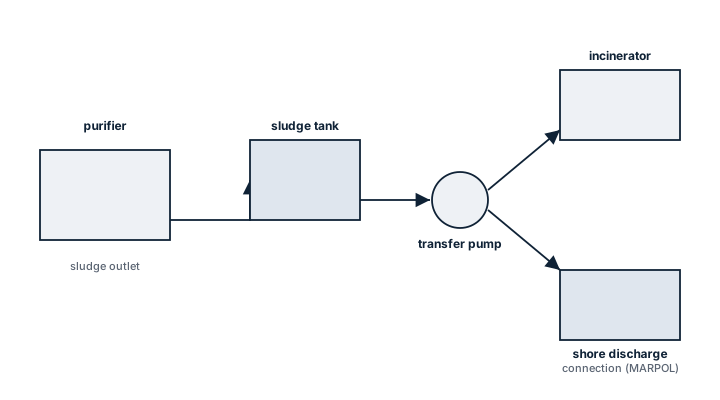
Main components
Sludge pump
Positive displacement pump, commonly a screw or gear type, selected specifically for high-viscosity, solids-bearing fluid rather than a centrifugal pump suited to clean liquids.
Sludge tank
Dedicated tank, usually fitted with heating coils to keep the contents pumpable and a settling arrangement so free water can be drawn off before disposal.
Heating arrangement
Steam or thermal oil coils in the tank and sometimes trace heating on the transfer piping, since sludge viscosity rises sharply as it cools.
Piping and valves
Larger-bore piping than equivalent clean-oil lines, with fewer tight bends, to reduce the chance of solids packing at a restriction.
Incinerator or shore connection interface
Standard connection for discharge ashore or feed line to the ship's incinerator where fitted, sized and valved to match the disposal route actually used.
Selection and sizing
- Pump capacity matched to purifier discharge rate and duty cycle, not undersized against peak sludge production during heavy purification periods
- Sludge tank capacity against realistic time between discharge opportunities on the vessel's trading pattern
- Heating capacity sufficient to keep sludge pumpable at the coldest ambient condition the ship trades in
- Pump material and seal selection resistant to the abrasive solids typically present in purifier sludge
Regulations and class
MARPOL Annex I governs the retention, recording and disposal of oily sludge, requiring an Oil Record Book entry for every transfer and prohibiting discharge to sea. Ships must be fitted with sludge tank capacity adequate for the intended voyage pattern, and port reception facility disposal, or shipboard incineration where the incinerator is certified for the purpose, are the only routes MARPOL permits. Class rules cover the tank, piping and pump as part of the machinery space fire and pollution prevention arrangement rather than as a stand-alone equipment class.
Typical faults
| Fault | Cause | Consequence |
|---|---|---|
| Pump loses suction or blocks | Sludge cooled and thickened, or solids packed at a pipe bend | Purifier discharge backs up, forcing a stop to purification |
| Tank heating failure | Steam coil scaling or trace heating fault | Sludge too viscous to transfer, tank effectively unusable until warmed |
| Oil Record Book discrepancy | Sludge transfer not logged accurately against tank soundings | Findings at Port State Control, potential detention or prosecution |
| Illegal discharge risk | Bypass piping fitted or valve left in wrong position | Serious MARPOL violation with criminal liability for those involved |
What to look for in a supplier
- Pump performance data specifically for high-viscosity, solids-bearing fluid at the sludge concentration the ship's purifiers actually produce, not clean-oil performance curves
- Tank heating coil sized against the ship's coldest trading ambient, with a margin rather than a nominal figure
- Materials and seals with demonstrated resistance to abrasive catalyst fines
- Piping layout review to minimise tight bends and dead legs where solids can settle and pack
A sludge system that struggles on a cold morning is usually a heating problem, not a pump problem — check coil temperature before assuming the pump has failed.
1 manufacturers · 1 models
Alfa Laval
1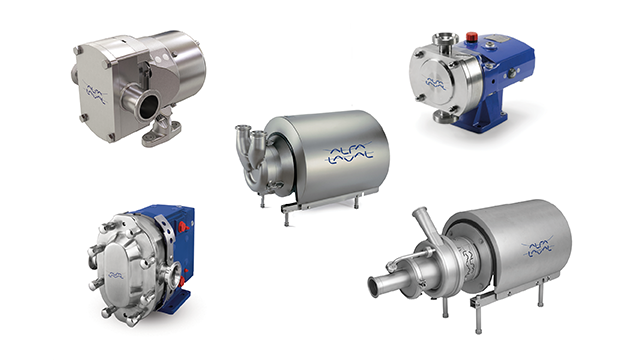
- Poor suction conditions, blockage or air ingress cause low flow, cavitation-like noise or unstable discharge
- Seal, packing or gasket wear causes visible leakage and falling system pressure
- Bearing, shaft or coupling wear causes vibration, abnormal noise or rising temperature
- Impeller, screw or other pumping-element wear or fouling reduces capacity and may increase drive load
- Motor, hydraulic-drive, valve or control faults cause failure to start, reduced speed or protective trips
- Handles highly viscous and abrasive sludge without cavitation
- Self‑priming and can run at very low flow rates for precise dosing
- Low pulsation reduces wear on downstream piping and separators
- Compact design fits in confined engine‑room spaces
- Easy maintenance – stator and rotor are replaced as a matched set
- Stator material wears quickly when processing very abrasive sludge
- Cannot be run dry; risk of severe internal damage if lubrication is lost
- Coupling failures reported if not properly aligned or oversped
- Flow capacity lower than comparable centrifugal pumps for the same power
- Higher initial purchase price relative to basic centrifugal models