What to check on a Purifier Feed/Discharge Pump.
A disc-stack purifier only separates correctly if oil moves through the bowl at a steady, predictable rate. The feed pump exists purely to hold that rate constant: a low-capacity metering pump, usually a screw or internal-gear type, pushing preheated oil into the bowl at a flow set by the separator's throughput curve for the fuel or lube grade in use. The discharge pump does the opposite job at the other end - it pulls clean, treated oil out of the bowl outlet and pushes it on to the service or…
What sets the feed and discharge pump apart
A disc-stack purifier only separates correctly if oil moves through the bowl at a steady, predictable rate. The feed pump exists purely to hold that rate constant: a low-capacity metering pump, usually a screw or internal-gear type, pushing preheated oil into the bowl at a flow set by the separator's throughput curve for the fuel or lube grade in use. The discharge pump does the opposite job at the other end - it pulls clean, treated oil out of the bowl outlet and pushes it on to the service or settling tank, working against whatever static lift and pipe resistance sits between the purifier and that tank. Neither pump does the separating; both control the conditions under which separation happens.
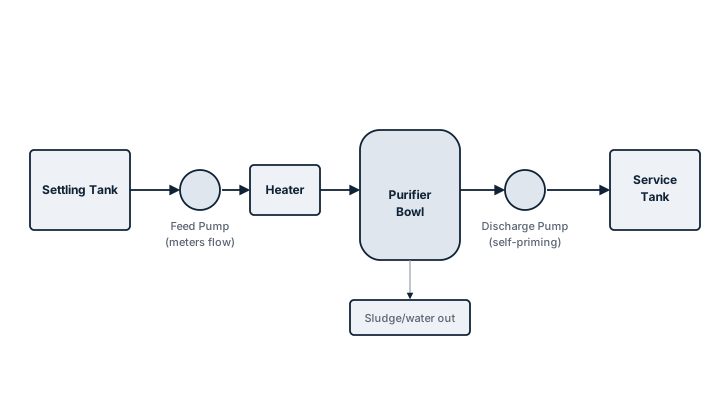
Main components
Feed pump
- Rotor or screw element sized for the target flow, often mounted on an extension of the same shaft that drives the bowl spindle, or as a small standalone unit with its own motor
- Mechanical seal or gland packing at the shaft penetration - this is the most common leak point on an older unit
- A relief valve or bypass line protecting the pump if the feed line is throttled or blocked downstream
- A metering or restriction valve, sometimes just a calibrated orifice, used to fine-tune actual flow against the manufacturer's capacity table
Discharge pump
- Self-priming positive displacement element, because a hermetic bowl discharges under a slight vacuum and the pump must draw reliably without air-locking
- Spring-loaded non-return valve at the outlet, stopping oil in the discharge line from running back into the bowl once the purifier stops
- Pressure gauge or transmitter connection feeding the purifier control panel, which normally trips the unit on sustained low discharge pressure
- On many modern skids, a solenoid-interlocked start sequence so the discharge pump only runs once the bowl has reached operating speed
Selection and sizing
Feed pump capacity has to match the separator's actual throughput at the viscosity and temperature the oil is running at, not the nominal maximum capacity printed on the nameplate. That nameplate figure usually applies to light diesel oil at a specific reference viscosity; heavy fuel or degraded lube oil needs a lower feed rate to keep retention time in the bowl long enough for water and solids to migrate to the periphery. Discharge pump sizing is a head calculation: static lift to the service tank plus line losses, checked against the pump curve at the viscosity expected in service.
| Parameter | Feed pump | Discharge pump |
|---|---|---|
| Duty | Constant low flow into bowl | Variable flow against system head |
| Priming | Flooded suction, rarely an issue | Must self-prime against vacuum |
| Failure symptom | Poor separation, water carry-over | Low discharge pressure trip |
Typical faults
- Worn screw or gear elements on the feed pump reduce delivered flow below the setpoint, shortening retention time and letting water pass into the clean oil outlet
- Seal wear at the feed pump shaft lets air into the suction side, causing an unstable feed rate and intermittent low-pressure alarms
- A discharge pump that loses prime after a stop-start cycle will not re-establish flow on its own, and the purifier control system reads this as a genuine low-pressure fault and shuts the unit down
- A stuck or worn non-return valve on the discharge line allows backflow into the bowl during shutdown, which can pull water back into oil that was already clean
What to look for in a supplier
- Match to the purifier OEM's own part number rather than a generic pump of similar flow and head - Alfa Laval, Mitsubishi Kakoki and GEA/Westfalia all pair pumps closely to bowl retention-time requirements
- Wetted-part material suited to the duty: stainless trim for lube oil with detergent additives, standard bronze or cast iron acceptable for straight fuel duty
- Seal material rated for the oil temperature actually seen at the purifier inlet, typically 85-98 degrees C for HFO purification
- Availability of just the wear kit (rotor, seal, valve) rather than a full pump exchange, since most failures are wear-part failures
If a purifier trips on low discharge pressure right after a routine stop, check whether the discharge pump has actually re-primed before chasing a control system fault - it is the more common cause.