What to check on an Emergency Generator Set.
1 models from Panasia in Emergency Generator Set. Below: the full model list.
What makes this type
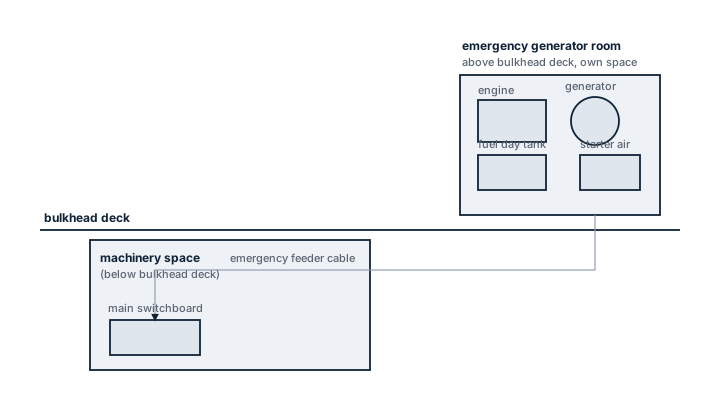
An emergency generator set exists to supply a defined list of safety-critical loads — steering gear, navigation lights, fire pumps, emergency lighting, watertight door indication, and communications — automatically, without anyone reaching the space first, whenever the main source of electrical power fails. What separates it from an auxiliary generator is not the engine itself, which is often a similar diesel unit at a smaller rating, but its location and independence: SOLAS requires it above the bulkhead deck, outside the main machinery space, in its own dedicated compartment with its own fuel supply, so that whatever event disabled the main gensets (flooding, fire, blackout) cannot also disable the emergency set. It is sized only to cover the safety load list for a defined duration, not to run the ship — it is not a backup source of full electrical power.
Read the full guide
Main components
Engine and dedicated fuel tank
A self-contained diesel with its own fuel supply, sized for the required autonomy period (commonly 18 to 36 hours depending on ship type), independent of the main fuel service system.
Automatic starting system
Must start automatically on loss of main power and be capable of picking up its rated load within a defined time (typically within 45 seconds under SOLAS for the first, most urgent load step), using a dedicated starting battery bank kept charged independently of the main switchboard.
Emergency switchboard
A physically separate switchboard from the main switchboard, feeding only the emergency load list, with automatic transfer arrangements that connect it when main power is lost and, on some ships, automatic changeover back once main power is restored.
Space heating and ventilation
The emergency generator room needs independent heating (in cold climates, to keep the engine startable) and ventilation, since it cannot rely on systems fed from the main machinery space.
Selection / Sizing
Sizing is a load-list exercise, not a power-headroom exercise: sum the SOLAS-mandated emergency loads (steering, fire pumps, navigation lights, emergency lighting, general alarm, and any other equipment on the required list for the ship type) with appropriate diversity factors, and size the set to cover that with margin, rather than sizing it as a smaller version of the main gensets. Passenger ships and certain offshore vessels have additional load items (evacuation systems, additional fire-fighting capacity) that push emergency set sizing higher than on a simple cargo ship.
Regulations / Class
SOLAS Ch. II-1 sets the core requirements: location above the bulkhead deck outside the machinery space, automatic starting and load pickup within a specified time, independent fuel and starting arrangements, and a defined minimum operating duration. Class surveys the automatic start sequence and load transfer at every periodic survey by a live test — a genset that starts manually but fails to auto-start on simulated blackout is a deficiency, not a pass with a note. MARPOL Annex VI NOx rules apply to the engine same as any diesel, though emergency sets typically run few hours per year so fuel and emissions compliance is rarely the operational concern it is for main and auxiliary engines.
Typical faults
- Starting battery failure — the most common cause of a failed emergency start, since the batteries sit idle between monthly tests and degrade without load cycling.
- Fuel system gumming from long inactivity — the dedicated fuel tank is rarely turned over, and stale fuel causes hard starting exactly when reliability matters most.
- Automatic transfer switch failure — mechanical or control faults that mean the set starts and runs but never actually picks up the emergency switchboard load.
- Space heater failure in cold trades — a cold engine room can prevent reliable automatic starting even with good batteries and fresh fuel.
- Load list creep — additional equipment connected to the emergency switchboard over time without re-checking total load against the set's rating.
What to look for in a supplier
- Certified automatic start and load-acceptance performance matching the specific pickup-time requirement for the ship type (passenger ships have tighter timing than cargo ships).
- Cold-start capability data if the ship trades in low ambient temperatures, including heater specification for the compartment.
- A battery and charging system sized and rated for the required number of start attempts without external support.
- Documentation supporting the class survey's live-test requirement, since an emergency set that cannot be demonstrated starting automatically fails survey regardless of paper specifications.
Test the automatic start monthly by simulating a real blackout, not by pressing the manual start button — a set that starts manually every time can still fail the one test that actually matters.