Searchlight
A marine searchlight is a manually or remotely trained high-intensity beam used for night navigation, man-overboard and SAR search, and illuminating cargo or mooring operations, a different tool from a floodlight, which is fixed and diffuse rather than aimed.
Read more — Searchlight explained ▾
What sets a searchlight apart
A searchlight is a focused, trainable beam, steered by the bridge team or a remote control unit to pick out a specific point: a buoy, a person in the water, an approaching vessel's markings, or a mooring line on a dark quay. That distinguishes it from deck floodlights, which illuminate a fixed area without aiming, and from navigation lights, which signal the ship's own presence rather than illuminate anything external. Lamp technology has shifted the category substantially: xenon and halogen units still exist on older tonnage, but LED searchlights have taken over most new installations because of their instant-on operation and far longer lamp life.
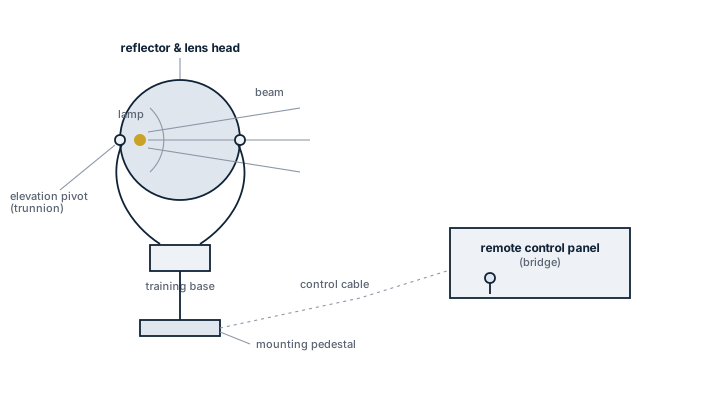
Main components
Lamp and reflector
Xenon units give the longest throw and truest colour rendering, valuable for SAR work, but run hot and need warm-up time. Halogen is cheaper and simpler but has a shorter beam range. LED units start instantly, draw less power and last many times longer, at some cost in maximum throw distance compared with a high-output xenon lamp.
Training mechanism
Manual units are trained by a handle or joystick at the light itself or via a mechanical linkage; remote units use a motorised pan-and-tilt head controlled from a bridge console, often with a repeater at the bridge wing.
Housing and mount
A weatherproof housing rated for continuous outdoor marine exposure, mounted on the monkey island, bridge wing or a dedicated mast position with a clear arc of training.
Control unit
Ranges from a simple local switch to a full remote joystick console with beam focus, on/off and training control, sometimes integrated with the bridge's navigation console.
Selection / Sizing
| Parameter | What it drives |
|---|---|
| Required beam range | Xenon for maximum throw on SAR-capable or offshore vessels; LED where instant-on and lower power draw matter more than absolute range |
| Mounting position and arc | Must clear masts, funnel and radar scanners across the full required training arc |
| Control location | Bridge-mounted remote control is standard on larger vessels; smaller craft may retain a manually trained unit |
Regulations / Class
SOLAS does not mandate a searchlight for all vessel types, but ships engaged in offshore support, SAR-related duties, or ice navigation commonly carry one as an operational or class notation requirement, and some flag states require a searchlight for vessels operating in areas with floating ice or heavy small-craft traffic. Where fitted for a specific class notation, its arc of illumination and control location are checked against the approved arrangement at survey.
Typical faults
- Xenon lamp igniter failure — light will not strike at all, often mistaken for a blown lamp when the lamp itself is fine.
- Training gearbox seized from lack of lubrication — unit works but will not turn to the required arc when actually needed.
- Remote control cable or slip ring corrosion — intermittent loss of remote training, forcing a return to manual local control.
- Housing seal degraded — moisture ingress corrodes the reflector and dims output well before the lamp itself fails.
What to look for in a supplier
- Beam range figures quoted under realistic marine atmospheric conditions, not clear-air laboratory figures.
- Housing genuinely rated for continuous saltwater exposure, not an adapted terrestrial floodlight.
- Spare lamp and igniter availability, since xenon lamps in particular are not a stock item in every port.
Run the searchlight and check its full training arc at every SAR or man-overboard drill, not just at annual survey — a gearbox that has seized quietly over months will only be discovered the moment someone actually needs the light to turn.
6 manufacturers · 7 models
Francis Searchlights
2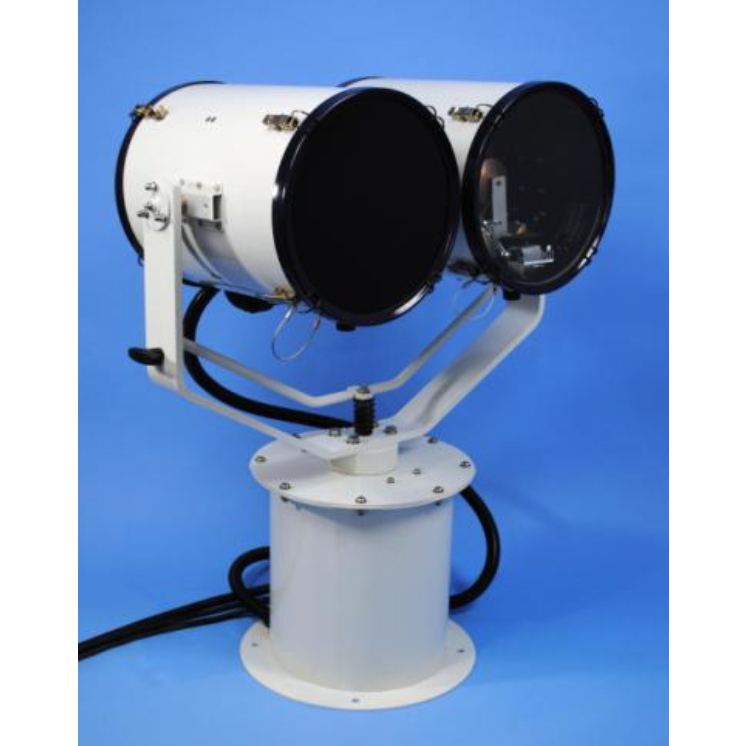
- Lamp, LED, driver, diaphragm or sound-generator failure causes loss or weakening of the required signal
- Water ingress or corroded terminals causes intermittent operation, earth faults or complete failure
- Mechanical mounting, alignment or movement faults reduce beam direction or acoustic effectiveness
- Control, limit-switch or bridge-circuit faults cause unavailable remote operation or false failure indication
- Lens, reflector, horn opening or exposed surface contamination reduces useful output
- High luminous intensity with a 2 000 m nominal range
- Compact 300 mm optic suitable for limited bridge space
- Standard remote‑control joystick for easy operation from the wheelhouse
- Robust marine‑grade housing designed for harsh sea environments
- Xenon bulb generates extreme heat and requires cooling before any service
- Limited lamp life (≈1 000–2 000 h) leading to regular replacements
- Joystick wear reported in field experience, necessitating periodic refurbishment
- Wiper motor failures have been noted, affecting reliability in rain or spray
- Lamp, LED, driver, diaphragm or sound-generator failure causes loss or weakening of the required signal
- Water ingress or corroded terminals causes intermittent operation, earth faults or complete failure
- Mechanical mounting, alignment or movement faults reduce beam direction or acoustic effectiveness
- Control, limit-switch or bridge-circuit faults cause unavailable remote operation or false failure indication
- Lens, reflector, horn opening or exposed surface contamination reduces useful output
- Long nominal range of 5 000 m for night navigation and emergency signaling
- Large 500 mm optics provide a wide, intense beam
- LED variant eliminates frequent bulb replacement and reduces operating cost
- Robust construction suited to heavy‑duty bridge installations
- Xenon version draws high power, impacting vessel electrical load
- Bearing corrosion reported in aggressive salt‑spray environments
- Window fogging can degrade beam quality if not regularly maintained
- Initial purchase price higher than basic halogen searchlights
Carlisle & Finch
1
- Lamp, LED, driver, diaphragm or sound-generator failure causes loss or weakening of the required signal
- Water ingress or corroded terminals causes intermittent operation, earth faults or complete failure
- Mechanical mounting, alignment or movement faults reduce beam direction or acoustic effectiveness
- Control, limit-switch or bridge-circuit faults cause unavailable remote operation or false failure indication
- Lens, reflector, horn opening or exposed surface contamination reduces useful output
- Proven ruggedness and durability from decades of naval service
- Modular design allows a straight‑forward upgrade to energy‑saving LED modules
- High luminous output suitable for navigation, security and rescue tasks
- Remote‑control operation enables crew safety during night work
- Standard yoke mounting fits most vessel deck configurations
- Original halogen bulbs have relatively short service life and generate heat
- Yoke mechanism can suffer corrosion in harsh saltwater environments if not regularly maintained
- Remote‑control cable assemblies are a known point of failure requiring periodic inspection
- Overall unit weight is higher than purpose‑built LED‑only searchlights
- Retrofit to LED may require downtime and additional wiring work
Den Haan Rotterdam
1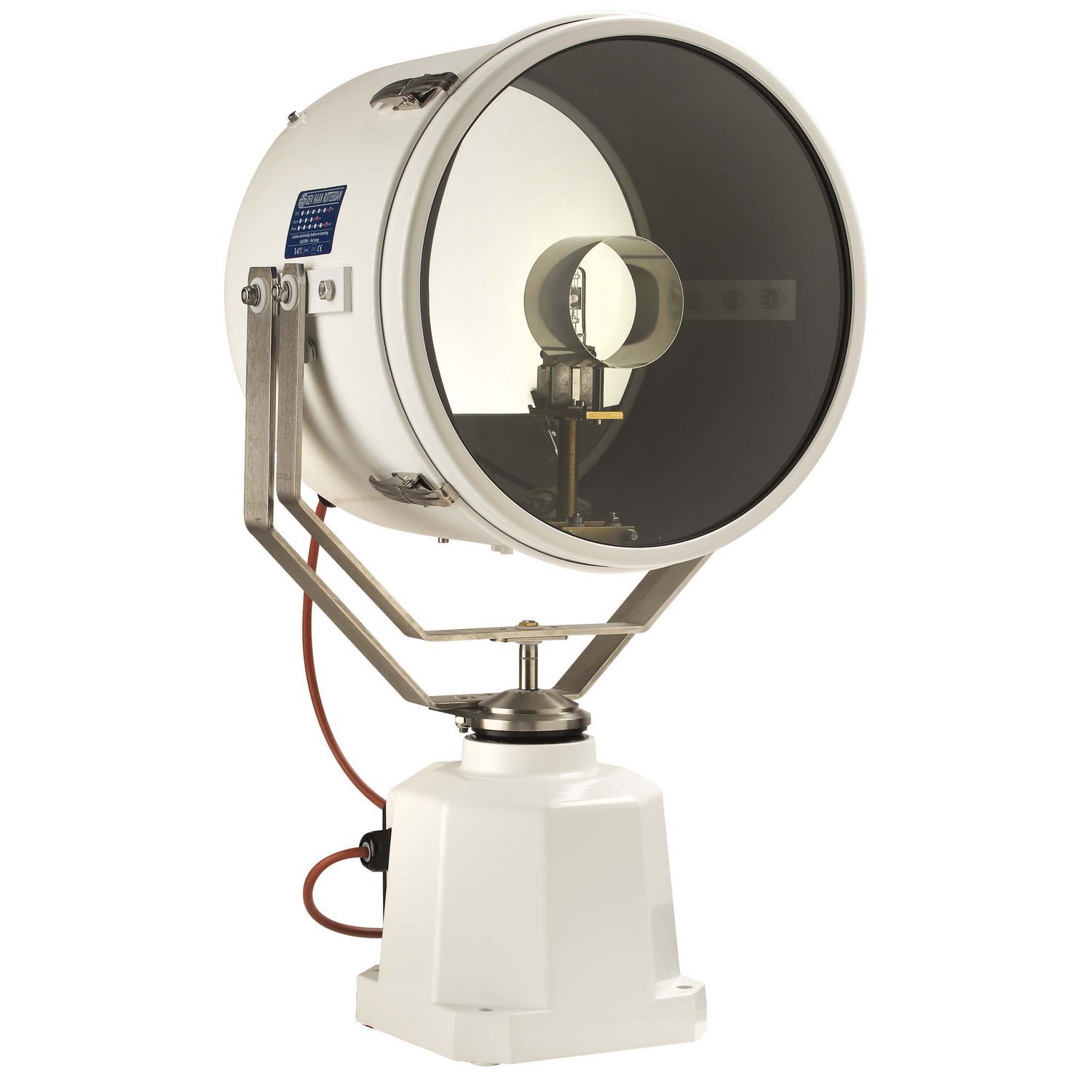
- Lamp, LED, driver, diaphragm or sound-generator failure causes loss or weakening of the required signal
- Water ingress or corroded terminals causes intermittent operation, earth faults or complete failure
- Mechanical mounting, alignment or movement faults reduce beam direction or acoustic effectiveness
- Control, limit-switch or bridge-circuit faults cause unavailable remote operation or false failure indication
- Lens, reflector, horn opening or exposed surface contamination reduces useful output
- Very high luminous output (up to several hundred thousand candela) for long‑range visibility
- Robust stainless‑steel housing with IP68 protection against saltwater ingress
- Remote control panel allows bridge operation without leaving the wheelhouse
- Modular lamp design enables quick swap between xenon and LED sources
- Widely used on commercial vessels, so spare parts and service expertise are readily available
- Xenon lamp replacement is costly and requires specialised handling
- Remote‑control cable assemblies have a known history of wear in harsh marine environments
- Glass window must be cleaned regularly to maintain optical performance
- Initial purchase price higher than basic LED searchlights from low‑cost manufacturers
- Weight and mounting hardware can be substantial on smaller vessels
Glamox Marine
1- Lamp, LED, driver, diaphragm or sound-generator failure causes loss or weakening of the required signal
- Water ingress or corroded terminals causes intermittent operation, earth faults or complete failure
- Mechanical mounting, alignment or movement faults reduce beam direction or acoustic effectiveness
- Control, limit-switch or bridge-circuit faults cause unavailable remote operation or false failure indication
- Lens, reflector, horn opening or exposed surface contamination reduces useful output
- LED option provides up to 70 % lower power consumption than traditional halogen units
- Long lamp life (up to 50 000 h) reduces replacement intervals
- Robust, corrosion‑resistant housing suited for harsh sea environments
- Remote joystick allows precise aiming from the bridge without manual handling
- Modular design enables quick swap between LED and halogen modules
- LED driver can become unstable in very low temperatures unless a heater is fitted
- Mounting brackets are prone to corrosion if regular marine‑grade coating maintenance is neglected
- Joystick mechanism may wear out after extensive use, requiring periodic inspection
- Initial purchase price higher than comparable halogen‑only searchlights
- Limited colour temperature options for LED version
Phoenix Marine
1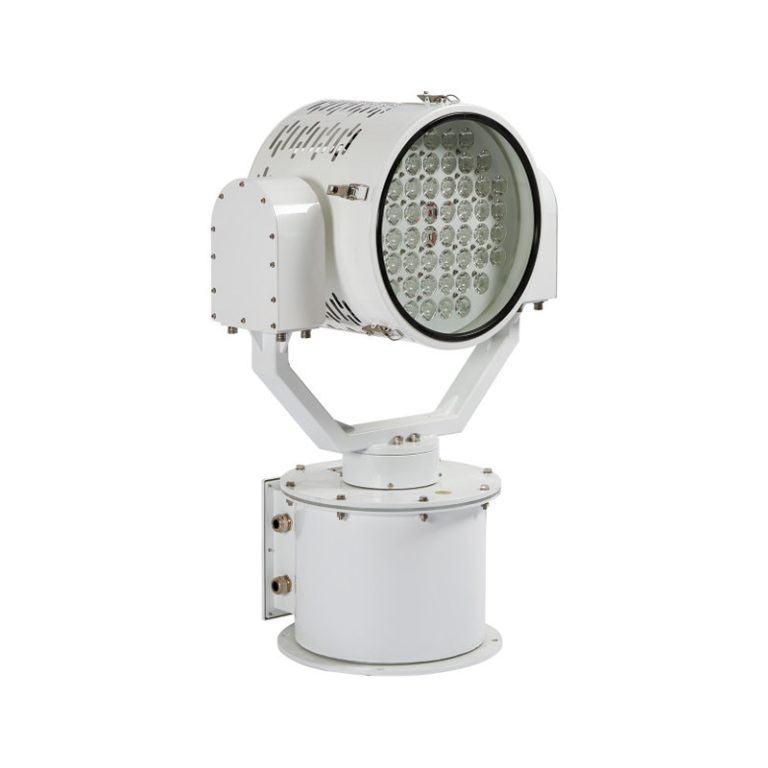
- Lamp, LED, driver, diaphragm or sound-generator failure causes loss or weakening of the required signal
- Water ingress or corroded terminals causes intermittent operation, earth faults or complete failure
- Mechanical mounting, alignment or movement faults reduce beam direction or acoustic effectiveness
- Control, limit-switch or bridge-circuit faults cause unavailable remote operation or false failure indication
- Lens, reflector, horn opening or exposed surface contamination reduces useful output
- Very long LED life (50,000+ hrs) reduces scheduled maintenance
- Low power draw compared with traditional halogen/metal‑halide units
- Instant on/off with full output – useful for emergency situations
- Compact and lightweight design typical of modern LED fixtures
- Reduced heat emission at the lamp head when operating within design limits
- Driver board failures have been reported, especially in harsh marine environments
- Heat‑sink performance can degrade in tropical or high‑ambient temperatures
- Remote control electronics may be prone to moisture ingress and corrosion
- Higher upfront cost than conventional incandescent searchlights
- Limited redundancy if only a single unit is installed
Tranberg
1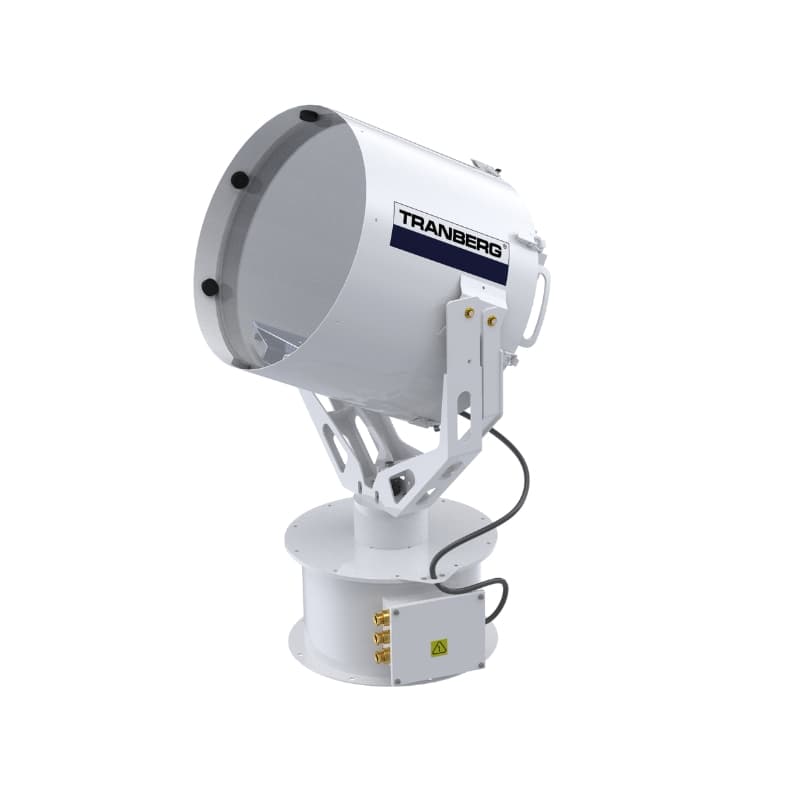
- Lamp, LED, driver, diaphragm or sound-generator failure causes loss or weakening of the required signal
- Water ingress or corroded terminals causes intermittent operation, earth faults or complete failure
- Mechanical mounting, alignment or movement faults reduce beam direction or acoustic effectiveness
- Control, limit-switch or bridge-circuit faults cause unavailable remote operation or false failure indication
- Lens, reflector, horn opening or exposed surface contamination reduces useful output
- Very high luminous intensity suitable for night navigation and emergency situations
- Option of ATEX certification allows installation on tankers, chemical carriers and offshore vessels where explosive gases may be present
- Dual light source (Xenon or LED) lets the user select based on performance or energy‑efficiency needs
- Robust housing designed for harsh marine environments
- High purchase cost compared with standard bridge lights
- ATEX‑certified version adds complexity to installation and maintenance
- Spare lens and specific replacement parts can be difficult to source quickly
- Xenon lamps have higher power consumption and shorter service intervals than LED