VSAT Terminal
A maritime VSAT terminal keeps a stabilised dish locked on a geostationary satellite despite the vessel's roll and pitch, delivering always-on broadband rather than the store-and-forward, low-bandwidth service typical of older L-band systems.
Read more — VSAT Terminal explained ▾
What sets this type apart
VSAT gives a ship broadband bandwidth, megabits rather than kilobits per second, by using a much larger stabilised antenna aimed at a geostationary Ku-band or Ka-band satellite, instead of the small omnidirectional antenna an L-band system like Fleet Broadband uses. The trade-off is size, power draw and cost: a VSAT dome sits prominently on the superstructure, needs a stabilised mount to keep the beam on the satellite through the vessel's motion, and depends on coverage from a specific satellite operator's beam pattern, which is why many installations carry an L-band terminal as backup for the gaps between beams or when VSAT service drops.
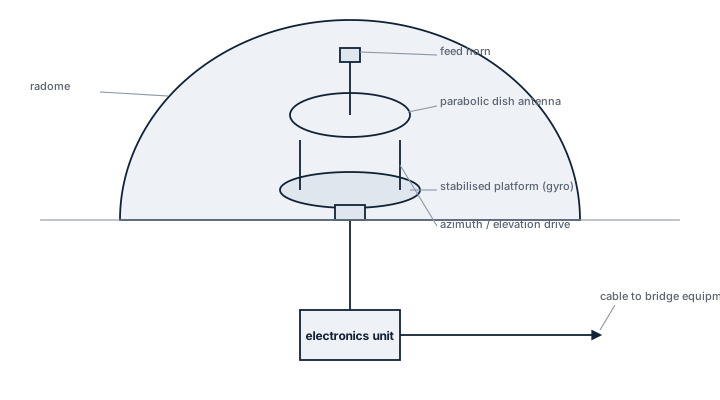
Main components
Antenna and radome
A parabolic dish, commonly 60 cm to well over a metre depending on required throughput, inside a radome that protects it from weather while remaining transparent to the satellite signal.
Stabilisation platform
A gyro-stabilised mount that continuously repositions the dish to compensate for roll, pitch and yaw, keeping it pointed at the satellite within a fraction of a degree.
Below-decks unit (BDU)
Houses the modem, RF electronics and network interface, converting satellite signal to the ship's onboard network and back.
Antenna control unit
Manages beam switching when the vessel crosses between satellite coverage areas, a process that on Ku-band VSAT is often automatic but requires the network operator's coverage map to be current.
Selection and sizing
Dish size and terminal bandwidth plan are chosen against the trading routes the vessel actually runs, since Ku-band and Ka-band coverage is not uniform globally and some routes cross gaps between satellite beams. Ka-band offers higher throughput per dollar of airtime in covered areas but has historically had thinner blue-water coverage than established Ku-band networks, so route coverage checking against the specific operator's footprint matters more than the headline bandwidth figure. Power consumption and deck space for the radome also factor into fitting the terminal on an existing vessel.
Regulations and class
VSAT installation does not carry a SOLAS carriage requirement the way GMDSS equipment does, since it typically serves crew welfare, operational data and business communication rather than distress and safety functions. Where the terminal shares infrastructure with GMDSS or navigation systems, class and flag administration rules on electromagnetic compatibility and independent power supply for safety equipment still apply, and the radome and mount must meet the vessel's structural and stability approval for topside weight and windage.
Typical faults
- Loss of satellite lock in heavy weather -- stabilisation platform cannot fully compensate for extreme roll; the consequence is connectivity dropouts exactly when crew and operations may need communication most.
- Radome damage from weather or ice -- physical damage to the protective dome; the consequence is signal degradation or water ingress into the antenna assembly.
- Beam switching failure at coverage boundaries -- outdated coverage maps or a fault in the antenna control unit; the consequence is a service gap that looks like a satellite outage but is actually a configuration issue.
- BDU or modem failure -- electronics failure below decks; the consequence is total loss of VSAT service even though the antenna itself is undamaged.
What to look for in a supplier
- Coverage maps and beam plans that actually match the vessel's trading routes, checked route by route rather than accepting a global coverage claim.
- Stabilisation performance specified for the sea states the vessel realistically encounters, not calm-water figures.
- Service level agreement covering both airtime and hardware support, since a BDU fault at sea needs a clear escalation path.
- Interoperability with the vessel's existing L-band backup terminal for automatic failover during VSAT gaps.
Check the satellite operator's current beam coverage against the vessel's actual voyage plan before departure on an unfamiliar route -- a dropped connection mid-ocean is more often a coverage gap than an equipment fault, and knowing the difference saves a wasted troubleshooting session.
8 manufacturers · 15 models
Intellian
5
- Band switching mechanism failure
- Radome cracking
- ACU overheating
- Dual‑band operation gives global Ku coverage plus high‑speed Ka throughput when available
- Integrated Antenna Control Unit (ACU) simplifies installation and reduces cabling
- Compact 60 cm radome fits on medium‑size vessels while meeting IP66 environmental protection
- Automatic band switching and auto‑tracking minimise crew intervention
- Proven Intellian brand with a large service network for spare parts and support
- Band‑switching mechanism has reported failures, potentially requiring ACU replacement
- Radome cracking observed in harsh marine environments, especially under repeated impact or UV exposure
- ACU overheating can occur if ventilation is restricted or ambient temperatures exceed design limits
- Higher upfront cost compared with single‑band VSAT units
- Installation requires clear line‑of‑sight and sufficient deck space for the 60 cm antenna
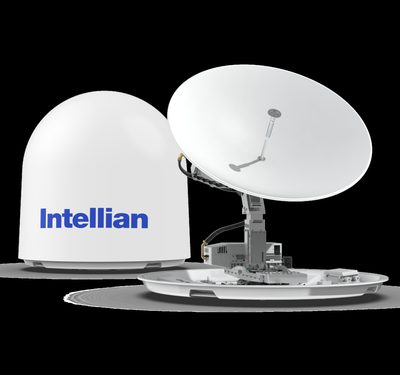
- Feed assembly failure
- Pedestal azimuth motor wear
- Lightning damage
- Compact 85 cm aperture fits limited deck space while still providing respectable bandwidth (up to ~20 Mbps).
- Integrated antenna‑modem reduces cabling and simplifies installation and commissioning.
- Proven reliability on a wide range of commercial vessels; robust marine‑grade construction.
- Lower power consumption compared with larger stabilized systems, beneficial for vessel energy budgets.
- Fixed‑mount design requires a relatively stable platform or external stabilization to maintain pointing accuracy in heavy seas.
- Maximum throughput is lower than that of larger (1.2 m) VSAT dishes, limiting high‑data‑rate applications.
- Known failure modes include feed assembly issues and pedestal azimuth motor wear, which can increase maintenance intervals.
- Ku‑band performance degrades in very high latitudes or during heavy rain attenuation.
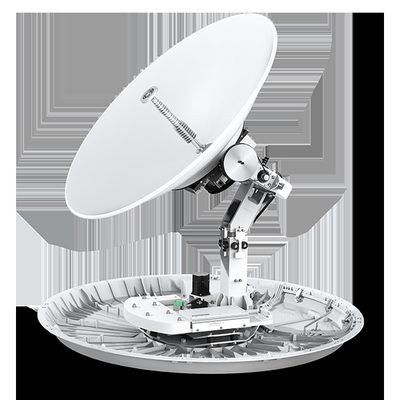
- Radome water ingress
- BUC power supply failure
- Tracking algorithm issues
- Compact 1 m dish delivers high gain while fitting limited deck space
- Integrated auto‑tracking reduces manual alignment effort
- Marine‑grade radome designed for harsh sea environments
- Proven Ku‑Band performance with up to several Mbps downlink
- Reported water ingress issues in the radome under heavy rain or spray
- BUC (Block Upconverter) power supply failures have been observed in the field
- Occasional tracking algorithm glitches can cause brief service interruptions
- Single‑band (Ku only) limits flexibility where C‑Band redundancy is desired
- Large size = wind loading issues
- C-Band feed alignment
- Heavy maintenance crane needed
- Large 1.5 m aperture provides high gain and higher possible throughput (up to ~30 Mbps depending on service)
- Dual C/Ku band operation allows selection of C‑Band for rain‑fade resilience in tropical waters
- Integrated modem and remote monitoring reduce crew workload and simplify troubleshooting
- Class‑approved design meets DNV GL, ABS and LR standards for harsh marine environments
- Scalable bandwidth options support crew welfare, telemedicine, real‑time navigation data and cargo monitoring
- Physical size creates significant wind loading; requires reinforced mounting and a crane for installation
- C‑Band feed alignment is more complex and can increase maintenance time
- Higher capital cost compared with smaller VSAT solutions
- Power consumption is greater than compact units, impacting vessel energy budgeting
- Limited suitability for vessels with restricted deck space or low‑profile superstructures
- Tri-band complexity
- Antenna weight
- ACU firmware management
- Single 80 cm antenna provides Ku, Ka and C‑Band connectivity, reducing deck space compared with separate antennas
- High bandwidth flexibility – can switch between bands for optimal throughput or redundancy
- Integrated ACU (antenna control unit) simplifies cabling and installation
- Intellian’s proven marine reliability and weather‑proof design
- Supports both broadband internet and satellite voice services
- Tri‑band RF architecture adds complexity and can increase failure points
- Antenna weight is higher than comparable single‑band units, affecting stability on smaller vessels
- ACU firmware requires regular management; outdated versions may cause performance issues
- Power consumption is greater than a single‑band VSAT of similar size
- Spare‑part availability can be limited for the specific t80W model
Cobham
2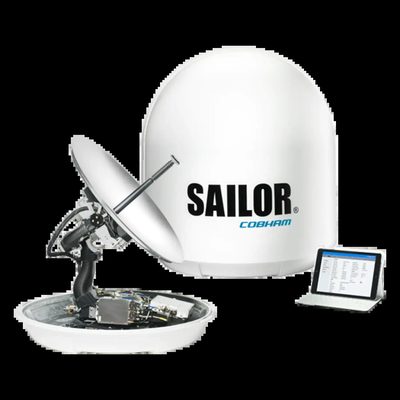
- Pedestal seal leaks
- ACU board failure
- Radome gasket degradation
- Compact 60 cm antenna fits on most commercial decks
- Full integration with the Sailor satcom ecosystem (fleet management, remote monitoring)
- High data‑rate capability (up to ~30 Mbps downstream) for crew internet and operational telemetry
- Proven reliability in harsh marine environments when maintained per service notes
- Standard IEC 60945 compliance for maritime communications equipment
- Known mechanical weak points: pedestal seal leaks, radome gasket wear, ACU board failures
- Ku‑band performance can degrade in heavy rain (rain fade)
- Installation requires a clear sky view and structural reinforcement for the pedestal
- Higher upfront cost compared with lower‑spec VSAT units
- Power draw may be significant for vessels with limited electrical margin
- Heavier maintenance
- Motor controller issues
- Higher power consumption
- Large 90 cm aperture provides superior link margin in rough sea state or heavy rain
- Higher maximum throughput (up to ~30‑40 Mbps) compared with smaller Sailor models
- Integrated modem and antenna control reduces installation complexity
- Marine‑grade construction meets SOLAS requirements for safety‑critical communications
- Optional motorised tracking allows continuous optimal pointing without manual intervention
- Heavier unit and larger antenna increase deck space and structural load requirements
- Motor controller can be a maintenance hotspot, especially in high‑vibration environments
- Higher power consumption may strain vessel’s electrical generation capacity
- Initial capital cost is higher than smaller VSAT options or competing 2‑m dish systems
- Longer installation time due to larger mounting and cabling
KVH Industries
2
- Limited gain in rough seas
- Small radome UV aging
- ACU firmware bugs
- High downstream data rates (up to ~50–100 Mbps) using KVH's HTS network
- Small low‑profile radome (37 cm dish) fits on vessels with limited deck space
- Integrated ACU reduces cabling and simplifies installation
- Auto‑pointing antenna provides fast acquisition and minimal crew intervention
- Supports voice, video conferencing and high‑capacity data services
- Limited antenna gain in high sea states can cause link degradation
- Small radome material is susceptible to UV aging and may need periodic replacement
- Reported firmware bugs in the ACU require careful version management
- Higher power draw compared with some L‑band or smaller VSAT solutions
- Coverage confined to KVH HTS footprint; not truly global
- Large antenna maintenance
- BUC replacement cost
- Heavy for small vessels
- High data rates (up to several hundred Mbps) via KVH's dedicated HTS network
- Integrated modem and BUC simplify installation and reduce cabling
- Marine‑grade, corrosion‑resistant enclosure designed for harsh sea environments
- Scalable bandwidth packages allow operators to match connectivity to operational needs
- Global coverage with low latency suitable for critical communications and crew welfare
- Large 110 cm antenna requires significant deck space and structural reinforcement
- Heavy unit increases vessel weight budget, limiting suitability for smaller ships
- BUC (Block Upconverter) replacement can be costly and may require specialized service
- Higher capital and operating costs compared with lower‑throughput VSAT options
- Installation and routine maintenance demand trained personnel
Sea Tel (Cobham)
2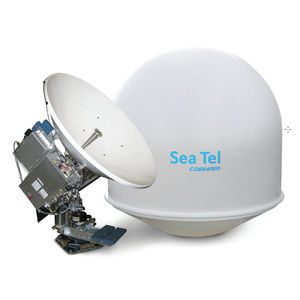
- Aging hardware
- Spare parts scarcity
- Pedestal bearing wear
- Large 1.2 m antenna delivers high gain and good link margin in marginal weather conditions
- Dual‑band capability (Ku & C) offers flexibility to use the most favorable satellite footprint
- Proven, widely installed legacy platform with a long operational track record
- Integrated modem reduces external cabling and simplifies installation
- Relatively low power draw compared with newer high‑throughput terminals
- Aging hardware prone to reliability issues as units approach end‑of‑life
- Spare parts increasingly scarce, leading to longer repair lead times
- Pedestal bearing wear requires regular mechanical maintenance
- Bandwidth and data rates are limited versus modern HTS (high‑throughput) VSATs
- Bulky antenna footprint can be challenging on vessels with limited deck space

- End of production — spares limited
- Pedestal motor aging
- ACU obsolescence
- Large 120 cm aperture delivers higher gain and bandwidth compared to smaller antennas
- Dual‑band (Ku and C) capability offers flexibility on different satellite footprints
- Well‑established design with a long service history in commercial fleets
- Integrated antenna and ACU reduces installation complexity
- Compatible with many existing maritime VSAT networks
- End‑of‑life product – manufacturer has ceased production, limiting spare parts availability
- Pedestal motor aging can lead to increased maintenance and potential downtime
- ACU electronics are obsolete, making firmware updates or upgrades difficult
- Lower power efficiency and data rates compared with newer 900‑series terminals
- Support infrastructure is being phased out in favour of newer platforms
Epak
1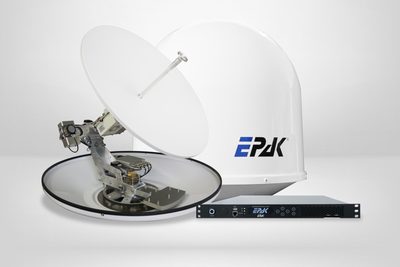
- Limited global service presence
- Spare parts availability
- ACU compatibility issues
- Lower acquisition cost compared with many Western competitors
- Compact unit suitable for limited bridge space
- Simple installation and basic configuration
- Adequate bandwidth for crew welfare, e‑mail and low‑rate operational data
- Limited global service footprint – coverage gaps in some regions
- Spare‑parts supply can be slow or unavailable on short notice
- Potential incompatibility with third‑party antenna control units (ACU)
- Support network less extensive than major OEMs
Kymeta
1
- New technology — limited track record
- Gain limitations vs parabolic
- Cost
- No mechanical pointing mechanisms – virtually zero maintenance and high reliability in harsh sea conditions
- Low profile design fits vessels with limited deck space or aesthetic constraints
- Fast acquisition and seamless handover while the ship is maneuvering or pitching/rolling
- Supports modern Ka‑band broadband services for crew welfare, real‑time data, and IoT applications
- Lower antenna gain compared with traditional parabolic dishes, reducing maximum link distance
- Higher upfront cost than conventional VSAT solutions
- Limited operational track record in the maritime sector – few long‑term case studies available
- Performance can be affected by heavy rain attenuation typical of Ka‑band frequencies
Orbit Communication
1
- Limited marine service presence
- Integration issues
- Firmware support
- Dual‑band capability (Ku & Ka) gives flexibility to select the most cost‑effective satellite service
- Integrated antenna‑modem design simplifies installation and reduces deck space requirements
- Supports high‑throughput broadband services suitable for crew welfare, real‑time monitoring and operational data transfer
- Remote management interface allows firmware updates and performance monitoring from shore
- Limited dedicated marine service network; support may rely on third‑party distributors
- Reported integration challenges with existing bridge and IT systems
- Firmware support cycles can be slower than larger, more established VSAT vendors
- Potentially higher total cost of ownership if extensive after‑sales assistance is required
Sailor / Cobham
1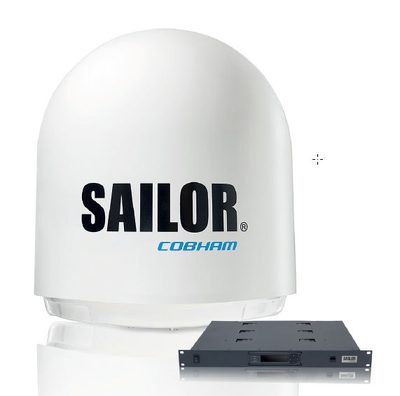
- Pedestal seal issues
- Radome impact damage
- BUC cooling
- Compact 80 cm aperture fits on vessels with limited deck space
- Integrated BUC and LNB simplify installation and reduce cabling
- Proven track record in commercial shipping with good uptime
- Auto‑tracking antenna maintains link without manual intervention
- Supports standard maritime IP protocols (NMEA, TCP/IP) for easy integration
- Maximum bandwidth lower than larger 1 m class VSATs, limiting high‑capacity applications
- Pedestal seal wear can lead to water ingress if not inspected regularly
- Radome is susceptible to impact damage in harsh deck environments
- BUC cooling system may require additional ventilation or maintenance
- Rain‑fade more pronounced than with larger apertures in heavy precipitation zones