Fairlead
A fairlead guides a mooring or towing line through a change of direction without gripping or holding it, taking the chafe and bend so the line runs fair from winch drum to bollard or quay instead of rubbing against deck edges or bulwark plating.
Read more — Fairlead explained ▾
What sets this type apart
A bollard or bitts hold a line under load once it is made fast; a fairlead does something different - it simply redirects a moving or loaded line through an angle, smoothing its path and taking the wear that would otherwise fall on the ship's structure or on the rope itself. The category covers several distinct shapes built for different jobs: open roller fairleads that let a line run freely across rotating rollers, closed Panama chocks (also called Panama leads) set into the bulwark for lines passing through locks and confined berths, and pedestal or universal fairleads mounted where a line needs to change direction significantly without excessive friction.
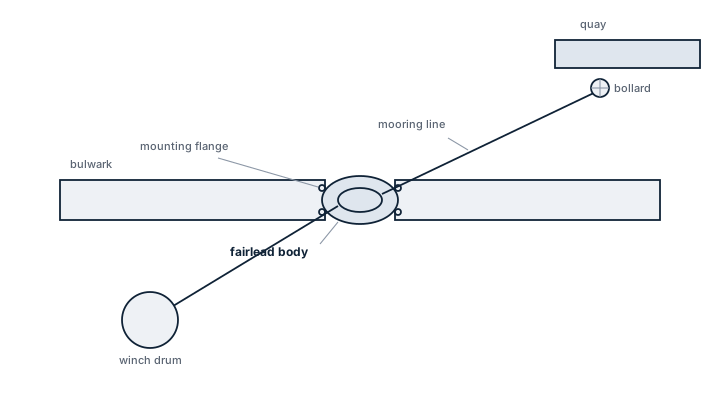
Main components
Roller fairlead
One or more free-rotating rollers, horizontal or vertical axis depending on whether the line's direction changes sideways or up and down, mounted in a steel frame bolted or welded to deck.
Panama (closed) fairlead
A closed oval opening set into bulwark plating, sized to the standard required for transiting the Panama Canal, with no moving parts - the line simply bears against the smooth inner edge.
Pedestal / universal fairlead
A raised fitting, sometimes with multiple rollers on different axes, used where lines approach from varied angles such as at a ship's quarter during mooring operations.
Selection and sizing
Fairleads are selected against the maximum breaking load (MBL) of the mooring line expected to pass through them, following the vessel's approved mooring arrangement plan rather than chosen independently - a fairlead undersized for the line it guides becomes the weak point in the mooring system even if the line and winch are correctly rated. Position on deck is fixed by mooring line geometry to the expected berths and terminals the ship will use, with roller versus closed type chosen partly by trade route (Panama-sized ships need the standard chocks regardless of other preferences).
Regulations and class
Mooring fittings including fairleads are assessed against class rules and the OCIMF Mooring Equipment Guidelines (MEG4) for the ship's size and mooring line loads, with a class-approved mooring arrangement plan showing fairlead positions, types and rated loads. Class periodically surveys mooring equipment condition as part of the ship's hull and fittings inspection.
Typical faults
| Fault | Consequence |
|---|---|
| Roller seized from corrosion or lack of lubrication | Line runs against a stationary roller surface, accelerating rope wear and increasing friction load on the winch |
| Sharp edges developed on a Panama chock from repeated line chafe | Damages mooring lines progressively, raising the risk of a parted line under load |
| Fairlead position mismatched to current mooring line lead angle after deck modifications | Line runs at an angle the fitting was not designed for, concentrating wear at one point |
| Cracked weld or loose foundation bolts not identified early | Reduced load capacity that can fail suddenly under snap-back mooring loads |
What to look for in a supplier
- Rated load matched to the vessel's approved mooring line MBL, documented against the mooring arrangement plan.
- Smooth, chafe-resistant surface finish, particularly on closed chocks where the line has no roller to reduce friction.
- Corrosion-resistant material or coating suited to continuous weather exposure on open deck.
- Foundation and mounting details compatible with the ship's existing deck structure without requiring extensive local reinforcement.
Inspect fairlead surfaces for developing sharp edges after every few months in heavy mooring service - a chock that looked fine at delivery can chafe a groove into itself well before any structural weakness shows up.
1 manufacturers · 4 models
Generic (Class Approved)
4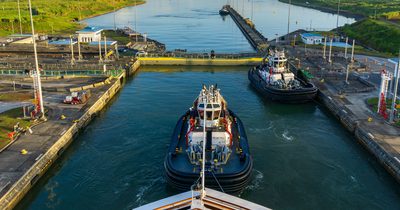
- Roller bearing seizure
- Roller surface scoring
- Frame corrosion
- Low line wear thanks to four independent rolling elements
- Handles relatively large rope diameters (up to 80 mm) while maintaining smooth payout
- Class‑approved design simplifies regulatory acceptance on many vessel types
- Simple maintenance – bearings can be greased monthly and rollers replaced individually
- Four‑roller arrangement adds weight and occupies more deck space than single‑roller units
- Bearing seizure or roller surface scoring are known failure modes requiring vigilant inspection
- Corrosion of the supporting frame is a risk in high‑salinity environments if protective coating degrades
- Internal surface wear
- Edge lip cracking
- Foundation bolt loosening
- Class‑approved and meets Panama Canal (ACP) compliance for transit
- Simple bolted installation on deck structures
- Robust steel construction suitable for typical line loads in canal operations
- Low routine maintenance when inspected regularly
- Limited to the size and load ratings defined by Panama Canal specifications; not ideal for oversized or high‑tension applications
- Internal surface wear can develop if not inspected and lubricated per service notes
- Edge lip cracking reported in long‑term service under cyclic loading
- Foundation bolts may loosen if torque checks are omitted
- Internal wear groove
- Casting defects
- Mounting bolt corrosion
- Closed design shields the rope from chafe and environmental exposure
- Class‑approved construction meets basic statutory requirements
- Internal groove reduces line abrasion and extends rope life up to 72 mm diameter
- Simple one‑point attachment simplifies installation on deck structures
- Heavier than open‑type fairleads, increasing deck load
- Limited to a maximum rope size of 72 mm; not suitable for larger towing lines
- Potential for internal groove wear if inspection is neglected
- Casting defects or bolt corrosion have been reported in field experience
- Lip edge rounding
- Weld cracking at base
- Rope chafe damage
- Open design allows quick rope changes without removing the fitting
- High maximum rope diameter (88 mm) suitable for heavy towing or mooring lines
- Class approved, meeting basic regulatory requirements
- Simple mounting with few moving parts reduces installation time and maintenance
- Low profile minimizes deck clutter
- Lip edge rounding can accelerate rope wear if not regularly inspected
- Weld cracking at the base reported under cyclic loading conditions
- Rope chafe damage possible when alignment is poor or line tension fluctuates
- Provides limited protection in harsh weather compared with closed/roller fairleads
- Designed for single‑line use only; not suitable for multi‑line applications