Main Lube Oil Pump
The main lube oil pump keeps oil moving to every bearing, gear, and cooler in the main engine, and unlike most auxiliary pumps it usually runs in a duty/standby pair because losing lube oil pressure for even a few seconds can wipe a bearing.
Read more — Main Lube Oil Pump explained ▾
What sets this pump apart from other engine-room pumps
Most pumps in an engine room can trip and give the crew a few minutes to react. A main lube oil pump cannot: a large two-stroke or medium-speed main engine loses usable bearing oil film within seconds of a pressure drop, so this pump is built and installed around continuity of supply rather than efficiency or flow economy. That is why it is almost always fitted as a duty and standby pair with automatic changeover, sometimes backed by a smaller engine-driven or gravity-fed emergency supply that covers the changeover gap itself.

Main components
- Pump element — usually a screw (positive displacement) type for the steady, low-pulsation flow lube oil circuits need, though centrifugal types appear on some medium-speed engines.
- Drive — electric motor drive for the standby unit, and on many designs for the duty unit as well; some main engines take a shaft-driven duty pump direct off the crankshaft with an electric standby.
- Pressure relief valve — protects the circuit against dead-heading if downstream filters or coolers clog.
- Suction strainer — coarse protection ahead of the pump, separate from the fine filters further downstream.
- Automatic changeover control — pressure switches that start the standby pump and alarm on a detected drop, sized to act faster than the oil film can collapse.
Selection and sizing
Capacity is set by the engine builder against the main engine's total lube oil circuit demand, including coolers, filters, and any turbocharger or reduction gear taking oil from the same system, plus a margin for fouled filters. Discharge pressure has to hold the required minimum at the farthest and highest bearing in the circuit, not just at the pump outlet. Motor rating for the standby pump needs enough starting torque to bring the system up to pressure quickly against cold, viscous oil, which is the condition it is most likely to start under.
Regulations and class
Class rules require a standby lube oil pump for the main engine with automatic start on low pressure, and periodic testing of the automatic changeover as part of the machinery survey regime. Alarm and slow-down or shutdown functions tied to lube oil pressure are checked at each class survey and are a standard item in the planned maintenance system's test schedule.
Typical faults
| Fault | Consequence |
|---|---|
| Worn screw or gear clearances | Falling volumetric efficiency reduces delivered flow before pressure gauges show an obvious drop. |
| Suction strainer partially clogged | Cavitation at the pump inlet, noise, and accelerated wear on the pump element. |
| Automatic changeover not tested regularly | Standby pump fails to start on demand, discovered only during an actual pressure loss. |
| Relief valve set incorrectly or seized | Either nuisance blow-off under normal load or no protection at all against a blocked circuit. |
What to look for in a supplier
- Performance curve matched to the actual engine builder's lube oil circuit data, not a generic pump selection.
- Spares kit that covers wear parts specific to the screw or gear set, since these are rarely interchangeable between makers.
- Confirmed compatibility with the existing automatic changeover and alarm wiring if this is a replacement rather than a newbuild fit.
- Documented factory test showing rated flow and pressure, not just a design datasheet.
Test the automatic changeover under load, not with the engine stopped — a standby pump that starts fine on a static test can still fail to pick up the full flow fast enough once the main engine is actually turning.
Technical drawings & plates
Historical engineering archive — public domain sources, cited per plate. Principles shown remain valid; always consult the OEM manual for model-specific data.

Typical Manufacturers
3 manufacturers · 3 models
IMO
1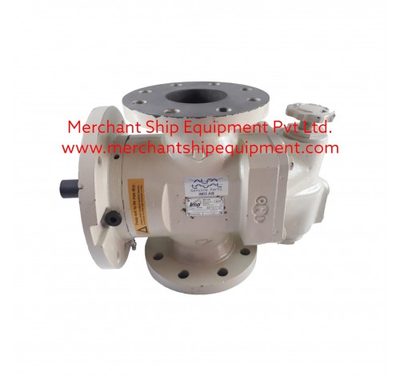
- Screw rotor wear
- Timing gear backlash
- Seal leakage
- Low suction pressure
- Compact size for space‑constrained engine rooms
- Smooth, low‑pulsation flow ideal for bearing lubrication
- Self‑priming capability reduces suction problems
- Robust construction suitable for continuous operation
- Screw rotor wear can increase clearances and reduce efficiency
- Timing gear backlash may affect pump timing and pressure stability
- Seal leakage is a known maintenance issue
- Performance drops if suction pressure falls below design minimum
Naniwa
1
- Internal gear wear
- Relief valve malfunction
- Oil contamination damage
- Compact, space‑saving design suitable for crowded engine rooms
- High pressure output compatible with most large diesel engine lubrication systems
- Simple mechanical construction – easy to service and overhaul on board
- Proven track record in marine applications with Naniwa’s long‑standing reputation
- Gear wear accelerates if oil cleanliness is not strictly controlled
- Relief valve can be prone to sticking or malfunction under high temperature conditions
- Flow capacity limited compared with larger screw‑type lube pumps, may require multiple units for very large engines
- Sensitive to oil contamination – upstream filtration must be reliable
Shinko Industries
1
- Rotor scoring
- Seal failure
- Coupling wear
- Provides consistent flow regardless of system pressure fluctuations
- Compact design suitable for confined engine‑room spaces
- Simple mechanical adjustment of discharge pressure
- Widely used in marine applications, so spare parts and expertise are readily available
- Integrated safety valve facilitates compliance with marine regulations
- Rotor scoring can occur if oil cleanliness is not strictly maintained
- Mechanical seals and coupling wear require regular inspection and replacement
- Maximum pressure rating lower than that of some screw‑type lube pumps
- Annual safety‑valve setting adds a scheduled maintenance task
- Relatively heavier construction compared with newer low‑weight pump designs
Who can you trust with this job?
The global maritime company directory — brand coverage, certificates and direct contact routes to maritime suppliers.
Open network →Sourcing this part?
One request. You get suppliers who actually carry it, not a search page.
Request partsCan’t read the plate?
Photograph it. We identify make and model and take you to the datasheet.
Try itRed Sea and Bab el-Mandeb
Rerouted transits, war-risk cover, and what it means for schedules and repairs.
17 reports