What to check on a EEBD (Emergency Escape Breathing Device).
An EEBD is built for one purpose: escape, not entry. Unlike a self-contained breathing apparatus (SCBA) used by a fire team to work inside a smoke-filled space, an EEBD has a fixed, short duration - SOLAS II-2/13.3.4 sets a minimum of 15 minutes - and a simplified hood or mask that a crew member with no training can don in seconds. It is stored where people are, not where firefighting gear is stored, because the moment it is needed is the moment someone is already inside a compartment filling with…
What sets the EEBD apart from other breathing apparatus
An EEBD is built for one purpose: escape, not entry. Unlike a self-contained breathing apparatus (SCBA) used by a fire team to work inside a smoke-filled space, an EEBD has a fixed, short duration - SOLAS II-2/13.3.4 sets a minimum of 15 minutes - and a simplified hood or mask that a crew member with no training can don in seconds. It is stored where people are, not where firefighting gear is stored, because the moment it is needed is the moment someone is already inside a compartment filling with smoke.
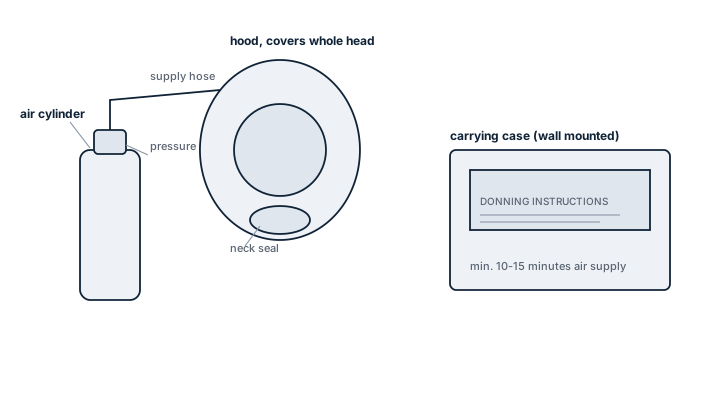
Main components
Air or oxygen supply
Compressed air cylinder types deliver breathing air directly; chemical oxygen generator types produce oxygen through a chemical reaction started when the device is activated. Both are sized to the minimum duration requirement, not to a working task.
Hood or mask
Most EEBDs use a soft, transparent hood that covers the whole head and seals at the neck, chosen because it needs no fitting or training to put on correctly under stress, unlike a tight-fitting mask that needs a proper seal to work.
Storage bracket and bag
EEBDs are kept in a quick-release bag or bracket in accommodation spaces, engine room escape routes and control stations, positioned so a crew member can reach one without passing through the hazard first.
Selection and sizing
| Variable | What it decides |
|---|---|
| Duration rating | Minimum 15 minutes per SOLAS; some operators fit a margin above minimum for longer escape routes |
| Supply type | Compressed air versus chemical oxygen generator - affects shelf life, storage temperature range and servicing method |
| Quantity and location | Set by the number of crew normally in a space plus the escape route layout, not a flat per-cabin count |
| Shelf life | Typically several years depending on type; expiry date is stamped on the unit and tracked like other lifesaving appliance stock |
Regulations and class
SOLAS Ch. II-2, Reg. 13.3.4 requires EEBDs in crew accommodation, machinery spaces and other locations depending on ship type, with the 15-minute minimum duration. The exact quantity and placement are set out in the fire safety systems requirements for the specific ship type and are checked against the approved fire control plan at survey. Class societies verify count, location and expiry status during periodic safety equipment surveys, and expired units are a common survey finding because the expiry date is easy to miss on a device that is rarely handled.
Typical faults
- Units past their expiry or hydrostatic test date left in service - the chemical generator or cylinder pressure can no longer be relied on for the full rated duration.
- Storage bracket location blocked by stored gear or cargo lashing - the device exists on the inventory list but is not actually reachable during an escape.
- Crew unfamiliar with the quick-donning method, tested only during drills rather than under any time pressure - hesitation at the moment of use burns through a fixed air supply.
- Wrong device used for a working task inside a smoke-filled space instead of an SCBA - the wearer runs out of air mid-task with no reserve and no easy resupply.
What to look for in a supplier
- Type approval certificate confirming SOLAS/MSC compliance and the rated duration
- Clear shelf life and storage temperature range, especially for chemical oxygen generator types sensitive to heat
- Servicing and disposal support for the specific device type, since some chemical generator types require special handling at end of life
- Stock availability matched to the ship's full inventory count, not single-unit replacement only
Check EEBD expiry dates on the same rounds as fire extinguisher inspection - they sit in a bracket for years without being touched, and an expired unit looks identical to a good one until someone tries to breathe through it.