Gas Detection (Portable)
A portable multi-gas detector is the last line of defence before someone steps into an enclosed space; it earns its keep only if it was bump-tested that day, not just calibrated sometime last quarter.
Read more — Gas Detection (Portable) explained ▾
What makes this type
Portable gas detectors are carried instruments used for spot checks and, critically, for enclosed space entry, distinct from fixed systems that monitor continuously without a person present. A crew member uses a portable unit to test the atmosphere of a tank, void or cargo hold before entry, and again while inside if the space is not continuously ventilated, because a space that reads safe at the hatch can still have pockets of dangerous atmosphere deeper in.
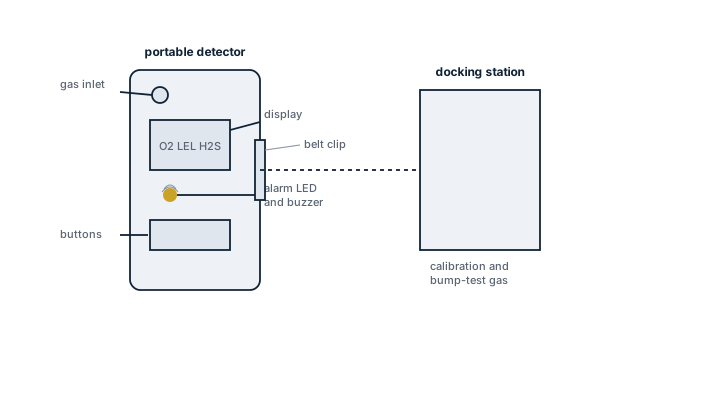
Main components
Sensor array
Standard four-gas units combine an oxygen sensor, a catalytic or infrared LEL (lower explosive limit) sensor for flammable gas, and electrochemical cells for H2S and CO. Specialised units add sensors for ammonia, chlorine or other cargo-specific gases depending on trade.
Pump and sample line
Diffusion units rely on ambient gas reaching the sensor; pumped units draw a sample through a hose, essential for testing a space before entry rather than only after opening it, since a pumped unit lets the operator sample from outside without putting their head into the opening.
Alarm and display
Audible, visual and vibration alarms trigger at pre-set thresholds, with a display showing live readings and a datalogger recording exposure history for later review after an incident or as part of routine compliance.
Selection and sizing
- Gas channels matched to the cargoes and spaces the vessel actually works with, not just a generic four-gas configuration
- Pumped sampling capability if enclosed space entry procedures require pre-entry testing from outside the space
- Battery runtime against typical shift length, and intrinsically safe certification for the zones the unit will be carried into
- Number of units against crew size and the number of simultaneous entries the ship's procedures allow
Regulations and class
SOLAS requires portable atmosphere testing instruments for enclosed space entry, reinforced by the IMO Enclosed Space Entry and Rescue resolution, which mandates testing oxygen, flammable gas and toxic gas levels before entry and continued monitoring during the work. Class and flag state requirements typically call for calibration against a certified reference gas at an interval set by the manufacturer, commonly six to twelve months, with a bump test (a quick functional check against test gas) before each use day.
Typical faults
| Fault | Consequence |
|---|---|
| Sensor not bump-tested before use | A dead or desensitised sensor gives a false safe reading, the most dangerous failure mode of the whole device |
| Battery allowed to run flat mid-entry | Loss of continuous monitoring during the exact period it is needed most |
| Water or dust ingress through a damaged housing | Sensor damage or blocked sample port, giving erratic or no reading |
| Calibration overdue and not tracked | Readings drift out of tolerance without any alarm indicating the unit itself has failed |
What to look for in a supplier
- Sensor package matching the actual gas hazards on board rather than a default configuration
- Straightforward bump-test and calibration procedure that the crew can realistically perform without shore support
- Robust housing rated for the drop and immersion exposure a working deck or tank entry actually involves
- Datalogging that supports the ship's enclosed space entry permit records for audit purposes
Bump-test every portable detector against test gas before each day it will be used for enclosed space entry; a calibration sticker from three months ago says nothing about whether the sensor still responds today.
Typical Manufacturers
3 manufacturers · 3 models
BW Technologies
1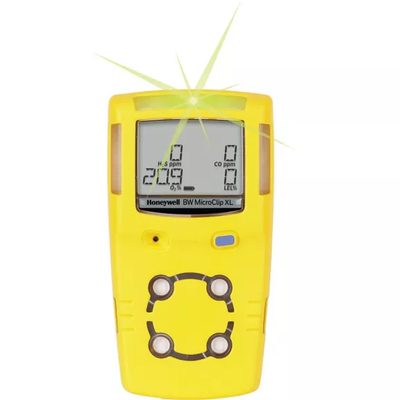
- Diffusion filter clogging
- Display screen fading
- Alligator clip breakage
- Compact, lightweight design for easy hand‑carrying and spot checks
- Interchangeable sensor modules (LEL, O₂, H₂S) allow flexible gas coverage
- Rechargeable battery provides up to 24 hours of continuous operation
- Rugged housing with alligator clip enables direct sampling from confined spaces
- Clear LCD display with configurable alarm thresholds
- Sensor modules have a limited service life (≈2 years) and must be replaced
- Diffusion filter can clog in dusty or oily environments, affecting response time
- LCD screen may fade after prolonged exposure to harsh lighting conditions
- Alligator clip is a known weak point and can break under heavy handling
- No built‑in data logger on the base model; external accessories required for record keeping
Dräger
1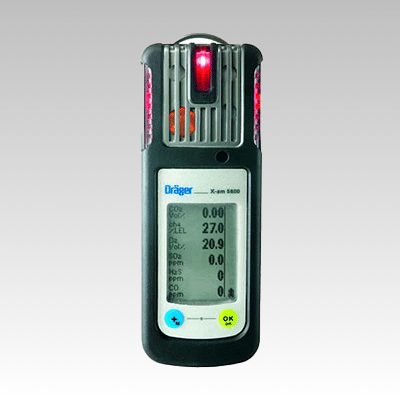
- Sensor drift between calibrations
- Pump module blockage
- Battery capacity degradation
- Wide detection range covering oxygen, toxic and combustible gases in a single handheld unit
- Integrated data logging with Bluetooth transfer for post‑mission analysis
- Explosion‑proof housing (ATEX/IECEx certified) suitable for engine rooms and confined spaces
- Fast sensor response times and automatic self‑test before each use
- User‑friendly LCD interface with audible/visual alarms
- Sensor drift requires regular bump tests and calibration every six months
- Battery life limited to ~24 h under continuous monitoring; replacement needed for long shifts
- Pump module can become blocked by dust or oil aerosols in harsh engine‑room environments
- Higher purchase price compared with basic single‑gas detectors
- Unit weight (~1.5 kg) may be heavier than some competitor models
MSA
1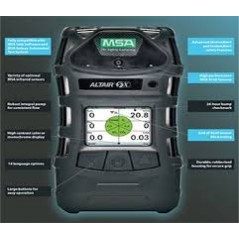
- MotionAlert false triggering
- Sensor cross-sensitivity in chemical environment
- Charging cradle contact corrosion
- Detects up to five gases on a single unit, reducing the need for multiple devices
- Bluetooth connectivity enables automatic log upload and remote monitoring
- Rugged IP66 housing suitable for harsh marine environments
- Long battery life (up to 30 hours) with quick‑swap rechargeable pack
- Intuitive touchscreen UI and audible/visual alarms for fast response
- MotionAlert sensor can generate false triggers in high‑vibration areas
- Cross‑sensitivity of certain sensors (e.g., CO vs. H₂S) in chemically complex atmospheres
- Charging cradle contacts may corrode if not regularly cleaned
- Higher upfront cost compared with single‑gas detectors
- Sensors have a limited service life and must be replaced per MSA lifecycle chart