OceanSphere
Engines

Emergency Escape Breathing Device (EEBD)

medium 39 / 39 models (Inspector)

An EEBD is a short-duration, single-use escape set, not a working breathing apparatus - it exists to get one person out of a smoke-logged or gas-filled space within the 10 to 15 minutes its air or oxygen supply lasts.

Read more — Emergency Escape Breathing Device (EEBD) explained

What sets an EEBD apart from SCBA

A self-contained breathing apparatus (SCBA) is duty equipment for a fire party or entry team: it is donned before entering a hazardous space, refilled after use, and rated for real work under load. An Emergency Escape Breathing Device (EEBD) is the opposite case - it is stored where crew already are, at their workstation or cabin, and only comes out when the space they are standing in has already filled with smoke or toxic gas and they need to walk out of it. It is not rated for firefighting, entry work, or rescue of another person; its whole job is a single exit under a hood, one person, one trip, then discarded or sent for recharge.

EEBD escape set components
Side view of an emergency escape breathing device showing the compressed air cylinder, demand valve, pressure gauge, hose, protective hood with neck seal, and shoulder harness on its quick-release wall bracket.

Main components

Cylinder and regulator

A small compressed-air or compressed-oxygen cylinder, typically good for 10 to 15 minutes at rated flow, feeds a demand or constant-flow regulator. Constant-flow units are simpler and more common at sea because there is nothing for a panicking user to get wrong.

Hood and neck seal

A clear, flame-resistant hood covers the whole head and seals at the neck with an elastic or adjustable collar, so the wearer keeps their own eyesight and does not need a fitted mask seal - useful for crew who normally wear glasses or have facial hair.

Carrying case

A sealed bag or hard case with a tamper-evident indicator, mounted in a bracket at the point of use: engine control room, galley, cabin alleyway, steering gear flat.

Selecting the right unit

Sizing an EEBD comes down to duration and gas type rather than flow capacity, since the wearer is walking, not working:

  • Duration - 10-minute units suit short, well-known escape routes; 15-minute units are the safer default where the route to open deck is longer or less direct.
  • Air vs. oxygen - compressed-air sets are lighter and need no chemical generation; oxygen sets (chemical or compressed) give longer duration for the same bulk but need different storage and service handling.
  • Hood size - a single hood size should fit the full range of crew face shapes; test this at issue, not after an incident.

Regulations and class requirements

SOLAS Ch. II-2 sets the carriage requirement: EEBDs are required in machinery spaces, with at least one per normally attended location and enough units for the crew who could be trapped there, and on passenger ships in additional locations set out in the fire safety systems code. Class surveys check that units are within their service or expiry date, that the tamper seal is intact, and that the bracket location matches the fire control plan. Expired or discharged units get replaced, not serviced back into date on board.

Typical faults

  • Broken tamper seal with no log entry - someone has opened or tested the case; the unit must be treated as used and replaced.
  • Cylinder pressure below the gauge's green band - a slow leak past the valve seat means the set will run short on duration exactly when it is needed.
  • Hood perished or brittle - UV and heat exposure near funnel casings or in engine rooms degrade the plastic faster than the labelled shelf life assumes.
  • Bracket location blocked by stores or cabling - a common finding on older ships where the space was re-used after the fire control plan was drawn.

What to look for in a supplier

  • Type approval matching the flag state and the fire safety systems code, not just a general CE marking.
  • Clear service life and expiry marking on the cylinder itself, not only on the outer case.
  • Available spares and exchange cylinders through a port the vessel actually calls at.
  • Documented hood material flame resistance, since this is the item most likely to degrade unseen.

Treat 'opened for training' the same as 'used' - log it and swap the unit, because a half-discharged cylinder that looks full on a cursory glance is worse than an obviously empty one.

Inspector Mode Show All 39 / 39 with inspector value

8 manufacturers · 39 models

Dräger

10
Drager Saver CF15 unverified
Duration min
15
Marine Approval
ja
Common Failures & Inspection Points
  • Loss of electrical, hydraulic, pneumatic, or other service supply caused by a tripped protection device, leakage, blockage, or upstream fault results in failed starting or loss of function
  • Mechanical wear, corrosion, fouling, or contamination of moving and wetted parts causes increased noise, leakage, sticking, vibration, or reduced performance
  • Seal, gasket, hose, cable, or connection deterioration from age, heat, vibration, or environmental exposure produces visible leakage, intermittent signals, or loss of pressure
  • Sensor, switch, actuator, relay, or control-system faults can cause incorrect indication, nuisance alarms, failed automatic sequences, or loss of remote control
  • Incorrect adjustment, assembly, or maintenance can lead to unstable operation, recurrent alarms, or performance that differs from the vessel's normal baseline
Service: Inspect the unit for leakage, corrosion, contamination, loose connections, abnormal noise or vibration, condition of guards and mountings, service supplies, controls, alarms, and functional performance. Use the vessel maintenance history to identify deterioration trends and refer to the manufacturer documentation for exact settings, tolerances, test values, and overhaul criteria.
Spare Parts: Keep the manufacturer-recommended seals and gaskets, filters where fitted, fuses or protection items, common sensors and switches, and critical actuator, control, or wear components appropriate to the installed configuration. Exact part numbers and quantities must come from the manufacturer spare-parts documentation.
Use Cases: Used on vessel types fitted with breathing apparatus equipment, including merchant, offshore, passenger, fishing, or workboat installations where this specific emergency escape breathing device (eebd) duty is required.
Drager Saver PP15 unverified
Duration min
15
Marine Approval
ja
Common Failures & Inspection Points
  • Loss of electrical, hydraulic, pneumatic, or other service supply caused by a tripped protection device, leakage, blockage, or upstream fault results in failed starting or loss of function
  • Mechanical wear, corrosion, fouling, or contamination of moving and wetted parts causes increased noise, leakage, sticking, vibration, or reduced performance
  • Seal, gasket, hose, cable, or connection deterioration from age, heat, vibration, or environmental exposure produces visible leakage, intermittent signals, or loss of pressure
  • Sensor, switch, actuator, relay, or control-system faults can cause incorrect indication, nuisance alarms, failed automatic sequences, or loss of remote control
  • Incorrect adjustment, assembly, or maintenance can lead to unstable operation, recurrent alarms, or performance that differs from the vessel's normal baseline
Service: Inspect the unit for leakage, corrosion, contamination, loose connections, abnormal noise or vibration, condition of guards and mountings, service supplies, controls, alarms, and functional performance. Use the vessel maintenance history to identify deterioration trends and refer to the manufacturer documentation for exact settings, tolerances, test values, and overhaul criteria.
Spare Parts: Keep the manufacturer-recommended seals and gaskets, filters where fitted, fuses or protection items, common sensors and switches, and critical actuator, control, or wear components appropriate to the installed configuration. Exact part numbers and quantities must come from the manufacturer spare-parts documentation.
Use Cases: Used on vessel types fitted with breathing apparatus equipment, including merchant, offshore, passenger, fishing, or workboat installations where this specific emergency escape breathing device (eebd) duty is required.
Drager PARAT 7500 unverified
Duration min
15
Marine Approval
ja
Common Failures & Inspection Points
  • Loss of electrical, hydraulic, pneumatic, or other service supply caused by a tripped protection device, leakage, blockage, or upstream fault results in failed starting or loss of function
  • Mechanical wear, corrosion, fouling, or contamination of moving and wetted parts causes increased noise, leakage, sticking, vibration, or reduced performance
  • Seal, gasket, hose, cable, or connection deterioration from age, heat, vibration, or environmental exposure produces visible leakage, intermittent signals, or loss of pressure
  • Sensor, switch, actuator, relay, or control-system faults can cause incorrect indication, nuisance alarms, failed automatic sequences, or loss of remote control
  • Incorrect adjustment, assembly, or maintenance can lead to unstable operation, recurrent alarms, or performance that differs from the vessel's normal baseline
Service: Inspect the unit for leakage, corrosion, contamination, loose connections, abnormal noise or vibration, condition of guards and mountings, service supplies, controls, alarms, and functional performance. Use the vessel maintenance history to identify deterioration trends and refer to the manufacturer documentation for exact settings, tolerances, test values, and overhaul criteria.
Spare Parts: Keep the manufacturer-recommended seals and gaskets, filters where fitted, fuses or protection items, common sensors and switches, and critical actuator, control, or wear components appropriate to the installed configuration. Exact part numbers and quantities must come from the manufacturer spare-parts documentation.
Use Cases: Used on vessel types fitted with breathing apparatus equipment, including merchant, offshore, passenger, fishing, or workboat installations where this specific emergency escape breathing device (eebd) duty is required.
Drager PARAT 5500 unverified
Duration min
15
Marine Approval
ja
Common Failures & Inspection Points
  • Loss of electrical, hydraulic, pneumatic, or other service supply caused by a tripped protection device, leakage, blockage, or upstream fault results in failed starting or loss of function
  • Mechanical wear, corrosion, fouling, or contamination of moving and wetted parts causes increased noise, leakage, sticking, vibration, or reduced performance
  • Seal, gasket, hose, cable, or connection deterioration from age, heat, vibration, or environmental exposure produces visible leakage, intermittent signals, or loss of pressure
  • Sensor, switch, actuator, relay, or control-system faults can cause incorrect indication, nuisance alarms, failed automatic sequences, or loss of remote control
  • Incorrect adjustment, assembly, or maintenance can lead to unstable operation, recurrent alarms, or performance that differs from the vessel's normal baseline
Service: Inspect the unit for leakage, corrosion, contamination, loose connections, abnormal noise or vibration, condition of guards and mountings, service supplies, controls, alarms, and functional performance. Use the vessel maintenance history to identify deterioration trends and refer to the manufacturer documentation for exact settings, tolerances, test values, and overhaul criteria.
Spare Parts: Keep the manufacturer-recommended seals and gaskets, filters where fitted, fuses or protection items, common sensors and switches, and critical actuator, control, or wear components appropriate to the installed configuration. Exact part numbers and quantities must come from the manufacturer spare-parts documentation.
Use Cases: Used on vessel types fitted with breathing apparatus equipment, including merchant, offshore, passenger, fishing, or workboat installations where this specific emergency escape breathing device (eebd) duty is required.
Drager Saver CF15 Mk2 unverified
Duration min
15
Marine Approval
ja
Common Failures & Inspection Points
  • Detector or sensing-element contamination, poisoning or ageing can cause false alarms, slow response or failed functional tests
  • Battery, power-supply or control-circuit faults caused by ageing, loose wiring or blown protection can lead to trouble alarms or unavailable safety functions
  • Cylinder pressure loss, leakage or damaged valves where stored media is used can leave the equipment outside ready condition and may be found during inspection or weighing checks
  • Blocked, corroded or mechanically damaged nozzles, piping, hoses or masks can restrict discharge or breathing flow and show as poor functional test results
  • Incorrect isolation, expired service status or disturbed release interlocks after maintenance can prevent normal arming and create panel faults or failed readiness checks
Service: Check physical condition, accessibility, labels and service status, then verify approved tests of detectors, alarms, release circuits or breathing components as applicable. Inspect cylinders, hoses, nozzles, masks, wiring and interlocks without discharging or altering safety systems outside the approved procedure. Use maker, class and statutory documentation for exact inspection and acceptance criteria.
Spare Parts: Hold only approved safety-system spares such as detector heads, filters or sensor caps, fuses, batteries where user-replaceable, seals, hoses, masks, nozzles and control modules according to the vessel's certified arrangement.
Use Cases: Machinery spaces, accommodation, cargo areas, enclosed spaces and emergency-response stations on merchant, passenger, tanker and offshore vessels.
Drager Saver PP15 Mk2 unverified
Duration min
15
Marine Approval
ja
Common Failures & Inspection Points
  • Detector or sensing-element contamination, poisoning or ageing can cause false alarms, slow response or failed functional tests
  • Battery, power-supply or control-circuit faults caused by ageing, loose wiring or blown protection can lead to trouble alarms or unavailable safety functions
  • Cylinder pressure loss, leakage or damaged valves where stored media is used can leave the equipment outside ready condition and may be found during inspection or weighing checks
  • Blocked, corroded or mechanically damaged nozzles, piping, hoses or masks can restrict discharge or breathing flow and show as poor functional test results
  • Incorrect isolation, expired service status or disturbed release interlocks after maintenance can prevent normal arming and create panel faults or failed readiness checks
Service: Check physical condition, accessibility, labels and service status, then verify approved tests of detectors, alarms, release circuits or breathing components as applicable. Inspect cylinders, hoses, nozzles, masks, wiring and interlocks without discharging or altering safety systems outside the approved procedure. Use maker, class and statutory documentation for exact inspection and acceptance criteria.
Spare Parts: Hold only approved safety-system spares such as detector heads, filters or sensor caps, fuses, batteries where user-replaceable, seals, hoses, masks, nozzles and control modules according to the vessel's certified arrangement.
Use Cases: Machinery spaces, accommodation, cargo areas, enclosed spaces and emergency-response stations on merchant, passenger, tanker and offshore vessels.
Drager PARAT 7500 Mk2 unverified
Duration min
15
Marine Approval
ja
Common Failures & Inspection Points
  • Detector or sensing-element contamination, poisoning or ageing can cause false alarms, slow response or failed functional tests
  • Battery, power-supply or control-circuit faults caused by ageing, loose wiring or blown protection can lead to trouble alarms or unavailable safety functions
  • Cylinder pressure loss, leakage or damaged valves where stored media is used can leave the equipment outside ready condition and may be found during inspection or weighing checks
  • Blocked, corroded or mechanically damaged nozzles, piping, hoses or masks can restrict discharge or breathing flow and show as poor functional test results
  • Incorrect isolation, expired service status or disturbed release interlocks after maintenance can prevent normal arming and create panel faults or failed readiness checks
Service: Check physical condition, accessibility, labels and service status, then verify approved tests of detectors, alarms, release circuits or breathing components as applicable. Inspect cylinders, hoses, nozzles, masks, wiring and interlocks without discharging or altering safety systems outside the approved procedure. Use maker, class and statutory documentation for exact inspection and acceptance criteria.
Spare Parts: Hold only approved safety-system spares such as detector heads, filters or sensor caps, fuses, batteries where user-replaceable, seals, hoses, masks, nozzles and control modules according to the vessel's certified arrangement.
Use Cases: Machinery spaces, accommodation, cargo areas, enclosed spaces and emergency-response stations on merchant, passenger, tanker and offshore vessels.
Drager PARAT 4700 unverified
Duration min
15
Marine Approval
ja
Common Failures & Inspection Points
  • Loss of electrical, hydraulic, pneumatic, or other service supply caused by a tripped protection device, leakage, blockage, or upstream fault results in failed starting or loss of function
  • Mechanical wear, corrosion, fouling, or contamination of moving and wetted parts causes increased noise, leakage, sticking, vibration, or reduced performance
  • Seal, gasket, hose, cable, or connection deterioration from age, heat, vibration, or environmental exposure produces visible leakage, intermittent signals, or loss of pressure
  • Sensor, switch, actuator, relay, or control-system faults can cause incorrect indication, nuisance alarms, failed automatic sequences, or loss of remote control
  • Incorrect adjustment, assembly, or maintenance can lead to unstable operation, recurrent alarms, or performance that differs from the vessel's normal baseline
Service: Inspect the unit for leakage, corrosion, contamination, loose connections, abnormal noise or vibration, condition of guards and mountings, service supplies, controls, alarms, and functional performance. Use the vessel maintenance history to identify deterioration trends and refer to the manufacturer documentation for exact settings, tolerances, test values, and overhaul criteria.
Spare Parts: Keep the manufacturer-recommended seals and gaskets, filters where fitted, fuses or protection items, common sensors and switches, and critical actuator, control, or wear components appropriate to the installed configuration. Exact part numbers and quantities must come from the manufacturer spare-parts documentation.
Use Cases: Used on vessel types fitted with breathing apparatus equipment, including merchant, offshore, passenger, fishing, or workboat installations where this specific emergency escape breathing device (eebd) duty is required.
Drager PARAT C unverified
Duration min
15
Marine Approval
ja
Common Failures & Inspection Points
  • Damaged seals or packaging compromise readiness and are visible during routine inspection
  • Expired service life or cylinder condition makes the device unsuitable for use
  • Corrosion or impact damage to the container can affect the breathing supply or activation mechanism
  • Missing hood, strap or instructions prevents correct deployment in an emergency
  • Incorrect stowage or blocked access delays retrieval when needed
Service: Check location, accessibility, seal integrity, physical condition, expiry or service markings and instructions without opening a sealed unit unnecessarily. Confirm quantity and placement against the vessel's approved fire-control or safety plan. Servicing and any pressure or duration checks must follow manufacturer and statutory procedures.
Spare Parts: EEBDs are commonly maintained as complete certified units rather than repaired onboard; retain approved mounting brackets, signs and any maker-specified replacement seals or accessories.
Use Cases: Used for emergency escape from smoke-filled or contaminated shipboard spaces, especially machinery spaces and accommodation escape routes.
Drager OxyK 50 unverified
Duration min
15
Marine Approval
ja
Common Failures & Inspection Points
  • Damaged seals or packaging compromise readiness and are visible during routine inspection
  • Expired service life or cylinder condition makes the device unsuitable for use
  • Corrosion or impact damage to the container can affect the breathing supply or activation mechanism
  • Missing hood, strap or instructions prevents correct deployment in an emergency
  • Incorrect stowage or blocked access delays retrieval when needed
Service: Check location, accessibility, seal integrity, physical condition, expiry or service markings and instructions without opening a sealed unit unnecessarily. Confirm quantity and placement against the vessel's approved fire-control or safety plan. Servicing and any pressure or duration checks must follow manufacturer and statutory procedures.
Spare Parts: EEBDs are commonly maintained as complete certified units rather than repaired onboard; retain approved mounting brackets, signs and any maker-specified replacement seals or accessories.
Use Cases: Used for emergency escape from smoke-filled or contaminated shipboard spaces, especially machinery spaces and accommodation escape routes.

MSA Safety

8
MSA S-CAP unverified
Duration min
15
Common Failures & Inspection Points
  • Damaged seals or packaging compromise readiness and are visible during routine inspection
  • Expired service life or cylinder condition makes the device unsuitable for use
  • Corrosion or impact damage to the container can affect the breathing supply or activation mechanism
  • Missing hood, strap or instructions prevents correct deployment in an emergency
  • Incorrect stowage or blocked access delays retrieval when needed
Service: Check location, accessibility, seal integrity, physical condition, expiry or service markings and instructions without opening a sealed unit unnecessarily. Confirm quantity and placement against the vessel's approved fire-control or safety plan. Servicing and any pressure or duration checks must follow manufacturer and statutory procedures.
Spare Parts: EEBDs are commonly maintained as complete certified units rather than repaired onboard; retain approved mounting brackets, signs and any maker-specified replacement seals or accessories.
Use Cases: Used for emergency escape from smoke-filled or contaminated shipboard spaces, especially machinery spaces and accommodation escape routes.
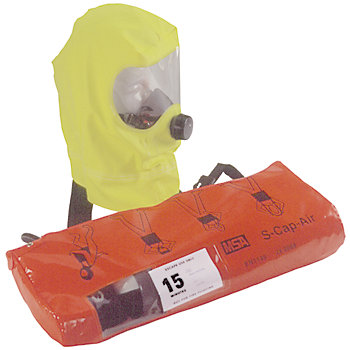
MSA Safety MSA S-CAP Air
MSA S-CAP Air unverified
Duration min
15
Common Failures & Inspection Points
  • Loss of electrical, hydraulic, pneumatic, or other service supply caused by a tripped protection device, leakage, blockage, or upstream fault results in failed starting or loss of function
  • Mechanical wear, corrosion, fouling, or contamination of moving and wetted parts causes increased noise, leakage, sticking, vibration, or reduced performance
  • Seal, gasket, hose, cable, or connection deterioration from age, heat, vibration, or environmental exposure produces visible leakage, intermittent signals, or loss of pressure
  • Sensor, switch, actuator, relay, or control-system faults can cause incorrect indication, nuisance alarms, failed automatic sequences, or loss of remote control
  • Incorrect adjustment, assembly, or maintenance can lead to unstable operation, recurrent alarms, or performance that differs from the vessel's normal baseline
Service: Inspect the unit for leakage, corrosion, contamination, loose connections, abnormal noise or vibration, condition of guards and mountings, service supplies, controls, alarms, and functional performance. Use the vessel maintenance history to identify deterioration trends and refer to the manufacturer documentation for exact settings, tolerances, test values, and overhaul criteria.
Spare Parts: Keep the manufacturer-recommended seals and gaskets, filters where fitted, fuses or protection items, common sensors and switches, and critical actuator, control, or wear components appropriate to the installed configuration. Exact part numbers and quantities must come from the manufacturer spare-parts documentation.
Use Cases: Used on vessel types fitted with breathing apparatus equipment, including merchant, offshore, passenger, fishing, or workboat installations where this specific emergency escape breathing device (eebd) duty is required.
MSA PremAire Cadet unverified
Duration min
10
Common Failures & Inspection Points
  • Detector or sensing-element contamination, poisoning or ageing can cause false alarms, slow response or failed functional tests
  • Battery, power-supply or control-circuit faults caused by ageing, loose wiring or blown protection can lead to trouble alarms or unavailable safety functions
  • Cylinder pressure loss, leakage or damaged valves where stored media is used can leave the equipment outside ready condition and may be found during inspection or weighing checks
  • Blocked, corroded or mechanically damaged nozzles, piping, hoses or masks can restrict discharge or breathing flow and show as poor functional test results
  • Incorrect isolation, expired service status or disturbed release interlocks after maintenance can prevent normal arming and create panel faults or failed readiness checks
Service: Check physical condition, accessibility, labels and service status, then verify approved tests of detectors, alarms, release circuits or breathing components as applicable. Inspect cylinders, hoses, nozzles, masks, wiring and interlocks without discharging or altering safety systems outside the approved procedure. Use maker, class and statutory documentation for exact inspection and acceptance criteria.
Spare Parts: Hold only approved safety-system spares such as detector heads, filters or sensor caps, fuses, batteries where user-replaceable, seals, hoses, masks, nozzles and control modules according to the vessel's certified arrangement.
Use Cases: Machinery spaces, accommodation, cargo areas, enclosed spaces and emergency-response stations on merchant, passenger, tanker and offshore vessels.
MSA PremAire Escape unverified
Duration min
10
Common Failures & Inspection Points
  • Detector or sensing-element contamination, poisoning or ageing can cause false alarms, slow response or failed functional tests
  • Battery, power-supply or control-circuit faults caused by ageing, loose wiring or blown protection can lead to trouble alarms or unavailable safety functions
  • Cylinder pressure loss, leakage or damaged valves where stored media is used can leave the equipment outside ready condition and may be found during inspection or weighing checks
  • Blocked, corroded or mechanically damaged nozzles, piping, hoses or masks can restrict discharge or breathing flow and show as poor functional test results
  • Incorrect isolation, expired service status or disturbed release interlocks after maintenance can prevent normal arming and create panel faults or failed readiness checks
Service: Check physical condition, accessibility, labels and service status, then verify approved tests of detectors, alarms, release circuits or breathing components as applicable. Inspect cylinders, hoses, nozzles, masks, wiring and interlocks without discharging or altering safety systems outside the approved procedure. Use maker, class and statutory documentation for exact inspection and acceptance criteria.
Spare Parts: Hold only approved safety-system spares such as detector heads, filters or sensor caps, fuses, batteries where user-replaceable, seals, hoses, masks, nozzles and control modules according to the vessel's certified arrangement.
Use Cases: Machinery spaces, accommodation, cargo areas, enclosed spaces and emergency-response stations on merchant, passenger, tanker and offshore vessels.
MSA Safety S-CAP Air Mk2 unverified
Duration min
15
Marine Approval
ja
Common Failures & Inspection Points
  • Cylinder pressure loss or valve leakage, typically indicated by reduced indicated pressure or failed leak check
  • Facepiece/hood seal deterioration, typically indicated by poor face seal, leakage or failed fit/function check
  • Demand valve or regulator contamination/wear, typically indicated by hard breathing, free flow or unstable pressure
  • Hose or connector damage, typically indicated by air leakage or restricted supply
  • Warning device or gauge fault, typically indicated by incorrect pressure indication or absent low-pressure alarm
Service: Inspect cylinder condition and pressure, valves, regulators, hoses, facepiece/hood, harness and warning devices; perform leak and functional checks and observe approved cylinder/service intervals.
Spare Parts: Keep masks/hoods as approved, seals, hoses, demand-valve/regulator service kits, batteries where fitted and replacement cylinders or charged units according to the vessel's safety plan.
Use Cases: Used for firefighting, rescue, tank/confined-space entry and emergency escape on ships and offshore units. This entry applies specifically to the Emergency Escape Breathing Device (EEBD) variant identified as MSA Safety MSA Safety S-CAP Air Mk2.
MSA Safety PremAire Escape Mk2 unverified
Duration min
15
Marine Approval
ja
Common Failures & Inspection Points
  • Loss of air supply caused by leakage, incomplete charging or damaged hose connection, resulting in insufficient pressure or airflow
  • Face seal, hood or demand-valve leakage caused by damaged seals, contamination or wear, resulting in poor fit or abnormal air consumption
  • Pressure reducer, gauge or warning-device fault caused by mechanical or electrical damage, resulting in unstable indication or missing low-air warning
  • Hose, harness or connector deterioration caused by age, heat or mechanical damage, resulting in leakage, poor fit or unreliable operation
  • Storage or charging deficiency caused by poor maintenance or inaccessible stowage, resulting in a unit that is not ready when required
Service: Check pressure or readiness indication, cylinder or air supply, hoses, harness, mask or hood, regulator and warning devices as applicable. Keep masks and hoods clean, dry and protected from distortion and inspect sealing surfaces for damage. Function-test airflow and warning features according to the approved manufacturer procedure. Maintain cylinder inspection, charging and appliance service records as required by the vessel's safety-management system. Remove damaged or suspect units from service until properly repaired and tested. Refer to the manufacturer documentation for the exact figure for cylinder, hose, endurance and test limits.
Spare Parts: Keep approved face-mask or hood service parts, demand-valve or regulator consumables, hoses, batteries where applicable and manufacturer-recommended maintenance kits. Spare charged cylinders or emergency units should follow the vessel's statutory inventory. Use only certified compatible components.
Use Cases: Firefighting, rescue, escape and hazardous-atmosphere work on ships and offshore installations according to the breathing-apparatus type.
MSA Safety PremAire Cadet Mk2 unverified
Duration min
15
Marine Approval
ja
Common Failures & Inspection Points
  • Cylinder, air-line or connection leakage reduces available air and is identified during pre-use checks
  • Regulator or demand-valve malfunction causes difficult breathing, free flow or unstable mask pressure
  • Face-mask seal damage causes inward leakage during the user seal check
  • Harness, buckle, hose or hood damage makes the unit difficult or unsafe to use
  • Pressure indication, low-air alarm or supply-control faults prevent reliable awareness of remaining air
Service: Inspect cylinder or air supply, valves, reducers, hoses, demand valve, mask or hood, harness, gauges and alarms as applicable. Confirm cleanliness and readiness after use and maintain charging and inspection controls under the vessel safety program. Functional testing must follow manufacturer and statutory procedures. Refer to the manufacturer documentation for the exact figure for pressure and service intervals.
Spare Parts: Carry approved mask or hood seals, straps, hoses, regulator service items where onboard repair is permitted and compatible cylinders or airline components according to the vessel safety plan.
Use Cases: Firefighting, enclosed-space rescue, emergency escape and supplied-air maintenance work.
MSA Safety Latchways EEBD unverified
Duration min
15
Marine Approval
ja
Common Failures & Inspection Points
  • Cylinder pressure loss or valve leakage, typically indicated by reduced indicated pressure or failed leak check
  • Facepiece/hood seal deterioration, typically indicated by poor face seal, leakage or failed fit/function check
  • Demand valve or regulator contamination/wear, typically indicated by hard breathing, free flow or unstable pressure
  • Hose or connector damage, typically indicated by air leakage or restricted supply
  • Warning device or gauge fault, typically indicated by incorrect pressure indication or absent low-pressure alarm
Service: Inspect cylinder condition and pressure, valves, regulators, hoses, facepiece/hood, harness and warning devices; perform leak and functional checks and observe approved cylinder/service intervals.
Spare Parts: Keep masks/hoods as approved, seals, hoses, demand-valve/regulator service kits, batteries where fitted and replacement cylinders or charged units according to the vessel's safety plan.
Use Cases: Used for firefighting, rescue, tank/confined-space entry and emergency escape on ships and offshore units. This entry applies specifically to the Emergency Escape Breathing Device (EEBD) variant identified as MSA Safety MSA Safety Latchways EEBD.

Scott Safety / 3M

6
Scott ELSA Sprint unverified
Duration min
10
Common Failures & Inspection Points
  • Cylinder pressure loss or valve leakage, typically indicated by reduced indicated pressure or failed leak check
  • Facepiece/hood seal deterioration, typically indicated by poor face seal, leakage or failed fit/function check
  • Demand valve or regulator contamination/wear, typically indicated by hard breathing, free flow or unstable pressure
  • Hose or connector damage, typically indicated by air leakage or restricted supply
  • Warning device or gauge fault, typically indicated by incorrect pressure indication or absent low-pressure alarm
Service: Inspect cylinder condition and pressure, valves, regulators, hoses, facepiece/hood, harness and warning devices; perform leak and functional checks and observe approved cylinder/service intervals.
Spare Parts: Keep masks/hoods as approved, seals, hoses, demand-valve/regulator service kits, batteries where fitted and replacement cylinders or charged units according to the vessel's safety plan.
Use Cases: Used for firefighting, rescue, tank/confined-space entry and emergency escape on ships and offshore units. This entry applies specifically to the Emergency Escape Breathing Device (EEBD) variant identified as Scott Safety / 3M Scott ELSA Sprint.
Scott ELSA-15 unverified
Duration min
15
Common Failures & Inspection Points
  • Detector or sensing-element contamination, poisoning or ageing can cause false alarms, slow response or failed functional tests
  • Battery, power-supply or control-circuit faults caused by ageing, loose wiring or blown protection can lead to trouble alarms or unavailable safety functions
  • Cylinder pressure loss, leakage or damaged valves where stored media is used can leave the equipment outside ready condition and may be found during inspection or weighing checks
  • Blocked, corroded or mechanically damaged nozzles, piping, hoses or masks can restrict discharge or breathing flow and show as poor functional test results
  • Incorrect isolation, expired service status or disturbed release interlocks after maintenance can prevent normal arming and create panel faults or failed readiness checks
Service: Check physical condition, accessibility, labels and service status, then verify approved tests of detectors, alarms, release circuits or breathing components as applicable. Inspect cylinders, hoses, nozzles, masks, wiring and interlocks without discharging or altering safety systems outside the approved procedure. Use maker, class and statutory documentation for exact inspection and acceptance criteria.
Spare Parts: Hold only approved safety-system spares such as detector heads, filters or sensor caps, fuses, batteries where user-replaceable, seals, hoses, masks, nozzles and control modules according to the vessel's certified arrangement.
Use Cases: Machinery spaces, accommodation, cargo areas, enclosed spaces and emergency-response stations on merchant, passenger, tanker and offshore vessels.
Scott Safety ELSA Sprint Mk2 unverified
Duration min
15
Marine Approval
ja
Common Failures & Inspection Points
  • Material, hull or container deterioration caused by weather, ultraviolet exposure, impact or aging, resulting in cracks, tears, corrosion or visible deformation
  • Release, securing or launching-component wear caused by drills, corrosion or misalignment, resulting in stiff operation, abnormal play or failed readiness checks
  • Battery, light or communication-equipment failure caused by aging, charging faults or water ingress, resulting in failed self-test or missing emergency indication
  • Engine, steering or inflation-system failure where applicable caused by fuel, mechanical, pneumatic or seal problems, resulting in inability to maneuver or deploy the appliance
  • Incorrect stowage, identification or service status caused by inventory or maintenance errors, resulting in delayed use or an appliance that is not ready
Service: Inspect condition, securing, markings, release or launching interfaces and all accessible emergency equipment appropriate to the appliance. Function-test only those features permitted by the approved onboard procedure and avoid unintended distress transmissions or unsafe release. Check service dates, batteries, hydrostatic releases, engines, lights and inventories where applicable. Keep embarkation, launch and access areas unobstructed. Replace expired, damaged or suspect certified components through the approved service route. Refer to the manufacturer documentation for the exact figure for inspection, servicing, load-test and replacement criteria.
Spare Parts: Keep only approved replacement batteries, lights, seals, securing parts, engine consumables, release components or complete replacement appliances appropriate to the certified equipment. Critical launching and survival components must remain within the approved configuration.
Use Cases: It is used for firefighting, rescue and escape on merchant ships, passenger vessels, offshore units or other vessel types where this equipment category is fitted.
Scott Safety ELSA-15 Mk2 unverified
Duration min
15
Marine Approval
ja
Common Failures & Inspection Points
  • Loss of air supply caused by leakage, incomplete charging or damaged hose connection, resulting in insufficient pressure or airflow
  • Face seal, hood or demand-valve leakage caused by damaged seals, contamination or wear, resulting in poor fit or abnormal air consumption
  • Pressure reducer, gauge or warning-device fault caused by mechanical or electrical damage, resulting in unstable indication or missing low-air warning
  • Hose, harness or connector deterioration caused by age, heat or mechanical damage, resulting in leakage, poor fit or unreliable operation
  • Storage or charging deficiency caused by poor maintenance or inaccessible stowage, resulting in a unit that is not ready when required
Service: Check pressure or readiness indication, cylinder or air supply, hoses, harness, mask or hood, regulator and warning devices as applicable. Keep masks and hoods clean, dry and protected from distortion and inspect sealing surfaces for damage. Function-test airflow and warning features according to the approved manufacturer procedure. Maintain cylinder inspection, charging and appliance service records as required by the vessel's safety-management system. Remove damaged or suspect units from service until properly repaired and tested. Refer to the manufacturer documentation for the exact figure for cylinder, hose, endurance and test limits.
Spare Parts: Keep approved face-mask or hood service parts, demand-valve or regulator consumables, hoses, batteries where applicable and manufacturer-recommended maintenance kits. Spare charged cylinders or emergency units should follow the vessel's statutory inventory. Use only certified compatible components.
Use Cases: Firefighting, rescue, escape and hazardous-atmosphere work on ships and offshore installations according to the breathing-apparatus type.
Scott Safety ELSA-10 unverified
Duration min
15
Marine Approval
ja
Scott Safety ELSA-Lite unverified
Duration min
15
Marine Approval
ja
Common Failures & Inspection Points
  • Cylinder, air-line or connection leakage reduces available air and is identified during pre-use checks
  • Regulator or demand-valve malfunction causes difficult breathing, free flow or unstable mask pressure
  • Face-mask seal damage causes inward leakage during the user seal check
  • Harness, buckle, hose or hood damage makes the unit difficult or unsafe to use
  • Pressure indication, low-air alarm or supply-control faults prevent reliable awareness of remaining air
Service: Inspect cylinder or air supply, valves, reducers, hoses, demand valve, mask or hood, harness, gauges and alarms as applicable. Confirm cleanliness and readiness after use and maintain charging and inspection controls under the vessel safety program. Functional testing must follow manufacturer and statutory procedures. Refer to the manufacturer documentation for the exact figure for pressure and service intervals.
Spare Parts: Carry approved mask or hood seals, straps, hoses, regulator service items where onboard repair is permitted and compatible cylinders or airline components according to the vessel safety plan.
Use Cases: Firefighting, enclosed-space rescue, emergency escape and supplied-air maintenance work.

Honeywell Safety

4
Honeywell ER2000SE EEBD unverified
Duration min
15
Common Failures & Inspection Points
  • Cylinder, air-line or connection leakage reduces available air and is identified during pre-use checks
  • Regulator or demand-valve malfunction causes difficult breathing, free flow or unstable mask pressure
  • Face-mask seal damage causes inward leakage during the user seal check
  • Harness, buckle, hose or hood damage makes the unit difficult or unsafe to use
  • Pressure indication, low-air alarm or supply-control faults prevent reliable awareness of remaining air
Service: Inspect cylinder or air supply, valves, reducers, hoses, demand valve, mask or hood, harness, gauges and alarms as applicable. Confirm cleanliness and readiness after use and maintain charging and inspection controls under the vessel safety program. Functional testing must follow manufacturer and statutory procedures. Refer to the manufacturer documentation for the exact figure for pressure and service intervals.
Spare Parts: Carry approved mask or hood seals, straps, hoses, regulator service items where onboard repair is permitted and compatible cylinders or airline components according to the vessel safety plan.
Use Cases: Firefighting, enclosed-space rescue, emergency escape and supplied-air maintenance work.
Honeywell ER2000SN EEBD unverified
Duration min
15
Common Failures & Inspection Points
  • Cylinder, air-line or connection leakage reduces available air and is identified during pre-use checks
  • Regulator or demand-valve malfunction causes difficult breathing, free flow or unstable mask pressure
  • Face-mask seal damage causes inward leakage during the user seal check
  • Harness, buckle, hose or hood damage makes the unit difficult or unsafe to use
  • Pressure indication, low-air alarm or supply-control faults prevent reliable awareness of remaining air
Service: Inspect cylinder or air supply, valves, reducers, hoses, demand valve, mask or hood, harness, gauges and alarms as applicable. Confirm cleanliness and readiness after use and maintain charging and inspection controls under the vessel safety program. Functional testing must follow manufacturer and statutory procedures. Refer to the manufacturer documentation for the exact figure for pressure and service intervals.
Spare Parts: Carry approved mask or hood seals, straps, hoses, regulator service items where onboard repair is permitted and compatible cylinders or airline components according to the vessel safety plan.
Use Cases: Firefighting, enclosed-space rescue, emergency escape and supplied-air maintenance work.
Honeywell Safety ER2000SE Mk2 unverified
Duration min
15
Marine Approval
ja
Common Failures & Inspection Points
  • Material, hull or container deterioration caused by weather, ultraviolet exposure, impact or aging, resulting in cracks, tears, corrosion or visible deformation
  • Release, securing or launching-component wear caused by drills, corrosion or misalignment, resulting in stiff operation, abnormal play or failed readiness checks
  • Battery, light or communication-equipment failure caused by aging, charging faults or water ingress, resulting in failed self-test or missing emergency indication
  • Engine, steering or inflation-system failure where applicable caused by fuel, mechanical, pneumatic or seal problems, resulting in inability to maneuver or deploy the appliance
  • Incorrect stowage, identification or service status caused by inventory or maintenance errors, resulting in delayed use or an appliance that is not ready
Service: Inspect condition, securing, markings, release or launching interfaces and all accessible emergency equipment appropriate to the appliance. Function-test only those features permitted by the approved onboard procedure and avoid unintended distress transmissions or unsafe release. Check service dates, batteries, hydrostatic releases, engines, lights and inventories where applicable. Keep embarkation, launch and access areas unobstructed. Replace expired, damaged or suspect certified components through the approved service route. Refer to the manufacturer documentation for the exact figure for inspection, servicing, load-test and replacement criteria.
Spare Parts: Keep only approved replacement batteries, lights, seals, securing parts, engine consumables, release components or complete replacement appliances appropriate to the certified equipment. Critical launching and survival components must remain within the approved configuration.
Use Cases: It is used for firefighting, rescue and escape on merchant ships, passenger vessels, offshore units or other vessel types where this equipment category is fitted.
Honeywell Safety ER2000SN Mk2 unverified
Duration min
15
Marine Approval
ja
Common Failures & Inspection Points
  • Material, hull or container deterioration caused by weather, ultraviolet exposure, impact or aging, resulting in cracks, tears, corrosion or visible deformation
  • Release, securing or launching-component wear caused by drills, corrosion or misalignment, resulting in stiff operation, abnormal play or failed readiness checks
  • Battery, light or communication-equipment failure caused by aging, charging faults or water ingress, resulting in failed self-test or missing emergency indication
  • Engine, steering or inflation-system failure where applicable caused by fuel, mechanical, pneumatic or seal problems, resulting in inability to maneuver or deploy the appliance
  • Incorrect stowage, identification or service status caused by inventory or maintenance errors, resulting in delayed use or an appliance that is not ready
Service: Inspect condition, securing, markings, release or launching interfaces and all accessible emergency equipment appropriate to the appliance. Function-test only those features permitted by the approved onboard procedure and avoid unintended distress transmissions or unsafe release. Check service dates, batteries, hydrostatic releases, engines, lights and inventories where applicable. Keep embarkation, launch and access areas unobstructed. Replace expired, damaged or suspect certified components through the approved service route. Refer to the manufacturer documentation for the exact figure for inspection, servicing, load-test and replacement criteria.
Spare Parts: Keep only approved replacement batteries, lights, seals, securing parts, engine consumables, release components or complete replacement appliances appropriate to the certified equipment. Critical launching and survival components must remain within the approved configuration.
Use Cases: It is used for firefighting, rescue and escape on merchant ships, passenger vessels, offshore units or other vessel types where this equipment category is fitted.

Ocenco

4
Ocenco M-20.2 unverified
Duration min
15
Marine Approval
ja
Common Failures & Inspection Points
  • Damaged seals or packaging compromise readiness and are visible during routine inspection
  • Expired service life or cylinder condition makes the device unsuitable for use
  • Corrosion or impact damage to the container can affect the breathing supply or activation mechanism
  • Missing hood, strap or instructions prevents correct deployment in an emergency
  • Incorrect stowage or blocked access delays retrieval when needed
Service: Check location, accessibility, seal integrity, physical condition, expiry or service markings and instructions without opening a sealed unit unnecessarily. Confirm quantity and placement against the vessel's approved fire-control or safety plan. Servicing and any pressure or duration checks must follow manufacturer and statutory procedures.
Spare Parts: EEBDs are commonly maintained as complete certified units rather than repaired onboard; retain approved mounting brackets, signs and any maker-specified replacement seals or accessories.
Use Cases: Used for emergency escape from smoke-filled or contaminated shipboard spaces, especially machinery spaces and accommodation escape routes.
Ocenco M-20.3 unverified
Duration min
15
Marine Approval
ja
Common Failures & Inspection Points
  • Damaged seals or packaging compromise readiness and are visible during routine inspection
  • Expired service life or cylinder condition makes the device unsuitable for use
  • Corrosion or impact damage to the container can affect the breathing supply or activation mechanism
  • Missing hood, strap or instructions prevents correct deployment in an emergency
  • Incorrect stowage or blocked access delays retrieval when needed
Service: Check location, accessibility, seal integrity, physical condition, expiry or service markings and instructions without opening a sealed unit unnecessarily. Confirm quantity and placement against the vessel's approved fire-control or safety plan. Servicing and any pressure or duration checks must follow manufacturer and statutory procedures.
Spare Parts: EEBDs are commonly maintained as complete certified units rather than repaired onboard; retain approved mounting brackets, signs and any maker-specified replacement seals or accessories.
Use Cases: Used for emergency escape from smoke-filled or contaminated shipboard spaces, especially machinery spaces and accommodation escape routes.
Ocenco EEBD-10 unverified
Duration min
15
Marine Approval
ja
Common Failures & Inspection Points
  • Damaged seals or packaging compromise readiness and are visible during routine inspection
  • Expired service life or cylinder condition makes the device unsuitable for use
  • Corrosion or impact damage to the container can affect the breathing supply or activation mechanism
  • Missing hood, strap or instructions prevents correct deployment in an emergency
  • Incorrect stowage or blocked access delays retrieval when needed
Service: Check location, accessibility, seal integrity, physical condition, expiry or service markings and instructions without opening a sealed unit unnecessarily. Confirm quantity and placement against the vessel's approved fire-control or safety plan. Servicing and any pressure or duration checks must follow manufacturer and statutory procedures.
Spare Parts: EEBDs are commonly maintained as complete certified units rather than repaired onboard; retain approved mounting brackets, signs and any maker-specified replacement seals or accessories.
Use Cases: Used for emergency escape from smoke-filled or contaminated shipboard spaces, especially machinery spaces and accommodation escape routes.
Ocenco EEBD-15 unverified
Duration min
15
Marine Approval
ja
Common Failures & Inspection Points
  • Damaged seals or packaging compromise readiness and are visible during routine inspection
  • Expired service life or cylinder condition makes the device unsuitable for use
  • Corrosion or impact damage to the container can affect the breathing supply or activation mechanism
  • Missing hood, strap or instructions prevents correct deployment in an emergency
  • Incorrect stowage or blocked access delays retrieval when needed
Service: Check location, accessibility, seal integrity, physical condition, expiry or service markings and instructions without opening a sealed unit unnecessarily. Confirm quantity and placement against the vessel's approved fire-control or safety plan. Servicing and any pressure or duration checks must follow manufacturer and statutory procedures.
Spare Parts: EEBDs are commonly maintained as complete certified units rather than repaired onboard; retain approved mounting brackets, signs and any maker-specified replacement seals or accessories.
Use Cases: Used for emergency escape from smoke-filled or contaminated shipboard spaces, especially machinery spaces and accommodation escape routes.

Essex Industries

3
Essex Industries PBE-5 unverified
Duration min
15
Marine Approval
ja
Common Failures & Inspection Points
  • Cylinder, air-line or connection leakage reduces available air and is identified during pre-use checks
  • Regulator or demand-valve malfunction causes difficult breathing, free flow or unstable mask pressure
  • Face-mask seal damage causes inward leakage during the user seal check
  • Harness, buckle, hose or hood damage makes the unit difficult or unsafe to use
  • Pressure indication, low-air alarm or supply-control faults prevent reliable awareness of remaining air
Service: Inspect cylinder or air supply, valves, reducers, hoses, demand valve, mask or hood, harness, gauges and alarms as applicable. Confirm cleanliness and readiness after use and maintain charging and inspection controls under the vessel safety program. Functional testing must follow manufacturer and statutory procedures. Refer to the manufacturer documentation for the exact figure for pressure and service intervals.
Spare Parts: Carry approved mask or hood seals, straps, hoses, regulator service items where onboard repair is permitted and compatible cylinders or airline components according to the vessel safety plan.
Use Cases: Firefighting, enclosed-space rescue, emergency escape and supplied-air maintenance work.
Essex Industries PBE-10 unverified
Duration min
15
Marine Approval
ja
Common Failures & Inspection Points
  • Cylinder, air-line or connection leakage reduces available air and is identified during pre-use checks
  • Regulator or demand-valve malfunction causes difficult breathing, free flow or unstable mask pressure
  • Face-mask seal damage causes inward leakage during the user seal check
  • Harness, buckle, hose or hood damage makes the unit difficult or unsafe to use
  • Pressure indication, low-air alarm or supply-control faults prevent reliable awareness of remaining air
Service: Inspect cylinder or air supply, valves, reducers, hoses, demand valve, mask or hood, harness, gauges and alarms as applicable. Confirm cleanliness and readiness after use and maintain charging and inspection controls under the vessel safety program. Functional testing must follow manufacturer and statutory procedures. Refer to the manufacturer documentation for the exact figure for pressure and service intervals.
Spare Parts: Carry approved mask or hood seals, straps, hoses, regulator service items where onboard repair is permitted and compatible cylinders or airline components according to the vessel safety plan.
Use Cases: Firefighting, enclosed-space rescue, emergency escape and supplied-air maintenance work.
Essex Industries PBE-15 unverified
Duration min
15
Marine Approval
ja
Common Failures & Inspection Points
  • Cylinder, air-line or connection leakage reduces available air and is identified during pre-use checks
  • Regulator or demand-valve malfunction causes difficult breathing, free flow or unstable mask pressure
  • Face-mask seal damage causes inward leakage during the user seal check
  • Harness, buckle, hose or hood damage makes the unit difficult or unsafe to use
  • Pressure indication, low-air alarm or supply-control faults prevent reliable awareness of remaining air
Service: Inspect cylinder or air supply, valves, reducers, hoses, demand valve, mask or hood, harness, gauges and alarms as applicable. Confirm cleanliness and readiness after use and maintain charging and inspection controls under the vessel safety program. Functional testing must follow manufacturer and statutory procedures. Refer to the manufacturer documentation for the exact figure for pressure and service intervals.
Spare Parts: Carry approved mask or hood seals, straps, hoses, regulator service items where onboard repair is permitted and compatible cylinders or airline components according to the vessel safety plan.
Use Cases: Firefighting, enclosed-space rescue, emergency escape and supplied-air maintenance work.

Interspiro

3
Interspiro SPIROSCAPE EEBD unverified
Duration min
15
Common Failures & Inspection Points
  • Cylinder pressure loss or valve leakage, typically indicated by reduced indicated pressure or failed leak check
  • Facepiece/hood seal deterioration, typically indicated by poor face seal, leakage or failed fit/function check
  • Demand valve or regulator contamination/wear, typically indicated by hard breathing, free flow or unstable pressure
  • Hose or connector damage, typically indicated by air leakage or restricted supply
  • Warning device or gauge fault, typically indicated by incorrect pressure indication or absent low-pressure alarm
Service: Inspect cylinder condition and pressure, valves, regulators, hoses, facepiece/hood, harness and warning devices; perform leak and functional checks and observe approved cylinder/service intervals.
Spare Parts: Keep masks/hoods as approved, seals, hoses, demand-valve/regulator service kits, batteries where fitted and replacement cylinders or charged units according to the vessel's safety plan.
Use Cases: Used for firefighting, rescue, tank/confined-space entry and emergency escape on ships and offshore units. This entry applies specifically to the Emergency Escape Breathing Device (EEBD) variant identified as Interspiro Interspiro SPIROSCAPE EEBD.
Interspiro SPIROSCAPE Mk2 unverified
Duration min
15
Marine Approval
ja
Common Failures & Inspection Points
  • Cylinder pressure loss or valve leakage, typically indicated by reduced indicated pressure or failed leak check
  • Facepiece/hood seal deterioration, typically indicated by poor face seal, leakage or failed fit/function check
  • Demand valve or regulator contamination/wear, typically indicated by hard breathing, free flow or unstable pressure
  • Hose or connector damage, typically indicated by air leakage or restricted supply
  • Warning device or gauge fault, typically indicated by incorrect pressure indication or absent low-pressure alarm
Service: Inspect cylinder condition and pressure, valves, regulators, hoses, facepiece/hood, harness and warning devices; perform leak and functional checks and observe approved cylinder/service intervals.
Spare Parts: Keep masks/hoods as approved, seals, hoses, demand-valve/regulator service kits, batteries where fitted and replacement cylinders or charged units according to the vessel's safety plan.
Use Cases: Used for firefighting, rescue, tank/confined-space entry and emergency escape on ships and offshore units. This entry applies specifically to the Emergency Escape Breathing Device (EEBD) variant identified as Interspiro Interspiro SPIROSCAPE Mk2.
Interspiro SPIROSCAPE Plus unverified
Duration min
15
Marine Approval
ja
Common Failures & Inspection Points
  • Cylinder pressure loss or valve leakage, typically indicated by reduced indicated pressure or failed leak check
  • Facepiece/hood seal deterioration, typically indicated by poor face seal, leakage or failed fit/function check
  • Demand valve or regulator contamination/wear, typically indicated by hard breathing, free flow or unstable pressure
  • Hose or connector damage, typically indicated by air leakage or restricted supply
  • Warning device or gauge fault, typically indicated by incorrect pressure indication or absent low-pressure alarm
Service: Inspect cylinder condition and pressure, valves, regulators, hoses, facepiece/hood, harness and warning devices; perform leak and functional checks and observe approved cylinder/service intervals.
Spare Parts: Keep masks/hoods as approved, seals, hoses, demand-valve/regulator service kits, batteries where fitted and replacement cylinders or charged units according to the vessel's safety plan.
Use Cases: Used for firefighting, rescue, tank/confined-space entry and emergency escape on ships and offshore units. This entry applies specifically to the Emergency Escape Breathing Device (EEBD) variant identified as Interspiro Interspiro SPIROSCAPE Plus.

Draeger Safety UK

1
Dräger Saver CF(10), Saver CF(15) and Saver CF(15)CC
Model Number
TAF00001D2