OceanSphere
Engines

Manual Call Point

medium 25 models total

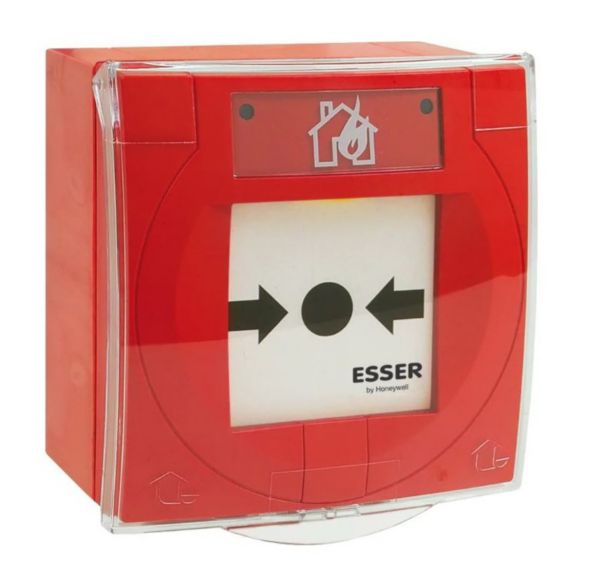
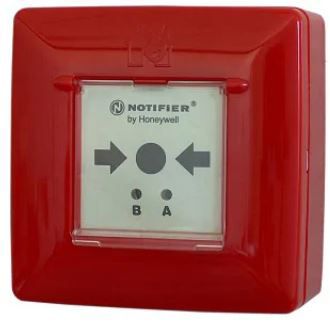
A manual call point is the deliberately low-tech override in an otherwise automatic fire detection system: a break-glass or push-button unit that lets any crew member raise the alarm the instant they see or smell fire, without waiting for a detector to react.

Read more — Manual Call Point explained

What a manual call point does that automatic detectors cannot

Smoke and heat detectors react to a physical change in the air; a manual call point (MCP) reacts to a person. It exists for the case where someone spots flame, smells smoke, or sees an electrical fault sparking well before any detector head crosses its alarm threshold, and for spaces where automatic detection is impractical or where a false start needs a human override. Every MCP on the loop reports its own address to the fire panel, exactly like an automatic detector, so the location shows immediately on the mimic display.
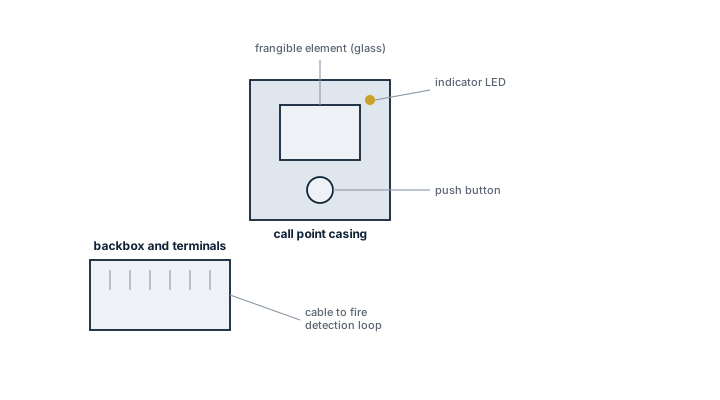
Manual call point construction
Front view of a manual call point showing the frangible element, push button, indicator LED and casing, alongside a detail of the backbox terminals and the cable wired to the fire detection loop.

Main components

Break-glass / frangible element units

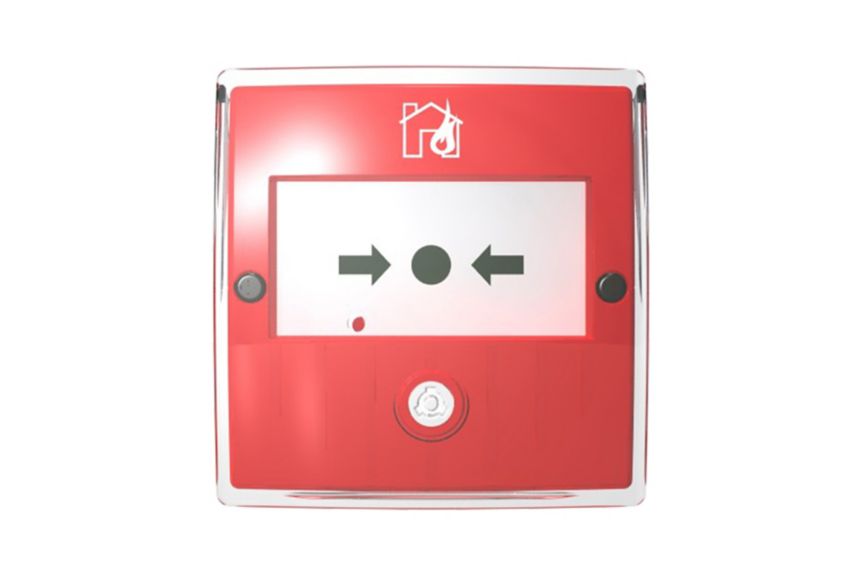
The traditional design uses a small glass or plastic element that must be broken to depress the operating element underneath. This deliberately makes activation a conscious, two-stage act — reducing accidental trips from a bumped enclosure — while still needing no key or tool.

Resettable (non-frangible) units

Increasingly common, these use a hinged or push-in element that can be reset with a key after a false alarm or drill, avoiding the cost and delay of replacing a glass element every time. Many yards now specify resettable units as standard on newbuilds precisely because drills happen often.

Addressable interface / base

On an addressable loop, the MCP body sits on a base that carries its own loop address, identical in principle to a smoke detector base, so the panel can distinguish an MCP activated in the engine room from a general zone alarm.

Selection considerations

  • Compatibility with the existing loop protocol — MCPs are protocol-specific and cannot be freely mixed between panel manufacturers on an addressable system.
  • Frangible versus resettable element, weighed against how often the space runs fire drills.
  • Ingress protection rating for exposed deck or engine room locations against a dry accommodation corridor unit.
  • Mounting height and colour, both fixed by class and flag requirements rather than left to preference.

Regulations and class

SOLAS Chapter II-2 and the FSS Code require manual call points at all exits from accommodation, service and control spaces, at each stairway landing, and along escape routes, in addition to automatic detection. They must be red, clearly marked, and positioned so no crew member has to travel far from any point in the space to reach one. Class surveys verify the call points activate the panel correctly and that the alarm reaches both the bridge and the fire control station, and periodic testing of a sample of call points is standard practice at each annual survey.

Typical faults

FaultConsequence
Paint applied over the unit during accommodation refurbishmentFrangible element no longer breaks under normal hand pressure, or the unit is no longer visibly red
Corroded terminal connections in weather-exposed mounting boxesLoop reports intermittent fault or the call point drops off the addressable loop entirely
Cover glass replaced with the wrong element ratingUnit either triggers under vibration alone or requires excessive force to activate
Call point address not updated after panel software changeAlarm shows the wrong location on the mimic, sending the fire team to the wrong deck

What to look for in a supplier

  • Type approval certificate matching the specific fire panel manufacturer and protocol already fitted, not a generic addressable claim.
  • Marine-rated housings (IP66 or better) for external and engine room locations.
  • Spare frangible elements available separately from full replacement units.
  • Documented compatibility with the vessel's existing loop wiring, since some manufacturers' addressable ranges are not backward compatible with older panel generations.

After any accommodation repainting, physically test every call point in the painted area — a coat of paint across the frangible element is one of the most common reasons a call point fails a survey.

7 manufacturers · 25 models

Autronica / Honeywell

5
BM-10 unverified
Marine Approval
ja
Common Failures & Inspection Points
  • Detector or sensing-element contamination, poisoning or ageing can cause false alarms, slow response or failed functional tests
  • Battery, power-supply or control-circuit faults caused by ageing, loose wiring or blown protection can lead to trouble alarms or unavailable safety functions
  • Cylinder pressure loss, leakage or damaged valves where stored media is used can leave the equipment outside ready condition and may be found during inspection or weighing checks
  • Blocked, corroded or mechanically damaged nozzles, piping, hoses or masks can restrict discharge or breathing flow and show as poor functional test results
  • Incorrect isolation, expired service status or disturbed release interlocks after maintenance can prevent normal arming and create panel faults or failed readiness checks
Service: Check physical condition, accessibility, labels and service status, then verify approved tests of detectors, alarms, release circuits or breathing components as applicable. Inspect cylinders, hoses, nozzles, masks, wiring and interlocks without discharging or altering safety systems outside the approved procedure. Use maker, class and statutory documentation for exact inspection and acceptance criteria.
Spare Parts: Hold only approved safety-system spares such as detector heads, filters or sensor caps, fuses, batteries where user-replaceable, seals, hoses, masks, nozzles and control modules according to the vessel's certified arrangement.
Use Cases: Machinery spaces, accommodation, cargo areas, enclosed spaces and emergency-response stations on merchant, passenger, tanker and offshore vessels.
BM-20 unverified
Marine Approval
ja
Common Failures & Inspection Points
  • Detector or sensing-element contamination, poisoning or ageing can cause false alarms, slow response or failed functional tests
  • Battery, power-supply or control-circuit faults caused by ageing, loose wiring or blown protection can lead to trouble alarms or unavailable safety functions
  • Cylinder pressure loss, leakage or damaged valves where stored media is used can leave the equipment outside ready condition and may be found during inspection or weighing checks
  • Blocked, corroded or mechanically damaged nozzles, piping, hoses or masks can restrict discharge or breathing flow and show as poor functional test results
  • Incorrect isolation, expired service status or disturbed release interlocks after maintenance can prevent normal arming and create panel faults or failed readiness checks
Service: Check physical condition, accessibility, labels and service status, then verify approved tests of detectors, alarms, release circuits or breathing components as applicable. Inspect cylinders, hoses, nozzles, masks, wiring and interlocks without discharging or altering safety systems outside the approved procedure. Use maker, class and statutory documentation for exact inspection and acceptance criteria.
Spare Parts: Hold only approved safety-system spares such as detector heads, filters or sensor caps, fuses, batteries where user-replaceable, seals, hoses, masks, nozzles and control modules according to the vessel's certified arrangement.
Use Cases: Machinery spaces, accommodation, cargo areas, enclosed spaces and emergency-response stations on merchant, passenger, tanker and offshore vessels.
Autronica / Honeywell Autronica Manual Call Point Resettable
Autronica Manual Call Point Resettable unverified
Type
Manual Call Point Resettable
Marine Approval
ja
Common Failures & Inspection Points
  • Detector contamination or sensor aging can cause nuisance alarms or reduced sensitivity, noticed as repeated false alarms or failed tests
  • Open or short circuits in loops and zones can isolate devices, shown by fault indications at the panel
  • Power-supply or battery faults can reduce system availability, seen as charger, supply or standby-power alarms
  • Addressing or configuration errors can identify the wrong device or zone, noticed during functional testing
  • Moisture, corrosion or loose terminals can create intermittent faults, seen as unstable loop status or recurring device communication alarms
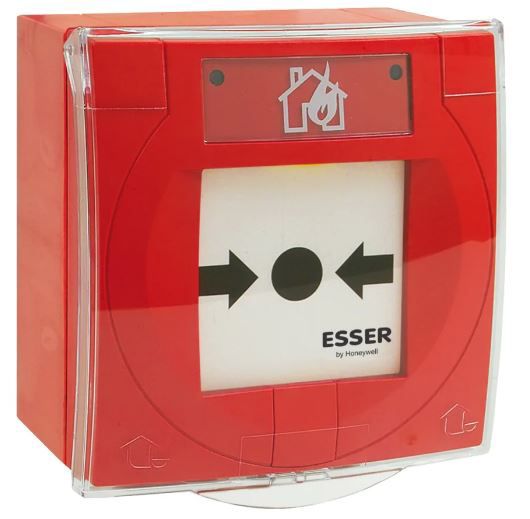
Service: Test representative detectors, manual inputs, sounders, panel indications, loop integrity and standby power in accordance with the vessel’s approved regime. Inspect devices for contamination, paint, obstruction and corrosion. Sensitivity limits and replacement criteria must follow manufacturer documentation.
Spare Parts: Carry compatible detectors, bases, manual-call-point elements, fuses, batteries or approved standby-power parts and common loop/interface modules as recommended.
Use Cases: Installed on virtually all SOLAS-class merchant ships and on many offshore and passenger vessels for early fire detection and alarm.
Autronica Manual Call Point Break-Glass unverified
Type
Manual Call Point Break-Glass
Marine Approval
ja
Common Failures & Inspection Points
  • Detector contamination or sensor aging can cause nuisance alarms or reduced sensitivity, noticed as repeated false alarms or failed tests
  • Open or short circuits in loops and zones can isolate devices, shown by fault indications at the panel
  • Power-supply or battery faults can reduce system availability, seen as charger, supply or standby-power alarms
  • Addressing or configuration errors can identify the wrong device or zone, noticed during functional testing
  • Moisture, corrosion or loose terminals can create intermittent faults, seen as unstable loop status or recurring device communication alarms
Service: Test representative detectors, manual inputs, sounders, panel indications, loop integrity and standby power in accordance with the vessel’s approved regime. Inspect devices for contamination, paint, obstruction and corrosion. Sensitivity limits and replacement criteria must follow manufacturer documentation.
Spare Parts: Carry compatible detectors, bases, manual-call-point elements, fuses, batteries or approved standby-power parts and common loop/interface modules as recommended.
Use Cases: Installed on virtually all SOLAS-class merchant ships and on many offshore and passenger vessels for early fire detection and alarm.
Autronica Weatherproof MCP IP67 unverified
Type
Weatherproof MCP IP67
Marine Approval
ja
Common Failures & Inspection Points
  • Detector contamination or sensor aging can cause nuisance alarms or reduced sensitivity, noticed as repeated false alarms or failed tests
  • Open or short circuits in loops and zones can isolate devices, shown by fault indications at the panel
  • Power-supply or battery faults can reduce system availability, seen as charger, supply or standby-power alarms
  • Addressing or configuration errors can identify the wrong device or zone, noticed during functional testing
  • Moisture, corrosion or loose terminals can create intermittent faults, seen as unstable loop status or recurring device communication alarms
Service: Test representative detectors, manual inputs, sounders, panel indications, loop integrity and standby power in accordance with the vessel’s approved regime. Inspect devices for contamination, paint, obstruction and corrosion. Sensitivity limits and replacement criteria must follow manufacturer documentation.
Spare Parts: Carry compatible detectors, bases, manual-call-point elements, fuses, batteries or approved standby-power parts and common loop/interface modules as recommended.
Use Cases: Installed on virtually all SOLAS-class merchant ships and on many offshore and passenger vessels for early fire detection and alarm.

Consilium Marine

5
Salwico MCP-3 unverified
Type
Break Glass / Resettable
Marine Approval
ja
Common Failures & Inspection Points
  • Blocked, damaged, corroded, or contaminated detectors, nozzles, piping, valves, or release components reduce coverage or prevent correct discharge
  • Loss of extinguishing medium, pressure, water supply, or foam concentrate causes low-level indications, failed tests, or reduced firefighting capability
  • Control-panel, power-supply, loop, cable, or communication faults produce alarms, disabled zones, or loss of remote release
  • Valve, damper, actuator, or interlock faults prevent the required shutdown, isolation, or agent release sequence
  • Poor maintenance, incorrect line-up, or obstructed access is identified during tests and can delay emergency response
Service: Inspect control panels, supplies, detectors or nozzles, valves, piping, alarms, remote releases, shutdown interlocks, signage, access, and system status. Functional testing, agent quantities, pressure settings, detector spacing, and discharge criteria must follow SOLAS, class, flag, approved fire-control plans, and manufacturer documentation.
Spare Parts: Carry approved detector or call-point units, fuses, seals and gaskets, valve or actuator service parts, nozzles or sprinkler heads where applicable, and critical control modules recommended for the installed system.
Use Cases: Used on all vessel types to protect machinery spaces, accommodation, cargo areas, vehicle decks, galleys, electrical rooms, and other fire-risk spaces.
Salwico MCP-5 unverified
Type
Break Glass / Resettable
Marine Approval
ja
Common Failures & Inspection Points
  • Blocked, damaged, corroded, or contaminated detectors, nozzles, piping, valves, or release components reduce coverage or prevent correct discharge
  • Loss of extinguishing medium, pressure, water supply, or foam concentrate causes low-level indications, failed tests, or reduced firefighting capability
  • Control-panel, power-supply, loop, cable, or communication faults produce alarms, disabled zones, or loss of remote release
  • Valve, damper, actuator, or interlock faults prevent the required shutdown, isolation, or agent release sequence
  • Poor maintenance, incorrect line-up, or obstructed access is identified during tests and can delay emergency response
Service: Inspect control panels, supplies, detectors or nozzles, valves, piping, alarms, remote releases, shutdown interlocks, signage, access, and system status. Functional testing, agent quantities, pressure settings, detector spacing, and discharge criteria must follow SOLAS, class, flag, approved fire-control plans, and manufacturer documentation.
Spare Parts: Carry approved detector or call-point units, fuses, seals and gaskets, valve or actuator service parts, nozzles or sprinkler heads where applicable, and critical control modules recommended for the installed system.
Use Cases: Used on all vessel types to protect machinery spaces, accommodation, cargo areas, vehicle decks, galleys, electrical rooms, and other fire-risk spaces.
Consilium Marine Manual Call Point Resettable unverified
Type
Manual Call Point Resettable
Marine Approval
ja
Common Failures & Inspection Points
  • Detector contamination or sensor aging can cause nuisance alarms or reduced sensitivity, noticed as repeated false alarms or failed tests
  • Open or short circuits in loops and zones can isolate devices, shown by fault indications at the panel
  • Power-supply or battery faults can reduce system availability, seen as charger, supply or standby-power alarms
  • Addressing or configuration errors can identify the wrong device or zone, noticed during functional testing
  • Moisture, corrosion or loose terminals can create intermittent faults, seen as unstable loop status or recurring device communication alarms
Service: Test representative detectors, manual inputs, sounders, panel indications, loop integrity and standby power in accordance with the vessel’s approved regime. Inspect devices for contamination, paint, obstruction and corrosion. Sensitivity limits and replacement criteria must follow manufacturer documentation.
Spare Parts: Carry compatible detectors, bases, manual-call-point elements, fuses, batteries or approved standby-power parts and common loop/interface modules as recommended.
Use Cases: Installed on virtually all SOLAS-class merchant ships and on many offshore and passenger vessels for early fire detection and alarm.
Consilium Marine Manual Call Point Break-Glass unverified
Type
Manual Call Point Break-Glass
Marine Approval
ja
Common Failures & Inspection Points
  • Detector contamination or sensor aging can cause nuisance alarms or reduced sensitivity, noticed as repeated false alarms or failed tests
  • Open or short circuits in loops and zones can isolate devices, shown by fault indications at the panel
  • Power-supply or battery faults can reduce system availability, seen as charger, supply or standby-power alarms
  • Addressing or configuration errors can identify the wrong device or zone, noticed during functional testing
  • Moisture, corrosion or loose terminals can create intermittent faults, seen as unstable loop status or recurring device communication alarms
Service: Test representative detectors, manual inputs, sounders, panel indications, loop integrity and standby power in accordance with the vessel’s approved regime. Inspect devices for contamination, paint, obstruction and corrosion. Sensitivity limits and replacement criteria must follow manufacturer documentation.
Spare Parts: Carry compatible detectors, bases, manual-call-point elements, fuses, batteries or approved standby-power parts and common loop/interface modules as recommended.
Use Cases: Installed on virtually all SOLAS-class merchant ships and on many offshore and passenger vessels for early fire detection and alarm.
Consilium Marine Weatherproof MCP IP67 unverified
Type
Weatherproof MCP IP67
Marine Approval
ja
Common Failures & Inspection Points
  • Detector contamination or sensor aging can cause nuisance alarms or reduced sensitivity, noticed as repeated false alarms or failed tests
  • Open or short circuits in loops and zones can isolate devices, shown by fault indications at the panel
  • Power-supply or battery faults can reduce system availability, seen as charger, supply or standby-power alarms
  • Addressing or configuration errors can identify the wrong device or zone, noticed during functional testing
  • Moisture, corrosion or loose terminals can create intermittent faults, seen as unstable loop status or recurring device communication alarms
Service: Test representative detectors, manual inputs, sounders, panel indications, loop integrity and standby power in accordance with the vessel’s approved regime. Inspect devices for contamination, paint, obstruction and corrosion. Sensitivity limits and replacement criteria must follow manufacturer documentation.
Spare Parts: Carry compatible detectors, bases, manual-call-point elements, fuses, batteries or approved standby-power parts and common loop/interface modules as recommended.
Use Cases: Installed on virtually all SOLAS-class merchant ships and on many offshore and passenger vessels for early fire detection and alarm.

Apollo Fire Detectors

3
Apollo Fire Detectors Manual Call Point Resettable unverified
Type
Manual Call Point Resettable
Marine Approval
ja
Common Failures & Inspection Points
  • Detector contamination or sensor aging can cause nuisance alarms or reduced sensitivity, noticed as repeated false alarms or failed tests
  • Open or short circuits in loops and zones can isolate devices, shown by fault indications at the panel
  • Power-supply or battery faults can reduce system availability, seen as charger, supply or standby-power alarms
  • Addressing or configuration errors can identify the wrong device or zone, noticed during functional testing
  • Moisture, corrosion or loose terminals can create intermittent faults, seen as unstable loop status or recurring device communication alarms
Service: Test representative detectors, manual inputs, sounders, panel indications, loop integrity and standby power in accordance with the vessel’s approved regime. Inspect devices for contamination, paint, obstruction and corrosion. Sensitivity limits and replacement criteria must follow manufacturer documentation.
Spare Parts: Carry compatible detectors, bases, manual-call-point elements, fuses, batteries or approved standby-power parts and common loop/interface modules as recommended.
Use Cases: Installed on virtually all SOLAS-class merchant ships and on many offshore and passenger vessels for early fire detection and alarm.
Apollo Fire Detectors Manual Call Point Break-Glass unverified
Type
Manual Call Point Break-Glass
Marine Approval
ja
Common Failures & Inspection Points
  • Detector contamination or sensor aging can cause nuisance alarms or reduced sensitivity, noticed as repeated false alarms or failed tests
  • Open or short circuits in loops and zones can isolate devices, shown by fault indications at the panel
  • Power-supply or battery faults can reduce system availability, seen as charger, supply or standby-power alarms
  • Addressing or configuration errors can identify the wrong device or zone, noticed during functional testing
  • Moisture, corrosion or loose terminals can create intermittent faults, seen as unstable loop status or recurring device communication alarms
Service: Test representative detectors, manual inputs, sounders, panel indications, loop integrity and standby power in accordance with the vessel’s approved regime. Inspect devices for contamination, paint, obstruction and corrosion. Sensitivity limits and replacement criteria must follow manufacturer documentation.
Spare Parts: Carry compatible detectors, bases, manual-call-point elements, fuses, batteries or approved standby-power parts and common loop/interface modules as recommended.
Use Cases: Installed on virtually all SOLAS-class merchant ships and on many offshore and passenger vessels for early fire detection and alarm.
Apollo Fire Detectors Weatherproof MCP IP67 unverified
Type
Weatherproof MCP IP67
Marine Approval
ja
Common Failures & Inspection Points
  • Detector contamination or sensor aging can cause nuisance alarms or reduced sensitivity, noticed as repeated false alarms or failed tests
  • Open or short circuits in loops and zones can isolate devices, shown by fault indications at the panel
  • Power-supply or battery faults can reduce system availability, seen as charger, supply or standby-power alarms
  • Addressing or configuration errors can identify the wrong device or zone, noticed during functional testing
  • Moisture, corrosion or loose terminals can create intermittent faults, seen as unstable loop status or recurring device communication alarms
Service: Test representative detectors, manual inputs, sounders, panel indications, loop integrity and standby power in accordance with the vessel’s approved regime. Inspect devices for contamination, paint, obstruction and corrosion. Sensitivity limits and replacement criteria must follow manufacturer documentation.
Spare Parts: Carry compatible detectors, bases, manual-call-point elements, fuses, batteries or approved standby-power parts and common loop/interface modules as recommended.
Use Cases: Installed on virtually all SOLAS-class merchant ships and on many offshore and passenger vessels for early fire detection and alarm.

Esser / Honeywell

3
Esser / Honeywell Esser Manual Call Point Resettable
Esser Manual Call Point Resettable unverified
Type
Manual Call Point Resettable
Marine Approval
ja
Common Failures & Inspection Points
  • Detector contamination or sensor aging can cause nuisance alarms or reduced sensitivity, noticed as repeated false alarms or failed tests
  • Open or short circuits in loops and zones can isolate devices, shown by fault indications at the panel
  • Power-supply or battery faults can reduce system availability, seen as charger, supply or standby-power alarms
  • Addressing or configuration errors can identify the wrong device or zone, noticed during functional testing
  • Moisture, corrosion or loose terminals can create intermittent faults, seen as unstable loop status or recurring device communication alarms
Service: Test representative detectors, manual inputs, sounders, panel indications, loop integrity and standby power in accordance with the vessel’s approved regime. Inspect devices for contamination, paint, obstruction and corrosion. Sensitivity limits and replacement criteria must follow manufacturer documentation.
Spare Parts: Carry compatible detectors, bases, manual-call-point elements, fuses, batteries or approved standby-power parts and common loop/interface modules as recommended.
Use Cases: Installed on virtually all SOLAS-class merchant ships and on many offshore and passenger vessels for early fire detection and alarm.
Esser / Honeywell Esser Manual Call Point Break-Glass
Esser Manual Call Point Break-Glass unverified
Type
Manual Call Point Break-Glass
Marine Approval
ja
Common Failures & Inspection Points
  • Detector contamination or sensor aging can cause nuisance alarms or reduced sensitivity, noticed as repeated false alarms or failed tests
  • Open or short circuits in loops and zones can isolate devices, shown by fault indications at the panel
  • Power-supply or battery faults can reduce system availability, seen as charger, supply or standby-power alarms
  • Addressing or configuration errors can identify the wrong device or zone, noticed during functional testing
  • Moisture, corrosion or loose terminals can create intermittent faults, seen as unstable loop status or recurring device communication alarms
Service: Test representative detectors, manual inputs, sounders, panel indications, loop integrity and standby power in accordance with the vessel’s approved regime. Inspect devices for contamination, paint, obstruction and corrosion. Sensitivity limits and replacement criteria must follow manufacturer documentation.
Spare Parts: Carry compatible detectors, bases, manual-call-point elements, fuses, batteries or approved standby-power parts and common loop/interface modules as recommended.
Use Cases: Installed on virtually all SOLAS-class merchant ships and on many offshore and passenger vessels for early fire detection and alarm.
Esser / Honeywell Esser Weatherproof MCP IP67
Esser Weatherproof MCP IP67 unverified
Type
Weatherproof MCP IP67
Marine Approval
ja
Common Failures & Inspection Points
  • Detector or sensing-element contamination caused by dust, grease, moisture or aging, resulting in false alarms, slow response or fault indication
  • Loop or cable fault caused by damaged wiring, loose terminals or earth leakage, resulting in missing devices or intermittent system faults
  • Addressing or configuration error caused by replacement or software changes, resulting in incorrect device identification or unavailable zones
  • Power-supply or backup-battery deterioration caused by charger faults or aged batteries, resulting in power alarms or reduced standby capability
  • Panel, relay or communication failure caused by electronics faults, resulting in missing alarms, failed outputs or loss of connection to other safety systems
Service: Inspect detectors, call points, panels, loops, power supplies and interfaces according to the approved fire-system test plan. Keep sensing openings clean and protect devices from paint, steam and dust. Function-test alarms, zone identification, sounders and required output relays using approved test tools and procedures. Check backup batteries and power-failure indications and record any isolated zone or disabled device. Restore all bypasses and isolations after work. Refer to the manufacturer documentation for the exact figure for test frequency, detector limits and replacement procedures.
Spare Parts: Keep approved detector heads, bases, call-point elements, loop modules, fuses, batteries, relays and selected panel components compatible with the installed system. Replacement devices must preserve addressing and type approval.
Use Cases: It is used for shipboard fire detection on merchant ships, passenger vessels, offshore units or other vessel types where this equipment category is fitted.

Hochiki Marine

3
Hochiki Marine Manual Call Point Resettable unverified
Type
Manual Call Point Resettable
Marine Approval
ja
Common Failures & Inspection Points
  • Detector contamination or sensor aging can cause nuisance alarms or reduced sensitivity, noticed as repeated false alarms or failed tests
  • Open or short circuits in loops and zones can isolate devices, shown by fault indications at the panel
  • Power-supply or battery faults can reduce system availability, seen as charger, supply or standby-power alarms
  • Addressing or configuration errors can identify the wrong device or zone, noticed during functional testing
  • Moisture, corrosion or loose terminals can create intermittent faults, seen as unstable loop status or recurring device communication alarms
Service: Test representative detectors, manual inputs, sounders, panel indications, loop integrity and standby power in accordance with the vessel’s approved regime. Inspect devices for contamination, paint, obstruction and corrosion. Sensitivity limits and replacement criteria must follow manufacturer documentation.
Spare Parts: Carry compatible detectors, bases, manual-call-point elements, fuses, batteries or approved standby-power parts and common loop/interface modules as recommended.
Use Cases: Installed on virtually all SOLAS-class merchant ships and on many offshore and passenger vessels for early fire detection and alarm.
Hochiki Marine Manual Call Point Break-Glass unverified
Type
Manual Call Point Break-Glass
Marine Approval
ja
Common Failures & Inspection Points
  • Detector contamination or sensor aging can cause nuisance alarms or reduced sensitivity, noticed as repeated false alarms or failed tests
  • Open or short circuits in loops and zones can isolate devices, shown by fault indications at the panel
  • Power-supply or battery faults can reduce system availability, seen as charger, supply or standby-power alarms
  • Addressing or configuration errors can identify the wrong device or zone, noticed during functional testing
  • Moisture, corrosion or loose terminals can create intermittent faults, seen as unstable loop status or recurring device communication alarms
Service: Test representative detectors, manual inputs, sounders, panel indications, loop integrity and standby power in accordance with the vessel’s approved regime. Inspect devices for contamination, paint, obstruction and corrosion. Sensitivity limits and replacement criteria must follow manufacturer documentation.
Spare Parts: Carry compatible detectors, bases, manual-call-point elements, fuses, batteries or approved standby-power parts and common loop/interface modules as recommended.
Use Cases: Installed on virtually all SOLAS-class merchant ships and on many offshore and passenger vessels for early fire detection and alarm.
Hochiki Marine Weatherproof MCP IP67 unverified
Type
Weatherproof MCP IP67
Marine Approval
ja
Common Failures & Inspection Points
  • Detector contamination or sensor aging can cause nuisance alarms or reduced sensitivity, noticed as repeated false alarms or failed tests
  • Open or short circuits in loops and zones can isolate devices, shown by fault indications at the panel
  • Power-supply or battery faults can reduce system availability, seen as charger, supply or standby-power alarms
  • Addressing or configuration errors can identify the wrong device or zone, noticed during functional testing
  • Moisture, corrosion or loose terminals can create intermittent faults, seen as unstable loop status or recurring device communication alarms
Service: Test representative detectors, manual inputs, sounders, panel indications, loop integrity and standby power in accordance with the vessel’s approved regime. Inspect devices for contamination, paint, obstruction and corrosion. Sensitivity limits and replacement criteria must follow manufacturer documentation.
Spare Parts: Carry compatible detectors, bases, manual-call-point elements, fuses, batteries or approved standby-power parts and common loop/interface modules as recommended.
Use Cases: Installed on virtually all SOLAS-class merchant ships and on many offshore and passenger vessels for early fire detection and alarm.

Notifier / Honeywell

3
Notifier / Honeywell Notifier Manual Call Point Resettable
Notifier Manual Call Point Resettable unverified
Type
Manual Call Point Resettable
Marine Approval
ja
Common Failures & Inspection Points
  • Detector contamination or sensor aging can cause nuisance alarms or reduced sensitivity, noticed as repeated false alarms or failed tests
  • Open or short circuits in loops and zones can isolate devices, shown by fault indications at the panel
  • Power-supply or battery faults can reduce system availability, seen as charger, supply or standby-power alarms
  • Addressing or configuration errors can identify the wrong device or zone, noticed during functional testing
  • Moisture, corrosion or loose terminals can create intermittent faults, seen as unstable loop status or recurring device communication alarms
Service: Test representative detectors, manual inputs, sounders, panel indications, loop integrity and standby power in accordance with the vessel’s approved regime. Inspect devices for contamination, paint, obstruction and corrosion. Sensitivity limits and replacement criteria must follow manufacturer documentation.
Spare Parts: Carry compatible detectors, bases, manual-call-point elements, fuses, batteries or approved standby-power parts and common loop/interface modules as recommended.
Use Cases: Installed on virtually all SOLAS-class merchant ships and on many offshore and passenger vessels for early fire detection and alarm.
Notifier Manual Call Point Break-Glass unverified
Type
Manual Call Point Break-Glass
Marine Approval
ja
Common Failures & Inspection Points
  • Detector contamination or sensor aging can cause nuisance alarms or reduced sensitivity, noticed as repeated false alarms or failed tests
  • Open or short circuits in loops and zones can isolate devices, shown by fault indications at the panel
  • Power-supply or battery faults can reduce system availability, seen as charger, supply or standby-power alarms
  • Addressing or configuration errors can identify the wrong device or zone, noticed during functional testing
  • Moisture, corrosion or loose terminals can create intermittent faults, seen as unstable loop status or recurring device communication alarms
Service: Test representative detectors, manual inputs, sounders, panel indications, loop integrity and standby power in accordance with the vessel’s approved regime. Inspect devices for contamination, paint, obstruction and corrosion. Sensitivity limits and replacement criteria must follow manufacturer documentation.
Spare Parts: Carry compatible detectors, bases, manual-call-point elements, fuses, batteries or approved standby-power parts and common loop/interface modules as recommended.
Use Cases: Installed on virtually all SOLAS-class merchant ships and on many offshore and passenger vessels for early fire detection and alarm.
Notifier Weatherproof MCP IP67 unverified
Type
Weatherproof MCP IP67
Marine Approval
ja
Common Failures & Inspection Points
  • Detector contamination or sensor aging can cause nuisance alarms or reduced sensitivity, noticed as repeated false alarms or failed tests
  • Open or short circuits in loops and zones can isolate devices, shown by fault indications at the panel
  • Power-supply or battery faults can reduce system availability, seen as charger, supply or standby-power alarms
  • Addressing or configuration errors can identify the wrong device or zone, noticed during functional testing
  • Moisture, corrosion or loose terminals can create intermittent faults, seen as unstable loop status or recurring device communication alarms
Service: Test representative detectors, manual inputs, sounders, panel indications, loop integrity and standby power in accordance with the vessel’s approved regime. Inspect devices for contamination, paint, obstruction and corrosion. Sensitivity limits and replacement criteria must follow manufacturer documentation.
Spare Parts: Carry compatible detectors, bases, manual-call-point elements, fuses, batteries or approved standby-power parts and common loop/interface modules as recommended.
Use Cases: Installed on virtually all SOLAS-class merchant ships and on many offshore and passenger vessels for early fire detection and alarm.

Siemens Fire Safety

3
Siemens Fire Safety Siemens Fire Safety Manual Call Point Resettable
Siemens Fire Safety Manual Call Point Resettable unverified
Type
Manual Call Point Resettable
Marine Approval
ja
Common Failures & Inspection Points
  • Detector contamination or sensor aging can cause nuisance alarms or reduced sensitivity, noticed as repeated false alarms or failed tests
  • Open or short circuits in loops and zones can isolate devices, shown by fault indications at the panel
  • Power-supply or battery faults can reduce system availability, seen as charger, supply or standby-power alarms
  • Addressing or configuration errors can identify the wrong device or zone, noticed during functional testing
  • Moisture, corrosion or loose terminals can create intermittent faults, seen as unstable loop status or recurring device communication alarms
Service: Test representative detectors, manual inputs, sounders, panel indications, loop integrity and standby power in accordance with the vessel’s approved regime. Inspect devices for contamination, paint, obstruction and corrosion. Sensitivity limits and replacement criteria must follow manufacturer documentation.
Spare Parts: Carry compatible detectors, bases, manual-call-point elements, fuses, batteries or approved standby-power parts and common loop/interface modules as recommended.
Use Cases: Installed on virtually all SOLAS-class merchant ships and on many offshore and passenger vessels for early fire detection and alarm.
Siemens Fire Safety Siemens Fire Safety Manual Call Point Break-Glass
Siemens Fire Safety Manual Call Point Break-Glass unverified
Type
Manual Call Point Break-Glass
Marine Approval
ja
Common Failures & Inspection Points
  • Detector contamination or sensor aging can cause nuisance alarms or reduced sensitivity, noticed as repeated false alarms or failed tests
  • Open or short circuits in loops and zones can isolate devices, shown by fault indications at the panel
  • Power-supply or battery faults can reduce system availability, seen as charger, supply or standby-power alarms
  • Addressing or configuration errors can identify the wrong device or zone, noticed during functional testing
  • Moisture, corrosion or loose terminals can create intermittent faults, seen as unstable loop status or recurring device communication alarms
Service: Test representative detectors, manual inputs, sounders, panel indications, loop integrity and standby power in accordance with the vessel’s approved regime. Inspect devices for contamination, paint, obstruction and corrosion. Sensitivity limits and replacement criteria must follow manufacturer documentation.
Spare Parts: Carry compatible detectors, bases, manual-call-point elements, fuses, batteries or approved standby-power parts and common loop/interface modules as recommended.
Use Cases: Installed on virtually all SOLAS-class merchant ships and on many offshore and passenger vessels for early fire detection and alarm.
Siemens Fire Safety Weatherproof MCP IP67 unverified
Type
Weatherproof MCP IP67
Marine Approval
ja
Common Failures & Inspection Points
  • Detector contamination or sensor aging can cause nuisance alarms or reduced sensitivity, noticed as repeated false alarms or failed tests
  • Open or short circuits in loops and zones can isolate devices, shown by fault indications at the panel
  • Power-supply or battery faults can reduce system availability, seen as charger, supply or standby-power alarms
  • Addressing or configuration errors can identify the wrong device or zone, noticed during functional testing
  • Moisture, corrosion or loose terminals can create intermittent faults, seen as unstable loop status or recurring device communication alarms
Service: Test representative detectors, manual inputs, sounders, panel indications, loop integrity and standby power in accordance with the vessel’s approved regime. Inspect devices for contamination, paint, obstruction and corrosion. Sensitivity limits and replacement criteria must follow manufacturer documentation.
Spare Parts: Carry compatible detectors, bases, manual-call-point elements, fuses, batteries or approved standby-power parts and common loop/interface modules as recommended.
Use Cases: Installed on virtually all SOLAS-class merchant ships and on many offshore and passenger vessels for early fire detection and alarm.