Rescue Boat (Fast)
A fast rescue boat is built to reach a person overboard quickly, not to carry the whole crew in an abandon-ship scenario, and SOLAS sets a stricter launch time and speed requirement for it than for an ordinary lifeboat.
Read more — Rescue Boat (Fast) explained ▾
What Sets the Fast Rescue Boat Apart
Ordinary lifeboats and rescue boats both exist to get people off the ship, but a fast rescue boat has one specific job: get to a person in the water quickly, before hypothermia or drowning becomes the deciding factor. SOLAS distinguishes it from a standard rescue boat by requiring a minimum speed, faster launch, and dedicated davit arrangement built for repeated man-overboard drills rather than a single abandon-ship launch. Passenger ships and many offshore support vessels carry a fast rescue boat in addition to, not instead of, the ship's lifeboats.

Main Components
Hull
Most fast rescue boats are rigid-hulled inflatable boats (RHIB), combining a solid fibreglass or aluminium hull for structural strength with inflatable collar tubes for buoyancy and a forgiving fender against the ship's side during recovery.
Propulsion
A diesel or petrol outboard, or an inboard diesel with waterjet on larger craft, is sized to reach the minimum required speed fully loaded and to hold that speed in a moderate sea state, since the boat is launched in conditions the ship itself may still be moving through.
Davit and Launching Appliance
A single-arm or radial davit purpose-built for rapid deployment, fitted with a quick-release hook system that lets the boat crew slip the falls the instant the boat is waterborne, without waiting for the davit wire to be manually unhooked.
Recovery Strop and Sling
A dedicated recovery arrangement, often a hydraulically operated painter or single-point lifting sling, allows the boat to be hooked on and hoisted back aboard quickly, including in a seaway with the ship rolling.
Selection and Sizing
Capacity is set by the crew needed to carry out a rescue, typically a coxswain plus one or two crew, not by passenger numbers. Speed requirement and davit swing radius against the ship's freeboard and hull form are the two figures that most often force a design choice between a smaller, quicker RHIB and a larger, more stable but slower craft.
Regulations and Class
- SOLAS Chapter III, Regulation 17.1 requires passenger ships to carry at least one fast rescue boat, launchable and manoeuvrable within five minutes of the order to abandon or rescue.
- The LSA Code sets construction and performance standards, including a minimum speed requirement in calm water and stability criteria specific to fast rescue boats rather than ordinary rescue boats.
- Class and flag state surveys require a launch drill at defined intervals, and the boat's engine, davit and release gear all fall under planned maintenance and periodic load testing.
Typical Faults
| Fault | Consequence |
|---|---|
| Outboard or inboard engine not run regularly between drills | Fails to start on demand, delaying launch past the five-minute requirement |
| Inflatable collar tube punctured or slow leak undetected | Reduced buoyancy and stability, especially dangerous fully loaded in a seaway |
| Quick-release hook mechanism corroded or misadjusted | Hook fails to release cleanly, or worse, releases prematurely during lowering |
| Davit wire or fall not inspected for wear | Wire failure during launch or recovery, a leading cause of fatal davit accidents |
What to Look for in a Supplier
- Type approval documentation confirming the hull and engine combination meets the LSA Code speed requirement fully loaded, not just with a light crew.
- Spare parts and service network reach for the specific outboard or inboard engine model, since a rescue boat left unserviceable is a non-conformity.
- Davit compatibility confirmed against the ship's existing deck fittings and freeboard, particularly on a retrofit rather than a newbuild.
Run the launch drill with the boat actually loaded to its rated crew number at least occasionally, not always light; a davit and release gear that behaves perfectly empty can bind or overload differently under full weight.
Typical Manufacturers
5 manufacturers · 11 models
VIKING Life-Saving
4- Material, hull or container deterioration caused by weather, ultraviolet exposure, impact or aging, resulting in cracks, tears, corrosion or visible deformation
- Release, securing or launching-component wear caused by drills, corrosion or misalignment, resulting in stiff operation, abnormal play or failed readiness checks
- Battery, light or communication-equipment failure caused by aging, charging faults or water ingress, resulting in failed self-test or missing emergency indication
- Engine, steering or inflation-system failure where applicable caused by fuel, mechanical, pneumatic or seal problems, resulting in inability to maneuver or deploy the appliance
- Incorrect stowage, identification or service status caused by inventory or maintenance errors, resulting in delayed use or an appliance that is not ready
- Material or seam deterioration caused by age, ultraviolet exposure or poor storage, resulting in cracks, tears or loss of flexibility
- Fastener, buckle or closure damage caused by corrosion, impact or repeated drills, resulting in inability to secure the appliance correctly
- Buoyancy or thermal-protection degradation caused by compression, water ingress or physical damage, resulting in reduced protective function
- Light, whistle or attached accessory failure caused by expiry, battery depletion or loss, resulting in incomplete emergency readiness
- Incorrect sizing, stowage or marking caused by replacement or inventory error, resulting in poor fit or inability to identify the approved item quickly
- Material or seam deterioration caused by age, ultraviolet exposure or poor storage, resulting in cracks, tears or loss of flexibility
- Fastener, buckle or closure damage caused by corrosion, impact or repeated drills, resulting in inability to secure the appliance correctly
- Buoyancy or thermal-protection degradation caused by compression, water ingress or physical damage, resulting in reduced protective function
- Light, whistle or attached accessory failure caused by expiry, battery depletion or loss, resulting in incomplete emergency readiness
- Incorrect sizing, stowage or marking caused by replacement or inventory error, resulting in poor fit or inability to identify the approved item quickly
- Material or seam deterioration caused by age, ultraviolet exposure or poor storage, resulting in cracks, tears or loss of flexibility
- Fastener, buckle or closure damage caused by corrosion, impact or repeated drills, resulting in inability to secure the appliance correctly
- Buoyancy or thermal-protection degradation caused by compression, water ingress or physical damage, resulting in reduced protective function
- Light, whistle or attached accessory failure caused by expiry, battery depletion or loss, resulting in incomplete emergency readiness
- Incorrect sizing, stowage or marking caused by replacement or inventory error, resulting in poor fit or inability to identify the approved item quickly
Fassmer
3- Material or seam deterioration caused by age, ultraviolet exposure or poor storage, resulting in cracks, tears or loss of flexibility
- Fastener, buckle or closure damage caused by corrosion, impact or repeated drills, resulting in inability to secure the appliance correctly
- Buoyancy or thermal-protection degradation caused by compression, water ingress or physical damage, resulting in reduced protective function
- Light, whistle or attached accessory failure caused by expiry, battery depletion or loss, resulting in incomplete emergency readiness
- Incorrect sizing, stowage or marking caused by replacement or inventory error, resulting in poor fit or inability to identify the approved item quickly
- Material or seam deterioration caused by age, ultraviolet exposure or poor storage, resulting in cracks, tears or loss of flexibility
- Fastener, buckle or closure damage caused by corrosion, impact or repeated drills, resulting in inability to secure the appliance correctly
- Buoyancy or thermal-protection degradation caused by compression, water ingress or physical damage, resulting in reduced protective function
- Light, whistle or attached accessory failure caused by expiry, battery depletion or loss, resulting in incomplete emergency readiness
- Incorrect sizing, stowage or marking caused by replacement or inventory error, resulting in poor fit or inability to identify the approved item quickly
- Material or seam deterioration caused by age, ultraviolet exposure or poor storage, resulting in cracks, tears or loss of flexibility
- Fastener, buckle or closure damage caused by corrosion, impact or repeated drills, resulting in inability to secure the appliance correctly
- Buoyancy or thermal-protection degradation caused by compression, water ingress or physical damage, resulting in reduced protective function
- Light, whistle or attached accessory failure caused by expiry, battery depletion or loss, resulting in incomplete emergency readiness
- Incorrect sizing, stowage or marking caused by replacement or inventory error, resulting in poor fit or inability to identify the approved item quickly
Hatecke
2- Physical damage or weather deterioration, typically indicated by visible defects or failed inspection
- Battery, inflation or propulsion readiness loss depending on appliance, typically indicated by failed self-test, low pressure or inability to operate
- Securing/release mechanism defect, typically indicated by cannot deploy or release correctly
- Expired service components or survival inventory, typically indicated by out-of-date markings or noncompliant inventory
- Corrosion or water ingress, typically indicated by stiff mechanisms, electrical faults or degraded material
- Engine, battery or fuel-system deterioration on powered craft causes difficult starting or failed drills
- Release, securing, sling or recovery-component wear causes stiff operation, incorrect indication or unsafe deployment
- Hull, fabric, line or buoyancy-component damage reduces integrity or recovery capability
- Steering or propulsion faults on rescue craft cause poor manoeuvrability or loss of thrust
- Missing, expired or damaged emergency equipment is detected during drills or statutory inspection
Norsafe
1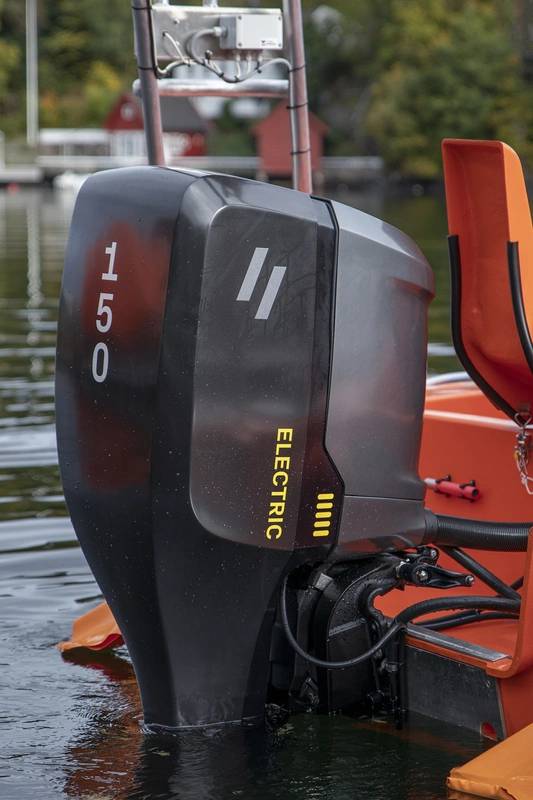
- Engine, battery or fuel-system deterioration causes difficult starting or failure to run during drills
- Release-hook, linkage or interlock wear causes stiff operation, incorrect indication or unsafe release behaviour
- Hull, canopy, window or seal damage causes water ingress or reduced weathertight integrity
- Steering or propulsion faults cause poor manoeuvrability, abnormal vibration or loss of thrust
- Inventory, securing or communication-equipment deficiencies are noticed during drills or statutory inspection
- High launch speed (≈30 kn) enables quick response to man‑over‑board incidents
- Self‑righting hull with inflatable collar provides added safety in rough seas
- Compact size fits on a wide range of merchant vessels and can be stored on deck or in a cradle
- Integrated towing hook allows immediate assistance to disabled ships
- Outboard engine is a single point of failure; starting issues have been reported
- Inflatable collar is vulnerable to puncture if not inspected regularly
- Towing‑hook release mechanism can jam, requiring manual intervention
- Requires weekly engine run‑test and monthly pressure checks, increasing maintenance workload
PALFINGER
1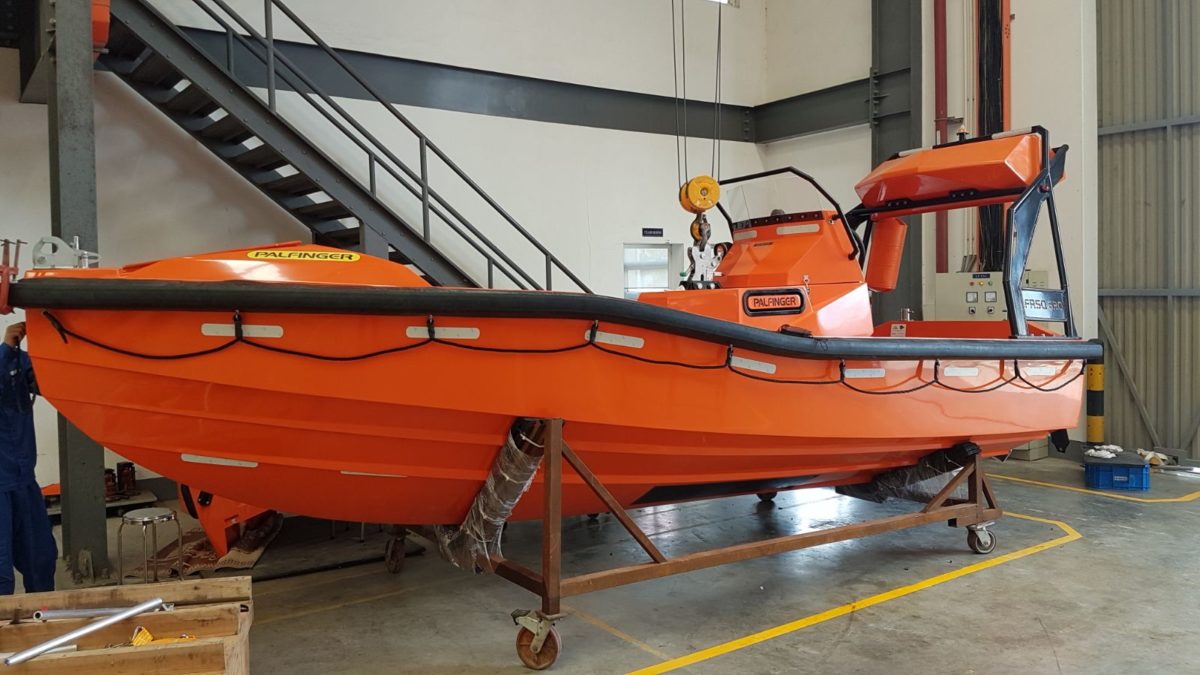
- Engine, battery or fuel-system deterioration causes difficult starting or failure to run during drills
- Release-hook, linkage or interlock wear causes stiff operation, incorrect indication or unsafe release behaviour
- Hull, canopy, window or seal damage causes water ingress or reduced weathertight integrity
- Steering or propulsion faults cause poor manoeuvrability, abnormal vibration or loss of thrust
- Inventory, securing or communication-equipment deficiencies are noticed during drills or statutory inspection
- Compact size enables storage on deck and quick launch from most vessel types
- Jet propulsion eliminates propeller entanglement with debris or personnel in the water
- High maneuverability for precise positioning during rescue missions
- Robust hull construction (fiberglass/aluminium) offers durability in harsh sea conditions
- Integrated mounting points for rescue equipment and navigation lights
- Jet intake can become blocked by debris, requiring thorough flushing after each use
- Steering cable is prone to stretch over time; replacement recommended every 5 years
- Navigation light wiring may corrode in salty environments if not regularly inspected
- Limited passenger/cargo capacity compared with larger RIBs (typically 4‑6 persons)
- Top speed may be lower than comparable outboard‑powered rescue boats