OceanSphere
Engines

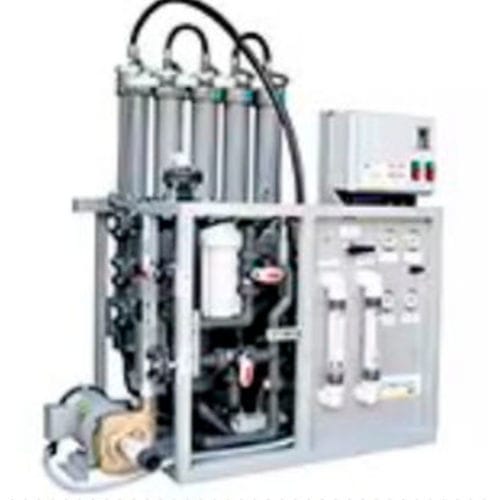
Potable Water Treatment System

medium 27 models total

A potable water treatment system disinfects and conditions water taken from a shore connection or the ship's own fresh water generator before it reaches the distribution main, because stored water sitting in tanks for days at a time will not stay safe to drink on its own.

Read more — Potable Water Treatment System explained

What defines a potable water treatment system

Treatment sits between the water source — bunkered shore water or the ship's fresh water generator (evaporator or reverse osmosis plant) — and the storage tanks and distribution main that supply taps, galley and washrooms. Its job is disinfection and, where needed, conditioning: killing or inactivating bacteria, adjusting pH, and in some designs remineralising water that has come from reverse osmosis or evaporation with almost no dissolved solids at all. This is a different function from the fresh water generator itself, which only removes salt; water leaving an evaporator or RO plant is not automatically safe to drink until it has been through disinfection and, typically, has had a residual disinfectant maintained through the distribution system.
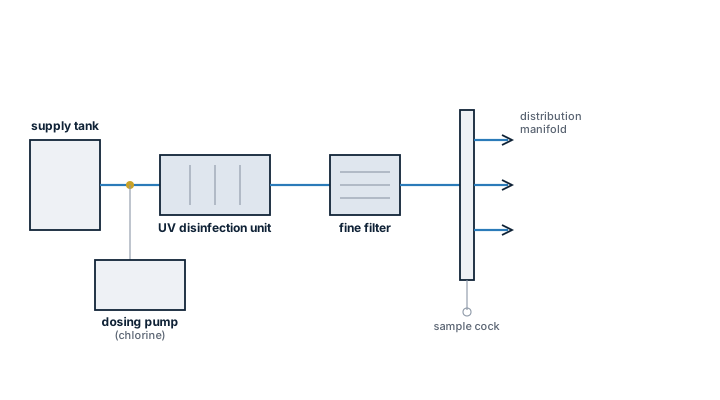
Potable water treatment process
Flow diagram of a shipboard potable water treatment system showing supply from the tank, chlorine dosing, UV disinfection, fine filtration and delivery through the distribution manifold to accommodation, with a sample cock for testing.

Main components

Disinfection stage

Ultraviolet (UV) treatment, chlorination/hypochlorite dosing, or electrochlorination are the common methods; UV needs no chemical storage but leaves no residual protection in the tank, so many systems combine UV at the point of generation with a small chlorine residual maintained in storage.

Filtration

Particulate and, on some systems, activated carbon filtration ahead of disinfection to remove sediment and improve UV or chlorine effectiveness, since suspended solids shield micro-organisms from both.

Remineralisation/pH adjustment

Where the water source is RO or evaporator output, a calcite or dosing stage adds back minerals and corrects pH, both for taste and to reduce the corrosivity of very pure water on the pipework it flows through.

Storage tank and distribution monitoring

Potable water tanks, distribution pumps and, on well-equipped systems, an inline residual chlorine and conductivity monitor that flags a treatment failure before it reaches the tap.

Selection and sizing

Capacity is matched to the fresh water generator's output or the expected bunkering rate, expressed in litres or cubic metres per hour, sized so treatment is never the bottleneck against demand. Disinfection method selection depends on crew size, water source variability (shore bunkering in ports of uncertain water quality versus a consistent RO feed) and the owner's maintenance preference — UV lamps need periodic replacement and sleeve cleaning, chlorination needs chemical stock and dosing pump maintenance. Sensor placement for residual chlorine or conductivity monitoring should cover both the point of treatment and a point in the distribution main, not just the tank inlet.

Regulations and class

Potable water quality standards on ships are commonly benchmarked against the WHO Guidelines for Drinking-water Quality, referenced directly by many flag administrations and by the ISM Code's requirement for safe water supply as part of the safety management system. Class societies with a healthy ship or comparable notation set specific requirements for treatment, monitoring and record keeping of water quality tests. Regular bacteriological and chemical testing, logged and retained, is expected at Port State Control and flag inspections, alongside physical inspection of tank coatings and cross-connection prevention between potable and non-potable systems.

CheckTypical frequency
Residual disinfectant levelDaily to weekly, per SMS procedure
Bacteriological samplingMonthly, or per flag/company requirement
Tank internal inspectionAnnually or at drydock, coating condition
UV lamp/sleeve replacementPer manufacturer hours rating, typically 1-2 years

Typical faults

  • UV lamp degradation — output falls well before the lamp visibly fails, silently reducing disinfection effectiveness unless UV intensity is actually monitored, not just lamp-on status.
  • Loss of chlorine residual — dosing pump fault or empty chemical stock lets residual protection lapse in storage tanks, allowing bacterial regrowth over days.
  • Tank coating breakdown — corrosion or coating failure introduces contamination and metallic taste, and is often only found at internal inspection.
  • Cross-connection with non-potable systems — an incorrectly valved or piped connection to a non-potable system is a serious contamination risk and a common finding when systems are modified without updating the piping diagram.

What to look for in a supplier

  • Documented UV dose or chlorine dosing rate matched to the actual flow rate and water quality expected, not a generic default setting.
  • Availability of consumables — UV lamps, sleeves, dosing chemicals, test kits — through the ship's normal supply chain and ports of call.
  • Inline monitoring with an alarm output to the ship's alarm system, so a treatment failure is flagged rather than discovered by taste or illness.
  • Compliance documentation referencing WHO guidelines or the specific flag/class standard the vessel is certified to.

Monitor UV intensity or chlorine residual directly, never lamp-on status or dosing pump running hours alone: a UV lamp can be lit and still be putting out too little dose to disinfect, and the only way to know is to measure it.

8 manufacturers · 27 models

BLUEWATER Marine

4
BW Pro 50 Marine unverified
Capacity lpd
50
Treatment Type
RO + UV + Mineralization
Common Failures & Inspection Points
  • Loss of electrical, hydraulic, pneumatic, fluid, or other service supply from a protection trip, leakage, blockage, or upstream fault results in failed starting or loss of function
  • Mechanical wear, corrosion, fouling, or contamination of moving and wetted parts causes increased noise, leakage, sticking, vibration, or reduced performance
  • Seal, gasket, hose, cable, or connection deterioration from age, heat, vibration, or environmental exposure produces visible leakage, intermittent signals, or loss of pressure
  • Sensor, switch, actuator, relay, or control-system faults cause incorrect indication, nuisance alarms, failed automatic sequences, or loss of remote control
  • Incorrect adjustment, assembly, or maintenance leads to unstable operation, recurrent alarms, or performance that differs from the vessel's normal baseline
Service: Inspect the unit for leakage, corrosion, contamination, loose connections, abnormal noise or vibration, condition of guards and mountings, service supplies, controls, alarms, and functional performance. Use maintenance history to identify deterioration trends and refer to manufacturer documentation for exact settings, tolerances, test values, and overhaul criteria.
Spare Parts: Keep the manufacturer-recommended seals and gaskets, filters where fitted, fuses or protection items, common sensors and switches, and critical actuator, control, or wear components appropriate to the installed configuration. Exact part numbers and quantities must come from the manufacturer spare-parts documentation.
Use Cases: Used on vessel types fitted with potable water system equipment, including merchant, offshore, passenger, fishing, or workboat installations where this specific potable water treatment system duty is required.
BW Pro 100 Marine unverified
Capacity lpd
100
Treatment Type
RO + UV + Mineralization
Common Failures & Inspection Points
  • Pump seal or bearing wear, typically indicated by leakage, noise or reduced delivery
  • Pressure-vessel bladder/air-charge problem, typically indicated by rapid pump cycling or unstable pressure
  • Pressure switch/sensor fault, typically indicated by incorrect start/stop or pressure alarms
  • Filter or treatment-path blockage, typically indicated by low flow or pressure
  • Contamination or biofilm from poor hygiene/control, typically indicated by water-quality test failure, odor or discoloration
Service: Inspect pumps, pressure vessels, switches, non-return valves, filters, disinfection/treatment equipment and hygiene records; exact pressure and water-quality limits follow approved vessel and health requirements.
Spare Parts: Keep pump seal kits, pressure switches/sensors, non-return valves, filters, dosing/UV consumables and critical control parts.
Use Cases: Used on all inhabited vessels to distribute treated freshwater to accommodation, galley and sanitary consumers. This entry applies specifically to the Potable Water Treatment System variant identified as BLUEWATER Marine BW Pro 100 Marine.
BW Pro 200 Marine unverified
Capacity lpd
200
Treatment Type
RO + UV + Mineralization
Common Failures & Inspection Points
  • Pump seal or bearing wear, typically indicated by leakage, noise or reduced delivery
  • Pressure-vessel bladder/air-charge problem, typically indicated by rapid pump cycling or unstable pressure
  • Pressure switch/sensor fault, typically indicated by incorrect start/stop or pressure alarms
  • Filter or treatment-path blockage, typically indicated by low flow or pressure
  • Contamination or biofilm from poor hygiene/control, typically indicated by water-quality test failure, odor or discoloration
Service: Inspect pumps, pressure vessels, switches, non-return valves, filters, disinfection/treatment equipment and hygiene records; exact pressure and water-quality limits follow approved vessel and health requirements.
Spare Parts: Keep pump seal kits, pressure switches/sensors, non-return valves, filters, dosing/UV consumables and critical control parts.
Use Cases: Used on all inhabited vessels to distribute treated freshwater to accommodation, galley and sanitary consumers. This entry applies specifically to the Potable Water Treatment System variant identified as BLUEWATER Marine BW Pro 200 Marine.
BW Pro 400 Marine unverified
Capacity lpd
400
Treatment Type
RO + UV + Mineralization
Common Failures & Inspection Points
  • Pump seal or bearing wear, typically indicated by leakage, noise or reduced delivery
  • Pressure-vessel bladder/air-charge problem, typically indicated by rapid pump cycling or unstable pressure
  • Pressure switch/sensor fault, typically indicated by incorrect start/stop or pressure alarms
  • Filter or treatment-path blockage, typically indicated by low flow or pressure
  • Contamination or biofilm from poor hygiene/control, typically indicated by water-quality test failure, odor or discoloration
Service: Inspect pumps, pressure vessels, switches, non-return valves, filters, disinfection/treatment equipment and hygiene records; exact pressure and water-quality limits follow approved vessel and health requirements.
Spare Parts: Keep pump seal kits, pressure switches/sensors, non-return valves, filters, dosing/UV consumables and critical control parts.
Use Cases: Used on all inhabited vessels to distribute treated freshwater to accommodation, galley and sanitary consumers. This entry applies specifically to the Potable Water Treatment System variant identified as BLUEWATER Marine BW Pro 400 Marine.

Katadyn/Spectra

4
Newport 400 Marine unverified
Capacity lpd
400
Treatment Type
RO + UV + Mineralization
Common Failures & Inspection Points
  • Pump seal or bearing wear, typically indicated by leakage, noise or reduced delivery
  • Pressure-vessel bladder/air-charge problem, typically indicated by rapid pump cycling or unstable pressure
  • Pressure switch/sensor fault, typically indicated by incorrect start/stop or pressure alarms
  • Filter or treatment-path blockage, typically indicated by low flow or pressure
  • Contamination or biofilm from poor hygiene/control, typically indicated by water-quality test failure, odor or discoloration
Service: Inspect pumps, pressure vessels, switches, non-return valves, filters, disinfection/treatment equipment and hygiene records; exact pressure and water-quality limits follow approved vessel and health requirements.
Spare Parts: Keep pump seal kits, pressure switches/sensors, non-return valves, filters, dosing/UV consumables and critical control parts.
Use Cases: Used on all inhabited vessels to distribute treated freshwater to accommodation, galley and sanitary consumers. This entry applies specifically to the Potable Water Treatment System variant identified as Katadyn/Spectra Newport 400 Marine.
Ventura 150 Marine unverified
Capacity lpd
150
Treatment Type
RO + UV + Mineralization
Common Failures & Inspection Points
  • Pump seal or bearing wear, typically indicated by leakage, noise or reduced delivery
  • Pressure-vessel bladder/air-charge problem, typically indicated by rapid pump cycling or unstable pressure
  • Pressure switch/sensor fault, typically indicated by incorrect start/stop or pressure alarms
  • Filter or treatment-path blockage, typically indicated by low flow or pressure
  • Contamination or biofilm from poor hygiene/control, typically indicated by water-quality test failure, odor or discoloration
Service: Inspect pumps, pressure vessels, switches, non-return valves, filters, disinfection/treatment equipment and hygiene records; exact pressure and water-quality limits follow approved vessel and health requirements.
Spare Parts: Keep pump seal kits, pressure switches/sensors, non-return valves, filters, dosing/UV consumables and critical control parts.
Use Cases: Used on all inhabited vessels to distribute treated freshwater to accommodation, galley and sanitary consumers. This entry applies specifically to the Potable Water Treatment System variant identified as Katadyn/Spectra Ventura 150 Marine.
Catalina 340 Marine unverified
Capacity lpd
340
Treatment Type
RO + UV + Mineralization
Common Failures & Inspection Points
  • Pump seal or bearing wear, typically indicated by leakage, noise or reduced delivery
  • Pressure-vessel bladder/air-charge problem, typically indicated by rapid pump cycling or unstable pressure
  • Pressure switch/sensor fault, typically indicated by incorrect start/stop or pressure alarms
  • Filter or treatment-path blockage, typically indicated by low flow or pressure
  • Contamination or biofilm from poor hygiene/control, typically indicated by water-quality test failure, odor or discoloration
Service: Inspect pumps, pressure vessels, switches, non-return valves, filters, disinfection/treatment equipment and hygiene records; exact pressure and water-quality limits follow approved vessel and health requirements.
Spare Parts: Keep pump seal kits, pressure switches/sensors, non-return valves, filters, dosing/UV consumables and critical control parts.
Use Cases: Used on all inhabited vessels to distribute treated freshwater to accommodation, galley and sanitary consumers. This entry applies specifically to the Potable Water Treatment System variant identified as Katadyn/Spectra Catalina 340 Marine.
Cape Horn Watermaker Marine unverified
Capacity lpd
100
Treatment Type
RO + UV + Mineralization
Common Failures & Inspection Points
  • Loss of pressure or treatment performance caused by pump, filter, lamp, media or control faults, resulting in poor water supply or inadequate treatment indication
  • Sensor or monitoring fault caused by fouling, calibration drift or wiring problems, resulting in implausible pressure or water-quality readings
  • Valve or non-return-valve failure caused by wear, scale or contamination, resulting in pressure loss, backflow or unstable pump cycling
  • Leakage caused by seal, housing, pressure-vessel or piping deterioration, resulting in water loss and wet equipment spaces
  • Control or power failure caused by electrical faults, loose connections or failed relays, resulting in inability to maintain treatment or distribution
Service: Inspect pumps, pressure vessel, filters, treatment elements, lamps, valves, sensors and sample points applicable to the installed system. Maintain hygienic conditions during any opening of potable-water equipment and prevent cross-contamination from tools or chemicals. Trend pressure, pump cycling and water-quality indications and investigate abnormal values promptly. Verify alarms and automatic changeover or shutdown functions after maintenance. Check approved treatment consumables and pressure-vessel condition as applicable. Refer to the manufacturer documentation for the exact figure for pressure settings, lamp replacement, dosing and water-quality limits.
Spare Parts: Keep pump seals, filters, approved treatment media or lamps as applicable, pressure switches or sensors, valves and manufacturer-recommended control components. Chemicals and wetted parts must be approved for potable-water service. Confirm all replacement parts against the exact unit and process configuration.
Use Cases: Potable-water pressurization, conditioning and disinfection on merchant ships, passenger vessels, offshore units and other vessels with onboard freshwater distribution.

Parker Village Marine

4
Parker/Village Marine VM LT-1800 Marine
VM LT-1800 Marine unverified
Capacity lpd
1800
Treatment Type
RO + UV + Mineralization
Common Failures & Inspection Points
  • Scale, exhausted media or dirty treatment surfaces reduce treatment effectiveness and cause poor water quality
  • Lamp, dosing pump, valve or power-supply faults cause loss of treatment and system alarms
  • Sensor, conductivity or dosing-control faults cause under-treatment, over-treatment or false indication
  • Filter or strainer blockage reduces flow and increases differential pressure
  • Seal, vessel or piping leakage causes water loss and may contaminate the treatment area
Service: Inspect treatment elements, filters, pumps, dosing equipment, sensors, valves and leakage according to the installed process. Trend water-quality results and replace or regenerate treatment media using approved procedures. Keep chemical and UV safety controls intact. Refer to the manufacturer documentation for the exact figure for dose, flow, regeneration and water-quality criteria.
Spare Parts: Carry filters, lamps or treatment media as applicable, pump seals, dosing tubing, sensors, valve parts and approved treatment consumables.
Use Cases: Potable-water disinfection, softening, mineral conditioning and domestic water treatment.
Parker/Village Marine VM LT-3000 Marine
VM LT-3000 Marine unverified
Capacity lpd
3000
Treatment Type
RO + UV + Mineralization
Common Failures & Inspection Points
  • Scale, exhausted media or dirty treatment surfaces reduce treatment effectiveness and cause poor water quality
  • Lamp, dosing pump, valve or power-supply faults cause loss of treatment and system alarms
  • Sensor, conductivity or dosing-control faults cause under-treatment, over-treatment or false indication
  • Filter or strainer blockage reduces flow and increases differential pressure
  • Seal, vessel or piping leakage causes water loss and may contaminate the treatment area
Service: Inspect treatment elements, filters, pumps, dosing equipment, sensors, valves and leakage according to the installed process. Trend water-quality results and replace or regenerate treatment media using approved procedures. Keep chemical and UV safety controls intact. Refer to the manufacturer documentation for the exact figure for dose, flow, regeneration and water-quality criteria.
Spare Parts: Carry filters, lamps or treatment media as applicable, pump seals, dosing tubing, sensors, valve parts and approved treatment consumables.
Use Cases: Potable-water disinfection, softening, mineral conditioning and domestic water treatment.
Parker/Village Marine VM LT-5000 Marine
VM LT-5000 Marine unverified
Capacity lpd
5000
Treatment Type
RO + UV + Mineralization
Common Failures & Inspection Points
  • Scale, exhausted media or dirty treatment surfaces reduce treatment effectiveness and cause poor water quality
  • Lamp, dosing pump, valve or power-supply faults cause loss of treatment and system alarms
  • Sensor, conductivity or dosing-control faults cause under-treatment, over-treatment or false indication
  • Filter or strainer blockage reduces flow and increases differential pressure
  • Seal, vessel or piping leakage causes water loss and may contaminate the treatment area
Service: Inspect treatment elements, filters, pumps, dosing equipment, sensors, valves and leakage according to the installed process. Trend water-quality results and replace or regenerate treatment media using approved procedures. Keep chemical and UV safety controls intact. Refer to the manufacturer documentation for the exact figure for dose, flow, regeneration and water-quality criteria.
Spare Parts: Carry filters, lamps or treatment media as applicable, pump seals, dosing tubing, sensors, valve parts and approved treatment consumables.
Use Cases: Potable-water disinfection, softening, mineral conditioning and domestic water treatment.
Parker/Village Marine VM LT-8000 Marine
VM LT-8000 Marine unverified
Capacity lpd
8000
Treatment Type
RO + UV + Mineralization
Common Failures & Inspection Points
  • Scale, exhausted media or dirty treatment surfaces reduce treatment effectiveness and cause poor water quality
  • Lamp, dosing pump, valve or power-supply faults cause loss of treatment and system alarms
  • Sensor, conductivity or dosing-control faults cause under-treatment, over-treatment or false indication
  • Filter or strainer blockage reduces flow and increases differential pressure
  • Seal, vessel or piping leakage causes water loss and may contaminate the treatment area
Service: Inspect treatment elements, filters, pumps, dosing equipment, sensors, valves and leakage according to the installed process. Trend water-quality results and replace or regenerate treatment media using approved procedures. Keep chemical and UV safety controls intact. Refer to the manufacturer documentation for the exact figure for dose, flow, regeneration and water-quality criteria.
Spare Parts: Carry filters, lamps or treatment media as applicable, pump seals, dosing tubing, sensors, valve parts and approved treatment consumables.
Use Cases: Potable-water disinfection, softening, mineral conditioning and domestic water treatment.

Sasakura

4
PW-RO 100 Marine unverified
Capacity lpd
100
Treatment Type
RO + UV + Mineralization
Common Failures & Inspection Points
  • Loss of electrical, hydraulic, pneumatic, or other service supply caused by a tripped protection device, leakage, blockage, or upstream fault results in failed starting or loss of function
  • Mechanical wear, corrosion, fouling, or contamination of moving and wetted parts causes increased noise, leakage, sticking, vibration, or reduced performance
  • Seal, gasket, hose, cable, or connection deterioration from age, heat, vibration, or environmental exposure produces visible leakage, intermittent signals, or loss of pressure
  • Sensor, switch, actuator, relay, or control-system faults can cause incorrect indication, nuisance alarms, failed automatic sequences, or loss of remote control
  • Incorrect adjustment, assembly, or maintenance can lead to unstable operation, recurrent alarms, or performance that differs from the vessel's normal baseline
Service: Inspect the unit for leakage, corrosion, contamination, loose connections, abnormal noise or vibration, condition of guards and mountings, service supplies, controls, alarms, and functional performance. Use the vessel maintenance history to identify deterioration trends and refer to the manufacturer documentation for exact settings, tolerances, test values, and overhaul criteria.
Spare Parts: Keep the manufacturer-recommended seals and gaskets, filters where fitted, fuses or protection items, common sensors and switches, and critical actuator, control, or wear components appropriate to the installed configuration. Exact part numbers and quantities must come from the manufacturer spare-parts documentation.
Use Cases: Used on vessel types fitted with potable water system equipment, including merchant, offshore, passenger, fishing, or workboat installations where this specific potable water treatment system duty is required.
PW-RO 200 Marine unverified
Capacity lpd
200
Treatment Type
RO + UV + Mineralization
Common Failures & Inspection Points
  • Loss of electrical, hydraulic, pneumatic, or other service supply caused by a tripped protection device, leakage, blockage, or upstream fault results in failed starting or loss of function
  • Mechanical wear, corrosion, fouling, or contamination of moving and wetted parts causes increased noise, leakage, sticking, vibration, or reduced performance
  • Seal, gasket, hose, cable, or connection deterioration from age, heat, vibration, or environmental exposure produces visible leakage, intermittent signals, or loss of pressure
  • Sensor, switch, actuator, relay, or control-system faults can cause incorrect indication, nuisance alarms, failed automatic sequences, or loss of remote control
  • Incorrect adjustment, assembly, or maintenance can lead to unstable operation, recurrent alarms, or performance that differs from the vessel's normal baseline
Service: Inspect the unit for leakage, corrosion, contamination, loose connections, abnormal noise or vibration, condition of guards and mountings, service supplies, controls, alarms, and functional performance. Use the vessel maintenance history to identify deterioration trends and refer to the manufacturer documentation for exact settings, tolerances, test values, and overhaul criteria.
Spare Parts: Keep the manufacturer-recommended seals and gaskets, filters where fitted, fuses or protection items, common sensors and switches, and critical actuator, control, or wear components appropriate to the installed configuration. Exact part numbers and quantities must come from the manufacturer spare-parts documentation.
Use Cases: Used on vessel types fitted with potable water system equipment, including merchant, offshore, passenger, fishing, or workboat installations where this specific potable water treatment system duty is required.
PW-RO 400 Marine unverified
Capacity lpd
400
Treatment Type
RO + UV + Mineralization
Common Failures & Inspection Points
  • Loss of electrical, hydraulic, pneumatic, or other service supply caused by a tripped protection device, leakage, blockage, or upstream fault results in failed starting or loss of function
  • Mechanical wear, corrosion, fouling, or contamination of moving and wetted parts causes increased noise, leakage, sticking, vibration, or reduced performance
  • Seal, gasket, hose, cable, or connection deterioration from age, heat, vibration, or environmental exposure produces visible leakage, intermittent signals, or loss of pressure
  • Sensor, switch, actuator, relay, or control-system faults can cause incorrect indication, nuisance alarms, failed automatic sequences, or loss of remote control
  • Incorrect adjustment, assembly, or maintenance can lead to unstable operation, recurrent alarms, or performance that differs from the vessel's normal baseline
Service: Inspect the unit for leakage, corrosion, contamination, loose connections, abnormal noise or vibration, condition of guards and mountings, service supplies, controls, alarms, and functional performance. Use the vessel maintenance history to identify deterioration trends and refer to the manufacturer documentation for exact settings, tolerances, test values, and overhaul criteria.
Spare Parts: Keep the manufacturer-recommended seals and gaskets, filters where fitted, fuses or protection items, common sensors and switches, and critical actuator, control, or wear components appropriate to the installed configuration. Exact part numbers and quantities must come from the manufacturer spare-parts documentation.
Use Cases: Used on vessel types fitted with potable water system equipment, including merchant, offshore, passenger, fishing, or workboat installations where this specific potable water treatment system duty is required.
PW-RO 600 Marine unverified
Capacity lpd
600
Treatment Type
RO + UV + Mineralization
Common Failures & Inspection Points
  • Loss of electrical, hydraulic, pneumatic, or other service supply caused by a tripped protection device, leakage, blockage, or upstream fault results in failed starting or loss of function
  • Mechanical wear, corrosion, fouling, or contamination of moving and wetted parts causes increased noise, leakage, sticking, vibration, or reduced performance
  • Seal, gasket, hose, cable, or connection deterioration from age, heat, vibration, or environmental exposure produces visible leakage, intermittent signals, or loss of pressure
  • Sensor, switch, actuator, relay, or control-system faults can cause incorrect indication, nuisance alarms, failed automatic sequences, or loss of remote control
  • Incorrect adjustment, assembly, or maintenance can lead to unstable operation, recurrent alarms, or performance that differs from the vessel's normal baseline
Service: Inspect the unit for leakage, corrosion, contamination, loose connections, abnormal noise or vibration, condition of guards and mountings, service supplies, controls, alarms, and functional performance. Use the vessel maintenance history to identify deterioration trends and refer to the manufacturer documentation for exact settings, tolerances, test values, and overhaul criteria.
Spare Parts: Keep the manufacturer-recommended seals and gaskets, filters where fitted, fuses or protection items, common sensors and switches, and critical actuator, control, or wear components appropriate to the installed configuration. Exact part numbers and quantities must come from the manufacturer spare-parts documentation.
Use Cases: Used on vessel types fitted with potable water system equipment, including merchant, offshore, passenger, fishing, or workboat installations where this specific potable water treatment system duty is required.

Alfa Laval

3
Alfa Laval AQUA Blue PW 100 Marine
AQUA Blue PW 100 Marine unverified
Capacity lpd
100
Treatment Type
RO + UV + Mineralization
Common Failures & Inspection Points
  • Pump seal or bearing wear, typically indicated by leakage, noise or reduced delivery
  • Pressure-vessel bladder/air-charge problem, typically indicated by rapid pump cycling or unstable pressure
  • Pressure switch/sensor fault, typically indicated by incorrect start/stop or pressure alarms
  • Filter or treatment-path blockage, typically indicated by low flow or pressure
  • Contamination or biofilm from poor hygiene/control, typically indicated by water-quality test failure, odor or discoloration
Service: Inspect pumps, pressure vessels, switches, non-return valves, filters, disinfection/treatment equipment and hygiene records; exact pressure and water-quality limits follow approved vessel and health requirements.
Spare Parts: Keep pump seal kits, pressure switches/sensors, non-return valves, filters, dosing/UV consumables and critical control parts.
Use Cases: Used on all inhabited vessels to distribute treated freshwater to accommodation, galley and sanitary consumers. This entry applies specifically to the Potable Water Treatment System variant identified as Alfa Laval AQUA Blue PW 100 Marine.
Alfa Laval AQUA Blue PW 200 Marine
AQUA Blue PW 200 Marine unverified
Capacity lpd
200
Treatment Type
RO + UV + Mineralization
Common Failures & Inspection Points
  • Pump seal or bearing wear, typically indicated by leakage, noise or reduced delivery
  • Pressure-vessel bladder/air-charge problem, typically indicated by rapid pump cycling or unstable pressure
  • Pressure switch/sensor fault, typically indicated by incorrect start/stop or pressure alarms
  • Filter or treatment-path blockage, typically indicated by low flow or pressure
  • Contamination or biofilm from poor hygiene/control, typically indicated by water-quality test failure, odor or discoloration
Service: Inspect pumps, pressure vessels, switches, non-return valves, filters, disinfection/treatment equipment and hygiene records; exact pressure and water-quality limits follow approved vessel and health requirements.
Spare Parts: Keep pump seal kits, pressure switches/sensors, non-return valves, filters, dosing/UV consumables and critical control parts.
Use Cases: Used on all inhabited vessels to distribute treated freshwater to accommodation, galley and sanitary consumers. This entry applies specifically to the Potable Water Treatment System variant identified as Alfa Laval AQUA Blue PW 200 Marine.
AQUA Blue PW 500 Marine unverified
Capacity lpd
500
Treatment Type
RO + UV + Mineralization
Common Failures & Inspection Points
  • Pump seal or bearing wear, typically indicated by leakage, noise or reduced delivery
  • Pressure-vessel bladder/air-charge problem, typically indicated by rapid pump cycling or unstable pressure
  • Pressure switch/sensor fault, typically indicated by incorrect start/stop or pressure alarms
  • Filter or treatment-path blockage, typically indicated by low flow or pressure
  • Contamination or biofilm from poor hygiene/control, typically indicated by water-quality test failure, odor or discoloration
Service: Inspect pumps, pressure vessels, switches, non-return valves, filters, disinfection/treatment equipment and hygiene records; exact pressure and water-quality limits follow approved vessel and health requirements.
Spare Parts: Keep pump seal kits, pressure switches/sensors, non-return valves, filters, dosing/UV consumables and critical control parts.
Use Cases: Used on all inhabited vessels to distribute treated freshwater to accommodation, galley and sanitary consumers. This entry applies specifically to the Potable Water Treatment System variant identified as Alfa Laval AQUA Blue PW 500 Marine.

ENWA Marine

3
PW-100 Marine unverified
Capacity lpd
100
Treatment Type
RO + UV + Mineralization
Common Failures & Inspection Points
  • Loss of electrical, hydraulic, pneumatic, or other service supply caused by a tripped protection device, leakage, blockage, or upstream fault results in failed starting or loss of function
  • Mechanical wear, corrosion, fouling, or contamination of moving and wetted parts causes increased noise, leakage, sticking, vibration, or reduced performance
  • Seal, gasket, hose, cable, or connection deterioration from age, heat, vibration, or environmental exposure produces visible leakage, intermittent signals, or loss of pressure
  • Sensor, switch, actuator, relay, or control-system faults can cause incorrect indication, nuisance alarms, failed automatic sequences, or loss of remote control
  • Incorrect adjustment, assembly, or maintenance can lead to unstable operation, recurrent alarms, or performance that differs from the vessel's normal baseline
Service: Inspect the unit for leakage, corrosion, contamination, loose connections, abnormal noise or vibration, condition of guards and mountings, service supplies, controls, alarms, and functional performance. Use the vessel maintenance history to identify deterioration trends and refer to the manufacturer documentation for exact settings, tolerances, test values, and overhaul criteria.
Spare Parts: Keep the manufacturer-recommended seals and gaskets, filters where fitted, fuses or protection items, common sensors and switches, and critical actuator, control, or wear components appropriate to the installed configuration. Exact part numbers and quantities must come from the manufacturer spare-parts documentation.
Use Cases: Used on vessel types fitted with potable water system equipment, including merchant, offshore, passenger, fishing, or workboat installations where this specific potable water treatment system duty is required.
PW-200 Marine unverified
Capacity lpd
200
Treatment Type
RO + UV + Mineralization
Common Failures & Inspection Points
  • Loss of electrical, hydraulic, pneumatic, or other service supply caused by a tripped protection device, leakage, blockage, or upstream fault results in failed starting or loss of function
  • Mechanical wear, corrosion, fouling, or contamination of moving and wetted parts causes increased noise, leakage, sticking, vibration, or reduced performance
  • Seal, gasket, hose, cable, or connection deterioration from age, heat, vibration, or environmental exposure produces visible leakage, intermittent signals, or loss of pressure
  • Sensor, switch, actuator, relay, or control-system faults can cause incorrect indication, nuisance alarms, failed automatic sequences, or loss of remote control
  • Incorrect adjustment, assembly, or maintenance can lead to unstable operation, recurrent alarms, or performance that differs from the vessel's normal baseline
Service: Inspect the unit for leakage, corrosion, contamination, loose connections, abnormal noise or vibration, condition of guards and mountings, service supplies, controls, alarms, and functional performance. Use the vessel maintenance history to identify deterioration trends and refer to the manufacturer documentation for exact settings, tolerances, test values, and overhaul criteria.
Spare Parts: Keep the manufacturer-recommended seals and gaskets, filters where fitted, fuses or protection items, common sensors and switches, and critical actuator, control, or wear components appropriate to the installed configuration. Exact part numbers and quantities must come from the manufacturer spare-parts documentation.
Use Cases: Used on vessel types fitted with potable water system equipment, including merchant, offshore, passenger, fishing, or workboat installations where this specific potable water treatment system duty is required.
PW-500 Marine unverified
Capacity lpd
500
Treatment Type
RO + UV + Mineralization
Common Failures & Inspection Points
  • Loss of electrical, hydraulic, pneumatic, or other service supply caused by a tripped protection device, leakage, blockage, or upstream fault results in failed starting or loss of function
  • Mechanical wear, corrosion, fouling, or contamination of moving and wetted parts causes increased noise, leakage, sticking, vibration, or reduced performance
  • Seal, gasket, hose, cable, or connection deterioration from age, heat, vibration, or environmental exposure produces visible leakage, intermittent signals, or loss of pressure
  • Sensor, switch, actuator, relay, or control-system faults can cause incorrect indication, nuisance alarms, failed automatic sequences, or loss of remote control
  • Incorrect adjustment, assembly, or maintenance can lead to unstable operation, recurrent alarms, or performance that differs from the vessel's normal baseline
Service: Inspect the unit for leakage, corrosion, contamination, loose connections, abnormal noise or vibration, condition of guards and mountings, service supplies, controls, alarms, and functional performance. Use the vessel maintenance history to identify deterioration trends and refer to the manufacturer documentation for exact settings, tolerances, test values, and overhaul criteria.
Spare Parts: Keep the manufacturer-recommended seals and gaskets, filters where fitted, fuses or protection items, common sensors and switches, and critical actuator, control, or wear components appropriate to the installed configuration. Exact part numbers and quantities must come from the manufacturer spare-parts documentation.
Use Cases: Used on vessel types fitted with potable water system equipment, including merchant, offshore, passenger, fishing, or workboat installations where this specific potable water treatment system duty is required.

RWO/Veolia

3
ClariSea PW 100 Marine unverified
Capacity lpd
100
Treatment Type
RO + UV + Mineralization
Common Failures & Inspection Points
  • Loss of electrical, hydraulic, pneumatic, fluid, or other service supply from a protection trip, leakage, blockage, or upstream fault results in failed starting or loss of function
  • Mechanical wear, corrosion, fouling, or contamination of moving and wetted parts causes increased noise, leakage, sticking, vibration, or reduced performance
  • Seal, gasket, hose, cable, or connection deterioration from age, heat, vibration, or environmental exposure produces visible leakage, intermittent signals, or loss of pressure
  • Sensor, switch, actuator, relay, or control-system faults cause incorrect indication, nuisance alarms, failed automatic sequences, or loss of remote control
  • Incorrect adjustment, assembly, or maintenance leads to unstable operation, recurrent alarms, or performance that differs from the vessel's normal baseline
Service: Inspect the unit for leakage, corrosion, contamination, loose connections, abnormal noise or vibration, condition of guards and mountings, service supplies, controls, alarms, and functional performance. Use maintenance history to identify deterioration trends and refer to manufacturer documentation for exact settings, tolerances, test values, and overhaul criteria.
Spare Parts: Keep the manufacturer-recommended seals and gaskets, filters where fitted, fuses or protection items, common sensors and switches, and critical actuator, control, or wear components appropriate to the installed configuration. Exact part numbers and quantities must come from the manufacturer spare-parts documentation.
Use Cases: Used on vessel types fitted with potable water system equipment, including merchant, offshore, passenger, fishing, or workboat installations where this specific potable water treatment system duty is required.
ClariSea PW 200 Marine unverified
Capacity lpd
200
Treatment Type
RO + UV + Mineralization
Common Failures & Inspection Points
  • Loss of electrical, hydraulic, pneumatic, fluid, or other service supply from a protection trip, leakage, blockage, or upstream fault results in failed starting or loss of function
  • Mechanical wear, corrosion, fouling, or contamination of moving and wetted parts causes increased noise, leakage, sticking, vibration, or reduced performance
  • Seal, gasket, hose, cable, or connection deterioration from age, heat, vibration, or environmental exposure produces visible leakage, intermittent signals, or loss of pressure
  • Sensor, switch, actuator, relay, or control-system faults cause incorrect indication, nuisance alarms, failed automatic sequences, or loss of remote control
  • Incorrect adjustment, assembly, or maintenance leads to unstable operation, recurrent alarms, or performance that differs from the vessel's normal baseline
Service: Inspect the unit for leakage, corrosion, contamination, loose connections, abnormal noise or vibration, condition of guards and mountings, service supplies, controls, alarms, and functional performance. Use maintenance history to identify deterioration trends and refer to manufacturer documentation for exact settings, tolerances, test values, and overhaul criteria.
Spare Parts: Keep the manufacturer-recommended seals and gaskets, filters where fitted, fuses or protection items, common sensors and switches, and critical actuator, control, or wear components appropriate to the installed configuration. Exact part numbers and quantities must come from the manufacturer spare-parts documentation.
Use Cases: Used on vessel types fitted with potable water system equipment, including merchant, offshore, passenger, fishing, or workboat installations where this specific potable water treatment system duty is required.
ClariSea PW 500 Marine unverified
Capacity lpd
500
Treatment Type
RO + UV + Mineralization
Common Failures & Inspection Points
  • Loss of electrical, hydraulic, pneumatic, fluid, or other service supply from a protection trip, leakage, blockage, or upstream fault results in failed starting or loss of function
  • Mechanical wear, corrosion, fouling, or contamination of moving and wetted parts causes increased noise, leakage, sticking, vibration, or reduced performance
  • Seal, gasket, hose, cable, or connection deterioration from age, heat, vibration, or environmental exposure produces visible leakage, intermittent signals, or loss of pressure
  • Sensor, switch, actuator, relay, or control-system faults cause incorrect indication, nuisance alarms, failed automatic sequences, or loss of remote control
  • Incorrect adjustment, assembly, or maintenance leads to unstable operation, recurrent alarms, or performance that differs from the vessel's normal baseline
Service: Inspect the unit for leakage, corrosion, contamination, loose connections, abnormal noise or vibration, condition of guards and mountings, service supplies, controls, alarms, and functional performance. Use maintenance history to identify deterioration trends and refer to manufacturer documentation for exact settings, tolerances, test values, and overhaul criteria.
Spare Parts: Keep the manufacturer-recommended seals and gaskets, filters where fitted, fuses or protection items, common sensors and switches, and critical actuator, control, or wear components appropriate to the installed configuration. Exact part numbers and quantities must come from the manufacturer spare-parts documentation.
Use Cases: Used on vessel types fitted with potable water system equipment, including merchant, offshore, passenger, fishing, or workboat installations where this specific potable water treatment system duty is required.

BWT Marine

2
AQA PW 100 Marine unverified
Capacity lpd
100
Treatment Type
RO + UV + Mineralization
Common Failures & Inspection Points
  • Filter, membrane, separator or treatment-stage fouling caused by solids, oil, scale or biological contamination can reduce throughput and increase differential pressure
  • Pump or valve faults caused by wear, blockage or actuator problems can cause low flow, unstable pressure or failure to complete an operating sequence
  • Sensor or monitor contamination caused by dirty process fluid or poor maintenance can produce implausible readings, alarms or automatic discharge inhibition
  • Seal, gasket or piping leakage caused by corrosion, ageing or vibration can lead to visible leakage, air ingress or loss of process pressure
  • Control or treatment-component failure caused by electrical faults, lamp or cell deterioration where fitted, or software issues can lead to shutdown or inability to meet the required treatment condition
Service: Inspect filters or treatment elements, pumps, valves, piping, sampling points and monitors, and review trend data for loss of throughput or abnormal pressure. Verify alarms, automatic diversion or interlocks where applicable and check cleanliness of sensors and sample lines. Use statutory procedures and manufacturer documentation for exact discharge, treatment and calibration limits.
Spare Parts: Typical spares include filters or treatment elements, seal and gasket kits, pump service parts, lamps or electrodes where applicable, monitor consumables, sensors and valve or actuator repair items.
Use Cases: Bilge-water treatment, fuel or lube purification, freshwater production, potable-water conditioning and ballast-water management on commercial vessels.
AQA PW 200 Marine unverified
Capacity lpd
200
Treatment Type
RO + UV + Mineralization
Common Failures & Inspection Points
  • Filter, membrane, separator or treatment-stage fouling caused by solids, oil, scale or biological contamination can reduce throughput and increase differential pressure
  • Pump or valve faults caused by wear, blockage or actuator problems can cause low flow, unstable pressure or failure to complete an operating sequence
  • Sensor or monitor contamination caused by dirty process fluid or poor maintenance can produce implausible readings, alarms or automatic discharge inhibition
  • Seal, gasket or piping leakage caused by corrosion, ageing or vibration can lead to visible leakage, air ingress or loss of process pressure
  • Control or treatment-component failure caused by electrical faults, lamp or cell deterioration where fitted, or software issues can lead to shutdown or inability to meet the required treatment condition
Service: Inspect filters or treatment elements, pumps, valves, piping, sampling points and monitors, and review trend data for loss of throughput or abnormal pressure. Verify alarms, automatic diversion or interlocks where applicable and check cleanliness of sensors and sample lines. Use statutory procedures and manufacturer documentation for exact discharge, treatment and calibration limits.
Spare Parts: Typical spares include filters or treatment elements, seal and gasket kits, pump service parts, lamps or electrodes where applicable, monitor consumables, sensors and valve or actuator repair items.
Use Cases: Bilge-water treatment, fuel or lube purification, freshwater production, potable-water conditioning and ballast-water management on commercial vessels.