Water Softener
A water softener removes calcium and magnesium hardness by ion exchange to protect boilers and heat exchangers from scale, a different job from the disinfection equipment it often sits next to in the same system.
Read more — Water Softener explained ▾
What defines this type
A water softener removes calcium and magnesium ions from feedwater by ion exchange, not by filtration or disinfection — it is solving scale formation, not bacterial growth. That puts it in a different job from the UV units and dosing skids that share this category: a softener protects boilers, evaporators, calorifiers and laundry equipment from limescale, and on many ships it never touches the potable water served to a cabin tap at all, because sodium-exchanged water is unsuitable for drinking in quantity.
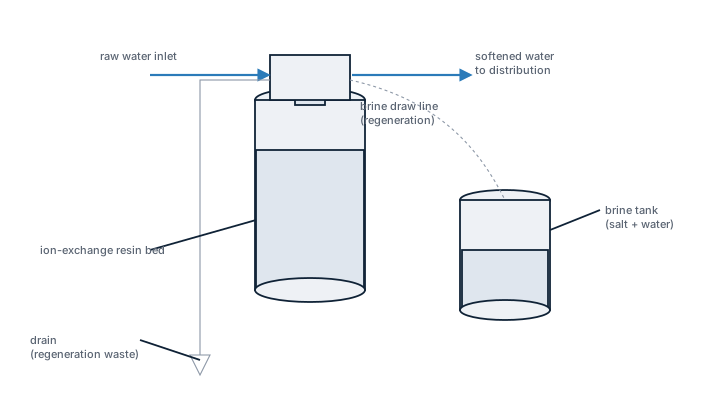
Main components
Resin vessel
A pressure vessel filled with sulfonated polystyrene cation exchange resin beads; as hard water passes through, the resin swaps calcium and magnesium ions in the water for sodium ions held on the resin.
Brine tank
Holds a saturated salt (sodium chloride) solution used to regenerate the resin once its exchange capacity is used up — the resin is flushed with brine, which reloads it with sodium and flushes the captured hardness ions to drain.
Control valve / head
Meters flow or runs on a timer to trigger regeneration, and sequences the backwash, brine draw, slow rinse and fast rinse stages automatically.
Bypass line
Lets untreated water reach taps where softened water is undesirable — drinking outlets, deck washdown — without cycling the full ship's supply through the resin bed.
Selection / Sizing
| Parameter | Why it matters |
|---|---|
| Feedwater hardness (grains per gallon or ppm CaCO3) | Sets resin capacity needed between regenerations |
| Peak flow rate | Undersized resin bed causes hardness breakthrough at peak demand |
| Resin volume | Directly sets total grains of hardness removable before regeneration |
| Regeneration frequency | Higher frequency raises salt and water consumption |
| Downstream use | Boiler feed tolerates near-zero hardness only; laundry is more forgiving |
Boiler feedwater is the sizing driver on most vessels: even trace hardness left untreated precipitates onto heat transfer surfaces inside a boiler and cuts efficiency sharply, so the softener is sized to guarantee near-zero hardness at the boiler's maximum feed rate, not at an average.
Regulations / Class
There is no SOLAS carriage requirement for a softener itself; the driver is class society guidance on boiler feedwater quality, which specifies maximum hardness, pH and dissolved oxygen limits that the treatment train — softener plus deaerator plus chemical dosing — must deliver together. Where softened water could reach a potable outlet, flag and port state drinking water rules apply to sodium content, which is why a bypass to raw or separately treated water for galley and drinking taps is standard practice rather than an optional extra.
Typical faults
- Resin fouling by iron or chlorine — iron in the feedwater oxidises onto the resin beads and permanently reduces exchange capacity; chlorine degrades the resin structure over time.
- Channeling — a resin bed that has compacted or partially fouled lets water find a low-resistance path through, so treated water leaves the vessel with hardness slipping through untouched.
- Brine line blockage — salt bridging or a clogged eductor stops brine draw, and the unit runs regeneration cycles that use water without actually regenerating.
- Undetected resin exhaustion — without a hardness test kept in the routine, a softener can run past its capacity for weeks before a scaled heat exchanger reveals the failure.
- Bypass valve left open or stuck — defeats the whole system silently; downstream equipment scales as if no softener were fitted at all.
What to look for in a supplier
- Resin exchange capacity rated in grains per cubic foot, not just vessel size, so sizing calculations are comparable across brands.
- Marine-grade or coated pressure vessels rated for the ship's feedwater pressure and vibration environment, not a shore-utility unit re-badged.
- A control head with a manual override and clear local indication, since remote diagnostics are of limited use mid-ocean.
- Resin and brine-system spares carried in a standard spares package, since resin replacement is a wear item, not a one-time purchase.
Test outlet hardness with a simple titration kit on a fixed schedule rather than trusting the regeneration timer — a softener can complete every programmed cycle and still be failing if the resin is fouled.
8 manufacturers · 108 models
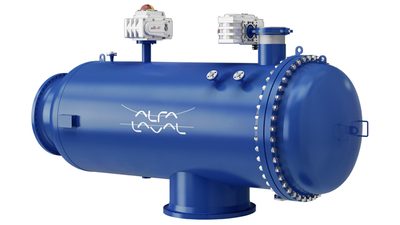
Alfa Laval
16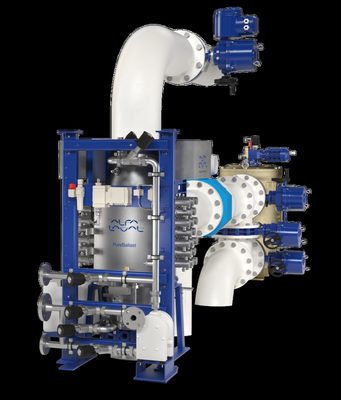



BWT Marine
16
ENWA Marine
16
RWO/Veolia
16
Evoqua/Xylem Marine
11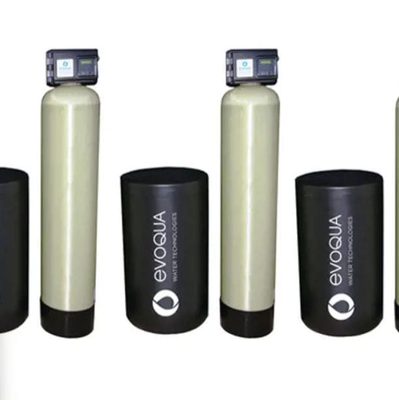
Lutz-Jesco Marine
11
Prominent Marine
11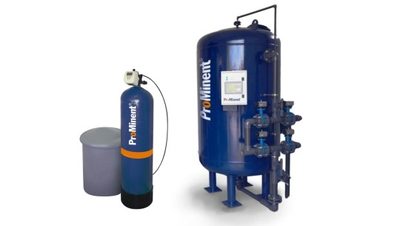
Sasakura
11