OceanSphere
Engines

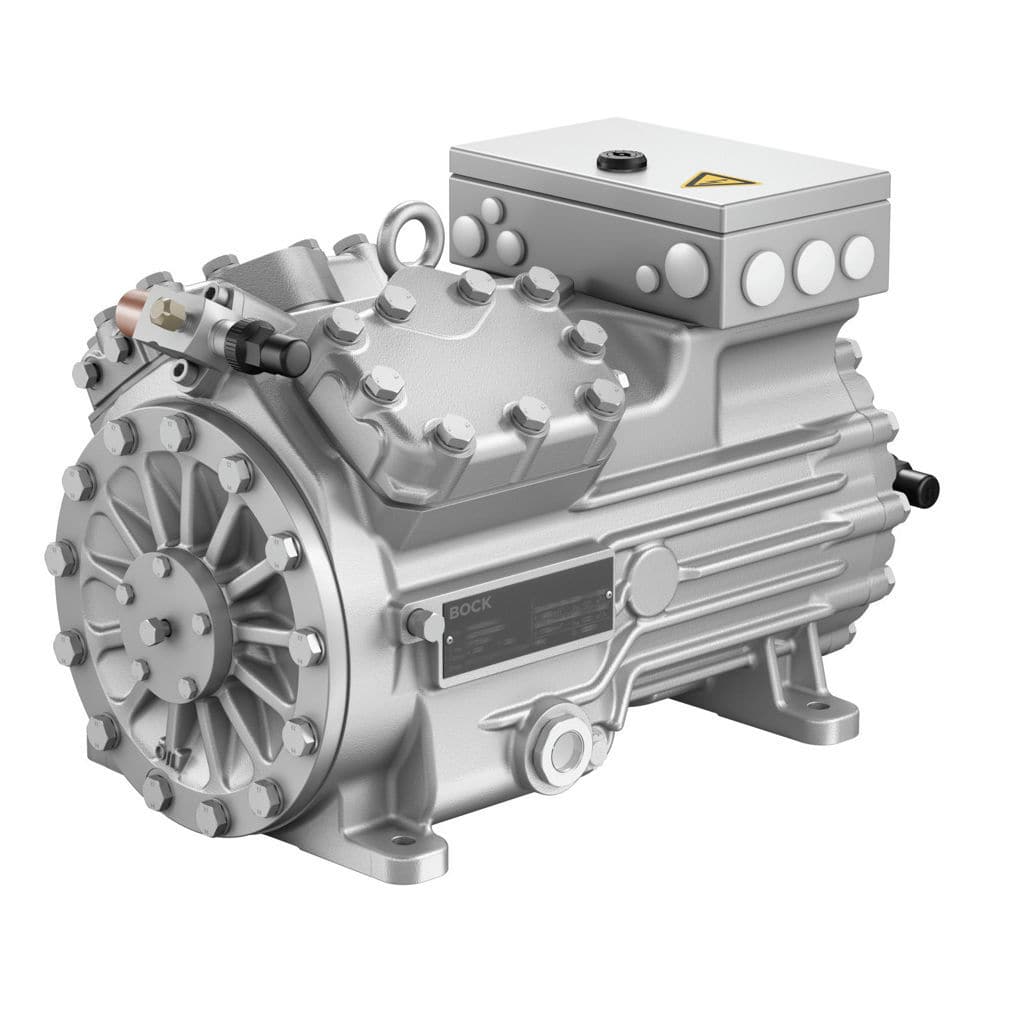
Refrigeration Compressor (Screw)

medium 330 models total

Screw compressors use two meshing helical rotors instead of a piston to compress refrigerant, giving continuous, low-vibration output at larger capacities than reciprocating units typically installed in provisions plants.

Read more — Refrigeration Compressor (Screw) explained

What Sets a Screw Compressor Apart

A screw compressor compresses refrigerant vapour between two meshing helical rotors, a male rotor with lobes driving a female rotor with matching flutes, inside a close-tolerance housing. Unlike the reciprocating piston compressors fitted to most provisions refrigeration plants, the screw design has no valves that open and close thousands of times a minute and no reciprocating mass to balance. Compression is continuous rather than pulsed, which keeps discharge pressure and temperature steadier and reduces vibration transmitted into the machinery foundation. This makes the screw compressor the usual choice once required capacity moves beyond what a multi-cylinder reciprocating unit can deliver economically, typically on larger provisions plants serving cruise or passenger tonnage, on refrigerated cargo hold systems, and on fishing vessel RSW (refrigerated seawater) plants. Below that capacity threshold, reciprocating and scroll compressors remain more common because they are cheaper to overhaul and tolerate partial-load cycling better.

Screw refrigeration compressor section
Cross section of a twin-screw refrigeration compressor showing the meshing male and female helical rotors inside the casing, the suction port taking in low pressure gas, the discharge port delivering high pressure gas, and the oil injection line.

Main Components

Rotor pair and casing

The male and female rotors run with a small, oil-sealed clearance rather than metal-to-metal contact; the oil film also removes heat of compression as it passes through the rotor mesh.

Slide valve or variable Vi mechanism

Capacity is adjusted by an internal slide valve that shortens the effective compression length, allowing turndown typically between 10% and 100% without stopping the compressor, and independently adjusting the internal volume ratio to match condensing and evaporating conditions.

Oil separator and injection system

Because oil is injected directly into the compression chamber for sealing, lubrication and cooling, an efficient oil separator downstream of the discharge is essential; carry-over that is too high starves the system of oil and fouls heat exchanger surfaces over time.

Suction and discharge check valves, economizer port

Many marine screw compressors include an economizer (side) port that admits flash gas from an intermediate pressure stage, improving efficiency at the low evaporating temperatures typical of freeze rooms and reefer holds.

Selection and Sizing

Sizing is driven by the required refrigeration duty at the design evaporating and condensing temperatures, not by displacement alone, because volumetric efficiency falls as the pressure ratio rises. Key figures to compare between offers:

  • Refrigeration capacity (kW) at a stated evaporating/condensing temperature pair, not a generic rating
  • Built-in volume ratio (Vi) and whether it is fixed or variable
  • Turndown range of the slide valve and minimum stable capacity
  • Refrigerant compatibility (R404A, R507, R134a or the lower-GWP replacements now specified on newbuildings)
  • Oil type and charge, since screw compressors typically hold a larger oil charge than a reciprocating unit of similar duty

Regulations and Class

Refrigerant handling on board falls under MARPOL Annex VI reporting for ozone-depleting substances and, increasingly, restrictions applied through flag and class rules on high-GWP refrigerants. Classification societies require periodic survey of refrigeration machinery serving cargo holds or provisions rooms, including pressure vessel inspection of the oil separator and condenser, and verification of high-pressure and low-pressure cutout settings. Where the plant serves cargo spaces on a reefer vessel, class rules on redundancy typically require at least two compressors per circuit so a single failure does not lose the hold.

Typical Faults

FaultCauseConsequence
Excessive oil carry-overWorn or fouled oil separator, overcharged oil, high load operationOil logging in the evaporator, loss of heat transfer, eventual oil starvation of the compressor
Slide valve stickingOil breakdown, debris in hydraulic actuating oilCompressor stuck at full or partial load, inability to control room temperature or excessive cycling
Low suction superheat / liquid sluggingFaulty expansion valve, low load with poor controlRotor and bearing damage, sudden high discharge temperature alarms
High discharge temperatureLow oil flow, high pressure ratio, refrigerant underchargeOil breakdown, rotor seizure risk, automatic trip

What to Look for in a Supplier

  • Documented performance curves at the actual evaporating/condensing conditions of the vessel's service, not a single rated point
  • Availability of the specific slide valve actuator and oil separator spares in the vessel's trading area
  • Experience with the refrigerant charge specified for the plant, including any low-GWP retrofit path
  • Reference installations of comparable capacity on similar vessel types
  • Clear oil specification and compatibility with the refrigerant, since the two are matched pairs

Watch the oil level sight glass and discharge temperature together, not separately — a screw compressor running short of oil often still shows a normal-looking discharge pressure right up until the bearings let go.
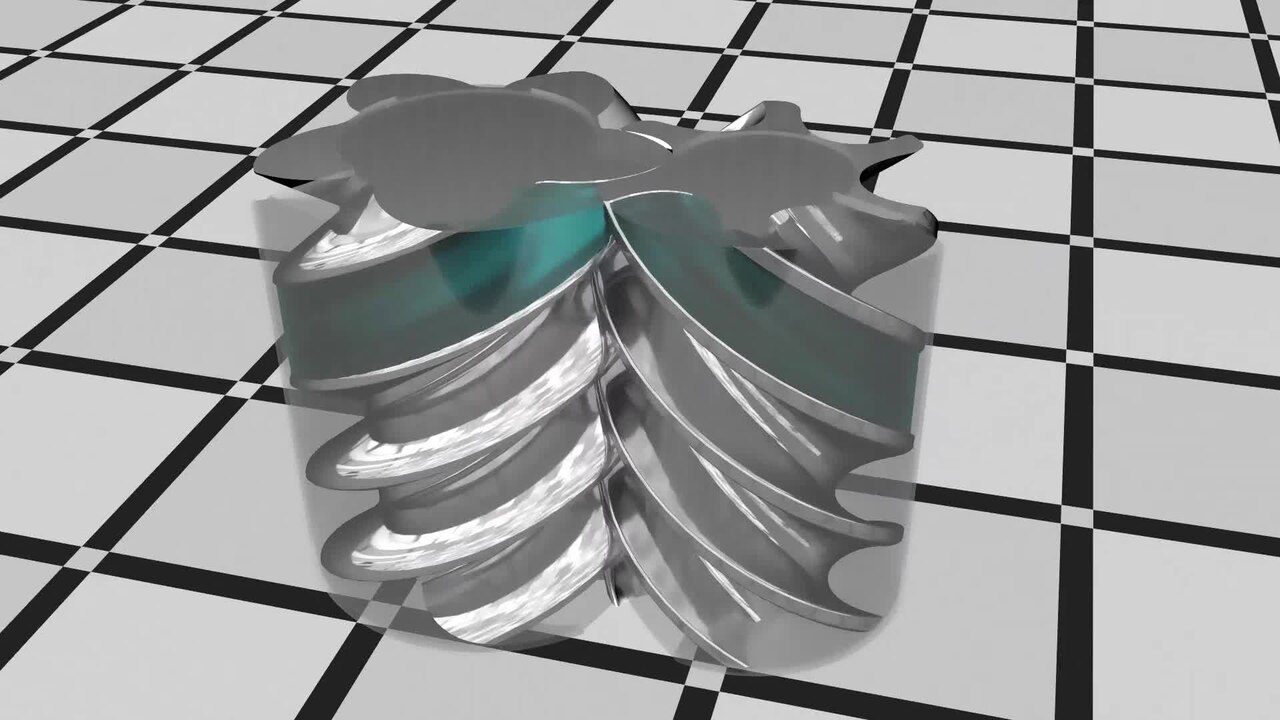
Rotary-screw compressor
Rotary-screw compressor. Photo: Slashme, CC BY-SA 4.0, via Wikimedia Commons

8 manufacturers · 330 models

Bitzer Marine

75
CSH 200kW R134a Marine unverified
Cooling Capacity (kW)
200
Compressor Type
screw
Refrigerant
R134a
Evaporating Temperature (°C)
-10
Condensing Temperature (°C)
40
Common Failures & Inspection Points
  • Valve, rotor, piston or internal compression-element wear caused by contamination, poor lubrication or normal wear can produce reduced delivery, high running temperature or abnormal noise
  • Lubrication failure caused by low level, blocked passages, oil contamination or pump faults can lead to rising temperature, bearing noise or protective shutdown
  • Cooling deficiency caused by fouled coolers, poor airflow or restricted water flow can produce high discharge temperature and repeated trips
  • Seal, gasket or piping leakage caused by ageing, vibration or damaged joints can result in pressure loss, refrigerant or air leakage and extended running
  • Motor, starter or protection faults caused by electrical defects or incorrect sensor signals can cause failure to start, nuisance trips or unstable operation
Service: Check oil condition and level where applicable, leakage, cooling, suction and discharge condition, vibration, temperature and protection alarms. Inspect belts, couplings, valves, filters or separators as fitted and review operating trends for loss of performance. Refer to manufacturer documentation for exact pressures, temperatures, clearances and service limits.
Spare Parts: Appropriate spares include approved seals and gaskets, filters, valve or service kits, belts or coupling elements where fitted, bearings, sensors and electrical protection items recommended for the installed compressor.
Use Cases: Starting-air, service-air, deck-air, refrigeration, HVAC and cargo-gas compression duties depending on the listed equipment type.
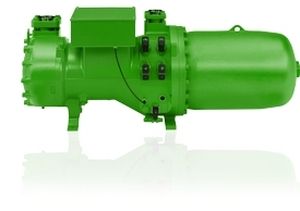
Bitzer Marine CSH 200kW R404A Marine
CSH 200kW R404A Marine unverified
Cooling Capacity (kW)
200
Compressor Type
screw
Refrigerant
R404A
Evaporating Temperature (°C)
-25
Condensing Temperature (°C)
40
Common Failures & Inspection Points
  • Valve, rotor, piston or internal compression-element wear caused by contamination, poor lubrication or normal wear can produce reduced delivery, high running temperature or abnormal noise
  • Lubrication failure caused by low level, blocked passages, oil contamination or pump faults can lead to rising temperature, bearing noise or protective shutdown
  • Cooling deficiency caused by fouled coolers, poor airflow or restricted water flow can produce high discharge temperature and repeated trips
  • Seal, gasket or piping leakage caused by ageing, vibration or damaged joints can result in pressure loss, refrigerant or air leakage and extended running
  • Motor, starter or protection faults caused by electrical defects or incorrect sensor signals can cause failure to start, nuisance trips or unstable operation
Service: Check oil condition and level where applicable, leakage, cooling, suction and discharge condition, vibration, temperature and protection alarms. Inspect belts, couplings, valves, filters or separators as fitted and review operating trends for loss of performance. Refer to manufacturer documentation for exact pressures, temperatures, clearances and service limits.
Spare Parts: Appropriate spares include approved seals and gaskets, filters, valve or service kits, belts or coupling elements where fitted, bearings, sensors and electrical protection items recommended for the installed compressor.
Use Cases: Starting-air, service-air, deck-air, refrigeration, HVAC and cargo-gas compression duties depending on the listed equipment type.
CSH 200kW R407C Marine unverified
Cooling Capacity (kW)
200
Compressor Type
screw
Refrigerant
R407C
Evaporating Temperature (°C)
-15
Condensing Temperature (°C)
40
Common Failures & Inspection Points
  • Valve, rotor, piston or internal compression-element wear caused by contamination, poor lubrication or normal wear can produce reduced delivery, high running temperature or abnormal noise
  • Lubrication failure caused by low level, blocked passages, oil contamination or pump faults can lead to rising temperature, bearing noise or protective shutdown
  • Cooling deficiency caused by fouled coolers, poor airflow or restricted water flow can produce high discharge temperature and repeated trips
  • Seal, gasket or piping leakage caused by ageing, vibration or damaged joints can result in pressure loss, refrigerant or air leakage and extended running
  • Motor, starter or protection faults caused by electrical defects or incorrect sensor signals can cause failure to start, nuisance trips or unstable operation
Service: Check oil condition and level where applicable, leakage, cooling, suction and discharge condition, vibration, temperature and protection alarms. Inspect belts, couplings, valves, filters or separators as fitted and review operating trends for loss of performance. Refer to manufacturer documentation for exact pressures, temperatures, clearances and service limits.
Spare Parts: Appropriate spares include approved seals and gaskets, filters, valve or service kits, belts or coupling elements where fitted, bearings, sensors and electrical protection items recommended for the installed compressor.
Use Cases: Starting-air, service-air, deck-air, refrigeration, HVAC and cargo-gas compression duties depending on the listed equipment type.
CSH 300kW R134a Marine unverified
Cooling Capacity (kW)
300
Compressor Type
screw
Refrigerant
R134a
Evaporating Temperature (°C)
-10
Condensing Temperature (°C)
40
Common Failures & Inspection Points
  • Valve, rotor, piston or internal compression-element wear caused by contamination, poor lubrication or normal wear can produce reduced delivery, high running temperature or abnormal noise
  • Lubrication failure caused by low level, blocked passages, oil contamination or pump faults can lead to rising temperature, bearing noise or protective shutdown
  • Cooling deficiency caused by fouled coolers, poor airflow or restricted water flow can produce high discharge temperature and repeated trips
  • Seal, gasket or piping leakage caused by ageing, vibration or damaged joints can result in pressure loss, refrigerant or air leakage and extended running
  • Motor, starter or protection faults caused by electrical defects or incorrect sensor signals can cause failure to start, nuisance trips or unstable operation
Service: Check oil condition and level where applicable, leakage, cooling, suction and discharge condition, vibration, temperature and protection alarms. Inspect belts, couplings, valves, filters or separators as fitted and review operating trends for loss of performance. Refer to manufacturer documentation for exact pressures, temperatures, clearances and service limits.
Spare Parts: Appropriate spares include approved seals and gaskets, filters, valve or service kits, belts or coupling elements where fitted, bearings, sensors and electrical protection items recommended for the installed compressor.
Use Cases: Starting-air, service-air, deck-air, refrigeration, HVAC and cargo-gas compression duties depending on the listed equipment type.
CSH 300kW R404A Marine unverified
Cooling Capacity (kW)
300
Compressor Type
screw
Refrigerant
R404A
Evaporating Temperature (°C)
-25
Condensing Temperature (°C)
40
Common Failures & Inspection Points
  • Valve, rotor, piston or internal compression-element wear caused by contamination, poor lubrication or normal wear can produce reduced delivery, high running temperature or abnormal noise
  • Lubrication failure caused by low level, blocked passages, oil contamination or pump faults can lead to rising temperature, bearing noise or protective shutdown
  • Cooling deficiency caused by fouled coolers, poor airflow or restricted water flow can produce high discharge temperature and repeated trips
  • Seal, gasket or piping leakage caused by ageing, vibration or damaged joints can result in pressure loss, refrigerant or air leakage and extended running
  • Motor, starter or protection faults caused by electrical defects or incorrect sensor signals can cause failure to start, nuisance trips or unstable operation
Service: Check oil condition and level where applicable, leakage, cooling, suction and discharge condition, vibration, temperature and protection alarms. Inspect belts, couplings, valves, filters or separators as fitted and review operating trends for loss of performance. Refer to manufacturer documentation for exact pressures, temperatures, clearances and service limits.
Spare Parts: Appropriate spares include approved seals and gaskets, filters, valve or service kits, belts or coupling elements where fitted, bearings, sensors and electrical protection items recommended for the installed compressor.
Use Cases: Starting-air, service-air, deck-air, refrigeration, HVAC and cargo-gas compression duties depending on the listed equipment type.
CSH 300kW R407C Marine unverified
Cooling Capacity (kW)
300
Compressor Type
screw
Refrigerant
R407C
Evaporating Temperature (°C)
-15
Condensing Temperature (°C)
40
Common Failures & Inspection Points
  • Valve, rotor, piston or internal compression-element wear caused by contamination, poor lubrication or normal wear can produce reduced delivery, high running temperature or abnormal noise
  • Lubrication failure caused by low level, blocked passages, oil contamination or pump faults can lead to rising temperature, bearing noise or protective shutdown
  • Cooling deficiency caused by fouled coolers, poor airflow or restricted water flow can produce high discharge temperature and repeated trips
  • Seal, gasket or piping leakage caused by ageing, vibration or damaged joints can result in pressure loss, refrigerant or air leakage and extended running
  • Motor, starter or protection faults caused by electrical defects or incorrect sensor signals can cause failure to start, nuisance trips or unstable operation
Service: Check oil condition and level where applicable, leakage, cooling, suction and discharge condition, vibration, temperature and protection alarms. Inspect belts, couplings, valves, filters or separators as fitted and review operating trends for loss of performance. Refer to manufacturer documentation for exact pressures, temperatures, clearances and service limits.
Spare Parts: Appropriate spares include approved seals and gaskets, filters, valve or service kits, belts or coupling elements where fitted, bearings, sensors and electrical protection items recommended for the installed compressor.
Use Cases: Starting-air, service-air, deck-air, refrigeration, HVAC and cargo-gas compression duties depending on the listed equipment type.
Bitzer Marine CSH 500kW R134a Marine
CSH 500kW R134a Marine unverified
Cooling Capacity (kW)
500
Compressor Type
screw
Refrigerant
R134a
Evaporating Temperature (°C)
-10
Condensing Temperature (°C)
40
Common Failures & Inspection Points
  • Valve, rotor, piston or internal compression-element wear caused by contamination, poor lubrication or normal wear can produce reduced delivery, high running temperature or abnormal noise
  • Lubrication failure caused by low level, blocked passages, oil contamination or pump faults can lead to rising temperature, bearing noise or protective shutdown
  • Cooling deficiency caused by fouled coolers, poor airflow or restricted water flow can produce high discharge temperature and repeated trips
  • Seal, gasket or piping leakage caused by ageing, vibration or damaged joints can result in pressure loss, refrigerant or air leakage and extended running
  • Motor, starter or protection faults caused by electrical defects or incorrect sensor signals can cause failure to start, nuisance trips or unstable operation
Service: Check oil condition and level where applicable, leakage, cooling, suction and discharge condition, vibration, temperature and protection alarms. Inspect belts, couplings, valves, filters or separators as fitted and review operating trends for loss of performance. Refer to manufacturer documentation for exact pressures, temperatures, clearances and service limits.
Spare Parts: Appropriate spares include approved seals and gaskets, filters, valve or service kits, belts or coupling elements where fitted, bearings, sensors and electrical protection items recommended for the installed compressor.
Use Cases: Starting-air, service-air, deck-air, refrigeration, HVAC and cargo-gas compression duties depending on the listed equipment type.
Bitzer Marine CSH 500kW R404A Marine
CSH 500kW R404A Marine unverified
Cooling Capacity (kW)
500
Compressor Type
screw
Refrigerant
R404A
Evaporating Temperature (°C)
-25
Condensing Temperature (°C)
40
Common Failures & Inspection Points
  • Valve, rotor, piston or internal compression-element wear caused by contamination, poor lubrication or normal wear can produce reduced delivery, high running temperature or abnormal noise
  • Lubrication failure caused by low level, blocked passages, oil contamination or pump faults can lead to rising temperature, bearing noise or protective shutdown
  • Cooling deficiency caused by fouled coolers, poor airflow or restricted water flow can produce high discharge temperature and repeated trips
  • Seal, gasket or piping leakage caused by ageing, vibration or damaged joints can result in pressure loss, refrigerant or air leakage and extended running
  • Motor, starter or protection faults caused by electrical defects or incorrect sensor signals can cause failure to start, nuisance trips or unstable operation
Service: Check oil condition and level where applicable, leakage, cooling, suction and discharge condition, vibration, temperature and protection alarms. Inspect belts, couplings, valves, filters or separators as fitted and review operating trends for loss of performance. Refer to manufacturer documentation for exact pressures, temperatures, clearances and service limits.
Spare Parts: Appropriate spares include approved seals and gaskets, filters, valve or service kits, belts or coupling elements where fitted, bearings, sensors and electrical protection items recommended for the installed compressor.
Use Cases: Starting-air, service-air, deck-air, refrigeration, HVAC and cargo-gas compression duties depending on the listed equipment type.
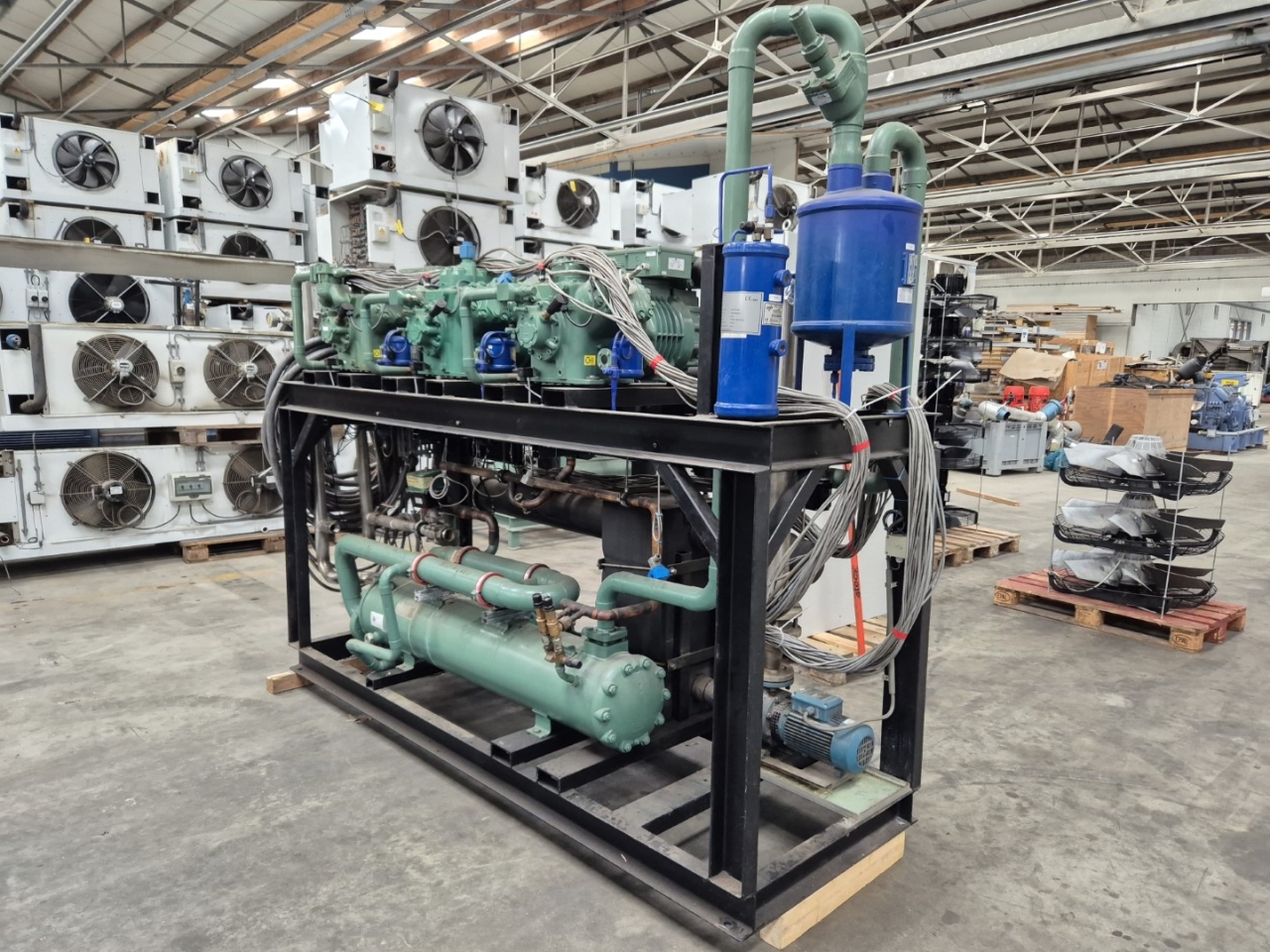
CSH 500kW R407C Marine unverified
Cooling Capacity (kW)
500
Compressor Type
screw
Refrigerant
R407C
Evaporating Temperature (°C)
-15
Condensing Temperature (°C)
40
Common Failures & Inspection Points
  • Valve, rotor, piston or internal compression-element wear caused by contamination, poor lubrication or normal wear can produce reduced delivery, high running temperature or abnormal noise
  • Lubrication failure caused by low level, blocked passages, oil contamination or pump faults can lead to rising temperature, bearing noise or protective shutdown
  • Cooling deficiency caused by fouled coolers, poor airflow or restricted water flow can produce high discharge temperature and repeated trips
  • Seal, gasket or piping leakage caused by ageing, vibration or damaged joints can result in pressure loss, refrigerant or air leakage and extended running
  • Motor, starter or protection faults caused by electrical defects or incorrect sensor signals can cause failure to start, nuisance trips or unstable operation
Service: Check oil condition and level where applicable, leakage, cooling, suction and discharge condition, vibration, temperature and protection alarms. Inspect belts, couplings, valves, filters or separators as fitted and review operating trends for loss of performance. Refer to manufacturer documentation for exact pressures, temperatures, clearances and service limits.
Spare Parts: Appropriate spares include approved seals and gaskets, filters, valve or service kits, belts or coupling elements where fitted, bearings, sensors and electrical protection items recommended for the installed compressor.
Use Cases: Starting-air, service-air, deck-air, refrigeration, HVAC and cargo-gas compression duties depending on the listed equipment type.
CSH 750kW R134a Marine unverified
Cooling Capacity (kW)
750
Compressor Type
screw
Refrigerant
R134a
Evaporating Temperature (°C)
-10
Condensing Temperature (°C)
40
Common Failures & Inspection Points
  • Valve, rotor, piston or internal compression-element wear caused by contamination, poor lubrication or normal wear can produce reduced delivery, high running temperature or abnormal noise
  • Lubrication failure caused by low level, blocked passages, oil contamination or pump faults can lead to rising temperature, bearing noise or protective shutdown
  • Cooling deficiency caused by fouled coolers, poor airflow or restricted water flow can produce high discharge temperature and repeated trips
  • Seal, gasket or piping leakage caused by ageing, vibration or damaged joints can result in pressure loss, refrigerant or air leakage and extended running
  • Motor, starter or protection faults caused by electrical defects or incorrect sensor signals can cause failure to start, nuisance trips or unstable operation
Service: Check oil condition and level where applicable, leakage, cooling, suction and discharge condition, vibration, temperature and protection alarms. Inspect belts, couplings, valves, filters or separators as fitted and review operating trends for loss of performance. Refer to manufacturer documentation for exact pressures, temperatures, clearances and service limits.
Spare Parts: Appropriate spares include approved seals and gaskets, filters, valve or service kits, belts or coupling elements where fitted, bearings, sensors and electrical protection items recommended for the installed compressor.
Use Cases: Starting-air, service-air, deck-air, refrigeration, HVAC and cargo-gas compression duties depending on the listed equipment type.
Bitzer Marine CSH 750kW R404A Marine
CSH 750kW R404A Marine unverified
Cooling Capacity (kW)
750
Compressor Type
screw
Refrigerant
R404A
Evaporating Temperature (°C)
-25
Condensing Temperature (°C)
40
Common Failures & Inspection Points
  • Valve, rotor, piston or internal compression-element wear caused by contamination, poor lubrication or normal wear can produce reduced delivery, high running temperature or abnormal noise
  • Lubrication failure caused by low level, blocked passages, oil contamination or pump faults can lead to rising temperature, bearing noise or protective shutdown
  • Cooling deficiency caused by fouled coolers, poor airflow or restricted water flow can produce high discharge temperature and repeated trips
  • Seal, gasket or piping leakage caused by ageing, vibration or damaged joints can result in pressure loss, refrigerant or air leakage and extended running
  • Motor, starter or protection faults caused by electrical defects or incorrect sensor signals can cause failure to start, nuisance trips or unstable operation
Service: Check oil condition and level where applicable, leakage, cooling, suction and discharge condition, vibration, temperature and protection alarms. Inspect belts, couplings, valves, filters or separators as fitted and review operating trends for loss of performance. Refer to manufacturer documentation for exact pressures, temperatures, clearances and service limits.
Spare Parts: Appropriate spares include approved seals and gaskets, filters, valve or service kits, belts or coupling elements where fitted, bearings, sensors and electrical protection items recommended for the installed compressor.
Use Cases: Starting-air, service-air, deck-air, refrigeration, HVAC and cargo-gas compression duties depending on the listed equipment type.
Bitzer Marine CSH 750kW R407C Marine
CSH 750kW R407C Marine unverified
Cooling Capacity (kW)
750
Compressor Type
screw
Refrigerant
R407C
Evaporating Temperature (°C)
-15
Condensing Temperature (°C)
40
Common Failures & Inspection Points
  • Valve, rotor, piston or internal compression-element wear caused by contamination, poor lubrication or normal wear can produce reduced delivery, high running temperature or abnormal noise
  • Lubrication failure caused by low level, blocked passages, oil contamination or pump faults can lead to rising temperature, bearing noise or protective shutdown
  • Cooling deficiency caused by fouled coolers, poor airflow or restricted water flow can produce high discharge temperature and repeated trips
  • Seal, gasket or piping leakage caused by ageing, vibration or damaged joints can result in pressure loss, refrigerant or air leakage and extended running
  • Motor, starter or protection faults caused by electrical defects or incorrect sensor signals can cause failure to start, nuisance trips or unstable operation
Service: Check oil condition and level where applicable, leakage, cooling, suction and discharge condition, vibration, temperature and protection alarms. Inspect belts, couplings, valves, filters or separators as fitted and review operating trends for loss of performance. Refer to manufacturer documentation for exact pressures, temperatures, clearances and service limits.
Spare Parts: Appropriate spares include approved seals and gaskets, filters, valve or service kits, belts or coupling elements where fitted, bearings, sensors and electrical protection items recommended for the installed compressor.
Use Cases: Starting-air, service-air, deck-air, refrigeration, HVAC and cargo-gas compression duties depending on the listed equipment type.
CSH 1000kW R134a Marine unverified
Cooling Capacity (kW)
1000
Compressor Type
screw
Refrigerant
R134a
Evaporating Temperature (°C)
-10
Condensing Temperature (°C)
40
Common Failures & Inspection Points
  • Valve, rotor, piston or internal compression-element wear caused by contamination, poor lubrication or normal wear can produce reduced delivery, high running temperature or abnormal noise
  • Lubrication failure caused by low level, blocked passages, oil contamination or pump faults can lead to rising temperature, bearing noise or protective shutdown
  • Cooling deficiency caused by fouled coolers, poor airflow or restricted water flow can produce high discharge temperature and repeated trips
  • Seal, gasket or piping leakage caused by ageing, vibration or damaged joints can result in pressure loss, refrigerant or air leakage and extended running
  • Motor, starter or protection faults caused by electrical defects or incorrect sensor signals can cause failure to start, nuisance trips or unstable operation
Service: Check oil condition and level where applicable, leakage, cooling, suction and discharge condition, vibration, temperature and protection alarms. Inspect belts, couplings, valves, filters or separators as fitted and review operating trends for loss of performance. Refer to manufacturer documentation for exact pressures, temperatures, clearances and service limits.
Spare Parts: Appropriate spares include approved seals and gaskets, filters, valve or service kits, belts or coupling elements where fitted, bearings, sensors and electrical protection items recommended for the installed compressor.
Use Cases: Starting-air, service-air, deck-air, refrigeration, HVAC and cargo-gas compression duties depending on the listed equipment type.
CSH 1000kW R404A Marine unverified
Cooling Capacity (kW)
1000
Compressor Type
screw
Refrigerant
R404A
Evaporating Temperature (°C)
-25
Condensing Temperature (°C)
40
Common Failures & Inspection Points
  • Valve, rotor, piston or internal compression-element wear caused by contamination, poor lubrication or normal wear can produce reduced delivery, high running temperature or abnormal noise
  • Lubrication failure caused by low level, blocked passages, oil contamination or pump faults can lead to rising temperature, bearing noise or protective shutdown
  • Cooling deficiency caused by fouled coolers, poor airflow or restricted water flow can produce high discharge temperature and repeated trips
  • Seal, gasket or piping leakage caused by ageing, vibration or damaged joints can result in pressure loss, refrigerant or air leakage and extended running
  • Motor, starter or protection faults caused by electrical defects or incorrect sensor signals can cause failure to start, nuisance trips or unstable operation
Service: Check oil condition and level where applicable, leakage, cooling, suction and discharge condition, vibration, temperature and protection alarms. Inspect belts, couplings, valves, filters or separators as fitted and review operating trends for loss of performance. Refer to manufacturer documentation for exact pressures, temperatures, clearances and service limits.
Spare Parts: Appropriate spares include approved seals and gaskets, filters, valve or service kits, belts or coupling elements where fitted, bearings, sensors and electrical protection items recommended for the installed compressor.
Use Cases: Starting-air, service-air, deck-air, refrigeration, HVAC and cargo-gas compression duties depending on the listed equipment type.
CSH 1000kW R407C Marine unverified
Cooling Capacity (kW)
1000
Compressor Type
screw
Refrigerant
R407C
Evaporating Temperature (°C)
-15
Condensing Temperature (°C)
40
Common Failures & Inspection Points
  • Valve, rotor, piston or internal compression-element wear caused by contamination, poor lubrication or normal wear can produce reduced delivery, high running temperature or abnormal noise
  • Lubrication failure caused by low level, blocked passages, oil contamination or pump faults can lead to rising temperature, bearing noise or protective shutdown
  • Cooling deficiency caused by fouled coolers, poor airflow or restricted water flow can produce high discharge temperature and repeated trips
  • Seal, gasket or piping leakage caused by ageing, vibration or damaged joints can result in pressure loss, refrigerant or air leakage and extended running
  • Motor, starter or protection faults caused by electrical defects or incorrect sensor signals can cause failure to start, nuisance trips or unstable operation
Service: Check oil condition and level where applicable, leakage, cooling, suction and discharge condition, vibration, temperature and protection alarms. Inspect belts, couplings, valves, filters or separators as fitted and review operating trends for loss of performance. Refer to manufacturer documentation for exact pressures, temperatures, clearances and service limits.
Spare Parts: Appropriate spares include approved seals and gaskets, filters, valve or service kits, belts or coupling elements where fitted, bearings, sensors and electrical protection items recommended for the installed compressor.
Use Cases: Starting-air, service-air, deck-air, refrigeration, HVAC and cargo-gas compression duties depending on the listed equipment type.
CSW 200kW R134a Marine unverified
Cooling Capacity (kW)
200
Compressor Type
screw
Refrigerant
R134a
Evaporating Temperature (°C)
-10
Condensing Temperature (°C)
40
Common Failures & Inspection Points
  • Valve, rotor, piston or internal compression-element wear caused by contamination, poor lubrication or normal wear can produce reduced delivery, high running temperature or abnormal noise
  • Lubrication failure caused by low level, blocked passages, oil contamination or pump faults can lead to rising temperature, bearing noise or protective shutdown
  • Cooling deficiency caused by fouled coolers, poor airflow or restricted water flow can produce high discharge temperature and repeated trips
  • Seal, gasket or piping leakage caused by ageing, vibration or damaged joints can result in pressure loss, refrigerant or air leakage and extended running
  • Motor, starter or protection faults caused by electrical defects or incorrect sensor signals can cause failure to start, nuisance trips or unstable operation
Service: Check oil condition and level where applicable, leakage, cooling, suction and discharge condition, vibration, temperature and protection alarms. Inspect belts, couplings, valves, filters or separators as fitted and review operating trends for loss of performance. Refer to manufacturer documentation for exact pressures, temperatures, clearances and service limits.
Spare Parts: Appropriate spares include approved seals and gaskets, filters, valve or service kits, belts or coupling elements where fitted, bearings, sensors and electrical protection items recommended for the installed compressor.
Use Cases: Starting-air, service-air, deck-air, refrigeration, HVAC and cargo-gas compression duties depending on the listed equipment type.
CSW 200kW R404A Marine unverified
Cooling Capacity (kW)
200
Compressor Type
screw
Refrigerant
R404A
Evaporating Temperature (°C)
-25
Condensing Temperature (°C)
40
Common Failures & Inspection Points
  • Valve, rotor, piston or internal compression-element wear caused by contamination, poor lubrication or normal wear can produce reduced delivery, high running temperature or abnormal noise
  • Lubrication failure caused by low level, blocked passages, oil contamination or pump faults can lead to rising temperature, bearing noise or protective shutdown
  • Cooling deficiency caused by fouled coolers, poor airflow or restricted water flow can produce high discharge temperature and repeated trips
  • Seal, gasket or piping leakage caused by ageing, vibration or damaged joints can result in pressure loss, refrigerant or air leakage and extended running
  • Motor, starter or protection faults caused by electrical defects or incorrect sensor signals can cause failure to start, nuisance trips or unstable operation
Service: Check oil condition and level where applicable, leakage, cooling, suction and discharge condition, vibration, temperature and protection alarms. Inspect belts, couplings, valves, filters or separators as fitted and review operating trends for loss of performance. Refer to manufacturer documentation for exact pressures, temperatures, clearances and service limits.
Spare Parts: Appropriate spares include approved seals and gaskets, filters, valve or service kits, belts or coupling elements where fitted, bearings, sensors and electrical protection items recommended for the installed compressor.
Use Cases: Starting-air, service-air, deck-air, refrigeration, HVAC and cargo-gas compression duties depending on the listed equipment type.
CSW 200kW R407C Marine unverified
Cooling Capacity (kW)
200
Compressor Type
screw
Refrigerant
R407C
Evaporating Temperature (°C)
-15
Condensing Temperature (°C)
40
Common Failures & Inspection Points
  • Valve, rotor, piston or internal compression-element wear caused by contamination, poor lubrication or normal wear can produce reduced delivery, high running temperature or abnormal noise
  • Lubrication failure caused by low level, blocked passages, oil contamination or pump faults can lead to rising temperature, bearing noise or protective shutdown
  • Cooling deficiency caused by fouled coolers, poor airflow or restricted water flow can produce high discharge temperature and repeated trips
  • Seal, gasket or piping leakage caused by ageing, vibration or damaged joints can result in pressure loss, refrigerant or air leakage and extended running
  • Motor, starter or protection faults caused by electrical defects or incorrect sensor signals can cause failure to start, nuisance trips or unstable operation
Service: Check oil condition and level where applicable, leakage, cooling, suction and discharge condition, vibration, temperature and protection alarms. Inspect belts, couplings, valves, filters or separators as fitted and review operating trends for loss of performance. Refer to manufacturer documentation for exact pressures, temperatures, clearances and service limits.
Spare Parts: Appropriate spares include approved seals and gaskets, filters, valve or service kits, belts or coupling elements where fitted, bearings, sensors and electrical protection items recommended for the installed compressor.
Use Cases: Starting-air, service-air, deck-air, refrigeration, HVAC and cargo-gas compression duties depending on the listed equipment type.
CSW 300kW R134a Marine unverified
Cooling Capacity (kW)
300
Compressor Type
screw
Refrigerant
R134a
Evaporating Temperature (°C)
-10
Condensing Temperature (°C)
40
Common Failures & Inspection Points
  • Valve, rotor, piston or internal compression-element wear caused by contamination, poor lubrication or normal wear can produce reduced delivery, high running temperature or abnormal noise
  • Lubrication failure caused by low level, blocked passages, oil contamination or pump faults can lead to rising temperature, bearing noise or protective shutdown
  • Cooling deficiency caused by fouled coolers, poor airflow or restricted water flow can produce high discharge temperature and repeated trips
  • Seal, gasket or piping leakage caused by ageing, vibration or damaged joints can result in pressure loss, refrigerant or air leakage and extended running
  • Motor, starter or protection faults caused by electrical defects or incorrect sensor signals can cause failure to start, nuisance trips or unstable operation
Service: Check oil condition and level where applicable, leakage, cooling, suction and discharge condition, vibration, temperature and protection alarms. Inspect belts, couplings, valves, filters or separators as fitted and review operating trends for loss of performance. Refer to manufacturer documentation for exact pressures, temperatures, clearances and service limits.
Spare Parts: Appropriate spares include approved seals and gaskets, filters, valve or service kits, belts or coupling elements where fitted, bearings, sensors and electrical protection items recommended for the installed compressor.
Use Cases: Starting-air, service-air, deck-air, refrigeration, HVAC and cargo-gas compression duties depending on the listed equipment type.
CSW 300kW R404A Marine unverified
Cooling Capacity (kW)
300
Compressor Type
screw
Refrigerant
R404A
Evaporating Temperature (°C)
-25
Condensing Temperature (°C)
40
Common Failures & Inspection Points
  • Valve, rotor, piston or internal compression-element wear caused by contamination, poor lubrication or normal wear can produce reduced delivery, high running temperature or abnormal noise
  • Lubrication failure caused by low level, blocked passages, oil contamination or pump faults can lead to rising temperature, bearing noise or protective shutdown
  • Cooling deficiency caused by fouled coolers, poor airflow or restricted water flow can produce high discharge temperature and repeated trips
  • Seal, gasket or piping leakage caused by ageing, vibration or damaged joints can result in pressure loss, refrigerant or air leakage and extended running
  • Motor, starter or protection faults caused by electrical defects or incorrect sensor signals can cause failure to start, nuisance trips or unstable operation
Service: Check oil condition and level where applicable, leakage, cooling, suction and discharge condition, vibration, temperature and protection alarms. Inspect belts, couplings, valves, filters or separators as fitted and review operating trends for loss of performance. Refer to manufacturer documentation for exact pressures, temperatures, clearances and service limits.
Spare Parts: Appropriate spares include approved seals and gaskets, filters, valve or service kits, belts or coupling elements where fitted, bearings, sensors and electrical protection items recommended for the installed compressor.
Use Cases: Starting-air, service-air, deck-air, refrigeration, HVAC and cargo-gas compression duties depending on the listed equipment type.
CSW 300kW R407C Marine unverified
Cooling Capacity (kW)
300
Compressor Type
screw
Refrigerant
R407C
Evaporating Temperature (°C)
-15
Condensing Temperature (°C)
40
Common Failures & Inspection Points
  • Valve, rotor, piston or internal compression-element wear caused by contamination, poor lubrication or normal wear can produce reduced delivery, high running temperature or abnormal noise
  • Lubrication failure caused by low level, blocked passages, oil contamination or pump faults can lead to rising temperature, bearing noise or protective shutdown
  • Cooling deficiency caused by fouled coolers, poor airflow or restricted water flow can produce high discharge temperature and repeated trips
  • Seal, gasket or piping leakage caused by ageing, vibration or damaged joints can result in pressure loss, refrigerant or air leakage and extended running
  • Motor, starter or protection faults caused by electrical defects or incorrect sensor signals can cause failure to start, nuisance trips or unstable operation
Service: Check oil condition and level where applicable, leakage, cooling, suction and discharge condition, vibration, temperature and protection alarms. Inspect belts, couplings, valves, filters or separators as fitted and review operating trends for loss of performance. Refer to manufacturer documentation for exact pressures, temperatures, clearances and service limits.
Spare Parts: Appropriate spares include approved seals and gaskets, filters, valve or service kits, belts or coupling elements where fitted, bearings, sensors and electrical protection items recommended for the installed compressor.
Use Cases: Starting-air, service-air, deck-air, refrigeration, HVAC and cargo-gas compression duties depending on the listed equipment type.
Bitzer Marine CSW 500kW R134a Marine
CSW 500kW R134a Marine unverified
Cooling Capacity (kW)
500
Compressor Type
screw
Refrigerant
R134a
Evaporating Temperature (°C)
-10
Condensing Temperature (°C)
40
Common Failures & Inspection Points
  • Valve, rotor, piston or internal compression-element wear caused by contamination, poor lubrication or normal wear can produce reduced delivery, high running temperature or abnormal noise
  • Lubrication failure caused by low level, blocked passages, oil contamination or pump faults can lead to rising temperature, bearing noise or protective shutdown
  • Cooling deficiency caused by fouled coolers, poor airflow or restricted water flow can produce high discharge temperature and repeated trips
  • Seal, gasket or piping leakage caused by ageing, vibration or damaged joints can result in pressure loss, refrigerant or air leakage and extended running
  • Motor, starter or protection faults caused by electrical defects or incorrect sensor signals can cause failure to start, nuisance trips or unstable operation
Service: Check oil condition and level where applicable, leakage, cooling, suction and discharge condition, vibration, temperature and protection alarms. Inspect belts, couplings, valves, filters or separators as fitted and review operating trends for loss of performance. Refer to manufacturer documentation for exact pressures, temperatures, clearances and service limits.
Spare Parts: Appropriate spares include approved seals and gaskets, filters, valve or service kits, belts or coupling elements where fitted, bearings, sensors and electrical protection items recommended for the installed compressor.
Use Cases: Starting-air, service-air, deck-air, refrigeration, HVAC and cargo-gas compression duties depending on the listed equipment type.
CSW 500kW R404A Marine unverified
Cooling Capacity (kW)
500
Compressor Type
screw
Refrigerant
R404A
Evaporating Temperature (°C)
-25
Condensing Temperature (°C)
40
Common Failures & Inspection Points
  • Valve, rotor, piston or internal compression-element wear caused by contamination, poor lubrication or normal wear can produce reduced delivery, high running temperature or abnormal noise
  • Lubrication failure caused by low level, blocked passages, oil contamination or pump faults can lead to rising temperature, bearing noise or protective shutdown
  • Cooling deficiency caused by fouled coolers, poor airflow or restricted water flow can produce high discharge temperature and repeated trips
  • Seal, gasket or piping leakage caused by ageing, vibration or damaged joints can result in pressure loss, refrigerant or air leakage and extended running
  • Motor, starter or protection faults caused by electrical defects or incorrect sensor signals can cause failure to start, nuisance trips or unstable operation
Service: Check oil condition and level where applicable, leakage, cooling, suction and discharge condition, vibration, temperature and protection alarms. Inspect belts, couplings, valves, filters or separators as fitted and review operating trends for loss of performance. Refer to manufacturer documentation for exact pressures, temperatures, clearances and service limits.
Spare Parts: Appropriate spares include approved seals and gaskets, filters, valve or service kits, belts or coupling elements where fitted, bearings, sensors and electrical protection items recommended for the installed compressor.
Use Cases: Starting-air, service-air, deck-air, refrigeration, HVAC and cargo-gas compression duties depending on the listed equipment type.
CSW 500kW R407C Marine unverified
Cooling Capacity (kW)
500
Compressor Type
screw
Refrigerant
R407C
Evaporating Temperature (°C)
-15
Condensing Temperature (°C)
40
Common Failures & Inspection Points
  • Valve, rotor, piston or internal compression-element wear caused by contamination, poor lubrication or normal wear can produce reduced delivery, high running temperature or abnormal noise
  • Lubrication failure caused by low level, blocked passages, oil contamination or pump faults can lead to rising temperature, bearing noise or protective shutdown
  • Cooling deficiency caused by fouled coolers, poor airflow or restricted water flow can produce high discharge temperature and repeated trips
  • Seal, gasket or piping leakage caused by ageing, vibration or damaged joints can result in pressure loss, refrigerant or air leakage and extended running
  • Motor, starter or protection faults caused by electrical defects or incorrect sensor signals can cause failure to start, nuisance trips or unstable operation
Service: Check oil condition and level where applicable, leakage, cooling, suction and discharge condition, vibration, temperature and protection alarms. Inspect belts, couplings, valves, filters or separators as fitted and review operating trends for loss of performance. Refer to manufacturer documentation for exact pressures, temperatures, clearances and service limits.
Spare Parts: Appropriate spares include approved seals and gaskets, filters, valve or service kits, belts or coupling elements where fitted, bearings, sensors and electrical protection items recommended for the installed compressor.
Use Cases: Starting-air, service-air, deck-air, refrigeration, HVAC and cargo-gas compression duties depending on the listed equipment type.
CSW 750kW R134a Marine unverified
Cooling Capacity (kW)
750
Compressor Type
screw
Refrigerant
R134a
Evaporating Temperature (°C)
-10
Condensing Temperature (°C)
40
Common Failures & Inspection Points
  • Valve, rotor, piston or internal compression-element wear caused by contamination, poor lubrication or normal wear can produce reduced delivery, high running temperature or abnormal noise
  • Lubrication failure caused by low level, blocked passages, oil contamination or pump faults can lead to rising temperature, bearing noise or protective shutdown
  • Cooling deficiency caused by fouled coolers, poor airflow or restricted water flow can produce high discharge temperature and repeated trips
  • Seal, gasket or piping leakage caused by ageing, vibration or damaged joints can result in pressure loss, refrigerant or air leakage and extended running
  • Motor, starter or protection faults caused by electrical defects or incorrect sensor signals can cause failure to start, nuisance trips or unstable operation
Service: Check oil condition and level where applicable, leakage, cooling, suction and discharge condition, vibration, temperature and protection alarms. Inspect belts, couplings, valves, filters or separators as fitted and review operating trends for loss of performance. Refer to manufacturer documentation for exact pressures, temperatures, clearances and service limits.
Spare Parts: Appropriate spares include approved seals and gaskets, filters, valve or service kits, belts or coupling elements where fitted, bearings, sensors and electrical protection items recommended for the installed compressor.
Use Cases: Starting-air, service-air, deck-air, refrigeration, HVAC and cargo-gas compression duties depending on the listed equipment type.
Bitzer Marine CSW 750kW R404A Marine
CSW 750kW R404A Marine unverified
Cooling Capacity (kW)
750
Compressor Type
screw
Refrigerant
R404A
Evaporating Temperature (°C)
-25
Condensing Temperature (°C)
40
Common Failures & Inspection Points
  • Valve, rotor, piston or internal compression-element wear caused by contamination, poor lubrication or normal wear can produce reduced delivery, high running temperature or abnormal noise
  • Lubrication failure caused by low level, blocked passages, oil contamination or pump faults can lead to rising temperature, bearing noise or protective shutdown
  • Cooling deficiency caused by fouled coolers, poor airflow or restricted water flow can produce high discharge temperature and repeated trips
  • Seal, gasket or piping leakage caused by ageing, vibration or damaged joints can result in pressure loss, refrigerant or air leakage and extended running
  • Motor, starter or protection faults caused by electrical defects or incorrect sensor signals can cause failure to start, nuisance trips or unstable operation
Service: Check oil condition and level where applicable, leakage, cooling, suction and discharge condition, vibration, temperature and protection alarms. Inspect belts, couplings, valves, filters or separators as fitted and review operating trends for loss of performance. Refer to manufacturer documentation for exact pressures, temperatures, clearances and service limits.
Spare Parts: Appropriate spares include approved seals and gaskets, filters, valve or service kits, belts or coupling elements where fitted, bearings, sensors and electrical protection items recommended for the installed compressor.
Use Cases: Starting-air, service-air, deck-air, refrigeration, HVAC and cargo-gas compression duties depending on the listed equipment type.
CSW 750kW R407C Marine unverified
Cooling Capacity (kW)
750
Compressor Type
screw
Refrigerant
R407C
Evaporating Temperature (°C)
-15
Condensing Temperature (°C)
40
Common Failures & Inspection Points
  • Valve, rotor, piston or internal compression-element wear caused by contamination, poor lubrication or normal wear can produce reduced delivery, high running temperature or abnormal noise
  • Lubrication failure caused by low level, blocked passages, oil contamination or pump faults can lead to rising temperature, bearing noise or protective shutdown
  • Cooling deficiency caused by fouled coolers, poor airflow or restricted water flow can produce high discharge temperature and repeated trips
  • Seal, gasket or piping leakage caused by ageing, vibration or damaged joints can result in pressure loss, refrigerant or air leakage and extended running
  • Motor, starter or protection faults caused by electrical defects or incorrect sensor signals can cause failure to start, nuisance trips or unstable operation
Service: Check oil condition and level where applicable, leakage, cooling, suction and discharge condition, vibration, temperature and protection alarms. Inspect belts, couplings, valves, filters or separators as fitted and review operating trends for loss of performance. Refer to manufacturer documentation for exact pressures, temperatures, clearances and service limits.
Spare Parts: Appropriate spares include approved seals and gaskets, filters, valve or service kits, belts or coupling elements where fitted, bearings, sensors and electrical protection items recommended for the installed compressor.
Use Cases: Starting-air, service-air, deck-air, refrigeration, HVAC and cargo-gas compression duties depending on the listed equipment type.
CSW 1000kW R134a Marine unverified
Cooling Capacity (kW)
1000
Compressor Type
screw
Refrigerant
R134a
Evaporating Temperature (°C)
-10
Condensing Temperature (°C)
40
Common Failures & Inspection Points
  • Valve, rotor, piston or internal compression-element wear caused by contamination, poor lubrication or normal wear can produce reduced delivery, high running temperature or abnormal noise
  • Lubrication failure caused by low level, blocked passages, oil contamination or pump faults can lead to rising temperature, bearing noise or protective shutdown
  • Cooling deficiency caused by fouled coolers, poor airflow or restricted water flow can produce high discharge temperature and repeated trips
  • Seal, gasket or piping leakage caused by ageing, vibration or damaged joints can result in pressure loss, refrigerant or air leakage and extended running
  • Motor, starter or protection faults caused by electrical defects or incorrect sensor signals can cause failure to start, nuisance trips or unstable operation
Service: Check oil condition and level where applicable, leakage, cooling, suction and discharge condition, vibration, temperature and protection alarms. Inspect belts, couplings, valves, filters or separators as fitted and review operating trends for loss of performance. Refer to manufacturer documentation for exact pressures, temperatures, clearances and service limits.
Spare Parts: Appropriate spares include approved seals and gaskets, filters, valve or service kits, belts or coupling elements where fitted, bearings, sensors and electrical protection items recommended for the installed compressor.
Use Cases: Starting-air, service-air, deck-air, refrigeration, HVAC and cargo-gas compression duties depending on the listed equipment type.
CSW 1000kW R404A Marine unverified
Cooling Capacity (kW)
1000
Compressor Type
screw
Refrigerant
R404A
Evaporating Temperature (°C)
-25
Condensing Temperature (°C)
40
Common Failures & Inspection Points
  • Valve, rotor, piston or internal compression-element wear caused by contamination, poor lubrication or normal wear can produce reduced delivery, high running temperature or abnormal noise
  • Lubrication failure caused by low level, blocked passages, oil contamination or pump faults can lead to rising temperature, bearing noise or protective shutdown
  • Cooling deficiency caused by fouled coolers, poor airflow or restricted water flow can produce high discharge temperature and repeated trips
  • Seal, gasket or piping leakage caused by ageing, vibration or damaged joints can result in pressure loss, refrigerant or air leakage and extended running
  • Motor, starter or protection faults caused by electrical defects or incorrect sensor signals can cause failure to start, nuisance trips or unstable operation
Service: Check oil condition and level where applicable, leakage, cooling, suction and discharge condition, vibration, temperature and protection alarms. Inspect belts, couplings, valves, filters or separators as fitted and review operating trends for loss of performance. Refer to manufacturer documentation for exact pressures, temperatures, clearances and service limits.
Spare Parts: Appropriate spares include approved seals and gaskets, filters, valve or service kits, belts or coupling elements where fitted, bearings, sensors and electrical protection items recommended for the installed compressor.
Use Cases: Starting-air, service-air, deck-air, refrigeration, HVAC and cargo-gas compression duties depending on the listed equipment type.
CSW 1000kW R407C Marine unverified
Cooling Capacity (kW)
1000
Compressor Type
screw
Refrigerant
R407C
Evaporating Temperature (°C)
-15
Condensing Temperature (°C)
40
Common Failures & Inspection Points
  • Valve, rotor, piston or internal compression-element wear caused by contamination, poor lubrication or normal wear can produce reduced delivery, high running temperature or abnormal noise
  • Lubrication failure caused by low level, blocked passages, oil contamination or pump faults can lead to rising temperature, bearing noise or protective shutdown
  • Cooling deficiency caused by fouled coolers, poor airflow or restricted water flow can produce high discharge temperature and repeated trips
  • Seal, gasket or piping leakage caused by ageing, vibration or damaged joints can result in pressure loss, refrigerant or air leakage and extended running
  • Motor, starter or protection faults caused by electrical defects or incorrect sensor signals can cause failure to start, nuisance trips or unstable operation
Service: Check oil condition and level where applicable, leakage, cooling, suction and discharge condition, vibration, temperature and protection alarms. Inspect belts, couplings, valves, filters or separators as fitted and review operating trends for loss of performance. Refer to manufacturer documentation for exact pressures, temperatures, clearances and service limits.
Spare Parts: Appropriate spares include approved seals and gaskets, filters, valve or service kits, belts or coupling elements where fitted, bearings, sensors and electrical protection items recommended for the installed compressor.
Use Cases: Starting-air, service-air, deck-air, refrigeration, HVAC and cargo-gas compression duties depending on the listed equipment type.
CKH 200kW R134a Marine unverified
Cooling Capacity (kW)
200
Compressor Type
screw
Refrigerant
R134a
Evaporating Temperature (°C)
-10
Condensing Temperature (°C)
40
Common Failures & Inspection Points
  • Valve, rotor, piston or internal compression-element wear caused by contamination, poor lubrication or normal wear can produce reduced delivery, high running temperature or abnormal noise
  • Lubrication failure caused by low level, blocked passages, oil contamination or pump faults can lead to rising temperature, bearing noise or protective shutdown
  • Cooling deficiency caused by fouled coolers, poor airflow or restricted water flow can produce high discharge temperature and repeated trips
  • Seal, gasket or piping leakage caused by ageing, vibration or damaged joints can result in pressure loss, refrigerant or air leakage and extended running
  • Motor, starter or protection faults caused by electrical defects or incorrect sensor signals can cause failure to start, nuisance trips or unstable operation
Service: Check oil condition and level where applicable, leakage, cooling, suction and discharge condition, vibration, temperature and protection alarms. Inspect belts, couplings, valves, filters or separators as fitted and review operating trends for loss of performance. Refer to manufacturer documentation for exact pressures, temperatures, clearances and service limits.
Spare Parts: Appropriate spares include approved seals and gaskets, filters, valve or service kits, belts or coupling elements where fitted, bearings, sensors and electrical protection items recommended for the installed compressor.
Use Cases: Starting-air, service-air, deck-air, refrigeration, HVAC and cargo-gas compression duties depending on the listed equipment type.
CKH 200kW R404A Marine unverified
Cooling Capacity (kW)
200
Compressor Type
screw
Refrigerant
R404A
Evaporating Temperature (°C)
-25
Condensing Temperature (°C)
40
Common Failures & Inspection Points
  • Valve, rotor, piston or internal compression-element wear caused by contamination, poor lubrication or normal wear can produce reduced delivery, high running temperature or abnormal noise
  • Lubrication failure caused by low level, blocked passages, oil contamination or pump faults can lead to rising temperature, bearing noise or protective shutdown
  • Cooling deficiency caused by fouled coolers, poor airflow or restricted water flow can produce high discharge temperature and repeated trips
  • Seal, gasket or piping leakage caused by ageing, vibration or damaged joints can result in pressure loss, refrigerant or air leakage and extended running
  • Motor, starter or protection faults caused by electrical defects or incorrect sensor signals can cause failure to start, nuisance trips or unstable operation
Service: Check oil condition and level where applicable, leakage, cooling, suction and discharge condition, vibration, temperature and protection alarms. Inspect belts, couplings, valves, filters or separators as fitted and review operating trends for loss of performance. Refer to manufacturer documentation for exact pressures, temperatures, clearances and service limits.
Spare Parts: Appropriate spares include approved seals and gaskets, filters, valve or service kits, belts or coupling elements where fitted, bearings, sensors and electrical protection items recommended for the installed compressor.
Use Cases: Starting-air, service-air, deck-air, refrigeration, HVAC and cargo-gas compression duties depending on the listed equipment type.
CKH 200kW R407C Marine unverified
Cooling Capacity (kW)
200
Compressor Type
screw
Refrigerant
R407C
Evaporating Temperature (°C)
-15
Condensing Temperature (°C)
40
Common Failures & Inspection Points
  • Valve, rotor, piston or internal compression-element wear caused by contamination, poor lubrication or normal wear can produce reduced delivery, high running temperature or abnormal noise
  • Lubrication failure caused by low level, blocked passages, oil contamination or pump faults can lead to rising temperature, bearing noise or protective shutdown
  • Cooling deficiency caused by fouled coolers, poor airflow or restricted water flow can produce high discharge temperature and repeated trips
  • Seal, gasket or piping leakage caused by ageing, vibration or damaged joints can result in pressure loss, refrigerant or air leakage and extended running
  • Motor, starter or protection faults caused by electrical defects or incorrect sensor signals can cause failure to start, nuisance trips or unstable operation
Service: Check oil condition and level where applicable, leakage, cooling, suction and discharge condition, vibration, temperature and protection alarms. Inspect belts, couplings, valves, filters or separators as fitted and review operating trends for loss of performance. Refer to manufacturer documentation for exact pressures, temperatures, clearances and service limits.
Spare Parts: Appropriate spares include approved seals and gaskets, filters, valve or service kits, belts or coupling elements where fitted, bearings, sensors and electrical protection items recommended for the installed compressor.
Use Cases: Starting-air, service-air, deck-air, refrigeration, HVAC and cargo-gas compression duties depending on the listed equipment type.
Bitzer Marine CKH 300kW R134a Marine
CKH 300kW R134a Marine unverified
Cooling Capacity (kW)
300
Compressor Type
screw
Refrigerant
R134a
Evaporating Temperature (°C)
-10
Condensing Temperature (°C)
40
Common Failures & Inspection Points
  • Valve, rotor, piston or internal compression-element wear caused by contamination, poor lubrication or normal wear can produce reduced delivery, high running temperature or abnormal noise
  • Lubrication failure caused by low level, blocked passages, oil contamination or pump faults can lead to rising temperature, bearing noise or protective shutdown
  • Cooling deficiency caused by fouled coolers, poor airflow or restricted water flow can produce high discharge temperature and repeated trips
  • Seal, gasket or piping leakage caused by ageing, vibration or damaged joints can result in pressure loss, refrigerant or air leakage and extended running
  • Motor, starter or protection faults caused by electrical defects or incorrect sensor signals can cause failure to start, nuisance trips or unstable operation
Service: Check oil condition and level where applicable, leakage, cooling, suction and discharge condition, vibration, temperature and protection alarms. Inspect belts, couplings, valves, filters or separators as fitted and review operating trends for loss of performance. Refer to manufacturer documentation for exact pressures, temperatures, clearances and service limits.
Spare Parts: Appropriate spares include approved seals and gaskets, filters, valve or service kits, belts or coupling elements where fitted, bearings, sensors and electrical protection items recommended for the installed compressor.
Use Cases: Starting-air, service-air, deck-air, refrigeration, HVAC and cargo-gas compression duties depending on the listed equipment type.
CKH 300kW R404A Marine unverified
Cooling Capacity (kW)
300
Compressor Type
screw
Refrigerant
R404A
Evaporating Temperature (°C)
-25
Condensing Temperature (°C)
40
Common Failures & Inspection Points
  • Valve, rotor, piston or internal compression-element wear caused by contamination, poor lubrication or normal wear can produce reduced delivery, high running temperature or abnormal noise
  • Lubrication failure caused by low level, blocked passages, oil contamination or pump faults can lead to rising temperature, bearing noise or protective shutdown
  • Cooling deficiency caused by fouled coolers, poor airflow or restricted water flow can produce high discharge temperature and repeated trips
  • Seal, gasket or piping leakage caused by ageing, vibration or damaged joints can result in pressure loss, refrigerant or air leakage and extended running
  • Motor, starter or protection faults caused by electrical defects or incorrect sensor signals can cause failure to start, nuisance trips or unstable operation
Service: Check oil condition and level where applicable, leakage, cooling, suction and discharge condition, vibration, temperature and protection alarms. Inspect belts, couplings, valves, filters or separators as fitted and review operating trends for loss of performance. Refer to manufacturer documentation for exact pressures, temperatures, clearances and service limits.
Spare Parts: Appropriate spares include approved seals and gaskets, filters, valve or service kits, belts or coupling elements where fitted, bearings, sensors and electrical protection items recommended for the installed compressor.
Use Cases: Starting-air, service-air, deck-air, refrigeration, HVAC and cargo-gas compression duties depending on the listed equipment type.
CKH 300kW R407C Marine unverified
Cooling Capacity (kW)
300
Compressor Type
screw
Refrigerant
R407C
Evaporating Temperature (°C)
-15
Condensing Temperature (°C)
40
Common Failures & Inspection Points
  • Valve, rotor, piston or internal compression-element wear caused by contamination, poor lubrication or normal wear can produce reduced delivery, high running temperature or abnormal noise
  • Lubrication failure caused by low level, blocked passages, oil contamination or pump faults can lead to rising temperature, bearing noise or protective shutdown
  • Cooling deficiency caused by fouled coolers, poor airflow or restricted water flow can produce high discharge temperature and repeated trips
  • Seal, gasket or piping leakage caused by ageing, vibration or damaged joints can result in pressure loss, refrigerant or air leakage and extended running
  • Motor, starter or protection faults caused by electrical defects or incorrect sensor signals can cause failure to start, nuisance trips or unstable operation
Service: Check oil condition and level where applicable, leakage, cooling, suction and discharge condition, vibration, temperature and protection alarms. Inspect belts, couplings, valves, filters or separators as fitted and review operating trends for loss of performance. Refer to manufacturer documentation for exact pressures, temperatures, clearances and service limits.
Spare Parts: Appropriate spares include approved seals and gaskets, filters, valve or service kits, belts or coupling elements where fitted, bearings, sensors and electrical protection items recommended for the installed compressor.
Use Cases: Starting-air, service-air, deck-air, refrigeration, HVAC and cargo-gas compression duties depending on the listed equipment type.
Bitzer Marine CKH 500kW R134a Marine
CKH 500kW R134a Marine unverified
Cooling Capacity (kW)
500
Compressor Type
screw
Refrigerant
R134a
Evaporating Temperature (°C)
-10
Condensing Temperature (°C)
40
Common Failures & Inspection Points
  • Valve, rotor, piston or internal compression-element wear caused by contamination, poor lubrication or normal wear can produce reduced delivery, high running temperature or abnormal noise
  • Lubrication failure caused by low level, blocked passages, oil contamination or pump faults can lead to rising temperature, bearing noise or protective shutdown
  • Cooling deficiency caused by fouled coolers, poor airflow or restricted water flow can produce high discharge temperature and repeated trips
  • Seal, gasket or piping leakage caused by ageing, vibration or damaged joints can result in pressure loss, refrigerant or air leakage and extended running
  • Motor, starter or protection faults caused by electrical defects or incorrect sensor signals can cause failure to start, nuisance trips or unstable operation
Service: Check oil condition and level where applicable, leakage, cooling, suction and discharge condition, vibration, temperature and protection alarms. Inspect belts, couplings, valves, filters or separators as fitted and review operating trends for loss of performance. Refer to manufacturer documentation for exact pressures, temperatures, clearances and service limits.
Spare Parts: Appropriate spares include approved seals and gaskets, filters, valve or service kits, belts or coupling elements where fitted, bearings, sensors and electrical protection items recommended for the installed compressor.
Use Cases: Starting-air, service-air, deck-air, refrigeration, HVAC and cargo-gas compression duties depending on the listed equipment type.
CKH 500kW R404A Marine unverified
Cooling Capacity (kW)
500
Compressor Type
screw
Refrigerant
R404A
Evaporating Temperature (°C)
-25
Condensing Temperature (°C)
40
Common Failures & Inspection Points
  • Valve, rotor, piston or internal compression-element wear caused by contamination, poor lubrication or normal wear can produce reduced delivery, high running temperature or abnormal noise
  • Lubrication failure caused by low level, blocked passages, oil contamination or pump faults can lead to rising temperature, bearing noise or protective shutdown
  • Cooling deficiency caused by fouled coolers, poor airflow or restricted water flow can produce high discharge temperature and repeated trips
  • Seal, gasket or piping leakage caused by ageing, vibration or damaged joints can result in pressure loss, refrigerant or air leakage and extended running
  • Motor, starter or protection faults caused by electrical defects or incorrect sensor signals can cause failure to start, nuisance trips or unstable operation
Service: Check oil condition and level where applicable, leakage, cooling, suction and discharge condition, vibration, temperature and protection alarms. Inspect belts, couplings, valves, filters or separators as fitted and review operating trends for loss of performance. Refer to manufacturer documentation for exact pressures, temperatures, clearances and service limits.
Spare Parts: Appropriate spares include approved seals and gaskets, filters, valve or service kits, belts or coupling elements where fitted, bearings, sensors and electrical protection items recommended for the installed compressor.
Use Cases: Starting-air, service-air, deck-air, refrigeration, HVAC and cargo-gas compression duties depending on the listed equipment type.
CKH 500kW R407C Marine unverified
Cooling Capacity (kW)
500
Compressor Type
screw
Refrigerant
R407C
Evaporating Temperature (°C)
-15
Condensing Temperature (°C)
40
Common Failures & Inspection Points
  • Valve, rotor, piston or internal compression-element wear caused by contamination, poor lubrication or normal wear can produce reduced delivery, high running temperature or abnormal noise
  • Lubrication failure caused by low level, blocked passages, oil contamination or pump faults can lead to rising temperature, bearing noise or protective shutdown
  • Cooling deficiency caused by fouled coolers, poor airflow or restricted water flow can produce high discharge temperature and repeated trips
  • Seal, gasket or piping leakage caused by ageing, vibration or damaged joints can result in pressure loss, refrigerant or air leakage and extended running
  • Motor, starter or protection faults caused by electrical defects or incorrect sensor signals can cause failure to start, nuisance trips or unstable operation
Service: Check oil condition and level where applicable, leakage, cooling, suction and discharge condition, vibration, temperature and protection alarms. Inspect belts, couplings, valves, filters or separators as fitted and review operating trends for loss of performance. Refer to manufacturer documentation for exact pressures, temperatures, clearances and service limits.
Spare Parts: Appropriate spares include approved seals and gaskets, filters, valve or service kits, belts or coupling elements where fitted, bearings, sensors and electrical protection items recommended for the installed compressor.
Use Cases: Starting-air, service-air, deck-air, refrigeration, HVAC and cargo-gas compression duties depending on the listed equipment type.
CKH 750kW R134a Marine unverified
Cooling Capacity (kW)
750
Compressor Type
screw
Refrigerant
R134a
Evaporating Temperature (°C)
-10
Condensing Temperature (°C)
40
Common Failures & Inspection Points
  • Valve, rotor, piston or internal compression-element wear caused by contamination, poor lubrication or normal wear can produce reduced delivery, high running temperature or abnormal noise
  • Lubrication failure caused by low level, blocked passages, oil contamination or pump faults can lead to rising temperature, bearing noise or protective shutdown
  • Cooling deficiency caused by fouled coolers, poor airflow or restricted water flow can produce high discharge temperature and repeated trips
  • Seal, gasket or piping leakage caused by ageing, vibration or damaged joints can result in pressure loss, refrigerant or air leakage and extended running
  • Motor, starter or protection faults caused by electrical defects or incorrect sensor signals can cause failure to start, nuisance trips or unstable operation
Service: Check oil condition and level where applicable, leakage, cooling, suction and discharge condition, vibration, temperature and protection alarms. Inspect belts, couplings, valves, filters or separators as fitted and review operating trends for loss of performance. Refer to manufacturer documentation for exact pressures, temperatures, clearances and service limits.
Spare Parts: Appropriate spares include approved seals and gaskets, filters, valve or service kits, belts or coupling elements where fitted, bearings, sensors and electrical protection items recommended for the installed compressor.
Use Cases: Starting-air, service-air, deck-air, refrigeration, HVAC and cargo-gas compression duties depending on the listed equipment type.
CKH 750kW R404A Marine unverified
Cooling Capacity (kW)
750
Compressor Type
screw
Refrigerant
R404A
Evaporating Temperature (°C)
-25
Condensing Temperature (°C)
40
Common Failures & Inspection Points
  • Valve, rotor, piston or internal compression-element wear caused by contamination, poor lubrication or normal wear can produce reduced delivery, high running temperature or abnormal noise
  • Lubrication failure caused by low level, blocked passages, oil contamination or pump faults can lead to rising temperature, bearing noise or protective shutdown
  • Cooling deficiency caused by fouled coolers, poor airflow or restricted water flow can produce high discharge temperature and repeated trips
  • Seal, gasket or piping leakage caused by ageing, vibration or damaged joints can result in pressure loss, refrigerant or air leakage and extended running
  • Motor, starter or protection faults caused by electrical defects or incorrect sensor signals can cause failure to start, nuisance trips or unstable operation
Service: Check oil condition and level where applicable, leakage, cooling, suction and discharge condition, vibration, temperature and protection alarms. Inspect belts, couplings, valves, filters or separators as fitted and review operating trends for loss of performance. Refer to manufacturer documentation for exact pressures, temperatures, clearances and service limits.
Spare Parts: Appropriate spares include approved seals and gaskets, filters, valve or service kits, belts or coupling elements where fitted, bearings, sensors and electrical protection items recommended for the installed compressor.
Use Cases: Starting-air, service-air, deck-air, refrigeration, HVAC and cargo-gas compression duties depending on the listed equipment type.
CKH 750kW R407C Marine unverified
Cooling Capacity (kW)
750
Compressor Type
screw
Refrigerant
R407C
Evaporating Temperature (°C)
-15
Condensing Temperature (°C)
40
Common Failures & Inspection Points
  • Valve, rotor, piston or internal compression-element wear caused by contamination, poor lubrication or normal wear can produce reduced delivery, high running temperature or abnormal noise
  • Lubrication failure caused by low level, blocked passages, oil contamination or pump faults can lead to rising temperature, bearing noise or protective shutdown
  • Cooling deficiency caused by fouled coolers, poor airflow or restricted water flow can produce high discharge temperature and repeated trips
  • Seal, gasket or piping leakage caused by ageing, vibration or damaged joints can result in pressure loss, refrigerant or air leakage and extended running
  • Motor, starter or protection faults caused by electrical defects or incorrect sensor signals can cause failure to start, nuisance trips or unstable operation
Service: Check oil condition and level where applicable, leakage, cooling, suction and discharge condition, vibration, temperature and protection alarms. Inspect belts, couplings, valves, filters or separators as fitted and review operating trends for loss of performance. Refer to manufacturer documentation for exact pressures, temperatures, clearances and service limits.
Spare Parts: Appropriate spares include approved seals and gaskets, filters, valve or service kits, belts or coupling elements where fitted, bearings, sensors and electrical protection items recommended for the installed compressor.
Use Cases: Starting-air, service-air, deck-air, refrigeration, HVAC and cargo-gas compression duties depending on the listed equipment type.
CKH 1000kW R134a Marine unverified
Cooling Capacity (kW)
1000
Compressor Type
screw
Refrigerant
R134a
Evaporating Temperature (°C)
-10
Condensing Temperature (°C)
40
Common Failures & Inspection Points
  • Valve, rotor, piston or internal compression-element wear caused by contamination, poor lubrication or normal wear can produce reduced delivery, high running temperature or abnormal noise
  • Lubrication failure caused by low level, blocked passages, oil contamination or pump faults can lead to rising temperature, bearing noise or protective shutdown
  • Cooling deficiency caused by fouled coolers, poor airflow or restricted water flow can produce high discharge temperature and repeated trips
  • Seal, gasket or piping leakage caused by ageing, vibration or damaged joints can result in pressure loss, refrigerant or air leakage and extended running
  • Motor, starter or protection faults caused by electrical defects or incorrect sensor signals can cause failure to start, nuisance trips or unstable operation
Service: Check oil condition and level where applicable, leakage, cooling, suction and discharge condition, vibration, temperature and protection alarms. Inspect belts, couplings, valves, filters or separators as fitted and review operating trends for loss of performance. Refer to manufacturer documentation for exact pressures, temperatures, clearances and service limits.
Spare Parts: Appropriate spares include approved seals and gaskets, filters, valve or service kits, belts or coupling elements where fitted, bearings, sensors and electrical protection items recommended for the installed compressor.
Use Cases: Starting-air, service-air, deck-air, refrigeration, HVAC and cargo-gas compression duties depending on the listed equipment type.
CKH 1000kW R404A Marine unverified
Cooling Capacity (kW)
1000
Compressor Type
screw
Refrigerant
R404A
Evaporating Temperature (°C)
-25
Condensing Temperature (°C)
40
Common Failures & Inspection Points
  • Valve, rotor, piston or internal compression-element wear caused by contamination, poor lubrication or normal wear can produce reduced delivery, high running temperature or abnormal noise
  • Lubrication failure caused by low level, blocked passages, oil contamination or pump faults can lead to rising temperature, bearing noise or protective shutdown
  • Cooling deficiency caused by fouled coolers, poor airflow or restricted water flow can produce high discharge temperature and repeated trips
  • Seal, gasket or piping leakage caused by ageing, vibration or damaged joints can result in pressure loss, refrigerant or air leakage and extended running
  • Motor, starter or protection faults caused by electrical defects or incorrect sensor signals can cause failure to start, nuisance trips or unstable operation
Service: Check oil condition and level where applicable, leakage, cooling, suction and discharge condition, vibration, temperature and protection alarms. Inspect belts, couplings, valves, filters or separators as fitted and review operating trends for loss of performance. Refer to manufacturer documentation for exact pressures, temperatures, clearances and service limits.
Spare Parts: Appropriate spares include approved seals and gaskets, filters, valve or service kits, belts or coupling elements where fitted, bearings, sensors and electrical protection items recommended for the installed compressor.
Use Cases: Starting-air, service-air, deck-air, refrigeration, HVAC and cargo-gas compression duties depending on the listed equipment type.
CKH 1000kW R407C Marine unverified
Cooling Capacity (kW)
1000
Compressor Type
screw
Refrigerant
R407C
Evaporating Temperature (°C)
-15
Condensing Temperature (°C)
40
Common Failures & Inspection Points
  • Valve, rotor, piston or internal compression-element wear caused by contamination, poor lubrication or normal wear can produce reduced delivery, high running temperature or abnormal noise
  • Lubrication failure caused by low level, blocked passages, oil contamination or pump faults can lead to rising temperature, bearing noise or protective shutdown
  • Cooling deficiency caused by fouled coolers, poor airflow or restricted water flow can produce high discharge temperature and repeated trips
  • Seal, gasket or piping leakage caused by ageing, vibration or damaged joints can result in pressure loss, refrigerant or air leakage and extended running
  • Motor, starter or protection faults caused by electrical defects or incorrect sensor signals can cause failure to start, nuisance trips or unstable operation
Service: Check oil condition and level where applicable, leakage, cooling, suction and discharge condition, vibration, temperature and protection alarms. Inspect belts, couplings, valves, filters or separators as fitted and review operating trends for loss of performance. Refer to manufacturer documentation for exact pressures, temperatures, clearances and service limits.
Spare Parts: Appropriate spares include approved seals and gaskets, filters, valve or service kits, belts or coupling elements where fitted, bearings, sensors and electrical protection items recommended for the installed compressor.
Use Cases: Starting-air, service-air, deck-air, refrigeration, HVAC and cargo-gas compression duties depending on the listed equipment type.
CBS 200kW R134a Marine unverified
Cooling Capacity (kW)
200
Compressor Type
screw
Refrigerant
R134a
Evaporating Temperature (°C)
-10
Condensing Temperature (°C)
40
Common Failures & Inspection Points
  • Valve, rotor, piston or internal compression-element wear caused by contamination, poor lubrication or normal wear can produce reduced delivery, high running temperature or abnormal noise
  • Lubrication failure caused by low level, blocked passages, oil contamination or pump faults can lead to rising temperature, bearing noise or protective shutdown
  • Cooling deficiency caused by fouled coolers, poor airflow or restricted water flow can produce high discharge temperature and repeated trips
  • Seal, gasket or piping leakage caused by ageing, vibration or damaged joints can result in pressure loss, refrigerant or air leakage and extended running
  • Motor, starter or protection faults caused by electrical defects or incorrect sensor signals can cause failure to start, nuisance trips or unstable operation
Service: Check oil condition and level where applicable, leakage, cooling, suction and discharge condition, vibration, temperature and protection alarms. Inspect belts, couplings, valves, filters or separators as fitted and review operating trends for loss of performance. Refer to manufacturer documentation for exact pressures, temperatures, clearances and service limits.
Spare Parts: Appropriate spares include approved seals and gaskets, filters, valve or service kits, belts or coupling elements where fitted, bearings, sensors and electrical protection items recommended for the installed compressor.
Use Cases: Starting-air, service-air, deck-air, refrigeration, HVAC and cargo-gas compression duties depending on the listed equipment type.
CBS 200kW R404A Marine unverified
Cooling Capacity (kW)
200
Compressor Type
screw
Refrigerant
R404A
Evaporating Temperature (°C)
-25
Condensing Temperature (°C)
40
Common Failures & Inspection Points
  • Valve, rotor, piston or internal compression-element wear caused by contamination, poor lubrication or normal wear can produce reduced delivery, high running temperature or abnormal noise
  • Lubrication failure caused by low level, blocked passages, oil contamination or pump faults can lead to rising temperature, bearing noise or protective shutdown
  • Cooling deficiency caused by fouled coolers, poor airflow or restricted water flow can produce high discharge temperature and repeated trips
  • Seal, gasket or piping leakage caused by ageing, vibration or damaged joints can result in pressure loss, refrigerant or air leakage and extended running
  • Motor, starter or protection faults caused by electrical defects or incorrect sensor signals can cause failure to start, nuisance trips or unstable operation
Service: Check oil condition and level where applicable, leakage, cooling, suction and discharge condition, vibration, temperature and protection alarms. Inspect belts, couplings, valves, filters or separators as fitted and review operating trends for loss of performance. Refer to manufacturer documentation for exact pressures, temperatures, clearances and service limits.
Spare Parts: Appropriate spares include approved seals and gaskets, filters, valve or service kits, belts or coupling elements where fitted, bearings, sensors and electrical protection items recommended for the installed compressor.
Use Cases: Starting-air, service-air, deck-air, refrigeration, HVAC and cargo-gas compression duties depending on the listed equipment type.
CBS 200kW R407C Marine unverified
Cooling Capacity (kW)
200
Compressor Type
screw
Refrigerant
R407C
Evaporating Temperature (°C)
-15
Condensing Temperature (°C)
40
Common Failures & Inspection Points
  • Valve, rotor, piston or internal compression-element wear caused by contamination, poor lubrication or normal wear can produce reduced delivery, high running temperature or abnormal noise
  • Lubrication failure caused by low level, blocked passages, oil contamination or pump faults can lead to rising temperature, bearing noise or protective shutdown
  • Cooling deficiency caused by fouled coolers, poor airflow or restricted water flow can produce high discharge temperature and repeated trips
  • Seal, gasket or piping leakage caused by ageing, vibration or damaged joints can result in pressure loss, refrigerant or air leakage and extended running
  • Motor, starter or protection faults caused by electrical defects or incorrect sensor signals can cause failure to start, nuisance trips or unstable operation
Service: Check oil condition and level where applicable, leakage, cooling, suction and discharge condition, vibration, temperature and protection alarms. Inspect belts, couplings, valves, filters or separators as fitted and review operating trends for loss of performance. Refer to manufacturer documentation for exact pressures, temperatures, clearances and service limits.
Spare Parts: Appropriate spares include approved seals and gaskets, filters, valve or service kits, belts or coupling elements where fitted, bearings, sensors and electrical protection items recommended for the installed compressor.
Use Cases: Starting-air, service-air, deck-air, refrigeration, HVAC and cargo-gas compression duties depending on the listed equipment type.
Bitzer Marine CBS 300kW R134a Marine
CBS 300kW R134a Marine unverified
Cooling Capacity (kW)
300
Compressor Type
screw
Refrigerant
R134a
Evaporating Temperature (°C)
-10
Condensing Temperature (°C)
40
Common Failures & Inspection Points
  • Valve, rotor, piston or internal compression-element wear caused by contamination, poor lubrication or normal wear can produce reduced delivery, high running temperature or abnormal noise
  • Lubrication failure caused by low level, blocked passages, oil contamination or pump faults can lead to rising temperature, bearing noise or protective shutdown
  • Cooling deficiency caused by fouled coolers, poor airflow or restricted water flow can produce high discharge temperature and repeated trips
  • Seal, gasket or piping leakage caused by ageing, vibration or damaged joints can result in pressure loss, refrigerant or air leakage and extended running
  • Motor, starter or protection faults caused by electrical defects or incorrect sensor signals can cause failure to start, nuisance trips or unstable operation
Service: Check oil condition and level where applicable, leakage, cooling, suction and discharge condition, vibration, temperature and protection alarms. Inspect belts, couplings, valves, filters or separators as fitted and review operating trends for loss of performance. Refer to manufacturer documentation for exact pressures, temperatures, clearances and service limits.
Spare Parts: Appropriate spares include approved seals and gaskets, filters, valve or service kits, belts or coupling elements where fitted, bearings, sensors and electrical protection items recommended for the installed compressor.
Use Cases: Starting-air, service-air, deck-air, refrigeration, HVAC and cargo-gas compression duties depending on the listed equipment type.
CBS 300kW R404A Marine unverified
Cooling Capacity (kW)
300
Compressor Type
screw
Refrigerant
R404A
Evaporating Temperature (°C)
-25
Condensing Temperature (°C)
40
Common Failures & Inspection Points
  • Valve, rotor, piston or internal compression-element wear caused by contamination, poor lubrication or normal wear can produce reduced delivery, high running temperature or abnormal noise
  • Lubrication failure caused by low level, blocked passages, oil contamination or pump faults can lead to rising temperature, bearing noise or protective shutdown
  • Cooling deficiency caused by fouled coolers, poor airflow or restricted water flow can produce high discharge temperature and repeated trips
  • Seal, gasket or piping leakage caused by ageing, vibration or damaged joints can result in pressure loss, refrigerant or air leakage and extended running
  • Motor, starter or protection faults caused by electrical defects or incorrect sensor signals can cause failure to start, nuisance trips or unstable operation
Service: Check oil condition and level where applicable, leakage, cooling, suction and discharge condition, vibration, temperature and protection alarms. Inspect belts, couplings, valves, filters or separators as fitted and review operating trends for loss of performance. Refer to manufacturer documentation for exact pressures, temperatures, clearances and service limits.
Spare Parts: Appropriate spares include approved seals and gaskets, filters, valve or service kits, belts or coupling elements where fitted, bearings, sensors and electrical protection items recommended for the installed compressor.
Use Cases: Starting-air, service-air, deck-air, refrigeration, HVAC and cargo-gas compression duties depending on the listed equipment type.
CBS 300kW R407C Marine unverified
Cooling Capacity (kW)
300
Compressor Type
screw
Refrigerant
R407C
Evaporating Temperature (°C)
-15
Condensing Temperature (°C)
40
Common Failures & Inspection Points
  • Valve, rotor, piston or internal compression-element wear caused by contamination, poor lubrication or normal wear can produce reduced delivery, high running temperature or abnormal noise
  • Lubrication failure caused by low level, blocked passages, oil contamination or pump faults can lead to rising temperature, bearing noise or protective shutdown
  • Cooling deficiency caused by fouled coolers, poor airflow or restricted water flow can produce high discharge temperature and repeated trips
  • Seal, gasket or piping leakage caused by ageing, vibration or damaged joints can result in pressure loss, refrigerant or air leakage and extended running
  • Motor, starter or protection faults caused by electrical defects or incorrect sensor signals can cause failure to start, nuisance trips or unstable operation
Service: Check oil condition and level where applicable, leakage, cooling, suction and discharge condition, vibration, temperature and protection alarms. Inspect belts, couplings, valves, filters or separators as fitted and review operating trends for loss of performance. Refer to manufacturer documentation for exact pressures, temperatures, clearances and service limits.
Spare Parts: Appropriate spares include approved seals and gaskets, filters, valve or service kits, belts or coupling elements where fitted, bearings, sensors and electrical protection items recommended for the installed compressor.
Use Cases: Starting-air, service-air, deck-air, refrigeration, HVAC and cargo-gas compression duties depending on the listed equipment type.
CBS 500kW R134a Marine unverified
Cooling Capacity (kW)
500
Compressor Type
screw
Refrigerant
R134a
Evaporating Temperature (°C)
-10
Condensing Temperature (°C)
40
Common Failures & Inspection Points
  • Valve, rotor, piston or internal compression-element wear caused by contamination, poor lubrication or normal wear can produce reduced delivery, high running temperature or abnormal noise
  • Lubrication failure caused by low level, blocked passages, oil contamination or pump faults can lead to rising temperature, bearing noise or protective shutdown
  • Cooling deficiency caused by fouled coolers, poor airflow or restricted water flow can produce high discharge temperature and repeated trips
  • Seal, gasket or piping leakage caused by ageing, vibration or damaged joints can result in pressure loss, refrigerant or air leakage and extended running
  • Motor, starter or protection faults caused by electrical defects or incorrect sensor signals can cause failure to start, nuisance trips or unstable operation
Service: Check oil condition and level where applicable, leakage, cooling, suction and discharge condition, vibration, temperature and protection alarms. Inspect belts, couplings, valves, filters or separators as fitted and review operating trends for loss of performance. Refer to manufacturer documentation for exact pressures, temperatures, clearances and service limits.
Spare Parts: Appropriate spares include approved seals and gaskets, filters, valve or service kits, belts or coupling elements where fitted, bearings, sensors and electrical protection items recommended for the installed compressor.
Use Cases: Starting-air, service-air, deck-air, refrigeration, HVAC and cargo-gas compression duties depending on the listed equipment type.
CBS 500kW R404A Marine unverified
Cooling Capacity (kW)
500
Compressor Type
screw
Refrigerant
R404A
Evaporating Temperature (°C)
-25
Condensing Temperature (°C)
40
Common Failures & Inspection Points
  • Valve, rotor, piston or internal compression-element wear caused by contamination, poor lubrication or normal wear can produce reduced delivery, high running temperature or abnormal noise
  • Lubrication failure caused by low level, blocked passages, oil contamination or pump faults can lead to rising temperature, bearing noise or protective shutdown
  • Cooling deficiency caused by fouled coolers, poor airflow or restricted water flow can produce high discharge temperature and repeated trips
  • Seal, gasket or piping leakage caused by ageing, vibration or damaged joints can result in pressure loss, refrigerant or air leakage and extended running
  • Motor, starter or protection faults caused by electrical defects or incorrect sensor signals can cause failure to start, nuisance trips or unstable operation
Service: Check oil condition and level where applicable, leakage, cooling, suction and discharge condition, vibration, temperature and protection alarms. Inspect belts, couplings, valves, filters or separators as fitted and review operating trends for loss of performance. Refer to manufacturer documentation for exact pressures, temperatures, clearances and service limits.
Spare Parts: Appropriate spares include approved seals and gaskets, filters, valve or service kits, belts or coupling elements where fitted, bearings, sensors and electrical protection items recommended for the installed compressor.
Use Cases: Starting-air, service-air, deck-air, refrigeration, HVAC and cargo-gas compression duties depending on the listed equipment type.
CBS 500kW R407C Marine unverified
Cooling Capacity (kW)
500
Compressor Type
screw
Refrigerant
R407C
Evaporating Temperature (°C)
-15
Condensing Temperature (°C)
40
Common Failures & Inspection Points
  • Valve, rotor, piston or internal compression-element wear caused by contamination, poor lubrication or normal wear can produce reduced delivery, high running temperature or abnormal noise
  • Lubrication failure caused by low level, blocked passages, oil contamination or pump faults can lead to rising temperature, bearing noise or protective shutdown
  • Cooling deficiency caused by fouled coolers, poor airflow or restricted water flow can produce high discharge temperature and repeated trips
  • Seal, gasket or piping leakage caused by ageing, vibration or damaged joints can result in pressure loss, refrigerant or air leakage and extended running
  • Motor, starter or protection faults caused by electrical defects or incorrect sensor signals can cause failure to start, nuisance trips or unstable operation
Service: Check oil condition and level where applicable, leakage, cooling, suction and discharge condition, vibration, temperature and protection alarms. Inspect belts, couplings, valves, filters or separators as fitted and review operating trends for loss of performance. Refer to manufacturer documentation for exact pressures, temperatures, clearances and service limits.
Spare Parts: Appropriate spares include approved seals and gaskets, filters, valve or service kits, belts or coupling elements where fitted, bearings, sensors and electrical protection items recommended for the installed compressor.
Use Cases: Starting-air, service-air, deck-air, refrigeration, HVAC and cargo-gas compression duties depending on the listed equipment type.
CBS 750kW R134a Marine unverified
Cooling Capacity (kW)
750
Compressor Type
screw
Refrigerant
R134a
Evaporating Temperature (°C)
-10
Condensing Temperature (°C)
40
Common Failures & Inspection Points
  • Valve, rotor, piston or internal compression-element wear caused by contamination, poor lubrication or normal wear can produce reduced delivery, high running temperature or abnormal noise
  • Lubrication failure caused by low level, blocked passages, oil contamination or pump faults can lead to rising temperature, bearing noise or protective shutdown
  • Cooling deficiency caused by fouled coolers, poor airflow or restricted water flow can produce high discharge temperature and repeated trips
  • Seal, gasket or piping leakage caused by ageing, vibration or damaged joints can result in pressure loss, refrigerant or air leakage and extended running
  • Motor, starter or protection faults caused by electrical defects or incorrect sensor signals can cause failure to start, nuisance trips or unstable operation
Service: Check oil condition and level where applicable, leakage, cooling, suction and discharge condition, vibration, temperature and protection alarms. Inspect belts, couplings, valves, filters or separators as fitted and review operating trends for loss of performance. Refer to manufacturer documentation for exact pressures, temperatures, clearances and service limits.
Spare Parts: Appropriate spares include approved seals and gaskets, filters, valve or service kits, belts or coupling elements where fitted, bearings, sensors and electrical protection items recommended for the installed compressor.
Use Cases: Starting-air, service-air, deck-air, refrigeration, HVAC and cargo-gas compression duties depending on the listed equipment type.
CBS 750kW R404A Marine unverified
Cooling Capacity (kW)
750
Compressor Type
screw
Refrigerant
R404A
Evaporating Temperature (°C)
-25
Condensing Temperature (°C)
40
Common Failures & Inspection Points
  • Valve, rotor, piston or internal compression-element wear caused by contamination, poor lubrication or normal wear can produce reduced delivery, high running temperature or abnormal noise
  • Lubrication failure caused by low level, blocked passages, oil contamination or pump faults can lead to rising temperature, bearing noise or protective shutdown
  • Cooling deficiency caused by fouled coolers, poor airflow or restricted water flow can produce high discharge temperature and repeated trips
  • Seal, gasket or piping leakage caused by ageing, vibration or damaged joints can result in pressure loss, refrigerant or air leakage and extended running
  • Motor, starter or protection faults caused by electrical defects or incorrect sensor signals can cause failure to start, nuisance trips or unstable operation
Service: Check oil condition and level where applicable, leakage, cooling, suction and discharge condition, vibration, temperature and protection alarms. Inspect belts, couplings, valves, filters or separators as fitted and review operating trends for loss of performance. Refer to manufacturer documentation for exact pressures, temperatures, clearances and service limits.
Spare Parts: Appropriate spares include approved seals and gaskets, filters, valve or service kits, belts or coupling elements where fitted, bearings, sensors and electrical protection items recommended for the installed compressor.
Use Cases: Starting-air, service-air, deck-air, refrigeration, HVAC and cargo-gas compression duties depending on the listed equipment type.
CBS 750kW R407C Marine unverified
Cooling Capacity (kW)
750
Compressor Type
screw
Refrigerant
R407C
Evaporating Temperature (°C)
-15
Condensing Temperature (°C)
40
Common Failures & Inspection Points
  • Valve, rotor, piston or internal compression-element wear caused by contamination, poor lubrication or normal wear can produce reduced delivery, high running temperature or abnormal noise
  • Lubrication failure caused by low level, blocked passages, oil contamination or pump faults can lead to rising temperature, bearing noise or protective shutdown
  • Cooling deficiency caused by fouled coolers, poor airflow or restricted water flow can produce high discharge temperature and repeated trips
  • Seal, gasket or piping leakage caused by ageing, vibration or damaged joints can result in pressure loss, refrigerant or air leakage and extended running
  • Motor, starter or protection faults caused by electrical defects or incorrect sensor signals can cause failure to start, nuisance trips or unstable operation
Service: Check oil condition and level where applicable, leakage, cooling, suction and discharge condition, vibration, temperature and protection alarms. Inspect belts, couplings, valves, filters or separators as fitted and review operating trends for loss of performance. Refer to manufacturer documentation for exact pressures, temperatures, clearances and service limits.
Spare Parts: Appropriate spares include approved seals and gaskets, filters, valve or service kits, belts or coupling elements where fitted, bearings, sensors and electrical protection items recommended for the installed compressor.
Use Cases: Starting-air, service-air, deck-air, refrigeration, HVAC and cargo-gas compression duties depending on the listed equipment type.
Bitzer Marine CBS 1000kW R134a Marine
CBS 1000kW R134a Marine unverified
Cooling Capacity (kW)
1000
Compressor Type
screw
Refrigerant
R134a
Evaporating Temperature (°C)
-10
Condensing Temperature (°C)
40
Common Failures & Inspection Points
  • Valve, rotor, piston or internal compression-element wear caused by contamination, poor lubrication or normal wear can produce reduced delivery, high running temperature or abnormal noise
  • Lubrication failure caused by low level, blocked passages, oil contamination or pump faults can lead to rising temperature, bearing noise or protective shutdown
  • Cooling deficiency caused by fouled coolers, poor airflow or restricted water flow can produce high discharge temperature and repeated trips
  • Seal, gasket or piping leakage caused by ageing, vibration or damaged joints can result in pressure loss, refrigerant or air leakage and extended running
  • Motor, starter or protection faults caused by electrical defects or incorrect sensor signals can cause failure to start, nuisance trips or unstable operation
Service: Check oil condition and level where applicable, leakage, cooling, suction and discharge condition, vibration, temperature and protection alarms. Inspect belts, couplings, valves, filters or separators as fitted and review operating trends for loss of performance. Refer to manufacturer documentation for exact pressures, temperatures, clearances and service limits.
Spare Parts: Appropriate spares include approved seals and gaskets, filters, valve or service kits, belts or coupling elements where fitted, bearings, sensors and electrical protection items recommended for the installed compressor.
Use Cases: Starting-air, service-air, deck-air, refrigeration, HVAC and cargo-gas compression duties depending on the listed equipment type.
CBS 1000kW R404A Marine unverified
Cooling Capacity (kW)
1000
Compressor Type
screw
Refrigerant
R404A
Evaporating Temperature (°C)
-25
Condensing Temperature (°C)
40
Common Failures & Inspection Points
  • Valve, rotor, piston or internal compression-element wear caused by contamination, poor lubrication or normal wear can produce reduced delivery, high running temperature or abnormal noise
  • Lubrication failure caused by low level, blocked passages, oil contamination or pump faults can lead to rising temperature, bearing noise or protective shutdown
  • Cooling deficiency caused by fouled coolers, poor airflow or restricted water flow can produce high discharge temperature and repeated trips
  • Seal, gasket or piping leakage caused by ageing, vibration or damaged joints can result in pressure loss, refrigerant or air leakage and extended running
  • Motor, starter or protection faults caused by electrical defects or incorrect sensor signals can cause failure to start, nuisance trips or unstable operation
Service: Check oil condition and level where applicable, leakage, cooling, suction and discharge condition, vibration, temperature and protection alarms. Inspect belts, couplings, valves, filters or separators as fitted and review operating trends for loss of performance. Refer to manufacturer documentation for exact pressures, temperatures, clearances and service limits.
Spare Parts: Appropriate spares include approved seals and gaskets, filters, valve or service kits, belts or coupling elements where fitted, bearings, sensors and electrical protection items recommended for the installed compressor.
Use Cases: Starting-air, service-air, deck-air, refrigeration, HVAC and cargo-gas compression duties depending on the listed equipment type.
CBS 1000kW R407C Marine unverified
Cooling Capacity (kW)
1000
Compressor Type
screw
Refrigerant
R407C
Evaporating Temperature (°C)
-15
Condensing Temperature (°C)
40
Common Failures & Inspection Points
  • Valve, rotor, piston or internal compression-element wear caused by contamination, poor lubrication or normal wear can produce reduced delivery, high running temperature or abnormal noise
  • Lubrication failure caused by low level, blocked passages, oil contamination or pump faults can lead to rising temperature, bearing noise or protective shutdown
  • Cooling deficiency caused by fouled coolers, poor airflow or restricted water flow can produce high discharge temperature and repeated trips
  • Seal, gasket or piping leakage caused by ageing, vibration or damaged joints can result in pressure loss, refrigerant or air leakage and extended running
  • Motor, starter or protection faults caused by electrical defects or incorrect sensor signals can cause failure to start, nuisance trips or unstable operation
Service: Check oil condition and level where applicable, leakage, cooling, suction and discharge condition, vibration, temperature and protection alarms. Inspect belts, couplings, valves, filters or separators as fitted and review operating trends for loss of performance. Refer to manufacturer documentation for exact pressures, temperatures, clearances and service limits.
Spare Parts: Appropriate spares include approved seals and gaskets, filters, valve or service kits, belts or coupling elements where fitted, bearings, sensors and electrical protection items recommended for the installed compressor.
Use Cases: Starting-air, service-air, deck-air, refrigeration, HVAC and cargo-gas compression duties depending on the listed equipment type.
Bitzer Marine OSN 200kW R134a Marine
OSN 200kW R134a Marine unverified
Cooling Capacity (kW)
200
Compressor Type
screw
Refrigerant
R134a
Evaporating Temperature (°C)
-10
Condensing Temperature (°C)
40
Common Failures & Inspection Points
  • Valve, rotor, piston or internal compression-element wear caused by contamination, poor lubrication or normal wear can produce reduced delivery, high running temperature or abnormal noise
  • Lubrication failure caused by low level, blocked passages, oil contamination or pump faults can lead to rising temperature, bearing noise or protective shutdown
  • Cooling deficiency caused by fouled coolers, poor airflow or restricted water flow can produce high discharge temperature and repeated trips
  • Seal, gasket or piping leakage caused by ageing, vibration or damaged joints can result in pressure loss, refrigerant or air leakage and extended running
  • Motor, starter or protection faults caused by electrical defects or incorrect sensor signals can cause failure to start, nuisance trips or unstable operation
Service: Check oil condition and level where applicable, leakage, cooling, suction and discharge condition, vibration, temperature and protection alarms. Inspect belts, couplings, valves, filters or separators as fitted and review operating trends for loss of performance. Refer to manufacturer documentation for exact pressures, temperatures, clearances and service limits.
Spare Parts: Appropriate spares include approved seals and gaskets, filters, valve or service kits, belts or coupling elements where fitted, bearings, sensors and electrical protection items recommended for the installed compressor.
Use Cases: Starting-air, service-air, deck-air, refrigeration, HVAC and cargo-gas compression duties depending on the listed equipment type.
OSN 200kW R404A Marine unverified
Cooling Capacity (kW)
200
Compressor Type
screw
Refrigerant
R404A
Evaporating Temperature (°C)
-25
Condensing Temperature (°C)
40
Common Failures & Inspection Points
  • Valve, rotor, piston or internal compression-element wear caused by contamination, poor lubrication or normal wear can produce reduced delivery, high running temperature or abnormal noise
  • Lubrication failure caused by low level, blocked passages, oil contamination or pump faults can lead to rising temperature, bearing noise or protective shutdown
  • Cooling deficiency caused by fouled coolers, poor airflow or restricted water flow can produce high discharge temperature and repeated trips
  • Seal, gasket or piping leakage caused by ageing, vibration or damaged joints can result in pressure loss, refrigerant or air leakage and extended running
  • Motor, starter or protection faults caused by electrical defects or incorrect sensor signals can cause failure to start, nuisance trips or unstable operation
Service: Check oil condition and level where applicable, leakage, cooling, suction and discharge condition, vibration, temperature and protection alarms. Inspect belts, couplings, valves, filters or separators as fitted and review operating trends for loss of performance. Refer to manufacturer documentation for exact pressures, temperatures, clearances and service limits.
Spare Parts: Appropriate spares include approved seals and gaskets, filters, valve or service kits, belts or coupling elements where fitted, bearings, sensors and electrical protection items recommended for the installed compressor.
Use Cases: Starting-air, service-air, deck-air, refrigeration, HVAC and cargo-gas compression duties depending on the listed equipment type.
OSN 200kW R407C Marine unverified
Cooling Capacity (kW)
200
Compressor Type
screw
Refrigerant
R407C
Evaporating Temperature (°C)
-15
Condensing Temperature (°C)
40
Common Failures & Inspection Points
  • Valve, rotor, piston or internal compression-element wear caused by contamination, poor lubrication or normal wear can produce reduced delivery, high running temperature or abnormal noise
  • Lubrication failure caused by low level, blocked passages, oil contamination or pump faults can lead to rising temperature, bearing noise or protective shutdown
  • Cooling deficiency caused by fouled coolers, poor airflow or restricted water flow can produce high discharge temperature and repeated trips
  • Seal, gasket or piping leakage caused by ageing, vibration or damaged joints can result in pressure loss, refrigerant or air leakage and extended running
  • Motor, starter or protection faults caused by electrical defects or incorrect sensor signals can cause failure to start, nuisance trips or unstable operation
Service: Check oil condition and level where applicable, leakage, cooling, suction and discharge condition, vibration, temperature and protection alarms. Inspect belts, couplings, valves, filters or separators as fitted and review operating trends for loss of performance. Refer to manufacturer documentation for exact pressures, temperatures, clearances and service limits.
Spare Parts: Appropriate spares include approved seals and gaskets, filters, valve or service kits, belts or coupling elements where fitted, bearings, sensors and electrical protection items recommended for the installed compressor.
Use Cases: Starting-air, service-air, deck-air, refrigeration, HVAC and cargo-gas compression duties depending on the listed equipment type.
OSN 300kW R134a Marine unverified
Cooling Capacity (kW)
300
Compressor Type
screw
Refrigerant
R134a
Evaporating Temperature (°C)
-10
Condensing Temperature (°C)
40
Common Failures & Inspection Points
  • Valve, rotor, piston or internal compression-element wear caused by contamination, poor lubrication or normal wear can produce reduced delivery, high running temperature or abnormal noise
  • Lubrication failure caused by low level, blocked passages, oil contamination or pump faults can lead to rising temperature, bearing noise or protective shutdown
  • Cooling deficiency caused by fouled coolers, poor airflow or restricted water flow can produce high discharge temperature and repeated trips
  • Seal, gasket or piping leakage caused by ageing, vibration or damaged joints can result in pressure loss, refrigerant or air leakage and extended running
  • Motor, starter or protection faults caused by electrical defects or incorrect sensor signals can cause failure to start, nuisance trips or unstable operation
Service: Check oil condition and level where applicable, leakage, cooling, suction and discharge condition, vibration, temperature and protection alarms. Inspect belts, couplings, valves, filters or separators as fitted and review operating trends for loss of performance. Refer to manufacturer documentation for exact pressures, temperatures, clearances and service limits.
Spare Parts: Appropriate spares include approved seals and gaskets, filters, valve or service kits, belts or coupling elements where fitted, bearings, sensors and electrical protection items recommended for the installed compressor.
Use Cases: Starting-air, service-air, deck-air, refrigeration, HVAC and cargo-gas compression duties depending on the listed equipment type.
OSN 300kW R404A Marine unverified
Cooling Capacity (kW)
300
Compressor Type
screw
Refrigerant
R404A
Evaporating Temperature (°C)
-25
Condensing Temperature (°C)
40
Common Failures & Inspection Points
  • Valve, rotor, piston or internal compression-element wear caused by contamination, poor lubrication or normal wear can produce reduced delivery, high running temperature or abnormal noise
  • Lubrication failure caused by low level, blocked passages, oil contamination or pump faults can lead to rising temperature, bearing noise or protective shutdown
  • Cooling deficiency caused by fouled coolers, poor airflow or restricted water flow can produce high discharge temperature and repeated trips
  • Seal, gasket or piping leakage caused by ageing, vibration or damaged joints can result in pressure loss, refrigerant or air leakage and extended running
  • Motor, starter or protection faults caused by electrical defects or incorrect sensor signals can cause failure to start, nuisance trips or unstable operation
Service: Check oil condition and level where applicable, leakage, cooling, suction and discharge condition, vibration, temperature and protection alarms. Inspect belts, couplings, valves, filters or separators as fitted and review operating trends for loss of performance. Refer to manufacturer documentation for exact pressures, temperatures, clearances and service limits.
Spare Parts: Appropriate spares include approved seals and gaskets, filters, valve or service kits, belts or coupling elements where fitted, bearings, sensors and electrical protection items recommended for the installed compressor.
Use Cases: Starting-air, service-air, deck-air, refrigeration, HVAC and cargo-gas compression duties depending on the listed equipment type.
OSN 300kW R407C Marine unverified
Cooling Capacity (kW)
300
Compressor Type
screw
Refrigerant
R407C
Evaporating Temperature (°C)
-15
Condensing Temperature (°C)
40
Common Failures & Inspection Points
  • Valve, rotor, piston or internal compression-element wear caused by contamination, poor lubrication or normal wear can produce reduced delivery, high running temperature or abnormal noise
  • Lubrication failure caused by low level, blocked passages, oil contamination or pump faults can lead to rising temperature, bearing noise or protective shutdown
  • Cooling deficiency caused by fouled coolers, poor airflow or restricted water flow can produce high discharge temperature and repeated trips
  • Seal, gasket or piping leakage caused by ageing, vibration or damaged joints can result in pressure loss, refrigerant or air leakage and extended running
  • Motor, starter or protection faults caused by electrical defects or incorrect sensor signals can cause failure to start, nuisance trips or unstable operation
Service: Check oil condition and level where applicable, leakage, cooling, suction and discharge condition, vibration, temperature and protection alarms. Inspect belts, couplings, valves, filters or separators as fitted and review operating trends for loss of performance. Refer to manufacturer documentation for exact pressures, temperatures, clearances and service limits.
Spare Parts: Appropriate spares include approved seals and gaskets, filters, valve or service kits, belts or coupling elements where fitted, bearings, sensors and electrical protection items recommended for the installed compressor.
Use Cases: Starting-air, service-air, deck-air, refrigeration, HVAC and cargo-gas compression duties depending on the listed equipment type.
Bitzer Marine OSN 500kW R134a Marine
OSN 500kW R134a Marine unverified
Cooling Capacity (kW)
500
Compressor Type
screw
Refrigerant
R134a
Evaporating Temperature (°C)
-10
Condensing Temperature (°C)
40
Common Failures & Inspection Points
  • Valve, rotor, piston or internal compression-element wear caused by contamination, poor lubrication or normal wear can produce reduced delivery, high running temperature or abnormal noise
  • Lubrication failure caused by low level, blocked passages, oil contamination or pump faults can lead to rising temperature, bearing noise or protective shutdown
  • Cooling deficiency caused by fouled coolers, poor airflow or restricted water flow can produce high discharge temperature and repeated trips
  • Seal, gasket or piping leakage caused by ageing, vibration or damaged joints can result in pressure loss, refrigerant or air leakage and extended running
  • Motor, starter or protection faults caused by electrical defects or incorrect sensor signals can cause failure to start, nuisance trips or unstable operation
Service: Check oil condition and level where applicable, leakage, cooling, suction and discharge condition, vibration, temperature and protection alarms. Inspect belts, couplings, valves, filters or separators as fitted and review operating trends for loss of performance. Refer to manufacturer documentation for exact pressures, temperatures, clearances and service limits.
Spare Parts: Appropriate spares include approved seals and gaskets, filters, valve or service kits, belts or coupling elements where fitted, bearings, sensors and electrical protection items recommended for the installed compressor.
Use Cases: Starting-air, service-air, deck-air, refrigeration, HVAC and cargo-gas compression duties depending on the listed equipment type.
OSN 500kW R404A Marine unverified
Cooling Capacity (kW)
500
Compressor Type
screw
Refrigerant
R404A
Evaporating Temperature (°C)
-25
Condensing Temperature (°C)
40
Common Failures & Inspection Points
  • Valve, rotor, piston or internal compression-element wear caused by contamination, poor lubrication or normal wear can produce reduced delivery, high running temperature or abnormal noise
  • Lubrication failure caused by low level, blocked passages, oil contamination or pump faults can lead to rising temperature, bearing noise or protective shutdown
  • Cooling deficiency caused by fouled coolers, poor airflow or restricted water flow can produce high discharge temperature and repeated trips
  • Seal, gasket or piping leakage caused by ageing, vibration or damaged joints can result in pressure loss, refrigerant or air leakage and extended running
  • Motor, starter or protection faults caused by electrical defects or incorrect sensor signals can cause failure to start, nuisance trips or unstable operation
Service: Check oil condition and level where applicable, leakage, cooling, suction and discharge condition, vibration, temperature and protection alarms. Inspect belts, couplings, valves, filters or separators as fitted and review operating trends for loss of performance. Refer to manufacturer documentation for exact pressures, temperatures, clearances and service limits.
Spare Parts: Appropriate spares include approved seals and gaskets, filters, valve or service kits, belts or coupling elements where fitted, bearings, sensors and electrical protection items recommended for the installed compressor.
Use Cases: Starting-air, service-air, deck-air, refrigeration, HVAC and cargo-gas compression duties depending on the listed equipment type.
OSN 500kW R407C Marine unverified
Cooling Capacity (kW)
500
Compressor Type
screw
Refrigerant
R407C
Evaporating Temperature (°C)
-15
Condensing Temperature (°C)
40
Common Failures & Inspection Points
  • Valve, rotor, piston or internal compression-element wear caused by contamination, poor lubrication or normal wear can produce reduced delivery, high running temperature or abnormal noise
  • Lubrication failure caused by low level, blocked passages, oil contamination or pump faults can lead to rising temperature, bearing noise or protective shutdown
  • Cooling deficiency caused by fouled coolers, poor airflow or restricted water flow can produce high discharge temperature and repeated trips
  • Seal, gasket or piping leakage caused by ageing, vibration or damaged joints can result in pressure loss, refrigerant or air leakage and extended running
  • Motor, starter or protection faults caused by electrical defects or incorrect sensor signals can cause failure to start, nuisance trips or unstable operation
Service: Check oil condition and level where applicable, leakage, cooling, suction and discharge condition, vibration, temperature and protection alarms. Inspect belts, couplings, valves, filters or separators as fitted and review operating trends for loss of performance. Refer to manufacturer documentation for exact pressures, temperatures, clearances and service limits.
Spare Parts: Appropriate spares include approved seals and gaskets, filters, valve or service kits, belts or coupling elements where fitted, bearings, sensors and electrical protection items recommended for the installed compressor.
Use Cases: Starting-air, service-air, deck-air, refrigeration, HVAC and cargo-gas compression duties depending on the listed equipment type.
OSN 750kW R134a Marine unverified
Cooling Capacity (kW)
750
Compressor Type
screw
Refrigerant
R134a
Evaporating Temperature (°C)
-10
Condensing Temperature (°C)
40
Common Failures & Inspection Points
  • Valve, rotor, piston or internal compression-element wear caused by contamination, poor lubrication or normal wear can produce reduced delivery, high running temperature or abnormal noise
  • Lubrication failure caused by low level, blocked passages, oil contamination or pump faults can lead to rising temperature, bearing noise or protective shutdown
  • Cooling deficiency caused by fouled coolers, poor airflow or restricted water flow can produce high discharge temperature and repeated trips
  • Seal, gasket or piping leakage caused by ageing, vibration or damaged joints can result in pressure loss, refrigerant or air leakage and extended running
  • Motor, starter or protection faults caused by electrical defects or incorrect sensor signals can cause failure to start, nuisance trips or unstable operation
Service: Check oil condition and level where applicable, leakage, cooling, suction and discharge condition, vibration, temperature and protection alarms. Inspect belts, couplings, valves, filters or separators as fitted and review operating trends for loss of performance. Refer to manufacturer documentation for exact pressures, temperatures, clearances and service limits.
Spare Parts: Appropriate spares include approved seals and gaskets, filters, valve or service kits, belts or coupling elements where fitted, bearings, sensors and electrical protection items recommended for the installed compressor.
Use Cases: Starting-air, service-air, deck-air, refrigeration, HVAC and cargo-gas compression duties depending on the listed equipment type.
Bitzer Marine OSN 750kW R404A Marine
OSN 750kW R404A Marine unverified
Cooling Capacity (kW)
750
Compressor Type
screw
Refrigerant
R404A
Evaporating Temperature (°C)
-25
Condensing Temperature (°C)
40
Common Failures & Inspection Points
  • Valve, rotor, piston or internal compression-element wear caused by contamination, poor lubrication or normal wear can produce reduced delivery, high running temperature or abnormal noise
  • Lubrication failure caused by low level, blocked passages, oil contamination or pump faults can lead to rising temperature, bearing noise or protective shutdown
  • Cooling deficiency caused by fouled coolers, poor airflow or restricted water flow can produce high discharge temperature and repeated trips
  • Seal, gasket or piping leakage caused by ageing, vibration or damaged joints can result in pressure loss, refrigerant or air leakage and extended running
  • Motor, starter or protection faults caused by electrical defects or incorrect sensor signals can cause failure to start, nuisance trips or unstable operation
Service: Check oil condition and level where applicable, leakage, cooling, suction and discharge condition, vibration, temperature and protection alarms. Inspect belts, couplings, valves, filters or separators as fitted and review operating trends for loss of performance. Refer to manufacturer documentation for exact pressures, temperatures, clearances and service limits.
Spare Parts: Appropriate spares include approved seals and gaskets, filters, valve or service kits, belts or coupling elements where fitted, bearings, sensors and electrical protection items recommended for the installed compressor.
Use Cases: Starting-air, service-air, deck-air, refrigeration, HVAC and cargo-gas compression duties depending on the listed equipment type.
OSN 750kW R407C Marine unverified
Cooling Capacity (kW)
750
Compressor Type
screw
Refrigerant
R407C
Evaporating Temperature (°C)
-15
Condensing Temperature (°C)
40
Common Failures & Inspection Points
  • Valve, rotor, piston or internal compression-element wear caused by contamination, poor lubrication or normal wear can produce reduced delivery, high running temperature or abnormal noise
  • Lubrication failure caused by low level, blocked passages, oil contamination or pump faults can lead to rising temperature, bearing noise or protective shutdown
  • Cooling deficiency caused by fouled coolers, poor airflow or restricted water flow can produce high discharge temperature and repeated trips
  • Seal, gasket or piping leakage caused by ageing, vibration or damaged joints can result in pressure loss, refrigerant or air leakage and extended running
  • Motor, starter or protection faults caused by electrical defects or incorrect sensor signals can cause failure to start, nuisance trips or unstable operation
Service: Check oil condition and level where applicable, leakage, cooling, suction and discharge condition, vibration, temperature and protection alarms. Inspect belts, couplings, valves, filters or separators as fitted and review operating trends for loss of performance. Refer to manufacturer documentation for exact pressures, temperatures, clearances and service limits.
Spare Parts: Appropriate spares include approved seals and gaskets, filters, valve or service kits, belts or coupling elements where fitted, bearings, sensors and electrical protection items recommended for the installed compressor.
Use Cases: Starting-air, service-air, deck-air, refrigeration, HVAC and cargo-gas compression duties depending on the listed equipment type.
OSN 1000kW R134a Marine unverified
Cooling Capacity (kW)
1000
Compressor Type
screw
Refrigerant
R134a
Evaporating Temperature (°C)
-10
Condensing Temperature (°C)
40
Common Failures & Inspection Points
  • Valve, rotor, piston or internal compression-element wear caused by contamination, poor lubrication or normal wear can produce reduced delivery, high running temperature or abnormal noise
  • Lubrication failure caused by low level, blocked passages, oil contamination or pump faults can lead to rising temperature, bearing noise or protective shutdown
  • Cooling deficiency caused by fouled coolers, poor airflow or restricted water flow can produce high discharge temperature and repeated trips
  • Seal, gasket or piping leakage caused by ageing, vibration or damaged joints can result in pressure loss, refrigerant or air leakage and extended running
  • Motor, starter or protection faults caused by electrical defects or incorrect sensor signals can cause failure to start, nuisance trips or unstable operation
Service: Check oil condition and level where applicable, leakage, cooling, suction and discharge condition, vibration, temperature and protection alarms. Inspect belts, couplings, valves, filters or separators as fitted and review operating trends for loss of performance. Refer to manufacturer documentation for exact pressures, temperatures, clearances and service limits.
Spare Parts: Appropriate spares include approved seals and gaskets, filters, valve or service kits, belts or coupling elements where fitted, bearings, sensors and electrical protection items recommended for the installed compressor.
Use Cases: Starting-air, service-air, deck-air, refrigeration, HVAC and cargo-gas compression duties depending on the listed equipment type.
OSN 1000kW R404A Marine unverified
Cooling Capacity (kW)
1000
Compressor Type
screw
Refrigerant
R404A
Evaporating Temperature (°C)
-25
Condensing Temperature (°C)
40
Common Failures & Inspection Points
  • Valve, rotor, piston or internal compression-element wear caused by contamination, poor lubrication or normal wear can produce reduced delivery, high running temperature or abnormal noise
  • Lubrication failure caused by low level, blocked passages, oil contamination or pump faults can lead to rising temperature, bearing noise or protective shutdown
  • Cooling deficiency caused by fouled coolers, poor airflow or restricted water flow can produce high discharge temperature and repeated trips
  • Seal, gasket or piping leakage caused by ageing, vibration or damaged joints can result in pressure loss, refrigerant or air leakage and extended running
  • Motor, starter or protection faults caused by electrical defects or incorrect sensor signals can cause failure to start, nuisance trips or unstable operation
Service: Check oil condition and level where applicable, leakage, cooling, suction and discharge condition, vibration, temperature and protection alarms. Inspect belts, couplings, valves, filters or separators as fitted and review operating trends for loss of performance. Refer to manufacturer documentation for exact pressures, temperatures, clearances and service limits.
Spare Parts: Appropriate spares include approved seals and gaskets, filters, valve or service kits, belts or coupling elements where fitted, bearings, sensors and electrical protection items recommended for the installed compressor.
Use Cases: Starting-air, service-air, deck-air, refrigeration, HVAC and cargo-gas compression duties depending on the listed equipment type.
OSN 1000kW R407C Marine unverified
Cooling Capacity (kW)
1000
Compressor Type
screw
Refrigerant
R407C
Evaporating Temperature (°C)
-15
Condensing Temperature (°C)
40
Common Failures & Inspection Points
  • Valve, rotor, piston or internal compression-element wear caused by contamination, poor lubrication or normal wear can produce reduced delivery, high running temperature or abnormal noise
  • Lubrication failure caused by low level, blocked passages, oil contamination or pump faults can lead to rising temperature, bearing noise or protective shutdown
  • Cooling deficiency caused by fouled coolers, poor airflow or restricted water flow can produce high discharge temperature and repeated trips
  • Seal, gasket or piping leakage caused by ageing, vibration or damaged joints can result in pressure loss, refrigerant or air leakage and extended running
  • Motor, starter or protection faults caused by electrical defects or incorrect sensor signals can cause failure to start, nuisance trips or unstable operation
Service: Check oil condition and level where applicable, leakage, cooling, suction and discharge condition, vibration, temperature and protection alarms. Inspect belts, couplings, valves, filters or separators as fitted and review operating trends for loss of performance. Refer to manufacturer documentation for exact pressures, temperatures, clearances and service limits.
Spare Parts: Appropriate spares include approved seals and gaskets, filters, valve or service kits, belts or coupling elements where fitted, bearings, sensors and electrical protection items recommended for the installed compressor.
Use Cases: Starting-air, service-air, deck-air, refrigeration, HVAC and cargo-gas compression duties depending on the listed equipment type.

Carrier Marine

45
06T 200kW R134a Marine unverified
Cooling Capacity (kW)
200
Compressor Type
screw
Refrigerant
R134a
Evaporating Temperature (°C)
-10
Condensing Temperature (°C)
40
Common Failures & Inspection Points
  • Valve, rotor, piston or internal compression-element wear caused by contamination, poor lubrication or normal wear can produce reduced delivery, high running temperature or abnormal noise
  • Lubrication failure caused by low level, blocked passages, oil contamination or pump faults can lead to rising temperature, bearing noise or protective shutdown
  • Cooling deficiency caused by fouled coolers, poor airflow or restricted water flow can produce high discharge temperature and repeated trips
  • Seal, gasket or piping leakage caused by ageing, vibration or damaged joints can result in pressure loss, refrigerant or air leakage and extended running
  • Motor, starter or protection faults caused by electrical defects or incorrect sensor signals can cause failure to start, nuisance trips or unstable operation
Service: Check oil condition and level where applicable, leakage, cooling, suction and discharge condition, vibration, temperature and protection alarms. Inspect belts, couplings, valves, filters or separators as fitted and review operating trends for loss of performance. Refer to manufacturer documentation for exact pressures, temperatures, clearances and service limits.
Spare Parts: Appropriate spares include approved seals and gaskets, filters, valve or service kits, belts or coupling elements where fitted, bearings, sensors and electrical protection items recommended for the installed compressor.
Use Cases: Starting-air, service-air, deck-air, refrigeration, HVAC and cargo-gas compression duties depending on the listed equipment type.
06T 200kW R404A Marine unverified
Cooling Capacity (kW)
200
Compressor Type
screw
Refrigerant
R404A
Evaporating Temperature (°C)
-25
Condensing Temperature (°C)
40
Common Failures & Inspection Points
  • Valve, rotor, piston or internal compression-element wear caused by contamination, poor lubrication or normal wear can produce reduced delivery, high running temperature or abnormal noise
  • Lubrication failure caused by low level, blocked passages, oil contamination or pump faults can lead to rising temperature, bearing noise or protective shutdown
  • Cooling deficiency caused by fouled coolers, poor airflow or restricted water flow can produce high discharge temperature and repeated trips
  • Seal, gasket or piping leakage caused by ageing, vibration or damaged joints can result in pressure loss, refrigerant or air leakage and extended running
  • Motor, starter or protection faults caused by electrical defects or incorrect sensor signals can cause failure to start, nuisance trips or unstable operation
Service: Check oil condition and level where applicable, leakage, cooling, suction and discharge condition, vibration, temperature and protection alarms. Inspect belts, couplings, valves, filters or separators as fitted and review operating trends for loss of performance. Refer to manufacturer documentation for exact pressures, temperatures, clearances and service limits.
Spare Parts: Appropriate spares include approved seals and gaskets, filters, valve or service kits, belts or coupling elements where fitted, bearings, sensors and electrical protection items recommended for the installed compressor.
Use Cases: Starting-air, service-air, deck-air, refrigeration, HVAC and cargo-gas compression duties depending on the listed equipment type.
06T 200kW R407C Marine unverified
Cooling Capacity (kW)
200
Compressor Type
screw
Refrigerant
R407C
Evaporating Temperature (°C)
-15
Condensing Temperature (°C)
40
Common Failures & Inspection Points
  • Valve, rotor, piston or internal compression-element wear caused by contamination, poor lubrication or normal wear can produce reduced delivery, high running temperature or abnormal noise
  • Lubrication failure caused by low level, blocked passages, oil contamination or pump faults can lead to rising temperature, bearing noise or protective shutdown
  • Cooling deficiency caused by fouled coolers, poor airflow or restricted water flow can produce high discharge temperature and repeated trips
  • Seal, gasket or piping leakage caused by ageing, vibration or damaged joints can result in pressure loss, refrigerant or air leakage and extended running
  • Motor, starter or protection faults caused by electrical defects or incorrect sensor signals can cause failure to start, nuisance trips or unstable operation
Service: Check oil condition and level where applicable, leakage, cooling, suction and discharge condition, vibration, temperature and protection alarms. Inspect belts, couplings, valves, filters or separators as fitted and review operating trends for loss of performance. Refer to manufacturer documentation for exact pressures, temperatures, clearances and service limits.
Spare Parts: Appropriate spares include approved seals and gaskets, filters, valve or service kits, belts or coupling elements where fitted, bearings, sensors and electrical protection items recommended for the installed compressor.
Use Cases: Starting-air, service-air, deck-air, refrigeration, HVAC and cargo-gas compression duties depending on the listed equipment type.
Carrier Marine 06T 300kW R134a Marine
06T 300kW R134a Marine unverified
Cooling Capacity (kW)
300
Compressor Type
screw
Refrigerant
R134a
Evaporating Temperature (°C)
-10
Condensing Temperature (°C)
40
Common Failures & Inspection Points
  • Valve, rotor, piston or internal compression-element wear caused by contamination, poor lubrication or normal wear can produce reduced delivery, high running temperature or abnormal noise
  • Lubrication failure caused by low level, blocked passages, oil contamination or pump faults can lead to rising temperature, bearing noise or protective shutdown
  • Cooling deficiency caused by fouled coolers, poor airflow or restricted water flow can produce high discharge temperature and repeated trips
  • Seal, gasket or piping leakage caused by ageing, vibration or damaged joints can result in pressure loss, refrigerant or air leakage and extended running
  • Motor, starter or protection faults caused by electrical defects or incorrect sensor signals can cause failure to start, nuisance trips or unstable operation
Service: Check oil condition and level where applicable, leakage, cooling, suction and discharge condition, vibration, temperature and protection alarms. Inspect belts, couplings, valves, filters or separators as fitted and review operating trends for loss of performance. Refer to manufacturer documentation for exact pressures, temperatures, clearances and service limits.
Spare Parts: Appropriate spares include approved seals and gaskets, filters, valve or service kits, belts or coupling elements where fitted, bearings, sensors and electrical protection items recommended for the installed compressor.
Use Cases: Starting-air, service-air, deck-air, refrigeration, HVAC and cargo-gas compression duties depending on the listed equipment type.
06T 300kW R404A Marine unverified
Cooling Capacity (kW)
300
Compressor Type
screw
Refrigerant
R404A
Evaporating Temperature (°C)
-25
Condensing Temperature (°C)
40
Common Failures & Inspection Points
  • Valve, rotor, piston or internal compression-element wear caused by contamination, poor lubrication or normal wear can produce reduced delivery, high running temperature or abnormal noise
  • Lubrication failure caused by low level, blocked passages, oil contamination or pump faults can lead to rising temperature, bearing noise or protective shutdown
  • Cooling deficiency caused by fouled coolers, poor airflow or restricted water flow can produce high discharge temperature and repeated trips
  • Seal, gasket or piping leakage caused by ageing, vibration or damaged joints can result in pressure loss, refrigerant or air leakage and extended running
  • Motor, starter or protection faults caused by electrical defects or incorrect sensor signals can cause failure to start, nuisance trips or unstable operation
Service: Check oil condition and level where applicable, leakage, cooling, suction and discharge condition, vibration, temperature and protection alarms. Inspect belts, couplings, valves, filters or separators as fitted and review operating trends for loss of performance. Refer to manufacturer documentation for exact pressures, temperatures, clearances and service limits.
Spare Parts: Appropriate spares include approved seals and gaskets, filters, valve or service kits, belts or coupling elements where fitted, bearings, sensors and electrical protection items recommended for the installed compressor.
Use Cases: Starting-air, service-air, deck-air, refrigeration, HVAC and cargo-gas compression duties depending on the listed equipment type.
06T 300kW R407C Marine unverified
Cooling Capacity (kW)
300
Compressor Type
screw
Refrigerant
R407C
Evaporating Temperature (°C)
-15
Condensing Temperature (°C)
40
Common Failures & Inspection Points
  • Valve, rotor, piston or internal compression-element wear caused by contamination, poor lubrication or normal wear can produce reduced delivery, high running temperature or abnormal noise
  • Lubrication failure caused by low level, blocked passages, oil contamination or pump faults can lead to rising temperature, bearing noise or protective shutdown
  • Cooling deficiency caused by fouled coolers, poor airflow or restricted water flow can produce high discharge temperature and repeated trips
  • Seal, gasket or piping leakage caused by ageing, vibration or damaged joints can result in pressure loss, refrigerant or air leakage and extended running
  • Motor, starter or protection faults caused by electrical defects or incorrect sensor signals can cause failure to start, nuisance trips or unstable operation
Service: Check oil condition and level where applicable, leakage, cooling, suction and discharge condition, vibration, temperature and protection alarms. Inspect belts, couplings, valves, filters or separators as fitted and review operating trends for loss of performance. Refer to manufacturer documentation for exact pressures, temperatures, clearances and service limits.
Spare Parts: Appropriate spares include approved seals and gaskets, filters, valve or service kits, belts or coupling elements where fitted, bearings, sensors and electrical protection items recommended for the installed compressor.
Use Cases: Starting-air, service-air, deck-air, refrigeration, HVAC and cargo-gas compression duties depending on the listed equipment type.
Carrier Marine 06T 500kW R134a Marine
06T 500kW R134a Marine unverified
Cooling Capacity (kW)
500
Compressor Type
screw
Refrigerant
R134a
Evaporating Temperature (°C)
-10
Condensing Temperature (°C)
40
Common Failures & Inspection Points
  • Valve, rotor, piston or internal compression-element wear caused by contamination, poor lubrication or normal wear can produce reduced delivery, high running temperature or abnormal noise
  • Lubrication failure caused by low level, blocked passages, oil contamination or pump faults can lead to rising temperature, bearing noise or protective shutdown
  • Cooling deficiency caused by fouled coolers, poor airflow or restricted water flow can produce high discharge temperature and repeated trips
  • Seal, gasket or piping leakage caused by ageing, vibration or damaged joints can result in pressure loss, refrigerant or air leakage and extended running
  • Motor, starter or protection faults caused by electrical defects or incorrect sensor signals can cause failure to start, nuisance trips or unstable operation
Service: Check oil condition and level where applicable, leakage, cooling, suction and discharge condition, vibration, temperature and protection alarms. Inspect belts, couplings, valves, filters or separators as fitted and review operating trends for loss of performance. Refer to manufacturer documentation for exact pressures, temperatures, clearances and service limits.
Spare Parts: Appropriate spares include approved seals and gaskets, filters, valve or service kits, belts or coupling elements where fitted, bearings, sensors and electrical protection items recommended for the installed compressor.
Use Cases: Starting-air, service-air, deck-air, refrigeration, HVAC and cargo-gas compression duties depending on the listed equipment type.
06T 500kW R404A Marine unverified
Cooling Capacity (kW)
500
Compressor Type
screw
Refrigerant
R404A
Evaporating Temperature (°C)
-25
Condensing Temperature (°C)
40
Common Failures & Inspection Points
  • Valve, rotor, piston or internal compression-element wear caused by contamination, poor lubrication or normal wear can produce reduced delivery, high running temperature or abnormal noise
  • Lubrication failure caused by low level, blocked passages, oil contamination or pump faults can lead to rising temperature, bearing noise or protective shutdown
  • Cooling deficiency caused by fouled coolers, poor airflow or restricted water flow can produce high discharge temperature and repeated trips
  • Seal, gasket or piping leakage caused by ageing, vibration or damaged joints can result in pressure loss, refrigerant or air leakage and extended running
  • Motor, starter or protection faults caused by electrical defects or incorrect sensor signals can cause failure to start, nuisance trips or unstable operation
Service: Check oil condition and level where applicable, leakage, cooling, suction and discharge condition, vibration, temperature and protection alarms. Inspect belts, couplings, valves, filters or separators as fitted and review operating trends for loss of performance. Refer to manufacturer documentation for exact pressures, temperatures, clearances and service limits.
Spare Parts: Appropriate spares include approved seals and gaskets, filters, valve or service kits, belts or coupling elements where fitted, bearings, sensors and electrical protection items recommended for the installed compressor.
Use Cases: Starting-air, service-air, deck-air, refrigeration, HVAC and cargo-gas compression duties depending on the listed equipment type.
06T 500kW R407C Marine unverified
Cooling Capacity (kW)
500
Compressor Type
screw
Refrigerant
R407C
Evaporating Temperature (°C)
-15
Condensing Temperature (°C)
40
Common Failures & Inspection Points
  • Valve, rotor, piston or internal compression-element wear caused by contamination, poor lubrication or normal wear can produce reduced delivery, high running temperature or abnormal noise
  • Lubrication failure caused by low level, blocked passages, oil contamination or pump faults can lead to rising temperature, bearing noise or protective shutdown
  • Cooling deficiency caused by fouled coolers, poor airflow or restricted water flow can produce high discharge temperature and repeated trips
  • Seal, gasket or piping leakage caused by ageing, vibration or damaged joints can result in pressure loss, refrigerant or air leakage and extended running
  • Motor, starter or protection faults caused by electrical defects or incorrect sensor signals can cause failure to start, nuisance trips or unstable operation
Service: Check oil condition and level where applicable, leakage, cooling, suction and discharge condition, vibration, temperature and protection alarms. Inspect belts, couplings, valves, filters or separators as fitted and review operating trends for loss of performance. Refer to manufacturer documentation for exact pressures, temperatures, clearances and service limits.
Spare Parts: Appropriate spares include approved seals and gaskets, filters, valve or service kits, belts or coupling elements where fitted, bearings, sensors and electrical protection items recommended for the installed compressor.
Use Cases: Starting-air, service-air, deck-air, refrigeration, HVAC and cargo-gas compression duties depending on the listed equipment type.
06T 750kW R134a Marine unverified
Cooling Capacity (kW)
750
Compressor Type
screw
Refrigerant
R134a
Evaporating Temperature (°C)
-10
Condensing Temperature (°C)
40
Common Failures & Inspection Points
  • Valve, rotor, piston or internal compression-element wear caused by contamination, poor lubrication or normal wear can produce reduced delivery, high running temperature or abnormal noise
  • Lubrication failure caused by low level, blocked passages, oil contamination or pump faults can lead to rising temperature, bearing noise or protective shutdown
  • Cooling deficiency caused by fouled coolers, poor airflow or restricted water flow can produce high discharge temperature and repeated trips
  • Seal, gasket or piping leakage caused by ageing, vibration or damaged joints can result in pressure loss, refrigerant or air leakage and extended running
  • Motor, starter or protection faults caused by electrical defects or incorrect sensor signals can cause failure to start, nuisance trips or unstable operation
Service: Check oil condition and level where applicable, leakage, cooling, suction and discharge condition, vibration, temperature and protection alarms. Inspect belts, couplings, valves, filters or separators as fitted and review operating trends for loss of performance. Refer to manufacturer documentation for exact pressures, temperatures, clearances and service limits.
Spare Parts: Appropriate spares include approved seals and gaskets, filters, valve or service kits, belts or coupling elements where fitted, bearings, sensors and electrical protection items recommended for the installed compressor.
Use Cases: Starting-air, service-air, deck-air, refrigeration, HVAC and cargo-gas compression duties depending on the listed equipment type.
06T 750kW R404A Marine unverified
Cooling Capacity (kW)
750
Compressor Type
screw
Refrigerant
R404A
Evaporating Temperature (°C)
-25
Condensing Temperature (°C)
40
Common Failures & Inspection Points
  • Valve, rotor, piston or internal compression-element wear caused by contamination, poor lubrication or normal wear can produce reduced delivery, high running temperature or abnormal noise
  • Lubrication failure caused by low level, blocked passages, oil contamination or pump faults can lead to rising temperature, bearing noise or protective shutdown
  • Cooling deficiency caused by fouled coolers, poor airflow or restricted water flow can produce high discharge temperature and repeated trips
  • Seal, gasket or piping leakage caused by ageing, vibration or damaged joints can result in pressure loss, refrigerant or air leakage and extended running
  • Motor, starter or protection faults caused by electrical defects or incorrect sensor signals can cause failure to start, nuisance trips or unstable operation
Service: Check oil condition and level where applicable, leakage, cooling, suction and discharge condition, vibration, temperature and protection alarms. Inspect belts, couplings, valves, filters or separators as fitted and review operating trends for loss of performance. Refer to manufacturer documentation for exact pressures, temperatures, clearances and service limits.
Spare Parts: Appropriate spares include approved seals and gaskets, filters, valve or service kits, belts or coupling elements where fitted, bearings, sensors and electrical protection items recommended for the installed compressor.
Use Cases: Starting-air, service-air, deck-air, refrigeration, HVAC and cargo-gas compression duties depending on the listed equipment type.
06T 750kW R407C Marine unverified
Cooling Capacity (kW)
750
Compressor Type
screw
Refrigerant
R407C
Evaporating Temperature (°C)
-15
Condensing Temperature (°C)
40
Common Failures & Inspection Points
  • Valve, rotor, piston or internal compression-element wear caused by contamination, poor lubrication or normal wear can produce reduced delivery, high running temperature or abnormal noise
  • Lubrication failure caused by low level, blocked passages, oil contamination or pump faults can lead to rising temperature, bearing noise or protective shutdown
  • Cooling deficiency caused by fouled coolers, poor airflow or restricted water flow can produce high discharge temperature and repeated trips
  • Seal, gasket or piping leakage caused by ageing, vibration or damaged joints can result in pressure loss, refrigerant or air leakage and extended running
  • Motor, starter or protection faults caused by electrical defects or incorrect sensor signals can cause failure to start, nuisance trips or unstable operation
Service: Check oil condition and level where applicable, leakage, cooling, suction and discharge condition, vibration, temperature and protection alarms. Inspect belts, couplings, valves, filters or separators as fitted and review operating trends for loss of performance. Refer to manufacturer documentation for exact pressures, temperatures, clearances and service limits.
Spare Parts: Appropriate spares include approved seals and gaskets, filters, valve or service kits, belts or coupling elements where fitted, bearings, sensors and electrical protection items recommended for the installed compressor.
Use Cases: Starting-air, service-air, deck-air, refrigeration, HVAC and cargo-gas compression duties depending on the listed equipment type.
06T 1000kW R134a Marine unverified
Cooling Capacity (kW)
1000
Compressor Type
screw
Refrigerant
R134a
Evaporating Temperature (°C)
-10
Condensing Temperature (°C)
40
Common Failures & Inspection Points
  • Refrigerant leakage from shaft seals, gaskets, valves, or piping causes reduced charge, poor cooling, or low suction pressure
  • Lubrication failure from low oil level, contamination, poor oil return, or pump faults causes noise, overheating, or low-oil-pressure trips
  • Valve, piston, screw, bearing, or internal wear reduces compression efficiency and appears as poor capacity or abnormal pressure balance
  • Condenser fouling or restricted cooling medium raises discharge pressure and temperature and may trigger high-pressure protection
  • Capacity-control, solenoid, sensor, motor, or protection faults cause unstable loading, short cycling, or failed starting
Service: Trend suction and discharge pressures and temperatures, oil level and condition, refrigerant condition, vibration, leakage, and compressor loading. Inspect cooling, filters or strainers, valves, safety devices, electrical protection, and control history; exact refrigerant charge, pressure limits, and internal clearances must follow manufacturer documentation.
Spare Parts: Keep approved seals and gaskets, filters or driers, oil-system parts, solenoid and control-valve items, sensors, motor or starter components, and manufacturer-recommended internal service parts.
Use Cases: Used in provision refrigeration, reefer cargo systems, HVAC chillers, process refrigeration, and low-temperature stores on merchant, passenger, fishing, offshore, and specialized vessels.
06T 1000kW R404A Marine unverified
Cooling Capacity (kW)
1000
Compressor Type
screw
Refrigerant
R404A
Evaporating Temperature (°C)
-25
Condensing Temperature (°C)
40
Common Failures & Inspection Points
  • Refrigerant leakage from shaft seals, gaskets, valves, or piping causes reduced charge, poor cooling, or low suction pressure
  • Lubrication failure from low oil level, contamination, poor oil return, or pump faults causes noise, overheating, or low-oil-pressure trips
  • Valve, piston, screw, bearing, or internal wear reduces compression efficiency and appears as poor capacity or abnormal pressure balance
  • Condenser fouling or restricted cooling medium raises discharge pressure and temperature and may trigger high-pressure protection
  • Capacity-control, solenoid, sensor, motor, or protection faults cause unstable loading, short cycling, or failed starting
Service: Trend suction and discharge pressures and temperatures, oil level and condition, refrigerant condition, vibration, leakage, and compressor loading. Inspect cooling, filters or strainers, valves, safety devices, electrical protection, and control history; exact refrigerant charge, pressure limits, and internal clearances must follow manufacturer documentation.
Spare Parts: Keep approved seals and gaskets, filters or driers, oil-system parts, solenoid and control-valve items, sensors, motor or starter components, and manufacturer-recommended internal service parts.
Use Cases: Used in provision refrigeration, reefer cargo systems, HVAC chillers, process refrigeration, and low-temperature stores on merchant, passenger, fishing, offshore, and specialized vessels.
06T 1000kW R407C Marine unverified
Cooling Capacity (kW)
1000
Compressor Type
screw
Refrigerant
R407C
Evaporating Temperature (°C)
-15
Condensing Temperature (°C)
40
Common Failures & Inspection Points
  • Refrigerant leakage from shaft seals, gaskets, valves, or piping causes reduced charge, poor cooling, or low suction pressure
  • Lubrication failure from low oil level, contamination, poor oil return, or pump faults causes noise, overheating, or low-oil-pressure trips
  • Valve, piston, screw, bearing, or internal wear reduces compression efficiency and appears as poor capacity or abnormal pressure balance
  • Condenser fouling or restricted cooling medium raises discharge pressure and temperature and may trigger high-pressure protection
  • Capacity-control, solenoid, sensor, motor, or protection faults cause unstable loading, short cycling, or failed starting
Service: Trend suction and discharge pressures and temperatures, oil level and condition, refrigerant condition, vibration, leakage, and compressor loading. Inspect cooling, filters or strainers, valves, safety devices, electrical protection, and control history; exact refrigerant charge, pressure limits, and internal clearances must follow manufacturer documentation.
Spare Parts: Keep approved seals and gaskets, filters or driers, oil-system parts, solenoid and control-valve items, sensors, motor or starter components, and manufacturer-recommended internal service parts.
Use Cases: Used in provision refrigeration, reefer cargo systems, HVAC chillers, process refrigeration, and low-temperature stores on merchant, passenger, fishing, offshore, and specialized vessels.
Carrier Marine 06D 200kW R134a Marine
06D 200kW R134a Marine unverified
Cooling Capacity (kW)
200
Compressor Type
screw
Refrigerant
R134a
Evaporating Temperature (°C)
-10
Condensing Temperature (°C)
40
Common Failures & Inspection Points
  • Valve, rotor, piston or internal compression-element wear caused by contamination, poor lubrication or normal wear can produce reduced delivery, high running temperature or abnormal noise
  • Lubrication failure caused by low level, blocked passages, oil contamination or pump faults can lead to rising temperature, bearing noise or protective shutdown
  • Cooling deficiency caused by fouled coolers, poor airflow or restricted water flow can produce high discharge temperature and repeated trips
  • Seal, gasket or piping leakage caused by ageing, vibration or damaged joints can result in pressure loss, refrigerant or air leakage and extended running
  • Motor, starter or protection faults caused by electrical defects or incorrect sensor signals can cause failure to start, nuisance trips or unstable operation
Service: Check oil condition and level where applicable, leakage, cooling, suction and discharge condition, vibration, temperature and protection alarms. Inspect belts, couplings, valves, filters or separators as fitted and review operating trends for loss of performance. Refer to manufacturer documentation for exact pressures, temperatures, clearances and service limits.
Spare Parts: Appropriate spares include approved seals and gaskets, filters, valve or service kits, belts or coupling elements where fitted, bearings, sensors and electrical protection items recommended for the installed compressor.
Use Cases: Starting-air, service-air, deck-air, refrigeration, HVAC and cargo-gas compression duties depending on the listed equipment type.
06D 200kW R404A Marine unverified
Cooling Capacity (kW)
200
Compressor Type
screw
Refrigerant
R404A
Evaporating Temperature (°C)
-25
Condensing Temperature (°C)
40
Common Failures & Inspection Points
  • Valve, rotor, piston or internal compression-element wear caused by contamination, poor lubrication or normal wear can produce reduced delivery, high running temperature or abnormal noise
  • Lubrication failure caused by low level, blocked passages, oil contamination or pump faults can lead to rising temperature, bearing noise or protective shutdown
  • Cooling deficiency caused by fouled coolers, poor airflow or restricted water flow can produce high discharge temperature and repeated trips
  • Seal, gasket or piping leakage caused by ageing, vibration or damaged joints can result in pressure loss, refrigerant or air leakage and extended running
  • Motor, starter or protection faults caused by electrical defects or incorrect sensor signals can cause failure to start, nuisance trips or unstable operation
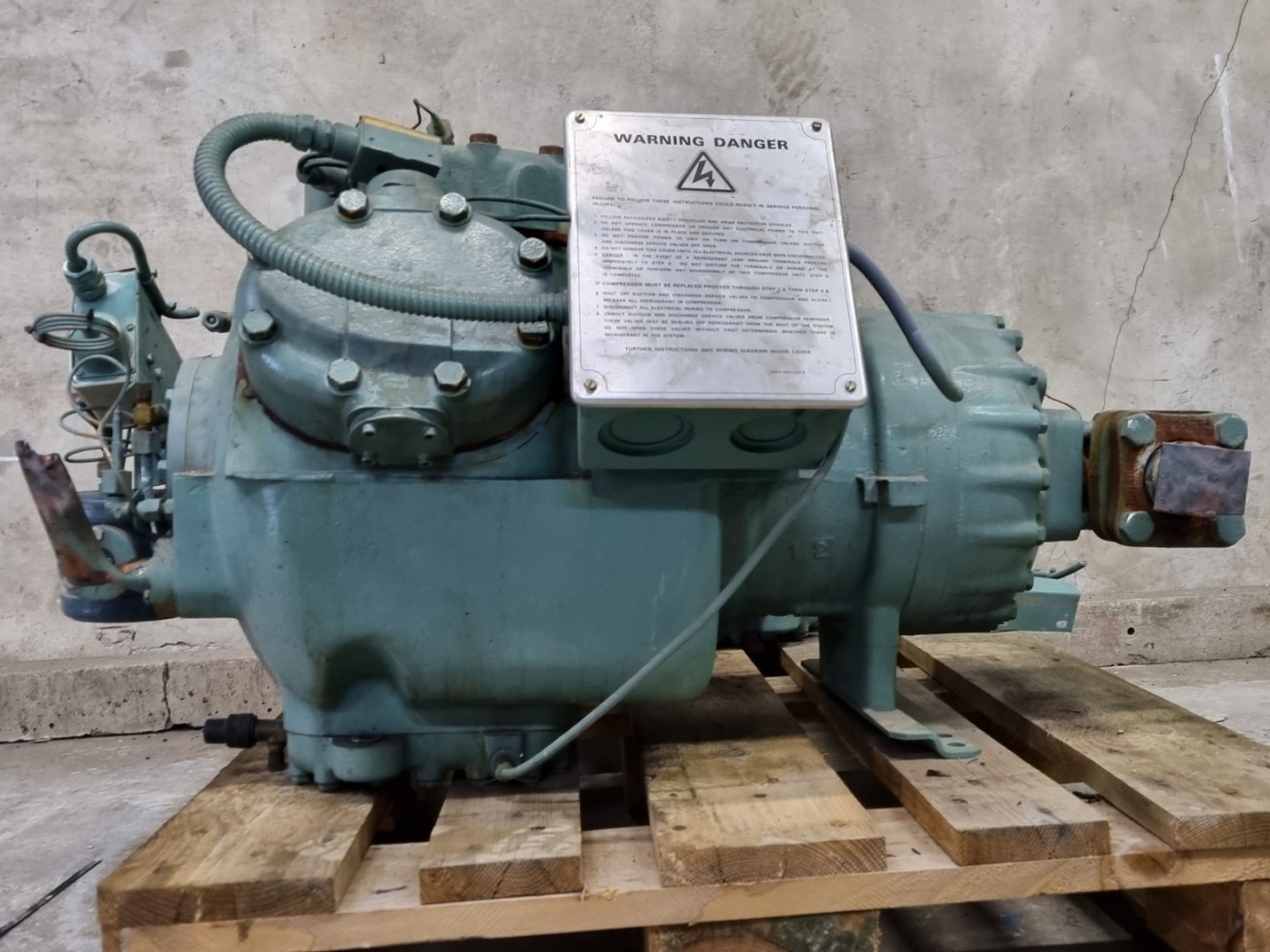
Service: Check oil condition and level where applicable, leakage, cooling, suction and discharge condition, vibration, temperature and protection alarms. Inspect belts, couplings, valves, filters or separators as fitted and review operating trends for loss of performance. Refer to manufacturer documentation for exact pressures, temperatures, clearances and service limits.
Spare Parts: Appropriate spares include approved seals and gaskets, filters, valve or service kits, belts or coupling elements where fitted, bearings, sensors and electrical protection items recommended for the installed compressor.
Use Cases: Starting-air, service-air, deck-air, refrigeration, HVAC and cargo-gas compression duties depending on the listed equipment type.
Carrier Marine 06D 200kW R407C Marine
06D 200kW R407C Marine unverified
Cooling Capacity (kW)
200
Compressor Type
screw
Refrigerant
R407C
Evaporating Temperature (°C)
-15
Condensing Temperature (°C)
40
Common Failures & Inspection Points
  • Valve, rotor, piston or internal compression-element wear caused by contamination, poor lubrication or normal wear can produce reduced delivery, high running temperature or abnormal noise
  • Lubrication failure caused by low level, blocked passages, oil contamination or pump faults can lead to rising temperature, bearing noise or protective shutdown
  • Cooling deficiency caused by fouled coolers, poor airflow or restricted water flow can produce high discharge temperature and repeated trips
  • Seal, gasket or piping leakage caused by ageing, vibration or damaged joints can result in pressure loss, refrigerant or air leakage and extended running
  • Motor, starter or protection faults caused by electrical defects or incorrect sensor signals can cause failure to start, nuisance trips or unstable operation
Service: Check oil condition and level where applicable, leakage, cooling, suction and discharge condition, vibration, temperature and protection alarms. Inspect belts, couplings, valves, filters or separators as fitted and review operating trends for loss of performance. Refer to manufacturer documentation for exact pressures, temperatures, clearances and service limits.
Spare Parts: Appropriate spares include approved seals and gaskets, filters, valve or service kits, belts or coupling elements where fitted, bearings, sensors and electrical protection items recommended for the installed compressor.
Use Cases: Starting-air, service-air, deck-air, refrigeration, HVAC and cargo-gas compression duties depending on the listed equipment type.
Carrier Marine 06D 300kW R134a Marine
06D 300kW R134a Marine unverified
Cooling Capacity (kW)
300
Compressor Type
screw
Refrigerant
R134a
Evaporating Temperature (°C)
-10
Condensing Temperature (°C)
40
Common Failures & Inspection Points
  • Valve, rotor, piston or internal compression-element wear caused by contamination, poor lubrication or normal wear can produce reduced delivery, high running temperature or abnormal noise
  • Lubrication failure caused by low level, blocked passages, oil contamination or pump faults can lead to rising temperature, bearing noise or protective shutdown
  • Cooling deficiency caused by fouled coolers, poor airflow or restricted water flow can produce high discharge temperature and repeated trips
  • Seal, gasket or piping leakage caused by ageing, vibration or damaged joints can result in pressure loss, refrigerant or air leakage and extended running
  • Motor, starter or protection faults caused by electrical defects or incorrect sensor signals can cause failure to start, nuisance trips or unstable operation
Service: Check oil condition and level where applicable, leakage, cooling, suction and discharge condition, vibration, temperature and protection alarms. Inspect belts, couplings, valves, filters or separators as fitted and review operating trends for loss of performance. Refer to manufacturer documentation for exact pressures, temperatures, clearances and service limits.
Spare Parts: Appropriate spares include approved seals and gaskets, filters, valve or service kits, belts or coupling elements where fitted, bearings, sensors and electrical protection items recommended for the installed compressor.
Use Cases: Starting-air, service-air, deck-air, refrigeration, HVAC and cargo-gas compression duties depending on the listed equipment type.
06D 300kW R404A Marine unverified
Cooling Capacity (kW)
300
Compressor Type
screw
Refrigerant
R404A
Evaporating Temperature (°C)
-25
Condensing Temperature (°C)
40
Common Failures & Inspection Points
  • Valve, rotor, piston or internal compression-element wear caused by contamination, poor lubrication or normal wear can produce reduced delivery, high running temperature or abnormal noise
  • Lubrication failure caused by low level, blocked passages, oil contamination or pump faults can lead to rising temperature, bearing noise or protective shutdown
  • Cooling deficiency caused by fouled coolers, poor airflow or restricted water flow can produce high discharge temperature and repeated trips
  • Seal, gasket or piping leakage caused by ageing, vibration or damaged joints can result in pressure loss, refrigerant or air leakage and extended running
  • Motor, starter or protection faults caused by electrical defects or incorrect sensor signals can cause failure to start, nuisance trips or unstable operation
Service: Check oil condition and level where applicable, leakage, cooling, suction and discharge condition, vibration, temperature and protection alarms. Inspect belts, couplings, valves, filters or separators as fitted and review operating trends for loss of performance. Refer to manufacturer documentation for exact pressures, temperatures, clearances and service limits.
Spare Parts: Appropriate spares include approved seals and gaskets, filters, valve or service kits, belts or coupling elements where fitted, bearings, sensors and electrical protection items recommended for the installed compressor.
Use Cases: Starting-air, service-air, deck-air, refrigeration, HVAC and cargo-gas compression duties depending on the listed equipment type.
06D 300kW R407C Marine unverified
Cooling Capacity (kW)
300
Compressor Type
screw
Refrigerant
R407C
Evaporating Temperature (°C)
-15
Condensing Temperature (°C)
40
Common Failures & Inspection Points
  • Valve, rotor, piston or internal compression-element wear caused by contamination, poor lubrication or normal wear can produce reduced delivery, high running temperature or abnormal noise
  • Lubrication failure caused by low level, blocked passages, oil contamination or pump faults can lead to rising temperature, bearing noise or protective shutdown
  • Cooling deficiency caused by fouled coolers, poor airflow or restricted water flow can produce high discharge temperature and repeated trips
  • Seal, gasket or piping leakage caused by ageing, vibration or damaged joints can result in pressure loss, refrigerant or air leakage and extended running
  • Motor, starter or protection faults caused by electrical defects or incorrect sensor signals can cause failure to start, nuisance trips or unstable operation
Service: Check oil condition and level where applicable, leakage, cooling, suction and discharge condition, vibration, temperature and protection alarms. Inspect belts, couplings, valves, filters or separators as fitted and review operating trends for loss of performance. Refer to manufacturer documentation for exact pressures, temperatures, clearances and service limits.
Spare Parts: Appropriate spares include approved seals and gaskets, filters, valve or service kits, belts or coupling elements where fitted, bearings, sensors and electrical protection items recommended for the installed compressor.
Use Cases: Starting-air, service-air, deck-air, refrigeration, HVAC and cargo-gas compression duties depending on the listed equipment type.
Carrier Marine 06D 500kW R134a Marine
06D 500kW R134a Marine unverified
Cooling Capacity (kW)
500
Compressor Type
screw
Refrigerant
R134a
Evaporating Temperature (°C)
-10
Condensing Temperature (°C)
40
Common Failures & Inspection Points
  • Valve, rotor, piston or internal compression-element wear caused by contamination, poor lubrication or normal wear can produce reduced delivery, high running temperature or abnormal noise
  • Lubrication failure caused by low level, blocked passages, oil contamination or pump faults can lead to rising temperature, bearing noise or protective shutdown
  • Cooling deficiency caused by fouled coolers, poor airflow or restricted water flow can produce high discharge temperature and repeated trips
  • Seal, gasket or piping leakage caused by ageing, vibration or damaged joints can result in pressure loss, refrigerant or air leakage and extended running
  • Motor, starter or protection faults caused by electrical defects or incorrect sensor signals can cause failure to start, nuisance trips or unstable operation
Service: Check oil condition and level where applicable, leakage, cooling, suction and discharge condition, vibration, temperature and protection alarms. Inspect belts, couplings, valves, filters or separators as fitted and review operating trends for loss of performance. Refer to manufacturer documentation for exact pressures, temperatures, clearances and service limits.
Spare Parts: Appropriate spares include approved seals and gaskets, filters, valve or service kits, belts or coupling elements where fitted, bearings, sensors and electrical protection items recommended for the installed compressor.
Use Cases: Starting-air, service-air, deck-air, refrigeration, HVAC and cargo-gas compression duties depending on the listed equipment type.
06D 500kW R404A Marine unverified
Cooling Capacity (kW)
500
Compressor Type
screw
Refrigerant
R404A
Evaporating Temperature (°C)
-25
Condensing Temperature (°C)
40
Common Failures & Inspection Points
  • Valve, rotor, piston or internal compression-element wear caused by contamination, poor lubrication or normal wear can produce reduced delivery, high running temperature or abnormal noise
  • Lubrication failure caused by low level, blocked passages, oil contamination or pump faults can lead to rising temperature, bearing noise or protective shutdown
  • Cooling deficiency caused by fouled coolers, poor airflow or restricted water flow can produce high discharge temperature and repeated trips
  • Seal, gasket or piping leakage caused by ageing, vibration or damaged joints can result in pressure loss, refrigerant or air leakage and extended running
  • Motor, starter or protection faults caused by electrical defects or incorrect sensor signals can cause failure to start, nuisance trips or unstable operation
Service: Check oil condition and level where applicable, leakage, cooling, suction and discharge condition, vibration, temperature and protection alarms. Inspect belts, couplings, valves, filters or separators as fitted and review operating trends for loss of performance. Refer to manufacturer documentation for exact pressures, temperatures, clearances and service limits.
Spare Parts: Appropriate spares include approved seals and gaskets, filters, valve or service kits, belts or coupling elements where fitted, bearings, sensors and electrical protection items recommended for the installed compressor.
Use Cases: Starting-air, service-air, deck-air, refrigeration, HVAC and cargo-gas compression duties depending on the listed equipment type.
Carrier Marine 06D 500kW R407C Marine
06D 500kW R407C Marine unverified
Cooling Capacity (kW)
500
Compressor Type
screw
Refrigerant
R407C
Evaporating Temperature (°C)
-15
Condensing Temperature (°C)
40
Common Failures & Inspection Points
  • Valve, rotor, piston or internal compression-element wear caused by contamination, poor lubrication or normal wear can produce reduced delivery, high running temperature or abnormal noise
  • Lubrication failure caused by low level, blocked passages, oil contamination or pump faults can lead to rising temperature, bearing noise or protective shutdown
  • Cooling deficiency caused by fouled coolers, poor airflow or restricted water flow can produce high discharge temperature and repeated trips
  • Seal, gasket or piping leakage caused by ageing, vibration or damaged joints can result in pressure loss, refrigerant or air leakage and extended running
  • Motor, starter or protection faults caused by electrical defects or incorrect sensor signals can cause failure to start, nuisance trips or unstable operation
Service: Check oil condition and level where applicable, leakage, cooling, suction and discharge condition, vibration, temperature and protection alarms. Inspect belts, couplings, valves, filters or separators as fitted and review operating trends for loss of performance. Refer to manufacturer documentation for exact pressures, temperatures, clearances and service limits.
Spare Parts: Appropriate spares include approved seals and gaskets, filters, valve or service kits, belts or coupling elements where fitted, bearings, sensors and electrical protection items recommended for the installed compressor.
Use Cases: Starting-air, service-air, deck-air, refrigeration, HVAC and cargo-gas compression duties depending on the listed equipment type.
Carrier Marine 06D 750kW R134a Marine
06D 750kW R134a Marine unverified
Cooling Capacity (kW)
750
Compressor Type
screw
Refrigerant
R134a
Evaporating Temperature (°C)
-10
Condensing Temperature (°C)
40
Common Failures & Inspection Points
  • Valve, rotor, piston or internal compression-element wear caused by contamination, poor lubrication or normal wear can produce reduced delivery, high running temperature or abnormal noise
  • Lubrication failure caused by low level, blocked passages, oil contamination or pump faults can lead to rising temperature, bearing noise or protective shutdown
  • Cooling deficiency caused by fouled coolers, poor airflow or restricted water flow can produce high discharge temperature and repeated trips
  • Seal, gasket or piping leakage caused by ageing, vibration or damaged joints can result in pressure loss, refrigerant or air leakage and extended running
  • Motor, starter or protection faults caused by electrical defects or incorrect sensor signals can cause failure to start, nuisance trips or unstable operation
Service: Check oil condition and level where applicable, leakage, cooling, suction and discharge condition, vibration, temperature and protection alarms. Inspect belts, couplings, valves, filters or separators as fitted and review operating trends for loss of performance. Refer to manufacturer documentation for exact pressures, temperatures, clearances and service limits.
Spare Parts: Appropriate spares include approved seals and gaskets, filters, valve or service kits, belts or coupling elements where fitted, bearings, sensors and electrical protection items recommended for the installed compressor.
Use Cases: Starting-air, service-air, deck-air, refrigeration, HVAC and cargo-gas compression duties depending on the listed equipment type.
06D 750kW R404A Marine unverified
Cooling Capacity (kW)
750
Compressor Type
screw
Refrigerant
R404A
Evaporating Temperature (°C)
-25
Condensing Temperature (°C)
40
Common Failures & Inspection Points
  • Valve, rotor, piston or internal compression-element wear caused by contamination, poor lubrication or normal wear can produce reduced delivery, high running temperature or abnormal noise
  • Lubrication failure caused by low level, blocked passages, oil contamination or pump faults can lead to rising temperature, bearing noise or protective shutdown
  • Cooling deficiency caused by fouled coolers, poor airflow or restricted water flow can produce high discharge temperature and repeated trips
  • Seal, gasket or piping leakage caused by ageing, vibration or damaged joints can result in pressure loss, refrigerant or air leakage and extended running
  • Motor, starter or protection faults caused by electrical defects or incorrect sensor signals can cause failure to start, nuisance trips or unstable operation
Service: Check oil condition and level where applicable, leakage, cooling, suction and discharge condition, vibration, temperature and protection alarms. Inspect belts, couplings, valves, filters or separators as fitted and review operating trends for loss of performance. Refer to manufacturer documentation for exact pressures, temperatures, clearances and service limits.
Spare Parts: Appropriate spares include approved seals and gaskets, filters, valve or service kits, belts or coupling elements where fitted, bearings, sensors and electrical protection items recommended for the installed compressor.
Use Cases: Starting-air, service-air, deck-air, refrigeration, HVAC and cargo-gas compression duties depending on the listed equipment type.
Carrier Marine 06D 750kW R407C Marine
06D 750kW R407C Marine unverified
Cooling Capacity (kW)
750
Compressor Type
screw
Refrigerant
R407C
Evaporating Temperature (°C)
-15
Condensing Temperature (°C)
40
Common Failures & Inspection Points
  • Valve, rotor, piston or internal compression-element wear caused by contamination, poor lubrication or normal wear can produce reduced delivery, high running temperature or abnormal noise
  • Lubrication failure caused by low level, blocked passages, oil contamination or pump faults can lead to rising temperature, bearing noise or protective shutdown
  • Cooling deficiency caused by fouled coolers, poor airflow or restricted water flow can produce high discharge temperature and repeated trips
  • Seal, gasket or piping leakage caused by ageing, vibration or damaged joints can result in pressure loss, refrigerant or air leakage and extended running
  • Motor, starter or protection faults caused by electrical defects or incorrect sensor signals can cause failure to start, nuisance trips or unstable operation
Service: Check oil condition and level where applicable, leakage, cooling, suction and discharge condition, vibration, temperature and protection alarms. Inspect belts, couplings, valves, filters or separators as fitted and review operating trends for loss of performance. Refer to manufacturer documentation for exact pressures, temperatures, clearances and service limits.
Spare Parts: Appropriate spares include approved seals and gaskets, filters, valve or service kits, belts or coupling elements where fitted, bearings, sensors and electrical protection items recommended for the installed compressor.
Use Cases: Starting-air, service-air, deck-air, refrigeration, HVAC and cargo-gas compression duties depending on the listed equipment type.
Carrier Marine 06D 1000kW R134a Marine
06D 1000kW R134a Marine unverified
Cooling Capacity (kW)
1000
Compressor Type
screw
Refrigerant
R134a
Evaporating Temperature (°C)
-10
Condensing Temperature (°C)
40
Common Failures & Inspection Points
  • Refrigerant leakage from shaft seals, gaskets, valves, or piping causes reduced charge, poor cooling, or low suction pressure
  • Lubrication failure from low oil level, contamination, poor oil return, or pump faults causes noise, overheating, or low-oil-pressure trips
  • Valve, piston, screw, bearing, or internal wear reduces compression efficiency and appears as poor capacity or abnormal pressure balance
  • Condenser fouling or restricted cooling medium raises discharge pressure and temperature and may trigger high-pressure protection
  • Capacity-control, solenoid, sensor, motor, or protection faults cause unstable loading, short cycling, or failed starting
Service: Trend suction and discharge pressures and temperatures, oil level and condition, refrigerant condition, vibration, leakage, and compressor loading. Inspect cooling, filters or strainers, valves, safety devices, electrical protection, and control history; exact refrigerant charge, pressure limits, and internal clearances must follow manufacturer documentation.
Spare Parts: Keep approved seals and gaskets, filters or driers, oil-system parts, solenoid and control-valve items, sensors, motor or starter components, and manufacturer-recommended internal service parts.
Use Cases: Used in provision refrigeration, reefer cargo systems, HVAC chillers, process refrigeration, and low-temperature stores on merchant, passenger, fishing, offshore, and specialized vessels.
Carrier Marine 06D 1000kW R404A Marine
06D 1000kW R404A Marine unverified
Cooling Capacity (kW)
1000
Compressor Type
screw
Refrigerant
R404A
Evaporating Temperature (°C)
-25
Condensing Temperature (°C)
40
Common Failures & Inspection Points
  • Refrigerant leakage from shaft seals, gaskets, valves, or piping causes reduced charge, poor cooling, or low suction pressure
  • Lubrication failure from low oil level, contamination, poor oil return, or pump faults causes noise, overheating, or low-oil-pressure trips
  • Valve, piston, screw, bearing, or internal wear reduces compression efficiency and appears as poor capacity or abnormal pressure balance
  • Condenser fouling or restricted cooling medium raises discharge pressure and temperature and may trigger high-pressure protection
  • Capacity-control, solenoid, sensor, motor, or protection faults cause unstable loading, short cycling, or failed starting
Service: Trend suction and discharge pressures and temperatures, oil level and condition, refrigerant condition, vibration, leakage, and compressor loading. Inspect cooling, filters or strainers, valves, safety devices, electrical protection, and control history; exact refrigerant charge, pressure limits, and internal clearances must follow manufacturer documentation.
Spare Parts: Keep approved seals and gaskets, filters or driers, oil-system parts, solenoid and control-valve items, sensors, motor or starter components, and manufacturer-recommended internal service parts.
Use Cases: Used in provision refrigeration, reefer cargo systems, HVAC chillers, process refrigeration, and low-temperature stores on merchant, passenger, fishing, offshore, and specialized vessels.
06D 1000kW R407C Marine unverified
Cooling Capacity (kW)
1000
Compressor Type
screw
Refrigerant
R407C
Evaporating Temperature (°C)
-15
Condensing Temperature (°C)
40
Common Failures & Inspection Points
  • Refrigerant leakage from shaft seals, gaskets, valves, or piping causes reduced charge, poor cooling, or low suction pressure
  • Lubrication failure from low oil level, contamination, poor oil return, or pump faults causes noise, overheating, or low-oil-pressure trips
  • Valve, piston, screw, bearing, or internal wear reduces compression efficiency and appears as poor capacity or abnormal pressure balance
  • Condenser fouling or restricted cooling medium raises discharge pressure and temperature and may trigger high-pressure protection
  • Capacity-control, solenoid, sensor, motor, or protection faults cause unstable loading, short cycling, or failed starting
Service: Trend suction and discharge pressures and temperatures, oil level and condition, refrigerant condition, vibration, leakage, and compressor loading. Inspect cooling, filters or strainers, valves, safety devices, electrical protection, and control history; exact refrigerant charge, pressure limits, and internal clearances must follow manufacturer documentation.
Spare Parts: Keep approved seals and gaskets, filters or driers, oil-system parts, solenoid and control-valve items, sensors, motor or starter components, and manufacturer-recommended internal service parts.
Use Cases: Used in provision refrigeration, reefer cargo systems, HVAC chillers, process refrigeration, and low-temperature stores on merchant, passenger, fishing, offshore, and specialized vessels.
Carrier Marine 06E 200kW R134a Marine
06E 200kW R134a Marine unverified
Cooling Capacity (kW)
200
Compressor Type
screw
Refrigerant
R134a
Evaporating Temperature (°C)
-10
Condensing Temperature (°C)
40
Common Failures & Inspection Points
  • Valve, rotor, piston or internal compression-element wear caused by contamination, poor lubrication or normal wear can produce reduced delivery, high running temperature or abnormal noise
  • Lubrication failure caused by low level, blocked passages, oil contamination or pump faults can lead to rising temperature, bearing noise or protective shutdown
  • Cooling deficiency caused by fouled coolers, poor airflow or restricted water flow can produce high discharge temperature and repeated trips
  • Seal, gasket or piping leakage caused by ageing, vibration or damaged joints can result in pressure loss, refrigerant or air leakage and extended running
  • Motor, starter or protection faults caused by electrical defects or incorrect sensor signals can cause failure to start, nuisance trips or unstable operation
Service: Check oil condition and level where applicable, leakage, cooling, suction and discharge condition, vibration, temperature and protection alarms. Inspect belts, couplings, valves, filters or separators as fitted and review operating trends for loss of performance. Refer to manufacturer documentation for exact pressures, temperatures, clearances and service limits.
Spare Parts: Appropriate spares include approved seals and gaskets, filters, valve or service kits, belts or coupling elements where fitted, bearings, sensors and electrical protection items recommended for the installed compressor.
Use Cases: Starting-air, service-air, deck-air, refrigeration, HVAC and cargo-gas compression duties depending on the listed equipment type.
Carrier Marine 06E 200kW R404A Marine
06E 200kW R404A Marine unverified
Cooling Capacity (kW)
200
Compressor Type
screw
Refrigerant
R404A
Evaporating Temperature (°C)
-25
Condensing Temperature (°C)
40
Common Failures & Inspection Points
  • Valve, rotor, piston or internal compression-element wear caused by contamination, poor lubrication or normal wear can produce reduced delivery, high running temperature or abnormal noise
  • Lubrication failure caused by low level, blocked passages, oil contamination or pump faults can lead to rising temperature, bearing noise or protective shutdown
  • Cooling deficiency caused by fouled coolers, poor airflow or restricted water flow can produce high discharge temperature and repeated trips
  • Seal, gasket or piping leakage caused by ageing, vibration or damaged joints can result in pressure loss, refrigerant or air leakage and extended running
  • Motor, starter or protection faults caused by electrical defects or incorrect sensor signals can cause failure to start, nuisance trips or unstable operation
Service: Check oil condition and level where applicable, leakage, cooling, suction and discharge condition, vibration, temperature and protection alarms. Inspect belts, couplings, valves, filters or separators as fitted and review operating trends for loss of performance. Refer to manufacturer documentation for exact pressures, temperatures, clearances and service limits.
Spare Parts: Appropriate spares include approved seals and gaskets, filters, valve or service kits, belts or coupling elements where fitted, bearings, sensors and electrical protection items recommended for the installed compressor.
Use Cases: Starting-air, service-air, deck-air, refrigeration, HVAC and cargo-gas compression duties depending on the listed equipment type.
Carrier Marine 06E 200kW R407C Marine
06E 200kW R407C Marine unverified
Cooling Capacity (kW)
200
Compressor Type
screw
Refrigerant
R407C
Evaporating Temperature (°C)
-15
Condensing Temperature (°C)
40
Common Failures & Inspection Points
  • Valve, rotor, piston or internal compression-element wear caused by contamination, poor lubrication or normal wear can produce reduced delivery, high running temperature or abnormal noise
  • Lubrication failure caused by low level, blocked passages, oil contamination or pump faults can lead to rising temperature, bearing noise or protective shutdown
  • Cooling deficiency caused by fouled coolers, poor airflow or restricted water flow can produce high discharge temperature and repeated trips
  • Seal, gasket or piping leakage caused by ageing, vibration or damaged joints can result in pressure loss, refrigerant or air leakage and extended running
  • Motor, starter or protection faults caused by electrical defects or incorrect sensor signals can cause failure to start, nuisance trips or unstable operation
Service: Check oil condition and level where applicable, leakage, cooling, suction and discharge condition, vibration, temperature and protection alarms. Inspect belts, couplings, valves, filters or separators as fitted and review operating trends for loss of performance. Refer to manufacturer documentation for exact pressures, temperatures, clearances and service limits.
Spare Parts: Appropriate spares include approved seals and gaskets, filters, valve or service kits, belts or coupling elements where fitted, bearings, sensors and electrical protection items recommended for the installed compressor.
Use Cases: Starting-air, service-air, deck-air, refrigeration, HVAC and cargo-gas compression duties depending on the listed equipment type.
Carrier Marine 06E 300kW R134a Marine
06E 300kW R134a Marine unverified
Cooling Capacity (kW)
300
Compressor Type
screw
Refrigerant
R134a
Evaporating Temperature (°C)
-10
Condensing Temperature (°C)
40
Common Failures & Inspection Points
  • Valve, rotor, piston or internal compression-element wear caused by contamination, poor lubrication or normal wear can produce reduced delivery, high running temperature or abnormal noise
  • Lubrication failure caused by low level, blocked passages, oil contamination or pump faults can lead to rising temperature, bearing noise or protective shutdown
  • Cooling deficiency caused by fouled coolers, poor airflow or restricted water flow can produce high discharge temperature and repeated trips
  • Seal, gasket or piping leakage caused by ageing, vibration or damaged joints can result in pressure loss, refrigerant or air leakage and extended running
  • Motor, starter or protection faults caused by electrical defects or incorrect sensor signals can cause failure to start, nuisance trips or unstable operation
Service: Check oil condition and level where applicable, leakage, cooling, suction and discharge condition, vibration, temperature and protection alarms. Inspect belts, couplings, valves, filters or separators as fitted and review operating trends for loss of performance. Refer to manufacturer documentation for exact pressures, temperatures, clearances and service limits.
Spare Parts: Appropriate spares include approved seals and gaskets, filters, valve or service kits, belts or coupling elements where fitted, bearings, sensors and electrical protection items recommended for the installed compressor.
Use Cases: Starting-air, service-air, deck-air, refrigeration, HVAC and cargo-gas compression duties depending on the listed equipment type.
Carrier Marine 06E 300kW R404A Marine
06E 300kW R404A Marine unverified
Cooling Capacity (kW)
300
Compressor Type
screw
Refrigerant
R404A
Evaporating Temperature (°C)
-25
Condensing Temperature (°C)
40
Common Failures & Inspection Points
  • Valve, rotor, piston or internal compression-element wear caused by contamination, poor lubrication or normal wear can produce reduced delivery, high running temperature or abnormal noise
  • Lubrication failure caused by low level, blocked passages, oil contamination or pump faults can lead to rising temperature, bearing noise or protective shutdown
  • Cooling deficiency caused by fouled coolers, poor airflow or restricted water flow can produce high discharge temperature and repeated trips
  • Seal, gasket or piping leakage caused by ageing, vibration or damaged joints can result in pressure loss, refrigerant or air leakage and extended running
  • Motor, starter or protection faults caused by electrical defects or incorrect sensor signals can cause failure to start, nuisance trips or unstable operation
Service: Check oil condition and level where applicable, leakage, cooling, suction and discharge condition, vibration, temperature and protection alarms. Inspect belts, couplings, valves, filters or separators as fitted and review operating trends for loss of performance. Refer to manufacturer documentation for exact pressures, temperatures, clearances and service limits.
Spare Parts: Appropriate spares include approved seals and gaskets, filters, valve or service kits, belts or coupling elements where fitted, bearings, sensors and electrical protection items recommended for the installed compressor.
Use Cases: Starting-air, service-air, deck-air, refrigeration, HVAC and cargo-gas compression duties depending on the listed equipment type.
Carrier Marine 06E 300kW R407C Marine
06E 300kW R407C Marine unverified
Cooling Capacity (kW)
300
Compressor Type
screw
Refrigerant
R407C
Evaporating Temperature (°C)
-15
Condensing Temperature (°C)
40
Common Failures & Inspection Points
  • Valve, rotor, piston or internal compression-element wear caused by contamination, poor lubrication or normal wear can produce reduced delivery, high running temperature or abnormal noise
  • Lubrication failure caused by low level, blocked passages, oil contamination or pump faults can lead to rising temperature, bearing noise or protective shutdown
  • Cooling deficiency caused by fouled coolers, poor airflow or restricted water flow can produce high discharge temperature and repeated trips
  • Seal, gasket or piping leakage caused by ageing, vibration or damaged joints can result in pressure loss, refrigerant or air leakage and extended running
  • Motor, starter or protection faults caused by electrical defects or incorrect sensor signals can cause failure to start, nuisance trips or unstable operation
Service: Check oil condition and level where applicable, leakage, cooling, suction and discharge condition, vibration, temperature and protection alarms. Inspect belts, couplings, valves, filters or separators as fitted and review operating trends for loss of performance. Refer to manufacturer documentation for exact pressures, temperatures, clearances and service limits.
Spare Parts: Appropriate spares include approved seals and gaskets, filters, valve or service kits, belts or coupling elements where fitted, bearings, sensors and electrical protection items recommended for the installed compressor.
Use Cases: Starting-air, service-air, deck-air, refrigeration, HVAC and cargo-gas compression duties depending on the listed equipment type.
Carrier Marine 06E 500kW R134a Marine
06E 500kW R134a Marine unverified
Cooling Capacity (kW)
500
Compressor Type
screw
Refrigerant
R134a
Evaporating Temperature (°C)
-10
Condensing Temperature (°C)
40
Common Failures & Inspection Points
  • Valve, rotor, piston or internal compression-element wear caused by contamination, poor lubrication or normal wear can produce reduced delivery, high running temperature or abnormal noise
  • Lubrication failure caused by low level, blocked passages, oil contamination or pump faults can lead to rising temperature, bearing noise or protective shutdown
  • Cooling deficiency caused by fouled coolers, poor airflow or restricted water flow can produce high discharge temperature and repeated trips
  • Seal, gasket or piping leakage caused by ageing, vibration or damaged joints can result in pressure loss, refrigerant or air leakage and extended running
  • Motor, starter or protection faults caused by electrical defects or incorrect sensor signals can cause failure to start, nuisance trips or unstable operation
Service: Check oil condition and level where applicable, leakage, cooling, suction and discharge condition, vibration, temperature and protection alarms. Inspect belts, couplings, valves, filters or separators as fitted and review operating trends for loss of performance. Refer to manufacturer documentation for exact pressures, temperatures, clearances and service limits.
Spare Parts: Appropriate spares include approved seals and gaskets, filters, valve or service kits, belts or coupling elements where fitted, bearings, sensors and electrical protection items recommended for the installed compressor.
Use Cases: Starting-air, service-air, deck-air, refrigeration, HVAC and cargo-gas compression duties depending on the listed equipment type.
Carrier Marine 06E 500kW R404A Marine
06E 500kW R404A Marine unverified
Cooling Capacity (kW)
500
Compressor Type
screw
Refrigerant
R404A
Evaporating Temperature (°C)
-25
Condensing Temperature (°C)
40
Common Failures & Inspection Points
  • Valve, rotor, piston or internal compression-element wear caused by contamination, poor lubrication or normal wear can produce reduced delivery, high running temperature or abnormal noise
  • Lubrication failure caused by low level, blocked passages, oil contamination or pump faults can lead to rising temperature, bearing noise or protective shutdown
  • Cooling deficiency caused by fouled coolers, poor airflow or restricted water flow can produce high discharge temperature and repeated trips
  • Seal, gasket or piping leakage caused by ageing, vibration or damaged joints can result in pressure loss, refrigerant or air leakage and extended running
  • Motor, starter or protection faults caused by electrical defects or incorrect sensor signals can cause failure to start, nuisance trips or unstable operation
Service: Check oil condition and level where applicable, leakage, cooling, suction and discharge condition, vibration, temperature and protection alarms. Inspect belts, couplings, valves, filters or separators as fitted and review operating trends for loss of performance. Refer to manufacturer documentation for exact pressures, temperatures, clearances and service limits.
Spare Parts: Appropriate spares include approved seals and gaskets, filters, valve or service kits, belts or coupling elements where fitted, bearings, sensors and electrical protection items recommended for the installed compressor.
Use Cases: Starting-air, service-air, deck-air, refrigeration, HVAC and cargo-gas compression duties depending on the listed equipment type.
Carrier Marine 06E 500kW R407C Marine
06E 500kW R407C Marine unverified
Cooling Capacity (kW)
500
Compressor Type
screw
Refrigerant
R407C
Evaporating Temperature (°C)
-15
Condensing Temperature (°C)
40
Common Failures & Inspection Points
  • Valve, rotor, piston or internal compression-element wear caused by contamination, poor lubrication or normal wear can produce reduced delivery, high running temperature or abnormal noise
  • Lubrication failure caused by low level, blocked passages, oil contamination or pump faults can lead to rising temperature, bearing noise or protective shutdown
  • Cooling deficiency caused by fouled coolers, poor airflow or restricted water flow can produce high discharge temperature and repeated trips
  • Seal, gasket or piping leakage caused by ageing, vibration or damaged joints can result in pressure loss, refrigerant or air leakage and extended running
  • Motor, starter or protection faults caused by electrical defects or incorrect sensor signals can cause failure to start, nuisance trips or unstable operation
Service: Check oil condition and level where applicable, leakage, cooling, suction and discharge condition, vibration, temperature and protection alarms. Inspect belts, couplings, valves, filters or separators as fitted and review operating trends for loss of performance. Refer to manufacturer documentation for exact pressures, temperatures, clearances and service limits.
Spare Parts: Appropriate spares include approved seals and gaskets, filters, valve or service kits, belts or coupling elements where fitted, bearings, sensors and electrical protection items recommended for the installed compressor.
Use Cases: Starting-air, service-air, deck-air, refrigeration, HVAC and cargo-gas compression duties depending on the listed equipment type.
Carrier Marine 06E 750kW R134a Marine
06E 750kW R134a Marine unverified
Cooling Capacity (kW)
750
Compressor Type
screw
Refrigerant
R134a
Evaporating Temperature (°C)
-10
Condensing Temperature (°C)
40
Common Failures & Inspection Points
  • Valve, rotor, piston or internal compression-element wear caused by contamination, poor lubrication or normal wear can produce reduced delivery, high running temperature or abnormal noise
  • Lubrication failure caused by low level, blocked passages, oil contamination or pump faults can lead to rising temperature, bearing noise or protective shutdown
  • Cooling deficiency caused by fouled coolers, poor airflow or restricted water flow can produce high discharge temperature and repeated trips
  • Seal, gasket or piping leakage caused by ageing, vibration or damaged joints can result in pressure loss, refrigerant or air leakage and extended running
  • Motor, starter or protection faults caused by electrical defects or incorrect sensor signals can cause failure to start, nuisance trips or unstable operation
Service: Check oil condition and level where applicable, leakage, cooling, suction and discharge condition, vibration, temperature and protection alarms. Inspect belts, couplings, valves, filters or separators as fitted and review operating trends for loss of performance. Refer to manufacturer documentation for exact pressures, temperatures, clearances and service limits.
Spare Parts: Appropriate spares include approved seals and gaskets, filters, valve or service kits, belts or coupling elements where fitted, bearings, sensors and electrical protection items recommended for the installed compressor.
Use Cases: Starting-air, service-air, deck-air, refrigeration, HVAC and cargo-gas compression duties depending on the listed equipment type.
Carrier Marine 06E 750kW R404A Marine
06E 750kW R404A Marine unverified
Cooling Capacity (kW)
750
Compressor Type
screw
Refrigerant
R404A
Evaporating Temperature (°C)
-25
Condensing Temperature (°C)
40
Common Failures & Inspection Points
  • Valve, rotor, piston or internal compression-element wear caused by contamination, poor lubrication or normal wear can produce reduced delivery, high running temperature or abnormal noise
  • Lubrication failure caused by low level, blocked passages, oil contamination or pump faults can lead to rising temperature, bearing noise or protective shutdown
  • Cooling deficiency caused by fouled coolers, poor airflow or restricted water flow can produce high discharge temperature and repeated trips
  • Seal, gasket or piping leakage caused by ageing, vibration or damaged joints can result in pressure loss, refrigerant or air leakage and extended running
  • Motor, starter or protection faults caused by electrical defects or incorrect sensor signals can cause failure to start, nuisance trips or unstable operation
Service: Check oil condition and level where applicable, leakage, cooling, suction and discharge condition, vibration, temperature and protection alarms. Inspect belts, couplings, valves, filters or separators as fitted and review operating trends for loss of performance. Refer to manufacturer documentation for exact pressures, temperatures, clearances and service limits.
Spare Parts: Appropriate spares include approved seals and gaskets, filters, valve or service kits, belts or coupling elements where fitted, bearings, sensors and electrical protection items recommended for the installed compressor.
Use Cases: Starting-air, service-air, deck-air, refrigeration, HVAC and cargo-gas compression duties depending on the listed equipment type.
Carrier Marine 06E 750kW R407C Marine
06E 750kW R407C Marine unverified
Cooling Capacity (kW)
750
Compressor Type
screw
Refrigerant
R407C
Evaporating Temperature (°C)
-15
Condensing Temperature (°C)
40
Common Failures & Inspection Points
  • Valve, rotor, piston or internal compression-element wear caused by contamination, poor lubrication or normal wear can produce reduced delivery, high running temperature or abnormal noise
  • Lubrication failure caused by low level, blocked passages, oil contamination or pump faults can lead to rising temperature, bearing noise or protective shutdown
  • Cooling deficiency caused by fouled coolers, poor airflow or restricted water flow can produce high discharge temperature and repeated trips
  • Seal, gasket or piping leakage caused by ageing, vibration or damaged joints can result in pressure loss, refrigerant or air leakage and extended running
  • Motor, starter or protection faults caused by electrical defects or incorrect sensor signals can cause failure to start, nuisance trips or unstable operation
Service: Check oil condition and level where applicable, leakage, cooling, suction and discharge condition, vibration, temperature and protection alarms. Inspect belts, couplings, valves, filters or separators as fitted and review operating trends for loss of performance. Refer to manufacturer documentation for exact pressures, temperatures, clearances and service limits.
Spare Parts: Appropriate spares include approved seals and gaskets, filters, valve or service kits, belts or coupling elements where fitted, bearings, sensors and electrical protection items recommended for the installed compressor.
Use Cases: Starting-air, service-air, deck-air, refrigeration, HVAC and cargo-gas compression duties depending on the listed equipment type.
Carrier Marine 06E 1000kW R134a Marine
06E 1000kW R134a Marine unverified
Cooling Capacity (kW)
1000
Compressor Type
screw
Refrigerant
R134a
Evaporating Temperature (°C)
-10
Condensing Temperature (°C)
40
Common Failures & Inspection Points
  • Refrigerant leakage from shaft seals, gaskets, valves, or piping causes reduced charge, poor cooling, or low suction pressure
  • Lubrication failure from low oil level, contamination, poor oil return, or pump faults causes noise, overheating, or low-oil-pressure trips
  • Valve, piston, screw, bearing, or internal wear reduces compression efficiency and appears as poor capacity or abnormal pressure balance
  • Condenser fouling or restricted cooling medium raises discharge pressure and temperature and may trigger high-pressure protection
  • Capacity-control, solenoid, sensor, motor, or protection faults cause unstable loading, short cycling, or failed starting
Service: Trend suction and discharge pressures and temperatures, oil level and condition, refrigerant condition, vibration, leakage, and compressor loading. Inspect cooling, filters or strainers, valves, safety devices, electrical protection, and control history; exact refrigerant charge, pressure limits, and internal clearances must follow manufacturer documentation.
Spare Parts: Keep approved seals and gaskets, filters or driers, oil-system parts, solenoid and control-valve items, sensors, motor or starter components, and manufacturer-recommended internal service parts.
Use Cases: Used in provision refrigeration, reefer cargo systems, HVAC chillers, process refrigeration, and low-temperature stores on merchant, passenger, fishing, offshore, and specialized vessels.
Carrier Marine 06E 1000kW R404A Marine
06E 1000kW R404A Marine unverified
Cooling Capacity (kW)
1000
Compressor Type
screw
Refrigerant
R404A
Evaporating Temperature (°C)
-25
Condensing Temperature (°C)
40
Common Failures & Inspection Points
  • Refrigerant leakage from shaft seals, gaskets, valves, or piping causes reduced charge, poor cooling, or low suction pressure
  • Lubrication failure from low oil level, contamination, poor oil return, or pump faults causes noise, overheating, or low-oil-pressure trips
  • Valve, piston, screw, bearing, or internal wear reduces compression efficiency and appears as poor capacity or abnormal pressure balance
  • Condenser fouling or restricted cooling medium raises discharge pressure and temperature and may trigger high-pressure protection
  • Capacity-control, solenoid, sensor, motor, or protection faults cause unstable loading, short cycling, or failed starting
Service: Trend suction and discharge pressures and temperatures, oil level and condition, refrigerant condition, vibration, leakage, and compressor loading. Inspect cooling, filters or strainers, valves, safety devices, electrical protection, and control history; exact refrigerant charge, pressure limits, and internal clearances must follow manufacturer documentation.
Spare Parts: Keep approved seals and gaskets, filters or driers, oil-system parts, solenoid and control-valve items, sensors, motor or starter components, and manufacturer-recommended internal service parts.
Use Cases: Used in provision refrigeration, reefer cargo systems, HVAC chillers, process refrigeration, and low-temperature stores on merchant, passenger, fishing, offshore, and specialized vessels.
Carrier Marine 06E 1000kW R407C Marine
06E 1000kW R407C Marine unverified
Cooling Capacity (kW)
1000
Compressor Type
screw
Refrigerant
R407C
Evaporating Temperature (°C)
-15
Condensing Temperature (°C)
40
Common Failures & Inspection Points
  • Refrigerant leakage from shaft seals, gaskets, valves, or piping causes reduced charge, poor cooling, or low suction pressure
  • Lubrication failure from low oil level, contamination, poor oil return, or pump faults causes noise, overheating, or low-oil-pressure trips
  • Valve, piston, screw, bearing, or internal wear reduces compression efficiency and appears as poor capacity or abnormal pressure balance
  • Condenser fouling or restricted cooling medium raises discharge pressure and temperature and may trigger high-pressure protection
  • Capacity-control, solenoid, sensor, motor, or protection faults cause unstable loading, short cycling, or failed starting
Service: Trend suction and discharge pressures and temperatures, oil level and condition, refrigerant condition, vibration, leakage, and compressor loading. Inspect cooling, filters or strainers, valves, safety devices, electrical protection, and control history; exact refrigerant charge, pressure limits, and internal clearances must follow manufacturer documentation.
Spare Parts: Keep approved seals and gaskets, filters or driers, oil-system parts, solenoid and control-valve items, sensors, motor or starter components, and manufacturer-recommended internal service parts.
Use Cases: Used in provision refrigeration, reefer cargo systems, HVAC chillers, process refrigeration, and low-temperature stores on merchant, passenger, fishing, offshore, and specialized vessels.

GEA Refrigeration Marine

45
GEA Refrigeration Marine Bock HG 200kW R134a Marine
Bock HG 200kW R134a Marine unverified
Cooling Capacity (kW)
200
Compressor Type
screw
Refrigerant
R134a
Evaporating Temperature (°C)
-10
Condensing Temperature (°C)
40
Common Failures & Inspection Points
  • Loss of lubrication or poor oil return caused by low oil level, refrigerant migration or system faults, resulting in bearing noise, high temperature or compressor damage
  • Internal compression-element or valve wear caused by contamination, liquid carry-over or long service, resulting in poor capacity and abnormal discharge conditions
  • Refrigerant leakage caused by shaft seal, gasket or connection deterioration, resulting in loss of charge and reduced refrigeration performance
  • Liquid refrigerant return caused by poor superheat control or evaporator problems, resulting in knocking, oil dilution, abnormal vibration or mechanical damage
  • Motor, coupling or capacity-control fault caused by electrical or mechanical defects, resulting in trips, unstable suction pressure or inability to match load
Service: Monitor suction and discharge conditions, oil level, oil pressure where applicable, temperatures, vibration and compressor loading. Check for refrigerant and oil leakage and verify oil-management equipment operates as designed. Inspect couplings, filters, strainers and capacity-control mechanisms where fitted. Investigate any evidence of liquid return or repeated protective trips before restarting. Maintain system cleanliness and use only refrigerant and lubricant approved for the installed design. Refer to the manufacturer documentation for the exact figure for operating limits, clearances and overhaul procedures.
Spare Parts: Keep model-correct seals, gaskets, oil filters or strainers, approved lubricant and manufacturer-recommended valve, bearing or capacity-control service parts. Critical cargo or provision refrigeration may justify additional compressor-specific wear parts. Confirm refrigerant compatibility and exact parts from manufacturer documentation.
Use Cases: Provision refrigeration, cargo cooling, HVAC chillers and other marine refrigeration or process-cooling systems.
GEA Refrigeration Marine Bock HG 200kW R404A Marine
Bock HG 200kW R404A Marine unverified
Cooling Capacity (kW)
200
Compressor Type
screw
Refrigerant
R404A
Evaporating Temperature (°C)
-25
Condensing Temperature (°C)
40
Common Failures & Inspection Points
  • Loss of lubrication or poor oil return caused by low oil level, refrigerant migration or system faults, resulting in bearing noise, high temperature or compressor damage
  • Internal compression-element or valve wear caused by contamination, liquid carry-over or long service, resulting in poor capacity and abnormal discharge conditions
  • Refrigerant leakage caused by shaft seal, gasket or connection deterioration, resulting in loss of charge and reduced refrigeration performance
  • Liquid refrigerant return caused by poor superheat control or evaporator problems, resulting in knocking, oil dilution, abnormal vibration or mechanical damage
  • Motor, coupling or capacity-control fault caused by electrical or mechanical defects, resulting in trips, unstable suction pressure or inability to match load
Service: Monitor suction and discharge conditions, oil level, oil pressure where applicable, temperatures, vibration and compressor loading. Check for refrigerant and oil leakage and verify oil-management equipment operates as designed. Inspect couplings, filters, strainers and capacity-control mechanisms where fitted. Investigate any evidence of liquid return or repeated protective trips before restarting. Maintain system cleanliness and use only refrigerant and lubricant approved for the installed design. Refer to the manufacturer documentation for the exact figure for operating limits, clearances and overhaul procedures.
Spare Parts: Keep model-correct seals, gaskets, oil filters or strainers, approved lubricant and manufacturer-recommended valve, bearing or capacity-control service parts. Critical cargo or provision refrigeration may justify additional compressor-specific wear parts. Confirm refrigerant compatibility and exact parts from manufacturer documentation.
Use Cases: Provision refrigeration, cargo cooling, HVAC chillers and other marine refrigeration or process-cooling systems.
Bock HG 200kW R407C Marine unverified
Cooling Capacity (kW)
200
Compressor Type
screw
Refrigerant
R407C
Evaporating Temperature (°C)
-15
Condensing Temperature (°C)
40
Common Failures & Inspection Points
  • Loss of lubrication or poor oil return caused by low oil level, refrigerant migration or system faults, resulting in bearing noise, high temperature or compressor damage
  • Internal compression-element or valve wear caused by contamination, liquid carry-over or long service, resulting in poor capacity and abnormal discharge conditions
  • Refrigerant leakage caused by shaft seal, gasket or connection deterioration, resulting in loss of charge and reduced refrigeration performance
  • Liquid refrigerant return caused by poor superheat control or evaporator problems, resulting in knocking, oil dilution, abnormal vibration or mechanical damage
  • Motor, coupling or capacity-control fault caused by electrical or mechanical defects, resulting in trips, unstable suction pressure or inability to match load
Service: Monitor suction and discharge conditions, oil level, oil pressure where applicable, temperatures, vibration and compressor loading. Check for refrigerant and oil leakage and verify oil-management equipment operates as designed. Inspect couplings, filters, strainers and capacity-control mechanisms where fitted. Investigate any evidence of liquid return or repeated protective trips before restarting. Maintain system cleanliness and use only refrigerant and lubricant approved for the installed design. Refer to the manufacturer documentation for the exact figure for operating limits, clearances and overhaul procedures.
Spare Parts: Keep model-correct seals, gaskets, oil filters or strainers, approved lubricant and manufacturer-recommended valve, bearing or capacity-control service parts. Critical cargo or provision refrigeration may justify additional compressor-specific wear parts. Confirm refrigerant compatibility and exact parts from manufacturer documentation.
Use Cases: Provision refrigeration, cargo cooling, HVAC chillers and other marine refrigeration or process-cooling systems.
Bock HG 300kW R134a Marine unverified
Cooling Capacity (kW)
300
Compressor Type
screw
Refrigerant
R134a
Evaporating Temperature (°C)
-10
Condensing Temperature (°C)
40
Common Failures & Inspection Points
  • Loss of lubrication or poor oil return caused by low oil level, refrigerant migration or system faults, resulting in bearing noise, high temperature or compressor damage
  • Internal compression-element or valve wear caused by contamination, liquid carry-over or long service, resulting in poor capacity and abnormal discharge conditions
  • Refrigerant leakage caused by shaft seal, gasket or connection deterioration, resulting in loss of charge and reduced refrigeration performance
  • Liquid refrigerant return caused by poor superheat control or evaporator problems, resulting in knocking, oil dilution, abnormal vibration or mechanical damage
  • Motor, coupling or capacity-control fault caused by electrical or mechanical defects, resulting in trips, unstable suction pressure or inability to match load
Service: Monitor suction and discharge conditions, oil level, oil pressure where applicable, temperatures, vibration and compressor loading. Check for refrigerant and oil leakage and verify oil-management equipment operates as designed. Inspect couplings, filters, strainers and capacity-control mechanisms where fitted. Investigate any evidence of liquid return or repeated protective trips before restarting. Maintain system cleanliness and use only refrigerant and lubricant approved for the installed design. Refer to the manufacturer documentation for the exact figure for operating limits, clearances and overhaul procedures.
Spare Parts: Keep model-correct seals, gaskets, oil filters or strainers, approved lubricant and manufacturer-recommended valve, bearing or capacity-control service parts. Critical cargo or provision refrigeration may justify additional compressor-specific wear parts. Confirm refrigerant compatibility and exact parts from manufacturer documentation.
Use Cases: Provision refrigeration, cargo cooling, HVAC chillers and other marine refrigeration or process-cooling systems.
GEA Refrigeration Marine Bock HG 300kW R404A Marine
Bock HG 300kW R404A Marine unverified
Cooling Capacity (kW)
300
Compressor Type
screw
Refrigerant
R404A
Evaporating Temperature (°C)
-25
Condensing Temperature (°C)
40
Common Failures & Inspection Points
  • Loss of lubrication or poor oil return caused by low oil level, refrigerant migration or system faults, resulting in bearing noise, high temperature or compressor damage
  • Internal compression-element or valve wear caused by contamination, liquid carry-over or long service, resulting in poor capacity and abnormal discharge conditions
  • Refrigerant leakage caused by shaft seal, gasket or connection deterioration, resulting in loss of charge and reduced refrigeration performance
  • Liquid refrigerant return caused by poor superheat control or evaporator problems, resulting in knocking, oil dilution, abnormal vibration or mechanical damage
  • Motor, coupling or capacity-control fault caused by electrical or mechanical defects, resulting in trips, unstable suction pressure or inability to match load
Service: Monitor suction and discharge conditions, oil level, oil pressure where applicable, temperatures, vibration and compressor loading. Check for refrigerant and oil leakage and verify oil-management equipment operates as designed. Inspect couplings, filters, strainers and capacity-control mechanisms where fitted. Investigate any evidence of liquid return or repeated protective trips before restarting. Maintain system cleanliness and use only refrigerant and lubricant approved for the installed design. Refer to the manufacturer documentation for the exact figure for operating limits, clearances and overhaul procedures.
Spare Parts: Keep model-correct seals, gaskets, oil filters or strainers, approved lubricant and manufacturer-recommended valve, bearing or capacity-control service parts. Critical cargo or provision refrigeration may justify additional compressor-specific wear parts. Confirm refrigerant compatibility and exact parts from manufacturer documentation.
Use Cases: Provision refrigeration, cargo cooling, HVAC chillers and other marine refrigeration or process-cooling systems.
Bock HG 300kW R407C Marine unverified
Cooling Capacity (kW)
300
Compressor Type
screw
Refrigerant
R407C
Evaporating Temperature (°C)
-15
Condensing Temperature (°C)
40
Common Failures & Inspection Points
  • Loss of lubrication or poor oil return caused by low oil level, refrigerant migration or system faults, resulting in bearing noise, high temperature or compressor damage
  • Internal compression-element or valve wear caused by contamination, liquid carry-over or long service, resulting in poor capacity and abnormal discharge conditions
  • Refrigerant leakage caused by shaft seal, gasket or connection deterioration, resulting in loss of charge and reduced refrigeration performance
  • Liquid refrigerant return caused by poor superheat control or evaporator problems, resulting in knocking, oil dilution, abnormal vibration or mechanical damage
  • Motor, coupling or capacity-control fault caused by electrical or mechanical defects, resulting in trips, unstable suction pressure or inability to match load
Service: Monitor suction and discharge conditions, oil level, oil pressure where applicable, temperatures, vibration and compressor loading. Check for refrigerant and oil leakage and verify oil-management equipment operates as designed. Inspect couplings, filters, strainers and capacity-control mechanisms where fitted. Investigate any evidence of liquid return or repeated protective trips before restarting. Maintain system cleanliness and use only refrigerant and lubricant approved for the installed design. Refer to the manufacturer documentation for the exact figure for operating limits, clearances and overhaul procedures.
Spare Parts: Keep model-correct seals, gaskets, oil filters or strainers, approved lubricant and manufacturer-recommended valve, bearing or capacity-control service parts. Critical cargo or provision refrigeration may justify additional compressor-specific wear parts. Confirm refrigerant compatibility and exact parts from manufacturer documentation.
Use Cases: Provision refrigeration, cargo cooling, HVAC chillers and other marine refrigeration or process-cooling systems.
GEA Refrigeration Marine Bock HG 500kW R134a Marine
Bock HG 500kW R134a Marine unverified
Cooling Capacity (kW)
500
Compressor Type
screw
Refrigerant
R134a
Evaporating Temperature (°C)
-10
Condensing Temperature (°C)
40
Common Failures & Inspection Points
  • Loss of lubrication or poor oil return caused by low oil level, refrigerant migration or system faults, resulting in bearing noise, high temperature or compressor damage
  • Internal compression-element or valve wear caused by contamination, liquid carry-over or long service, resulting in poor capacity and abnormal discharge conditions
  • Refrigerant leakage caused by shaft seal, gasket or connection deterioration, resulting in loss of charge and reduced refrigeration performance
  • Liquid refrigerant return caused by poor superheat control or evaporator problems, resulting in knocking, oil dilution, abnormal vibration or mechanical damage
  • Motor, coupling or capacity-control fault caused by electrical or mechanical defects, resulting in trips, unstable suction pressure or inability to match load
Service: Monitor suction and discharge conditions, oil level, oil pressure where applicable, temperatures, vibration and compressor loading. Check for refrigerant and oil leakage and verify oil-management equipment operates as designed. Inspect couplings, filters, strainers and capacity-control mechanisms where fitted. Investigate any evidence of liquid return or repeated protective trips before restarting. Maintain system cleanliness and use only refrigerant and lubricant approved for the installed design. Refer to the manufacturer documentation for the exact figure for operating limits, clearances and overhaul procedures.
Spare Parts: Keep model-correct seals, gaskets, oil filters or strainers, approved lubricant and manufacturer-recommended valve, bearing or capacity-control service parts. Critical cargo or provision refrigeration may justify additional compressor-specific wear parts. Confirm refrigerant compatibility and exact parts from manufacturer documentation.
Use Cases: Provision refrigeration, cargo cooling, HVAC chillers and other marine refrigeration or process-cooling systems.
GEA Refrigeration Marine Bock HG 500kW R404A Marine
Bock HG 500kW R404A Marine unverified
Cooling Capacity (kW)
500
Compressor Type
screw
Refrigerant
R404A
Evaporating Temperature (°C)
-25
Condensing Temperature (°C)
40
Common Failures & Inspection Points
  • Loss of lubrication or poor oil return caused by low oil level, refrigerant migration or system faults, resulting in bearing noise, high temperature or compressor damage
  • Internal compression-element or valve wear caused by contamination, liquid carry-over or long service, resulting in poor capacity and abnormal discharge conditions
  • Refrigerant leakage caused by shaft seal, gasket or connection deterioration, resulting in loss of charge and reduced refrigeration performance
  • Liquid refrigerant return caused by poor superheat control or evaporator problems, resulting in knocking, oil dilution, abnormal vibration or mechanical damage
  • Motor, coupling or capacity-control fault caused by electrical or mechanical defects, resulting in trips, unstable suction pressure or inability to match load
Service: Monitor suction and discharge conditions, oil level, oil pressure where applicable, temperatures, vibration and compressor loading. Check for refrigerant and oil leakage and verify oil-management equipment operates as designed. Inspect couplings, filters, strainers and capacity-control mechanisms where fitted. Investigate any evidence of liquid return or repeated protective trips before restarting. Maintain system cleanliness and use only refrigerant and lubricant approved for the installed design. Refer to the manufacturer documentation for the exact figure for operating limits, clearances and overhaul procedures.
Spare Parts: Keep model-correct seals, gaskets, oil filters or strainers, approved lubricant and manufacturer-recommended valve, bearing or capacity-control service parts. Critical cargo or provision refrigeration may justify additional compressor-specific wear parts. Confirm refrigerant compatibility and exact parts from manufacturer documentation.
Use Cases: Provision refrigeration, cargo cooling, HVAC chillers and other marine refrigeration or process-cooling systems.
Bock HG 500kW R407C Marine unverified
Cooling Capacity (kW)
500
Compressor Type
screw
Refrigerant
R407C
Evaporating Temperature (°C)
-15
Condensing Temperature (°C)
40
Common Failures & Inspection Points
  • Loss of lubrication or poor oil return caused by low oil level, refrigerant migration or system faults, resulting in bearing noise, high temperature or compressor damage
  • Internal compression-element or valve wear caused by contamination, liquid carry-over or long service, resulting in poor capacity and abnormal discharge conditions
  • Refrigerant leakage caused by shaft seal, gasket or connection deterioration, resulting in loss of charge and reduced refrigeration performance
  • Liquid refrigerant return caused by poor superheat control or evaporator problems, resulting in knocking, oil dilution, abnormal vibration or mechanical damage
  • Motor, coupling or capacity-control fault caused by electrical or mechanical defects, resulting in trips, unstable suction pressure or inability to match load
Service: Monitor suction and discharge conditions, oil level, oil pressure where applicable, temperatures, vibration and compressor loading. Check for refrigerant and oil leakage and verify oil-management equipment operates as designed. Inspect couplings, filters, strainers and capacity-control mechanisms where fitted. Investigate any evidence of liquid return or repeated protective trips before restarting. Maintain system cleanliness and use only refrigerant and lubricant approved for the installed design. Refer to the manufacturer documentation for the exact figure for operating limits, clearances and overhaul procedures.
Spare Parts: Keep model-correct seals, gaskets, oil filters or strainers, approved lubricant and manufacturer-recommended valve, bearing or capacity-control service parts. Critical cargo or provision refrigeration may justify additional compressor-specific wear parts. Confirm refrigerant compatibility and exact parts from manufacturer documentation.
Use Cases: Provision refrigeration, cargo cooling, HVAC chillers and other marine refrigeration or process-cooling systems.
GEA Refrigeration Marine Bock HG 750kW R134a Marine
Bock HG 750kW R134a Marine unverified
Cooling Capacity (kW)
750
Compressor Type
screw
Refrigerant
R134a
Evaporating Temperature (°C)
-10
Condensing Temperature (°C)
40
Common Failures & Inspection Points
  • Loss of lubrication or poor oil return caused by low oil level, refrigerant migration or system faults, resulting in bearing noise, high temperature or compressor damage
  • Internal compression-element or valve wear caused by contamination, liquid carry-over or long service, resulting in poor capacity and abnormal discharge conditions
  • Refrigerant leakage caused by shaft seal, gasket or connection deterioration, resulting in loss of charge and reduced refrigeration performance
  • Liquid refrigerant return caused by poor superheat control or evaporator problems, resulting in knocking, oil dilution, abnormal vibration or mechanical damage
  • Motor, coupling or capacity-control fault caused by electrical or mechanical defects, resulting in trips, unstable suction pressure or inability to match load
Service: Monitor suction and discharge conditions, oil level, oil pressure where applicable, temperatures, vibration and compressor loading. Check for refrigerant and oil leakage and verify oil-management equipment operates as designed. Inspect couplings, filters, strainers and capacity-control mechanisms where fitted. Investigate any evidence of liquid return or repeated protective trips before restarting. Maintain system cleanliness and use only refrigerant and lubricant approved for the installed design. Refer to the manufacturer documentation for the exact figure for operating limits, clearances and overhaul procedures.
Spare Parts: Keep model-correct seals, gaskets, oil filters or strainers, approved lubricant and manufacturer-recommended valve, bearing or capacity-control service parts. Critical cargo or provision refrigeration may justify additional compressor-specific wear parts. Confirm refrigerant compatibility and exact parts from manufacturer documentation.
Use Cases: Provision refrigeration, cargo cooling, HVAC chillers and other marine refrigeration or process-cooling systems.
Bock HG 750kW R404A Marine unverified
Cooling Capacity (kW)
750
Compressor Type
screw
Refrigerant
R404A
Evaporating Temperature (°C)
-25
Condensing Temperature (°C)
40
Common Failures & Inspection Points
  • Loss of lubrication or poor oil return caused by low oil level, refrigerant migration or system faults, resulting in bearing noise, high temperature or compressor damage
  • Internal compression-element or valve wear caused by contamination, liquid carry-over or long service, resulting in poor capacity and abnormal discharge conditions
  • Refrigerant leakage caused by shaft seal, gasket or connection deterioration, resulting in loss of charge and reduced refrigeration performance
  • Liquid refrigerant return caused by poor superheat control or evaporator problems, resulting in knocking, oil dilution, abnormal vibration or mechanical damage
  • Motor, coupling or capacity-control fault caused by electrical or mechanical defects, resulting in trips, unstable suction pressure or inability to match load
Service: Monitor suction and discharge conditions, oil level, oil pressure where applicable, temperatures, vibration and compressor loading. Check for refrigerant and oil leakage and verify oil-management equipment operates as designed. Inspect couplings, filters, strainers and capacity-control mechanisms where fitted. Investigate any evidence of liquid return or repeated protective trips before restarting. Maintain system cleanliness and use only refrigerant and lubricant approved for the installed design. Refer to the manufacturer documentation for the exact figure for operating limits, clearances and overhaul procedures.
Spare Parts: Keep model-correct seals, gaskets, oil filters or strainers, approved lubricant and manufacturer-recommended valve, bearing or capacity-control service parts. Critical cargo or provision refrigeration may justify additional compressor-specific wear parts. Confirm refrigerant compatibility and exact parts from manufacturer documentation.
Use Cases: Provision refrigeration, cargo cooling, HVAC chillers and other marine refrigeration or process-cooling systems.
Bock HG 750kW R407C Marine unverified
Cooling Capacity (kW)
750
Compressor Type
screw
Refrigerant
R407C
Evaporating Temperature (°C)
-15
Condensing Temperature (°C)
40
Common Failures & Inspection Points
  • Loss of lubrication or poor oil return caused by low oil level, refrigerant migration or system faults, resulting in bearing noise, high temperature or compressor damage
  • Internal compression-element or valve wear caused by contamination, liquid carry-over or long service, resulting in poor capacity and abnormal discharge conditions
  • Refrigerant leakage caused by shaft seal, gasket or connection deterioration, resulting in loss of charge and reduced refrigeration performance
  • Liquid refrigerant return caused by poor superheat control or evaporator problems, resulting in knocking, oil dilution, abnormal vibration or mechanical damage
  • Motor, coupling or capacity-control fault caused by electrical or mechanical defects, resulting in trips, unstable suction pressure or inability to match load
Service: Monitor suction and discharge conditions, oil level, oil pressure where applicable, temperatures, vibration and compressor loading. Check for refrigerant and oil leakage and verify oil-management equipment operates as designed. Inspect couplings, filters, strainers and capacity-control mechanisms where fitted. Investigate any evidence of liquid return or repeated protective trips before restarting. Maintain system cleanliness and use only refrigerant and lubricant approved for the installed design. Refer to the manufacturer documentation for the exact figure for operating limits, clearances and overhaul procedures.
Spare Parts: Keep model-correct seals, gaskets, oil filters or strainers, approved lubricant and manufacturer-recommended valve, bearing or capacity-control service parts. Critical cargo or provision refrigeration may justify additional compressor-specific wear parts. Confirm refrigerant compatibility and exact parts from manufacturer documentation.
Use Cases: Provision refrigeration, cargo cooling, HVAC chillers and other marine refrigeration or process-cooling systems.
GEA Refrigeration Marine Bock HG 1000kW R134a Marine
Bock HG 1000kW R134a Marine unverified
Cooling Capacity (kW)
1000
Compressor Type
screw
Refrigerant
R134a
Evaporating Temperature (°C)
-10
Condensing Temperature (°C)
40
Common Failures & Inspection Points
  • Mechanical wear caused by inadequate lubrication, contamination or long service, resulting in rising vibration, noise or temperature
  • Seal or gasket deterioration caused by wear, corrosion or misalignment, resulting in visible leakage or loss of process containment
  • Flow restriction, cavitation or fouling caused by blocked passages or unsuitable operating conditions, resulting in reduced capacity and unstable performance
  • Motor, coupling or drive failure caused by electrical faults, misalignment or overload, resulting in trips, abnormal current or inability to reach normal speed
  • Sensor, control or protection failure caused by wiring, calibration or electronics faults, resulting in alarms, incorrect control response or shutdown
Service: Inspect bearings, lubrication, seals, couplings, foundations, process connections and protective devices. Trend vibration, temperature, pressure, flow and motor load where available and investigate deterioration from the established normal condition. Check for leakage, corrosion, fouling and abnormal mechanical contact. Function-test local and remote controls, alarms and shutdowns after maintenance. Maintain cleanliness during opening and reassembly. Refer to the manufacturer documentation for the exact figure for clearances, limits, settings and overhaul criteria.
Spare Parts: Keep model-correct seals, gaskets, bearings, filters or strainers, coupling parts, sensors and manufacturer-recommended wear components. Critical installations may justify a rotating assembly, motor or control module according to redundancy. Confirm all parts against the exact model and serial number.
Use Cases: It is used for provision refrigeration, cargo cooling and HVAC on merchant ships, passenger vessels, offshore units or other vessel types where this equipment category is fitted.
GEA Refrigeration Marine Bock HG 1000kW R404A Marine
Bock HG 1000kW R404A Marine unverified
Cooling Capacity (kW)
1000
Compressor Type
screw
Refrigerant
R404A
Evaporating Temperature (°C)
-25
Condensing Temperature (°C)
40
Common Failures & Inspection Points
  • Mechanical wear caused by inadequate lubrication, contamination or long service, resulting in rising vibration, noise or temperature
  • Seal or gasket deterioration caused by wear, corrosion or misalignment, resulting in visible leakage or loss of process containment
  • Flow restriction, cavitation or fouling caused by blocked passages or unsuitable operating conditions, resulting in reduced capacity and unstable performance
  • Motor, coupling or drive failure caused by electrical faults, misalignment or overload, resulting in trips, abnormal current or inability to reach normal speed
  • Sensor, control or protection failure caused by wiring, calibration or electronics faults, resulting in alarms, incorrect control response or shutdown
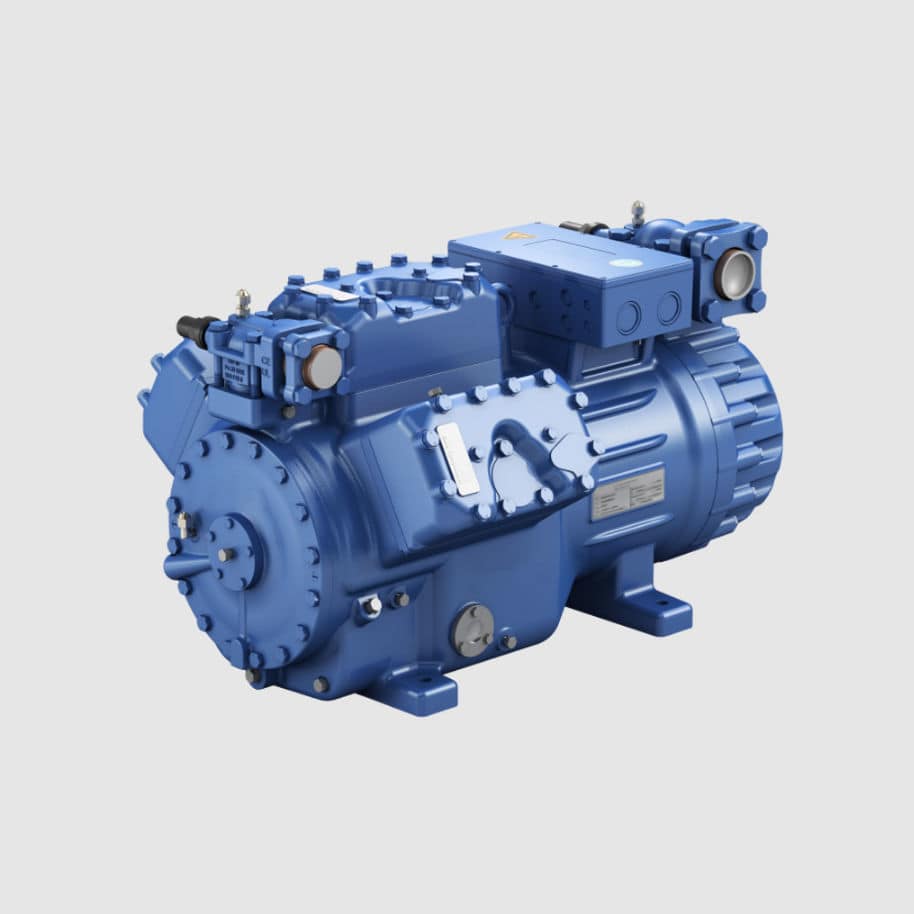
Service: Inspect bearings, lubrication, seals, couplings, foundations, process connections and protective devices. Trend vibration, temperature, pressure, flow and motor load where available and investigate deterioration from the established normal condition. Check for leakage, corrosion, fouling and abnormal mechanical contact. Function-test local and remote controls, alarms and shutdowns after maintenance. Maintain cleanliness during opening and reassembly. Refer to the manufacturer documentation for the exact figure for clearances, limits, settings and overhaul criteria.
Spare Parts: Keep model-correct seals, gaskets, bearings, filters or strainers, coupling parts, sensors and manufacturer-recommended wear components. Critical installations may justify a rotating assembly, motor or control module according to redundancy. Confirm all parts against the exact model and serial number.
Use Cases: It is used for provision refrigeration, cargo cooling and HVAC on merchant ships, passenger vessels, offshore units or other vessel types where this equipment category is fitted.
Bock HG 1000kW R407C Marine unverified
Cooling Capacity (kW)
1000
Compressor Type
screw
Refrigerant
R407C
Evaporating Temperature (°C)
-15
Condensing Temperature (°C)
40
Common Failures & Inspection Points
  • Mechanical wear caused by inadequate lubrication, contamination or long service, resulting in rising vibration, noise or temperature
  • Seal or gasket deterioration caused by wear, corrosion or misalignment, resulting in visible leakage or loss of process containment
  • Flow restriction, cavitation or fouling caused by blocked passages or unsuitable operating conditions, resulting in reduced capacity and unstable performance
  • Motor, coupling or drive failure caused by electrical faults, misalignment or overload, resulting in trips, abnormal current or inability to reach normal speed
  • Sensor, control or protection failure caused by wiring, calibration or electronics faults, resulting in alarms, incorrect control response or shutdown
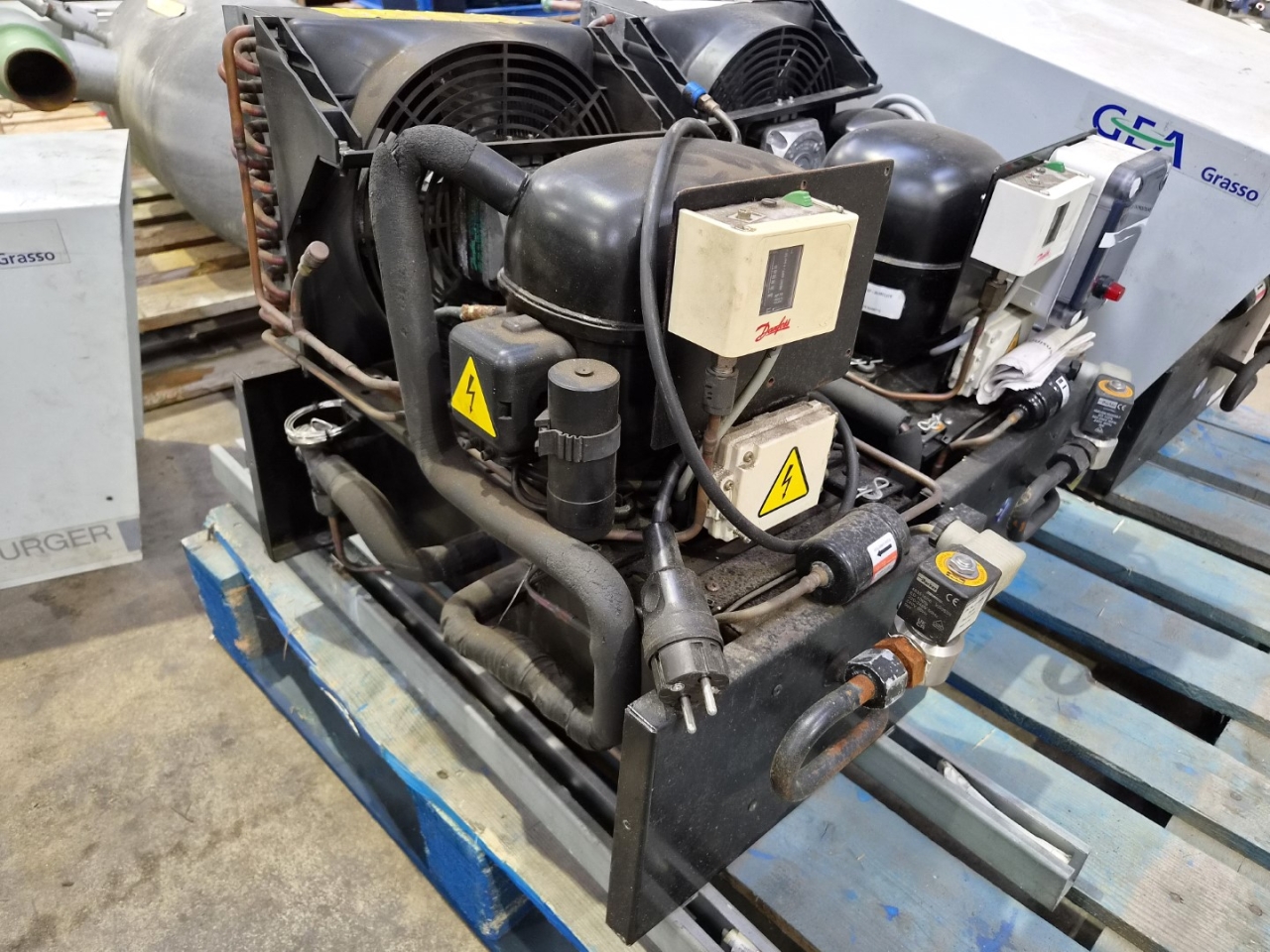
Service: Inspect bearings, lubrication, seals, couplings, foundations, process connections and protective devices. Trend vibration, temperature, pressure, flow and motor load where available and investigate deterioration from the established normal condition. Check for leakage, corrosion, fouling and abnormal mechanical contact. Function-test local and remote controls, alarms and shutdowns after maintenance. Maintain cleanliness during opening and reassembly. Refer to the manufacturer documentation for the exact figure for clearances, limits, settings and overhaul criteria.
Spare Parts: Keep model-correct seals, gaskets, bearings, filters or strainers, coupling parts, sensors and manufacturer-recommended wear components. Critical installations may justify a rotating assembly, motor or control module according to redundancy. Confirm all parts against the exact model and serial number.
Use Cases: It is used for provision refrigeration, cargo cooling and HVAC on merchant ships, passenger vessels, offshore units or other vessel types where this equipment category is fitted.
GEA Refrigeration Marine Bock HA 200kW R134a Marine
Bock HA 200kW R134a Marine unverified
Cooling Capacity (kW)
200
Compressor Type
screw
Refrigerant
R134a
Evaporating Temperature (°C)
-10
Condensing Temperature (°C)
40
Common Failures & Inspection Points
  • Loss of lubrication or poor oil return caused by low oil level, refrigerant migration or system faults, resulting in bearing noise, high temperature or compressor damage
  • Internal compression-element or valve wear caused by contamination, liquid carry-over or long service, resulting in poor capacity and abnormal discharge conditions
  • Refrigerant leakage caused by shaft seal, gasket or connection deterioration, resulting in loss of charge and reduced refrigeration performance
  • Liquid refrigerant return caused by poor superheat control or evaporator problems, resulting in knocking, oil dilution, abnormal vibration or mechanical damage
  • Motor, coupling or capacity-control fault caused by electrical or mechanical defects, resulting in trips, unstable suction pressure or inability to match load
Service: Monitor suction and discharge conditions, oil level, oil pressure where applicable, temperatures, vibration and compressor loading. Check for refrigerant and oil leakage and verify oil-management equipment operates as designed. Inspect couplings, filters, strainers and capacity-control mechanisms where fitted. Investigate any evidence of liquid return or repeated protective trips before restarting. Maintain system cleanliness and use only refrigerant and lubricant approved for the installed design. Refer to the manufacturer documentation for the exact figure for operating limits, clearances and overhaul procedures.
Spare Parts: Keep model-correct seals, gaskets, oil filters or strainers, approved lubricant and manufacturer-recommended valve, bearing or capacity-control service parts. Critical cargo or provision refrigeration may justify additional compressor-specific wear parts. Confirm refrigerant compatibility and exact parts from manufacturer documentation.
Use Cases: Provision refrigeration, cargo cooling, HVAC chillers and other marine refrigeration or process-cooling systems.
GEA Refrigeration Marine Bock HA 200kW R404A Marine
Bock HA 200kW R404A Marine unverified
Cooling Capacity (kW)
200
Compressor Type
screw
Refrigerant
R404A
Evaporating Temperature (°C)
-25
Condensing Temperature (°C)
40
Common Failures & Inspection Points
  • Loss of lubrication or poor oil return caused by low oil level, refrigerant migration or system faults, resulting in bearing noise, high temperature or compressor damage
  • Internal compression-element or valve wear caused by contamination, liquid carry-over or long service, resulting in poor capacity and abnormal discharge conditions
  • Refrigerant leakage caused by shaft seal, gasket or connection deterioration, resulting in loss of charge and reduced refrigeration performance
  • Liquid refrigerant return caused by poor superheat control or evaporator problems, resulting in knocking, oil dilution, abnormal vibration or mechanical damage
  • Motor, coupling or capacity-control fault caused by electrical or mechanical defects, resulting in trips, unstable suction pressure or inability to match load
Service: Monitor suction and discharge conditions, oil level, oil pressure where applicable, temperatures, vibration and compressor loading. Check for refrigerant and oil leakage and verify oil-management equipment operates as designed. Inspect couplings, filters, strainers and capacity-control mechanisms where fitted. Investigate any evidence of liquid return or repeated protective trips before restarting. Maintain system cleanliness and use only refrigerant and lubricant approved for the installed design. Refer to the manufacturer documentation for the exact figure for operating limits, clearances and overhaul procedures.
Spare Parts: Keep model-correct seals, gaskets, oil filters or strainers, approved lubricant and manufacturer-recommended valve, bearing or capacity-control service parts. Critical cargo or provision refrigeration may justify additional compressor-specific wear parts. Confirm refrigerant compatibility and exact parts from manufacturer documentation.
Use Cases: Provision refrigeration, cargo cooling, HVAC chillers and other marine refrigeration or process-cooling systems.
Bock HA 200kW R407C Marine unverified
Cooling Capacity (kW)
200
Compressor Type
screw
Refrigerant
R407C
Evaporating Temperature (°C)
-15
Condensing Temperature (°C)
40
Common Failures & Inspection Points
  • Loss of lubrication or poor oil return caused by low oil level, refrigerant migration or system faults, resulting in bearing noise, high temperature or compressor damage
  • Internal compression-element or valve wear caused by contamination, liquid carry-over or long service, resulting in poor capacity and abnormal discharge conditions
  • Refrigerant leakage caused by shaft seal, gasket or connection deterioration, resulting in loss of charge and reduced refrigeration performance
  • Liquid refrigerant return caused by poor superheat control or evaporator problems, resulting in knocking, oil dilution, abnormal vibration or mechanical damage
  • Motor, coupling or capacity-control fault caused by electrical or mechanical defects, resulting in trips, unstable suction pressure or inability to match load
Service: Monitor suction and discharge conditions, oil level, oil pressure where applicable, temperatures, vibration and compressor loading. Check for refrigerant and oil leakage and verify oil-management equipment operates as designed. Inspect couplings, filters, strainers and capacity-control mechanisms where fitted. Investigate any evidence of liquid return or repeated protective trips before restarting. Maintain system cleanliness and use only refrigerant and lubricant approved for the installed design. Refer to the manufacturer documentation for the exact figure for operating limits, clearances and overhaul procedures.
Spare Parts: Keep model-correct seals, gaskets, oil filters or strainers, approved lubricant and manufacturer-recommended valve, bearing or capacity-control service parts. Critical cargo or provision refrigeration may justify additional compressor-specific wear parts. Confirm refrigerant compatibility and exact parts from manufacturer documentation.
Use Cases: Provision refrigeration, cargo cooling, HVAC chillers and other marine refrigeration or process-cooling systems.
GEA Refrigeration Marine Bock HA 300kW R134a Marine
Bock HA 300kW R134a Marine unverified
Cooling Capacity (kW)
300
Compressor Type
screw
Refrigerant
R134a
Evaporating Temperature (°C)
-10
Condensing Temperature (°C)
40
Common Failures & Inspection Points
  • Loss of lubrication or poor oil return caused by low oil level, refrigerant migration or system faults, resulting in bearing noise, high temperature or compressor damage
  • Internal compression-element or valve wear caused by contamination, liquid carry-over or long service, resulting in poor capacity and abnormal discharge conditions
  • Refrigerant leakage caused by shaft seal, gasket or connection deterioration, resulting in loss of charge and reduced refrigeration performance
  • Liquid refrigerant return caused by poor superheat control or evaporator problems, resulting in knocking, oil dilution, abnormal vibration or mechanical damage
  • Motor, coupling or capacity-control fault caused by electrical or mechanical defects, resulting in trips, unstable suction pressure or inability to match load
Service: Monitor suction and discharge conditions, oil level, oil pressure where applicable, temperatures, vibration and compressor loading. Check for refrigerant and oil leakage and verify oil-management equipment operates as designed. Inspect couplings, filters, strainers and capacity-control mechanisms where fitted. Investigate any evidence of liquid return or repeated protective trips before restarting. Maintain system cleanliness and use only refrigerant and lubricant approved for the installed design. Refer to the manufacturer documentation for the exact figure for operating limits, clearances and overhaul procedures.
Spare Parts: Keep model-correct seals, gaskets, oil filters or strainers, approved lubricant and manufacturer-recommended valve, bearing or capacity-control service parts. Critical cargo or provision refrigeration may justify additional compressor-specific wear parts. Confirm refrigerant compatibility and exact parts from manufacturer documentation.
Use Cases: Provision refrigeration, cargo cooling, HVAC chillers and other marine refrigeration or process-cooling systems.
GEA Refrigeration Marine Bock HA 300kW R404A Marine
Bock HA 300kW R404A Marine unverified
Cooling Capacity (kW)
300
Compressor Type
screw
Refrigerant
R404A
Evaporating Temperature (°C)
-25
Condensing Temperature (°C)
40
Common Failures & Inspection Points
  • Mechanical wear caused by inadequate lubrication, contamination or long service, resulting in rising vibration, noise or temperature
  • Seal or gasket deterioration caused by wear, corrosion or misalignment, resulting in visible leakage or loss of process containment
  • Flow restriction, cavitation or fouling caused by blocked passages or unsuitable operating conditions, resulting in reduced capacity and unstable performance
  • Motor, coupling or drive failure caused by electrical faults, misalignment or overload, resulting in trips, abnormal current or inability to reach normal speed
  • Sensor, control or protection failure caused by wiring, calibration or electronics faults, resulting in alarms, incorrect control response or shutdown
Service: Inspect bearings, lubrication, seals, couplings, foundations, process connections and protective devices. Trend vibration, temperature, pressure, flow and motor load where available and investigate deterioration from the established normal condition. Check for leakage, corrosion, fouling and abnormal mechanical contact. Function-test local and remote controls, alarms and shutdowns after maintenance. Maintain cleanliness during opening and reassembly. Refer to the manufacturer documentation for the exact figure for clearances, limits, settings and overhaul criteria.
Spare Parts: Keep model-correct seals, gaskets, bearings, filters or strainers, coupling parts, sensors and manufacturer-recommended wear components. Critical installations may justify a rotating assembly, motor or control module according to redundancy. Confirm all parts against the exact model and serial number.
Use Cases: It is used for provision refrigeration, cargo cooling and HVAC on merchant ships, passenger vessels, offshore units or other vessel types where this equipment category is fitted.
Bock HA 300kW R407C Marine unverified
Cooling Capacity (kW)
300
Compressor Type
screw
Refrigerant
R407C
Evaporating Temperature (°C)
-15
Condensing Temperature (°C)
40
Common Failures & Inspection Points
  • Mechanical wear caused by inadequate lubrication, contamination or long service, resulting in rising vibration, noise or temperature
  • Seal or gasket deterioration caused by wear, corrosion or misalignment, resulting in visible leakage or loss of process containment
  • Flow restriction, cavitation or fouling caused by blocked passages or unsuitable operating conditions, resulting in reduced capacity and unstable performance
  • Motor, coupling or drive failure caused by electrical faults, misalignment or overload, resulting in trips, abnormal current or inability to reach normal speed
  • Sensor, control or protection failure caused by wiring, calibration or electronics faults, resulting in alarms, incorrect control response or shutdown
Service: Inspect bearings, lubrication, seals, couplings, foundations, process connections and protective devices. Trend vibration, temperature, pressure, flow and motor load where available and investigate deterioration from the established normal condition. Check for leakage, corrosion, fouling and abnormal mechanical contact. Function-test local and remote controls, alarms and shutdowns after maintenance. Maintain cleanliness during opening and reassembly. Refer to the manufacturer documentation for the exact figure for clearances, limits, settings and overhaul criteria.
Spare Parts: Keep model-correct seals, gaskets, bearings, filters or strainers, coupling parts, sensors and manufacturer-recommended wear components. Critical installations may justify a rotating assembly, motor or control module according to redundancy. Confirm all parts against the exact model and serial number.
Use Cases: It is used for provision refrigeration, cargo cooling and HVAC on merchant ships, passenger vessels, offshore units or other vessel types where this equipment category is fitted.
GEA Refrigeration Marine Bock HA 500kW R134a Marine
Bock HA 500kW R134a Marine unverified
Cooling Capacity (kW)
500
Compressor Type
screw
Refrigerant
R134a
Evaporating Temperature (°C)
-10
Condensing Temperature (°C)
40
Common Failures & Inspection Points
  • Mechanical wear caused by inadequate lubrication, contamination or long service, resulting in rising vibration, noise or temperature
  • Seal or gasket deterioration caused by wear, corrosion or misalignment, resulting in visible leakage or loss of process containment
  • Flow restriction, cavitation or fouling caused by blocked passages or unsuitable operating conditions, resulting in reduced capacity and unstable performance
  • Motor, coupling or drive failure caused by electrical faults, misalignment or overload, resulting in trips, abnormal current or inability to reach normal speed
  • Sensor, control or protection failure caused by wiring, calibration or electronics faults, resulting in alarms, incorrect control response or shutdown
Service: Inspect bearings, lubrication, seals, couplings, foundations, process connections and protective devices. Trend vibration, temperature, pressure, flow and motor load where available and investigate deterioration from the established normal condition. Check for leakage, corrosion, fouling and abnormal mechanical contact. Function-test local and remote controls, alarms and shutdowns after maintenance. Maintain cleanliness during opening and reassembly. Refer to the manufacturer documentation for the exact figure for clearances, limits, settings and overhaul criteria.
Spare Parts: Keep model-correct seals, gaskets, bearings, filters or strainers, coupling parts, sensors and manufacturer-recommended wear components. Critical installations may justify a rotating assembly, motor or control module according to redundancy. Confirm all parts against the exact model and serial number.
Use Cases: It is used for provision refrigeration, cargo cooling and HVAC on merchant ships, passenger vessels, offshore units or other vessel types where this equipment category is fitted.
GEA Refrigeration Marine Bock HA 500kW R404A Marine
Bock HA 500kW R404A Marine unverified
Cooling Capacity (kW)
500
Compressor Type
screw
Refrigerant
R404A
Evaporating Temperature (°C)
-25
Condensing Temperature (°C)
40
Common Failures & Inspection Points
  • Mechanical wear caused by inadequate lubrication, contamination or long service, resulting in rising vibration, noise or temperature
  • Seal or gasket deterioration caused by wear, corrosion or misalignment, resulting in visible leakage or loss of process containment
  • Flow restriction, cavitation or fouling caused by blocked passages or unsuitable operating conditions, resulting in reduced capacity and unstable performance
  • Motor, coupling or drive failure caused by electrical faults, misalignment or overload, resulting in trips, abnormal current or inability to reach normal speed
  • Sensor, control or protection failure caused by wiring, calibration or electronics faults, resulting in alarms, incorrect control response or shutdown
Service: Inspect bearings, lubrication, seals, couplings, foundations, process connections and protective devices. Trend vibration, temperature, pressure, flow and motor load where available and investigate deterioration from the established normal condition. Check for leakage, corrosion, fouling and abnormal mechanical contact. Function-test local and remote controls, alarms and shutdowns after maintenance. Maintain cleanliness during opening and reassembly. Refer to the manufacturer documentation for the exact figure for clearances, limits, settings and overhaul criteria.
Spare Parts: Keep model-correct seals, gaskets, bearings, filters or strainers, coupling parts, sensors and manufacturer-recommended wear components. Critical installations may justify a rotating assembly, motor or control module according to redundancy. Confirm all parts against the exact model and serial number.
Use Cases: It is used for provision refrigeration, cargo cooling and HVAC on merchant ships, passenger vessels, offshore units or other vessel types where this equipment category is fitted.
Bock HA 500kW R407C Marine unverified
Cooling Capacity (kW)
500
Compressor Type
screw
Refrigerant
R407C
Evaporating Temperature (°C)
-15
Condensing Temperature (°C)
40
Common Failures & Inspection Points
  • Mechanical wear caused by inadequate lubrication, contamination or long service, resulting in rising vibration, noise or temperature
  • Seal or gasket deterioration caused by wear, corrosion or misalignment, resulting in visible leakage or loss of process containment
  • Flow restriction, cavitation or fouling caused by blocked passages or unsuitable operating conditions, resulting in reduced capacity and unstable performance
  • Motor, coupling or drive failure caused by electrical faults, misalignment or overload, resulting in trips, abnormal current or inability to reach normal speed
  • Sensor, control or protection failure caused by wiring, calibration or electronics faults, resulting in alarms, incorrect control response or shutdown
Service: Inspect bearings, lubrication, seals, couplings, foundations, process connections and protective devices. Trend vibration, temperature, pressure, flow and motor load where available and investigate deterioration from the established normal condition. Check for leakage, corrosion, fouling and abnormal mechanical contact. Function-test local and remote controls, alarms and shutdowns after maintenance. Maintain cleanliness during opening and reassembly. Refer to the manufacturer documentation for the exact figure for clearances, limits, settings and overhaul criteria.
Spare Parts: Keep model-correct seals, gaskets, bearings, filters or strainers, coupling parts, sensors and manufacturer-recommended wear components. Critical installations may justify a rotating assembly, motor or control module according to redundancy. Confirm all parts against the exact model and serial number.
Use Cases: It is used for provision refrigeration, cargo cooling and HVAC on merchant ships, passenger vessels, offshore units or other vessel types where this equipment category is fitted.
GEA Refrigeration Marine Bock HA 750kW R134a Marine
Bock HA 750kW R134a Marine unverified
Cooling Capacity (kW)
750
Compressor Type
screw
Refrigerant
R134a
Evaporating Temperature (°C)
-10
Condensing Temperature (°C)
40
Common Failures & Inspection Points
  • Mechanical wear caused by inadequate lubrication, contamination or long service, resulting in rising vibration, noise or temperature
  • Seal or gasket deterioration caused by wear, corrosion or misalignment, resulting in visible leakage or loss of process containment
  • Flow restriction, cavitation or fouling caused by blocked passages or unsuitable operating conditions, resulting in reduced capacity and unstable performance
  • Motor, coupling or drive failure caused by electrical faults, misalignment or overload, resulting in trips, abnormal current or inability to reach normal speed
  • Sensor, control or protection failure caused by wiring, calibration or electronics faults, resulting in alarms, incorrect control response or shutdown
Service: Inspect bearings, lubrication, seals, couplings, foundations, process connections and protective devices. Trend vibration, temperature, pressure, flow and motor load where available and investigate deterioration from the established normal condition. Check for leakage, corrosion, fouling and abnormal mechanical contact. Function-test local and remote controls, alarms and shutdowns after maintenance. Maintain cleanliness during opening and reassembly. Refer to the manufacturer documentation for the exact figure for clearances, limits, settings and overhaul criteria.
Spare Parts: Keep model-correct seals, gaskets, bearings, filters or strainers, coupling parts, sensors and manufacturer-recommended wear components. Critical installations may justify a rotating assembly, motor or control module according to redundancy. Confirm all parts against the exact model and serial number.
Use Cases: It is used for provision refrigeration, cargo cooling and HVAC on merchant ships, passenger vessels, offshore units or other vessel types where this equipment category is fitted.
GEA Refrigeration Marine Bock HA 750kW R404A Marine
Bock HA 750kW R404A Marine unverified
Cooling Capacity (kW)
750
Compressor Type
screw
Refrigerant
R404A
Evaporating Temperature (°C)
-25
Condensing Temperature (°C)
40
Common Failures & Inspection Points
  • Mechanical wear caused by inadequate lubrication, contamination or long service, resulting in rising vibration, noise or temperature
  • Seal or gasket deterioration caused by wear, corrosion or misalignment, resulting in visible leakage or loss of process containment
  • Flow restriction, cavitation or fouling caused by blocked passages or unsuitable operating conditions, resulting in reduced capacity and unstable performance
  • Motor, coupling or drive failure caused by electrical faults, misalignment or overload, resulting in trips, abnormal current or inability to reach normal speed
  • Sensor, control or protection failure caused by wiring, calibration or electronics faults, resulting in alarms, incorrect control response or shutdown
Service: Inspect bearings, lubrication, seals, couplings, foundations, process connections and protective devices. Trend vibration, temperature, pressure, flow and motor load where available and investigate deterioration from the established normal condition. Check for leakage, corrosion, fouling and abnormal mechanical contact. Function-test local and remote controls, alarms and shutdowns after maintenance. Maintain cleanliness during opening and reassembly. Refer to the manufacturer documentation for the exact figure for clearances, limits, settings and overhaul criteria.
Spare Parts: Keep model-correct seals, gaskets, bearings, filters or strainers, coupling parts, sensors and manufacturer-recommended wear components. Critical installations may justify a rotating assembly, motor or control module according to redundancy. Confirm all parts against the exact model and serial number.
Use Cases: It is used for provision refrigeration, cargo cooling and HVAC on merchant ships, passenger vessels, offshore units or other vessel types where this equipment category is fitted.
Bock HA 750kW R407C Marine unverified
Cooling Capacity (kW)
750
Compressor Type
screw
Refrigerant
R407C
Evaporating Temperature (°C)
-15
Condensing Temperature (°C)
40
Common Failures & Inspection Points
  • Mechanical wear caused by inadequate lubrication, contamination or long service, resulting in rising vibration, noise or temperature
  • Seal or gasket deterioration caused by wear, corrosion or misalignment, resulting in visible leakage or loss of process containment
  • Flow restriction, cavitation or fouling caused by blocked passages or unsuitable operating conditions, resulting in reduced capacity and unstable performance
  • Motor, coupling or drive failure caused by electrical faults, misalignment or overload, resulting in trips, abnormal current or inability to reach normal speed
  • Sensor, control or protection failure caused by wiring, calibration or electronics faults, resulting in alarms, incorrect control response or shutdown
Service: Inspect bearings, lubrication, seals, couplings, foundations, process connections and protective devices. Trend vibration, temperature, pressure, flow and motor load where available and investigate deterioration from the established normal condition. Check for leakage, corrosion, fouling and abnormal mechanical contact. Function-test local and remote controls, alarms and shutdowns after maintenance. Maintain cleanliness during opening and reassembly. Refer to the manufacturer documentation for the exact figure for clearances, limits, settings and overhaul criteria.
Spare Parts: Keep model-correct seals, gaskets, bearings, filters or strainers, coupling parts, sensors and manufacturer-recommended wear components. Critical installations may justify a rotating assembly, motor or control module according to redundancy. Confirm all parts against the exact model and serial number.
Use Cases: It is used for provision refrigeration, cargo cooling and HVAC on merchant ships, passenger vessels, offshore units or other vessel types where this equipment category is fitted.
GEA Refrigeration Marine Bock HA 1000kW R134a Marine
Bock HA 1000kW R134a Marine unverified
Cooling Capacity (kW)
1000
Compressor Type
screw
Refrigerant
R134a
Evaporating Temperature (°C)
-10
Condensing Temperature (°C)
40
Common Failures & Inspection Points
  • Mechanical wear caused by inadequate lubrication, contamination or long service, resulting in rising vibration, noise or temperature
  • Seal or gasket deterioration caused by wear, corrosion or misalignment, resulting in visible leakage or loss of process containment
  • Flow restriction, cavitation or fouling caused by blocked passages or unsuitable operating conditions, resulting in reduced capacity and unstable performance
  • Motor, coupling or drive failure caused by electrical faults, misalignment or overload, resulting in trips, abnormal current or inability to reach normal speed
  • Sensor, control or protection failure caused by wiring, calibration or electronics faults, resulting in alarms, incorrect control response or shutdown
Service: Inspect bearings, lubrication, seals, couplings, foundations, process connections and protective devices. Trend vibration, temperature, pressure, flow and motor load where available and investigate deterioration from the established normal condition. Check for leakage, corrosion, fouling and abnormal mechanical contact. Function-test local and remote controls, alarms and shutdowns after maintenance. Maintain cleanliness during opening and reassembly. Refer to the manufacturer documentation for the exact figure for clearances, limits, settings and overhaul criteria.
Spare Parts: Keep model-correct seals, gaskets, bearings, filters or strainers, coupling parts, sensors and manufacturer-recommended wear components. Critical installations may justify a rotating assembly, motor or control module according to redundancy. Confirm all parts against the exact model and serial number.
Use Cases: It is used for provision refrigeration, cargo cooling and HVAC on merchant ships, passenger vessels, offshore units or other vessel types where this equipment category is fitted.
GEA Refrigeration Marine Bock HA 1000kW R404A Marine
Bock HA 1000kW R404A Marine unverified
Cooling Capacity (kW)
1000
Compressor Type
screw
Refrigerant
R404A
Evaporating Temperature (°C)
-25
Condensing Temperature (°C)
40
Common Failures & Inspection Points
  • Mechanical wear caused by inadequate lubrication, contamination or long service, resulting in rising vibration, noise or temperature
  • Seal or gasket deterioration caused by wear, corrosion or misalignment, resulting in visible leakage or loss of process containment
  • Flow restriction, cavitation or fouling caused by blocked passages or unsuitable operating conditions, resulting in reduced capacity and unstable performance
  • Motor, coupling or drive failure caused by electrical faults, misalignment or overload, resulting in trips, abnormal current or inability to reach normal speed
  • Sensor, control or protection failure caused by wiring, calibration or electronics faults, resulting in alarms, incorrect control response or shutdown
Service: Inspect bearings, lubrication, seals, couplings, foundations, process connections and protective devices. Trend vibration, temperature, pressure, flow and motor load where available and investigate deterioration from the established normal condition. Check for leakage, corrosion, fouling and abnormal mechanical contact. Function-test local and remote controls, alarms and shutdowns after maintenance. Maintain cleanliness during opening and reassembly. Refer to the manufacturer documentation for the exact figure for clearances, limits, settings and overhaul criteria.
Spare Parts: Keep model-correct seals, gaskets, bearings, filters or strainers, coupling parts, sensors and manufacturer-recommended wear components. Critical installations may justify a rotating assembly, motor or control module according to redundancy. Confirm all parts against the exact model and serial number.
Use Cases: It is used for provision refrigeration, cargo cooling and HVAC on merchant ships, passenger vessels, offshore units or other vessel types where this equipment category is fitted.
Bock HA 1000kW R407C Marine unverified
Cooling Capacity (kW)
1000
Compressor Type
screw
Refrigerant
R407C
Evaporating Temperature (°C)
-15
Condensing Temperature (°C)
40
Common Failures & Inspection Points
  • Mechanical wear caused by inadequate lubrication, contamination or long service, resulting in rising vibration, noise or temperature
  • Seal or gasket deterioration caused by wear, corrosion or misalignment, resulting in visible leakage or loss of process containment
  • Flow restriction, cavitation or fouling caused by blocked passages or unsuitable operating conditions, resulting in reduced capacity and unstable performance
  • Motor, coupling or drive failure caused by electrical faults, misalignment or overload, resulting in trips, abnormal current or inability to reach normal speed
  • Sensor, control or protection failure caused by wiring, calibration or electronics faults, resulting in alarms, incorrect control response or shutdown
Service: Inspect bearings, lubrication, seals, couplings, foundations, process connections and protective devices. Trend vibration, temperature, pressure, flow and motor load where available and investigate deterioration from the established normal condition. Check for leakage, corrosion, fouling and abnormal mechanical contact. Function-test local and remote controls, alarms and shutdowns after maintenance. Maintain cleanliness during opening and reassembly. Refer to the manufacturer documentation for the exact figure for clearances, limits, settings and overhaul criteria.
Spare Parts: Keep model-correct seals, gaskets, bearings, filters or strainers, coupling parts, sensors and manufacturer-recommended wear components. Critical installations may justify a rotating assembly, motor or control module according to redundancy. Confirm all parts against the exact model and serial number.
Use Cases: It is used for provision refrigeration, cargo cooling and HVAC on merchant ships, passenger vessels, offshore units or other vessel types where this equipment category is fitted.
GEA Refrigeration Marine Grasso 200kW R134a Marine
Grasso 200kW R134a Marine unverified
Cooling Capacity (kW)
200
Compressor Type
screw
Refrigerant
R134a
Evaporating Temperature (°C)
-10
Condensing Temperature (°C)
40
Common Failures & Inspection Points
  • Loss of lubrication or poor oil return caused by low oil level, refrigerant migration or system faults, resulting in bearing noise, high temperature or compressor damage
  • Internal compression-element or valve wear caused by contamination, liquid carry-over or long service, resulting in poor capacity and abnormal discharge conditions
  • Refrigerant leakage caused by shaft seal, gasket or connection deterioration, resulting in loss of charge and reduced refrigeration performance
  • Liquid refrigerant return caused by poor superheat control or evaporator problems, resulting in knocking, oil dilution, abnormal vibration or mechanical damage
  • Motor, coupling or capacity-control fault caused by electrical or mechanical defects, resulting in trips, unstable suction pressure or inability to match load
Service: Monitor suction and discharge conditions, oil level, oil pressure where applicable, temperatures, vibration and compressor loading. Check for refrigerant and oil leakage and verify oil-management equipment operates as designed. Inspect couplings, filters, strainers and capacity-control mechanisms where fitted. Investigate any evidence of liquid return or repeated protective trips before restarting. Maintain system cleanliness and use only refrigerant and lubricant approved for the installed design. Refer to the manufacturer documentation for the exact figure for operating limits, clearances and overhaul procedures.
Spare Parts: Keep model-correct seals, gaskets, oil filters or strainers, approved lubricant and manufacturer-recommended valve, bearing or capacity-control service parts. Critical cargo or provision refrigeration may justify additional compressor-specific wear parts. Confirm refrigerant compatibility and exact parts from manufacturer documentation.
Use Cases: Provision refrigeration, cargo cooling, HVAC chillers and other marine refrigeration or process-cooling systems.
GEA Refrigeration Marine Grasso 200kW R404A Marine
Grasso 200kW R404A Marine unverified
Cooling Capacity (kW)
200
Compressor Type
screw
Refrigerant
R404A
Evaporating Temperature (°C)
-25
Condensing Temperature (°C)
40
Common Failures & Inspection Points
  • Loss of lubrication or poor oil return caused by low oil level, refrigerant migration or system faults, resulting in bearing noise, high temperature or compressor damage
  • Internal compression-element or valve wear caused by contamination, liquid carry-over or long service, resulting in poor capacity and abnormal discharge conditions
  • Refrigerant leakage caused by shaft seal, gasket or connection deterioration, resulting in loss of charge and reduced refrigeration performance
  • Liquid refrigerant return caused by poor superheat control or evaporator problems, resulting in knocking, oil dilution, abnormal vibration or mechanical damage
  • Motor, coupling or capacity-control fault caused by electrical or mechanical defects, resulting in trips, unstable suction pressure or inability to match load
Service: Monitor suction and discharge conditions, oil level, oil pressure where applicable, temperatures, vibration and compressor loading. Check for refrigerant and oil leakage and verify oil-management equipment operates as designed. Inspect couplings, filters, strainers and capacity-control mechanisms where fitted. Investigate any evidence of liquid return or repeated protective trips before restarting. Maintain system cleanliness and use only refrigerant and lubricant approved for the installed design. Refer to the manufacturer documentation for the exact figure for operating limits, clearances and overhaul procedures.
Spare Parts: Keep model-correct seals, gaskets, oil filters or strainers, approved lubricant and manufacturer-recommended valve, bearing or capacity-control service parts. Critical cargo or provision refrigeration may justify additional compressor-specific wear parts. Confirm refrigerant compatibility and exact parts from manufacturer documentation.
Use Cases: Provision refrigeration, cargo cooling, HVAC chillers and other marine refrigeration or process-cooling systems.
GEA Refrigeration Marine Grasso 200kW R407C Marine
Grasso 200kW R407C Marine unverified
Cooling Capacity (kW)
200
Compressor Type
screw
Refrigerant
R407C
Evaporating Temperature (°C)
-15
Condensing Temperature (°C)
40
Common Failures & Inspection Points
  • Loss of lubrication or poor oil return caused by low oil level, refrigerant migration or system faults, resulting in bearing noise, high temperature or compressor damage
  • Internal compression-element or valve wear caused by contamination, liquid carry-over or long service, resulting in poor capacity and abnormal discharge conditions
  • Refrigerant leakage caused by shaft seal, gasket or connection deterioration, resulting in loss of charge and reduced refrigeration performance
  • Liquid refrigerant return caused by poor superheat control or evaporator problems, resulting in knocking, oil dilution, abnormal vibration or mechanical damage
  • Motor, coupling or capacity-control fault caused by electrical or mechanical defects, resulting in trips, unstable suction pressure or inability to match load
Service: Monitor suction and discharge conditions, oil level, oil pressure where applicable, temperatures, vibration and compressor loading. Check for refrigerant and oil leakage and verify oil-management equipment operates as designed. Inspect couplings, filters, strainers and capacity-control mechanisms where fitted. Investigate any evidence of liquid return or repeated protective trips before restarting. Maintain system cleanliness and use only refrigerant and lubricant approved for the installed design. Refer to the manufacturer documentation for the exact figure for operating limits, clearances and overhaul procedures.
Spare Parts: Keep model-correct seals, gaskets, oil filters or strainers, approved lubricant and manufacturer-recommended valve, bearing or capacity-control service parts. Critical cargo or provision refrigeration may justify additional compressor-specific wear parts. Confirm refrigerant compatibility and exact parts from manufacturer documentation.
Use Cases: Provision refrigeration, cargo cooling, HVAC chillers and other marine refrigeration or process-cooling systems.
GEA Refrigeration Marine Grasso 300kW R134a Marine
Grasso 300kW R134a Marine unverified
Cooling Capacity (kW)
300
Compressor Type
screw
Refrigerant
R134a
Evaporating Temperature (°C)
-10
Condensing Temperature (°C)
40
Common Failures & Inspection Points
  • Loss of lubrication or poor oil return caused by low oil level, refrigerant migration or system faults, resulting in bearing noise, high temperature or compressor damage
  • Internal compression-element or valve wear caused by contamination, liquid carry-over or long service, resulting in poor capacity and abnormal discharge conditions
  • Refrigerant leakage caused by shaft seal, gasket or connection deterioration, resulting in loss of charge and reduced refrigeration performance
  • Liquid refrigerant return caused by poor superheat control or evaporator problems, resulting in knocking, oil dilution, abnormal vibration or mechanical damage
  • Motor, coupling or capacity-control fault caused by electrical or mechanical defects, resulting in trips, unstable suction pressure or inability to match load
Service: Monitor suction and discharge conditions, oil level, oil pressure where applicable, temperatures, vibration and compressor loading. Check for refrigerant and oil leakage and verify oil-management equipment operates as designed. Inspect couplings, filters, strainers and capacity-control mechanisms where fitted. Investigate any evidence of liquid return or repeated protective trips before restarting. Maintain system cleanliness and use only refrigerant and lubricant approved for the installed design. Refer to the manufacturer documentation for the exact figure for operating limits, clearances and overhaul procedures.
Spare Parts: Keep model-correct seals, gaskets, oil filters or strainers, approved lubricant and manufacturer-recommended valve, bearing or capacity-control service parts. Critical cargo or provision refrigeration may justify additional compressor-specific wear parts. Confirm refrigerant compatibility and exact parts from manufacturer documentation.
Use Cases: Provision refrigeration, cargo cooling, HVAC chillers and other marine refrigeration or process-cooling systems.
GEA Refrigeration Marine Grasso 300kW R404A Marine
Grasso 300kW R404A Marine unverified
Cooling Capacity (kW)
300
Compressor Type
screw
Refrigerant
R404A
Evaporating Temperature (°C)
-25
Condensing Temperature (°C)
40
Common Failures & Inspection Points
  • Loss of lubrication or poor oil return caused by low oil level, refrigerant migration or system faults, resulting in bearing noise, high temperature or compressor damage
  • Internal compression-element or valve wear caused by contamination, liquid carry-over or long service, resulting in poor capacity and abnormal discharge conditions
  • Refrigerant leakage caused by shaft seal, gasket or connection deterioration, resulting in loss of charge and reduced refrigeration performance
  • Liquid refrigerant return caused by poor superheat control or evaporator problems, resulting in knocking, oil dilution, abnormal vibration or mechanical damage
  • Motor, coupling or capacity-control fault caused by electrical or mechanical defects, resulting in trips, unstable suction pressure or inability to match load
Service: Monitor suction and discharge conditions, oil level, oil pressure where applicable, temperatures, vibration and compressor loading. Check for refrigerant and oil leakage and verify oil-management equipment operates as designed. Inspect couplings, filters, strainers and capacity-control mechanisms where fitted. Investigate any evidence of liquid return or repeated protective trips before restarting. Maintain system cleanliness and use only refrigerant and lubricant approved for the installed design. Refer to the manufacturer documentation for the exact figure for operating limits, clearances and overhaul procedures.
Spare Parts: Keep model-correct seals, gaskets, oil filters or strainers, approved lubricant and manufacturer-recommended valve, bearing or capacity-control service parts. Critical cargo or provision refrigeration may justify additional compressor-specific wear parts. Confirm refrigerant compatibility and exact parts from manufacturer documentation.
Use Cases: Provision refrigeration, cargo cooling, HVAC chillers and other marine refrigeration or process-cooling systems.
Grasso 300kW R407C Marine unverified
Cooling Capacity (kW)
300
Compressor Type
screw
Refrigerant
R407C
Evaporating Temperature (°C)
-15
Condensing Temperature (°C)
40
Common Failures & Inspection Points
  • Loss of lubrication or poor oil return caused by low oil level, refrigerant migration or system faults, resulting in bearing noise, high temperature or compressor damage
  • Internal compression-element or valve wear caused by contamination, liquid carry-over or long service, resulting in poor capacity and abnormal discharge conditions
  • Refrigerant leakage caused by shaft seal, gasket or connection deterioration, resulting in loss of charge and reduced refrigeration performance
  • Liquid refrigerant return caused by poor superheat control or evaporator problems, resulting in knocking, oil dilution, abnormal vibration or mechanical damage
  • Motor, coupling or capacity-control fault caused by electrical or mechanical defects, resulting in trips, unstable suction pressure or inability to match load
Service: Monitor suction and discharge conditions, oil level, oil pressure where applicable, temperatures, vibration and compressor loading. Check for refrigerant and oil leakage and verify oil-management equipment operates as designed. Inspect couplings, filters, strainers and capacity-control mechanisms where fitted. Investigate any evidence of liquid return or repeated protective trips before restarting. Maintain system cleanliness and use only refrigerant and lubricant approved for the installed design. Refer to the manufacturer documentation for the exact figure for operating limits, clearances and overhaul procedures.
Spare Parts: Keep model-correct seals, gaskets, oil filters or strainers, approved lubricant and manufacturer-recommended valve, bearing or capacity-control service parts. Critical cargo or provision refrigeration may justify additional compressor-specific wear parts. Confirm refrigerant compatibility and exact parts from manufacturer documentation.
Use Cases: Provision refrigeration, cargo cooling, HVAC chillers and other marine refrigeration or process-cooling systems.
GEA Refrigeration Marine Grasso 500kW R134a Marine
Grasso 500kW R134a Marine unverified
Cooling Capacity (kW)
500
Compressor Type
screw
Refrigerant
R134a
Evaporating Temperature (°C)
-10
Condensing Temperature (°C)
40
Common Failures & Inspection Points
  • Loss of lubrication or poor oil return caused by low oil level, refrigerant migration or system faults, resulting in bearing noise, high temperature or compressor damage
  • Internal compression-element or valve wear caused by contamination, liquid carry-over or long service, resulting in poor capacity and abnormal discharge conditions
  • Refrigerant leakage caused by shaft seal, gasket or connection deterioration, resulting in loss of charge and reduced refrigeration performance
  • Liquid refrigerant return caused by poor superheat control or evaporator problems, resulting in knocking, oil dilution, abnormal vibration or mechanical damage
  • Motor, coupling or capacity-control fault caused by electrical or mechanical defects, resulting in trips, unstable suction pressure or inability to match load
Service: Monitor suction and discharge conditions, oil level, oil pressure where applicable, temperatures, vibration and compressor loading. Check for refrigerant and oil leakage and verify oil-management equipment operates as designed. Inspect couplings, filters, strainers and capacity-control mechanisms where fitted. Investigate any evidence of liquid return or repeated protective trips before restarting. Maintain system cleanliness and use only refrigerant and lubricant approved for the installed design. Refer to the manufacturer documentation for the exact figure for operating limits, clearances and overhaul procedures.
Spare Parts: Keep model-correct seals, gaskets, oil filters or strainers, approved lubricant and manufacturer-recommended valve, bearing or capacity-control service parts. Critical cargo or provision refrigeration may justify additional compressor-specific wear parts. Confirm refrigerant compatibility and exact parts from manufacturer documentation.
Use Cases: Provision refrigeration, cargo cooling, HVAC chillers and other marine refrigeration or process-cooling systems.
GEA Refrigeration Marine Grasso 500kW R404A Marine
Grasso 500kW R404A Marine unverified
Cooling Capacity (kW)
500
Compressor Type
screw
Refrigerant
R404A
Evaporating Temperature (°C)
-25
Condensing Temperature (°C)
40
Common Failures & Inspection Points
  • Loss of lubrication or poor oil return caused by low oil level, refrigerant migration or system faults, resulting in bearing noise, high temperature or compressor damage
  • Internal compression-element or valve wear caused by contamination, liquid carry-over or long service, resulting in poor capacity and abnormal discharge conditions
  • Refrigerant leakage caused by shaft seal, gasket or connection deterioration, resulting in loss of charge and reduced refrigeration performance
  • Liquid refrigerant return caused by poor superheat control or evaporator problems, resulting in knocking, oil dilution, abnormal vibration or mechanical damage
  • Motor, coupling or capacity-control fault caused by electrical or mechanical defects, resulting in trips, unstable suction pressure or inability to match load
Service: Monitor suction and discharge conditions, oil level, oil pressure where applicable, temperatures, vibration and compressor loading. Check for refrigerant and oil leakage and verify oil-management equipment operates as designed. Inspect couplings, filters, strainers and capacity-control mechanisms where fitted. Investigate any evidence of liquid return or repeated protective trips before restarting. Maintain system cleanliness and use only refrigerant and lubricant approved for the installed design. Refer to the manufacturer documentation for the exact figure for operating limits, clearances and overhaul procedures.
Spare Parts: Keep model-correct seals, gaskets, oil filters or strainers, approved lubricant and manufacturer-recommended valve, bearing or capacity-control service parts. Critical cargo or provision refrigeration may justify additional compressor-specific wear parts. Confirm refrigerant compatibility and exact parts from manufacturer documentation.
Use Cases: Provision refrigeration, cargo cooling, HVAC chillers and other marine refrigeration or process-cooling systems.
Grasso 500kW R407C Marine unverified
Cooling Capacity (kW)
500
Compressor Type
screw
Refrigerant
R407C
Evaporating Temperature (°C)
-15
Condensing Temperature (°C)
40
Common Failures & Inspection Points
  • Loss of lubrication or poor oil return caused by low oil level, refrigerant migration or system faults, resulting in bearing noise, high temperature or compressor damage
  • Internal compression-element or valve wear caused by contamination, liquid carry-over or long service, resulting in poor capacity and abnormal discharge conditions
  • Refrigerant leakage caused by shaft seal, gasket or connection deterioration, resulting in loss of charge and reduced refrigeration performance
  • Liquid refrigerant return caused by poor superheat control or evaporator problems, resulting in knocking, oil dilution, abnormal vibration or mechanical damage
  • Motor, coupling or capacity-control fault caused by electrical or mechanical defects, resulting in trips, unstable suction pressure or inability to match load
Service: Monitor suction and discharge conditions, oil level, oil pressure where applicable, temperatures, vibration and compressor loading. Check for refrigerant and oil leakage and verify oil-management equipment operates as designed. Inspect couplings, filters, strainers and capacity-control mechanisms where fitted. Investigate any evidence of liquid return or repeated protective trips before restarting. Maintain system cleanliness and use only refrigerant and lubricant approved for the installed design. Refer to the manufacturer documentation for the exact figure for operating limits, clearances and overhaul procedures.
Spare Parts: Keep model-correct seals, gaskets, oil filters or strainers, approved lubricant and manufacturer-recommended valve, bearing or capacity-control service parts. Critical cargo or provision refrigeration may justify additional compressor-specific wear parts. Confirm refrigerant compatibility and exact parts from manufacturer documentation.
Use Cases: Provision refrigeration, cargo cooling, HVAC chillers and other marine refrigeration or process-cooling systems.
GEA Refrigeration Marine Grasso 750kW R134a Marine
Grasso 750kW R134a Marine unverified
Cooling Capacity (kW)
750
Compressor Type
screw
Refrigerant
R134a
Evaporating Temperature (°C)
-10
Condensing Temperature (°C)
40
Common Failures & Inspection Points
  • Loss of lubrication or poor oil return caused by low oil level, refrigerant migration or system faults, resulting in bearing noise, high temperature or compressor damage
  • Internal compression-element or valve wear caused by contamination, liquid carry-over or long service, resulting in poor capacity and abnormal discharge conditions
  • Refrigerant leakage caused by shaft seal, gasket or connection deterioration, resulting in loss of charge and reduced refrigeration performance
  • Liquid refrigerant return caused by poor superheat control or evaporator problems, resulting in knocking, oil dilution, abnormal vibration or mechanical damage
  • Motor, coupling or capacity-control fault caused by electrical or mechanical defects, resulting in trips, unstable suction pressure or inability to match load
Service: Monitor suction and discharge conditions, oil level, oil pressure where applicable, temperatures, vibration and compressor loading. Check for refrigerant and oil leakage and verify oil-management equipment operates as designed. Inspect couplings, filters, strainers and capacity-control mechanisms where fitted. Investigate any evidence of liquid return or repeated protective trips before restarting. Maintain system cleanliness and use only refrigerant and lubricant approved for the installed design. Refer to the manufacturer documentation for the exact figure for operating limits, clearances and overhaul procedures.
Spare Parts: Keep model-correct seals, gaskets, oil filters or strainers, approved lubricant and manufacturer-recommended valve, bearing or capacity-control service parts. Critical cargo or provision refrigeration may justify additional compressor-specific wear parts. Confirm refrigerant compatibility and exact parts from manufacturer documentation.
Use Cases: Provision refrigeration, cargo cooling, HVAC chillers and other marine refrigeration or process-cooling systems.
GEA Refrigeration Marine Grasso 750kW R404A Marine
Grasso 750kW R404A Marine unverified
Cooling Capacity (kW)
750
Compressor Type
screw
Refrigerant
R404A
Evaporating Temperature (°C)
-25
Condensing Temperature (°C)
40
Common Failures & Inspection Points
  • Loss of lubrication or poor oil return caused by low oil level, refrigerant migration or system faults, resulting in bearing noise, high temperature or compressor damage
  • Internal compression-element or valve wear caused by contamination, liquid carry-over or long service, resulting in poor capacity and abnormal discharge conditions
  • Refrigerant leakage caused by shaft seal, gasket or connection deterioration, resulting in loss of charge and reduced refrigeration performance
  • Liquid refrigerant return caused by poor superheat control or evaporator problems, resulting in knocking, oil dilution, abnormal vibration or mechanical damage
  • Motor, coupling or capacity-control fault caused by electrical or mechanical defects, resulting in trips, unstable suction pressure or inability to match load
Service: Monitor suction and discharge conditions, oil level, oil pressure where applicable, temperatures, vibration and compressor loading. Check for refrigerant and oil leakage and verify oil-management equipment operates as designed. Inspect couplings, filters, strainers and capacity-control mechanisms where fitted. Investigate any evidence of liquid return or repeated protective trips before restarting. Maintain system cleanliness and use only refrigerant and lubricant approved for the installed design. Refer to the manufacturer documentation for the exact figure for operating limits, clearances and overhaul procedures.
Spare Parts: Keep model-correct seals, gaskets, oil filters or strainers, approved lubricant and manufacturer-recommended valve, bearing or capacity-control service parts. Critical cargo or provision refrigeration may justify additional compressor-specific wear parts. Confirm refrigerant compatibility and exact parts from manufacturer documentation.
Use Cases: Provision refrigeration, cargo cooling, HVAC chillers and other marine refrigeration or process-cooling systems.
GEA Refrigeration Marine Grasso 750kW R407C Marine
Grasso 750kW R407C Marine unverified
Cooling Capacity (kW)
750
Compressor Type
screw
Refrigerant
R407C
Evaporating Temperature (°C)
-15
Condensing Temperature (°C)
40
Common Failures & Inspection Points
  • Loss of lubrication or poor oil return caused by low oil level, refrigerant migration or system faults, resulting in bearing noise, high temperature or compressor damage
  • Internal compression-element or valve wear caused by contamination, liquid carry-over or long service, resulting in poor capacity and abnormal discharge conditions
  • Refrigerant leakage caused by shaft seal, gasket or connection deterioration, resulting in loss of charge and reduced refrigeration performance
  • Liquid refrigerant return caused by poor superheat control or evaporator problems, resulting in knocking, oil dilution, abnormal vibration or mechanical damage
  • Motor, coupling or capacity-control fault caused by electrical or mechanical defects, resulting in trips, unstable suction pressure or inability to match load
Service: Monitor suction and discharge conditions, oil level, oil pressure where applicable, temperatures, vibration and compressor loading. Check for refrigerant and oil leakage and verify oil-management equipment operates as designed. Inspect couplings, filters, strainers and capacity-control mechanisms where fitted. Investigate any evidence of liquid return or repeated protective trips before restarting. Maintain system cleanliness and use only refrigerant and lubricant approved for the installed design. Refer to the manufacturer documentation for the exact figure for operating limits, clearances and overhaul procedures.
Spare Parts: Keep model-correct seals, gaskets, oil filters or strainers, approved lubricant and manufacturer-recommended valve, bearing or capacity-control service parts. Critical cargo or provision refrigeration may justify additional compressor-specific wear parts. Confirm refrigerant compatibility and exact parts from manufacturer documentation.
Use Cases: Provision refrigeration, cargo cooling, HVAC chillers and other marine refrigeration or process-cooling systems.
GEA Refrigeration Marine Grasso 1000kW R134a Marine
Grasso 1000kW R134a Marine unverified
Cooling Capacity (kW)
1000
Compressor Type
screw
Refrigerant
R134a
Evaporating Temperature (°C)
-10
Condensing Temperature (°C)
40
Common Failures & Inspection Points
  • Mechanical wear caused by inadequate lubrication, contamination or long service, resulting in rising vibration, noise or temperature
  • Seal or gasket deterioration caused by wear, corrosion or misalignment, resulting in visible leakage or loss of process containment
  • Flow restriction, cavitation or fouling caused by blocked passages or unsuitable operating conditions, resulting in reduced capacity and unstable performance
  • Motor, coupling or drive failure caused by electrical faults, misalignment or overload, resulting in trips, abnormal current or inability to reach normal speed
  • Sensor, control or protection failure caused by wiring, calibration or electronics faults, resulting in alarms, incorrect control response or shutdown
Service: Inspect bearings, lubrication, seals, couplings, foundations, process connections and protective devices. Trend vibration, temperature, pressure, flow and motor load where available and investigate deterioration from the established normal condition. Check for leakage, corrosion, fouling and abnormal mechanical contact. Function-test local and remote controls, alarms and shutdowns after maintenance. Maintain cleanliness during opening and reassembly. Refer to the manufacturer documentation for the exact figure for clearances, limits, settings and overhaul criteria.
Spare Parts: Keep model-correct seals, gaskets, bearings, filters or strainers, coupling parts, sensors and manufacturer-recommended wear components. Critical installations may justify a rotating assembly, motor or control module according to redundancy. Confirm all parts against the exact model and serial number.
Use Cases: It is used for provision refrigeration, cargo cooling and HVAC on merchant ships, passenger vessels, offshore units or other vessel types where this equipment category is fitted.
GEA Refrigeration Marine Grasso 1000kW R404A Marine
Grasso 1000kW R404A Marine unverified
Cooling Capacity (kW)
1000
Compressor Type
screw
Refrigerant
R404A
Evaporating Temperature (°C)
-25
Condensing Temperature (°C)
40
Common Failures & Inspection Points
  • Mechanical wear caused by inadequate lubrication, contamination or long service, resulting in rising vibration, noise or temperature
  • Seal or gasket deterioration caused by wear, corrosion or misalignment, resulting in visible leakage or loss of process containment
  • Flow restriction, cavitation or fouling caused by blocked passages or unsuitable operating conditions, resulting in reduced capacity and unstable performance
  • Motor, coupling or drive failure caused by electrical faults, misalignment or overload, resulting in trips, abnormal current or inability to reach normal speed
  • Sensor, control or protection failure caused by wiring, calibration or electronics faults, resulting in alarms, incorrect control response or shutdown
Service: Inspect bearings, lubrication, seals, couplings, foundations, process connections and protective devices. Trend vibration, temperature, pressure, flow and motor load where available and investigate deterioration from the established normal condition. Check for leakage, corrosion, fouling and abnormal mechanical contact. Function-test local and remote controls, alarms and shutdowns after maintenance. Maintain cleanliness during opening and reassembly. Refer to the manufacturer documentation for the exact figure for clearances, limits, settings and overhaul criteria.
Spare Parts: Keep model-correct seals, gaskets, bearings, filters or strainers, coupling parts, sensors and manufacturer-recommended wear components. Critical installations may justify a rotating assembly, motor or control module according to redundancy. Confirm all parts against the exact model and serial number.
Use Cases: It is used for provision refrigeration, cargo cooling and HVAC on merchant ships, passenger vessels, offshore units or other vessel types where this equipment category is fitted.
Grasso 1000kW R407C Marine unverified
Cooling Capacity (kW)
1000
Compressor Type
screw
Refrigerant
R407C
Evaporating Temperature (°C)
-15
Condensing Temperature (°C)
40
Common Failures & Inspection Points
  • Mechanical wear caused by inadequate lubrication, contamination or long service, resulting in rising vibration, noise or temperature
  • Seal or gasket deterioration caused by wear, corrosion or misalignment, resulting in visible leakage or loss of process containment
  • Flow restriction, cavitation or fouling caused by blocked passages or unsuitable operating conditions, resulting in reduced capacity and unstable performance
  • Motor, coupling or drive failure caused by electrical faults, misalignment or overload, resulting in trips, abnormal current or inability to reach normal speed
  • Sensor, control or protection failure caused by wiring, calibration or electronics faults, resulting in alarms, incorrect control response or shutdown
Service: Inspect bearings, lubrication, seals, couplings, foundations, process connections and protective devices. Trend vibration, temperature, pressure, flow and motor load where available and investigate deterioration from the established normal condition. Check for leakage, corrosion, fouling and abnormal mechanical contact. Function-test local and remote controls, alarms and shutdowns after maintenance. Maintain cleanliness during opening and reassembly. Refer to the manufacturer documentation for the exact figure for clearances, limits, settings and overhaul criteria.
Spare Parts: Keep model-correct seals, gaskets, bearings, filters or strainers, coupling parts, sensors and manufacturer-recommended wear components. Critical installations may justify a rotating assembly, motor or control module according to redundancy. Confirm all parts against the exact model and serial number.
Use Cases: It is used for provision refrigeration, cargo cooling and HVAC on merchant ships, passenger vessels, offshore units or other vessel types where this equipment category is fitted.

Mycom Marine

45
Mycom Marine N4 200kW R134a Marine
N4 200kW R134a Marine unverified
Cooling Capacity (kW)
200
Compressor Type
screw
Refrigerant
R134a
Evaporating Temperature (°C)
-10
Condensing Temperature (°C)
40
Common Failures & Inspection Points
  • Suction filter restriction, valve fouling, or poor inlet conditions reduce capacity and cause long running time or low final pressure
  • Discharge or suction valve wear from deposits, fatigue, or contamination causes reduced compression, high stage temperatures, or abnormal pulsation
  • Lubrication problems from low oil level, contamination, or pump failure cause high bearing temperature, noise, or low oil-pressure alarms
  • Cooler fouling or cooling-water restriction causes high discharge temperature and thermal trips
  • Seal, piston ring, packing, rotor, or gasket wear causes gas leakage, oil carryover, reduced capacity, or frequent cycling
Service: Trend stage pressures and temperatures, oil condition, cooling performance, running time, leakage, vibration, and safety trips. Inspect filters, valves, coolers, drains, separators, unloaders, drive components, and relief devices; use manufacturer data for exact pressure settings and wear limits.
Spare Parts: Carry the applicable valve service kits, piston rings or sealing elements, gaskets, filters, lubricating-system parts, belts or coupling elements, and critical sensors or unloaders recommended for the installed compressor.
Use Cases: Used on merchant ships, offshore vessels, passenger ships, fishing vessels, and workboats for starting air, service/control air, refrigeration, cargo gas, and specialized process duties.
Mycom Marine N4 200kW R404A Marine
N4 200kW R404A Marine unverified
Cooling Capacity (kW)
200
Compressor Type
screw
Refrigerant
R404A
Evaporating Temperature (°C)
-25
Condensing Temperature (°C)
40
Common Failures & Inspection Points
  • Suction filter restriction, valve fouling, or poor inlet conditions reduce capacity and cause long running time or low final pressure
  • Discharge or suction valve wear from deposits, fatigue, or contamination causes reduced compression, high stage temperatures, or abnormal pulsation
  • Lubrication problems from low oil level, contamination, or pump failure cause high bearing temperature, noise, or low oil-pressure alarms
  • Cooler fouling or cooling-water restriction causes high discharge temperature and thermal trips
  • Seal, piston ring, packing, rotor, or gasket wear causes gas leakage, oil carryover, reduced capacity, or frequent cycling
Service: Trend stage pressures and temperatures, oil condition, cooling performance, running time, leakage, vibration, and safety trips. Inspect filters, valves, coolers, drains, separators, unloaders, drive components, and relief devices; use manufacturer data for exact pressure settings and wear limits.
Spare Parts: Carry the applicable valve service kits, piston rings or sealing elements, gaskets, filters, lubricating-system parts, belts or coupling elements, and critical sensors or unloaders recommended for the installed compressor.
Use Cases: Used on merchant ships, offshore vessels, passenger ships, fishing vessels, and workboats for starting air, service/control air, refrigeration, cargo gas, and specialized process duties.
Mycom Marine N4 200kW R407C Marine
N4 200kW R407C Marine unverified
Cooling Capacity (kW)
200
Compressor Type
screw
Refrigerant
R407C
Evaporating Temperature (°C)
-15
Condensing Temperature (°C)
40
Common Failures & Inspection Points
  • Suction filter restriction, valve fouling, or poor inlet conditions reduce capacity and cause long running time or low final pressure
  • Discharge or suction valve wear from deposits, fatigue, or contamination causes reduced compression, high stage temperatures, or abnormal pulsation
  • Lubrication problems from low oil level, contamination, or pump failure cause high bearing temperature, noise, or low oil-pressure alarms
  • Cooler fouling or cooling-water restriction causes high discharge temperature and thermal trips
  • Seal, piston ring, packing, rotor, or gasket wear causes gas leakage, oil carryover, reduced capacity, or frequent cycling
Service: Trend stage pressures and temperatures, oil condition, cooling performance, running time, leakage, vibration, and safety trips. Inspect filters, valves, coolers, drains, separators, unloaders, drive components, and relief devices; use manufacturer data for exact pressure settings and wear limits.
Spare Parts: Carry the applicable valve service kits, piston rings or sealing elements, gaskets, filters, lubricating-system parts, belts or coupling elements, and critical sensors or unloaders recommended for the installed compressor.
Use Cases: Used on merchant ships, offshore vessels, passenger ships, fishing vessels, and workboats for starting air, service/control air, refrigeration, cargo gas, and specialized process duties.
Mycom Marine N4 300kW R134a Marine
N4 300kW R134a Marine unverified
Cooling Capacity (kW)
300
Compressor Type
screw
Refrigerant
R134a
Evaporating Temperature (°C)
-10
Condensing Temperature (°C)
40
Common Failures & Inspection Points
  • Suction filter restriction, valve fouling, or poor inlet conditions reduce capacity and cause long running time or low final pressure
  • Discharge or suction valve wear from deposits, fatigue, or contamination causes reduced compression, high stage temperatures, or abnormal pulsation
  • Lubrication problems from low oil level, contamination, or pump failure cause high bearing temperature, noise, or low oil-pressure alarms
  • Cooler fouling or cooling-water restriction causes high discharge temperature and thermal trips
  • Seal, piston ring, packing, rotor, or gasket wear causes gas leakage, oil carryover, reduced capacity, or frequent cycling
Service: Trend stage pressures and temperatures, oil condition, cooling performance, running time, leakage, vibration, and safety trips. Inspect filters, valves, coolers, drains, separators, unloaders, drive components, and relief devices; use manufacturer data for exact pressure settings and wear limits.
Spare Parts: Carry the applicable valve service kits, piston rings or sealing elements, gaskets, filters, lubricating-system parts, belts or coupling elements, and critical sensors or unloaders recommended for the installed compressor.
Use Cases: Used on merchant ships, offshore vessels, passenger ships, fishing vessels, and workboats for starting air, service/control air, refrigeration, cargo gas, and specialized process duties.
Mycom Marine N4 300kW R404A Marine
N4 300kW R404A Marine unverified
Cooling Capacity (kW)
300
Compressor Type
screw
Refrigerant
R404A
Evaporating Temperature (°C)
-25
Condensing Temperature (°C)
40
Common Failures & Inspection Points
  • Suction filter restriction, valve fouling, or poor inlet conditions reduce capacity and cause long running time or low final pressure
  • Discharge or suction valve wear from deposits, fatigue, or contamination causes reduced compression, high stage temperatures, or abnormal pulsation
  • Lubrication problems from low oil level, contamination, or pump failure cause high bearing temperature, noise, or low oil-pressure alarms
  • Cooler fouling or cooling-water restriction causes high discharge temperature and thermal trips
  • Seal, piston ring, packing, rotor, or gasket wear causes gas leakage, oil carryover, reduced capacity, or frequent cycling
Service: Trend stage pressures and temperatures, oil condition, cooling performance, running time, leakage, vibration, and safety trips. Inspect filters, valves, coolers, drains, separators, unloaders, drive components, and relief devices; use manufacturer data for exact pressure settings and wear limits.
Spare Parts: Carry the applicable valve service kits, piston rings or sealing elements, gaskets, filters, lubricating-system parts, belts or coupling elements, and critical sensors or unloaders recommended for the installed compressor.
Use Cases: Used on merchant ships, offshore vessels, passenger ships, fishing vessels, and workboats for starting air, service/control air, refrigeration, cargo gas, and specialized process duties.
Mycom Marine N4 300kW R407C Marine
N4 300kW R407C Marine unverified
Cooling Capacity (kW)
300
Compressor Type
screw
Refrigerant
R407C
Evaporating Temperature (°C)
-15
Condensing Temperature (°C)
40
Common Failures & Inspection Points
  • Suction filter restriction, valve fouling, or poor inlet conditions reduce capacity and cause long running time or low final pressure
  • Discharge or suction valve wear from deposits, fatigue, or contamination causes reduced compression, high stage temperatures, or abnormal pulsation
  • Lubrication problems from low oil level, contamination, or pump failure cause high bearing temperature, noise, or low oil-pressure alarms
  • Cooler fouling or cooling-water restriction causes high discharge temperature and thermal trips
  • Seal, piston ring, packing, rotor, or gasket wear causes gas leakage, oil carryover, reduced capacity, or frequent cycling
Service: Trend stage pressures and temperatures, oil condition, cooling performance, running time, leakage, vibration, and safety trips. Inspect filters, valves, coolers, drains, separators, unloaders, drive components, and relief devices; use manufacturer data for exact pressure settings and wear limits.
Spare Parts: Carry the applicable valve service kits, piston rings or sealing elements, gaskets, filters, lubricating-system parts, belts or coupling elements, and critical sensors or unloaders recommended for the installed compressor.
Use Cases: Used on merchant ships, offshore vessels, passenger ships, fishing vessels, and workboats for starting air, service/control air, refrigeration, cargo gas, and specialized process duties.
Mycom Marine N4 500kW R134a Marine
N4 500kW R134a Marine unverified
Cooling Capacity (kW)
500
Compressor Type
screw
Refrigerant
R134a
Evaporating Temperature (°C)
-10
Condensing Temperature (°C)
40
Common Failures & Inspection Points
  • Suction filter restriction, valve fouling, or poor inlet conditions reduce capacity and cause long running time or low final pressure
  • Discharge or suction valve wear from deposits, fatigue, or contamination causes reduced compression, high stage temperatures, or abnormal pulsation
  • Lubrication problems from low oil level, contamination, or pump failure cause high bearing temperature, noise, or low oil-pressure alarms
  • Cooler fouling or cooling-water restriction causes high discharge temperature and thermal trips
  • Seal, piston ring, packing, rotor, or gasket wear causes gas leakage, oil carryover, reduced capacity, or frequent cycling
Service: Trend stage pressures and temperatures, oil condition, cooling performance, running time, leakage, vibration, and safety trips. Inspect filters, valves, coolers, drains, separators, unloaders, drive components, and relief devices; use manufacturer data for exact pressure settings and wear limits.
Spare Parts: Carry the applicable valve service kits, piston rings or sealing elements, gaskets, filters, lubricating-system parts, belts or coupling elements, and critical sensors or unloaders recommended for the installed compressor.
Use Cases: Used on merchant ships, offshore vessels, passenger ships, fishing vessels, and workboats for starting air, service/control air, refrigeration, cargo gas, and specialized process duties.
Mycom Marine N4 500kW R404A Marine
N4 500kW R404A Marine unverified
Cooling Capacity (kW)
500
Compressor Type
screw
Refrigerant
R404A
Evaporating Temperature (°C)
-25
Condensing Temperature (°C)
40
Common Failures & Inspection Points
  • Suction filter restriction, valve fouling, or poor inlet conditions reduce capacity and cause long running time or low final pressure
  • Discharge or suction valve wear from deposits, fatigue, or contamination causes reduced compression, high stage temperatures, or abnormal pulsation
  • Lubrication problems from low oil level, contamination, or pump failure cause high bearing temperature, noise, or low oil-pressure alarms
  • Cooler fouling or cooling-water restriction causes high discharge temperature and thermal trips
  • Seal, piston ring, packing, rotor, or gasket wear causes gas leakage, oil carryover, reduced capacity, or frequent cycling
Service: Trend stage pressures and temperatures, oil condition, cooling performance, running time, leakage, vibration, and safety trips. Inspect filters, valves, coolers, drains, separators, unloaders, drive components, and relief devices; use manufacturer data for exact pressure settings and wear limits.
Spare Parts: Carry the applicable valve service kits, piston rings or sealing elements, gaskets, filters, lubricating-system parts, belts or coupling elements, and critical sensors or unloaders recommended for the installed compressor.
Use Cases: Used on merchant ships, offshore vessels, passenger ships, fishing vessels, and workboats for starting air, service/control air, refrigeration, cargo gas, and specialized process duties.
Mycom Marine N4 500kW R407C Marine
N4 500kW R407C Marine unverified
Cooling Capacity (kW)
500
Compressor Type
screw
Refrigerant
R407C
Evaporating Temperature (°C)
-15
Condensing Temperature (°C)
40
Common Failures & Inspection Points
  • Suction filter restriction, valve fouling, or poor inlet conditions reduce capacity and cause long running time or low final pressure
  • Discharge or suction valve wear from deposits, fatigue, or contamination causes reduced compression, high stage temperatures, or abnormal pulsation
  • Lubrication problems from low oil level, contamination, or pump failure cause high bearing temperature, noise, or low oil-pressure alarms
  • Cooler fouling or cooling-water restriction causes high discharge temperature and thermal trips
  • Seal, piston ring, packing, rotor, or gasket wear causes gas leakage, oil carryover, reduced capacity, or frequent cycling
Service: Trend stage pressures and temperatures, oil condition, cooling performance, running time, leakage, vibration, and safety trips. Inspect filters, valves, coolers, drains, separators, unloaders, drive components, and relief devices; use manufacturer data for exact pressure settings and wear limits.
Spare Parts: Carry the applicable valve service kits, piston rings or sealing elements, gaskets, filters, lubricating-system parts, belts or coupling elements, and critical sensors or unloaders recommended for the installed compressor.
Use Cases: Used on merchant ships, offshore vessels, passenger ships, fishing vessels, and workboats for starting air, service/control air, refrigeration, cargo gas, and specialized process duties.
Mycom Marine N4 750kW R134a Marine
N4 750kW R134a Marine unverified
Cooling Capacity (kW)
750
Compressor Type
screw
Refrigerant
R134a
Evaporating Temperature (°C)
-10
Condensing Temperature (°C)
40
Common Failures & Inspection Points
  • Suction filter restriction, valve fouling, or poor inlet conditions reduce capacity and cause long running time or low final pressure
  • Discharge or suction valve wear from deposits, fatigue, or contamination causes reduced compression, high stage temperatures, or abnormal pulsation
  • Lubrication problems from low oil level, contamination, or pump failure cause high bearing temperature, noise, or low oil-pressure alarms
  • Cooler fouling or cooling-water restriction causes high discharge temperature and thermal trips
  • Seal, piston ring, packing, rotor, or gasket wear causes gas leakage, oil carryover, reduced capacity, or frequent cycling
Service: Trend stage pressures and temperatures, oil condition, cooling performance, running time, leakage, vibration, and safety trips. Inspect filters, valves, coolers, drains, separators, unloaders, drive components, and relief devices; use manufacturer data for exact pressure settings and wear limits.
Spare Parts: Carry the applicable valve service kits, piston rings or sealing elements, gaskets, filters, lubricating-system parts, belts or coupling elements, and critical sensors or unloaders recommended for the installed compressor.
Use Cases: Used on merchant ships, offshore vessels, passenger ships, fishing vessels, and workboats for starting air, service/control air, refrigeration, cargo gas, and specialized process duties.
Mycom Marine N4 750kW R404A Marine
N4 750kW R404A Marine unverified
Cooling Capacity (kW)
750
Compressor Type
screw
Refrigerant
R404A
Evaporating Temperature (°C)
-25
Condensing Temperature (°C)
40
Common Failures & Inspection Points
  • Suction filter restriction, valve fouling, or poor inlet conditions reduce capacity and cause long running time or low final pressure
  • Discharge or suction valve wear from deposits, fatigue, or contamination causes reduced compression, high stage temperatures, or abnormal pulsation
  • Lubrication problems from low oil level, contamination, or pump failure cause high bearing temperature, noise, or low oil-pressure alarms
  • Cooler fouling or cooling-water restriction causes high discharge temperature and thermal trips
  • Seal, piston ring, packing, rotor, or gasket wear causes gas leakage, oil carryover, reduced capacity, or frequent cycling
Service: Trend stage pressures and temperatures, oil condition, cooling performance, running time, leakage, vibration, and safety trips. Inspect filters, valves, coolers, drains, separators, unloaders, drive components, and relief devices; use manufacturer data for exact pressure settings and wear limits.
Spare Parts: Carry the applicable valve service kits, piston rings or sealing elements, gaskets, filters, lubricating-system parts, belts or coupling elements, and critical sensors or unloaders recommended for the installed compressor.
Use Cases: Used on merchant ships, offshore vessels, passenger ships, fishing vessels, and workboats for starting air, service/control air, refrigeration, cargo gas, and specialized process duties.
Mycom Marine N4 750kW R407C Marine
N4 750kW R407C Marine unverified
Cooling Capacity (kW)
750
Compressor Type
screw
Refrigerant
R407C
Evaporating Temperature (°C)
-15
Condensing Temperature (°C)
40
Common Failures & Inspection Points
  • Suction filter restriction, valve fouling, or poor inlet conditions reduce capacity and cause long running time or low final pressure
  • Discharge or suction valve wear from deposits, fatigue, or contamination causes reduced compression, high stage temperatures, or abnormal pulsation
  • Lubrication problems from low oil level, contamination, or pump failure cause high bearing temperature, noise, or low oil-pressure alarms
  • Cooler fouling or cooling-water restriction causes high discharge temperature and thermal trips
  • Seal, piston ring, packing, rotor, or gasket wear causes gas leakage, oil carryover, reduced capacity, or frequent cycling
Service: Trend stage pressures and temperatures, oil condition, cooling performance, running time, leakage, vibration, and safety trips. Inspect filters, valves, coolers, drains, separators, unloaders, drive components, and relief devices; use manufacturer data for exact pressure settings and wear limits.
Spare Parts: Carry the applicable valve service kits, piston rings or sealing elements, gaskets, filters, lubricating-system parts, belts or coupling elements, and critical sensors or unloaders recommended for the installed compressor.
Use Cases: Used on merchant ships, offshore vessels, passenger ships, fishing vessels, and workboats for starting air, service/control air, refrigeration, cargo gas, and specialized process duties.
N4 1000kW R134a Marine unverified
Cooling Capacity (kW)
1000
Compressor Type
screw
Refrigerant
R134a
Evaporating Temperature (°C)
-10
Condensing Temperature (°C)
40
Common Failures & Inspection Points
  • Valve, rotor, piston or internal compression-element wear caused by contamination, poor lubrication or normal wear can produce reduced delivery, high running temperature or abnormal noise
  • Lubrication failure caused by low level, blocked passages, oil contamination or pump faults can lead to rising temperature, bearing noise or protective shutdown
  • Cooling deficiency caused by fouled coolers, poor airflow or restricted water flow can produce high discharge temperature and repeated trips
  • Seal, gasket or piping leakage caused by ageing, vibration or damaged joints can result in pressure loss, refrigerant or air leakage and extended running
  • Motor, starter or protection faults caused by electrical defects or incorrect sensor signals can cause failure to start, nuisance trips or unstable operation
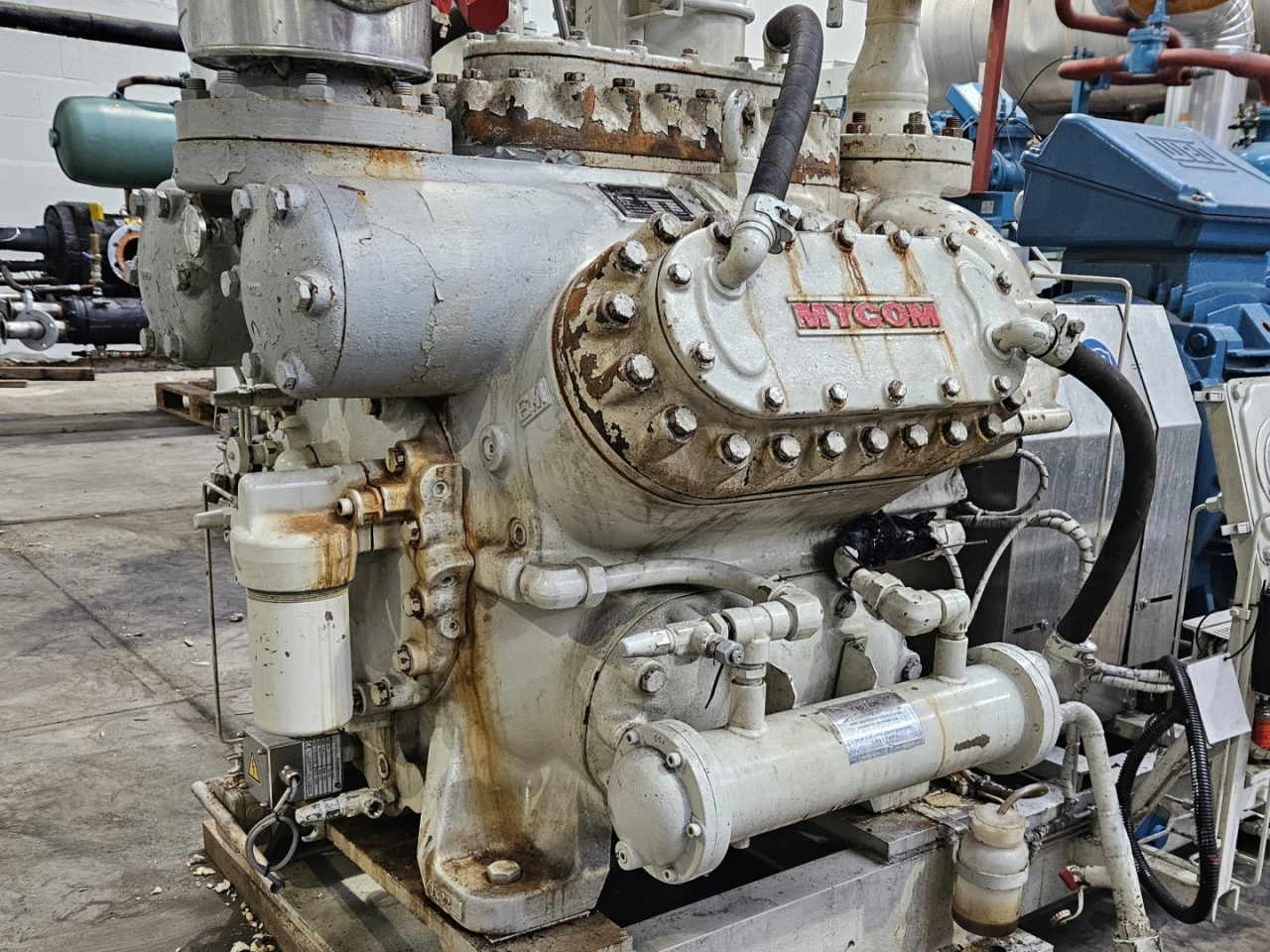
Service: Check oil condition and level where applicable, leakage, cooling, suction and discharge condition, vibration, temperature and protection alarms. Inspect belts, couplings, valves, filters or separators as fitted and review operating trends for loss of performance. Refer to manufacturer documentation for exact pressures, temperatures, clearances and service limits.
Spare Parts: Appropriate spares include approved seals and gaskets, filters, valve or service kits, belts or coupling elements where fitted, bearings, sensors and electrical protection items recommended for the installed compressor.
Use Cases: Starting-air, service-air, deck-air, refrigeration, HVAC and cargo-gas compression duties depending on the listed equipment type.
Mycom Marine N4 1000kW R404A Marine
N4 1000kW R404A Marine unverified
Cooling Capacity (kW)
1000
Compressor Type
screw
Refrigerant
R404A
Evaporating Temperature (°C)
-25
Condensing Temperature (°C)
40
Common Failures & Inspection Points
  • Valve, rotor, piston or internal compression-element wear caused by contamination, poor lubrication or normal wear can produce reduced delivery, high running temperature or abnormal noise
  • Lubrication failure caused by low level, blocked passages, oil contamination or pump faults can lead to rising temperature, bearing noise or protective shutdown
  • Cooling deficiency caused by fouled coolers, poor airflow or restricted water flow can produce high discharge temperature and repeated trips
  • Seal, gasket or piping leakage caused by ageing, vibration or damaged joints can result in pressure loss, refrigerant or air leakage and extended running
  • Motor, starter or protection faults caused by electrical defects or incorrect sensor signals can cause failure to start, nuisance trips or unstable operation
Service: Check oil condition and level where applicable, leakage, cooling, suction and discharge condition, vibration, temperature and protection alarms. Inspect belts, couplings, valves, filters or separators as fitted and review operating trends for loss of performance. Refer to manufacturer documentation for exact pressures, temperatures, clearances and service limits.
Spare Parts: Appropriate spares include approved seals and gaskets, filters, valve or service kits, belts or coupling elements where fitted, bearings, sensors and electrical protection items recommended for the installed compressor.
Use Cases: Starting-air, service-air, deck-air, refrigeration, HVAC and cargo-gas compression duties depending on the listed equipment type.
Mycom Marine N4 1000kW R407C Marine
N4 1000kW R407C Marine unverified
Cooling Capacity (kW)
1000
Compressor Type
screw
Refrigerant
R407C
Evaporating Temperature (°C)
-15
Condensing Temperature (°C)
40
Common Failures & Inspection Points
  • Valve, rotor, piston or internal compression-element wear caused by contamination, poor lubrication or normal wear can produce reduced delivery, high running temperature or abnormal noise
  • Lubrication failure caused by low level, blocked passages, oil contamination or pump faults can lead to rising temperature, bearing noise or protective shutdown
  • Cooling deficiency caused by fouled coolers, poor airflow or restricted water flow can produce high discharge temperature and repeated trips
  • Seal, gasket or piping leakage caused by ageing, vibration or damaged joints can result in pressure loss, refrigerant or air leakage and extended running
  • Motor, starter or protection faults caused by electrical defects or incorrect sensor signals can cause failure to start, nuisance trips or unstable operation
Service: Check oil condition and level where applicable, leakage, cooling, suction and discharge condition, vibration, temperature and protection alarms. Inspect belts, couplings, valves, filters or separators as fitted and review operating trends for loss of performance. Refer to manufacturer documentation for exact pressures, temperatures, clearances and service limits.
Spare Parts: Appropriate spares include approved seals and gaskets, filters, valve or service kits, belts or coupling elements where fitted, bearings, sensors and electrical protection items recommended for the installed compressor.
Use Cases: Starting-air, service-air, deck-air, refrigeration, HVAC and cargo-gas compression duties depending on the listed equipment type.
Mycom Marine N6 200kW R134a Marine
N6 200kW R134a Marine unverified
Cooling Capacity (kW)
200
Compressor Type
screw
Refrigerant
R134a
Evaporating Temperature (°C)
-10
Condensing Temperature (°C)
40
Common Failures & Inspection Points
  • Suction filter restriction, valve fouling, or poor inlet conditions reduce capacity and cause long running time or low final pressure
  • Discharge or suction valve wear from deposits, fatigue, or contamination causes reduced compression, high stage temperatures, or abnormal pulsation
  • Lubrication problems from low oil level, contamination, or pump failure cause high bearing temperature, noise, or low oil-pressure alarms
  • Cooler fouling or cooling-water restriction causes high discharge temperature and thermal trips
  • Seal, piston ring, packing, rotor, or gasket wear causes gas leakage, oil carryover, reduced capacity, or frequent cycling
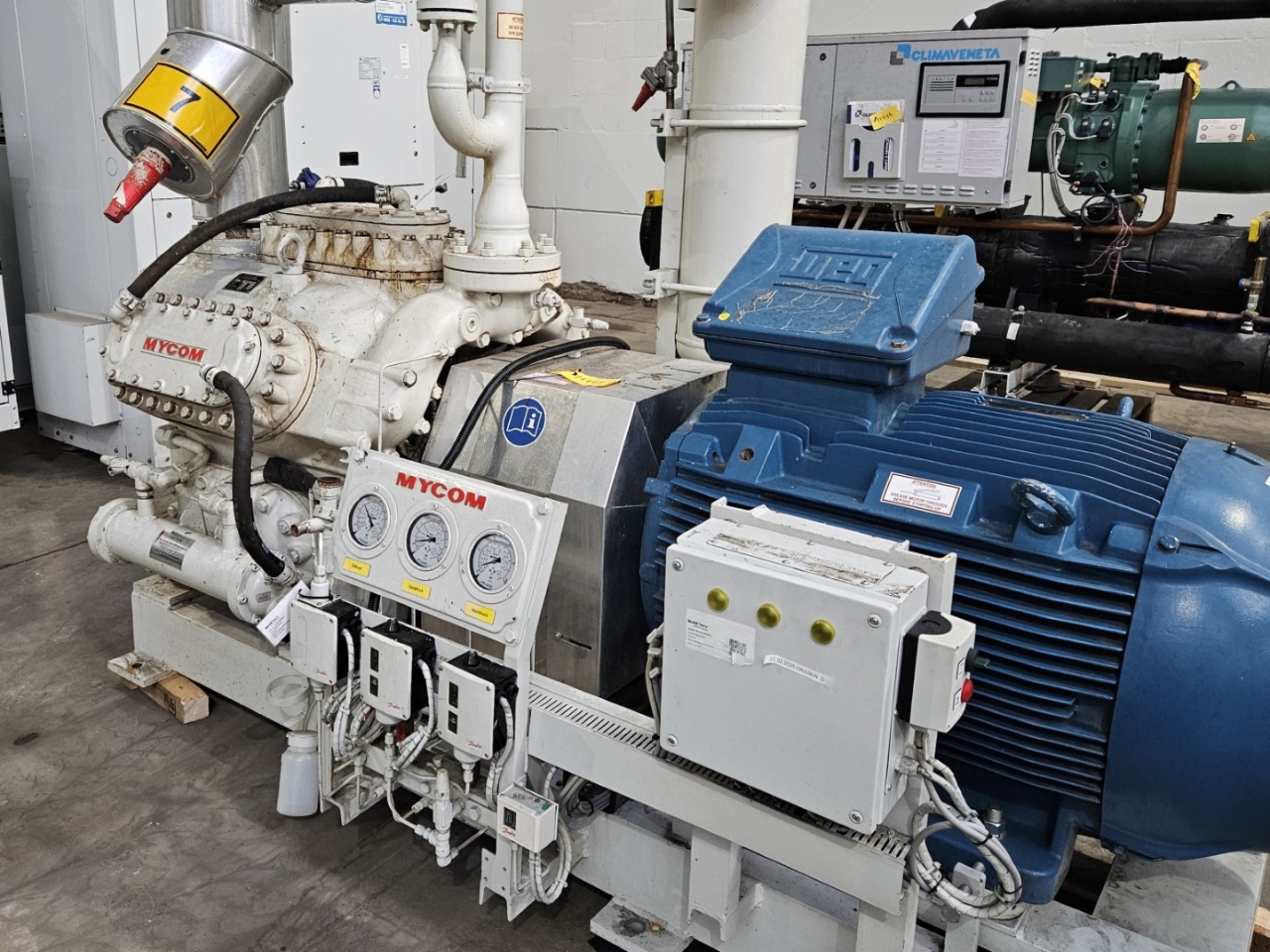
Service: Trend stage pressures and temperatures, oil condition, cooling performance, running time, leakage, vibration, and safety trips. Inspect filters, valves, coolers, drains, separators, unloaders, drive components, and relief devices; use manufacturer data for exact pressure settings and wear limits.
Spare Parts: Carry the applicable valve service kits, piston rings or sealing elements, gaskets, filters, lubricating-system parts, belts or coupling elements, and critical sensors or unloaders recommended for the installed compressor.
Use Cases: Used on merchant ships, offshore vessels, passenger ships, fishing vessels, and workboats for starting air, service/control air, refrigeration, cargo gas, and specialized process duties.
Mycom Marine N6 200kW R404A Marine
N6 200kW R404A Marine unverified
Cooling Capacity (kW)
200
Compressor Type
screw
Refrigerant
R404A
Evaporating Temperature (°C)
-25
Condensing Temperature (°C)
40
Common Failures & Inspection Points
  • Suction filter restriction, valve fouling, or poor inlet conditions reduce capacity and cause long running time or low final pressure
  • Discharge or suction valve wear from deposits, fatigue, or contamination causes reduced compression, high stage temperatures, or abnormal pulsation
  • Lubrication problems from low oil level, contamination, or pump failure cause high bearing temperature, noise, or low oil-pressure alarms
  • Cooler fouling or cooling-water restriction causes high discharge temperature and thermal trips
  • Seal, piston ring, packing, rotor, or gasket wear causes gas leakage, oil carryover, reduced capacity, or frequent cycling
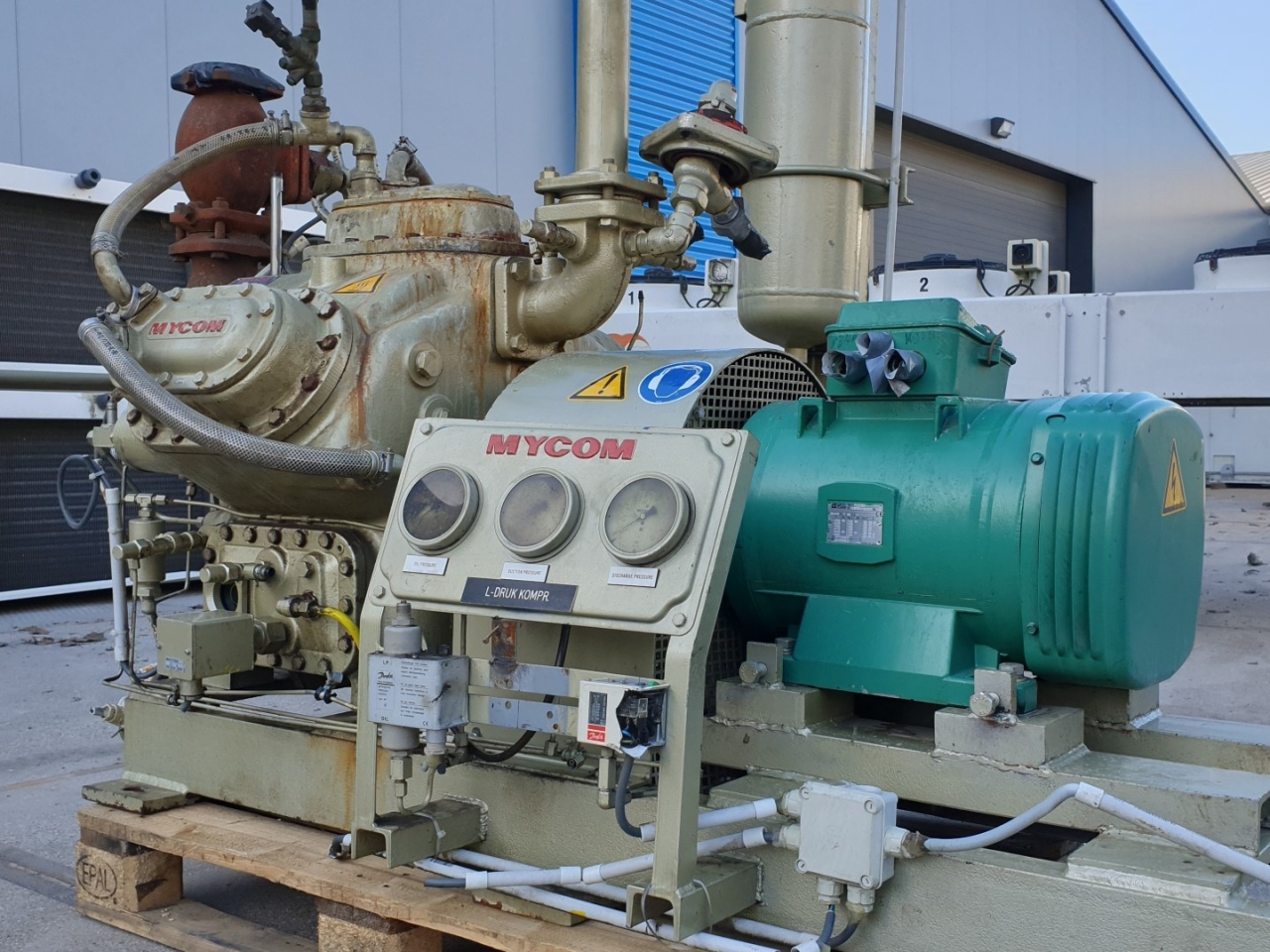
Service: Trend stage pressures and temperatures, oil condition, cooling performance, running time, leakage, vibration, and safety trips. Inspect filters, valves, coolers, drains, separators, unloaders, drive components, and relief devices; use manufacturer data for exact pressure settings and wear limits.
Spare Parts: Carry the applicable valve service kits, piston rings or sealing elements, gaskets, filters, lubricating-system parts, belts or coupling elements, and critical sensors or unloaders recommended for the installed compressor.
Use Cases: Used on merchant ships, offshore vessels, passenger ships, fishing vessels, and workboats for starting air, service/control air, refrigeration, cargo gas, and specialized process duties.
N6 200kW R407C Marine unverified
Cooling Capacity (kW)
200
Compressor Type
screw
Refrigerant
R407C
Evaporating Temperature (°C)
-15
Condensing Temperature (°C)
40
Common Failures & Inspection Points
  • Suction filter restriction, valve fouling, or poor inlet conditions reduce capacity and cause long running time or low final pressure
  • Discharge or suction valve wear from deposits, fatigue, or contamination causes reduced compression, high stage temperatures, or abnormal pulsation
  • Lubrication problems from low oil level, contamination, or pump failure cause high bearing temperature, noise, or low oil-pressure alarms
  • Cooler fouling or cooling-water restriction causes high discharge temperature and thermal trips
  • Seal, piston ring, packing, rotor, or gasket wear causes gas leakage, oil carryover, reduced capacity, or frequent cycling
Service: Trend stage pressures and temperatures, oil condition, cooling performance, running time, leakage, vibration, and safety trips. Inspect filters, valves, coolers, drains, separators, unloaders, drive components, and relief devices; use manufacturer data for exact pressure settings and wear limits.
Spare Parts: Carry the applicable valve service kits, piston rings or sealing elements, gaskets, filters, lubricating-system parts, belts or coupling elements, and critical sensors or unloaders recommended for the installed compressor.
Use Cases: Used on merchant ships, offshore vessels, passenger ships, fishing vessels, and workboats for starting air, service/control air, refrigeration, cargo gas, and specialized process duties.
Mycom Marine N6 300kW R134a Marine
N6 300kW R134a Marine unverified
Cooling Capacity (kW)
300
Compressor Type
screw
Refrigerant
R134a
Evaporating Temperature (°C)
-10
Condensing Temperature (°C)
40
Common Failures & Inspection Points
  • Suction filter restriction, valve fouling, or poor inlet conditions reduce capacity and cause long running time or low final pressure
  • Discharge or suction valve wear from deposits, fatigue, or contamination causes reduced compression, high stage temperatures, or abnormal pulsation
  • Lubrication problems from low oil level, contamination, or pump failure cause high bearing temperature, noise, or low oil-pressure alarms
  • Cooler fouling or cooling-water restriction causes high discharge temperature and thermal trips
  • Seal, piston ring, packing, rotor, or gasket wear causes gas leakage, oil carryover, reduced capacity, or frequent cycling
Service: Trend stage pressures and temperatures, oil condition, cooling performance, running time, leakage, vibration, and safety trips. Inspect filters, valves, coolers, drains, separators, unloaders, drive components, and relief devices; use manufacturer data for exact pressure settings and wear limits.
Spare Parts: Carry the applicable valve service kits, piston rings or sealing elements, gaskets, filters, lubricating-system parts, belts or coupling elements, and critical sensors or unloaders recommended for the installed compressor.
Use Cases: Used on merchant ships, offshore vessels, passenger ships, fishing vessels, and workboats for starting air, service/control air, refrigeration, cargo gas, and specialized process duties.
Mycom Marine N6 300kW R404A Marine
N6 300kW R404A Marine unverified
Cooling Capacity (kW)
300
Compressor Type
screw
Refrigerant
R404A
Evaporating Temperature (°C)
-25
Condensing Temperature (°C)
40
Common Failures & Inspection Points
  • Suction filter restriction, valve fouling, or poor inlet conditions reduce capacity and cause long running time or low final pressure
  • Discharge or suction valve wear from deposits, fatigue, or contamination causes reduced compression, high stage temperatures, or abnormal pulsation
  • Lubrication problems from low oil level, contamination, or pump failure cause high bearing temperature, noise, or low oil-pressure alarms
  • Cooler fouling or cooling-water restriction causes high discharge temperature and thermal trips
  • Seal, piston ring, packing, rotor, or gasket wear causes gas leakage, oil carryover, reduced capacity, or frequent cycling
Service: Trend stage pressures and temperatures, oil condition, cooling performance, running time, leakage, vibration, and safety trips. Inspect filters, valves, coolers, drains, separators, unloaders, drive components, and relief devices; use manufacturer data for exact pressure settings and wear limits.
Spare Parts: Carry the applicable valve service kits, piston rings or sealing elements, gaskets, filters, lubricating-system parts, belts or coupling elements, and critical sensors or unloaders recommended for the installed compressor.
Use Cases: Used on merchant ships, offshore vessels, passenger ships, fishing vessels, and workboats for starting air, service/control air, refrigeration, cargo gas, and specialized process duties.
Mycom Marine N6 300kW R407C Marine
N6 300kW R407C Marine unverified
Cooling Capacity (kW)
300
Compressor Type
screw
Refrigerant
R407C
Evaporating Temperature (°C)
-15
Condensing Temperature (°C)
40
Common Failures & Inspection Points
  • Suction filter restriction, valve fouling, or poor inlet conditions reduce capacity and cause long running time or low final pressure
  • Discharge or suction valve wear from deposits, fatigue, or contamination causes reduced compression, high stage temperatures, or abnormal pulsation
  • Lubrication problems from low oil level, contamination, or pump failure cause high bearing temperature, noise, or low oil-pressure alarms
  • Cooler fouling or cooling-water restriction causes high discharge temperature and thermal trips
  • Seal, piston ring, packing, rotor, or gasket wear causes gas leakage, oil carryover, reduced capacity, or frequent cycling
Service: Trend stage pressures and temperatures, oil condition, cooling performance, running time, leakage, vibration, and safety trips. Inspect filters, valves, coolers, drains, separators, unloaders, drive components, and relief devices; use manufacturer data for exact pressure settings and wear limits.
Spare Parts: Carry the applicable valve service kits, piston rings or sealing elements, gaskets, filters, lubricating-system parts, belts or coupling elements, and critical sensors or unloaders recommended for the installed compressor.
Use Cases: Used on merchant ships, offshore vessels, passenger ships, fishing vessels, and workboats for starting air, service/control air, refrigeration, cargo gas, and specialized process duties.
Mycom Marine N6 500kW R134a Marine
N6 500kW R134a Marine unverified
Cooling Capacity (kW)
500
Compressor Type
screw
Refrigerant
R134a
Evaporating Temperature (°C)
-10
Condensing Temperature (°C)
40
Common Failures & Inspection Points
  • Suction filter restriction, valve fouling, or poor inlet conditions reduce capacity and cause long running time or low final pressure
  • Discharge or suction valve wear from deposits, fatigue, or contamination causes reduced compression, high stage temperatures, or abnormal pulsation
  • Lubrication problems from low oil level, contamination, or pump failure cause high bearing temperature, noise, or low oil-pressure alarms
  • Cooler fouling or cooling-water restriction causes high discharge temperature and thermal trips
  • Seal, piston ring, packing, rotor, or gasket wear causes gas leakage, oil carryover, reduced capacity, or frequent cycling
Service: Trend stage pressures and temperatures, oil condition, cooling performance, running time, leakage, vibration, and safety trips. Inspect filters, valves, coolers, drains, separators, unloaders, drive components, and relief devices; use manufacturer data for exact pressure settings and wear limits.
Spare Parts: Carry the applicable valve service kits, piston rings or sealing elements, gaskets, filters, lubricating-system parts, belts or coupling elements, and critical sensors or unloaders recommended for the installed compressor.
Use Cases: Used on merchant ships, offshore vessels, passenger ships, fishing vessels, and workboats for starting air, service/control air, refrigeration, cargo gas, and specialized process duties.
Mycom Marine N6 500kW R404A Marine
N6 500kW R404A Marine unverified
Cooling Capacity (kW)
500
Compressor Type
screw
Refrigerant
R404A
Evaporating Temperature (°C)
-25
Condensing Temperature (°C)
40
Common Failures & Inspection Points
  • Suction filter restriction, valve fouling, or poor inlet conditions reduce capacity and cause long running time or low final pressure
  • Discharge or suction valve wear from deposits, fatigue, or contamination causes reduced compression, high stage temperatures, or abnormal pulsation
  • Lubrication problems from low oil level, contamination, or pump failure cause high bearing temperature, noise, or low oil-pressure alarms
  • Cooler fouling or cooling-water restriction causes high discharge temperature and thermal trips
  • Seal, piston ring, packing, rotor, or gasket wear causes gas leakage, oil carryover, reduced capacity, or frequent cycling
Service: Trend stage pressures and temperatures, oil condition, cooling performance, running time, leakage, vibration, and safety trips. Inspect filters, valves, coolers, drains, separators, unloaders, drive components, and relief devices; use manufacturer data for exact pressure settings and wear limits.
Spare Parts: Carry the applicable valve service kits, piston rings or sealing elements, gaskets, filters, lubricating-system parts, belts or coupling elements, and critical sensors or unloaders recommended for the installed compressor.
Use Cases: Used on merchant ships, offshore vessels, passenger ships, fishing vessels, and workboats for starting air, service/control air, refrigeration, cargo gas, and specialized process duties.
Mycom Marine N6 500kW R407C Marine
N6 500kW R407C Marine unverified
Cooling Capacity (kW)
500
Compressor Type
screw
Refrigerant
R407C
Evaporating Temperature (°C)
-15
Condensing Temperature (°C)
40
Common Failures & Inspection Points
  • Suction filter restriction, valve fouling, or poor inlet conditions reduce capacity and cause long running time or low final pressure
  • Discharge or suction valve wear from deposits, fatigue, or contamination causes reduced compression, high stage temperatures, or abnormal pulsation
  • Lubrication problems from low oil level, contamination, or pump failure cause high bearing temperature, noise, or low oil-pressure alarms
  • Cooler fouling or cooling-water restriction causes high discharge temperature and thermal trips
  • Seal, piston ring, packing, rotor, or gasket wear causes gas leakage, oil carryover, reduced capacity, or frequent cycling
Service: Trend stage pressures and temperatures, oil condition, cooling performance, running time, leakage, vibration, and safety trips. Inspect filters, valves, coolers, drains, separators, unloaders, drive components, and relief devices; use manufacturer data for exact pressure settings and wear limits.
Spare Parts: Carry the applicable valve service kits, piston rings or sealing elements, gaskets, filters, lubricating-system parts, belts or coupling elements, and critical sensors or unloaders recommended for the installed compressor.
Use Cases: Used on merchant ships, offshore vessels, passenger ships, fishing vessels, and workboats for starting air, service/control air, refrigeration, cargo gas, and specialized process duties.
Mycom Marine N6 750kW R134a Marine
N6 750kW R134a Marine unverified
Cooling Capacity (kW)
750
Compressor Type
screw
Refrigerant
R134a
Evaporating Temperature (°C)
-10
Condensing Temperature (°C)
40
Common Failures & Inspection Points
  • Suction filter restriction, valve fouling, or poor inlet conditions reduce capacity and cause long running time or low final pressure
  • Discharge or suction valve wear from deposits, fatigue, or contamination causes reduced compression, high stage temperatures, or abnormal pulsation
  • Lubrication problems from low oil level, contamination, or pump failure cause high bearing temperature, noise, or low oil-pressure alarms
  • Cooler fouling or cooling-water restriction causes high discharge temperature and thermal trips
  • Seal, piston ring, packing, rotor, or gasket wear causes gas leakage, oil carryover, reduced capacity, or frequent cycling
Service: Trend stage pressures and temperatures, oil condition, cooling performance, running time, leakage, vibration, and safety trips. Inspect filters, valves, coolers, drains, separators, unloaders, drive components, and relief devices; use manufacturer data for exact pressure settings and wear limits.
Spare Parts: Carry the applicable valve service kits, piston rings or sealing elements, gaskets, filters, lubricating-system parts, belts or coupling elements, and critical sensors or unloaders recommended for the installed compressor.
Use Cases: Used on merchant ships, offshore vessels, passenger ships, fishing vessels, and workboats for starting air, service/control air, refrigeration, cargo gas, and specialized process duties.
Mycom Marine N6 750kW R404A Marine
N6 750kW R404A Marine unverified
Cooling Capacity (kW)
750
Compressor Type
screw
Refrigerant
R404A
Evaporating Temperature (°C)
-25
Condensing Temperature (°C)
40
Common Failures & Inspection Points
  • Suction filter restriction, valve fouling, or poor inlet conditions reduce capacity and cause long running time or low final pressure
  • Discharge or suction valve wear from deposits, fatigue, or contamination causes reduced compression, high stage temperatures, or abnormal pulsation
  • Lubrication problems from low oil level, contamination, or pump failure cause high bearing temperature, noise, or low oil-pressure alarms
  • Cooler fouling or cooling-water restriction causes high discharge temperature and thermal trips
  • Seal, piston ring, packing, rotor, or gasket wear causes gas leakage, oil carryover, reduced capacity, or frequent cycling
Service: Trend stage pressures and temperatures, oil condition, cooling performance, running time, leakage, vibration, and safety trips. Inspect filters, valves, coolers, drains, separators, unloaders, drive components, and relief devices; use manufacturer data for exact pressure settings and wear limits.
Spare Parts: Carry the applicable valve service kits, piston rings or sealing elements, gaskets, filters, lubricating-system parts, belts or coupling elements, and critical sensors or unloaders recommended for the installed compressor.
Use Cases: Used on merchant ships, offshore vessels, passenger ships, fishing vessels, and workboats for starting air, service/control air, refrigeration, cargo gas, and specialized process duties.
Mycom Marine N6 750kW R407C Marine
N6 750kW R407C Marine unverified
Cooling Capacity (kW)
750
Compressor Type
screw
Refrigerant
R407C
Evaporating Temperature (°C)
-15
Condensing Temperature (°C)
40
Common Failures & Inspection Points
  • Suction filter restriction, valve fouling, or poor inlet conditions reduce capacity and cause long running time or low final pressure
  • Discharge or suction valve wear from deposits, fatigue, or contamination causes reduced compression, high stage temperatures, or abnormal pulsation
  • Lubrication problems from low oil level, contamination, or pump failure cause high bearing temperature, noise, or low oil-pressure alarms
  • Cooler fouling or cooling-water restriction causes high discharge temperature and thermal trips
  • Seal, piston ring, packing, rotor, or gasket wear causes gas leakage, oil carryover, reduced capacity, or frequent cycling
Service: Trend stage pressures and temperatures, oil condition, cooling performance, running time, leakage, vibration, and safety trips. Inspect filters, valves, coolers, drains, separators, unloaders, drive components, and relief devices; use manufacturer data for exact pressure settings and wear limits.
Spare Parts: Carry the applicable valve service kits, piston rings or sealing elements, gaskets, filters, lubricating-system parts, belts or coupling elements, and critical sensors or unloaders recommended for the installed compressor.
Use Cases: Used on merchant ships, offshore vessels, passenger ships, fishing vessels, and workboats for starting air, service/control air, refrigeration, cargo gas, and specialized process duties.
Mycom Marine N6 1000kW R134a Marine
N6 1000kW R134a Marine unverified
Cooling Capacity (kW)
1000
Compressor Type
screw
Refrigerant
R134a
Evaporating Temperature (°C)
-10
Condensing Temperature (°C)
40
Common Failures & Inspection Points
  • Valve, rotor, piston or internal compression-element wear caused by contamination, poor lubrication or normal wear can produce reduced delivery, high running temperature or abnormal noise
  • Lubrication failure caused by low level, blocked passages, oil contamination or pump faults can lead to rising temperature, bearing noise or protective shutdown
  • Cooling deficiency caused by fouled coolers, poor airflow or restricted water flow can produce high discharge temperature and repeated trips
  • Seal, gasket or piping leakage caused by ageing, vibration or damaged joints can result in pressure loss, refrigerant or air leakage and extended running
  • Motor, starter or protection faults caused by electrical defects or incorrect sensor signals can cause failure to start, nuisance trips or unstable operation
Service: Check oil condition and level where applicable, leakage, cooling, suction and discharge condition, vibration, temperature and protection alarms. Inspect belts, couplings, valves, filters or separators as fitted and review operating trends for loss of performance. Refer to manufacturer documentation for exact pressures, temperatures, clearances and service limits.
Spare Parts: Appropriate spares include approved seals and gaskets, filters, valve or service kits, belts or coupling elements where fitted, bearings, sensors and electrical protection items recommended for the installed compressor.
Use Cases: Starting-air, service-air, deck-air, refrigeration, HVAC and cargo-gas compression duties depending on the listed equipment type.
Mycom Marine N6 1000kW R404A Marine
N6 1000kW R404A Marine unverified
Cooling Capacity (kW)
1000
Compressor Type
screw
Refrigerant
R404A
Evaporating Temperature (°C)
-25
Condensing Temperature (°C)
40
Common Failures & Inspection Points
  • Valve, rotor, piston or internal compression-element wear caused by contamination, poor lubrication or normal wear can produce reduced delivery, high running temperature or abnormal noise
  • Lubrication failure caused by low level, blocked passages, oil contamination or pump faults can lead to rising temperature, bearing noise or protective shutdown
  • Cooling deficiency caused by fouled coolers, poor airflow or restricted water flow can produce high discharge temperature and repeated trips
  • Seal, gasket or piping leakage caused by ageing, vibration or damaged joints can result in pressure loss, refrigerant or air leakage and extended running
  • Motor, starter or protection faults caused by electrical defects or incorrect sensor signals can cause failure to start, nuisance trips or unstable operation
Service: Check oil condition and level where applicable, leakage, cooling, suction and discharge condition, vibration, temperature and protection alarms. Inspect belts, couplings, valves, filters or separators as fitted and review operating trends for loss of performance. Refer to manufacturer documentation for exact pressures, temperatures, clearances and service limits.
Spare Parts: Appropriate spares include approved seals and gaskets, filters, valve or service kits, belts or coupling elements where fitted, bearings, sensors and electrical protection items recommended for the installed compressor.
Use Cases: Starting-air, service-air, deck-air, refrigeration, HVAC and cargo-gas compression duties depending on the listed equipment type.
Mycom Marine N6 1000kW R407C Marine
N6 1000kW R407C Marine unverified
Cooling Capacity (kW)
1000
Compressor Type
screw
Refrigerant
R407C
Evaporating Temperature (°C)
-15
Condensing Temperature (°C)
40
Common Failures & Inspection Points
  • Valve, rotor, piston or internal compression-element wear caused by contamination, poor lubrication or normal wear can produce reduced delivery, high running temperature or abnormal noise
  • Lubrication failure caused by low level, blocked passages, oil contamination or pump faults can lead to rising temperature, bearing noise or protective shutdown
  • Cooling deficiency caused by fouled coolers, poor airflow or restricted water flow can produce high discharge temperature and repeated trips
  • Seal, gasket or piping leakage caused by ageing, vibration or damaged joints can result in pressure loss, refrigerant or air leakage and extended running
  • Motor, starter or protection faults caused by electrical defects or incorrect sensor signals can cause failure to start, nuisance trips or unstable operation
Service: Check oil condition and level where applicable, leakage, cooling, suction and discharge condition, vibration, temperature and protection alarms. Inspect belts, couplings, valves, filters or separators as fitted and review operating trends for loss of performance. Refer to manufacturer documentation for exact pressures, temperatures, clearances and service limits.
Spare Parts: Appropriate spares include approved seals and gaskets, filters, valve or service kits, belts or coupling elements where fitted, bearings, sensors and electrical protection items recommended for the installed compressor.
Use Cases: Starting-air, service-air, deck-air, refrigeration, HVAC and cargo-gas compression duties depending on the listed equipment type.
Mycom Marine N8 200kW R134a Marine
N8 200kW R134a Marine unverified
Cooling Capacity (kW)
200
Compressor Type
screw
Refrigerant
R134a
Evaporating Temperature (°C)
-10
Condensing Temperature (°C)
40
Common Failures & Inspection Points
  • Suction filter restriction, valve fouling, or poor inlet conditions reduce capacity and cause long running time or low final pressure
  • Discharge or suction valve wear from deposits, fatigue, or contamination causes reduced compression, high stage temperatures, or abnormal pulsation
  • Lubrication problems from low oil level, contamination, or pump failure cause high bearing temperature, noise, or low oil-pressure alarms
  • Cooler fouling or cooling-water restriction causes high discharge temperature and thermal trips
  • Seal, piston ring, packing, rotor, or gasket wear causes gas leakage, oil carryover, reduced capacity, or frequent cycling
Service: Trend stage pressures and temperatures, oil condition, cooling performance, running time, leakage, vibration, and safety trips. Inspect filters, valves, coolers, drains, separators, unloaders, drive components, and relief devices; use manufacturer data for exact pressure settings and wear limits.
Spare Parts: Carry the applicable valve service kits, piston rings or sealing elements, gaskets, filters, lubricating-system parts, belts or coupling elements, and critical sensors or unloaders recommended for the installed compressor.
Use Cases: Used on merchant ships, offshore vessels, passenger ships, fishing vessels, and workboats for starting air, service/control air, refrigeration, cargo gas, and specialized process duties.
Mycom Marine N8 200kW R404A Marine
N8 200kW R404A Marine unverified
Cooling Capacity (kW)
200
Compressor Type
screw
Refrigerant
R404A
Evaporating Temperature (°C)
-25
Condensing Temperature (°C)
40
Common Failures & Inspection Points
  • Suction filter restriction, valve fouling, or poor inlet conditions reduce capacity and cause long running time or low final pressure
  • Discharge or suction valve wear from deposits, fatigue, or contamination causes reduced compression, high stage temperatures, or abnormal pulsation
  • Lubrication problems from low oil level, contamination, or pump failure cause high bearing temperature, noise, or low oil-pressure alarms
  • Cooler fouling or cooling-water restriction causes high discharge temperature and thermal trips
  • Seal, piston ring, packing, rotor, or gasket wear causes gas leakage, oil carryover, reduced capacity, or frequent cycling
Service: Trend stage pressures and temperatures, oil condition, cooling performance, running time, leakage, vibration, and safety trips. Inspect filters, valves, coolers, drains, separators, unloaders, drive components, and relief devices; use manufacturer data for exact pressure settings and wear limits.
Spare Parts: Carry the applicable valve service kits, piston rings or sealing elements, gaskets, filters, lubricating-system parts, belts or coupling elements, and critical sensors or unloaders recommended for the installed compressor.
Use Cases: Used on merchant ships, offshore vessels, passenger ships, fishing vessels, and workboats for starting air, service/control air, refrigeration, cargo gas, and specialized process duties.
Mycom Marine N8 200kW R407C Marine
N8 200kW R407C Marine unverified
Cooling Capacity (kW)
200
Compressor Type
screw
Refrigerant
R407C
Evaporating Temperature (°C)
-15
Condensing Temperature (°C)
40
Common Failures & Inspection Points
  • Suction filter restriction, valve fouling, or poor inlet conditions reduce capacity and cause long running time or low final pressure
  • Discharge or suction valve wear from deposits, fatigue, or contamination causes reduced compression, high stage temperatures, or abnormal pulsation
  • Lubrication problems from low oil level, contamination, or pump failure cause high bearing temperature, noise, or low oil-pressure alarms
  • Cooler fouling or cooling-water restriction causes high discharge temperature and thermal trips
  • Seal, piston ring, packing, rotor, or gasket wear causes gas leakage, oil carryover, reduced capacity, or frequent cycling
Service: Trend stage pressures and temperatures, oil condition, cooling performance, running time, leakage, vibration, and safety trips. Inspect filters, valves, coolers, drains, separators, unloaders, drive components, and relief devices; use manufacturer data for exact pressure settings and wear limits.
Spare Parts: Carry the applicable valve service kits, piston rings or sealing elements, gaskets, filters, lubricating-system parts, belts or coupling elements, and critical sensors or unloaders recommended for the installed compressor.
Use Cases: Used on merchant ships, offshore vessels, passenger ships, fishing vessels, and workboats for starting air, service/control air, refrigeration, cargo gas, and specialized process duties.
Mycom Marine N8 300kW R134a Marine
N8 300kW R134a Marine unverified
Cooling Capacity (kW)
300
Compressor Type
screw
Refrigerant
R134a
Evaporating Temperature (°C)
-10
Condensing Temperature (°C)
40
Common Failures & Inspection Points
  • Suction filter restriction, valve fouling, or poor inlet conditions reduce capacity and cause long running time or low final pressure
  • Discharge or suction valve wear from deposits, fatigue, or contamination causes reduced compression, high stage temperatures, or abnormal pulsation
  • Lubrication problems from low oil level, contamination, or pump failure cause high bearing temperature, noise, or low oil-pressure alarms
  • Cooler fouling or cooling-water restriction causes high discharge temperature and thermal trips
  • Seal, piston ring, packing, rotor, or gasket wear causes gas leakage, oil carryover, reduced capacity, or frequent cycling
Service: Trend stage pressures and temperatures, oil condition, cooling performance, running time, leakage, vibration, and safety trips. Inspect filters, valves, coolers, drains, separators, unloaders, drive components, and relief devices; use manufacturer data for exact pressure settings and wear limits.
Spare Parts: Carry the applicable valve service kits, piston rings or sealing elements, gaskets, filters, lubricating-system parts, belts or coupling elements, and critical sensors or unloaders recommended for the installed compressor.
Use Cases: Used on merchant ships, offshore vessels, passenger ships, fishing vessels, and workboats for starting air, service/control air, refrigeration, cargo gas, and specialized process duties.
Mycom Marine N8 300kW R404A Marine
N8 300kW R404A Marine unverified
Cooling Capacity (kW)
300
Compressor Type
screw
Refrigerant
R404A
Evaporating Temperature (°C)
-25
Condensing Temperature (°C)
40
Common Failures & Inspection Points
  • Suction filter restriction, valve fouling, or poor inlet conditions reduce capacity and cause long running time or low final pressure
  • Discharge or suction valve wear from deposits, fatigue, or contamination causes reduced compression, high stage temperatures, or abnormal pulsation
  • Lubrication problems from low oil level, contamination, or pump failure cause high bearing temperature, noise, or low oil-pressure alarms
  • Cooler fouling or cooling-water restriction causes high discharge temperature and thermal trips
  • Seal, piston ring, packing, rotor, or gasket wear causes gas leakage, oil carryover, reduced capacity, or frequent cycling
Service: Trend stage pressures and temperatures, oil condition, cooling performance, running time, leakage, vibration, and safety trips. Inspect filters, valves, coolers, drains, separators, unloaders, drive components, and relief devices; use manufacturer data for exact pressure settings and wear limits.
Spare Parts: Carry the applicable valve service kits, piston rings or sealing elements, gaskets, filters, lubricating-system parts, belts or coupling elements, and critical sensors or unloaders recommended for the installed compressor.
Use Cases: Used on merchant ships, offshore vessels, passenger ships, fishing vessels, and workboats for starting air, service/control air, refrigeration, cargo gas, and specialized process duties.
Mycom Marine N8 300kW R407C Marine
N8 300kW R407C Marine unverified
Cooling Capacity (kW)
300
Compressor Type
screw
Refrigerant
R407C
Evaporating Temperature (°C)
-15
Condensing Temperature (°C)
40
Common Failures & Inspection Points
  • Suction filter restriction, valve fouling, or poor inlet conditions reduce capacity and cause long running time or low final pressure
  • Discharge or suction valve wear from deposits, fatigue, or contamination causes reduced compression, high stage temperatures, or abnormal pulsation
  • Lubrication problems from low oil level, contamination, or pump failure cause high bearing temperature, noise, or low oil-pressure alarms
  • Cooler fouling or cooling-water restriction causes high discharge temperature and thermal trips
  • Seal, piston ring, packing, rotor, or gasket wear causes gas leakage, oil carryover, reduced capacity, or frequent cycling
Service: Trend stage pressures and temperatures, oil condition, cooling performance, running time, leakage, vibration, and safety trips. Inspect filters, valves, coolers, drains, separators, unloaders, drive components, and relief devices; use manufacturer data for exact pressure settings and wear limits.
Spare Parts: Carry the applicable valve service kits, piston rings or sealing elements, gaskets, filters, lubricating-system parts, belts or coupling elements, and critical sensors or unloaders recommended for the installed compressor.
Use Cases: Used on merchant ships, offshore vessels, passenger ships, fishing vessels, and workboats for starting air, service/control air, refrigeration, cargo gas, and specialized process duties.
N8 500kW R134a Marine unverified
Cooling Capacity (kW)
500
Compressor Type
screw
Refrigerant
R134a
Evaporating Temperature (°C)
-10
Condensing Temperature (°C)
40
Common Failures & Inspection Points
  • Suction filter restriction, valve fouling, or poor inlet conditions reduce capacity and cause long running time or low final pressure
  • Discharge or suction valve wear from deposits, fatigue, or contamination causes reduced compression, high stage temperatures, or abnormal pulsation
  • Lubrication problems from low oil level, contamination, or pump failure cause high bearing temperature, noise, or low oil-pressure alarms
  • Cooler fouling or cooling-water restriction causes high discharge temperature and thermal trips
  • Seal, piston ring, packing, rotor, or gasket wear causes gas leakage, oil carryover, reduced capacity, or frequent cycling
Service: Trend stage pressures and temperatures, oil condition, cooling performance, running time, leakage, vibration, and safety trips. Inspect filters, valves, coolers, drains, separators, unloaders, drive components, and relief devices; use manufacturer data for exact pressure settings and wear limits.
Spare Parts: Carry the applicable valve service kits, piston rings or sealing elements, gaskets, filters, lubricating-system parts, belts or coupling elements, and critical sensors or unloaders recommended for the installed compressor.
Use Cases: Used on merchant ships, offshore vessels, passenger ships, fishing vessels, and workboats for starting air, service/control air, refrigeration, cargo gas, and specialized process duties.
Mycom Marine N8 500kW R404A Marine
N8 500kW R404A Marine unverified
Cooling Capacity (kW)
500
Compressor Type
screw
Refrigerant
R404A
Evaporating Temperature (°C)
-25
Condensing Temperature (°C)
40
Common Failures & Inspection Points
  • Suction filter restriction, valve fouling, or poor inlet conditions reduce capacity and cause long running time or low final pressure
  • Discharge or suction valve wear from deposits, fatigue, or contamination causes reduced compression, high stage temperatures, or abnormal pulsation
  • Lubrication problems from low oil level, contamination, or pump failure cause high bearing temperature, noise, or low oil-pressure alarms
  • Cooler fouling or cooling-water restriction causes high discharge temperature and thermal trips
  • Seal, piston ring, packing, rotor, or gasket wear causes gas leakage, oil carryover, reduced capacity, or frequent cycling
Service: Trend stage pressures and temperatures, oil condition, cooling performance, running time, leakage, vibration, and safety trips. Inspect filters, valves, coolers, drains, separators, unloaders, drive components, and relief devices; use manufacturer data for exact pressure settings and wear limits.
Spare Parts: Carry the applicable valve service kits, piston rings or sealing elements, gaskets, filters, lubricating-system parts, belts or coupling elements, and critical sensors or unloaders recommended for the installed compressor.
Use Cases: Used on merchant ships, offshore vessels, passenger ships, fishing vessels, and workboats for starting air, service/control air, refrigeration, cargo gas, and specialized process duties.
Mycom Marine N8 500kW R407C Marine
N8 500kW R407C Marine unverified
Cooling Capacity (kW)
500
Compressor Type
screw
Refrigerant
R407C
Evaporating Temperature (°C)
-15
Condensing Temperature (°C)
40
Common Failures & Inspection Points
  • Suction filter restriction, valve fouling, or poor inlet conditions reduce capacity and cause long running time or low final pressure
  • Discharge or suction valve wear from deposits, fatigue, or contamination causes reduced compression, high stage temperatures, or abnormal pulsation
  • Lubrication problems from low oil level, contamination, or pump failure cause high bearing temperature, noise, or low oil-pressure alarms
  • Cooler fouling or cooling-water restriction causes high discharge temperature and thermal trips
  • Seal, piston ring, packing, rotor, or gasket wear causes gas leakage, oil carryover, reduced capacity, or frequent cycling
Service: Trend stage pressures and temperatures, oil condition, cooling performance, running time, leakage, vibration, and safety trips. Inspect filters, valves, coolers, drains, separators, unloaders, drive components, and relief devices; use manufacturer data for exact pressure settings and wear limits.
Spare Parts: Carry the applicable valve service kits, piston rings or sealing elements, gaskets, filters, lubricating-system parts, belts or coupling elements, and critical sensors or unloaders recommended for the installed compressor.
Use Cases: Used on merchant ships, offshore vessels, passenger ships, fishing vessels, and workboats for starting air, service/control air, refrigeration, cargo gas, and specialized process duties.
Mycom Marine N8 750kW R134a Marine
N8 750kW R134a Marine unverified
Cooling Capacity (kW)
750
Compressor Type
screw
Refrigerant
R134a
Evaporating Temperature (°C)
-10
Condensing Temperature (°C)
40
Common Failures & Inspection Points
  • Suction filter restriction, valve fouling, or poor inlet conditions reduce capacity and cause long running time or low final pressure
  • Discharge or suction valve wear from deposits, fatigue, or contamination causes reduced compression, high stage temperatures, or abnormal pulsation
  • Lubrication problems from low oil level, contamination, or pump failure cause high bearing temperature, noise, or low oil-pressure alarms
  • Cooler fouling or cooling-water restriction causes high discharge temperature and thermal trips
  • Seal, piston ring, packing, rotor, or gasket wear causes gas leakage, oil carryover, reduced capacity, or frequent cycling
Service: Trend stage pressures and temperatures, oil condition, cooling performance, running time, leakage, vibration, and safety trips. Inspect filters, valves, coolers, drains, separators, unloaders, drive components, and relief devices; use manufacturer data for exact pressure settings and wear limits.
Spare Parts: Carry the applicable valve service kits, piston rings or sealing elements, gaskets, filters, lubricating-system parts, belts or coupling elements, and critical sensors or unloaders recommended for the installed compressor.
Use Cases: Used on merchant ships, offshore vessels, passenger ships, fishing vessels, and workboats for starting air, service/control air, refrigeration, cargo gas, and specialized process duties.
Mycom Marine N8 750kW R404A Marine
N8 750kW R404A Marine unverified
Cooling Capacity (kW)
750
Compressor Type
screw
Refrigerant
R404A
Evaporating Temperature (°C)
-25
Condensing Temperature (°C)
40
Common Failures & Inspection Points
  • Suction filter restriction, valve fouling, or poor inlet conditions reduce capacity and cause long running time or low final pressure
  • Discharge or suction valve wear from deposits, fatigue, or contamination causes reduced compression, high stage temperatures, or abnormal pulsation
  • Lubrication problems from low oil level, contamination, or pump failure cause high bearing temperature, noise, or low oil-pressure alarms
  • Cooler fouling or cooling-water restriction causes high discharge temperature and thermal trips
  • Seal, piston ring, packing, rotor, or gasket wear causes gas leakage, oil carryover, reduced capacity, or frequent cycling
Service: Trend stage pressures and temperatures, oil condition, cooling performance, running time, leakage, vibration, and safety trips. Inspect filters, valves, coolers, drains, separators, unloaders, drive components, and relief devices; use manufacturer data for exact pressure settings and wear limits.
Spare Parts: Carry the applicable valve service kits, piston rings or sealing elements, gaskets, filters, lubricating-system parts, belts or coupling elements, and critical sensors or unloaders recommended for the installed compressor.
Use Cases: Used on merchant ships, offshore vessels, passenger ships, fishing vessels, and workboats for starting air, service/control air, refrigeration, cargo gas, and specialized process duties.
Mycom Marine N8 750kW R407C Marine
N8 750kW R407C Marine unverified
Cooling Capacity (kW)
750
Compressor Type
screw
Refrigerant
R407C
Evaporating Temperature (°C)
-15
Condensing Temperature (°C)
40
Common Failures & Inspection Points
  • Suction filter restriction, valve fouling, or poor inlet conditions reduce capacity and cause long running time or low final pressure
  • Discharge or suction valve wear from deposits, fatigue, or contamination causes reduced compression, high stage temperatures, or abnormal pulsation
  • Lubrication problems from low oil level, contamination, or pump failure cause high bearing temperature, noise, or low oil-pressure alarms
  • Cooler fouling or cooling-water restriction causes high discharge temperature and thermal trips
  • Seal, piston ring, packing, rotor, or gasket wear causes gas leakage, oil carryover, reduced capacity, or frequent cycling
Service: Trend stage pressures and temperatures, oil condition, cooling performance, running time, leakage, vibration, and safety trips. Inspect filters, valves, coolers, drains, separators, unloaders, drive components, and relief devices; use manufacturer data for exact pressure settings and wear limits.
Spare Parts: Carry the applicable valve service kits, piston rings or sealing elements, gaskets, filters, lubricating-system parts, belts or coupling elements, and critical sensors or unloaders recommended for the installed compressor.
Use Cases: Used on merchant ships, offshore vessels, passenger ships, fishing vessels, and workboats for starting air, service/control air, refrigeration, cargo gas, and specialized process duties.
Mycom Marine N8 1000kW R134a Marine
N8 1000kW R134a Marine unverified
Cooling Capacity (kW)
1000
Compressor Type
screw
Refrigerant
R134a
Evaporating Temperature (°C)
-10
Condensing Temperature (°C)
40
Common Failures & Inspection Points
  • Valve, rotor, piston or internal compression-element wear caused by contamination, poor lubrication or normal wear can produce reduced delivery, high running temperature or abnormal noise
  • Lubrication failure caused by low level, blocked passages, oil contamination or pump faults can lead to rising temperature, bearing noise or protective shutdown
  • Cooling deficiency caused by fouled coolers, poor airflow or restricted water flow can produce high discharge temperature and repeated trips
  • Seal, gasket or piping leakage caused by ageing, vibration or damaged joints can result in pressure loss, refrigerant or air leakage and extended running
  • Motor, starter or protection faults caused by electrical defects or incorrect sensor signals can cause failure to start, nuisance trips or unstable operation
Service: Check oil condition and level where applicable, leakage, cooling, suction and discharge condition, vibration, temperature and protection alarms. Inspect belts, couplings, valves, filters or separators as fitted and review operating trends for loss of performance. Refer to manufacturer documentation for exact pressures, temperatures, clearances and service limits.
Spare Parts: Appropriate spares include approved seals and gaskets, filters, valve or service kits, belts or coupling elements where fitted, bearings, sensors and electrical protection items recommended for the installed compressor.
Use Cases: Starting-air, service-air, deck-air, refrigeration, HVAC and cargo-gas compression duties depending on the listed equipment type.
Mycom Marine N8 1000kW R404A Marine
N8 1000kW R404A Marine unverified
Cooling Capacity (kW)
1000
Compressor Type
screw
Refrigerant
R404A
Evaporating Temperature (°C)
-25
Condensing Temperature (°C)
40
Common Failures & Inspection Points
  • Valve, rotor, piston or internal compression-element wear caused by contamination, poor lubrication or normal wear can produce reduced delivery, high running temperature or abnormal noise
  • Lubrication failure caused by low level, blocked passages, oil contamination or pump faults can lead to rising temperature, bearing noise or protective shutdown
  • Cooling deficiency caused by fouled coolers, poor airflow or restricted water flow can produce high discharge temperature and repeated trips
  • Seal, gasket or piping leakage caused by ageing, vibration or damaged joints can result in pressure loss, refrigerant or air leakage and extended running
  • Motor, starter or protection faults caused by electrical defects or incorrect sensor signals can cause failure to start, nuisance trips or unstable operation
Service: Check oil condition and level where applicable, leakage, cooling, suction and discharge condition, vibration, temperature and protection alarms. Inspect belts, couplings, valves, filters or separators as fitted and review operating trends for loss of performance. Refer to manufacturer documentation for exact pressures, temperatures, clearances and service limits.
Spare Parts: Appropriate spares include approved seals and gaskets, filters, valve or service kits, belts or coupling elements where fitted, bearings, sensors and electrical protection items recommended for the installed compressor.
Use Cases: Starting-air, service-air, deck-air, refrigeration, HVAC and cargo-gas compression duties depending on the listed equipment type.
Mycom Marine N8 1000kW R407C Marine
N8 1000kW R407C Marine unverified
Cooling Capacity (kW)
1000
Compressor Type
screw
Refrigerant
R407C
Evaporating Temperature (°C)
-15
Condensing Temperature (°C)
40
Common Failures & Inspection Points
  • Valve, rotor, piston or internal compression-element wear caused by contamination, poor lubrication or normal wear can produce reduced delivery, high running temperature or abnormal noise
  • Lubrication failure caused by low level, blocked passages, oil contamination or pump faults can lead to rising temperature, bearing noise or protective shutdown
  • Cooling deficiency caused by fouled coolers, poor airflow or restricted water flow can produce high discharge temperature and repeated trips
  • Seal, gasket or piping leakage caused by ageing, vibration or damaged joints can result in pressure loss, refrigerant or air leakage and extended running
  • Motor, starter or protection faults caused by electrical defects or incorrect sensor signals can cause failure to start, nuisance trips or unstable operation
Service: Check oil condition and level where applicable, leakage, cooling, suction and discharge condition, vibration, temperature and protection alarms. Inspect belts, couplings, valves, filters or separators as fitted and review operating trends for loss of performance. Refer to manufacturer documentation for exact pressures, temperatures, clearances and service limits.
Spare Parts: Appropriate spares include approved seals and gaskets, filters, valve or service kits, belts or coupling elements where fitted, bearings, sensors and electrical protection items recommended for the installed compressor.
Use Cases: Starting-air, service-air, deck-air, refrigeration, HVAC and cargo-gas compression duties depending on the listed equipment type.

Sabroe/Johnson Controls

45
SMC 200kW R134a Marine unverified
Cooling Capacity (kW)
200
Compressor Type
screw
Refrigerant
R134a
Evaporating Temperature (°C)
-10
Condensing Temperature (°C)
40
Common Failures & Inspection Points
  • Refrigerant leakage through seals, joints or piping reduces cooling capacity and causes low suction pressure or long running periods
  • Oil starvation or poor oil return causes bearing or compression-element damage, abnormal noise and rising temperature
  • Liquid refrigerant return causes knocking, unstable suction conditions or mechanical damage
  • Condenser fouling or poor cooling-water flow raises discharge pressure and causes high-pressure trips
  • Capacity-control, solenoid or electrical faults cause short cycling, poor temperature control or inability to start
Service: Inspect refrigerant and oil leakage, suction and discharge condition, compressor sound, oil management, electrical protection and capacity controls. Check condenser and evaporator cleanliness and review alarm history. Confirm heaters and solenoids operate correctly where fitted. Refer to the manufacturer documentation for the exact figure for refrigerant charge, oil quantity, pressure and clearance limits.
Spare Parts: Carry seals where serviceable, oil filters, approved lubricant, gaskets, solenoid or capacity-control parts, crankcase heaters, contactors and pressure switches.
Use Cases: Provision stores, refrigerated cargo spaces, air-conditioning plants and other marine refrigeration duties.
SMC 200kW R404A Marine unverified
Cooling Capacity (kW)
200
Compressor Type
screw
Refrigerant
R404A
Evaporating Temperature (°C)
-25
Condensing Temperature (°C)
40
Common Failures & Inspection Points
  • Refrigerant leakage through seals, joints or piping reduces cooling capacity and causes low suction pressure or long running periods
  • Oil starvation or poor oil return causes bearing or compression-element damage, abnormal noise and rising temperature
  • Liquid refrigerant return causes knocking, unstable suction conditions or mechanical damage
  • Condenser fouling or poor cooling-water flow raises discharge pressure and causes high-pressure trips
  • Capacity-control, solenoid or electrical faults cause short cycling, poor temperature control or inability to start
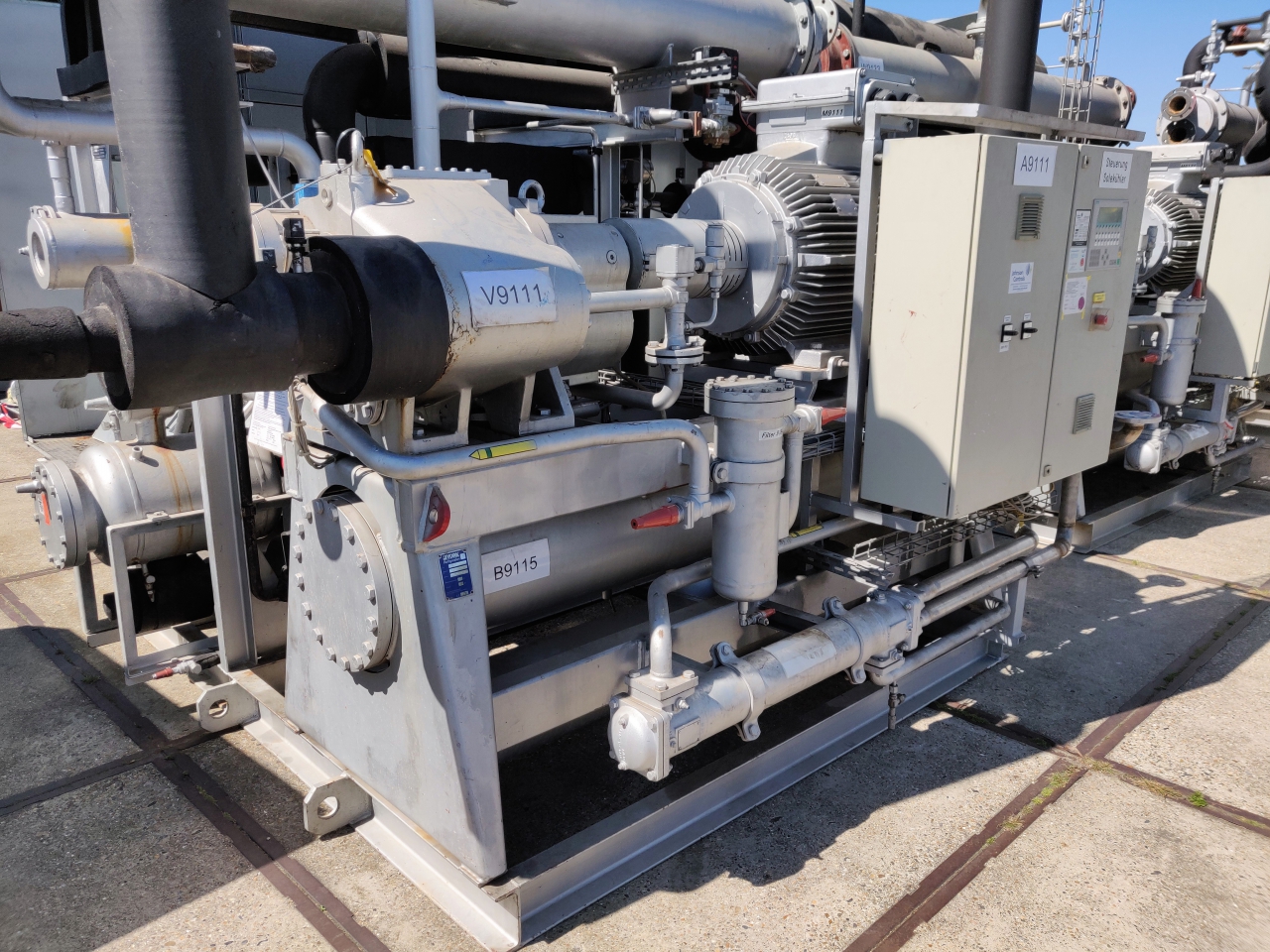
Service: Inspect refrigerant and oil leakage, suction and discharge condition, compressor sound, oil management, electrical protection and capacity controls. Check condenser and evaporator cleanliness and review alarm history. Confirm heaters and solenoids operate correctly where fitted. Refer to the manufacturer documentation for the exact figure for refrigerant charge, oil quantity, pressure and clearance limits.
Spare Parts: Carry seals where serviceable, oil filters, approved lubricant, gaskets, solenoid or capacity-control parts, crankcase heaters, contactors and pressure switches.
Use Cases: Provision stores, refrigerated cargo spaces, air-conditioning plants and other marine refrigeration duties.
SMC 200kW R407C Marine unverified
Cooling Capacity (kW)
200
Compressor Type
screw
Refrigerant
R407C
Evaporating Temperature (°C)
-15
Condensing Temperature (°C)
40
Common Failures & Inspection Points
  • Refrigerant leakage through seals, joints or piping reduces cooling capacity and causes low suction pressure or long running periods
  • Oil starvation or poor oil return causes bearing or compression-element damage, abnormal noise and rising temperature
  • Liquid refrigerant return causes knocking, unstable suction conditions or mechanical damage
  • Condenser fouling or poor cooling-water flow raises discharge pressure and causes high-pressure trips
  • Capacity-control, solenoid or electrical faults cause short cycling, poor temperature control or inability to start
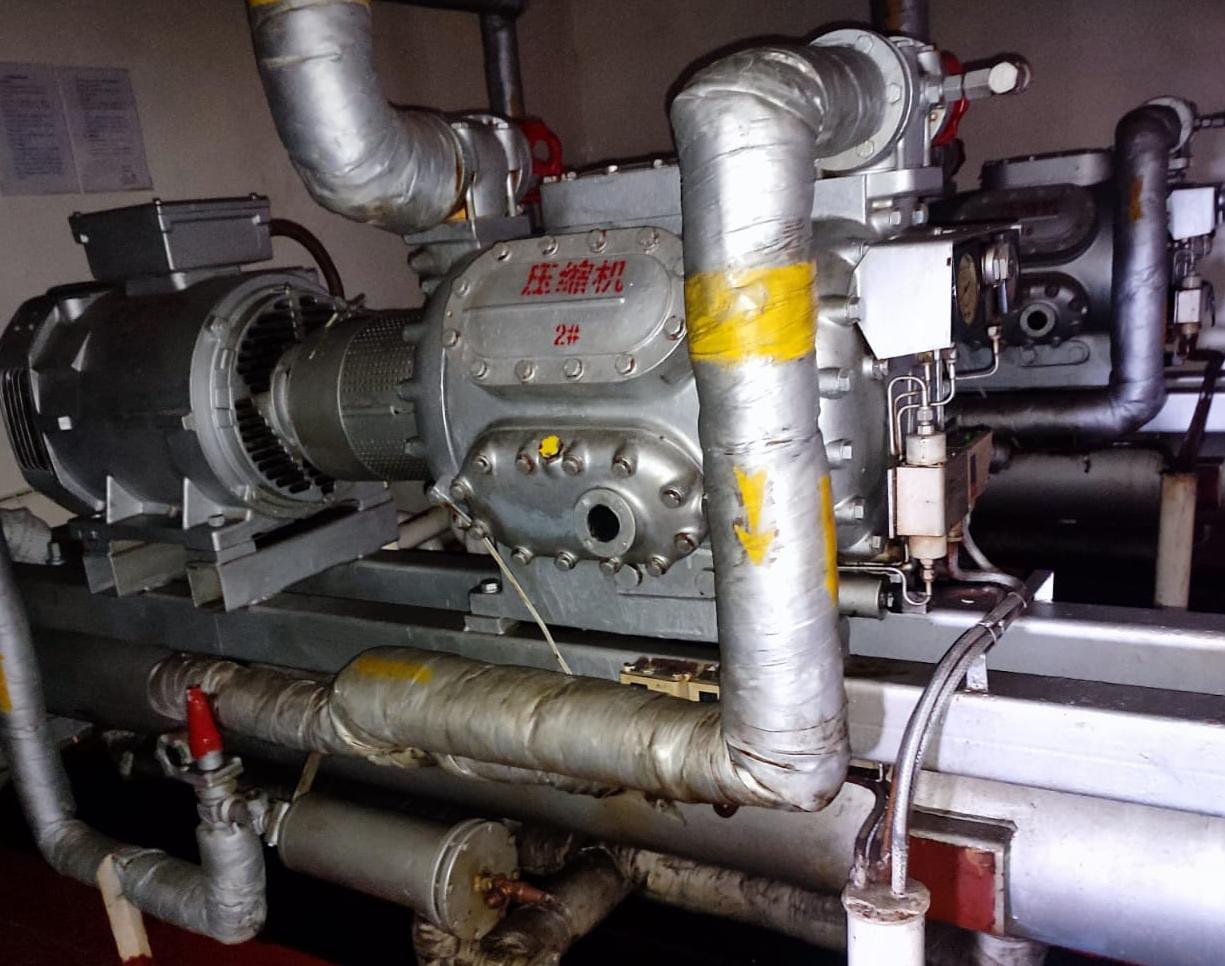
Service: Inspect refrigerant and oil leakage, suction and discharge condition, compressor sound, oil management, electrical protection and capacity controls. Check condenser and evaporator cleanliness and review alarm history. Confirm heaters and solenoids operate correctly where fitted. Refer to the manufacturer documentation for the exact figure for refrigerant charge, oil quantity, pressure and clearance limits.
Spare Parts: Carry seals where serviceable, oil filters, approved lubricant, gaskets, solenoid or capacity-control parts, crankcase heaters, contactors and pressure switches.
Use Cases: Provision stores, refrigerated cargo spaces, air-conditioning plants and other marine refrigeration duties.
SMC 300kW R134a Marine unverified
Cooling Capacity (kW)
300
Compressor Type
screw
Refrigerant
R134a
Evaporating Temperature (°C)
-10
Condensing Temperature (°C)
40
Common Failures & Inspection Points
  • Refrigerant leakage through seals, joints or piping reduces cooling capacity and causes low suction pressure or long running periods
  • Oil starvation or poor oil return causes bearing or compression-element damage, abnormal noise and rising temperature
  • Liquid refrigerant return causes knocking, unstable suction conditions or mechanical damage
  • Condenser fouling or poor cooling-water flow raises discharge pressure and causes high-pressure trips
  • Capacity-control, solenoid or electrical faults cause short cycling, poor temperature control or inability to start
Service: Inspect refrigerant and oil leakage, suction and discharge condition, compressor sound, oil management, electrical protection and capacity controls. Check condenser and evaporator cleanliness and review alarm history. Confirm heaters and solenoids operate correctly where fitted. Refer to the manufacturer documentation for the exact figure for refrigerant charge, oil quantity, pressure and clearance limits.
Spare Parts: Carry seals where serviceable, oil filters, approved lubricant, gaskets, solenoid or capacity-control parts, crankcase heaters, contactors and pressure switches.
Use Cases: Provision stores, refrigerated cargo spaces, air-conditioning plants and other marine refrigeration duties.
SMC 300kW R404A Marine unverified
Cooling Capacity (kW)
300
Compressor Type
screw
Refrigerant
R404A
Evaporating Temperature (°C)
-25
Condensing Temperature (°C)
40
Common Failures & Inspection Points
  • Refrigerant leakage through seals, joints or piping reduces cooling capacity and causes low suction pressure or long running periods
  • Oil starvation or poor oil return causes bearing or compression-element damage, abnormal noise and rising temperature
  • Liquid refrigerant return causes knocking, unstable suction conditions or mechanical damage
  • Condenser fouling or poor cooling-water flow raises discharge pressure and causes high-pressure trips
  • Capacity-control, solenoid or electrical faults cause short cycling, poor temperature control or inability to start
Service: Inspect refrigerant and oil leakage, suction and discharge condition, compressor sound, oil management, electrical protection and capacity controls. Check condenser and evaporator cleanliness and review alarm history. Confirm heaters and solenoids operate correctly where fitted. Refer to the manufacturer documentation for the exact figure for refrigerant charge, oil quantity, pressure and clearance limits.
Spare Parts: Carry seals where serviceable, oil filters, approved lubricant, gaskets, solenoid or capacity-control parts, crankcase heaters, contactors and pressure switches.
Use Cases: Provision stores, refrigerated cargo spaces, air-conditioning plants and other marine refrigeration duties.
SMC 300kW R407C Marine unverified
Cooling Capacity (kW)
300
Compressor Type
screw
Refrigerant
R407C
Evaporating Temperature (°C)
-15
Condensing Temperature (°C)
40
Common Failures & Inspection Points
  • Refrigerant leakage through seals, joints or piping reduces cooling capacity and causes low suction pressure or long running periods
  • Oil starvation or poor oil return causes bearing or compression-element damage, abnormal noise and rising temperature
  • Liquid refrigerant return causes knocking, unstable suction conditions or mechanical damage
  • Condenser fouling or poor cooling-water flow raises discharge pressure and causes high-pressure trips
  • Capacity-control, solenoid or electrical faults cause short cycling, poor temperature control or inability to start
Service: Inspect refrigerant and oil leakage, suction and discharge condition, compressor sound, oil management, electrical protection and capacity controls. Check condenser and evaporator cleanliness and review alarm history. Confirm heaters and solenoids operate correctly where fitted. Refer to the manufacturer documentation for the exact figure for refrigerant charge, oil quantity, pressure and clearance limits.
Spare Parts: Carry seals where serviceable, oil filters, approved lubricant, gaskets, solenoid or capacity-control parts, crankcase heaters, contactors and pressure switches.
Use Cases: Provision stores, refrigerated cargo spaces, air-conditioning plants and other marine refrigeration duties.
SMC 500kW R134a Marine unverified
Cooling Capacity (kW)
500
Compressor Type
screw
Refrigerant
R134a
Evaporating Temperature (°C)
-10
Condensing Temperature (°C)
40
Common Failures & Inspection Points
  • Refrigerant leakage through seals, joints or piping reduces cooling capacity and causes low suction pressure or long running periods
  • Oil starvation or poor oil return causes bearing or compression-element damage, abnormal noise and rising temperature
  • Liquid refrigerant return causes knocking, unstable suction conditions or mechanical damage
  • Condenser fouling or poor cooling-water flow raises discharge pressure and causes high-pressure trips
  • Capacity-control, solenoid or electrical faults cause short cycling, poor temperature control or inability to start
Service: Inspect refrigerant and oil leakage, suction and discharge condition, compressor sound, oil management, electrical protection and capacity controls. Check condenser and evaporator cleanliness and review alarm history. Confirm heaters and solenoids operate correctly where fitted. Refer to the manufacturer documentation for the exact figure for refrigerant charge, oil quantity, pressure and clearance limits.
Spare Parts: Carry seals where serviceable, oil filters, approved lubricant, gaskets, solenoid or capacity-control parts, crankcase heaters, contactors and pressure switches.
Use Cases: Provision stores, refrigerated cargo spaces, air-conditioning plants and other marine refrigeration duties.
SMC 500kW R404A Marine unverified
Cooling Capacity (kW)
500
Compressor Type
screw
Refrigerant
R404A
Evaporating Temperature (°C)
-25
Condensing Temperature (°C)
40
Common Failures & Inspection Points
  • Refrigerant leakage through seals, joints or piping reduces cooling capacity and causes low suction pressure or long running periods
  • Oil starvation or poor oil return causes bearing or compression-element damage, abnormal noise and rising temperature
  • Liquid refrigerant return causes knocking, unstable suction conditions or mechanical damage
  • Condenser fouling or poor cooling-water flow raises discharge pressure and causes high-pressure trips
  • Capacity-control, solenoid or electrical faults cause short cycling, poor temperature control or inability to start
Service: Inspect refrigerant and oil leakage, suction and discharge condition, compressor sound, oil management, electrical protection and capacity controls. Check condenser and evaporator cleanliness and review alarm history. Confirm heaters and solenoids operate correctly where fitted. Refer to the manufacturer documentation for the exact figure for refrigerant charge, oil quantity, pressure and clearance limits.
Spare Parts: Carry seals where serviceable, oil filters, approved lubricant, gaskets, solenoid or capacity-control parts, crankcase heaters, contactors and pressure switches.
Use Cases: Provision stores, refrigerated cargo spaces, air-conditioning plants and other marine refrigeration duties.
SMC 500kW R407C Marine unverified
Cooling Capacity (kW)
500
Compressor Type
screw
Refrigerant
R407C
Evaporating Temperature (°C)
-15
Condensing Temperature (°C)
40
Common Failures & Inspection Points
  • Refrigerant leakage through seals, joints or piping reduces cooling capacity and causes low suction pressure or long running periods
  • Oil starvation or poor oil return causes bearing or compression-element damage, abnormal noise and rising temperature
  • Liquid refrigerant return causes knocking, unstable suction conditions or mechanical damage
  • Condenser fouling or poor cooling-water flow raises discharge pressure and causes high-pressure trips
  • Capacity-control, solenoid or electrical faults cause short cycling, poor temperature control or inability to start
Service: Inspect refrigerant and oil leakage, suction and discharge condition, compressor sound, oil management, electrical protection and capacity controls. Check condenser and evaporator cleanliness and review alarm history. Confirm heaters and solenoids operate correctly where fitted. Refer to the manufacturer documentation for the exact figure for refrigerant charge, oil quantity, pressure and clearance limits.
Spare Parts: Carry seals where serviceable, oil filters, approved lubricant, gaskets, solenoid or capacity-control parts, crankcase heaters, contactors and pressure switches.
Use Cases: Provision stores, refrigerated cargo spaces, air-conditioning plants and other marine refrigeration duties.
SMC 750kW R134a Marine unverified
Cooling Capacity (kW)
750
Compressor Type
screw
Refrigerant
R134a
Evaporating Temperature (°C)
-10
Condensing Temperature (°C)
40
Common Failures & Inspection Points
  • Refrigerant leakage through seals, joints or piping reduces cooling capacity and causes low suction pressure or long running periods
  • Oil starvation or poor oil return causes bearing or compression-element damage, abnormal noise and rising temperature
  • Liquid refrigerant return causes knocking, unstable suction conditions or mechanical damage
  • Condenser fouling or poor cooling-water flow raises discharge pressure and causes high-pressure trips
  • Capacity-control, solenoid or electrical faults cause short cycling, poor temperature control or inability to start
Service: Inspect refrigerant and oil leakage, suction and discharge condition, compressor sound, oil management, electrical protection and capacity controls. Check condenser and evaporator cleanliness and review alarm history. Confirm heaters and solenoids operate correctly where fitted. Refer to the manufacturer documentation for the exact figure for refrigerant charge, oil quantity, pressure and clearance limits.
Spare Parts: Carry seals where serviceable, oil filters, approved lubricant, gaskets, solenoid or capacity-control parts, crankcase heaters, contactors and pressure switches.
Use Cases: Provision stores, refrigerated cargo spaces, air-conditioning plants and other marine refrigeration duties.
SMC 750kW R404A Marine unverified
Cooling Capacity (kW)
750
Compressor Type
screw
Refrigerant
R404A
Evaporating Temperature (°C)
-25
Condensing Temperature (°C)
40
Common Failures & Inspection Points
  • Refrigerant leakage through seals, joints or piping reduces cooling capacity and causes low suction pressure or long running periods
  • Oil starvation or poor oil return causes bearing or compression-element damage, abnormal noise and rising temperature
  • Liquid refrigerant return causes knocking, unstable suction conditions or mechanical damage
  • Condenser fouling or poor cooling-water flow raises discharge pressure and causes high-pressure trips
  • Capacity-control, solenoid or electrical faults cause short cycling, poor temperature control or inability to start
Service: Inspect refrigerant and oil leakage, suction and discharge condition, compressor sound, oil management, electrical protection and capacity controls. Check condenser and evaporator cleanliness and review alarm history. Confirm heaters and solenoids operate correctly where fitted. Refer to the manufacturer documentation for the exact figure for refrigerant charge, oil quantity, pressure and clearance limits.
Spare Parts: Carry seals where serviceable, oil filters, approved lubricant, gaskets, solenoid or capacity-control parts, crankcase heaters, contactors and pressure switches.
Use Cases: Provision stores, refrigerated cargo spaces, air-conditioning plants and other marine refrigeration duties.
SMC 750kW R407C Marine unverified
Cooling Capacity (kW)
750
Compressor Type
screw
Refrigerant
R407C
Evaporating Temperature (°C)
-15
Condensing Temperature (°C)
40
Common Failures & Inspection Points
  • Refrigerant leakage through seals, joints or piping reduces cooling capacity and causes low suction pressure or long running periods
  • Oil starvation or poor oil return causes bearing or compression-element damage, abnormal noise and rising temperature
  • Liquid refrigerant return causes knocking, unstable suction conditions or mechanical damage
  • Condenser fouling or poor cooling-water flow raises discharge pressure and causes high-pressure trips
  • Capacity-control, solenoid or electrical faults cause short cycling, poor temperature control or inability to start
Service: Inspect refrigerant and oil leakage, suction and discharge condition, compressor sound, oil management, electrical protection and capacity controls. Check condenser and evaporator cleanliness and review alarm history. Confirm heaters and solenoids operate correctly where fitted. Refer to the manufacturer documentation for the exact figure for refrigerant charge, oil quantity, pressure and clearance limits.
Spare Parts: Carry seals where serviceable, oil filters, approved lubricant, gaskets, solenoid or capacity-control parts, crankcase heaters, contactors and pressure switches.
Use Cases: Provision stores, refrigerated cargo spaces, air-conditioning plants and other marine refrigeration duties.
SMC 1000kW R134a Marine unverified
Cooling Capacity (kW)
1000
Compressor Type
screw
Refrigerant
R134a
Evaporating Temperature (°C)
-10
Condensing Temperature (°C)
40
Common Failures & Inspection Points
  • Refrigerant leakage through seals, joints or piping reduces cooling capacity and causes low suction pressure or long running periods
  • Oil starvation or poor oil return causes bearing or compression-element damage, abnormal noise and rising temperature
  • Liquid refrigerant return causes knocking, unstable suction conditions or mechanical damage
  • Condenser fouling or poor cooling-water flow raises discharge pressure and causes high-pressure trips
  • Capacity-control, solenoid or electrical faults cause short cycling, poor temperature control or inability to start
Service: Inspect refrigerant and oil leakage, suction and discharge condition, compressor sound, oil management, electrical protection and capacity controls. Check condenser and evaporator cleanliness and review alarm history. Confirm heaters and solenoids operate correctly where fitted. Refer to the manufacturer documentation for the exact figure for refrigerant charge, oil quantity, pressure and clearance limits.
Spare Parts: Carry seals where serviceable, oil filters, approved lubricant, gaskets, solenoid or capacity-control parts, crankcase heaters, contactors and pressure switches.
Use Cases: Provision stores, refrigerated cargo spaces, air-conditioning plants and other marine refrigeration duties.
SMC 1000kW R404A Marine unverified
Cooling Capacity (kW)
1000
Compressor Type
screw
Refrigerant
R404A
Evaporating Temperature (°C)
-25
Condensing Temperature (°C)
40
Common Failures & Inspection Points
  • Refrigerant leakage through seals, joints or piping reduces cooling capacity and causes low suction pressure or long running periods
  • Oil starvation or poor oil return causes bearing or compression-element damage, abnormal noise and rising temperature
  • Liquid refrigerant return causes knocking, unstable suction conditions or mechanical damage
  • Condenser fouling or poor cooling-water flow raises discharge pressure and causes high-pressure trips
  • Capacity-control, solenoid or electrical faults cause short cycling, poor temperature control or inability to start
Service: Inspect refrigerant and oil leakage, suction and discharge condition, compressor sound, oil management, electrical protection and capacity controls. Check condenser and evaporator cleanliness and review alarm history. Confirm heaters and solenoids operate correctly where fitted. Refer to the manufacturer documentation for the exact figure for refrigerant charge, oil quantity, pressure and clearance limits.
Spare Parts: Carry seals where serviceable, oil filters, approved lubricant, gaskets, solenoid or capacity-control parts, crankcase heaters, contactors and pressure switches.
Use Cases: Provision stores, refrigerated cargo spaces, air-conditioning plants and other marine refrigeration duties.
SMC 1000kW R407C Marine unverified
Cooling Capacity (kW)
1000
Compressor Type
screw
Refrigerant
R407C
Evaporating Temperature (°C)
-15
Condensing Temperature (°C)
40
Common Failures & Inspection Points
  • Refrigerant leakage through seals, joints or piping reduces cooling capacity and causes low suction pressure or long running periods
  • Oil starvation or poor oil return causes bearing or compression-element damage, abnormal noise and rising temperature
  • Liquid refrigerant return causes knocking, unstable suction conditions or mechanical damage
  • Condenser fouling or poor cooling-water flow raises discharge pressure and causes high-pressure trips
  • Capacity-control, solenoid or electrical faults cause short cycling, poor temperature control or inability to start
Service: Inspect refrigerant and oil leakage, suction and discharge condition, compressor sound, oil management, electrical protection and capacity controls. Check condenser and evaporator cleanliness and review alarm history. Confirm heaters and solenoids operate correctly where fitted. Refer to the manufacturer documentation for the exact figure for refrigerant charge, oil quantity, pressure and clearance limits.
Spare Parts: Carry seals where serviceable, oil filters, approved lubricant, gaskets, solenoid or capacity-control parts, crankcase heaters, contactors and pressure switches.
Use Cases: Provision stores, refrigerated cargo spaces, air-conditioning plants and other marine refrigeration duties.
SAB 200kW R134a Marine unverified
Cooling Capacity (kW)
200
Compressor Type
screw
Refrigerant
R134a
Evaporating Temperature (°C)
-10
Condensing Temperature (°C)
40
Common Failures & Inspection Points
  • Refrigerant leakage through seals, joints or piping reduces cooling capacity and causes low suction pressure or long running periods
  • Oil starvation or poor oil return causes bearing or compression-element damage, abnormal noise and rising temperature
  • Liquid refrigerant return causes knocking, unstable suction conditions or mechanical damage
  • Condenser fouling or poor cooling-water flow raises discharge pressure and causes high-pressure trips
  • Capacity-control, solenoid or electrical faults cause short cycling, poor temperature control or inability to start
Service: Inspect refrigerant and oil leakage, suction and discharge condition, compressor sound, oil management, electrical protection and capacity controls. Check condenser and evaporator cleanliness and review alarm history. Confirm heaters and solenoids operate correctly where fitted. Refer to the manufacturer documentation for the exact figure for refrigerant charge, oil quantity, pressure and clearance limits.
Spare Parts: Carry seals where serviceable, oil filters, approved lubricant, gaskets, solenoid or capacity-control parts, crankcase heaters, contactors and pressure switches.
Use Cases: Provision stores, refrigerated cargo spaces, air-conditioning plants and other marine refrigeration duties.
Sabroe/Johnson Controls SAB 200kW R404A Marine
SAB 200kW R404A Marine unverified
Cooling Capacity (kW)
200
Compressor Type
screw
Refrigerant
R404A
Evaporating Temperature (°C)
-25
Condensing Temperature (°C)
40
Common Failures & Inspection Points
  • Refrigerant leakage through seals, joints or piping reduces cooling capacity and causes low suction pressure or long running periods
  • Oil starvation or poor oil return causes bearing or compression-element damage, abnormal noise and rising temperature
  • Liquid refrigerant return causes knocking, unstable suction conditions or mechanical damage
  • Condenser fouling or poor cooling-water flow raises discharge pressure and causes high-pressure trips
  • Capacity-control, solenoid or electrical faults cause short cycling, poor temperature control or inability to start
Service: Inspect refrigerant and oil leakage, suction and discharge condition, compressor sound, oil management, electrical protection and capacity controls. Check condenser and evaporator cleanliness and review alarm history. Confirm heaters and solenoids operate correctly where fitted. Refer to the manufacturer documentation for the exact figure for refrigerant charge, oil quantity, pressure and clearance limits.
Spare Parts: Carry seals where serviceable, oil filters, approved lubricant, gaskets, solenoid or capacity-control parts, crankcase heaters, contactors and pressure switches.
Use Cases: Provision stores, refrigerated cargo spaces, air-conditioning plants and other marine refrigeration duties.
Sabroe/Johnson Controls SAB 200kW R407C Marine
SAB 200kW R407C Marine unverified
Cooling Capacity (kW)
200
Compressor Type
screw
Refrigerant
R407C
Evaporating Temperature (°C)
-15
Condensing Temperature (°C)
40
Common Failures & Inspection Points
  • Refrigerant leakage through seals, joints or piping reduces cooling capacity and causes low suction pressure or long running periods
  • Oil starvation or poor oil return causes bearing or compression-element damage, abnormal noise and rising temperature
  • Liquid refrigerant return causes knocking, unstable suction conditions or mechanical damage
  • Condenser fouling or poor cooling-water flow raises discharge pressure and causes high-pressure trips
  • Capacity-control, solenoid or electrical faults cause short cycling, poor temperature control or inability to start
Service: Inspect refrigerant and oil leakage, suction and discharge condition, compressor sound, oil management, electrical protection and capacity controls. Check condenser and evaporator cleanliness and review alarm history. Confirm heaters and solenoids operate correctly where fitted. Refer to the manufacturer documentation for the exact figure for refrigerant charge, oil quantity, pressure and clearance limits.
Spare Parts: Carry seals where serviceable, oil filters, approved lubricant, gaskets, solenoid or capacity-control parts, crankcase heaters, contactors and pressure switches.
Use Cases: Provision stores, refrigerated cargo spaces, air-conditioning plants and other marine refrigeration duties.
SAB 300kW R134a Marine unverified
Cooling Capacity (kW)
300
Compressor Type
screw
Refrigerant
R134a
Evaporating Temperature (°C)
-10
Condensing Temperature (°C)
40
Common Failures & Inspection Points
  • Refrigerant leakage through seals, joints or piping reduces cooling capacity and causes low suction pressure or long running periods
  • Oil starvation or poor oil return causes bearing or compression-element damage, abnormal noise and rising temperature
  • Liquid refrigerant return causes knocking, unstable suction conditions or mechanical damage
  • Condenser fouling or poor cooling-water flow raises discharge pressure and causes high-pressure trips
  • Capacity-control, solenoid or electrical faults cause short cycling, poor temperature control or inability to start
Service: Inspect refrigerant and oil leakage, suction and discharge condition, compressor sound, oil management, electrical protection and capacity controls. Check condenser and evaporator cleanliness and review alarm history. Confirm heaters and solenoids operate correctly where fitted. Refer to the manufacturer documentation for the exact figure for refrigerant charge, oil quantity, pressure and clearance limits.
Spare Parts: Carry seals where serviceable, oil filters, approved lubricant, gaskets, solenoid or capacity-control parts, crankcase heaters, contactors and pressure switches.
Use Cases: Provision stores, refrigerated cargo spaces, air-conditioning plants and other marine refrigeration duties.
SAB 300kW R404A Marine unverified
Cooling Capacity (kW)
300
Compressor Type
screw
Refrigerant
R404A
Evaporating Temperature (°C)
-25
Condensing Temperature (°C)
40
Common Failures & Inspection Points
  • Refrigerant leakage through seals, joints or piping reduces cooling capacity and causes low suction pressure or long running periods
  • Oil starvation or poor oil return causes bearing or compression-element damage, abnormal noise and rising temperature
  • Liquid refrigerant return causes knocking, unstable suction conditions or mechanical damage
  • Condenser fouling or poor cooling-water flow raises discharge pressure and causes high-pressure trips
  • Capacity-control, solenoid or electrical faults cause short cycling, poor temperature control or inability to start
Service: Inspect refrigerant and oil leakage, suction and discharge condition, compressor sound, oil management, electrical protection and capacity controls. Check condenser and evaporator cleanliness and review alarm history. Confirm heaters and solenoids operate correctly where fitted. Refer to the manufacturer documentation for the exact figure for refrigerant charge, oil quantity, pressure and clearance limits.
Spare Parts: Carry seals where serviceable, oil filters, approved lubricant, gaskets, solenoid or capacity-control parts, crankcase heaters, contactors and pressure switches.
Use Cases: Provision stores, refrigerated cargo spaces, air-conditioning plants and other marine refrigeration duties.
SAB 300kW R407C Marine unverified
Cooling Capacity (kW)
300
Compressor Type
screw
Refrigerant
R407C
Evaporating Temperature (°C)
-15
Condensing Temperature (°C)
40
Common Failures & Inspection Points
  • Refrigerant leakage through seals, joints or piping reduces cooling capacity and causes low suction pressure or long running periods
  • Oil starvation or poor oil return causes bearing or compression-element damage, abnormal noise and rising temperature
  • Liquid refrigerant return causes knocking, unstable suction conditions or mechanical damage
  • Condenser fouling or poor cooling-water flow raises discharge pressure and causes high-pressure trips
  • Capacity-control, solenoid or electrical faults cause short cycling, poor temperature control or inability to start
Service: Inspect refrigerant and oil leakage, suction and discharge condition, compressor sound, oil management, electrical protection and capacity controls. Check condenser and evaporator cleanliness and review alarm history. Confirm heaters and solenoids operate correctly where fitted. Refer to the manufacturer documentation for the exact figure for refrigerant charge, oil quantity, pressure and clearance limits.
Spare Parts: Carry seals where serviceable, oil filters, approved lubricant, gaskets, solenoid or capacity-control parts, crankcase heaters, contactors and pressure switches.
Use Cases: Provision stores, refrigerated cargo spaces, air-conditioning plants and other marine refrigeration duties.
SAB 500kW R134a Marine unverified
Cooling Capacity (kW)
500
Compressor Type
screw
Refrigerant
R134a
Evaporating Temperature (°C)
-10
Condensing Temperature (°C)
40
Common Failures & Inspection Points
  • Refrigerant leakage through seals, joints or piping reduces cooling capacity and causes low suction pressure or long running periods
  • Oil starvation or poor oil return causes bearing or compression-element damage, abnormal noise and rising temperature
  • Liquid refrigerant return causes knocking, unstable suction conditions or mechanical damage
  • Condenser fouling or poor cooling-water flow raises discharge pressure and causes high-pressure trips
  • Capacity-control, solenoid or electrical faults cause short cycling, poor temperature control or inability to start
Service: Inspect refrigerant and oil leakage, suction and discharge condition, compressor sound, oil management, electrical protection and capacity controls. Check condenser and evaporator cleanliness and review alarm history. Confirm heaters and solenoids operate correctly where fitted. Refer to the manufacturer documentation for the exact figure for refrigerant charge, oil quantity, pressure and clearance limits.
Spare Parts: Carry seals where serviceable, oil filters, approved lubricant, gaskets, solenoid or capacity-control parts, crankcase heaters, contactors and pressure switches.
Use Cases: Provision stores, refrigerated cargo spaces, air-conditioning plants and other marine refrigeration duties.
SAB 500kW R404A Marine unverified
Cooling Capacity (kW)
500
Compressor Type
screw
Refrigerant
R404A
Evaporating Temperature (°C)
-25
Condensing Temperature (°C)
40
Common Failures & Inspection Points
  • Refrigerant leakage through seals, joints or piping reduces cooling capacity and causes low suction pressure or long running periods
  • Oil starvation or poor oil return causes bearing or compression-element damage, abnormal noise and rising temperature
  • Liquid refrigerant return causes knocking, unstable suction conditions or mechanical damage
  • Condenser fouling or poor cooling-water flow raises discharge pressure and causes high-pressure trips
  • Capacity-control, solenoid or electrical faults cause short cycling, poor temperature control or inability to start
Service: Inspect refrigerant and oil leakage, suction and discharge condition, compressor sound, oil management, electrical protection and capacity controls. Check condenser and evaporator cleanliness and review alarm history. Confirm heaters and solenoids operate correctly where fitted. Refer to the manufacturer documentation for the exact figure for refrigerant charge, oil quantity, pressure and clearance limits.
Spare Parts: Carry seals where serviceable, oil filters, approved lubricant, gaskets, solenoid or capacity-control parts, crankcase heaters, contactors and pressure switches.
Use Cases: Provision stores, refrigerated cargo spaces, air-conditioning plants and other marine refrigeration duties.
SAB 500kW R407C Marine unverified
Cooling Capacity (kW)
500
Compressor Type
screw
Refrigerant
R407C
Evaporating Temperature (°C)
-15
Condensing Temperature (°C)
40
Common Failures & Inspection Points
  • Refrigerant leakage through seals, joints or piping reduces cooling capacity and causes low suction pressure or long running periods
  • Oil starvation or poor oil return causes bearing or compression-element damage, abnormal noise and rising temperature
  • Liquid refrigerant return causes knocking, unstable suction conditions or mechanical damage
  • Condenser fouling or poor cooling-water flow raises discharge pressure and causes high-pressure trips
  • Capacity-control, solenoid or electrical faults cause short cycling, poor temperature control or inability to start
Service: Inspect refrigerant and oil leakage, suction and discharge condition, compressor sound, oil management, electrical protection and capacity controls. Check condenser and evaporator cleanliness and review alarm history. Confirm heaters and solenoids operate correctly where fitted. Refer to the manufacturer documentation for the exact figure for refrigerant charge, oil quantity, pressure and clearance limits.
Spare Parts: Carry seals where serviceable, oil filters, approved lubricant, gaskets, solenoid or capacity-control parts, crankcase heaters, contactors and pressure switches.
Use Cases: Provision stores, refrigerated cargo spaces, air-conditioning plants and other marine refrigeration duties.
SAB 750kW R134a Marine unverified
Cooling Capacity (kW)
750
Compressor Type
screw
Refrigerant
R134a
Evaporating Temperature (°C)
-10
Condensing Temperature (°C)
40
Common Failures & Inspection Points
  • Refrigerant leakage through seals, joints or piping reduces cooling capacity and causes low suction pressure or long running periods
  • Oil starvation or poor oil return causes bearing or compression-element damage, abnormal noise and rising temperature
  • Liquid refrigerant return causes knocking, unstable suction conditions or mechanical damage
  • Condenser fouling or poor cooling-water flow raises discharge pressure and causes high-pressure trips
  • Capacity-control, solenoid or electrical faults cause short cycling, poor temperature control or inability to start
Service: Inspect refrigerant and oil leakage, suction and discharge condition, compressor sound, oil management, electrical protection and capacity controls. Check condenser and evaporator cleanliness and review alarm history. Confirm heaters and solenoids operate correctly where fitted. Refer to the manufacturer documentation for the exact figure for refrigerant charge, oil quantity, pressure and clearance limits.
Spare Parts: Carry seals where serviceable, oil filters, approved lubricant, gaskets, solenoid or capacity-control parts, crankcase heaters, contactors and pressure switches.
Use Cases: Provision stores, refrigerated cargo spaces, air-conditioning plants and other marine refrigeration duties.
SAB 750kW R404A Marine unverified
Cooling Capacity (kW)
750
Compressor Type
screw
Refrigerant
R404A
Evaporating Temperature (°C)
-25
Condensing Temperature (°C)
40
Common Failures & Inspection Points
  • Refrigerant leakage through seals, joints or piping reduces cooling capacity and causes low suction pressure or long running periods
  • Oil starvation or poor oil return causes bearing or compression-element damage, abnormal noise and rising temperature
  • Liquid refrigerant return causes knocking, unstable suction conditions or mechanical damage
  • Condenser fouling or poor cooling-water flow raises discharge pressure and causes high-pressure trips
  • Capacity-control, solenoid or electrical faults cause short cycling, poor temperature control or inability to start
Service: Inspect refrigerant and oil leakage, suction and discharge condition, compressor sound, oil management, electrical protection and capacity controls. Check condenser and evaporator cleanliness and review alarm history. Confirm heaters and solenoids operate correctly where fitted. Refer to the manufacturer documentation for the exact figure for refrigerant charge, oil quantity, pressure and clearance limits.
Spare Parts: Carry seals where serviceable, oil filters, approved lubricant, gaskets, solenoid or capacity-control parts, crankcase heaters, contactors and pressure switches.
Use Cases: Provision stores, refrigerated cargo spaces, air-conditioning plants and other marine refrigeration duties.
SAB 750kW R407C Marine unverified
Cooling Capacity (kW)
750
Compressor Type
screw
Refrigerant
R407C
Evaporating Temperature (°C)
-15
Condensing Temperature (°C)
40
Common Failures & Inspection Points
  • Refrigerant leakage through seals, joints or piping reduces cooling capacity and causes low suction pressure or long running periods
  • Oil starvation or poor oil return causes bearing or compression-element damage, abnormal noise and rising temperature
  • Liquid refrigerant return causes knocking, unstable suction conditions or mechanical damage
  • Condenser fouling or poor cooling-water flow raises discharge pressure and causes high-pressure trips
  • Capacity-control, solenoid or electrical faults cause short cycling, poor temperature control or inability to start
Service: Inspect refrigerant and oil leakage, suction and discharge condition, compressor sound, oil management, electrical protection and capacity controls. Check condenser and evaporator cleanliness and review alarm history. Confirm heaters and solenoids operate correctly where fitted. Refer to the manufacturer documentation for the exact figure for refrigerant charge, oil quantity, pressure and clearance limits.
Spare Parts: Carry seals where serviceable, oil filters, approved lubricant, gaskets, solenoid or capacity-control parts, crankcase heaters, contactors and pressure switches.
Use Cases: Provision stores, refrigerated cargo spaces, air-conditioning plants and other marine refrigeration duties.
SAB 1000kW R134a Marine unverified
Cooling Capacity (kW)
1000
Compressor Type
screw
Refrigerant
R134a
Evaporating Temperature (°C)
-10
Condensing Temperature (°C)
40
Common Failures & Inspection Points
  • Refrigerant leakage through seals, joints or piping reduces cooling capacity and causes low suction pressure or long running periods
  • Oil starvation or poor oil return causes bearing or compression-element damage, abnormal noise and rising temperature
  • Liquid refrigerant return causes knocking, unstable suction conditions or mechanical damage
  • Condenser fouling or poor cooling-water flow raises discharge pressure and causes high-pressure trips
  • Capacity-control, solenoid or electrical faults cause short cycling, poor temperature control or inability to start
Service: Inspect refrigerant and oil leakage, suction and discharge condition, compressor sound, oil management, electrical protection and capacity controls. Check condenser and evaporator cleanliness and review alarm history. Confirm heaters and solenoids operate correctly where fitted. Refer to the manufacturer documentation for the exact figure for refrigerant charge, oil quantity, pressure and clearance limits.
Spare Parts: Carry seals where serviceable, oil filters, approved lubricant, gaskets, solenoid or capacity-control parts, crankcase heaters, contactors and pressure switches.
Use Cases: Provision stores, refrigerated cargo spaces, air-conditioning plants and other marine refrigeration duties.
SAB 1000kW R404A Marine unverified
Cooling Capacity (kW)
1000
Compressor Type
screw
Refrigerant
R404A
Evaporating Temperature (°C)
-25
Condensing Temperature (°C)
40
Common Failures & Inspection Points
  • Refrigerant leakage through seals, joints or piping reduces cooling capacity and causes low suction pressure or long running periods
  • Oil starvation or poor oil return causes bearing or compression-element damage, abnormal noise and rising temperature
  • Liquid refrigerant return causes knocking, unstable suction conditions or mechanical damage
  • Condenser fouling or poor cooling-water flow raises discharge pressure and causes high-pressure trips
  • Capacity-control, solenoid or electrical faults cause short cycling, poor temperature control or inability to start
Service: Inspect refrigerant and oil leakage, suction and discharge condition, compressor sound, oil management, electrical protection and capacity controls. Check condenser and evaporator cleanliness and review alarm history. Confirm heaters and solenoids operate correctly where fitted. Refer to the manufacturer documentation for the exact figure for refrigerant charge, oil quantity, pressure and clearance limits.
Spare Parts: Carry seals where serviceable, oil filters, approved lubricant, gaskets, solenoid or capacity-control parts, crankcase heaters, contactors and pressure switches.
Use Cases: Provision stores, refrigerated cargo spaces, air-conditioning plants and other marine refrigeration duties.
SAB 1000kW R407C Marine unverified
Cooling Capacity (kW)
1000
Compressor Type
screw
Refrigerant
R407C
Evaporating Temperature (°C)
-15
Condensing Temperature (°C)
40
Common Failures & Inspection Points
  • Refrigerant leakage through seals, joints or piping reduces cooling capacity and causes low suction pressure or long running periods
  • Oil starvation or poor oil return causes bearing or compression-element damage, abnormal noise and rising temperature
  • Liquid refrigerant return causes knocking, unstable suction conditions or mechanical damage
  • Condenser fouling or poor cooling-water flow raises discharge pressure and causes high-pressure trips
  • Capacity-control, solenoid or electrical faults cause short cycling, poor temperature control or inability to start
Service: Inspect refrigerant and oil leakage, suction and discharge condition, compressor sound, oil management, electrical protection and capacity controls. Check condenser and evaporator cleanliness and review alarm history. Confirm heaters and solenoids operate correctly where fitted. Refer to the manufacturer documentation for the exact figure for refrigerant charge, oil quantity, pressure and clearance limits.
Spare Parts: Carry seals where serviceable, oil filters, approved lubricant, gaskets, solenoid or capacity-control parts, crankcase heaters, contactors and pressure switches.
Use Cases: Provision stores, refrigerated cargo spaces, air-conditioning plants and other marine refrigeration duties.
CMO 200kW R134a Marine unverified
Cooling Capacity (kW)
200
Compressor Type
screw
Refrigerant
R134a
Evaporating Temperature (°C)
-10
Condensing Temperature (°C)
40
Common Failures & Inspection Points
  • Refrigerant leakage through seals, joints or piping reduces cooling capacity and causes low suction pressure or long running periods
  • Oil starvation or poor oil return causes bearing or compression-element damage, abnormal noise and rising temperature
  • Liquid refrigerant return causes knocking, unstable suction conditions or mechanical damage
  • Condenser fouling or poor cooling-water flow raises discharge pressure and causes high-pressure trips
  • Capacity-control, solenoid or electrical faults cause short cycling, poor temperature control or inability to start
Service: Inspect refrigerant and oil leakage, suction and discharge condition, compressor sound, oil management, electrical protection and capacity controls. Check condenser and evaporator cleanliness and review alarm history. Confirm heaters and solenoids operate correctly where fitted. Refer to the manufacturer documentation for the exact figure for refrigerant charge, oil quantity, pressure and clearance limits.
Spare Parts: Carry seals where serviceable, oil filters, approved lubricant, gaskets, solenoid or capacity-control parts, crankcase heaters, contactors and pressure switches.
Use Cases: Provision stores, refrigerated cargo spaces, air-conditioning plants and other marine refrigeration duties.
CMO 200kW R404A Marine unverified
Cooling Capacity (kW)
200
Compressor Type
screw
Refrigerant
R404A
Evaporating Temperature (°C)
-25
Condensing Temperature (°C)
40
Common Failures & Inspection Points
  • Refrigerant leakage through seals, joints or piping reduces cooling capacity and causes low suction pressure or long running periods
  • Oil starvation or poor oil return causes bearing or compression-element damage, abnormal noise and rising temperature
  • Liquid refrigerant return causes knocking, unstable suction conditions or mechanical damage
  • Condenser fouling or poor cooling-water flow raises discharge pressure and causes high-pressure trips
  • Capacity-control, solenoid or electrical faults cause short cycling, poor temperature control or inability to start
Service: Inspect refrigerant and oil leakage, suction and discharge condition, compressor sound, oil management, electrical protection and capacity controls. Check condenser and evaporator cleanliness and review alarm history. Confirm heaters and solenoids operate correctly where fitted. Refer to the manufacturer documentation for the exact figure for refrigerant charge, oil quantity, pressure and clearance limits.
Spare Parts: Carry seals where serviceable, oil filters, approved lubricant, gaskets, solenoid or capacity-control parts, crankcase heaters, contactors and pressure switches.
Use Cases: Provision stores, refrigerated cargo spaces, air-conditioning plants and other marine refrigeration duties.
CMO 200kW R407C Marine unverified
Cooling Capacity (kW)
200
Compressor Type
screw
Refrigerant
R407C
Evaporating Temperature (°C)
-15
Condensing Temperature (°C)
40
Common Failures & Inspection Points
  • Refrigerant leakage through seals, joints or piping reduces cooling capacity and causes low suction pressure or long running periods
  • Oil starvation or poor oil return causes bearing or compression-element damage, abnormal noise and rising temperature
  • Liquid refrigerant return causes knocking, unstable suction conditions or mechanical damage
  • Condenser fouling or poor cooling-water flow raises discharge pressure and causes high-pressure trips
  • Capacity-control, solenoid or electrical faults cause short cycling, poor temperature control or inability to start
Service: Inspect refrigerant and oil leakage, suction and discharge condition, compressor sound, oil management, electrical protection and capacity controls. Check condenser and evaporator cleanliness and review alarm history. Confirm heaters and solenoids operate correctly where fitted. Refer to the manufacturer documentation for the exact figure for refrigerant charge, oil quantity, pressure and clearance limits.
Spare Parts: Carry seals where serviceable, oil filters, approved lubricant, gaskets, solenoid or capacity-control parts, crankcase heaters, contactors and pressure switches.
Use Cases: Provision stores, refrigerated cargo spaces, air-conditioning plants and other marine refrigeration duties.
CMO 300kW R134a Marine unverified
Cooling Capacity (kW)
300
Compressor Type
screw
Refrigerant
R134a
Evaporating Temperature (°C)
-10
Condensing Temperature (°C)
40
Common Failures & Inspection Points
  • Refrigerant leakage through seals, joints or piping reduces cooling capacity and causes low suction pressure or long running periods
  • Oil starvation or poor oil return causes bearing or compression-element damage, abnormal noise and rising temperature
  • Liquid refrigerant return causes knocking, unstable suction conditions or mechanical damage
  • Condenser fouling or poor cooling-water flow raises discharge pressure and causes high-pressure trips
  • Capacity-control, solenoid or electrical faults cause short cycling, poor temperature control or inability to start
Service: Inspect refrigerant and oil leakage, suction and discharge condition, compressor sound, oil management, electrical protection and capacity controls. Check condenser and evaporator cleanliness and review alarm history. Confirm heaters and solenoids operate correctly where fitted. Refer to the manufacturer documentation for the exact figure for refrigerant charge, oil quantity, pressure and clearance limits.
Spare Parts: Carry seals where serviceable, oil filters, approved lubricant, gaskets, solenoid or capacity-control parts, crankcase heaters, contactors and pressure switches.
Use Cases: Provision stores, refrigerated cargo spaces, air-conditioning plants and other marine refrigeration duties.
CMO 300kW R404A Marine unverified
Cooling Capacity (kW)
300
Compressor Type
screw
Refrigerant
R404A
Evaporating Temperature (°C)
-25
Condensing Temperature (°C)
40
Common Failures & Inspection Points
  • Refrigerant leakage through seals, joints or piping reduces cooling capacity and causes low suction pressure or long running periods
  • Oil starvation or poor oil return causes bearing or compression-element damage, abnormal noise and rising temperature
  • Liquid refrigerant return causes knocking, unstable suction conditions or mechanical damage
  • Condenser fouling or poor cooling-water flow raises discharge pressure and causes high-pressure trips
  • Capacity-control, solenoid or electrical faults cause short cycling, poor temperature control or inability to start
Service: Inspect refrigerant and oil leakage, suction and discharge condition, compressor sound, oil management, electrical protection and capacity controls. Check condenser and evaporator cleanliness and review alarm history. Confirm heaters and solenoids operate correctly where fitted. Refer to the manufacturer documentation for the exact figure for refrigerant charge, oil quantity, pressure and clearance limits.
Spare Parts: Carry seals where serviceable, oil filters, approved lubricant, gaskets, solenoid or capacity-control parts, crankcase heaters, contactors and pressure switches.
Use Cases: Provision stores, refrigerated cargo spaces, air-conditioning plants and other marine refrigeration duties.
CMO 300kW R407C Marine unverified
Cooling Capacity (kW)
300
Compressor Type
screw
Refrigerant
R407C
Evaporating Temperature (°C)
-15
Condensing Temperature (°C)
40
Common Failures & Inspection Points
  • Refrigerant leakage through seals, joints or piping reduces cooling capacity and causes low suction pressure or long running periods
  • Oil starvation or poor oil return causes bearing or compression-element damage, abnormal noise and rising temperature
  • Liquid refrigerant return causes knocking, unstable suction conditions or mechanical damage
  • Condenser fouling or poor cooling-water flow raises discharge pressure and causes high-pressure trips
  • Capacity-control, solenoid or electrical faults cause short cycling, poor temperature control or inability to start
Service: Inspect refrigerant and oil leakage, suction and discharge condition, compressor sound, oil management, electrical protection and capacity controls. Check condenser and evaporator cleanliness and review alarm history. Confirm heaters and solenoids operate correctly where fitted. Refer to the manufacturer documentation for the exact figure for refrigerant charge, oil quantity, pressure and clearance limits.
Spare Parts: Carry seals where serviceable, oil filters, approved lubricant, gaskets, solenoid or capacity-control parts, crankcase heaters, contactors and pressure switches.
Use Cases: Provision stores, refrigerated cargo spaces, air-conditioning plants and other marine refrigeration duties.
CMO 500kW R134a Marine unverified
Cooling Capacity (kW)
500
Compressor Type
screw
Refrigerant
R134a
Evaporating Temperature (°C)
-10
Condensing Temperature (°C)
40
Common Failures & Inspection Points
  • Refrigerant leakage through seals, joints or piping reduces cooling capacity and causes low suction pressure or long running periods
  • Oil starvation or poor oil return causes bearing or compression-element damage, abnormal noise and rising temperature
  • Liquid refrigerant return causes knocking, unstable suction conditions or mechanical damage
  • Condenser fouling or poor cooling-water flow raises discharge pressure and causes high-pressure trips
  • Capacity-control, solenoid or electrical faults cause short cycling, poor temperature control or inability to start
Service: Inspect refrigerant and oil leakage, suction and discharge condition, compressor sound, oil management, electrical protection and capacity controls. Check condenser and evaporator cleanliness and review alarm history. Confirm heaters and solenoids operate correctly where fitted. Refer to the manufacturer documentation for the exact figure for refrigerant charge, oil quantity, pressure and clearance limits.
Spare Parts: Carry seals where serviceable, oil filters, approved lubricant, gaskets, solenoid or capacity-control parts, crankcase heaters, contactors and pressure switches.
Use Cases: Provision stores, refrigerated cargo spaces, air-conditioning plants and other marine refrigeration duties.
CMO 500kW R404A Marine unverified
Cooling Capacity (kW)
500
Compressor Type
screw
Refrigerant
R404A
Evaporating Temperature (°C)
-25
Condensing Temperature (°C)
40
Common Failures & Inspection Points
  • Refrigerant leakage through seals, joints or piping reduces cooling capacity and causes low suction pressure or long running periods
  • Oil starvation or poor oil return causes bearing or compression-element damage, abnormal noise and rising temperature
  • Liquid refrigerant return causes knocking, unstable suction conditions or mechanical damage
  • Condenser fouling or poor cooling-water flow raises discharge pressure and causes high-pressure trips
  • Capacity-control, solenoid or electrical faults cause short cycling, poor temperature control or inability to start
Service: Inspect refrigerant and oil leakage, suction and discharge condition, compressor sound, oil management, electrical protection and capacity controls. Check condenser and evaporator cleanliness and review alarm history. Confirm heaters and solenoids operate correctly where fitted. Refer to the manufacturer documentation for the exact figure for refrigerant charge, oil quantity, pressure and clearance limits.
Spare Parts: Carry seals where serviceable, oil filters, approved lubricant, gaskets, solenoid or capacity-control parts, crankcase heaters, contactors and pressure switches.
Use Cases: Provision stores, refrigerated cargo spaces, air-conditioning plants and other marine refrigeration duties.
CMO 500kW R407C Marine unverified
Cooling Capacity (kW)
500
Compressor Type
screw
Refrigerant
R407C
Evaporating Temperature (°C)
-15
Condensing Temperature (°C)
40
Common Failures & Inspection Points
  • Refrigerant leakage through seals, joints or piping reduces cooling capacity and causes low suction pressure or long running periods
  • Oil starvation or poor oil return causes bearing or compression-element damage, abnormal noise and rising temperature
  • Liquid refrigerant return causes knocking, unstable suction conditions or mechanical damage
  • Condenser fouling or poor cooling-water flow raises discharge pressure and causes high-pressure trips
  • Capacity-control, solenoid or electrical faults cause short cycling, poor temperature control or inability to start
Service: Inspect refrigerant and oil leakage, suction and discharge condition, compressor sound, oil management, electrical protection and capacity controls. Check condenser and evaporator cleanliness and review alarm history. Confirm heaters and solenoids operate correctly where fitted. Refer to the manufacturer documentation for the exact figure for refrigerant charge, oil quantity, pressure and clearance limits.
Spare Parts: Carry seals where serviceable, oil filters, approved lubricant, gaskets, solenoid or capacity-control parts, crankcase heaters, contactors and pressure switches.
Use Cases: Provision stores, refrigerated cargo spaces, air-conditioning plants and other marine refrigeration duties.
CMO 750kW R134a Marine unverified
Cooling Capacity (kW)
750
Compressor Type
screw
Refrigerant
R134a
Evaporating Temperature (°C)
-10
Condensing Temperature (°C)
40
Common Failures & Inspection Points
  • Refrigerant leakage through seals, joints or piping reduces cooling capacity and causes low suction pressure or long running periods
  • Oil starvation or poor oil return causes bearing or compression-element damage, abnormal noise and rising temperature
  • Liquid refrigerant return causes knocking, unstable suction conditions or mechanical damage
  • Condenser fouling or poor cooling-water flow raises discharge pressure and causes high-pressure trips
  • Capacity-control, solenoid or electrical faults cause short cycling, poor temperature control or inability to start
Service: Inspect refrigerant and oil leakage, suction and discharge condition, compressor sound, oil management, electrical protection and capacity controls. Check condenser and evaporator cleanliness and review alarm history. Confirm heaters and solenoids operate correctly where fitted. Refer to the manufacturer documentation for the exact figure for refrigerant charge, oil quantity, pressure and clearance limits.
Spare Parts: Carry seals where serviceable, oil filters, approved lubricant, gaskets, solenoid or capacity-control parts, crankcase heaters, contactors and pressure switches.
Use Cases: Provision stores, refrigerated cargo spaces, air-conditioning plants and other marine refrigeration duties.
Sabroe/Johnson Controls CMO 750kW R404A Marine
CMO 750kW R404A Marine unverified
Cooling Capacity (kW)
750
Compressor Type
screw
Refrigerant
R404A
Evaporating Temperature (°C)
-25
Condensing Temperature (°C)
40
Common Failures & Inspection Points
  • Refrigerant leakage through seals, joints or piping reduces cooling capacity and causes low suction pressure or long running periods
  • Oil starvation or poor oil return causes bearing or compression-element damage, abnormal noise and rising temperature
  • Liquid refrigerant return causes knocking, unstable suction conditions or mechanical damage
  • Condenser fouling or poor cooling-water flow raises discharge pressure and causes high-pressure trips
  • Capacity-control, solenoid or electrical faults cause short cycling, poor temperature control or inability to start
Service: Inspect refrigerant and oil leakage, suction and discharge condition, compressor sound, oil management, electrical protection and capacity controls. Check condenser and evaporator cleanliness and review alarm history. Confirm heaters and solenoids operate correctly where fitted. Refer to the manufacturer documentation for the exact figure for refrigerant charge, oil quantity, pressure and clearance limits.
Spare Parts: Carry seals where serviceable, oil filters, approved lubricant, gaskets, solenoid or capacity-control parts, crankcase heaters, contactors and pressure switches.
Use Cases: Provision stores, refrigerated cargo spaces, air-conditioning plants and other marine refrigeration duties.
Sabroe/Johnson Controls CMO 750kW R407C Marine
CMO 750kW R407C Marine unverified
Cooling Capacity (kW)
750
Compressor Type
screw
Refrigerant
R407C
Evaporating Temperature (°C)
-15
Condensing Temperature (°C)
40
Common Failures & Inspection Points
  • Refrigerant leakage through seals, joints or piping reduces cooling capacity and causes low suction pressure or long running periods
  • Oil starvation or poor oil return causes bearing or compression-element damage, abnormal noise and rising temperature
  • Liquid refrigerant return causes knocking, unstable suction conditions or mechanical damage
  • Condenser fouling or poor cooling-water flow raises discharge pressure and causes high-pressure trips
  • Capacity-control, solenoid or electrical faults cause short cycling, poor temperature control or inability to start
Service: Inspect refrigerant and oil leakage, suction and discharge condition, compressor sound, oil management, electrical protection and capacity controls. Check condenser and evaporator cleanliness and review alarm history. Confirm heaters and solenoids operate correctly where fitted. Refer to the manufacturer documentation for the exact figure for refrigerant charge, oil quantity, pressure and clearance limits.
Spare Parts: Carry seals where serviceable, oil filters, approved lubricant, gaskets, solenoid or capacity-control parts, crankcase heaters, contactors and pressure switches.
Use Cases: Provision stores, refrigerated cargo spaces, air-conditioning plants and other marine refrigeration duties.
Sabroe/Johnson Controls CMO 1000kW R134a Marine
CMO 1000kW R134a Marine unverified
Cooling Capacity (kW)
1000
Compressor Type
screw
Refrigerant
R134a
Evaporating Temperature (°C)
-10
Condensing Temperature (°C)
40
Common Failures & Inspection Points
  • Refrigerant leakage through seals, joints or piping reduces cooling capacity and causes low suction pressure or long running periods
  • Oil starvation or poor oil return causes bearing or compression-element damage, abnormal noise and rising temperature
  • Liquid refrigerant return causes knocking, unstable suction conditions or mechanical damage
  • Condenser fouling or poor cooling-water flow raises discharge pressure and causes high-pressure trips
  • Capacity-control, solenoid or electrical faults cause short cycling, poor temperature control or inability to start
Service: Inspect refrigerant and oil leakage, suction and discharge condition, compressor sound, oil management, electrical protection and capacity controls. Check condenser and evaporator cleanliness and review alarm history. Confirm heaters and solenoids operate correctly where fitted. Refer to the manufacturer documentation for the exact figure for refrigerant charge, oil quantity, pressure and clearance limits.
Spare Parts: Carry seals where serviceable, oil filters, approved lubricant, gaskets, solenoid or capacity-control parts, crankcase heaters, contactors and pressure switches.
Use Cases: Provision stores, refrigerated cargo spaces, air-conditioning plants and other marine refrigeration duties.
CMO 1000kW R404A Marine unverified
Cooling Capacity (kW)
1000
Compressor Type
screw
Refrigerant
R404A
Evaporating Temperature (°C)
-25
Condensing Temperature (°C)
40
Common Failures & Inspection Points
  • Refrigerant leakage through seals, joints or piping reduces cooling capacity and causes low suction pressure or long running periods
  • Oil starvation or poor oil return causes bearing or compression-element damage, abnormal noise and rising temperature
  • Liquid refrigerant return causes knocking, unstable suction conditions or mechanical damage
  • Condenser fouling or poor cooling-water flow raises discharge pressure and causes high-pressure trips
  • Capacity-control, solenoid or electrical faults cause short cycling, poor temperature control or inability to start
Service: Inspect refrigerant and oil leakage, suction and discharge condition, compressor sound, oil management, electrical protection and capacity controls. Check condenser and evaporator cleanliness and review alarm history. Confirm heaters and solenoids operate correctly where fitted. Refer to the manufacturer documentation for the exact figure for refrigerant charge, oil quantity, pressure and clearance limits.
Spare Parts: Carry seals where serviceable, oil filters, approved lubricant, gaskets, solenoid or capacity-control parts, crankcase heaters, contactors and pressure switches.
Use Cases: Provision stores, refrigerated cargo spaces, air-conditioning plants and other marine refrigeration duties.
CMO 1000kW R407C Marine unverified
Cooling Capacity (kW)
1000
Compressor Type
screw
Refrigerant
R407C
Evaporating Temperature (°C)
-15
Condensing Temperature (°C)
40
Common Failures & Inspection Points
  • Refrigerant leakage through seals, joints or piping reduces cooling capacity and causes low suction pressure or long running periods
  • Oil starvation or poor oil return causes bearing or compression-element damage, abnormal noise and rising temperature
  • Liquid refrigerant return causes knocking, unstable suction conditions or mechanical damage
  • Condenser fouling or poor cooling-water flow raises discharge pressure and causes high-pressure trips
  • Capacity-control, solenoid or electrical faults cause short cycling, poor temperature control or inability to start
Service: Inspect refrigerant and oil leakage, suction and discharge condition, compressor sound, oil management, electrical protection and capacity controls. Check condenser and evaporator cleanliness and review alarm history. Confirm heaters and solenoids operate correctly where fitted. Refer to the manufacturer documentation for the exact figure for refrigerant charge, oil quantity, pressure and clearance limits.
Spare Parts: Carry seals where serviceable, oil filters, approved lubricant, gaskets, solenoid or capacity-control parts, crankcase heaters, contactors and pressure switches.
Use Cases: Provision stores, refrigerated cargo spaces, air-conditioning plants and other marine refrigeration duties.

Daikin Marine

30
ZUV-R 200kW R134a Marine unverified
Cooling Capacity (kW)
200
Compressor Type
screw
Refrigerant
R134a
Evaporating Temperature (°C)
-10
Condensing Temperature (°C)
40
Common Failures & Inspection Points
  • Refrigerant leakage from shaft seals, gaskets, valves, or piping causes reduced charge, poor cooling, or low suction pressure
  • Lubrication failure from low oil level, contamination, poor oil return, or pump faults causes noise, overheating, or low-oil-pressure trips
  • Valve, piston, screw, bearing, or internal wear reduces compression efficiency and appears as poor capacity or abnormal pressure balance
  • Condenser fouling or restricted cooling medium raises discharge pressure and temperature and may trigger high-pressure protection
  • Capacity-control, solenoid, sensor, motor, or protection faults cause unstable loading, short cycling, or failed starting
Service: Trend suction and discharge pressures and temperatures, oil level and condition, refrigerant condition, vibration, leakage, and compressor loading. Inspect cooling, filters or strainers, valves, safety devices, electrical protection, and control history; exact refrigerant charge, pressure limits, and internal clearances must follow manufacturer documentation.
Spare Parts: Keep approved seals and gaskets, filters or driers, oil-system parts, solenoid and control-valve items, sensors, motor or starter components, and manufacturer-recommended internal service parts.
Use Cases: Used in provision refrigeration, reefer cargo systems, HVAC chillers, process refrigeration, and low-temperature stores on merchant, passenger, fishing, offshore, and specialized vessels.
ZUV-R 200kW R404A Marine unverified
Cooling Capacity (kW)
200
Compressor Type
screw
Refrigerant
R404A
Evaporating Temperature (°C)
-25
Condensing Temperature (°C)
40
Common Failures & Inspection Points
  • Refrigerant leakage from shaft seals, gaskets, valves, or piping causes reduced charge, poor cooling, or low suction pressure
  • Lubrication failure from low oil level, contamination, poor oil return, or pump faults causes noise, overheating, or low-oil-pressure trips
  • Valve, piston, screw, bearing, or internal wear reduces compression efficiency and appears as poor capacity or abnormal pressure balance
  • Condenser fouling or restricted cooling medium raises discharge pressure and temperature and may trigger high-pressure protection
  • Capacity-control, solenoid, sensor, motor, or protection faults cause unstable loading, short cycling, or failed starting
Service: Trend suction and discharge pressures and temperatures, oil level and condition, refrigerant condition, vibration, leakage, and compressor loading. Inspect cooling, filters or strainers, valves, safety devices, electrical protection, and control history; exact refrigerant charge, pressure limits, and internal clearances must follow manufacturer documentation.
Spare Parts: Keep approved seals and gaskets, filters or driers, oil-system parts, solenoid and control-valve items, sensors, motor or starter components, and manufacturer-recommended internal service parts.
Use Cases: Used in provision refrigeration, reefer cargo systems, HVAC chillers, process refrigeration, and low-temperature stores on merchant, passenger, fishing, offshore, and specialized vessels.
ZUV-R 200kW R407C Marine unverified
Cooling Capacity (kW)
200
Compressor Type
screw
Refrigerant
R407C
Evaporating Temperature (°C)
-15
Condensing Temperature (°C)
40
Common Failures & Inspection Points
  • Refrigerant leakage from shaft seals, gaskets, valves, or piping causes reduced charge, poor cooling, or low suction pressure
  • Lubrication failure from low oil level, contamination, poor oil return, or pump faults causes noise, overheating, or low-oil-pressure trips
  • Valve, piston, screw, bearing, or internal wear reduces compression efficiency and appears as poor capacity or abnormal pressure balance
  • Condenser fouling or restricted cooling medium raises discharge pressure and temperature and may trigger high-pressure protection
  • Capacity-control, solenoid, sensor, motor, or protection faults cause unstable loading, short cycling, or failed starting
Service: Trend suction and discharge pressures and temperatures, oil level and condition, refrigerant condition, vibration, leakage, and compressor loading. Inspect cooling, filters or strainers, valves, safety devices, electrical protection, and control history; exact refrigerant charge, pressure limits, and internal clearances must follow manufacturer documentation.
Spare Parts: Keep approved seals and gaskets, filters or driers, oil-system parts, solenoid and control-valve items, sensors, motor or starter components, and manufacturer-recommended internal service parts.
Use Cases: Used in provision refrigeration, reefer cargo systems, HVAC chillers, process refrigeration, and low-temperature stores on merchant, passenger, fishing, offshore, and specialized vessels.
ZUV-R 300kW R134a Marine unverified
Cooling Capacity (kW)
300
Compressor Type
screw
Refrigerant
R134a
Evaporating Temperature (°C)
-10
Condensing Temperature (°C)
40
Common Failures & Inspection Points
  • Refrigerant leakage from shaft seals, gaskets, valves, or piping causes reduced charge, poor cooling, or low suction pressure
  • Lubrication failure from low oil level, contamination, poor oil return, or pump faults causes noise, overheating, or low-oil-pressure trips
  • Valve, piston, screw, bearing, or internal wear reduces compression efficiency and appears as poor capacity or abnormal pressure balance
  • Condenser fouling or restricted cooling medium raises discharge pressure and temperature and may trigger high-pressure protection
  • Capacity-control, solenoid, sensor, motor, or protection faults cause unstable loading, short cycling, or failed starting
Service: Trend suction and discharge pressures and temperatures, oil level and condition, refrigerant condition, vibration, leakage, and compressor loading. Inspect cooling, filters or strainers, valves, safety devices, electrical protection, and control history; exact refrigerant charge, pressure limits, and internal clearances must follow manufacturer documentation.
Spare Parts: Keep approved seals and gaskets, filters or driers, oil-system parts, solenoid and control-valve items, sensors, motor or starter components, and manufacturer-recommended internal service parts.
Use Cases: Used in provision refrigeration, reefer cargo systems, HVAC chillers, process refrigeration, and low-temperature stores on merchant, passenger, fishing, offshore, and specialized vessels.
ZUV-R 300kW R404A Marine unverified
Cooling Capacity (kW)
300
Compressor Type
screw
Refrigerant
R404A
Evaporating Temperature (°C)
-25
Condensing Temperature (°C)
40
Common Failures & Inspection Points
  • Refrigerant leakage from shaft seals, gaskets, valves, or piping causes reduced charge, poor cooling, or low suction pressure
  • Lubrication failure from low oil level, contamination, poor oil return, or pump faults causes noise, overheating, or low-oil-pressure trips
  • Valve, piston, screw, bearing, or internal wear reduces compression efficiency and appears as poor capacity or abnormal pressure balance
  • Condenser fouling or restricted cooling medium raises discharge pressure and temperature and may trigger high-pressure protection
  • Capacity-control, solenoid, sensor, motor, or protection faults cause unstable loading, short cycling, or failed starting
Service: Trend suction and discharge pressures and temperatures, oil level and condition, refrigerant condition, vibration, leakage, and compressor loading. Inspect cooling, filters or strainers, valves, safety devices, electrical protection, and control history; exact refrigerant charge, pressure limits, and internal clearances must follow manufacturer documentation.
Spare Parts: Keep approved seals and gaskets, filters or driers, oil-system parts, solenoid and control-valve items, sensors, motor or starter components, and manufacturer-recommended internal service parts.
Use Cases: Used in provision refrigeration, reefer cargo systems, HVAC chillers, process refrigeration, and low-temperature stores on merchant, passenger, fishing, offshore, and specialized vessels.
ZUV-R 300kW R407C Marine unverified
Cooling Capacity (kW)
300
Compressor Type
screw
Refrigerant
R407C
Evaporating Temperature (°C)
-15
Condensing Temperature (°C)
40
Common Failures & Inspection Points
  • Refrigerant leakage from shaft seals, gaskets, valves, or piping causes reduced charge, poor cooling, or low suction pressure
  • Lubrication failure from low oil level, contamination, poor oil return, or pump faults causes noise, overheating, or low-oil-pressure trips
  • Valve, piston, screw, bearing, or internal wear reduces compression efficiency and appears as poor capacity or abnormal pressure balance
  • Condenser fouling or restricted cooling medium raises discharge pressure and temperature and may trigger high-pressure protection
  • Capacity-control, solenoid, sensor, motor, or protection faults cause unstable loading, short cycling, or failed starting
Service: Trend suction and discharge pressures and temperatures, oil level and condition, refrigerant condition, vibration, leakage, and compressor loading. Inspect cooling, filters or strainers, valves, safety devices, electrical protection, and control history; exact refrigerant charge, pressure limits, and internal clearances must follow manufacturer documentation.
Spare Parts: Keep approved seals and gaskets, filters or driers, oil-system parts, solenoid and control-valve items, sensors, motor or starter components, and manufacturer-recommended internal service parts.
Use Cases: Used in provision refrigeration, reefer cargo systems, HVAC chillers, process refrigeration, and low-temperature stores on merchant, passenger, fishing, offshore, and specialized vessels.
ZUV-R 500kW R134a Marine unverified
Cooling Capacity (kW)
500
Compressor Type
screw
Refrigerant
R134a
Evaporating Temperature (°C)
-10
Condensing Temperature (°C)
40
Common Failures & Inspection Points
  • Refrigerant leakage from shaft seals, gaskets, valves, or piping causes reduced charge, poor cooling, or low suction pressure
  • Lubrication failure from low oil level, contamination, poor oil return, or pump faults causes noise, overheating, or low-oil-pressure trips
  • Valve, piston, screw, bearing, or internal wear reduces compression efficiency and appears as poor capacity or abnormal pressure balance
  • Condenser fouling or restricted cooling medium raises discharge pressure and temperature and may trigger high-pressure protection
  • Capacity-control, solenoid, sensor, motor, or protection faults cause unstable loading, short cycling, or failed starting
Service: Trend suction and discharge pressures and temperatures, oil level and condition, refrigerant condition, vibration, leakage, and compressor loading. Inspect cooling, filters or strainers, valves, safety devices, electrical protection, and control history; exact refrigerant charge, pressure limits, and internal clearances must follow manufacturer documentation.
Spare Parts: Keep approved seals and gaskets, filters or driers, oil-system parts, solenoid and control-valve items, sensors, motor or starter components, and manufacturer-recommended internal service parts.
Use Cases: Used in provision refrigeration, reefer cargo systems, HVAC chillers, process refrigeration, and low-temperature stores on merchant, passenger, fishing, offshore, and specialized vessels.
ZUV-R 500kW R404A Marine unverified
Cooling Capacity (kW)
500
Compressor Type
screw
Refrigerant
R404A
Evaporating Temperature (°C)
-25
Condensing Temperature (°C)
40
Common Failures & Inspection Points
  • Refrigerant leakage from shaft seals, gaskets, valves, or piping causes reduced charge, poor cooling, or low suction pressure
  • Lubrication failure from low oil level, contamination, poor oil return, or pump faults causes noise, overheating, or low-oil-pressure trips
  • Valve, piston, screw, bearing, or internal wear reduces compression efficiency and appears as poor capacity or abnormal pressure balance
  • Condenser fouling or restricted cooling medium raises discharge pressure and temperature and may trigger high-pressure protection
  • Capacity-control, solenoid, sensor, motor, or protection faults cause unstable loading, short cycling, or failed starting
Service: Trend suction and discharge pressures and temperatures, oil level and condition, refrigerant condition, vibration, leakage, and compressor loading. Inspect cooling, filters or strainers, valves, safety devices, electrical protection, and control history; exact refrigerant charge, pressure limits, and internal clearances must follow manufacturer documentation.
Spare Parts: Keep approved seals and gaskets, filters or driers, oil-system parts, solenoid and control-valve items, sensors, motor or starter components, and manufacturer-recommended internal service parts.
Use Cases: Used in provision refrigeration, reefer cargo systems, HVAC chillers, process refrigeration, and low-temperature stores on merchant, passenger, fishing, offshore, and specialized vessels.
ZUV-R 500kW R407C Marine unverified
Cooling Capacity (kW)
500
Compressor Type
screw
Refrigerant
R407C
Evaporating Temperature (°C)
-15
Condensing Temperature (°C)
40
Common Failures & Inspection Points
  • Refrigerant leakage from shaft seals, gaskets, valves, or piping causes reduced charge, poor cooling, or low suction pressure
  • Lubrication failure from low oil level, contamination, poor oil return, or pump faults causes noise, overheating, or low-oil-pressure trips
  • Valve, piston, screw, bearing, or internal wear reduces compression efficiency and appears as poor capacity or abnormal pressure balance
  • Condenser fouling or restricted cooling medium raises discharge pressure and temperature and may trigger high-pressure protection
  • Capacity-control, solenoid, sensor, motor, or protection faults cause unstable loading, short cycling, or failed starting
Service: Trend suction and discharge pressures and temperatures, oil level and condition, refrigerant condition, vibration, leakage, and compressor loading. Inspect cooling, filters or strainers, valves, safety devices, electrical protection, and control history; exact refrigerant charge, pressure limits, and internal clearances must follow manufacturer documentation.
Spare Parts: Keep approved seals and gaskets, filters or driers, oil-system parts, solenoid and control-valve items, sensors, motor or starter components, and manufacturer-recommended internal service parts.
Use Cases: Used in provision refrigeration, reefer cargo systems, HVAC chillers, process refrigeration, and low-temperature stores on merchant, passenger, fishing, offshore, and specialized vessels.
ZUV-R 750kW R134a Marine unverified
Cooling Capacity (kW)
750
Compressor Type
screw
Refrigerant
R134a
Evaporating Temperature (°C)
-10
Condensing Temperature (°C)
40
Common Failures & Inspection Points
  • Refrigerant leakage from shaft seals, gaskets, valves, or piping causes reduced charge, poor cooling, or low suction pressure
  • Lubrication failure from low oil level, contamination, poor oil return, or pump faults causes noise, overheating, or low-oil-pressure trips
  • Valve, piston, screw, bearing, or internal wear reduces compression efficiency and appears as poor capacity or abnormal pressure balance
  • Condenser fouling or restricted cooling medium raises discharge pressure and temperature and may trigger high-pressure protection
  • Capacity-control, solenoid, sensor, motor, or protection faults cause unstable loading, short cycling, or failed starting
Service: Trend suction and discharge pressures and temperatures, oil level and condition, refrigerant condition, vibration, leakage, and compressor loading. Inspect cooling, filters or strainers, valves, safety devices, electrical protection, and control history; exact refrigerant charge, pressure limits, and internal clearances must follow manufacturer documentation.
Spare Parts: Keep approved seals and gaskets, filters or driers, oil-system parts, solenoid and control-valve items, sensors, motor or starter components, and manufacturer-recommended internal service parts.
Use Cases: Used in provision refrigeration, reefer cargo systems, HVAC chillers, process refrigeration, and low-temperature stores on merchant, passenger, fishing, offshore, and specialized vessels.
ZUV-R 750kW R404A Marine unverified
Cooling Capacity (kW)
750
Compressor Type
screw
Refrigerant
R404A
Evaporating Temperature (°C)
-25
Condensing Temperature (°C)
40
Common Failures & Inspection Points
  • Refrigerant leakage from shaft seals, gaskets, valves, or piping causes reduced charge, poor cooling, or low suction pressure
  • Lubrication failure from low oil level, contamination, poor oil return, or pump faults causes noise, overheating, or low-oil-pressure trips
  • Valve, piston, screw, bearing, or internal wear reduces compression efficiency and appears as poor capacity or abnormal pressure balance
  • Condenser fouling or restricted cooling medium raises discharge pressure and temperature and may trigger high-pressure protection
  • Capacity-control, solenoid, sensor, motor, or protection faults cause unstable loading, short cycling, or failed starting
Service: Trend suction and discharge pressures and temperatures, oil level and condition, refrigerant condition, vibration, leakage, and compressor loading. Inspect cooling, filters or strainers, valves, safety devices, electrical protection, and control history; exact refrigerant charge, pressure limits, and internal clearances must follow manufacturer documentation.
Spare Parts: Keep approved seals and gaskets, filters or driers, oil-system parts, solenoid and control-valve items, sensors, motor or starter components, and manufacturer-recommended internal service parts.
Use Cases: Used in provision refrigeration, reefer cargo systems, HVAC chillers, process refrigeration, and low-temperature stores on merchant, passenger, fishing, offshore, and specialized vessels.
Daikin Marine ZUV-R 750kW R407C Marine
ZUV-R 750kW R407C Marine unverified
Cooling Capacity (kW)
750
Compressor Type
screw
Refrigerant
R407C
Evaporating Temperature (°C)
-15
Condensing Temperature (°C)
40
Common Failures & Inspection Points
  • Refrigerant leakage from shaft seals, gaskets, valves, or piping causes reduced charge, poor cooling, or low suction pressure
  • Lubrication failure from low oil level, contamination, poor oil return, or pump faults causes noise, overheating, or low-oil-pressure trips
  • Valve, piston, screw, bearing, or internal wear reduces compression efficiency and appears as poor capacity or abnormal pressure balance
  • Condenser fouling or restricted cooling medium raises discharge pressure and temperature and may trigger high-pressure protection
  • Capacity-control, solenoid, sensor, motor, or protection faults cause unstable loading, short cycling, or failed starting
Service: Trend suction and discharge pressures and temperatures, oil level and condition, refrigerant condition, vibration, leakage, and compressor loading. Inspect cooling, filters or strainers, valves, safety devices, electrical protection, and control history; exact refrigerant charge, pressure limits, and internal clearances must follow manufacturer documentation.
Spare Parts: Keep approved seals and gaskets, filters or driers, oil-system parts, solenoid and control-valve items, sensors, motor or starter components, and manufacturer-recommended internal service parts.
Use Cases: Used in provision refrigeration, reefer cargo systems, HVAC chillers, process refrigeration, and low-temperature stores on merchant, passenger, fishing, offshore, and specialized vessels.
ZUV-R 1000kW R134a Marine unverified
Cooling Capacity (kW)
1000
Compressor Type
screw
Refrigerant
R134a
Evaporating Temperature (°C)
-10
Condensing Temperature (°C)
40
Common Failures & Inspection Points
  • Refrigerant leakage from shaft seals, gaskets, valves, or piping causes reduced charge, poor cooling, or low suction pressure
  • Lubrication failure from low oil level, contamination, poor oil return, or pump faults causes noise, overheating, or low-oil-pressure trips
  • Valve, piston, screw, bearing, or internal wear reduces compression efficiency and appears as poor capacity or abnormal pressure balance
  • Condenser fouling or restricted cooling medium raises discharge pressure and temperature and may trigger high-pressure protection
  • Capacity-control, solenoid, sensor, motor, or protection faults cause unstable loading, short cycling, or failed starting
Service: Trend suction and discharge pressures and temperatures, oil level and condition, refrigerant condition, vibration, leakage, and compressor loading. Inspect cooling, filters or strainers, valves, safety devices, electrical protection, and control history; exact refrigerant charge, pressure limits, and internal clearances must follow manufacturer documentation.
Spare Parts: Keep approved seals and gaskets, filters or driers, oil-system parts, solenoid and control-valve items, sensors, motor or starter components, and manufacturer-recommended internal service parts.
Use Cases: Used in provision refrigeration, reefer cargo systems, HVAC chillers, process refrigeration, and low-temperature stores on merchant, passenger, fishing, offshore, and specialized vessels.
ZUV-R 1000kW R404A Marine unverified
Cooling Capacity (kW)
1000
Compressor Type
screw
Refrigerant
R404A
Evaporating Temperature (°C)
-25
Condensing Temperature (°C)
40
Common Failures & Inspection Points
  • Refrigerant leakage from shaft seals, gaskets, valves, or piping causes reduced charge, poor cooling, or low suction pressure
  • Lubrication failure from low oil level, contamination, poor oil return, or pump faults causes noise, overheating, or low-oil-pressure trips
  • Valve, piston, screw, bearing, or internal wear reduces compression efficiency and appears as poor capacity or abnormal pressure balance
  • Condenser fouling or restricted cooling medium raises discharge pressure and temperature and may trigger high-pressure protection
  • Capacity-control, solenoid, sensor, motor, or protection faults cause unstable loading, short cycling, or failed starting
Service: Trend suction and discharge pressures and temperatures, oil level and condition, refrigerant condition, vibration, leakage, and compressor loading. Inspect cooling, filters or strainers, valves, safety devices, electrical protection, and control history; exact refrigerant charge, pressure limits, and internal clearances must follow manufacturer documentation.
Spare Parts: Keep approved seals and gaskets, filters or driers, oil-system parts, solenoid and control-valve items, sensors, motor or starter components, and manufacturer-recommended internal service parts.
Use Cases: Used in provision refrigeration, reefer cargo systems, HVAC chillers, process refrigeration, and low-temperature stores on merchant, passenger, fishing, offshore, and specialized vessels.
Daikin Marine ZUV-R 1000kW R407C Marine
ZUV-R 1000kW R407C Marine unverified
Cooling Capacity (kW)
1000
Compressor Type
screw
Refrigerant
R407C
Evaporating Temperature (°C)
-15
Condensing Temperature (°C)
40
Common Failures & Inspection Points
  • Refrigerant leakage from shaft seals, gaskets, valves, or piping causes reduced charge, poor cooling, or low suction pressure
  • Lubrication failure from low oil level, contamination, poor oil return, or pump faults causes noise, overheating, or low-oil-pressure trips
  • Valve, piston, screw, bearing, or internal wear reduces compression efficiency and appears as poor capacity or abnormal pressure balance
  • Condenser fouling or restricted cooling medium raises discharge pressure and temperature and may trigger high-pressure protection
  • Capacity-control, solenoid, sensor, motor, or protection faults cause unstable loading, short cycling, or failed starting
Service: Trend suction and discharge pressures and temperatures, oil level and condition, refrigerant condition, vibration, leakage, and compressor loading. Inspect cooling, filters or strainers, valves, safety devices, electrical protection, and control history; exact refrigerant charge, pressure limits, and internal clearances must follow manufacturer documentation.
Spare Parts: Keep approved seals and gaskets, filters or driers, oil-system parts, solenoid and control-valve items, sensors, motor or starter components, and manufacturer-recommended internal service parts.
Use Cases: Used in provision refrigeration, reefer cargo systems, HVAC chillers, process refrigeration, and low-temperature stores on merchant, passenger, fishing, offshore, and specialized vessels.
ZRQ-R 200kW R134a Marine unverified
Cooling Capacity (kW)
200
Compressor Type
screw
Refrigerant
R134a
Evaporating Temperature (°C)
-10
Condensing Temperature (°C)
40
Common Failures & Inspection Points
  • Refrigerant leakage from shaft seals, gaskets, valves, or piping causes reduced charge, poor cooling, or low suction pressure
  • Lubrication failure from low oil level, contamination, poor oil return, or pump faults causes noise, overheating, or low-oil-pressure trips
  • Valve, piston, screw, bearing, or internal wear reduces compression efficiency and appears as poor capacity or abnormal pressure balance
  • Condenser fouling or restricted cooling medium raises discharge pressure and temperature and may trigger high-pressure protection
  • Capacity-control, solenoid, sensor, motor, or protection faults cause unstable loading, short cycling, or failed starting
Service: Trend suction and discharge pressures and temperatures, oil level and condition, refrigerant condition, vibration, leakage, and compressor loading. Inspect cooling, filters or strainers, valves, safety devices, electrical protection, and control history; exact refrigerant charge, pressure limits, and internal clearances must follow manufacturer documentation.
Spare Parts: Keep approved seals and gaskets, filters or driers, oil-system parts, solenoid and control-valve items, sensors, motor or starter components, and manufacturer-recommended internal service parts.
Use Cases: Used in provision refrigeration, reefer cargo systems, HVAC chillers, process refrigeration, and low-temperature stores on merchant, passenger, fishing, offshore, and specialized vessels.
ZRQ-R 200kW R404A Marine unverified
Cooling Capacity (kW)
200
Compressor Type
screw
Refrigerant
R404A
Evaporating Temperature (°C)
-25
Condensing Temperature (°C)
40
Common Failures & Inspection Points
  • Refrigerant leakage from shaft seals, gaskets, valves, or piping causes reduced charge, poor cooling, or low suction pressure
  • Lubrication failure from low oil level, contamination, poor oil return, or pump faults causes noise, overheating, or low-oil-pressure trips
  • Valve, piston, screw, bearing, or internal wear reduces compression efficiency and appears as poor capacity or abnormal pressure balance
  • Condenser fouling or restricted cooling medium raises discharge pressure and temperature and may trigger high-pressure protection
  • Capacity-control, solenoid, sensor, motor, or protection faults cause unstable loading, short cycling, or failed starting
Service: Trend suction and discharge pressures and temperatures, oil level and condition, refrigerant condition, vibration, leakage, and compressor loading. Inspect cooling, filters or strainers, valves, safety devices, electrical protection, and control history; exact refrigerant charge, pressure limits, and internal clearances must follow manufacturer documentation.
Spare Parts: Keep approved seals and gaskets, filters or driers, oil-system parts, solenoid and control-valve items, sensors, motor or starter components, and manufacturer-recommended internal service parts.
Use Cases: Used in provision refrigeration, reefer cargo systems, HVAC chillers, process refrigeration, and low-temperature stores on merchant, passenger, fishing, offshore, and specialized vessels.
ZRQ-R 200kW R407C Marine unverified
Cooling Capacity (kW)
200
Compressor Type
screw
Refrigerant
R407C
Evaporating Temperature (°C)
-15
Condensing Temperature (°C)
40
Common Failures & Inspection Points
  • Refrigerant leakage from shaft seals, gaskets, valves, or piping causes reduced charge, poor cooling, or low suction pressure
  • Lubrication failure from low oil level, contamination, poor oil return, or pump faults causes noise, overheating, or low-oil-pressure trips
  • Valve, piston, screw, bearing, or internal wear reduces compression efficiency and appears as poor capacity or abnormal pressure balance
  • Condenser fouling or restricted cooling medium raises discharge pressure and temperature and may trigger high-pressure protection
  • Capacity-control, solenoid, sensor, motor, or protection faults cause unstable loading, short cycling, or failed starting
Service: Trend suction and discharge pressures and temperatures, oil level and condition, refrigerant condition, vibration, leakage, and compressor loading. Inspect cooling, filters or strainers, valves, safety devices, electrical protection, and control history; exact refrigerant charge, pressure limits, and internal clearances must follow manufacturer documentation.
Spare Parts: Keep approved seals and gaskets, filters or driers, oil-system parts, solenoid and control-valve items, sensors, motor or starter components, and manufacturer-recommended internal service parts.
Use Cases: Used in provision refrigeration, reefer cargo systems, HVAC chillers, process refrigeration, and low-temperature stores on merchant, passenger, fishing, offshore, and specialized vessels.
ZRQ-R 300kW R134a Marine unverified
Cooling Capacity (kW)
300
Compressor Type
screw
Refrigerant
R134a
Evaporating Temperature (°C)
-10
Condensing Temperature (°C)
40
Common Failures & Inspection Points
  • Refrigerant leakage from shaft seals, gaskets, valves, or piping causes reduced charge, poor cooling, or low suction pressure
  • Lubrication failure from low oil level, contamination, poor oil return, or pump faults causes noise, overheating, or low-oil-pressure trips
  • Valve, piston, screw, bearing, or internal wear reduces compression efficiency and appears as poor capacity or abnormal pressure balance
  • Condenser fouling or restricted cooling medium raises discharge pressure and temperature and may trigger high-pressure protection
  • Capacity-control, solenoid, sensor, motor, or protection faults cause unstable loading, short cycling, or failed starting
Service: Trend suction and discharge pressures and temperatures, oil level and condition, refrigerant condition, vibration, leakage, and compressor loading. Inspect cooling, filters or strainers, valves, safety devices, electrical protection, and control history; exact refrigerant charge, pressure limits, and internal clearances must follow manufacturer documentation.
Spare Parts: Keep approved seals and gaskets, filters or driers, oil-system parts, solenoid and control-valve items, sensors, motor or starter components, and manufacturer-recommended internal service parts.
Use Cases: Used in provision refrigeration, reefer cargo systems, HVAC chillers, process refrigeration, and low-temperature stores on merchant, passenger, fishing, offshore, and specialized vessels.
ZRQ-R 300kW R404A Marine unverified
Cooling Capacity (kW)
300
Compressor Type
screw
Refrigerant
R404A
Evaporating Temperature (°C)
-25
Condensing Temperature (°C)
40
Common Failures & Inspection Points
  • Refrigerant leakage from shaft seals, gaskets, valves, or piping causes reduced charge, poor cooling, or low suction pressure
  • Lubrication failure from low oil level, contamination, poor oil return, or pump faults causes noise, overheating, or low-oil-pressure trips
  • Valve, piston, screw, bearing, or internal wear reduces compression efficiency and appears as poor capacity or abnormal pressure balance
  • Condenser fouling or restricted cooling medium raises discharge pressure and temperature and may trigger high-pressure protection
  • Capacity-control, solenoid, sensor, motor, or protection faults cause unstable loading, short cycling, or failed starting
Service: Trend suction and discharge pressures and temperatures, oil level and condition, refrigerant condition, vibration, leakage, and compressor loading. Inspect cooling, filters or strainers, valves, safety devices, electrical protection, and control history; exact refrigerant charge, pressure limits, and internal clearances must follow manufacturer documentation.
Spare Parts: Keep approved seals and gaskets, filters or driers, oil-system parts, solenoid and control-valve items, sensors, motor or starter components, and manufacturer-recommended internal service parts.
Use Cases: Used in provision refrigeration, reefer cargo systems, HVAC chillers, process refrigeration, and low-temperature stores on merchant, passenger, fishing, offshore, and specialized vessels.
ZRQ-R 300kW R407C Marine unverified
Cooling Capacity (kW)
300
Compressor Type
screw
Refrigerant
R407C
Evaporating Temperature (°C)
-15
Condensing Temperature (°C)
40
Common Failures & Inspection Points
  • Refrigerant leakage from shaft seals, gaskets, valves, or piping causes reduced charge, poor cooling, or low suction pressure
  • Lubrication failure from low oil level, contamination, poor oil return, or pump faults causes noise, overheating, or low-oil-pressure trips
  • Valve, piston, screw, bearing, or internal wear reduces compression efficiency and appears as poor capacity or abnormal pressure balance
  • Condenser fouling or restricted cooling medium raises discharge pressure and temperature and may trigger high-pressure protection
  • Capacity-control, solenoid, sensor, motor, or protection faults cause unstable loading, short cycling, or failed starting
Service: Trend suction and discharge pressures and temperatures, oil level and condition, refrigerant condition, vibration, leakage, and compressor loading. Inspect cooling, filters or strainers, valves, safety devices, electrical protection, and control history; exact refrigerant charge, pressure limits, and internal clearances must follow manufacturer documentation.
Spare Parts: Keep approved seals and gaskets, filters or driers, oil-system parts, solenoid and control-valve items, sensors, motor or starter components, and manufacturer-recommended internal service parts.
Use Cases: Used in provision refrigeration, reefer cargo systems, HVAC chillers, process refrigeration, and low-temperature stores on merchant, passenger, fishing, offshore, and specialized vessels.
ZRQ-R 500kW R134a Marine unverified
Cooling Capacity (kW)
500
Compressor Type
screw
Refrigerant
R134a
Evaporating Temperature (°C)
-10
Condensing Temperature (°C)
40
Common Failures & Inspection Points
  • Refrigerant leakage from shaft seals, gaskets, valves, or piping causes reduced charge, poor cooling, or low suction pressure
  • Lubrication failure from low oil level, contamination, poor oil return, or pump faults causes noise, overheating, or low-oil-pressure trips
  • Valve, piston, screw, bearing, or internal wear reduces compression efficiency and appears as poor capacity or abnormal pressure balance
  • Condenser fouling or restricted cooling medium raises discharge pressure and temperature and may trigger high-pressure protection
  • Capacity-control, solenoid, sensor, motor, or protection faults cause unstable loading, short cycling, or failed starting
Service: Trend suction and discharge pressures and temperatures, oil level and condition, refrigerant condition, vibration, leakage, and compressor loading. Inspect cooling, filters or strainers, valves, safety devices, electrical protection, and control history; exact refrigerant charge, pressure limits, and internal clearances must follow manufacturer documentation.
Spare Parts: Keep approved seals and gaskets, filters or driers, oil-system parts, solenoid and control-valve items, sensors, motor or starter components, and manufacturer-recommended internal service parts.
Use Cases: Used in provision refrigeration, reefer cargo systems, HVAC chillers, process refrigeration, and low-temperature stores on merchant, passenger, fishing, offshore, and specialized vessels.
ZRQ-R 500kW R404A Marine unverified
Cooling Capacity (kW)
500
Compressor Type
screw
Refrigerant
R404A
Evaporating Temperature (°C)
-25
Condensing Temperature (°C)
40
Common Failures & Inspection Points
  • Refrigerant leakage from shaft seals, gaskets, valves, or piping causes reduced charge, poor cooling, or low suction pressure
  • Lubrication failure from low oil level, contamination, poor oil return, or pump faults causes noise, overheating, or low-oil-pressure trips
  • Valve, piston, screw, bearing, or internal wear reduces compression efficiency and appears as poor capacity or abnormal pressure balance
  • Condenser fouling or restricted cooling medium raises discharge pressure and temperature and may trigger high-pressure protection
  • Capacity-control, solenoid, sensor, motor, or protection faults cause unstable loading, short cycling, or failed starting
Service: Trend suction and discharge pressures and temperatures, oil level and condition, refrigerant condition, vibration, leakage, and compressor loading. Inspect cooling, filters or strainers, valves, safety devices, electrical protection, and control history; exact refrigerant charge, pressure limits, and internal clearances must follow manufacturer documentation.
Spare Parts: Keep approved seals and gaskets, filters or driers, oil-system parts, solenoid and control-valve items, sensors, motor or starter components, and manufacturer-recommended internal service parts.
Use Cases: Used in provision refrigeration, reefer cargo systems, HVAC chillers, process refrigeration, and low-temperature stores on merchant, passenger, fishing, offshore, and specialized vessels.
ZRQ-R 500kW R407C Marine unverified
Cooling Capacity (kW)
500
Compressor Type
screw
Refrigerant
R407C
Evaporating Temperature (°C)
-15
Condensing Temperature (°C)
40
Common Failures & Inspection Points
  • Refrigerant leakage from shaft seals, gaskets, valves, or piping causes reduced charge, poor cooling, or low suction pressure
  • Lubrication failure from low oil level, contamination, poor oil return, or pump faults causes noise, overheating, or low-oil-pressure trips
  • Valve, piston, screw, bearing, or internal wear reduces compression efficiency and appears as poor capacity or abnormal pressure balance
  • Condenser fouling or restricted cooling medium raises discharge pressure and temperature and may trigger high-pressure protection
  • Capacity-control, solenoid, sensor, motor, or protection faults cause unstable loading, short cycling, or failed starting
Service: Trend suction and discharge pressures and temperatures, oil level and condition, refrigerant condition, vibration, leakage, and compressor loading. Inspect cooling, filters or strainers, valves, safety devices, electrical protection, and control history; exact refrigerant charge, pressure limits, and internal clearances must follow manufacturer documentation.
Spare Parts: Keep approved seals and gaskets, filters or driers, oil-system parts, solenoid and control-valve items, sensors, motor or starter components, and manufacturer-recommended internal service parts.
Use Cases: Used in provision refrigeration, reefer cargo systems, HVAC chillers, process refrigeration, and low-temperature stores on merchant, passenger, fishing, offshore, and specialized vessels.
ZRQ-R 750kW R134a Marine unverified
Cooling Capacity (kW)
750
Compressor Type
screw
Refrigerant
R134a
Evaporating Temperature (°C)
-10
Condensing Temperature (°C)
40
Common Failures & Inspection Points
  • Refrigerant leakage from shaft seals, gaskets, valves, or piping causes reduced charge, poor cooling, or low suction pressure
  • Lubrication failure from low oil level, contamination, poor oil return, or pump faults causes noise, overheating, or low-oil-pressure trips
  • Valve, piston, screw, bearing, or internal wear reduces compression efficiency and appears as poor capacity or abnormal pressure balance
  • Condenser fouling or restricted cooling medium raises discharge pressure and temperature and may trigger high-pressure protection
  • Capacity-control, solenoid, sensor, motor, or protection faults cause unstable loading, short cycling, or failed starting
Service: Trend suction and discharge pressures and temperatures, oil level and condition, refrigerant condition, vibration, leakage, and compressor loading. Inspect cooling, filters or strainers, valves, safety devices, electrical protection, and control history; exact refrigerant charge, pressure limits, and internal clearances must follow manufacturer documentation.
Spare Parts: Keep approved seals and gaskets, filters or driers, oil-system parts, solenoid and control-valve items, sensors, motor or starter components, and manufacturer-recommended internal service parts.
Use Cases: Used in provision refrigeration, reefer cargo systems, HVAC chillers, process refrigeration, and low-temperature stores on merchant, passenger, fishing, offshore, and specialized vessels.
ZRQ-R 750kW R404A Marine unverified
Cooling Capacity (kW)
750
Compressor Type
screw
Refrigerant
R404A
Evaporating Temperature (°C)
-25
Condensing Temperature (°C)
40
Common Failures & Inspection Points
  • Refrigerant leakage from shaft seals, gaskets, valves, or piping causes reduced charge, poor cooling, or low suction pressure
  • Lubrication failure from low oil level, contamination, poor oil return, or pump faults causes noise, overheating, or low-oil-pressure trips
  • Valve, piston, screw, bearing, or internal wear reduces compression efficiency and appears as poor capacity or abnormal pressure balance
  • Condenser fouling or restricted cooling medium raises discharge pressure and temperature and may trigger high-pressure protection
  • Capacity-control, solenoid, sensor, motor, or protection faults cause unstable loading, short cycling, or failed starting
Service: Trend suction and discharge pressures and temperatures, oil level and condition, refrigerant condition, vibration, leakage, and compressor loading. Inspect cooling, filters or strainers, valves, safety devices, electrical protection, and control history; exact refrigerant charge, pressure limits, and internal clearances must follow manufacturer documentation.
Spare Parts: Keep approved seals and gaskets, filters or driers, oil-system parts, solenoid and control-valve items, sensors, motor or starter components, and manufacturer-recommended internal service parts.
Use Cases: Used in provision refrigeration, reefer cargo systems, HVAC chillers, process refrigeration, and low-temperature stores on merchant, passenger, fishing, offshore, and specialized vessels.
ZRQ-R 750kW R407C Marine unverified
Cooling Capacity (kW)
750
Compressor Type
screw
Refrigerant
R407C
Evaporating Temperature (°C)
-15
Condensing Temperature (°C)
40
Common Failures & Inspection Points
  • Refrigerant leakage from shaft seals, gaskets, valves, or piping causes reduced charge, poor cooling, or low suction pressure
  • Lubrication failure from low oil level, contamination, poor oil return, or pump faults causes noise, overheating, or low-oil-pressure trips
  • Valve, piston, screw, bearing, or internal wear reduces compression efficiency and appears as poor capacity or abnormal pressure balance
  • Condenser fouling or restricted cooling medium raises discharge pressure and temperature and may trigger high-pressure protection
  • Capacity-control, solenoid, sensor, motor, or protection faults cause unstable loading, short cycling, or failed starting
Service: Trend suction and discharge pressures and temperatures, oil level and condition, refrigerant condition, vibration, leakage, and compressor loading. Inspect cooling, filters or strainers, valves, safety devices, electrical protection, and control history; exact refrigerant charge, pressure limits, and internal clearances must follow manufacturer documentation.
Spare Parts: Keep approved seals and gaskets, filters or driers, oil-system parts, solenoid and control-valve items, sensors, motor or starter components, and manufacturer-recommended internal service parts.
Use Cases: Used in provision refrigeration, reefer cargo systems, HVAC chillers, process refrigeration, and low-temperature stores on merchant, passenger, fishing, offshore, and specialized vessels.
ZRQ-R 1000kW R134a Marine unverified
Cooling Capacity (kW)
1000
Compressor Type
screw
Refrigerant
R134a
Evaporating Temperature (°C)
-10
Condensing Temperature (°C)
40
Common Failures & Inspection Points
  • Refrigerant leakage from shaft seals, gaskets, valves, or piping causes reduced charge, poor cooling, or low suction pressure
  • Lubrication failure from low oil level, contamination, poor oil return, or pump faults causes noise, overheating, or low-oil-pressure trips
  • Valve, piston, screw, bearing, or internal wear reduces compression efficiency and appears as poor capacity or abnormal pressure balance
  • Condenser fouling or restricted cooling medium raises discharge pressure and temperature and may trigger high-pressure protection
  • Capacity-control, solenoid, sensor, motor, or protection faults cause unstable loading, short cycling, or failed starting
Service: Trend suction and discharge pressures and temperatures, oil level and condition, refrigerant condition, vibration, leakage, and compressor loading. Inspect cooling, filters or strainers, valves, safety devices, electrical protection, and control history; exact refrigerant charge, pressure limits, and internal clearances must follow manufacturer documentation.
Spare Parts: Keep approved seals and gaskets, filters or driers, oil-system parts, solenoid and control-valve items, sensors, motor or starter components, and manufacturer-recommended internal service parts.
Use Cases: Used in provision refrigeration, reefer cargo systems, HVAC chillers, process refrigeration, and low-temperature stores on merchant, passenger, fishing, offshore, and specialized vessels.
ZRQ-R 1000kW R404A Marine unverified
Cooling Capacity (kW)
1000
Compressor Type
screw
Refrigerant
R404A
Evaporating Temperature (°C)
-25
Condensing Temperature (°C)
40
Common Failures & Inspection Points
  • Refrigerant leakage from shaft seals, gaskets, valves, or piping causes reduced charge, poor cooling, or low suction pressure
  • Lubrication failure from low oil level, contamination, poor oil return, or pump faults causes noise, overheating, or low-oil-pressure trips
  • Valve, piston, screw, bearing, or internal wear reduces compression efficiency and appears as poor capacity or abnormal pressure balance
  • Condenser fouling or restricted cooling medium raises discharge pressure and temperature and may trigger high-pressure protection
  • Capacity-control, solenoid, sensor, motor, or protection faults cause unstable loading, short cycling, or failed starting
Service: Trend suction and discharge pressures and temperatures, oil level and condition, refrigerant condition, vibration, leakage, and compressor loading. Inspect cooling, filters or strainers, valves, safety devices, electrical protection, and control history; exact refrigerant charge, pressure limits, and internal clearances must follow manufacturer documentation.
Spare Parts: Keep approved seals and gaskets, filters or driers, oil-system parts, solenoid and control-valve items, sensors, motor or starter components, and manufacturer-recommended internal service parts.
Use Cases: Used in provision refrigeration, reefer cargo systems, HVAC chillers, process refrigeration, and low-temperature stores on merchant, passenger, fishing, offshore, and specialized vessels.
ZRQ-R 1000kW R407C Marine unverified
Cooling Capacity (kW)
1000
Compressor Type
screw
Refrigerant
R407C
Evaporating Temperature (°C)
-15
Condensing Temperature (°C)
40
Common Failures & Inspection Points
  • Refrigerant leakage from shaft seals, gaskets, valves, or piping causes reduced charge, poor cooling, or low suction pressure
  • Lubrication failure from low oil level, contamination, poor oil return, or pump faults causes noise, overheating, or low-oil-pressure trips
  • Valve, piston, screw, bearing, or internal wear reduces compression efficiency and appears as poor capacity or abnormal pressure balance
  • Condenser fouling or restricted cooling medium raises discharge pressure and temperature and may trigger high-pressure protection
  • Capacity-control, solenoid, sensor, motor, or protection faults cause unstable loading, short cycling, or failed starting
Service: Trend suction and discharge pressures and temperatures, oil level and condition, refrigerant condition, vibration, leakage, and compressor loading. Inspect cooling, filters or strainers, valves, safety devices, electrical protection, and control history; exact refrigerant charge, pressure limits, and internal clearances must follow manufacturer documentation.
Spare Parts: Keep approved seals and gaskets, filters or driers, oil-system parts, solenoid and control-valve items, sensors, motor or starter components, and manufacturer-recommended internal service parts.
Use Cases: Used in provision refrigeration, reefer cargo systems, HVAC chillers, process refrigeration, and low-temperature stores on merchant, passenger, fishing, offshore, and specialized vessels.

Frick/Johnson

30
RWF 200kW R134a Marine unverified
Cooling Capacity (kW)
200
Compressor Type
screw
Refrigerant
R134a
Evaporating Temperature (°C)
-10
Condensing Temperature (°C)
40
Common Failures & Inspection Points
  • Valve, rotor, piston or internal compression-element wear caused by contamination, poor lubrication or normal wear can produce reduced delivery, high running temperature or abnormal noise
  • Lubrication failure caused by low level, blocked passages, oil contamination or pump faults can lead to rising temperature, bearing noise or protective shutdown
  • Cooling deficiency caused by fouled coolers, poor airflow or restricted water flow can produce high discharge temperature and repeated trips
  • Seal, gasket or piping leakage caused by ageing, vibration or damaged joints can result in pressure loss, refrigerant or air leakage and extended running
  • Motor, starter or protection faults caused by electrical defects or incorrect sensor signals can cause failure to start, nuisance trips or unstable operation
Service: Check oil condition and level where applicable, leakage, cooling, suction and discharge condition, vibration, temperature and protection alarms. Inspect belts, couplings, valves, filters or separators as fitted and review operating trends for loss of performance. Refer to manufacturer documentation for exact pressures, temperatures, clearances and service limits.
Spare Parts: Appropriate spares include approved seals and gaskets, filters, valve or service kits, belts or coupling elements where fitted, bearings, sensors and electrical protection items recommended for the installed compressor.
Use Cases: Starting-air, service-air, deck-air, refrigeration, HVAC and cargo-gas compression duties depending on the listed equipment type.
RWF 200kW R404A Marine unverified
Cooling Capacity (kW)
200
Compressor Type
screw
Refrigerant
R404A
Evaporating Temperature (°C)
-25
Condensing Temperature (°C)
40
Common Failures & Inspection Points
  • Valve, rotor, piston or internal compression-element wear caused by contamination, poor lubrication or normal wear can produce reduced delivery, high running temperature or abnormal noise
  • Lubrication failure caused by low level, blocked passages, oil contamination or pump faults can lead to rising temperature, bearing noise or protective shutdown
  • Cooling deficiency caused by fouled coolers, poor airflow or restricted water flow can produce high discharge temperature and repeated trips
  • Seal, gasket or piping leakage caused by ageing, vibration or damaged joints can result in pressure loss, refrigerant or air leakage and extended running
  • Motor, starter or protection faults caused by electrical defects or incorrect sensor signals can cause failure to start, nuisance trips or unstable operation
Service: Check oil condition and level where applicable, leakage, cooling, suction and discharge condition, vibration, temperature and protection alarms. Inspect belts, couplings, valves, filters or separators as fitted and review operating trends for loss of performance. Refer to manufacturer documentation for exact pressures, temperatures, clearances and service limits.
Spare Parts: Appropriate spares include approved seals and gaskets, filters, valve or service kits, belts or coupling elements where fitted, bearings, sensors and electrical protection items recommended for the installed compressor.
Use Cases: Starting-air, service-air, deck-air, refrigeration, HVAC and cargo-gas compression duties depending on the listed equipment type.
RWF 200kW R407C Marine unverified
Cooling Capacity (kW)
200
Compressor Type
screw
Refrigerant
R407C
Evaporating Temperature (°C)
-15
Condensing Temperature (°C)
40
Common Failures & Inspection Points
  • Valve, rotor, piston or internal compression-element wear caused by contamination, poor lubrication or normal wear can produce reduced delivery, high running temperature or abnormal noise
  • Lubrication failure caused by low level, blocked passages, oil contamination or pump faults can lead to rising temperature, bearing noise or protective shutdown
  • Cooling deficiency caused by fouled coolers, poor airflow or restricted water flow can produce high discharge temperature and repeated trips
  • Seal, gasket or piping leakage caused by ageing, vibration or damaged joints can result in pressure loss, refrigerant or air leakage and extended running
  • Motor, starter or protection faults caused by electrical defects or incorrect sensor signals can cause failure to start, nuisance trips or unstable operation
Service: Check oil condition and level where applicable, leakage, cooling, suction and discharge condition, vibration, temperature and protection alarms. Inspect belts, couplings, valves, filters or separators as fitted and review operating trends for loss of performance. Refer to manufacturer documentation for exact pressures, temperatures, clearances and service limits.
Spare Parts: Appropriate spares include approved seals and gaskets, filters, valve or service kits, belts or coupling elements where fitted, bearings, sensors and electrical protection items recommended for the installed compressor.
Use Cases: Starting-air, service-air, deck-air, refrigeration, HVAC and cargo-gas compression duties depending on the listed equipment type.
RWF 300kW R134a Marine unverified
Cooling Capacity (kW)
300
Compressor Type
screw
Refrigerant
R134a
Evaporating Temperature (°C)
-10
Condensing Temperature (°C)
40
Common Failures & Inspection Points
  • Valve, rotor, piston or internal compression-element wear caused by contamination, poor lubrication or normal wear can produce reduced delivery, high running temperature or abnormal noise
  • Lubrication failure caused by low level, blocked passages, oil contamination or pump faults can lead to rising temperature, bearing noise or protective shutdown
  • Cooling deficiency caused by fouled coolers, poor airflow or restricted water flow can produce high discharge temperature and repeated trips
  • Seal, gasket or piping leakage caused by ageing, vibration or damaged joints can result in pressure loss, refrigerant or air leakage and extended running
  • Motor, starter or protection faults caused by electrical defects or incorrect sensor signals can cause failure to start, nuisance trips or unstable operation
Service: Check oil condition and level where applicable, leakage, cooling, suction and discharge condition, vibration, temperature and protection alarms. Inspect belts, couplings, valves, filters or separators as fitted and review operating trends for loss of performance. Refer to manufacturer documentation for exact pressures, temperatures, clearances and service limits.
Spare Parts: Appropriate spares include approved seals and gaskets, filters, valve or service kits, belts or coupling elements where fitted, bearings, sensors and electrical protection items recommended for the installed compressor.
Use Cases: Starting-air, service-air, deck-air, refrigeration, HVAC and cargo-gas compression duties depending on the listed equipment type.
RWF 300kW R404A Marine unverified
Cooling Capacity (kW)
300
Compressor Type
screw
Refrigerant
R404A
Evaporating Temperature (°C)
-25
Condensing Temperature (°C)
40
Common Failures & Inspection Points
  • Valve, rotor, piston or internal compression-element wear caused by contamination, poor lubrication or normal wear can produce reduced delivery, high running temperature or abnormal noise
  • Lubrication failure caused by low level, blocked passages, oil contamination or pump faults can lead to rising temperature, bearing noise or protective shutdown
  • Cooling deficiency caused by fouled coolers, poor airflow or restricted water flow can produce high discharge temperature and repeated trips
  • Seal, gasket or piping leakage caused by ageing, vibration or damaged joints can result in pressure loss, refrigerant or air leakage and extended running
  • Motor, starter or protection faults caused by electrical defects or incorrect sensor signals can cause failure to start, nuisance trips or unstable operation
Service: Check oil condition and level where applicable, leakage, cooling, suction and discharge condition, vibration, temperature and protection alarms. Inspect belts, couplings, valves, filters or separators as fitted and review operating trends for loss of performance. Refer to manufacturer documentation for exact pressures, temperatures, clearances and service limits.
Spare Parts: Appropriate spares include approved seals and gaskets, filters, valve or service kits, belts or coupling elements where fitted, bearings, sensors and electrical protection items recommended for the installed compressor.
Use Cases: Starting-air, service-air, deck-air, refrigeration, HVAC and cargo-gas compression duties depending on the listed equipment type.
RWF 300kW R407C Marine unverified
Cooling Capacity (kW)
300
Compressor Type
screw
Refrigerant
R407C
Evaporating Temperature (°C)
-15
Condensing Temperature (°C)
40
Common Failures & Inspection Points
  • Valve, rotor, piston or internal compression-element wear caused by contamination, poor lubrication or normal wear can produce reduced delivery, high running temperature or abnormal noise
  • Lubrication failure caused by low level, blocked passages, oil contamination or pump faults can lead to rising temperature, bearing noise or protective shutdown
  • Cooling deficiency caused by fouled coolers, poor airflow or restricted water flow can produce high discharge temperature and repeated trips
  • Seal, gasket or piping leakage caused by ageing, vibration or damaged joints can result in pressure loss, refrigerant or air leakage and extended running
  • Motor, starter or protection faults caused by electrical defects or incorrect sensor signals can cause failure to start, nuisance trips or unstable operation
Service: Check oil condition and level where applicable, leakage, cooling, suction and discharge condition, vibration, temperature and protection alarms. Inspect belts, couplings, valves, filters or separators as fitted and review operating trends for loss of performance. Refer to manufacturer documentation for exact pressures, temperatures, clearances and service limits.
Spare Parts: Appropriate spares include approved seals and gaskets, filters, valve or service kits, belts or coupling elements where fitted, bearings, sensors and electrical protection items recommended for the installed compressor.
Use Cases: Starting-air, service-air, deck-air, refrigeration, HVAC and cargo-gas compression duties depending on the listed equipment type.
RWF 500kW R134a Marine unverified
Cooling Capacity (kW)
500
Compressor Type
screw
Refrigerant
R134a
Evaporating Temperature (°C)
-10
Condensing Temperature (°C)
40
Common Failures & Inspection Points
  • Valve, rotor, piston or internal compression-element wear caused by contamination, poor lubrication or normal wear can produce reduced delivery, high running temperature or abnormal noise
  • Lubrication failure caused by low level, blocked passages, oil contamination or pump faults can lead to rising temperature, bearing noise or protective shutdown
  • Cooling deficiency caused by fouled coolers, poor airflow or restricted water flow can produce high discharge temperature and repeated trips
  • Seal, gasket or piping leakage caused by ageing, vibration or damaged joints can result in pressure loss, refrigerant or air leakage and extended running
  • Motor, starter or protection faults caused by electrical defects or incorrect sensor signals can cause failure to start, nuisance trips or unstable operation
Service: Check oil condition and level where applicable, leakage, cooling, suction and discharge condition, vibration, temperature and protection alarms. Inspect belts, couplings, valves, filters or separators as fitted and review operating trends for loss of performance. Refer to manufacturer documentation for exact pressures, temperatures, clearances and service limits.
Spare Parts: Appropriate spares include approved seals and gaskets, filters, valve or service kits, belts or coupling elements where fitted, bearings, sensors and electrical protection items recommended for the installed compressor.
Use Cases: Starting-air, service-air, deck-air, refrigeration, HVAC and cargo-gas compression duties depending on the listed equipment type.
RWF 500kW R404A Marine unverified
Cooling Capacity (kW)
500
Compressor Type
screw
Refrigerant
R404A
Evaporating Temperature (°C)
-25
Condensing Temperature (°C)
40
Common Failures & Inspection Points
  • Valve, rotor, piston or internal compression-element wear caused by contamination, poor lubrication or normal wear can produce reduced delivery, high running temperature or abnormal noise
  • Lubrication failure caused by low level, blocked passages, oil contamination or pump faults can lead to rising temperature, bearing noise or protective shutdown
  • Cooling deficiency caused by fouled coolers, poor airflow or restricted water flow can produce high discharge temperature and repeated trips
  • Seal, gasket or piping leakage caused by ageing, vibration or damaged joints can result in pressure loss, refrigerant or air leakage and extended running
  • Motor, starter or protection faults caused by electrical defects or incorrect sensor signals can cause failure to start, nuisance trips or unstable operation
Service: Check oil condition and level where applicable, leakage, cooling, suction and discharge condition, vibration, temperature and protection alarms. Inspect belts, couplings, valves, filters or separators as fitted and review operating trends for loss of performance. Refer to manufacturer documentation for exact pressures, temperatures, clearances and service limits.
Spare Parts: Appropriate spares include approved seals and gaskets, filters, valve or service kits, belts or coupling elements where fitted, bearings, sensors and electrical protection items recommended for the installed compressor.
Use Cases: Starting-air, service-air, deck-air, refrigeration, HVAC and cargo-gas compression duties depending on the listed equipment type.
RWF 500kW R407C Marine unverified
Cooling Capacity (kW)
500
Compressor Type
screw
Refrigerant
R407C
Evaporating Temperature (°C)
-15
Condensing Temperature (°C)
40
Common Failures & Inspection Points
  • Valve, rotor, piston or internal compression-element wear caused by contamination, poor lubrication or normal wear can produce reduced delivery, high running temperature or abnormal noise
  • Lubrication failure caused by low level, blocked passages, oil contamination or pump faults can lead to rising temperature, bearing noise or protective shutdown
  • Cooling deficiency caused by fouled coolers, poor airflow or restricted water flow can produce high discharge temperature and repeated trips
  • Seal, gasket or piping leakage caused by ageing, vibration or damaged joints can result in pressure loss, refrigerant or air leakage and extended running
  • Motor, starter or protection faults caused by electrical defects or incorrect sensor signals can cause failure to start, nuisance trips or unstable operation
Service: Check oil condition and level where applicable, leakage, cooling, suction and discharge condition, vibration, temperature and protection alarms. Inspect belts, couplings, valves, filters or separators as fitted and review operating trends for loss of performance. Refer to manufacturer documentation for exact pressures, temperatures, clearances and service limits.
Spare Parts: Appropriate spares include approved seals and gaskets, filters, valve or service kits, belts or coupling elements where fitted, bearings, sensors and electrical protection items recommended for the installed compressor.
Use Cases: Starting-air, service-air, deck-air, refrigeration, HVAC and cargo-gas compression duties depending on the listed equipment type.
RWF 750kW R134a Marine unverified
Cooling Capacity (kW)
750
Compressor Type
screw
Refrigerant
R134a
Evaporating Temperature (°C)
-10
Condensing Temperature (°C)
40
Common Failures & Inspection Points
  • Valve, rotor, piston or internal compression-element wear caused by contamination, poor lubrication or normal wear can produce reduced delivery, high running temperature or abnormal noise
  • Lubrication failure caused by low level, blocked passages, oil contamination or pump faults can lead to rising temperature, bearing noise or protective shutdown
  • Cooling deficiency caused by fouled coolers, poor airflow or restricted water flow can produce high discharge temperature and repeated trips
  • Seal, gasket or piping leakage caused by ageing, vibration or damaged joints can result in pressure loss, refrigerant or air leakage and extended running
  • Motor, starter or protection faults caused by electrical defects or incorrect sensor signals can cause failure to start, nuisance trips or unstable operation
Service: Check oil condition and level where applicable, leakage, cooling, suction and discharge condition, vibration, temperature and protection alarms. Inspect belts, couplings, valves, filters or separators as fitted and review operating trends for loss of performance. Refer to manufacturer documentation for exact pressures, temperatures, clearances and service limits.
Spare Parts: Appropriate spares include approved seals and gaskets, filters, valve or service kits, belts or coupling elements where fitted, bearings, sensors and electrical protection items recommended for the installed compressor.
Use Cases: Starting-air, service-air, deck-air, refrigeration, HVAC and cargo-gas compression duties depending on the listed equipment type.
RWF 750kW R404A Marine unverified
Cooling Capacity (kW)
750
Compressor Type
screw
Refrigerant
R404A
Evaporating Temperature (°C)
-25
Condensing Temperature (°C)
40
Common Failures & Inspection Points
  • Valve, rotor, piston or internal compression-element wear caused by contamination, poor lubrication or normal wear can produce reduced delivery, high running temperature or abnormal noise
  • Lubrication failure caused by low level, blocked passages, oil contamination or pump faults can lead to rising temperature, bearing noise or protective shutdown
  • Cooling deficiency caused by fouled coolers, poor airflow or restricted water flow can produce high discharge temperature and repeated trips
  • Seal, gasket or piping leakage caused by ageing, vibration or damaged joints can result in pressure loss, refrigerant or air leakage and extended running
  • Motor, starter or protection faults caused by electrical defects or incorrect sensor signals can cause failure to start, nuisance trips or unstable operation
Service: Check oil condition and level where applicable, leakage, cooling, suction and discharge condition, vibration, temperature and protection alarms. Inspect belts, couplings, valves, filters or separators as fitted and review operating trends for loss of performance. Refer to manufacturer documentation for exact pressures, temperatures, clearances and service limits.
Spare Parts: Appropriate spares include approved seals and gaskets, filters, valve or service kits, belts or coupling elements where fitted, bearings, sensors and electrical protection items recommended for the installed compressor.
Use Cases: Starting-air, service-air, deck-air, refrigeration, HVAC and cargo-gas compression duties depending on the listed equipment type.
RWF 750kW R407C Marine unverified
Cooling Capacity (kW)
750
Compressor Type
screw
Refrigerant
R407C
Evaporating Temperature (°C)
-15
Condensing Temperature (°C)
40
Common Failures & Inspection Points
  • Valve, rotor, piston or internal compression-element wear caused by contamination, poor lubrication or normal wear can produce reduced delivery, high running temperature or abnormal noise
  • Lubrication failure caused by low level, blocked passages, oil contamination or pump faults can lead to rising temperature, bearing noise or protective shutdown
  • Cooling deficiency caused by fouled coolers, poor airflow or restricted water flow can produce high discharge temperature and repeated trips
  • Seal, gasket or piping leakage caused by ageing, vibration or damaged joints can result in pressure loss, refrigerant or air leakage and extended running
  • Motor, starter or protection faults caused by electrical defects or incorrect sensor signals can cause failure to start, nuisance trips or unstable operation
Service: Check oil condition and level where applicable, leakage, cooling, suction and discharge condition, vibration, temperature and protection alarms. Inspect belts, couplings, valves, filters or separators as fitted and review operating trends for loss of performance. Refer to manufacturer documentation for exact pressures, temperatures, clearances and service limits.
Spare Parts: Appropriate spares include approved seals and gaskets, filters, valve or service kits, belts or coupling elements where fitted, bearings, sensors and electrical protection items recommended for the installed compressor.
Use Cases: Starting-air, service-air, deck-air, refrigeration, HVAC and cargo-gas compression duties depending on the listed equipment type.
RWF 1000kW R134a Marine unverified
Cooling Capacity (kW)
1000
Compressor Type
screw
Refrigerant
R134a
Evaporating Temperature (°C)
-10
Condensing Temperature (°C)
40
Common Failures & Inspection Points
  • Valve, rotor, piston or internal compression-element wear caused by contamination, poor lubrication or normal wear can produce reduced delivery, high running temperature or abnormal noise
  • Lubrication failure caused by low level, blocked passages, oil contamination or pump faults can lead to rising temperature, bearing noise or protective shutdown
  • Cooling deficiency caused by fouled coolers, poor airflow or restricted water flow can produce high discharge temperature and repeated trips
  • Seal, gasket or piping leakage caused by ageing, vibration or damaged joints can result in pressure loss, refrigerant or air leakage and extended running
  • Motor, starter or protection faults caused by electrical defects or incorrect sensor signals can cause failure to start, nuisance trips or unstable operation
Service: Check oil condition and level where applicable, leakage, cooling, suction and discharge condition, vibration, temperature and protection alarms. Inspect belts, couplings, valves, filters or separators as fitted and review operating trends for loss of performance. Refer to manufacturer documentation for exact pressures, temperatures, clearances and service limits.
Spare Parts: Appropriate spares include approved seals and gaskets, filters, valve or service kits, belts or coupling elements where fitted, bearings, sensors and electrical protection items recommended for the installed compressor.
Use Cases: Starting-air, service-air, deck-air, refrigeration, HVAC and cargo-gas compression duties depending on the listed equipment type.
RWF 1000kW R404A Marine unverified
Cooling Capacity (kW)
1000
Compressor Type
screw
Refrigerant
R404A
Evaporating Temperature (°C)
-25
Condensing Temperature (°C)
40
Common Failures & Inspection Points
  • Valve, rotor, piston or internal compression-element wear caused by contamination, poor lubrication or normal wear can produce reduced delivery, high running temperature or abnormal noise
  • Lubrication failure caused by low level, blocked passages, oil contamination or pump faults can lead to rising temperature, bearing noise or protective shutdown
  • Cooling deficiency caused by fouled coolers, poor airflow or restricted water flow can produce high discharge temperature and repeated trips
  • Seal, gasket or piping leakage caused by ageing, vibration or damaged joints can result in pressure loss, refrigerant or air leakage and extended running
  • Motor, starter or protection faults caused by electrical defects or incorrect sensor signals can cause failure to start, nuisance trips or unstable operation
Service: Check oil condition and level where applicable, leakage, cooling, suction and discharge condition, vibration, temperature and protection alarms. Inspect belts, couplings, valves, filters or separators as fitted and review operating trends for loss of performance. Refer to manufacturer documentation for exact pressures, temperatures, clearances and service limits.
Spare Parts: Appropriate spares include approved seals and gaskets, filters, valve or service kits, belts or coupling elements where fitted, bearings, sensors and electrical protection items recommended for the installed compressor.
Use Cases: Starting-air, service-air, deck-air, refrigeration, HVAC and cargo-gas compression duties depending on the listed equipment type.
RWF 1000kW R407C Marine unverified
Cooling Capacity (kW)
1000
Compressor Type
screw
Refrigerant
R407C
Evaporating Temperature (°C)
-15
Condensing Temperature (°C)
40
Common Failures & Inspection Points
  • Valve, rotor, piston or internal compression-element wear caused by contamination, poor lubrication or normal wear can produce reduced delivery, high running temperature or abnormal noise
  • Lubrication failure caused by low level, blocked passages, oil contamination or pump faults can lead to rising temperature, bearing noise or protective shutdown
  • Cooling deficiency caused by fouled coolers, poor airflow or restricted water flow can produce high discharge temperature and repeated trips
  • Seal, gasket or piping leakage caused by ageing, vibration or damaged joints can result in pressure loss, refrigerant or air leakage and extended running
  • Motor, starter or protection faults caused by electrical defects or incorrect sensor signals can cause failure to start, nuisance trips or unstable operation
Service: Check oil condition and level where applicable, leakage, cooling, suction and discharge condition, vibration, temperature and protection alarms. Inspect belts, couplings, valves, filters or separators as fitted and review operating trends for loss of performance. Refer to manufacturer documentation for exact pressures, temperatures, clearances and service limits.
Spare Parts: Appropriate spares include approved seals and gaskets, filters, valve or service kits, belts or coupling elements where fitted, bearings, sensors and electrical protection items recommended for the installed compressor.
Use Cases: Starting-air, service-air, deck-air, refrigeration, HVAC and cargo-gas compression duties depending on the listed equipment type.
RWB 200kW R134a Marine unverified
Cooling Capacity (kW)
200
Compressor Type
screw
Refrigerant
R134a
Evaporating Temperature (°C)
-10
Condensing Temperature (°C)
40
Common Failures & Inspection Points
  • Valve, rotor, piston or internal compression-element wear caused by contamination, poor lubrication or normal wear can produce reduced delivery, high running temperature or abnormal noise
  • Lubrication failure caused by low level, blocked passages, oil contamination or pump faults can lead to rising temperature, bearing noise or protective shutdown
  • Cooling deficiency caused by fouled coolers, poor airflow or restricted water flow can produce high discharge temperature and repeated trips
  • Seal, gasket or piping leakage caused by ageing, vibration or damaged joints can result in pressure loss, refrigerant or air leakage and extended running
  • Motor, starter or protection faults caused by electrical defects or incorrect sensor signals can cause failure to start, nuisance trips or unstable operation
Service: Check oil condition and level where applicable, leakage, cooling, suction and discharge condition, vibration, temperature and protection alarms. Inspect belts, couplings, valves, filters or separators as fitted and review operating trends for loss of performance. Refer to manufacturer documentation for exact pressures, temperatures, clearances and service limits.
Spare Parts: Appropriate spares include approved seals and gaskets, filters, valve or service kits, belts or coupling elements where fitted, bearings, sensors and electrical protection items recommended for the installed compressor.
Use Cases: Starting-air, service-air, deck-air, refrigeration, HVAC and cargo-gas compression duties depending on the listed equipment type.
RWB 200kW R404A Marine unverified
Cooling Capacity (kW)
200
Compressor Type
screw
Refrigerant
R404A
Evaporating Temperature (°C)
-25
Condensing Temperature (°C)
40
Common Failures & Inspection Points
  • Valve, rotor, piston or internal compression-element wear caused by contamination, poor lubrication or normal wear can produce reduced delivery, high running temperature or abnormal noise
  • Lubrication failure caused by low level, blocked passages, oil contamination or pump faults can lead to rising temperature, bearing noise or protective shutdown
  • Cooling deficiency caused by fouled coolers, poor airflow or restricted water flow can produce high discharge temperature and repeated trips
  • Seal, gasket or piping leakage caused by ageing, vibration or damaged joints can result in pressure loss, refrigerant or air leakage and extended running
  • Motor, starter or protection faults caused by electrical defects or incorrect sensor signals can cause failure to start, nuisance trips or unstable operation
Service: Check oil condition and level where applicable, leakage, cooling, suction and discharge condition, vibration, temperature and protection alarms. Inspect belts, couplings, valves, filters or separators as fitted and review operating trends for loss of performance. Refer to manufacturer documentation for exact pressures, temperatures, clearances and service limits.
Spare Parts: Appropriate spares include approved seals and gaskets, filters, valve or service kits, belts or coupling elements where fitted, bearings, sensors and electrical protection items recommended for the installed compressor.
Use Cases: Starting-air, service-air, deck-air, refrigeration, HVAC and cargo-gas compression duties depending on the listed equipment type.
RWB 200kW R407C Marine unverified
Cooling Capacity (kW)
200
Compressor Type
screw
Refrigerant
R407C
Evaporating Temperature (°C)
-15
Condensing Temperature (°C)
40
Common Failures & Inspection Points
  • Valve, rotor, piston or internal compression-element wear caused by contamination, poor lubrication or normal wear can produce reduced delivery, high running temperature or abnormal noise
  • Lubrication failure caused by low level, blocked passages, oil contamination or pump faults can lead to rising temperature, bearing noise or protective shutdown
  • Cooling deficiency caused by fouled coolers, poor airflow or restricted water flow can produce high discharge temperature and repeated trips
  • Seal, gasket or piping leakage caused by ageing, vibration or damaged joints can result in pressure loss, refrigerant or air leakage and extended running
  • Motor, starter or protection faults caused by electrical defects or incorrect sensor signals can cause failure to start, nuisance trips or unstable operation
Service: Check oil condition and level where applicable, leakage, cooling, suction and discharge condition, vibration, temperature and protection alarms. Inspect belts, couplings, valves, filters or separators as fitted and review operating trends for loss of performance. Refer to manufacturer documentation for exact pressures, temperatures, clearances and service limits.
Spare Parts: Appropriate spares include approved seals and gaskets, filters, valve or service kits, belts or coupling elements where fitted, bearings, sensors and electrical protection items recommended for the installed compressor.
Use Cases: Starting-air, service-air, deck-air, refrigeration, HVAC and cargo-gas compression duties depending on the listed equipment type.
RWB 300kW R134a Marine unverified
Cooling Capacity (kW)
300
Compressor Type
screw
Refrigerant
R134a
Evaporating Temperature (°C)
-10
Condensing Temperature (°C)
40
Common Failures & Inspection Points
  • Valve, rotor, piston or internal compression-element wear caused by contamination, poor lubrication or normal wear can produce reduced delivery, high running temperature or abnormal noise
  • Lubrication failure caused by low level, blocked passages, oil contamination or pump faults can lead to rising temperature, bearing noise or protective shutdown
  • Cooling deficiency caused by fouled coolers, poor airflow or restricted water flow can produce high discharge temperature and repeated trips
  • Seal, gasket or piping leakage caused by ageing, vibration or damaged joints can result in pressure loss, refrigerant or air leakage and extended running
  • Motor, starter or protection faults caused by electrical defects or incorrect sensor signals can cause failure to start, nuisance trips or unstable operation
Service: Check oil condition and level where applicable, leakage, cooling, suction and discharge condition, vibration, temperature and protection alarms. Inspect belts, couplings, valves, filters or separators as fitted and review operating trends for loss of performance. Refer to manufacturer documentation for exact pressures, temperatures, clearances and service limits.
Spare Parts: Appropriate spares include approved seals and gaskets, filters, valve or service kits, belts or coupling elements where fitted, bearings, sensors and electrical protection items recommended for the installed compressor.
Use Cases: Starting-air, service-air, deck-air, refrigeration, HVAC and cargo-gas compression duties depending on the listed equipment type.
RWB 300kW R404A Marine unverified
Cooling Capacity (kW)
300
Compressor Type
screw
Refrigerant
R404A
Evaporating Temperature (°C)
-25
Condensing Temperature (°C)
40
Common Failures & Inspection Points
  • Valve, rotor, piston or internal compression-element wear caused by contamination, poor lubrication or normal wear can produce reduced delivery, high running temperature or abnormal noise
  • Lubrication failure caused by low level, blocked passages, oil contamination or pump faults can lead to rising temperature, bearing noise or protective shutdown
  • Cooling deficiency caused by fouled coolers, poor airflow or restricted water flow can produce high discharge temperature and repeated trips
  • Seal, gasket or piping leakage caused by ageing, vibration or damaged joints can result in pressure loss, refrigerant or air leakage and extended running
  • Motor, starter or protection faults caused by electrical defects or incorrect sensor signals can cause failure to start, nuisance trips or unstable operation
Service: Check oil condition and level where applicable, leakage, cooling, suction and discharge condition, vibration, temperature and protection alarms. Inspect belts, couplings, valves, filters or separators as fitted and review operating trends for loss of performance. Refer to manufacturer documentation for exact pressures, temperatures, clearances and service limits.
Spare Parts: Appropriate spares include approved seals and gaskets, filters, valve or service kits, belts or coupling elements where fitted, bearings, sensors and electrical protection items recommended for the installed compressor.
Use Cases: Starting-air, service-air, deck-air, refrigeration, HVAC and cargo-gas compression duties depending on the listed equipment type.
RWB 300kW R407C Marine unverified
Cooling Capacity (kW)
300
Compressor Type
screw
Refrigerant
R407C
Evaporating Temperature (°C)
-15
Condensing Temperature (°C)
40
Common Failures & Inspection Points
  • Valve, rotor, piston or internal compression-element wear caused by contamination, poor lubrication or normal wear can produce reduced delivery, high running temperature or abnormal noise
  • Lubrication failure caused by low level, blocked passages, oil contamination or pump faults can lead to rising temperature, bearing noise or protective shutdown
  • Cooling deficiency caused by fouled coolers, poor airflow or restricted water flow can produce high discharge temperature and repeated trips
  • Seal, gasket or piping leakage caused by ageing, vibration or damaged joints can result in pressure loss, refrigerant or air leakage and extended running
  • Motor, starter or protection faults caused by electrical defects or incorrect sensor signals can cause failure to start, nuisance trips or unstable operation
Service: Check oil condition and level where applicable, leakage, cooling, suction and discharge condition, vibration, temperature and protection alarms. Inspect belts, couplings, valves, filters or separators as fitted and review operating trends for loss of performance. Refer to manufacturer documentation for exact pressures, temperatures, clearances and service limits.
Spare Parts: Appropriate spares include approved seals and gaskets, filters, valve or service kits, belts or coupling elements where fitted, bearings, sensors and electrical protection items recommended for the installed compressor.
Use Cases: Starting-air, service-air, deck-air, refrigeration, HVAC and cargo-gas compression duties depending on the listed equipment type.
RWB 500kW R134a Marine unverified
Cooling Capacity (kW)
500
Compressor Type
screw
Refrigerant
R134a
Evaporating Temperature (°C)
-10
Condensing Temperature (°C)
40
Common Failures & Inspection Points
  • Valve, rotor, piston or internal compression-element wear caused by contamination, poor lubrication or normal wear can produce reduced delivery, high running temperature or abnormal noise
  • Lubrication failure caused by low level, blocked passages, oil contamination or pump faults can lead to rising temperature, bearing noise or protective shutdown
  • Cooling deficiency caused by fouled coolers, poor airflow or restricted water flow can produce high discharge temperature and repeated trips
  • Seal, gasket or piping leakage caused by ageing, vibration or damaged joints can result in pressure loss, refrigerant or air leakage and extended running
  • Motor, starter or protection faults caused by electrical defects or incorrect sensor signals can cause failure to start, nuisance trips or unstable operation
Service: Check oil condition and level where applicable, leakage, cooling, suction and discharge condition, vibration, temperature and protection alarms. Inspect belts, couplings, valves, filters or separators as fitted and review operating trends for loss of performance. Refer to manufacturer documentation for exact pressures, temperatures, clearances and service limits.
Spare Parts: Appropriate spares include approved seals and gaskets, filters, valve or service kits, belts or coupling elements where fitted, bearings, sensors and electrical protection items recommended for the installed compressor.
Use Cases: Starting-air, service-air, deck-air, refrigeration, HVAC and cargo-gas compression duties depending on the listed equipment type.
RWB 500kW R404A Marine unverified
Cooling Capacity (kW)
500
Compressor Type
screw
Refrigerant
R404A
Evaporating Temperature (°C)
-25
Condensing Temperature (°C)
40
Common Failures & Inspection Points
  • Valve, rotor, piston or internal compression-element wear caused by contamination, poor lubrication or normal wear can produce reduced delivery, high running temperature or abnormal noise
  • Lubrication failure caused by low level, blocked passages, oil contamination or pump faults can lead to rising temperature, bearing noise or protective shutdown
  • Cooling deficiency caused by fouled coolers, poor airflow or restricted water flow can produce high discharge temperature and repeated trips
  • Seal, gasket or piping leakage caused by ageing, vibration or damaged joints can result in pressure loss, refrigerant or air leakage and extended running
  • Motor, starter or protection faults caused by electrical defects or incorrect sensor signals can cause failure to start, nuisance trips or unstable operation
Service: Check oil condition and level where applicable, leakage, cooling, suction and discharge condition, vibration, temperature and protection alarms. Inspect belts, couplings, valves, filters or separators as fitted and review operating trends for loss of performance. Refer to manufacturer documentation for exact pressures, temperatures, clearances and service limits.
Spare Parts: Appropriate spares include approved seals and gaskets, filters, valve or service kits, belts or coupling elements where fitted, bearings, sensors and electrical protection items recommended for the installed compressor.
Use Cases: Starting-air, service-air, deck-air, refrigeration, HVAC and cargo-gas compression duties depending on the listed equipment type.
RWB 500kW R407C Marine unverified
Cooling Capacity (kW)
500
Compressor Type
screw
Refrigerant
R407C
Evaporating Temperature (°C)
-15
Condensing Temperature (°C)
40
Common Failures & Inspection Points
  • Valve, rotor, piston or internal compression-element wear caused by contamination, poor lubrication or normal wear can produce reduced delivery, high running temperature or abnormal noise
  • Lubrication failure caused by low level, blocked passages, oil contamination or pump faults can lead to rising temperature, bearing noise or protective shutdown
  • Cooling deficiency caused by fouled coolers, poor airflow or restricted water flow can produce high discharge temperature and repeated trips
  • Seal, gasket or piping leakage caused by ageing, vibration or damaged joints can result in pressure loss, refrigerant or air leakage and extended running
  • Motor, starter or protection faults caused by electrical defects or incorrect sensor signals can cause failure to start, nuisance trips or unstable operation
Service: Check oil condition and level where applicable, leakage, cooling, suction and discharge condition, vibration, temperature and protection alarms. Inspect belts, couplings, valves, filters or separators as fitted and review operating trends for loss of performance. Refer to manufacturer documentation for exact pressures, temperatures, clearances and service limits.
Spare Parts: Appropriate spares include approved seals and gaskets, filters, valve or service kits, belts or coupling elements where fitted, bearings, sensors and electrical protection items recommended for the installed compressor.
Use Cases: Starting-air, service-air, deck-air, refrigeration, HVAC and cargo-gas compression duties depending on the listed equipment type.
RWB 750kW R134a Marine unverified
Cooling Capacity (kW)
750
Compressor Type
screw
Refrigerant
R134a
Evaporating Temperature (°C)
-10
Condensing Temperature (°C)
40
Common Failures & Inspection Points
  • Valve, rotor, piston or internal compression-element wear caused by contamination, poor lubrication or normal wear can produce reduced delivery, high running temperature or abnormal noise
  • Lubrication failure caused by low level, blocked passages, oil contamination or pump faults can lead to rising temperature, bearing noise or protective shutdown
  • Cooling deficiency caused by fouled coolers, poor airflow or restricted water flow can produce high discharge temperature and repeated trips
  • Seal, gasket or piping leakage caused by ageing, vibration or damaged joints can result in pressure loss, refrigerant or air leakage and extended running
  • Motor, starter or protection faults caused by electrical defects or incorrect sensor signals can cause failure to start, nuisance trips or unstable operation
Service: Check oil condition and level where applicable, leakage, cooling, suction and discharge condition, vibration, temperature and protection alarms. Inspect belts, couplings, valves, filters or separators as fitted and review operating trends for loss of performance. Refer to manufacturer documentation for exact pressures, temperatures, clearances and service limits.
Spare Parts: Appropriate spares include approved seals and gaskets, filters, valve or service kits, belts or coupling elements where fitted, bearings, sensors and electrical protection items recommended for the installed compressor.
Use Cases: Starting-air, service-air, deck-air, refrigeration, HVAC and cargo-gas compression duties depending on the listed equipment type.
RWB 750kW R404A Marine unverified
Cooling Capacity (kW)
750
Compressor Type
screw
Refrigerant
R404A
Evaporating Temperature (°C)
-25
Condensing Temperature (°C)
40
Common Failures & Inspection Points
  • Valve, rotor, piston or internal compression-element wear caused by contamination, poor lubrication or normal wear can produce reduced delivery, high running temperature or abnormal noise
  • Lubrication failure caused by low level, blocked passages, oil contamination or pump faults can lead to rising temperature, bearing noise or protective shutdown
  • Cooling deficiency caused by fouled coolers, poor airflow or restricted water flow can produce high discharge temperature and repeated trips
  • Seal, gasket or piping leakage caused by ageing, vibration or damaged joints can result in pressure loss, refrigerant or air leakage and extended running
  • Motor, starter or protection faults caused by electrical defects or incorrect sensor signals can cause failure to start, nuisance trips or unstable operation
Service: Check oil condition and level where applicable, leakage, cooling, suction and discharge condition, vibration, temperature and protection alarms. Inspect belts, couplings, valves, filters or separators as fitted and review operating trends for loss of performance. Refer to manufacturer documentation for exact pressures, temperatures, clearances and service limits.
Spare Parts: Appropriate spares include approved seals and gaskets, filters, valve or service kits, belts or coupling elements where fitted, bearings, sensors and electrical protection items recommended for the installed compressor.
Use Cases: Starting-air, service-air, deck-air, refrigeration, HVAC and cargo-gas compression duties depending on the listed equipment type.
RWB 750kW R407C Marine unverified
Cooling Capacity (kW)
750
Compressor Type
screw
Refrigerant
R407C
Evaporating Temperature (°C)
-15
Condensing Temperature (°C)
40
Common Failures & Inspection Points
  • Valve, rotor, piston or internal compression-element wear caused by contamination, poor lubrication or normal wear can produce reduced delivery, high running temperature or abnormal noise
  • Lubrication failure caused by low level, blocked passages, oil contamination or pump faults can lead to rising temperature, bearing noise or protective shutdown
  • Cooling deficiency caused by fouled coolers, poor airflow or restricted water flow can produce high discharge temperature and repeated trips
  • Seal, gasket or piping leakage caused by ageing, vibration or damaged joints can result in pressure loss, refrigerant or air leakage and extended running
  • Motor, starter or protection faults caused by electrical defects or incorrect sensor signals can cause failure to start, nuisance trips or unstable operation
Service: Check oil condition and level where applicable, leakage, cooling, suction and discharge condition, vibration, temperature and protection alarms. Inspect belts, couplings, valves, filters or separators as fitted and review operating trends for loss of performance. Refer to manufacturer documentation for exact pressures, temperatures, clearances and service limits.
Spare Parts: Appropriate spares include approved seals and gaskets, filters, valve or service kits, belts or coupling elements where fitted, bearings, sensors and electrical protection items recommended for the installed compressor.
Use Cases: Starting-air, service-air, deck-air, refrigeration, HVAC and cargo-gas compression duties depending on the listed equipment type.
RWB 1000kW R134a Marine unverified
Cooling Capacity (kW)
1000
Compressor Type
screw
Refrigerant
R134a
Evaporating Temperature (°C)
-10
Condensing Temperature (°C)
40
Common Failures & Inspection Points
  • Valve, rotor, piston or internal compression-element wear caused by contamination, poor lubrication or normal wear can produce reduced delivery, high running temperature or abnormal noise
  • Lubrication failure caused by low level, blocked passages, oil contamination or pump faults can lead to rising temperature, bearing noise or protective shutdown
  • Cooling deficiency caused by fouled coolers, poor airflow or restricted water flow can produce high discharge temperature and repeated trips
  • Seal, gasket or piping leakage caused by ageing, vibration or damaged joints can result in pressure loss, refrigerant or air leakage and extended running
  • Motor, starter or protection faults caused by electrical defects or incorrect sensor signals can cause failure to start, nuisance trips or unstable operation
Service: Check oil condition and level where applicable, leakage, cooling, suction and discharge condition, vibration, temperature and protection alarms. Inspect belts, couplings, valves, filters or separators as fitted and review operating trends for loss of performance. Refer to manufacturer documentation for exact pressures, temperatures, clearances and service limits.
Spare Parts: Appropriate spares include approved seals and gaskets, filters, valve or service kits, belts or coupling elements where fitted, bearings, sensors and electrical protection items recommended for the installed compressor.
Use Cases: Starting-air, service-air, deck-air, refrigeration, HVAC and cargo-gas compression duties depending on the listed equipment type.
RWB 1000kW R404A Marine unverified
Cooling Capacity (kW)
1000
Compressor Type
screw
Refrigerant
R404A
Evaporating Temperature (°C)
-25
Condensing Temperature (°C)
40
Common Failures & Inspection Points
  • Valve, rotor, piston or internal compression-element wear caused by contamination, poor lubrication or normal wear can produce reduced delivery, high running temperature or abnormal noise
  • Lubrication failure caused by low level, blocked passages, oil contamination or pump faults can lead to rising temperature, bearing noise or protective shutdown
  • Cooling deficiency caused by fouled coolers, poor airflow or restricted water flow can produce high discharge temperature and repeated trips
  • Seal, gasket or piping leakage caused by ageing, vibration or damaged joints can result in pressure loss, refrigerant or air leakage and extended running
  • Motor, starter or protection faults caused by electrical defects or incorrect sensor signals can cause failure to start, nuisance trips or unstable operation
Service: Check oil condition and level where applicable, leakage, cooling, suction and discharge condition, vibration, temperature and protection alarms. Inspect belts, couplings, valves, filters or separators as fitted and review operating trends for loss of performance. Refer to manufacturer documentation for exact pressures, temperatures, clearances and service limits.
Spare Parts: Appropriate spares include approved seals and gaskets, filters, valve or service kits, belts or coupling elements where fitted, bearings, sensors and electrical protection items recommended for the installed compressor.
Use Cases: Starting-air, service-air, deck-air, refrigeration, HVAC and cargo-gas compression duties depending on the listed equipment type.
RWB 1000kW R407C Marine unverified
Cooling Capacity (kW)
1000
Compressor Type
screw
Refrigerant
R407C
Evaporating Temperature (°C)
-15
Condensing Temperature (°C)
40
Common Failures & Inspection Points
  • Valve, rotor, piston or internal compression-element wear caused by contamination, poor lubrication or normal wear can produce reduced delivery, high running temperature or abnormal noise
  • Lubrication failure caused by low level, blocked passages, oil contamination or pump faults can lead to rising temperature, bearing noise or protective shutdown
  • Cooling deficiency caused by fouled coolers, poor airflow or restricted water flow can produce high discharge temperature and repeated trips
  • Seal, gasket or piping leakage caused by ageing, vibration or damaged joints can result in pressure loss, refrigerant or air leakage and extended running
  • Motor, starter or protection faults caused by electrical defects or incorrect sensor signals can cause failure to start, nuisance trips or unstable operation
Service: Check oil condition and level where applicable, leakage, cooling, suction and discharge condition, vibration, temperature and protection alarms. Inspect belts, couplings, valves, filters or separators as fitted and review operating trends for loss of performance. Refer to manufacturer documentation for exact pressures, temperatures, clearances and service limits.
Spare Parts: Appropriate spares include approved seals and gaskets, filters, valve or service kits, belts or coupling elements where fitted, bearings, sensors and electrical protection items recommended for the installed compressor.
Use Cases: Starting-air, service-air, deck-air, refrigeration, HVAC and cargo-gas compression duties depending on the listed equipment type.

MENERGA Marine

15
MEN-R 200kW R134a Marine unverified
Cooling Capacity (kW)
200
Compressor Type
screw
Refrigerant
R134a
Evaporating Temperature (°C)
-10
Condensing Temperature (°C)
40
Common Failures & Inspection Points
  • Refrigerant leakage from shaft seals, gaskets, valves, or piping causes reduced charge, poor cooling, or low suction pressure
  • Lubrication failure from low oil level, contamination, poor oil return, or pump faults causes noise, overheating, or low-oil-pressure trips
  • Valve, piston, screw, bearing, or internal wear reduces compression efficiency and appears as poor capacity or abnormal pressure balance
  • Condenser fouling or restricted cooling medium raises discharge pressure and temperature and may trigger high-pressure protection
  • Capacity-control, solenoid, sensor, motor, or protection faults cause unstable loading, short cycling, or failed starting
Service: Trend suction and discharge pressures and temperatures, oil level and condition, refrigerant condition, vibration, leakage, and compressor loading. Inspect cooling, filters or strainers, valves, safety devices, electrical protection, and control history; exact refrigerant charge, pressure limits, and internal clearances must follow manufacturer documentation.
Spare Parts: Keep approved seals and gaskets, filters or driers, oil-system parts, solenoid and control-valve items, sensors, motor or starter components, and manufacturer-recommended internal service parts.
Use Cases: Used in provision refrigeration, reefer cargo systems, HVAC chillers, process refrigeration, and low-temperature stores on merchant, passenger, fishing, offshore, and specialized vessels.
MEN-R 200kW R404A Marine unverified
Cooling Capacity (kW)
200
Compressor Type
screw
Refrigerant
R404A
Evaporating Temperature (°C)
-25
Condensing Temperature (°C)
40
Common Failures & Inspection Points
  • Refrigerant leakage from shaft seals, gaskets, valves, or piping causes reduced charge, poor cooling, or low suction pressure
  • Lubrication failure from low oil level, contamination, poor oil return, or pump faults causes noise, overheating, or low-oil-pressure trips
  • Valve, piston, screw, bearing, or internal wear reduces compression efficiency and appears as poor capacity or abnormal pressure balance
  • Condenser fouling or restricted cooling medium raises discharge pressure and temperature and may trigger high-pressure protection
  • Capacity-control, solenoid, sensor, motor, or protection faults cause unstable loading, short cycling, or failed starting
Service: Trend suction and discharge pressures and temperatures, oil level and condition, refrigerant condition, vibration, leakage, and compressor loading. Inspect cooling, filters or strainers, valves, safety devices, electrical protection, and control history; exact refrigerant charge, pressure limits, and internal clearances must follow manufacturer documentation.
Spare Parts: Keep approved seals and gaskets, filters or driers, oil-system parts, solenoid and control-valve items, sensors, motor or starter components, and manufacturer-recommended internal service parts.
Use Cases: Used in provision refrigeration, reefer cargo systems, HVAC chillers, process refrigeration, and low-temperature stores on merchant, passenger, fishing, offshore, and specialized vessels.
MEN-R 200kW R407C Marine unverified
Cooling Capacity (kW)
200
Compressor Type
screw
Refrigerant
R407C
Evaporating Temperature (°C)
-15
Condensing Temperature (°C)
40
Common Failures & Inspection Points
  • Refrigerant leakage from shaft seals, gaskets, valves, or piping causes reduced charge, poor cooling, or low suction pressure
  • Lubrication failure from low oil level, contamination, poor oil return, or pump faults causes noise, overheating, or low-oil-pressure trips
  • Valve, piston, screw, bearing, or internal wear reduces compression efficiency and appears as poor capacity or abnormal pressure balance
  • Condenser fouling or restricted cooling medium raises discharge pressure and temperature and may trigger high-pressure protection
  • Capacity-control, solenoid, sensor, motor, or protection faults cause unstable loading, short cycling, or failed starting
Service: Trend suction and discharge pressures and temperatures, oil level and condition, refrigerant condition, vibration, leakage, and compressor loading. Inspect cooling, filters or strainers, valves, safety devices, electrical protection, and control history; exact refrigerant charge, pressure limits, and internal clearances must follow manufacturer documentation.
Spare Parts: Keep approved seals and gaskets, filters or driers, oil-system parts, solenoid and control-valve items, sensors, motor or starter components, and manufacturer-recommended internal service parts.
Use Cases: Used in provision refrigeration, reefer cargo systems, HVAC chillers, process refrigeration, and low-temperature stores on merchant, passenger, fishing, offshore, and specialized vessels.
MEN-R 300kW R134a Marine unverified
Cooling Capacity (kW)
300
Compressor Type
screw
Refrigerant
R134a
Evaporating Temperature (°C)
-10
Condensing Temperature (°C)
40
Common Failures & Inspection Points
  • Refrigerant leakage from shaft seals, gaskets, valves, or piping causes reduced charge, poor cooling, or low suction pressure
  • Lubrication failure from low oil level, contamination, poor oil return, or pump faults causes noise, overheating, or low-oil-pressure trips
  • Valve, piston, screw, bearing, or internal wear reduces compression efficiency and appears as poor capacity or abnormal pressure balance
  • Condenser fouling or restricted cooling medium raises discharge pressure and temperature and may trigger high-pressure protection
  • Capacity-control, solenoid, sensor, motor, or protection faults cause unstable loading, short cycling, or failed starting
Service: Trend suction and discharge pressures and temperatures, oil level and condition, refrigerant condition, vibration, leakage, and compressor loading. Inspect cooling, filters or strainers, valves, safety devices, electrical protection, and control history; exact refrigerant charge, pressure limits, and internal clearances must follow manufacturer documentation.
Spare Parts: Keep approved seals and gaskets, filters or driers, oil-system parts, solenoid and control-valve items, sensors, motor or starter components, and manufacturer-recommended internal service parts.
Use Cases: Used in provision refrigeration, reefer cargo systems, HVAC chillers, process refrigeration, and low-temperature stores on merchant, passenger, fishing, offshore, and specialized vessels.
MEN-R 300kW R404A Marine unverified
Cooling Capacity (kW)
300
Compressor Type
screw
Refrigerant
R404A
Evaporating Temperature (°C)
-25
Condensing Temperature (°C)
40
Common Failures & Inspection Points
  • Refrigerant leakage from shaft seals, gaskets, valves, or piping causes reduced charge, poor cooling, or low suction pressure
  • Lubrication failure from low oil level, contamination, poor oil return, or pump faults causes noise, overheating, or low-oil-pressure trips
  • Valve, piston, screw, bearing, or internal wear reduces compression efficiency and appears as poor capacity or abnormal pressure balance
  • Condenser fouling or restricted cooling medium raises discharge pressure and temperature and may trigger high-pressure protection
  • Capacity-control, solenoid, sensor, motor, or protection faults cause unstable loading, short cycling, or failed starting
Service: Trend suction and discharge pressures and temperatures, oil level and condition, refrigerant condition, vibration, leakage, and compressor loading. Inspect cooling, filters or strainers, valves, safety devices, electrical protection, and control history; exact refrigerant charge, pressure limits, and internal clearances must follow manufacturer documentation.
Spare Parts: Keep approved seals and gaskets, filters or driers, oil-system parts, solenoid and control-valve items, sensors, motor or starter components, and manufacturer-recommended internal service parts.
Use Cases: Used in provision refrigeration, reefer cargo systems, HVAC chillers, process refrigeration, and low-temperature stores on merchant, passenger, fishing, offshore, and specialized vessels.
MEN-R 300kW R407C Marine unverified
Cooling Capacity (kW)
300
Compressor Type
screw
Refrigerant
R407C
Evaporating Temperature (°C)
-15
Condensing Temperature (°C)
40
Common Failures & Inspection Points
  • Refrigerant leakage from shaft seals, gaskets, valves, or piping causes reduced charge, poor cooling, or low suction pressure
  • Lubrication failure from low oil level, contamination, poor oil return, or pump faults causes noise, overheating, or low-oil-pressure trips
  • Valve, piston, screw, bearing, or internal wear reduces compression efficiency and appears as poor capacity or abnormal pressure balance
  • Condenser fouling or restricted cooling medium raises discharge pressure and temperature and may trigger high-pressure protection
  • Capacity-control, solenoid, sensor, motor, or protection faults cause unstable loading, short cycling, or failed starting
Service: Trend suction and discharge pressures and temperatures, oil level and condition, refrigerant condition, vibration, leakage, and compressor loading. Inspect cooling, filters or strainers, valves, safety devices, electrical protection, and control history; exact refrigerant charge, pressure limits, and internal clearances must follow manufacturer documentation.
Spare Parts: Keep approved seals and gaskets, filters or driers, oil-system parts, solenoid and control-valve items, sensors, motor or starter components, and manufacturer-recommended internal service parts.
Use Cases: Used in provision refrigeration, reefer cargo systems, HVAC chillers, process refrigeration, and low-temperature stores on merchant, passenger, fishing, offshore, and specialized vessels.
MEN-R 500kW R134a Marine unverified
Cooling Capacity (kW)
500
Compressor Type
screw
Refrigerant
R134a
Evaporating Temperature (°C)
-10
Condensing Temperature (°C)
40
Common Failures & Inspection Points
  • Refrigerant leakage from shaft seals, gaskets, valves, or piping causes reduced charge, poor cooling, or low suction pressure
  • Lubrication failure from low oil level, contamination, poor oil return, or pump faults causes noise, overheating, or low-oil-pressure trips
  • Valve, piston, screw, bearing, or internal wear reduces compression efficiency and appears as poor capacity or abnormal pressure balance
  • Condenser fouling or restricted cooling medium raises discharge pressure and temperature and may trigger high-pressure protection
  • Capacity-control, solenoid, sensor, motor, or protection faults cause unstable loading, short cycling, or failed starting
Service: Trend suction and discharge pressures and temperatures, oil level and condition, refrigerant condition, vibration, leakage, and compressor loading. Inspect cooling, filters or strainers, valves, safety devices, electrical protection, and control history; exact refrigerant charge, pressure limits, and internal clearances must follow manufacturer documentation.
Spare Parts: Keep approved seals and gaskets, filters or driers, oil-system parts, solenoid and control-valve items, sensors, motor or starter components, and manufacturer-recommended internal service parts.
Use Cases: Used in provision refrigeration, reefer cargo systems, HVAC chillers, process refrigeration, and low-temperature stores on merchant, passenger, fishing, offshore, and specialized vessels.
MEN-R 500kW R404A Marine unverified
Cooling Capacity (kW)
500
Compressor Type
screw
Refrigerant
R404A
Evaporating Temperature (°C)
-25
Condensing Temperature (°C)
40
Common Failures & Inspection Points
  • Refrigerant leakage from shaft seals, gaskets, valves, or piping causes reduced charge, poor cooling, or low suction pressure
  • Lubrication failure from low oil level, contamination, poor oil return, or pump faults causes noise, overheating, or low-oil-pressure trips
  • Valve, piston, screw, bearing, or internal wear reduces compression efficiency and appears as poor capacity or abnormal pressure balance
  • Condenser fouling or restricted cooling medium raises discharge pressure and temperature and may trigger high-pressure protection
  • Capacity-control, solenoid, sensor, motor, or protection faults cause unstable loading, short cycling, or failed starting
Service: Trend suction and discharge pressures and temperatures, oil level and condition, refrigerant condition, vibration, leakage, and compressor loading. Inspect cooling, filters or strainers, valves, safety devices, electrical protection, and control history; exact refrigerant charge, pressure limits, and internal clearances must follow manufacturer documentation.
Spare Parts: Keep approved seals and gaskets, filters or driers, oil-system parts, solenoid and control-valve items, sensors, motor or starter components, and manufacturer-recommended internal service parts.
Use Cases: Used in provision refrigeration, reefer cargo systems, HVAC chillers, process refrigeration, and low-temperature stores on merchant, passenger, fishing, offshore, and specialized vessels.
MEN-R 500kW R407C Marine unverified
Cooling Capacity (kW)
500
Compressor Type
screw
Refrigerant
R407C
Evaporating Temperature (°C)
-15
Condensing Temperature (°C)
40
Common Failures & Inspection Points
  • Refrigerant leakage from shaft seals, gaskets, valves, or piping causes reduced charge, poor cooling, or low suction pressure
  • Lubrication failure from low oil level, contamination, poor oil return, or pump faults causes noise, overheating, or low-oil-pressure trips
  • Valve, piston, screw, bearing, or internal wear reduces compression efficiency and appears as poor capacity or abnormal pressure balance
  • Condenser fouling or restricted cooling medium raises discharge pressure and temperature and may trigger high-pressure protection
  • Capacity-control, solenoid, sensor, motor, or protection faults cause unstable loading, short cycling, or failed starting
Service: Trend suction and discharge pressures and temperatures, oil level and condition, refrigerant condition, vibration, leakage, and compressor loading. Inspect cooling, filters or strainers, valves, safety devices, electrical protection, and control history; exact refrigerant charge, pressure limits, and internal clearances must follow manufacturer documentation.
Spare Parts: Keep approved seals and gaskets, filters or driers, oil-system parts, solenoid and control-valve items, sensors, motor or starter components, and manufacturer-recommended internal service parts.
Use Cases: Used in provision refrigeration, reefer cargo systems, HVAC chillers, process refrigeration, and low-temperature stores on merchant, passenger, fishing, offshore, and specialized vessels.
MENERGA Marine MEN-R 750kW R134a Marine
MEN-R 750kW R134a Marine unverified
Cooling Capacity (kW)
750
Compressor Type
screw
Refrigerant
R134a
Evaporating Temperature (°C)
-10
Condensing Temperature (°C)
40
Common Failures & Inspection Points
  • Refrigerant leakage from shaft seals, gaskets, valves, or piping causes reduced charge, poor cooling, or low suction pressure
  • Lubrication failure from low oil level, contamination, poor oil return, or pump faults causes noise, overheating, or low-oil-pressure trips
  • Valve, piston, screw, bearing, or internal wear reduces compression efficiency and appears as poor capacity or abnormal pressure balance
  • Condenser fouling or restricted cooling medium raises discharge pressure and temperature and may trigger high-pressure protection
  • Capacity-control, solenoid, sensor, motor, or protection faults cause unstable loading, short cycling, or failed starting
Service: Trend suction and discharge pressures and temperatures, oil level and condition, refrigerant condition, vibration, leakage, and compressor loading. Inspect cooling, filters or strainers, valves, safety devices, electrical protection, and control history; exact refrigerant charge, pressure limits, and internal clearances must follow manufacturer documentation.
Spare Parts: Keep approved seals and gaskets, filters or driers, oil-system parts, solenoid and control-valve items, sensors, motor or starter components, and manufacturer-recommended internal service parts.
Use Cases: Used in provision refrigeration, reefer cargo systems, HVAC chillers, process refrigeration, and low-temperature stores on merchant, passenger, fishing, offshore, and specialized vessels.
MENERGA Marine MEN-R 750kW R404A Marine
MEN-R 750kW R404A Marine unverified
Cooling Capacity (kW)
750
Compressor Type
screw
Refrigerant
R404A
Evaporating Temperature (°C)
-25
Condensing Temperature (°C)
40
Common Failures & Inspection Points
  • Refrigerant leakage from shaft seals, gaskets, valves, or piping causes reduced charge, poor cooling, or low suction pressure
  • Lubrication failure from low oil level, contamination, poor oil return, or pump faults causes noise, overheating, or low-oil-pressure trips
  • Valve, piston, screw, bearing, or internal wear reduces compression efficiency and appears as poor capacity or abnormal pressure balance
  • Condenser fouling or restricted cooling medium raises discharge pressure and temperature and may trigger high-pressure protection
  • Capacity-control, solenoid, sensor, motor, or protection faults cause unstable loading, short cycling, or failed starting
Service: Trend suction and discharge pressures and temperatures, oil level and condition, refrigerant condition, vibration, leakage, and compressor loading. Inspect cooling, filters or strainers, valves, safety devices, electrical protection, and control history; exact refrigerant charge, pressure limits, and internal clearances must follow manufacturer documentation.
Spare Parts: Keep approved seals and gaskets, filters or driers, oil-system parts, solenoid and control-valve items, sensors, motor or starter components, and manufacturer-recommended internal service parts.
Use Cases: Used in provision refrigeration, reefer cargo systems, HVAC chillers, process refrigeration, and low-temperature stores on merchant, passenger, fishing, offshore, and specialized vessels.
MENERGA Marine MEN-R 750kW R407C Marine
MEN-R 750kW R407C Marine unverified
Cooling Capacity (kW)
750
Compressor Type
screw
Refrigerant
R407C
Evaporating Temperature (°C)
-15
Condensing Temperature (°C)
40
Common Failures & Inspection Points
  • Refrigerant leakage from shaft seals, gaskets, valves, or piping causes reduced charge, poor cooling, or low suction pressure
  • Lubrication failure from low oil level, contamination, poor oil return, or pump faults causes noise, overheating, or low-oil-pressure trips
  • Valve, piston, screw, bearing, or internal wear reduces compression efficiency and appears as poor capacity or abnormal pressure balance
  • Condenser fouling or restricted cooling medium raises discharge pressure and temperature and may trigger high-pressure protection
  • Capacity-control, solenoid, sensor, motor, or protection faults cause unstable loading, short cycling, or failed starting
Service: Trend suction and discharge pressures and temperatures, oil level and condition, refrigerant condition, vibration, leakage, and compressor loading. Inspect cooling, filters or strainers, valves, safety devices, electrical protection, and control history; exact refrigerant charge, pressure limits, and internal clearances must follow manufacturer documentation.
Spare Parts: Keep approved seals and gaskets, filters or driers, oil-system parts, solenoid and control-valve items, sensors, motor or starter components, and manufacturer-recommended internal service parts.
Use Cases: Used in provision refrigeration, reefer cargo systems, HVAC chillers, process refrigeration, and low-temperature stores on merchant, passenger, fishing, offshore, and specialized vessels.
MEN-R 1000kW R134a Marine unverified
Cooling Capacity (kW)
1000
Compressor Type
screw
Refrigerant
R134a
Evaporating Temperature (°C)
-10
Condensing Temperature (°C)
40
Common Failures & Inspection Points
  • Refrigerant leakage from shaft seals, gaskets, valves, or piping causes reduced charge, poor cooling, or low suction pressure
  • Lubrication failure from low oil level, contamination, poor oil return, or pump faults causes noise, overheating, or low-oil-pressure trips
  • Valve, piston, screw, bearing, or internal wear reduces compression efficiency and appears as poor capacity or abnormal pressure balance
  • Condenser fouling or restricted cooling medium raises discharge pressure and temperature and may trigger high-pressure protection
  • Capacity-control, solenoid, sensor, motor, or protection faults cause unstable loading, short cycling, or failed starting
Service: Trend suction and discharge pressures and temperatures, oil level and condition, refrigerant condition, vibration, leakage, and compressor loading. Inspect cooling, filters or strainers, valves, safety devices, electrical protection, and control history; exact refrigerant charge, pressure limits, and internal clearances must follow manufacturer documentation.
Spare Parts: Keep approved seals and gaskets, filters or driers, oil-system parts, solenoid and control-valve items, sensors, motor or starter components, and manufacturer-recommended internal service parts.
Use Cases: Used in provision refrigeration, reefer cargo systems, HVAC chillers, process refrigeration, and low-temperature stores on merchant, passenger, fishing, offshore, and specialized vessels.
MEN-R 1000kW R404A Marine unverified
Cooling Capacity (kW)
1000
Compressor Type
screw
Refrigerant
R404A
Evaporating Temperature (°C)
-25
Condensing Temperature (°C)
40
Common Failures & Inspection Points
  • Refrigerant leakage from shaft seals, gaskets, valves, or piping causes reduced charge, poor cooling, or low suction pressure
  • Lubrication failure from low oil level, contamination, poor oil return, or pump faults causes noise, overheating, or low-oil-pressure trips
  • Valve, piston, screw, bearing, or internal wear reduces compression efficiency and appears as poor capacity or abnormal pressure balance
  • Condenser fouling or restricted cooling medium raises discharge pressure and temperature and may trigger high-pressure protection
  • Capacity-control, solenoid, sensor, motor, or protection faults cause unstable loading, short cycling, or failed starting
Service: Trend suction and discharge pressures and temperatures, oil level and condition, refrigerant condition, vibration, leakage, and compressor loading. Inspect cooling, filters or strainers, valves, safety devices, electrical protection, and control history; exact refrigerant charge, pressure limits, and internal clearances must follow manufacturer documentation.
Spare Parts: Keep approved seals and gaskets, filters or driers, oil-system parts, solenoid and control-valve items, sensors, motor or starter components, and manufacturer-recommended internal service parts.
Use Cases: Used in provision refrigeration, reefer cargo systems, HVAC chillers, process refrigeration, and low-temperature stores on merchant, passenger, fishing, offshore, and specialized vessels.
MEN-R 1000kW R407C Marine unverified
Cooling Capacity (kW)
1000
Compressor Type
screw
Refrigerant
R407C
Evaporating Temperature (°C)
-15
Condensing Temperature (°C)
40
Common Failures & Inspection Points
  • Refrigerant leakage from shaft seals, gaskets, valves, or piping causes reduced charge, poor cooling, or low suction pressure
  • Lubrication failure from low oil level, contamination, poor oil return, or pump faults causes noise, overheating, or low-oil-pressure trips
  • Valve, piston, screw, bearing, or internal wear reduces compression efficiency and appears as poor capacity or abnormal pressure balance
  • Condenser fouling or restricted cooling medium raises discharge pressure and temperature and may trigger high-pressure protection
  • Capacity-control, solenoid, sensor, motor, or protection faults cause unstable loading, short cycling, or failed starting
Service: Trend suction and discharge pressures and temperatures, oil level and condition, refrigerant condition, vibration, leakage, and compressor loading. Inspect cooling, filters or strainers, valves, safety devices, electrical protection, and control history; exact refrigerant charge, pressure limits, and internal clearances must follow manufacturer documentation.
Spare Parts: Keep approved seals and gaskets, filters or driers, oil-system parts, solenoid and control-valve items, sensors, motor or starter components, and manufacturer-recommended internal service parts.
Use Cases: Used in provision refrigeration, reefer cargo systems, HVAC chillers, process refrigeration, and low-temperature stores on merchant, passenger, fishing, offshore, and specialized vessels.