What to check on a Chemical Hose.
A chemical cargo hose differs from a general-purpose oil or floating hose primarily in its lining: the inner tube is selected for chemical compatibility with a specific cargo or a defined list of cargoes, using materials such as PTFE, UHMWPE or specific elastomer compounds rather than a single generic nitrile bore. Because chemical compatibility is not universal, a hose that is correct for one cargo can fail rapidly if used for another, through swelling, softening, or permeation of the lining. Chemical hoses are also individually numbered and tracked against a…
What Sets a Chemical Hose Apart
A chemical cargo hose differs from a general-purpose oil or floating hose primarily in its lining: the inner tube is selected for chemical compatibility with a specific cargo or a defined list of cargoes, using materials such as PTFE, UHMWPE or specific elastomer compounds rather than a single generic nitrile bore. Because chemical compatibility is not universal, a hose that is correct for one cargo can fail rapidly if used for another, through swelling, softening, or permeation of the lining. Chemical hoses are also individually numbered and tracked against a compatibility certificate and a test record, unlike commodity oil hoses, because the consequence of using the wrong hose is a cargo contamination or containment failure rather than a simple wear issue. They are used at the ship/shore or ship/ship manifold connection for chemical tankers and are not intended to float, distinguishing them from the floating hoses used in offshore product and crude transfers.
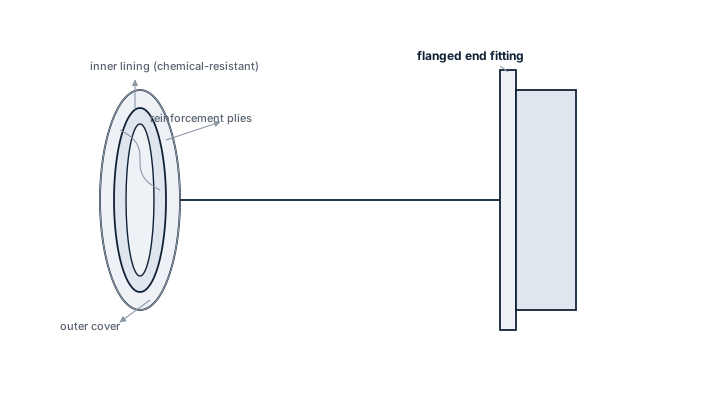
Main Components
Inner lining (bore)
The chemically resistant lining that contacts the cargo directly; its compatibility, not the hose's pressure rating, is usually the limiting factor on what the hose is permitted to carry.
Reinforcement plies
Layers of synthetic fabric or wire helix built around the lining that carry the working pressure and resist kinking and crushing, sized to the hose's rated working pressure and vacuum service if stripping is required through the same hose.
Cover
An outer rubber or synthetic cover protects the reinforcement from abrasion, UV and spillage of the cargo itself during connection and disconnection.
End fittings and bonding
Flanged or camlock end fittings are permanently swaged or bolted to the hose, with an internal bonding wire connecting the fittings to dissipate static charge generated as cargo flows through the hose.
Selection and Sizing
Selection starts from the cargo, not the pipe diameter:
- Confirmed chemical compatibility of the lining with each specific cargo the hose will carry, checked against the manufacturer's resistance chart
- Working pressure and, where the hose is also used for stripping, vacuum rating
- Bore diameter matched to the manifold connection and the required transfer rate
- Temperature rating, since some chemical cargoes are loaded or carried heated
- End fitting type matching the terminal's manifold standard at the ports the vessel calls
Regulations and Class
Chemical cargo hoses fall under the IBC Code requirements for chemical tankers on cargo transfer equipment and are subject to periodic pressure testing, commonly at intervals set by class and industry guidance such as OCIMF hose testing recommendations, with hoses withdrawn from service once they reach a defined maximum service life regardless of test result. Each hose is individually marked with its identification number, maximum working pressure, and test date, and the ship must retain compatibility and test certificates for each hose in use. A hose without current test certification or with an expired service life is a detainable deficiency at many terminals independent of any port state control inspection.
Typical Faults
| Fault | Cause | Consequence |
|---|---|---|
| Lining swelling or softening | Cargo used outside the hose's certified compatibility | Hose bulging or bursting under pressure, cargo release at the manifold |
| Reinforcement fatigue | Repeated bending near the end fittings, exceeding minimum bend radius | Kinking, reduced burst margin, eventual failure at the flex point |
| Static bonding wire failure | Corrosion or a break in the internal bonding wire, undetected without testing | Static discharge risk during cargo transfer of a flammable or static-accumulator cargo |
| End fitting leakage | Worn gasket, damaged flange face, incorrect torque on reassembly | Cargo leak at the connection during transfer |
What to Look for in a Supplier
- A compatibility chart covering the vessel's actual cargo list, supplied with the hose, not a generic industry table
- Individual hose test certificates and a marked service life consistent with the trade the hose will see
- Bonding wire continuity testing as part of the delivery test, documented on the certificate
- End fittings matching the terminal standards on the vessel's regular trading routes
Keep the compatibility chart with the hose, not filed separately in the cargo office — the person connecting the hose at 0300 needs it at the manifold, not after the fact.