IG Scrubber/Dryer
The scrubber and dryer sit between the inert gas generator and the tank main, and their only job is to take flue gas that is hot, wet and full of sulphur compounds and hand the deck seal something cool, dry and clean enough not to corrode the cargo tanks it protects.
Read more — IG Scrubber/Dryer explained ▾
What the scrubber/dryer stage does within an inert gas system
Raw flue gas from a combustion-type or dedicated inert gas generator arrives at roughly 250-350°C, carrying soot, sulphur dioxide and moisture. None of that can go straight into a cargo tank: the heat would damage tank coatings and seals, the SO2 combines with water to form corrosive sulphurous acid, and excess moisture raises the risk of condensation inside the tank. The scrubber tower washes the gas with sea water to cool it and strip out particulates and much of the SO2; a downstream demister or dryer stage removes the water droplets the scrubbing process itself introduces, so the gas leaving for the deck seal is both cool and reasonably dry.
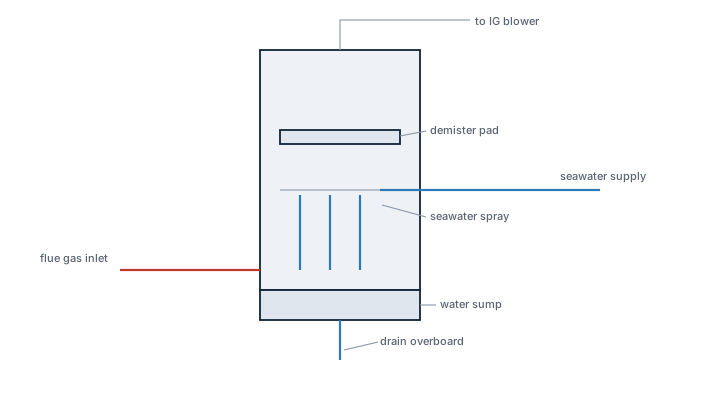
Main components
Scrubber tower and spray system
A packed or spray-tower vessel where sea water is sprayed counter-current to the rising flue gas, typically dropping gas temperature to within a few degrees of the sea water temperature while washing out soot and dissolving sulphur dioxide. Spray nozzles and packing material are the main wear items, since they sit in a continuous stream of acidic, particulate-laden water.
Demister / dryer section
Mesh pad or vane-type demisters strip entrained water droplets from the gas before it reaches the blower and deck seal. Some systems add a separate drying stage to reduce moisture further, since a wet gas stream promotes corrosion all the way along the deck main to the tank.
Effluent and drain system
Scrubber wash water, now acidic and carrying soot, is discharged overboard through a dedicated effluent line, subject to its own discharge criteria distinct from oily water separator effluent.
Regulations and class
The IG system as a whole, including the scrubber, falls under SOLAS Chapter II-2 requirements for inert gas on tankers, and IACS unified requirements set performance criteria for oxygen content and gas quality leaving the plant, typically requiring the system to reliably deliver gas with oxygen content at or below 5% by volume. Scrubber effluent discharge is addressed under MARPOL, and class surveys check the scrubber's ability to actually cool and clean the gas to specification, not just that the plant runs.
Typical faults
| Fault | Consequence |
|---|---|
| Scrubber spray nozzles blocked or worn from continuous acidic flow | Poor gas cooling and washing, letting hot, sulphur-laden gas through toward the deck seal |
| Demister pad fouled with soot and salt buildup | Wet gas carries over to the deck main, accelerating corrosion of piping and valves |
| Sea water supply pump undersized or fouled strainer restricting flow | Inadequate cooling raises delivered gas temperature above design limits |
| Effluent line partially blocked with accumulated soot sludge | Back-pressure in the scrubber disturbs the water level and gas flow through the tower |
Typical wear and inspection points
- Spray nozzle condition and coverage pattern, checked visually whenever the tower is opened.
- Demister pad cleanliness and pressure drop across the section, an early indicator of fouling before gas quality actually suffers.
- Internal coating and corrosion condition of the scrubber shell itself, since it runs permanently wet with acidic water.
- Level control and drain valve operation, since a flooded or dry scrubber both disrupt gas flow to the deck seal.
What to look for in a supplier
- Materials of construction suited to continuous acidic sea water service — coating specification matters as much as vessel size.
- Spare nozzle and demister pad kits sized to the specific tower model rather than a generic fit.
- Documentation supporting the gas quality performance the system is expected to deliver, for class renewal.
Track the pressure drop across the demister over time rather than waiting for a gas quality alarm — a rising differential is the earliest warning that fouling is building up before it starts letting wet gas through to the deck seal.
4 manufacturers · 24 models
Alfa Laval
6
- Oxygen Output Range
- 2-4% O2 (Combustion type)
- Gas Production Capacity
- 1000-20,000 m³/h (Smit Combustion); 3000-22,500 m³/h (Smit LNG/LPG)
- Operating Pressure
- 0.15-0.25 bar(g) Combustion; up to 0.4 bar(g) LNG/LPG
- Scrubber Type
- Wet scrubber with spray cooling and water demisting
- Fuel Consumption
- Minimized via Ultramizing system; AFEM upgrade reduces by up to 40%
- Analyzer Type
- Combustion-process oxygen analyzer (SMIT7000/AAL7000 available as upgrade)
- Smit Combustion (FU-Type)
- Smit LNG/LPG
- Smit Flue Gas
- Smit Combinert
- Area: Scrubber fouling, corrosion, blocked spray nozzles, demister damageCheck: Visual inspection through scrubber manholes; check spray nozzles for blockage (impairs cooling efficiency); inspect cooling pipes, floats, sensors for corrosion or soot deposits; verify cooling water flow and demister function
- Area: Deck seal water level loss, gauge glass fouling, seal integrity compromiseCheck: Verify gauge glass is clean and water level visible; check high/low level alarm float switches operational; inspect for water leakage, corrosion; in cold weather verify heating coil function and trace heating active; confirm low-level alarm functions
- Area: P/V breaker seal loss, incorrect relief pressure setting, glycol/water mixture degradationCheck: Verify P/V breaker opens at preset pressure/vacuum; check sight glass and fluid level (glycol-water mixture); inspect for leakage around valve stem; test differential pressure response; replace fluid if discolored/contaminated
- Area: Oxygen analyzer drift, calibration loss, sensor fouling or failureCheck: Calibrate analyzer ≥24 hrs before cargo operations; log calibration results; verify O2 readout 2-4% during operation; replace probe/sensor if drift >0.5%; ensure analyzer sample line clear and inlet not fouled
- Area: Combustion process inefficiency, incomplete fuel combustion, soot generationCheck: Observe flue gas color (should be colorless/light gray, not black); monitor fuel/air ratio; inspect burner nozzles and air registers for clogging; verify combustion oxygen ≤4%; check fuel pump pressure/flow; inspect ignition electrode condition
- Area: Non-return valve (check valve) function loss, backflow risk to engine roomCheck: Confirm non-return valves at deck seal outlet prevent backflow; verify pressure differential across deck seal maintained; listen for flow disturbance; schedule valve seat/seal inspection per Condition Audit; test with pressure gauge if vessel equipped
Type-universal inspection/service points for Inert Gas Systems (Alfa Laval, Mega-Schwarm 2026-06). Per-model specs not auto-filled.
- Oxygen Output Range
- 2-4% O2 (Combustion type)
- Gas Production Capacity
- 1000-20,000 m³/h (Smit Combustion); 3000-22,500 m³/h (Smit LNG/LPG)
- Operating Pressure
- 0.15-0.25 bar(g) Combustion; up to 0.4 bar(g) LNG/LPG
- Scrubber Type
- Wet scrubber with spray cooling and water demisting
- Fuel Consumption
- Minimized via Ultramizing system; AFEM upgrade reduces by up to 40%
- Analyzer Type
- Combustion-process oxygen analyzer (SMIT7000/AAL7000 available as upgrade)
- Smit Combustion (FU-Type)
- Smit LNG/LPG
- Smit Flue Gas
- Smit Combinert
- Area: Scrubber fouling, corrosion, blocked spray nozzles, demister damageCheck: Visual inspection through scrubber manholes; check spray nozzles for blockage (impairs cooling efficiency); inspect cooling pipes, floats, sensors for corrosion or soot deposits; verify cooling water flow and demister function
- Area: Deck seal water level loss, gauge glass fouling, seal integrity compromiseCheck: Verify gauge glass is clean and water level visible; check high/low level alarm float switches operational; inspect for water leakage, corrosion; in cold weather verify heating coil function and trace heating active; confirm low-level alarm functions
- Area: P/V breaker seal loss, incorrect relief pressure setting, glycol/water mixture degradationCheck: Verify P/V breaker opens at preset pressure/vacuum; check sight glass and fluid level (glycol-water mixture); inspect for leakage around valve stem; test differential pressure response; replace fluid if discolored/contaminated
- Area: Oxygen analyzer drift, calibration loss, sensor fouling or failureCheck: Calibrate analyzer ≥24 hrs before cargo operations; log calibration results; verify O2 readout 2-4% during operation; replace probe/sensor if drift >0.5%; ensure analyzer sample line clear and inlet not fouled
- Area: Combustion process inefficiency, incomplete fuel combustion, soot generationCheck: Observe flue gas color (should be colorless/light gray, not black); monitor fuel/air ratio; inspect burner nozzles and air registers for clogging; verify combustion oxygen ≤4%; check fuel pump pressure/flow; inspect ignition electrode condition
- Area: Non-return valve (check valve) function loss, backflow risk to engine roomCheck: Confirm non-return valves at deck seal outlet prevent backflow; verify pressure differential across deck seal maintained; listen for flow disturbance; schedule valve seat/seal inspection per Condition Audit; test with pressure gauge if vessel equipped
Type-universal inspection/service points for Inert Gas Systems (Alfa Laval, Mega-Schwarm 2026-06). Per-model specs not auto-filled.

- Oxygen Output Range
- 2-4% O2 (Combustion type)
- Gas Production Capacity
- 1000-20,000 m³/h (Smit Combustion); 3000-22,500 m³/h (Smit LNG/LPG)
- Operating Pressure
- 0.15-0.25 bar(g) Combustion; up to 0.4 bar(g) LNG/LPG
- Scrubber Type
- Wet scrubber with spray cooling and water demisting
- Fuel Consumption
- Minimized via Ultramizing system; AFEM upgrade reduces by up to 40%
- Analyzer Type
- Combustion-process oxygen analyzer (SMIT7000/AAL7000 available as upgrade)
- Smit Combustion (FU-Type)
- Smit LNG/LPG
- Smit Flue Gas
- Smit Combinert
- Area: Scrubber fouling, corrosion, blocked spray nozzles, demister damageCheck: Visual inspection through scrubber manholes; check spray nozzles for blockage (impairs cooling efficiency); inspect cooling pipes, floats, sensors for corrosion or soot deposits; verify cooling water flow and demister function
- Area: Deck seal water level loss, gauge glass fouling, seal integrity compromiseCheck: Verify gauge glass is clean and water level visible; check high/low level alarm float switches operational; inspect for water leakage, corrosion; in cold weather verify heating coil function and trace heating active; confirm low-level alarm functions
- Area: P/V breaker seal loss, incorrect relief pressure setting, glycol/water mixture degradationCheck: Verify P/V breaker opens at preset pressure/vacuum; check sight glass and fluid level (glycol-water mixture); inspect for leakage around valve stem; test differential pressure response; replace fluid if discolored/contaminated
- Area: Oxygen analyzer drift, calibration loss, sensor fouling or failureCheck: Calibrate analyzer ≥24 hrs before cargo operations; log calibration results; verify O2 readout 2-4% during operation; replace probe/sensor if drift >0.5%; ensure analyzer sample line clear and inlet not fouled
- Area: Combustion process inefficiency, incomplete fuel combustion, soot generationCheck: Observe flue gas color (should be colorless/light gray, not black); monitor fuel/air ratio; inspect burner nozzles and air registers for clogging; verify combustion oxygen ≤4%; check fuel pump pressure/flow; inspect ignition electrode condition
- Area: Non-return valve (check valve) function loss, backflow risk to engine roomCheck: Confirm non-return valves at deck seal outlet prevent backflow; verify pressure differential across deck seal maintained; listen for flow disturbance; schedule valve seat/seal inspection per Condition Audit; test with pressure gauge if vessel equipped
Type-universal inspection/service points for Inert Gas Systems (Alfa Laval, Mega-Schwarm 2026-06). Per-model specs not auto-filled.
- Oxygen Output Range
- 2-4% O2 (Combustion type)
- Gas Production Capacity
- 1000-20,000 m³/h (Smit Combustion); 3000-22,500 m³/h (Smit LNG/LPG)
- Operating Pressure
- 0.15-0.25 bar(g) Combustion; up to 0.4 bar(g) LNG/LPG
- Scrubber Type
- Wet scrubber with spray cooling and water demisting
- Fuel Consumption
- Minimized via Ultramizing system; AFEM upgrade reduces by up to 40%
- Analyzer Type
- Combustion-process oxygen analyzer (SMIT7000/AAL7000 available as upgrade)
- Smit Combustion (FU-Type)
- Smit LNG/LPG
- Smit Flue Gas
- Smit Combinert
- Area: Scrubber fouling, corrosion, blocked spray nozzles, demister damageCheck: Visual inspection through scrubber manholes; check spray nozzles for blockage (impairs cooling efficiency); inspect cooling pipes, floats, sensors for corrosion or soot deposits; verify cooling water flow and demister function
- Area: Deck seal water level loss, gauge glass fouling, seal integrity compromiseCheck: Verify gauge glass is clean and water level visible; check high/low level alarm float switches operational; inspect for water leakage, corrosion; in cold weather verify heating coil function and trace heating active; confirm low-level alarm functions
- Area: P/V breaker seal loss, incorrect relief pressure setting, glycol/water mixture degradationCheck: Verify P/V breaker opens at preset pressure/vacuum; check sight glass and fluid level (glycol-water mixture); inspect for leakage around valve stem; test differential pressure response; replace fluid if discolored/contaminated
- Area: Oxygen analyzer drift, calibration loss, sensor fouling or failureCheck: Calibrate analyzer ≥24 hrs before cargo operations; log calibration results; verify O2 readout 2-4% during operation; replace probe/sensor if drift >0.5%; ensure analyzer sample line clear and inlet not fouled
- Area: Combustion process inefficiency, incomplete fuel combustion, soot generationCheck: Observe flue gas color (should be colorless/light gray, not black); monitor fuel/air ratio; inspect burner nozzles and air registers for clogging; verify combustion oxygen ≤4%; check fuel pump pressure/flow; inspect ignition electrode condition
- Area: Non-return valve (check valve) function loss, backflow risk to engine roomCheck: Confirm non-return valves at deck seal outlet prevent backflow; verify pressure differential across deck seal maintained; listen for flow disturbance; schedule valve seat/seal inspection per Condition Audit; test with pressure gauge if vessel equipped
Type-universal inspection/service points for Inert Gas Systems (Alfa Laval, Mega-Schwarm 2026-06). Per-model specs not auto-filled.
- Oxygen Output Range
- 2-4% O2 (Combustion type)
- Gas Production Capacity
- 1000-20,000 m³/h (Smit Combustion); 3000-22,500 m³/h (Smit LNG/LPG)
- Operating Pressure
- 0.15-0.25 bar(g) Combustion; up to 0.4 bar(g) LNG/LPG
- Scrubber Type
- Wet scrubber with spray cooling and water demisting
- Fuel Consumption
- Minimized via Ultramizing system; AFEM upgrade reduces by up to 40%
- Analyzer Type
- Combustion-process oxygen analyzer (SMIT7000/AAL7000 available as upgrade)
- Smit Combustion (FU-Type)
- Smit LNG/LPG
- Smit Flue Gas
- Smit Combinert
- Area: Scrubber fouling, corrosion, blocked spray nozzles, demister damageCheck: Visual inspection through scrubber manholes; check spray nozzles for blockage (impairs cooling efficiency); inspect cooling pipes, floats, sensors for corrosion or soot deposits; verify cooling water flow and demister function
- Area: Deck seal water level loss, gauge glass fouling, seal integrity compromiseCheck: Verify gauge glass is clean and water level visible; check high/low level alarm float switches operational; inspect for water leakage, corrosion; in cold weather verify heating coil function and trace heating active; confirm low-level alarm functions
- Area: P/V breaker seal loss, incorrect relief pressure setting, glycol/water mixture degradationCheck: Verify P/V breaker opens at preset pressure/vacuum; check sight glass and fluid level (glycol-water mixture); inspect for leakage around valve stem; test differential pressure response; replace fluid if discolored/contaminated
- Area: Oxygen analyzer drift, calibration loss, sensor fouling or failureCheck: Calibrate analyzer ≥24 hrs before cargo operations; log calibration results; verify O2 readout 2-4% during operation; replace probe/sensor if drift >0.5%; ensure analyzer sample line clear and inlet not fouled
- Area: Combustion process inefficiency, incomplete fuel combustion, soot generationCheck: Observe flue gas color (should be colorless/light gray, not black); monitor fuel/air ratio; inspect burner nozzles and air registers for clogging; verify combustion oxygen ≤4%; check fuel pump pressure/flow; inspect ignition electrode condition
- Area: Non-return valve (check valve) function loss, backflow risk to engine roomCheck: Confirm non-return valves at deck seal outlet prevent backflow; verify pressure differential across deck seal maintained; listen for flow disturbance; schedule valve seat/seal inspection per Condition Audit; test with pressure gauge if vessel equipped
Type-universal inspection/service points for Inert Gas Systems (Alfa Laval, Mega-Schwarm 2026-06). Per-model specs not auto-filled.
- Oxygen Output Range
- 2-4% O2 (Combustion type)
- Gas Production Capacity
- 1000-20,000 m³/h (Smit Combustion); 3000-22,500 m³/h (Smit LNG/LPG)
- Operating Pressure
- 0.15-0.25 bar(g) Combustion; up to 0.4 bar(g) LNG/LPG
- Scrubber Type
- Wet scrubber with spray cooling and water demisting
- Fuel Consumption
- Minimized via Ultramizing system; AFEM upgrade reduces by up to 40%
- Analyzer Type
- Combustion-process oxygen analyzer (SMIT7000/AAL7000 available as upgrade)
- Smit Combustion (FU-Type)
- Smit LNG/LPG
- Smit Flue Gas
- Smit Combinert
- Area: Scrubber fouling, corrosion, blocked spray nozzles, demister damageCheck: Visual inspection through scrubber manholes; check spray nozzles for blockage (impairs cooling efficiency); inspect cooling pipes, floats, sensors for corrosion or soot deposits; verify cooling water flow and demister function
- Area: Deck seal water level loss, gauge glass fouling, seal integrity compromiseCheck: Verify gauge glass is clean and water level visible; check high/low level alarm float switches operational; inspect for water leakage, corrosion; in cold weather verify heating coil function and trace heating active; confirm low-level alarm functions
- Area: P/V breaker seal loss, incorrect relief pressure setting, glycol/water mixture degradationCheck: Verify P/V breaker opens at preset pressure/vacuum; check sight glass and fluid level (glycol-water mixture); inspect for leakage around valve stem; test differential pressure response; replace fluid if discolored/contaminated
- Area: Oxygen analyzer drift, calibration loss, sensor fouling or failureCheck: Calibrate analyzer ≥24 hrs before cargo operations; log calibration results; verify O2 readout 2-4% during operation; replace probe/sensor if drift >0.5%; ensure analyzer sample line clear and inlet not fouled
- Area: Combustion process inefficiency, incomplete fuel combustion, soot generationCheck: Observe flue gas color (should be colorless/light gray, not black); monitor fuel/air ratio; inspect burner nozzles and air registers for clogging; verify combustion oxygen ≤4%; check fuel pump pressure/flow; inspect ignition electrode condition
- Area: Non-return valve (check valve) function loss, backflow risk to engine roomCheck: Confirm non-return valves at deck seal outlet prevent backflow; verify pressure differential across deck seal maintained; listen for flow disturbance; schedule valve seat/seal inspection per Condition Audit; test with pressure gauge if vessel equipped
Type-universal inspection/service points for Inert Gas Systems (Alfa Laval, Mega-Schwarm 2026-06). Per-model specs not auto-filled.
Mahler AGS
6- Nitrogen Purity
- Up to 99.99 vol.-% (purities 95-99.99% typical for marine cargo inerting)
- Capacity Range
- 200 to 4,000 Nm³/h
- Product Pressure
- 6-9 bar(abs) at outlet
- Dew Point
- Minimum -40°C and below
- Residual O2 Content
- Down to 100 ppmv (higher purities on demand)
- Technology
- Pressure Swing Adsorption (PSA) with Carbon Molecular Sieve (CMS)
- NITROSWING PSA Nitrogen Plants
- NITROSWING Modular Design Systems
- Area: Carbon Molecular Sieve (CMS) DegradationCheck: Annual full inspection: Check CMS bed condition, verify no moisture exposure (degrades sieve lifespan 10+ years; oil contamination reduces lifespan significantly); quarterly checks of N2 purity/flow rate and sieve replacement need. Pre-filters for moisture/oil removal must be inspected and replaced timely.
- Area: Oxygen Analyzer Sampling Line BlockageCheck: Periodic inspection and CLEANING of O2 analyzer sampling pipes (at least twice yearly per updated procedures after carbon deposit incidents) to prevent partial clogging. Verify sampling line integrity, check for carbon deposits from IGG scrubber. Analyzer must trigger alarm at O2 > 8%.
- Area: Deck Water Seal Integrity & Heating SystemCheck: Internal inspection of deck seal: check Venturi non-return valves/orifice plates for corrosion/damage (excessive water carryover to tanks); inspect inlet pipe/housing for corrosion/cracks; check heating coil condition. In cold weather zones, verify deck seal heating system operational. Test seal alarms.
- Area: Activated Carbon Pre-Filter ContaminationCheck: Check activated carbon tower for oil/moisture/foreign material accumulation (activated carbon prevents contaminants entering PSA unit). Inspect air dryer & filter units functionality. Replace pre-filters according to maintenance schedule if lubricated air is used. Monitor pressure drop across filters.
- Area: P/V Valve (Pressure/Vacuum) Weight Mechanism FreezeCheck: Pre-operation inspection (especially cold weather): check P/V valve weight mechanism for freeze-in/sticking to seat. Verify non-return valve function to prevent cargo tank backflow. Test automatic shut-down systems. Confirm valve operability before each voyage commencement.
- Area: Pressure Vessel Integrity & Adsorption TowersCheck: Annual inspection of dual adsorption towers (filled with CMS) for structural integrity, corrosion, or damage. Verify tower seals/connections integrity. Check product quality downstream (N2 purity/flow); if degraded, towers may need CMS bed replacement. Pressure test vessels per classification society rules.
Generic type inspection/maintenance points for Inert Gas Systems (Mahler AGS, Mega-Swarm 2026-06). Per-model specs not auto-populated.
- Nitrogen Purity
- Up to 99.99 vol.-% (purities 95-99.99% typical for marine cargo inerting)
- Capacity Range
- 200 to 4,000 Nm³/h
- Product Pressure
- 6-9 bar(abs) at outlet
- Dew Point
- Minimum -40°C and below
- Residual O2 Content
- Down to 100 ppmv (higher purities on demand)
- Technology
- Pressure Swing Adsorption (PSA) with Carbon Molecular Sieve (CMS)
- NITROSWING PSA Nitrogen Plants
- NITROSWING Modular Design Systems
- Area: Carbon Molecular Sieve (CMS) DegradationCheck: Annual full inspection: Check CMS bed condition, verify no moisture exposure (degrades sieve lifespan 10+ years; oil contamination reduces lifespan significantly); quarterly checks of N2 purity/flow rate and sieve replacement need. Pre-filters for moisture/oil removal must be inspected and replaced timely.
- Area: Oxygen Analyzer Sampling Line BlockageCheck: Periodic inspection and CLEANING of O2 analyzer sampling pipes (at least twice yearly per updated procedures after carbon deposit incidents) to prevent partial clogging. Verify sampling line integrity, check for carbon deposits from IGG scrubber. Analyzer must trigger alarm at O2 > 8%.
- Area: Deck Water Seal Integrity & Heating SystemCheck: Internal inspection of deck seal: check Venturi non-return valves/orifice plates for corrosion/damage (excessive water carryover to tanks); inspect inlet pipe/housing for corrosion/cracks; check heating coil condition. In cold weather zones, verify deck seal heating system operational. Test seal alarms.
- Area: Activated Carbon Pre-Filter ContaminationCheck: Check activated carbon tower for oil/moisture/foreign material accumulation (activated carbon prevents contaminants entering PSA unit). Inspect air dryer & filter units functionality. Replace pre-filters according to maintenance schedule if lubricated air is used. Monitor pressure drop across filters.
- Area: P/V Valve (Pressure/Vacuum) Weight Mechanism FreezeCheck: Pre-operation inspection (especially cold weather): check P/V valve weight mechanism for freeze-in/sticking to seat. Verify non-return valve function to prevent cargo tank backflow. Test automatic shut-down systems. Confirm valve operability before each voyage commencement.
- Area: Pressure Vessel Integrity & Adsorption TowersCheck: Annual inspection of dual adsorption towers (filled with CMS) for structural integrity, corrosion, or damage. Verify tower seals/connections integrity. Check product quality downstream (N2 purity/flow); if degraded, towers may need CMS bed replacement. Pressure test vessels per classification society rules.
Generic type inspection/maintenance points for Inert Gas Systems (Mahler AGS, Mega-Swarm 2026-06). Per-model specs not auto-populated.
- Nitrogen Purity
- Up to 99.99 vol.-% (purities 95-99.99% typical for marine cargo inerting)
- Capacity Range
- 200 to 4,000 Nm³/h
- Product Pressure
- 6-9 bar(abs) at outlet
- Dew Point
- Minimum -40°C and below
- Residual O2 Content
- Down to 100 ppmv (higher purities on demand)
- Technology
- Pressure Swing Adsorption (PSA) with Carbon Molecular Sieve (CMS)
- NITROSWING PSA Nitrogen Plants
- NITROSWING Modular Design Systems
- Area: Carbon Molecular Sieve (CMS) DegradationCheck: Annual full inspection: Check CMS bed condition, verify no moisture exposure (degrades sieve lifespan 10+ years; oil contamination reduces lifespan significantly); quarterly checks of N2 purity/flow rate and sieve replacement need. Pre-filters for moisture/oil removal must be inspected and replaced timely.
- Area: Oxygen Analyzer Sampling Line BlockageCheck: Periodic inspection and CLEANING of O2 analyzer sampling pipes (at least twice yearly per updated procedures after carbon deposit incidents) to prevent partial clogging. Verify sampling line integrity, check for carbon deposits from IGG scrubber. Analyzer must trigger alarm at O2 > 8%.
- Area: Deck Water Seal Integrity & Heating SystemCheck: Internal inspection of deck seal: check Venturi non-return valves/orifice plates for corrosion/damage (excessive water carryover to tanks); inspect inlet pipe/housing for corrosion/cracks; check heating coil condition. In cold weather zones, verify deck seal heating system operational. Test seal alarms.
- Area: Activated Carbon Pre-Filter ContaminationCheck: Check activated carbon tower for oil/moisture/foreign material accumulation (activated carbon prevents contaminants entering PSA unit). Inspect air dryer & filter units functionality. Replace pre-filters according to maintenance schedule if lubricated air is used. Monitor pressure drop across filters.
- Area: P/V Valve (Pressure/Vacuum) Weight Mechanism FreezeCheck: Pre-operation inspection (especially cold weather): check P/V valve weight mechanism for freeze-in/sticking to seat. Verify non-return valve function to prevent cargo tank backflow. Test automatic shut-down systems. Confirm valve operability before each voyage commencement.
- Area: Pressure Vessel Integrity & Adsorption TowersCheck: Annual inspection of dual adsorption towers (filled with CMS) for structural integrity, corrosion, or damage. Verify tower seals/connections integrity. Check product quality downstream (N2 purity/flow); if degraded, towers may need CMS bed replacement. Pressure test vessels per classification society rules.
Generic type inspection/maintenance points for Inert Gas Systems (Mahler AGS, Mega-Swarm 2026-06). Per-model specs not auto-populated.
- Nitrogen Purity
- Up to 99.99 vol.-% (purities 95-99.99% typical for marine cargo inerting)
- Capacity Range
- 200 to 4,000 Nm³/h
- Product Pressure
- 6-9 bar(abs) at outlet
- Dew Point
- Minimum -40°C and below
- Residual O2 Content
- Down to 100 ppmv (higher purities on demand)
- Technology
- Pressure Swing Adsorption (PSA) with Carbon Molecular Sieve (CMS)
- NITROSWING PSA Nitrogen Plants
- NITROSWING Modular Design Systems
- Area: Carbon Molecular Sieve (CMS) DegradationCheck: Annual full inspection: Check CMS bed condition, verify no moisture exposure (degrades sieve lifespan 10+ years; oil contamination reduces lifespan significantly); quarterly checks of N2 purity/flow rate and sieve replacement need. Pre-filters for moisture/oil removal must be inspected and replaced timely.
- Area: Oxygen Analyzer Sampling Line BlockageCheck: Periodic inspection and CLEANING of O2 analyzer sampling pipes (at least twice yearly per updated procedures after carbon deposit incidents) to prevent partial clogging. Verify sampling line integrity, check for carbon deposits from IGG scrubber. Analyzer must trigger alarm at O2 > 8%.
- Area: Deck Water Seal Integrity & Heating SystemCheck: Internal inspection of deck seal: check Venturi non-return valves/orifice plates for corrosion/damage (excessive water carryover to tanks); inspect inlet pipe/housing for corrosion/cracks; check heating coil condition. In cold weather zones, verify deck seal heating system operational. Test seal alarms.
- Area: Activated Carbon Pre-Filter ContaminationCheck: Check activated carbon tower for oil/moisture/foreign material accumulation (activated carbon prevents contaminants entering PSA unit). Inspect air dryer & filter units functionality. Replace pre-filters according to maintenance schedule if lubricated air is used. Monitor pressure drop across filters.
- Area: P/V Valve (Pressure/Vacuum) Weight Mechanism FreezeCheck: Pre-operation inspection (especially cold weather): check P/V valve weight mechanism for freeze-in/sticking to seat. Verify non-return valve function to prevent cargo tank backflow. Test automatic shut-down systems. Confirm valve operability before each voyage commencement.
- Area: Pressure Vessel Integrity & Adsorption TowersCheck: Annual inspection of dual adsorption towers (filled with CMS) for structural integrity, corrosion, or damage. Verify tower seals/connections integrity. Check product quality downstream (N2 purity/flow); if degraded, towers may need CMS bed replacement. Pressure test vessels per classification society rules.
Generic type inspection/maintenance points for Inert Gas Systems (Mahler AGS, Mega-Swarm 2026-06). Per-model specs not auto-populated.
- Nitrogen Purity
- Up to 99.99 vol.-% (purities 95-99.99% typical for marine cargo inerting)
- Capacity Range
- 200 to 4,000 Nm³/h
- Product Pressure
- 6-9 bar(abs) at outlet
- Dew Point
- Minimum -40°C and below
- Residual O2 Content
- Down to 100 ppmv (higher purities on demand)
- Technology
- Pressure Swing Adsorption (PSA) with Carbon Molecular Sieve (CMS)
- NITROSWING PSA Nitrogen Plants
- NITROSWING Modular Design Systems
- Area: Carbon Molecular Sieve (CMS) DegradationCheck: Annual full inspection: Check CMS bed condition, verify no moisture exposure (degrades sieve lifespan 10+ years; oil contamination reduces lifespan significantly); quarterly checks of N2 purity/flow rate and sieve replacement need. Pre-filters for moisture/oil removal must be inspected and replaced timely.
- Area: Oxygen Analyzer Sampling Line BlockageCheck: Periodic inspection and CLEANING of O2 analyzer sampling pipes (at least twice yearly per updated procedures after carbon deposit incidents) to prevent partial clogging. Verify sampling line integrity, check for carbon deposits from IGG scrubber. Analyzer must trigger alarm at O2 > 8%.
- Area: Deck Water Seal Integrity & Heating SystemCheck: Internal inspection of deck seal: check Venturi non-return valves/orifice plates for corrosion/damage (excessive water carryover to tanks); inspect inlet pipe/housing for corrosion/cracks; check heating coil condition. In cold weather zones, verify deck seal heating system operational. Test seal alarms.
- Area: Activated Carbon Pre-Filter ContaminationCheck: Check activated carbon tower for oil/moisture/foreign material accumulation (activated carbon prevents contaminants entering PSA unit). Inspect air dryer & filter units functionality. Replace pre-filters according to maintenance schedule if lubricated air is used. Monitor pressure drop across filters.
- Area: P/V Valve (Pressure/Vacuum) Weight Mechanism FreezeCheck: Pre-operation inspection (especially cold weather): check P/V valve weight mechanism for freeze-in/sticking to seat. Verify non-return valve function to prevent cargo tank backflow. Test automatic shut-down systems. Confirm valve operability before each voyage commencement.
- Area: Pressure Vessel Integrity & Adsorption TowersCheck: Annual inspection of dual adsorption towers (filled with CMS) for structural integrity, corrosion, or damage. Verify tower seals/connections integrity. Check product quality downstream (N2 purity/flow); if degraded, towers may need CMS bed replacement. Pressure test vessels per classification society rules.
Generic type inspection/maintenance points for Inert Gas Systems (Mahler AGS, Mega-Swarm 2026-06). Per-model specs not auto-populated.
- Nitrogen Purity
- Up to 99.99 vol.-% (purities 95-99.99% typical for marine cargo inerting)
- Capacity Range
- 200 to 4,000 Nm³/h
- Product Pressure
- 6-9 bar(abs) at outlet
- Dew Point
- Minimum -40°C and below
- Residual O2 Content
- Down to 100 ppmv (higher purities on demand)
- Technology
- Pressure Swing Adsorption (PSA) with Carbon Molecular Sieve (CMS)
- NITROSWING PSA Nitrogen Plants
- NITROSWING Modular Design Systems
- Area: Carbon Molecular Sieve (CMS) DegradationCheck: Annual full inspection: Check CMS bed condition, verify no moisture exposure (degrades sieve lifespan 10+ years; oil contamination reduces lifespan significantly); quarterly checks of N2 purity/flow rate and sieve replacement need. Pre-filters for moisture/oil removal must be inspected and replaced timely.
- Area: Oxygen Analyzer Sampling Line BlockageCheck: Periodic inspection and CLEANING of O2 analyzer sampling pipes (at least twice yearly per updated procedures after carbon deposit incidents) to prevent partial clogging. Verify sampling line integrity, check for carbon deposits from IGG scrubber. Analyzer must trigger alarm at O2 > 8%.
- Area: Deck Water Seal Integrity & Heating SystemCheck: Internal inspection of deck seal: check Venturi non-return valves/orifice plates for corrosion/damage (excessive water carryover to tanks); inspect inlet pipe/housing for corrosion/cracks; check heating coil condition. In cold weather zones, verify deck seal heating system operational. Test seal alarms.
- Area: Activated Carbon Pre-Filter ContaminationCheck: Check activated carbon tower for oil/moisture/foreign material accumulation (activated carbon prevents contaminants entering PSA unit). Inspect air dryer & filter units functionality. Replace pre-filters according to maintenance schedule if lubricated air is used. Monitor pressure drop across filters.
- Area: P/V Valve (Pressure/Vacuum) Weight Mechanism FreezeCheck: Pre-operation inspection (especially cold weather): check P/V valve weight mechanism for freeze-in/sticking to seat. Verify non-return valve function to prevent cargo tank backflow. Test automatic shut-down systems. Confirm valve operability before each voyage commencement.
- Area: Pressure Vessel Integrity & Adsorption TowersCheck: Annual inspection of dual adsorption towers (filled with CMS) for structural integrity, corrosion, or damage. Verify tower seals/connections integrity. Check product quality downstream (N2 purity/flow); if degraded, towers may need CMS bed replacement. Pressure test vessels per classification society rules.
Generic type inspection/maintenance points for Inert Gas Systems (Mahler AGS, Mega-Swarm 2026-06). Per-model specs not auto-populated.
SAACKE
6
- Fouling or deposit build-up caused by poor combustion, contaminated fluid or exhaust soot can reduce heat transfer or flow and produce higher temperatures or loss of capacity
- Leakage from tubes, gaskets, seals or casing caused by corrosion, thermal cycling or erosion can appear as fluid loss, pressure decay or cross-contamination
- Burner, ignition or fuel-control faults where combustion is used can cause flame failure, unstable firing, smoke or shutdown alarms
- Fan, pump or actuator faults caused by mechanical wear or electrical problems can reduce circulation, airflow or treatment effectiveness
- Sensor, control or safety-interlock faults caused by drift, wiring defects or contamination can trigger nuisance trips or allow unstable operation
- Fouling or deposit build-up caused by poor combustion, contaminated fluid or exhaust soot can reduce heat transfer or flow and produce higher temperatures or loss of capacity
- Leakage from tubes, gaskets, seals or casing caused by corrosion, thermal cycling or erosion can appear as fluid loss, pressure decay or cross-contamination
- Burner, ignition or fuel-control faults where combustion is used can cause flame failure, unstable firing, smoke or shutdown alarms
- Fan, pump or actuator faults caused by mechanical wear or electrical problems can reduce circulation, airflow or treatment effectiveness
- Sensor, control or safety-interlock faults caused by drift, wiring defects or contamination can trigger nuisance trips or allow unstable operation
- Fouling or deposit build-up caused by poor combustion, contaminated fluid or exhaust soot can reduce heat transfer or flow and produce higher temperatures or loss of capacity
- Leakage from tubes, gaskets, seals or casing caused by corrosion, thermal cycling or erosion can appear as fluid loss, pressure decay or cross-contamination
- Burner, ignition or fuel-control faults where combustion is used can cause flame failure, unstable firing, smoke or shutdown alarms
- Fan, pump or actuator faults caused by mechanical wear or electrical problems can reduce circulation, airflow or treatment effectiveness
- Sensor, control or safety-interlock faults caused by drift, wiring defects or contamination can trigger nuisance trips or allow unstable operation
- Fouling or deposit build-up caused by poor combustion, contaminated fluid or exhaust soot can reduce heat transfer or flow and produce higher temperatures or loss of capacity
- Leakage from tubes, gaskets, seals or casing caused by corrosion, thermal cycling or erosion can appear as fluid loss, pressure decay or cross-contamination
- Burner, ignition or fuel-control faults where combustion is used can cause flame failure, unstable firing, smoke or shutdown alarms
- Fan, pump or actuator faults caused by mechanical wear or electrical problems can reduce circulation, airflow or treatment effectiveness
- Sensor, control or safety-interlock faults caused by drift, wiring defects or contamination can trigger nuisance trips or allow unstable operation
- Poor gas quality from membrane degradation, combustion problems, scrubber faults, or air ingress is indicated by high oxygen readings or inability to meet the required condition
- Filter, scrubber, dryer, or wash-water restriction from deposits or blocked elements reduces gas quality or flow
- Blower, compressor, or fan degradation causes low delivery pressure or reduced gas production
- Valve, seal, non-return device, or deck-water-seal faults can cause leakage, unstable pressure, or compromised backflow protection
- Analyzer, transmitter, or control-system faults from contamination or calibration drift give implausible readings, nuisance alarms, or failed automatic sequences
- Poor gas quality from membrane degradation, combustion problems, scrubber faults, or air ingress is indicated by high oxygen readings or inability to meet the required condition
- Filter, scrubber, dryer, or wash-water restriction from deposits or blocked elements reduces gas quality or flow
- Blower, compressor, or fan degradation causes low delivery pressure or reduced gas production
- Valve, seal, non-return device, or deck-water-seal faults can cause leakage, unstable pressure, or compromised backflow protection
- Analyzer, transmitter, or control-system faults from contamination or calibration drift give implausible readings, nuisance alarms, or failed automatic sequences
Wärtsilä
6- Gaskapazität
- Bis 20.000 Nm³/h Nennwert
- Sauerstoffgehalt
- 3% by volume (auf Basis Marine Destillat)
- Abgasdruck (normal)
- 0,12 bar gauge
- Gasaustrittstemperatur
- Max. 5°C über Seewassertemperatur
- Inertgasfeuchte
- 100% relative Feuchte, <1 g/kg Trockengas Wassertropfenanteil
- Brennstoffverbrauch
- 0,075 kg/Nm³ Gas (nominal)
- Seewasserbedarf
- 0.06 m³/Nm³ gas (at 32°C seawater temperature)
- Betriebsdauer
- >20 Jahre Lebensdauer
- Moss IGG für Tanker (Produkt & Chemikalienöltanker)
- Moss IGG für Gastransporter (LNG Carrier)
- Moss Mult-Inert System (Dual-Mode: IG & Flue Gas)
- Moss Flue Gas System mit Topping-up Generator
- Offshore Inertgas-Pakete
- Area: Scrubber-Rohrsystem Verschmutzung & KorrosionCheck: Visual inspection through man-holes for sludging, corrosion damage, deposits; check nozzles, cooling tubes, floats, sensors, demister elements. Inspection frequency 6-12 months (doubled under critical conditions). Drydock entrance inspectable (scrubber discharge line).
- Area: Oxygen analyser sample line blockage due to carbon depositsCheck: Periodic test & cleaning of inert gas sample line to O₂ analyser (critical service position). Analyser itself: 2-point calibration (Zero-Gas N₂ 0%, Span-Gas known O₂ concentration) before operation. Calibration accuracy per manufacturer. Alarm setting: >8% O₂ volume.
- Area: Deck Water Seal Wasserniveau & FunktionsprüfungCheck: Check water supply (min. 2 separate pumps required). Visual inspection water level (equipped with low-level alarm). Inspection PMS interval per manufacturer; special attention during IG system shutdown. Check for blockage/corrosion at openings.
- Area: Pressure/Vacuum Breaker (P/V-Breaker) Druckeinstellung & FlammschutzCheck: Check flame screens/meshes (replacement per PMS plan). Calibration for required pressure values + test at operating pressure. Liquid-filled breakers: check fluid type & level; check anti-freeze additive in case of frost risk. Labelling with opening pressures & fluid type/concentration + min. operating temperature.
- Area: Rückschlagventil (Non-Return Valve / Check Valve) Freigang & VentilsitzCheck: Ventil zur Inspection öffnen. Prüfung auf Korrosion, Ventilsitz-Zustand, freie Ventilbewegung über volle Hublänge. Betriebsprobe im Service durchführen. Mindestens zwei Rückschlagvorrichtungen erforderlich (Deck Seal + Isolierventil). Kritisch für Hydrokarbon-Rückfluss-Verhinderung in Maschinenraum.
- Area: Brennkammer-Zustand & Lagerzustand Flue-Gas-Rückzirkulations-VentileCheck: Access to combustion chamber via hinged front (tool-free accessible — check for wear). Flue gas & recirculation valves regularly stroked (stroke test) when system out of service — ensure free operation over full stroke range. Inspection frequency per operating frequency.
Type-universal inspection/service points for Inert Gas Systems (Wärtsilä, Mega-Schwarm 2026-06). Per-model specs not auto-filled.
- Gaskapazität
- Bis 20.000 Nm³/h Nennwert
- Sauerstoffgehalt
- 3% by volume (auf Basis Marine Destillat)
- Abgasdruck (normal)
- 0,12 bar gauge
- Gasaustrittstemperatur
- Max. 5°C über Seewassertemperatur
- Inertgasfeuchte
- 100% relative Feuchte, <1 g/kg Trockengas Wassertropfenanteil
- Brennstoffverbrauch
- 0,075 kg/Nm³ Gas (nominal)
- Seewasserbedarf
- 0.06 m³/Nm³ gas (at 32°C seawater temperature)
- Betriebsdauer
- >20 Jahre Lebensdauer
- Moss IGG für Tanker (Produkt & Chemikalienöltanker)
- Moss IGG für Gastransporter (LNG Carrier)
- Moss Mult-Inert System (Dual-Mode: IG & Flue Gas)
- Moss Flue Gas System mit Topping-up Generator
- Offshore Inertgas-Pakete
- Area: Scrubber-Rohrsystem Verschmutzung & KorrosionCheck: Visual inspection through man-holes for sludging, corrosion damage, deposits; check nozzles, cooling tubes, floats, sensors, demister elements. Inspection frequency 6-12 months (doubled under critical conditions). Drydock entrance inspectable (scrubber discharge line).
- Area: Oxygen analyser sample line blockage due to carbon depositsCheck: Periodic test & cleaning of inert gas sample line to O₂ analyser (critical service position). Analyser itself: 2-point calibration (Zero-Gas N₂ 0%, Span-Gas known O₂ concentration) before operation. Calibration accuracy per manufacturer. Alarm setting: >8% O₂ volume.
- Area: Deck Water Seal Wasserniveau & FunktionsprüfungCheck: Check water supply (min. 2 separate pumps required). Visual inspection water level (equipped with low-level alarm). Inspection PMS interval per manufacturer; special attention during IG system shutdown. Check for blockage/corrosion at openings.
- Area: Pressure/Vacuum Breaker (P/V-Breaker) Druckeinstellung & FlammschutzCheck: Check flame screens/meshes (replacement per PMS plan). Calibration for required pressure values + test at operating pressure. Liquid-filled breakers: check fluid type & level; check anti-freeze additive in case of frost risk. Labelling with opening pressures & fluid type/concentration + min. operating temperature.
- Area: Rückschlagventil (Non-Return Valve / Check Valve) Freigang & VentilsitzCheck: Ventil zur Inspection öffnen. Prüfung auf Korrosion, Ventilsitz-Zustand, freie Ventilbewegung über volle Hublänge. Betriebsprobe im Service durchführen. Mindestens zwei Rückschlagvorrichtungen erforderlich (Deck Seal + Isolierventil). Kritisch für Hydrokarbon-Rückfluss-Verhinderung in Maschinenraum.
- Area: Brennkammer-Zustand & Lagerzustand Flue-Gas-Rückzirkulations-VentileCheck: Access to combustion chamber via hinged front (tool-free accessible — check for wear). Flue gas & recirculation valves regularly stroked (stroke test) when system out of service — ensure free operation over full stroke range. Inspection frequency per operating frequency.
Type-universal inspection/service points for Inert Gas Systems (Wärtsilä, Mega-Schwarm 2026-06). Per-model specs not auto-filled.
- Gaskapazität
- Bis 20.000 Nm³/h Nennwert
- Sauerstoffgehalt
- 3% by volume (auf Basis Marine Destillat)
- Abgasdruck (normal)
- 0,12 bar gauge
- Gasaustrittstemperatur
- Max. 5°C über Seewassertemperatur
- Inertgasfeuchte
- 100% relative Feuchte, <1 g/kg Trockengas Wassertropfenanteil
- Brennstoffverbrauch
- 0,075 kg/Nm³ Gas (nominal)
- Seewasserbedarf
- 0.06 m³/Nm³ gas (at 32°C seawater temperature)
- Betriebsdauer
- >20 Jahre Lebensdauer
- Moss IGG für Tanker (Produkt & Chemikalienöltanker)
- Moss IGG für Gastransporter (LNG Carrier)
- Moss Mult-Inert System (Dual-Mode: IG & Flue Gas)
- Moss Flue Gas System mit Topping-up Generator
- Offshore Inertgas-Pakete
- Area: Scrubber-Rohrsystem Verschmutzung & KorrosionCheck: Visual inspection through man-holes for sludging, corrosion damage, deposits; check nozzles, cooling tubes, floats, sensors, demister elements. Inspection frequency 6-12 months (doubled under critical conditions). Drydock entrance inspectable (scrubber discharge line).
- Area: Oxygen analyser sample line blockage due to carbon depositsCheck: Periodic test & cleaning of inert gas sample line to O₂ analyser (critical service position). Analyser itself: 2-point calibration (Zero-Gas N₂ 0%, Span-Gas known O₂ concentration) before operation. Calibration accuracy per manufacturer. Alarm setting: >8% O₂ volume.
- Area: Deck Water Seal Wasserniveau & FunktionsprüfungCheck: Check water supply (min. 2 separate pumps required). Visual inspection water level (equipped with low-level alarm). Inspection PMS interval per manufacturer; special attention during IG system shutdown. Check for blockage/corrosion at openings.
- Area: Pressure/Vacuum Breaker (P/V-Breaker) Druckeinstellung & FlammschutzCheck: Check flame screens/meshes (replacement per PMS plan). Calibration for required pressure values + test at operating pressure. Liquid-filled breakers: check fluid type & level; check anti-freeze additive in case of frost risk. Labelling with opening pressures & fluid type/concentration + min. operating temperature.
- Area: Rückschlagventil (Non-Return Valve / Check Valve) Freigang & VentilsitzCheck: Ventil zur Inspection öffnen. Prüfung auf Korrosion, Ventilsitz-Zustand, freie Ventilbewegung über volle Hublänge. Betriebsprobe im Service durchführen. Mindestens zwei Rückschlagvorrichtungen erforderlich (Deck Seal + Isolierventil). Kritisch für Hydrokarbon-Rückfluss-Verhinderung in Maschinenraum.
- Area: Brennkammer-Zustand & Lagerzustand Flue-Gas-Rückzirkulations-VentileCheck: Access to combustion chamber via hinged front (tool-free accessible — check for wear). Flue gas & recirculation valves regularly stroked (stroke test) when system out of service — ensure free operation over full stroke range. Inspection frequency per operating frequency.
Type-universal inspection/service points for Inert Gas Systems (Wärtsilä, Mega-Schwarm 2026-06). Per-model specs not auto-filled.
- Gaskapazität
- Bis 20.000 Nm³/h Nennwert
- Sauerstoffgehalt
- 3% by volume (auf Basis Marine Destillat)
- Abgasdruck (normal)
- 0,12 bar gauge
- Gasaustrittstemperatur
- Max. 5°C über Seewassertemperatur
- Inertgasfeuchte
- 100% relative Feuchte, <1 g/kg Trockengas Wassertropfenanteil
- Brennstoffverbrauch
- 0,075 kg/Nm³ Gas (nominal)
- Seewasserbedarf
- 0.06 m³/Nm³ gas (at 32°C seawater temperature)
- Betriebsdauer
- >20 Jahre Lebensdauer
- Moss IGG für Tanker (Produkt & Chemikalienöltanker)
- Moss IGG für Gastransporter (LNG Carrier)
- Moss Mult-Inert System (Dual-Mode: IG & Flue Gas)
- Moss Flue Gas System mit Topping-up Generator
- Offshore Inertgas-Pakete
- Area: Scrubber-Rohrsystem Verschmutzung & KorrosionCheck: Visual inspection through man-holes for sludging, corrosion damage, deposits; check nozzles, cooling tubes, floats, sensors, demister elements. Inspection frequency 6-12 months (doubled under critical conditions). Drydock entrance inspectable (scrubber discharge line).
- Area: Oxygen analyser sample line blockage due to carbon depositsCheck: Periodic test & cleaning of inert gas sample line to O₂ analyser (critical service position). Analyser itself: 2-point calibration (Zero-Gas N₂ 0%, Span-Gas known O₂ concentration) before operation. Calibration accuracy per manufacturer. Alarm setting: >8% O₂ volume.
- Area: Deck Water Seal Wasserniveau & FunktionsprüfungCheck: Check water supply (min. 2 separate pumps required). Visual inspection water level (equipped with low-level alarm). Inspection PMS interval per manufacturer; special attention during IG system shutdown. Check for blockage/corrosion at openings.
- Area: Pressure/Vacuum Breaker (P/V-Breaker) Druckeinstellung & FlammschutzCheck: Check flame screens/meshes (replacement per PMS plan). Calibration for required pressure values + test at operating pressure. Liquid-filled breakers: check fluid type & level; check anti-freeze additive in case of frost risk. Labelling with opening pressures & fluid type/concentration + min. operating temperature.
- Area: Rückschlagventil (Non-Return Valve / Check Valve) Freigang & VentilsitzCheck: Ventil zur Inspection öffnen. Prüfung auf Korrosion, Ventilsitz-Zustand, freie Ventilbewegung über volle Hublänge. Betriebsprobe im Service durchführen. Mindestens zwei Rückschlagvorrichtungen erforderlich (Deck Seal + Isolierventil). Kritisch für Hydrokarbon-Rückfluss-Verhinderung in Maschinenraum.
- Area: Brennkammer-Zustand & Lagerzustand Flue-Gas-Rückzirkulations-VentileCheck: Access to combustion chamber via hinged front (tool-free accessible — check for wear). Flue gas & recirculation valves regularly stroked (stroke test) when system out of service — ensure free operation over full stroke range. Inspection frequency per operating frequency.
Type-universal inspection/service points for Inert Gas Systems (Wärtsilä, Mega-Schwarm 2026-06). Per-model specs not auto-filled.
- Gaskapazität
- Bis 20.000 Nm³/h Nennwert
- Sauerstoffgehalt
- 3% by volume (auf Basis Marine Destillat)
- Abgasdruck (normal)
- 0,12 bar gauge
- Gasaustrittstemperatur
- Max. 5°C über Seewassertemperatur
- Inertgasfeuchte
- 100% relative Feuchte, <1 g/kg Trockengas Wassertropfenanteil
- Brennstoffverbrauch
- 0,075 kg/Nm³ Gas (nominal)
- Seewasserbedarf
- 0.06 m³/Nm³ gas (at 32°C seawater temperature)
- Betriebsdauer
- >20 Jahre Lebensdauer
- Moss IGG für Tanker (Produkt & Chemikalienöltanker)
- Moss IGG für Gastransporter (LNG Carrier)
- Moss Mult-Inert System (Dual-Mode: IG & Flue Gas)
- Moss Flue Gas System mit Topping-up Generator
- Offshore Inertgas-Pakete
- Area: Scrubber-Rohrsystem Verschmutzung & KorrosionCheck: Visual inspection through man-holes for sludging, corrosion damage, deposits; check nozzles, cooling tubes, floats, sensors, demister elements. Inspection frequency 6-12 months (doubled under critical conditions). Drydock entrance inspectable (scrubber discharge line).
- Area: Oxygen analyser sample line blockage due to carbon depositsCheck: Periodic test & cleaning of inert gas sample line to O₂ analyser (critical service position). Analyser itself: 2-point calibration (Zero-Gas N₂ 0%, Span-Gas known O₂ concentration) before operation. Calibration accuracy per manufacturer. Alarm setting: >8% O₂ volume.
- Area: Deck Water Seal Wasserniveau & FunktionsprüfungCheck: Check water supply (min. 2 separate pumps required). Visual inspection water level (equipped with low-level alarm). Inspection PMS interval per manufacturer; special attention during IG system shutdown. Check for blockage/corrosion at openings.
- Area: Pressure/Vacuum Breaker (P/V-Breaker) Druckeinstellung & FlammschutzCheck: Check flame screens/meshes (replacement per PMS plan). Calibration for required pressure values + test at operating pressure. Liquid-filled breakers: check fluid type & level; check anti-freeze additive in case of frost risk. Labelling with opening pressures & fluid type/concentration + min. operating temperature.
- Area: Rückschlagventil (Non-Return Valve / Check Valve) Freigang & VentilsitzCheck: Ventil zur Inspection öffnen. Prüfung auf Korrosion, Ventilsitz-Zustand, freie Ventilbewegung über volle Hublänge. Betriebsprobe im Service durchführen. Mindestens zwei Rückschlagvorrichtungen erforderlich (Deck Seal + Isolierventil). Kritisch für Hydrokarbon-Rückfluss-Verhinderung in Maschinenraum.
- Area: Brennkammer-Zustand & Lagerzustand Flue-Gas-Rückzirkulations-VentileCheck: Access to combustion chamber via hinged front (tool-free accessible — check for wear). Flue gas & recirculation valves regularly stroked (stroke test) when system out of service — ensure free operation over full stroke range. Inspection frequency per operating frequency.
Type-universal inspection/service points for Inert Gas Systems (Wärtsilä, Mega-Schwarm 2026-06). Per-model specs not auto-filled.
- Gaskapazität
- Bis 20.000 Nm³/h Nennwert
- Sauerstoffgehalt
- 3% by volume (auf Basis Marine Destillat)
- Abgasdruck (normal)
- 0,12 bar gauge
- Gasaustrittstemperatur
- Max. 5°C über Seewassertemperatur
- Inertgasfeuchte
- 100% relative Feuchte, <1 g/kg Trockengas Wassertropfenanteil
- Brennstoffverbrauch
- 0,075 kg/Nm³ Gas (nominal)
- Seewasserbedarf
- 0.06 m³/Nm³ gas (at 32°C seawater temperature)
- Betriebsdauer
- >20 Jahre Lebensdauer
- Moss IGG für Tanker (Produkt & Chemikalienöltanker)
- Moss IGG für Gastransporter (LNG Carrier)
- Moss Mult-Inert System (Dual-Mode: IG & Flue Gas)
- Moss Flue Gas System mit Topping-up Generator
- Offshore Inertgas-Pakete
- Area: Scrubber-Rohrsystem Verschmutzung & KorrosionCheck: Visual inspection through man-holes for sludging, corrosion damage, deposits; check nozzles, cooling tubes, floats, sensors, demister elements. Inspection frequency 6-12 months (doubled under critical conditions). Drydock entrance inspectable (scrubber discharge line).
- Area: Oxygen analyser sample line blockage due to carbon depositsCheck: Periodic test & cleaning of inert gas sample line to O₂ analyser (critical service position). Analyser itself: 2-point calibration (Zero-Gas N₂ 0%, Span-Gas known O₂ concentration) before operation. Calibration accuracy per manufacturer. Alarm setting: >8% O₂ volume.
- Area: Deck Water Seal Wasserniveau & FunktionsprüfungCheck: Check water supply (min. 2 separate pumps required). Visual inspection water level (equipped with low-level alarm). Inspection PMS interval per manufacturer; special attention during IG system shutdown. Check for blockage/corrosion at openings.
- Area: Pressure/Vacuum Breaker (P/V-Breaker) Druckeinstellung & FlammschutzCheck: Check flame screens/meshes (replacement per PMS plan). Calibration for required pressure values + test at operating pressure. Liquid-filled breakers: check fluid type & level; check anti-freeze additive in case of frost risk. Labelling with opening pressures & fluid type/concentration + min. operating temperature.
- Area: Rückschlagventil (Non-Return Valve / Check Valve) Freigang & VentilsitzCheck: Ventil zur Inspection öffnen. Prüfung auf Korrosion, Ventilsitz-Zustand, freie Ventilbewegung über volle Hublänge. Betriebsprobe im Service durchführen. Mindestens zwei Rückschlagvorrichtungen erforderlich (Deck Seal + Isolierventil). Kritisch für Hydrokarbon-Rückfluss-Verhinderung in Maschinenraum.
- Area: Brennkammer-Zustand & Lagerzustand Flue-Gas-Rückzirkulations-VentileCheck: Access to combustion chamber via hinged front (tool-free accessible — check for wear). Flue gas & recirculation valves regularly stroked (stroke test) when system out of service — ensure free operation over full stroke range. Inspection frequency per operating frequency.
Type-universal inspection/service points for Inert Gas Systems (Wärtsilä, Mega-Schwarm 2026-06). Per-model specs not auto-filled.