Alfa Laval Aalborg Aalborg OC-I 0.5t/10bar
Alfa Laval Aalborg Alfa Laval Aalborg Aalborg OC-I 0.5t/10bar — HFO/MDO.
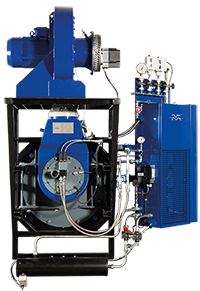
Inspector Detail
▸
Common issues
- Burner nozzle/atomizer fouling or coking causing poor combustion and smoke
- Waterside scale buildup from inadequate feedwater treatment
- Fireside soot deposits on tubes reducing heat transfer efficiency
- Safety valve seat leakage or wire-drawing
- Refractory cracking or erosion around the burner throat
- Feed pump or level control malfunction leading to low-water trips
Inspection checklist
- Check flame condition and combustion quality (smoke, color) at the burner
- Test the low-low water level alarm and cutout
- Inspect the safety valve for correct set pressure and lift per class requirement
- Check boiler water treatment dosing and test results (alkalinity, chlorides, TDS)
- Inspect fireside tube surfaces for soot/scale at each opening
- Inspect waterside surfaces for scale, pitting, or sludge accumulation
- Check refractory condition around the burner and furnace
- Verify the burner control sequence (purge, ignition, flame failure trip)
- Inspect mountings, gauge glass, and pressure gauge for correct function
Service intervals
| Boiler water chemical treatment testing | weekly, per class/maker guidance |
| Safety valve testing/lifting | per class requirement, typically annually |
| Internal waterside inspection/cleaning | annually or per class survey interval |
| Fireside soot cleaning | per running condition, typically each port call or per deposit buildup |
| Burner nozzle/atomizer inspection | 500-1000 running hours or per fouling rate |
| Low water alarm/cutout test | monthly |
Typical wear limits
| Tube wall thickness | measured by UT against the boiler maker's minimum allowable thickness at survey - do not estimate visually |
Ranges are typical for this design class. Always confirm against the manufacturer documentation for your serial number.
Critical spares
- Burner nozzle/atomizer
- Safety valve or repair kit
- Feed check/non-return valve
- Water level gauge glass set
- Ignition electrodes
- Flame scanner/photocell
Safety
- Pressurized steam system - follow lockout/tagout and allow cooling before internal inspection
- Low water level is a critical hazard - never bypass low-water cutouts, as tube/shell overheating can lead to failure
- Hot surfaces on the casing, steam lines, and burner front
- Fuel oil under pressure and heated (HFO) - burn/fire risk at the burner and fuel line connections
- Safety valve discharge path must be clear and correctly routed
Class survey
Composite/auxiliary boilers of this size are examined internally and externally at Special Survey (often also at intermediate surveys for older units), with mandatory safety valve testing and thickness gauging of representative tube/shell areas. Boiler water treatment logs and safety valve test records should be maintained for survey.
Components & Design
Component data being added…
Technical Data
🤖 Ask about this model
One free question — answered like a marine engineer. No account needed.
Common failures & inspection points
Internal visual inspection of all steam/water tubes; perform pressure test if suspected; seal leaking tube with conical stop valve after steel wire brush cleaning of tube ends. Leaking tubes must be renewed.
Check DP transmitter unit (external reference/variable leg, 4–20 mA output); feedwater control valve functional test; sight glass for cracks, contamination; test alarm function in control unit
Test two safety valves under full-load steam: pressure build-up 7 min. max. +6% working pressure permissible (water tubes); pop-point of each valve max. ±3% from set pressure; class notation: perform opening + accumulation test under classifier supervision
Inspect furnace walls and refractory lining visually (min. 2x/year); check for cracks, moisture, soot deposits. Check lower tube plate (insulation + form refractory). After 3–4 weeks operation: perform blow-down, inspect/clean boiler, remove sludge
Hydrostatic test: fill boiler with water 21–65 °C (water tubes max. 71 °C). Pressure: 1.5× MAWP (non-entry) or 1.25× MAWP (entry). Secure safety valves with clamps. Check all seal surfaces, rivets, welds for leaks. Class notation: every 2 years (up to 8 years), then annually
Class survey: water side (steam drum, water drum, all tubes) check for corrosion/cracks/deposits; fire side (furnace, flue gas path) check for soot/flocking (min. 2x/year). Man holes (top/bottom) permit access. If necessary use ultrasonic/endoscope for deeper defects
Type-general inspection and maintenance points for this equipment category — not model-specific.
Suppliers & Spare Parts
Direct links to manufacturer, datasheet, spare-parts portal and dealers — request access below.
📄 Request sourcing links & documentsCases, daily reports, timesheets and AI troubleshooting in the OceanSphere Marine app — free for 14 days.
Start free trial →Find manufacturers, repair shops and spare-part dealers in the Maritime Network — our global company directory.
Maritime Network →