6L20HX GenSet
The Niigata 6L20HX is a medium‑speed, inline‑six diesel genset designed for shipboard auxiliary power, notable for its robust construction and dual‑fuel capability (diesel/MDO).
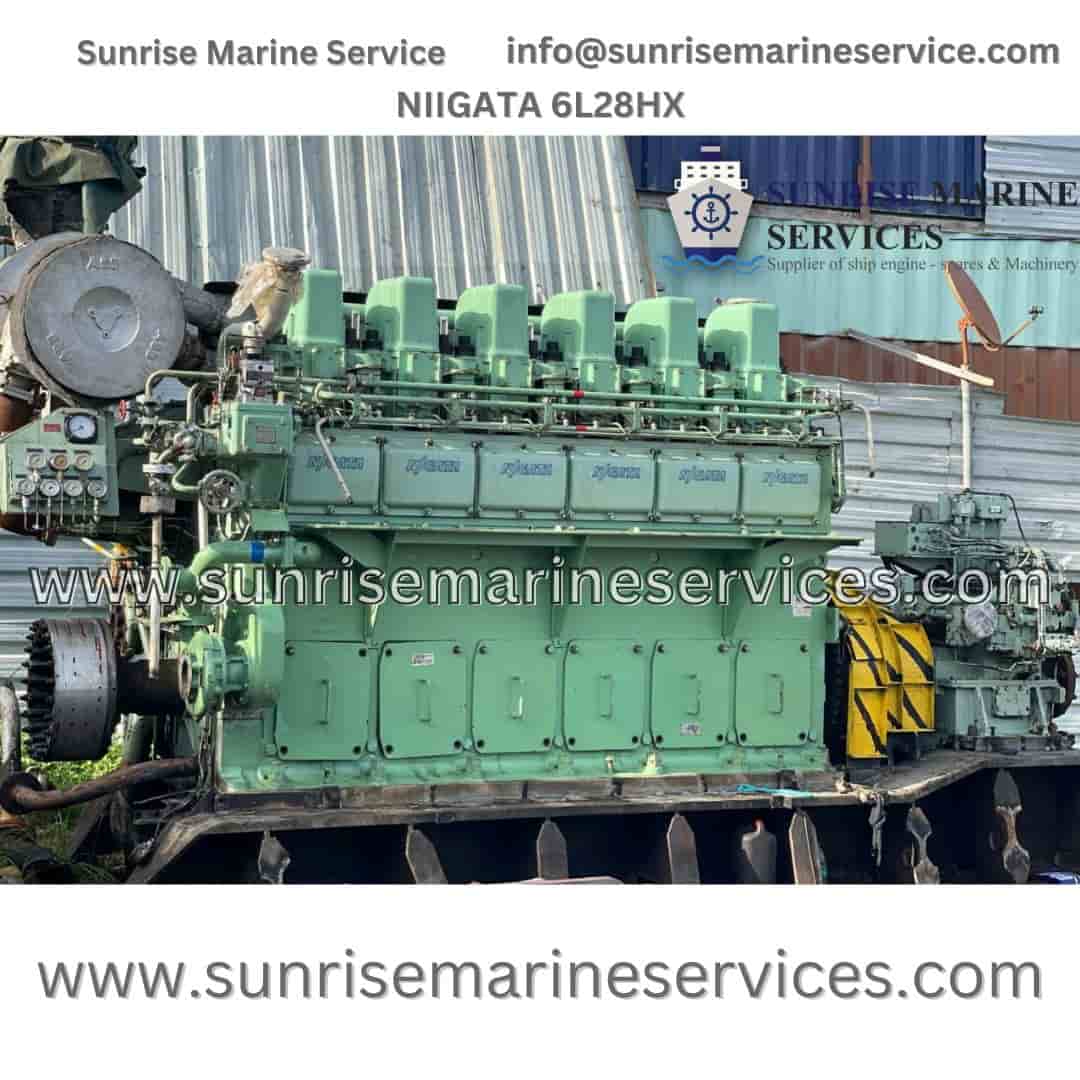
Engine Specifications
Inspector Detail
✓ verified
▸
Common issues
- Injector nozzle deposits leading to poor combustion and increased exhaust temperatures.
- Exhaust valve seat wear, causing blow-by, reduced compression, and potential valve failure.
- Charge-air cooler fouling (both air and water side), resulting in reduced engine efficiency and higher thermal loads.
- Piston ring wear, leading to increased lube oil consumption and crankcase blow-by.
- Fuel pump element wear, affecting injection timing and pressure uniformity across cylinders.
- Main and connecting rod bearing wear, often due to lube oil contamination or insufficient film thickness.
- Turbocharger bearing wear or fouling of compressor/turbine blades, impacting charge air pressure and engine performance.
- Cooling water system scaling or corrosion, leading to reduced heat transfer efficiency and potential overheating.
Inspection checklist
- Verify exhaust gas temperature spread across cylinders; significant deviations (e.g., > +/- 30°C) indicate combustion issues.
- Inspect cooling water system for leaks, proper pressure, temperature, and condition of expansion tank water (color, oil film). Check charge-air cooler water side for cleanliness.
- Check fuel oil system for leaks at high-pressure lines, proper filter differential pressure, and uniformity of fuel pump rack positions.
- Examine lubricating oil system for leaks, proper pressure, level, and filter differential pressure. Visually inspect oil for contamination or degradation.
- Inspect charge air system for leaks in piping, condition of turbocharger (noise, vibration, cleanliness of compressor/turbine blades if accessible), and cleanliness of charge-air cooler air side.
- Monitor crankcase breather for excessive blow-by and ensure crankcase relief valves are intact and free.
- Listen for abnormal engine noises (knocking, rattling) and observe for excessive vibration at various loads.
- Verify functionality of critical safety devices and alarms (overspeed trip, low lube oil pressure, high cooling water temperature, etc.).
- Assess general engine room cleanliness and housekeeping, which often reflects overall maintenance standards.
Service intervals
| Fuel Injectors Overhaul | 4,000 - 5,000 hours |
| Exhaust Valve Overhaul/Replacement | 8,000 - 10,000 hours |
| Cylinder Head Overhaul | 8,000 - 10,000 hours |
| Piston Overhaul (rings, cleaning) | 12,000 - 16,000 hours |
| Connecting Rod Bearing Inspection/Renewal | 12,000 - 16,000 hours |
| Major Overhaul (Main Bearings, Crankshaft Inspection) | 24,000 - 32,000 hours |
| Lube Oil Analysis | Monthly or 250-500 hours |
| Fuel Filter Elements Replacement | 500 - 1,000 hours |
| Lube Oil Filter Elements Replacement | 1,000 - 2,000 hours |
Typical wear limits
| Cylinder Liner Wear | Max 0.6 - 0.8 mm (at top ring reversal point) |
| Piston Ring Groove Wear (Axial Clearance) | Max 0.15 - 0.25 mm (for top ring) |
| Crankshaft Deflection | Max 0.05 - 0.10 mm (difference between readings) |
| Main/Connecting Rod Bearing Clearances | Max 0.15 - 0.25 mm (measured with plastigauge or feeler gauges) |
| Exhaust Valve Seat Recession | Max 1.0 - 1.5 mm (from original position) |
Ranges are typical for this design class. Always confirm against the manufacturer documentation for your serial number.
Critical spares
- Fuel Injector Nozzles (or complete injectors)
- Exhaust Valve Spindles and Seats (or complete valves)
- Piston Rings (complete set for at least one cylinder)
- Connecting Rod Bearings (one set)
- Fuel Pump Elements and Delivery Valves
- Complete Gasket/O-ring Set for Cylinder Head Overhaul
- Lube Oil and Fuel Filter Elements (various types)
- Turbocharger Bearing Cartridge or repair kit
Safety
- High-pressure fuel leaks: Risk of spray fire from fractured high-pressure fuel lines. Ensure proper shielding and double-wall piping where applicable.
- Hot surfaces: Exhaust manifold, turbocharger, and other components pose severe burn hazards. Verify insulation is intact and properly secured.
- Rotating machinery: Exposed rotating parts (flywheel, coupling, fan belts) present entanglement risks. All guards must be in place and secure.
- Pressurized systems: Sudden release of pressure from cooling water, lube oil, or starting air systems can cause injury. Ensure proper isolation and depressurization procedures are followed.
- Electrical hazards: High voltage from the generator and associated switchgear. Adhere to strict lockout/tagout procedures during maintenance.
Class survey
For a Niigata 6L20HX auxiliary genset, class surveyors typically focus on: 1. **Safety Devices:** Verification of overspeed trip, low lube oil pressure, high cooling water temperature, and other critical alarms and shutdowns. Functionality of emergency stop. 2. **Fuel Oil System Integrity:** Inspection for leaks, proper shielding of high-pressure lines, and fire safety arrangements (e.g., quick closing valves, spray shields). 3. **Crankcase Safety:** Inspection of crankcase relief valves for proper installation and condition. Monitoring of crankcase pressure/blow-by. 4. **Exhaust System:** Integrity of exhaust piping, insulation, and spark arrestor (if fitted). 5. **General Condition & Maintenance:** Overall cleanliness, absence of leaks, proper securing of components, and evidence of planned maintenance activities. 6. **Documentation:** Review of engine logbook, maintenance records, lube oil analysis reports, and spare parts inventory. 7. **Load Test:** During special surveys, the engine may be required to demonstrate its ability to take and maintain load, and to operate within specified parameters.
Components & Design
Component data being added…
Technical Data
🤖 Ask about this model
One free question — answered like a marine engineer. No account needed.
Common failures & inspection points
Service & Maintenance
Monitor exhaust spread and cooling water condition. Carry out Niigata scheduled overhauls for fuel injection equipment, valves and cylinder components.
Suppliers & Spare Parts
Direct links to manufacturer, datasheet, spare-parts portal and dealers — request access below.
📄 Request sourcing links & documentsCases, daily reports, timesheets and AI troubleshooting in the OceanSphere Marine app — free for 14 days.
Start free trial →Find manufacturers, repair shops and spare-part dealers in the Maritime Network — our global company directory.
Maritime Network →