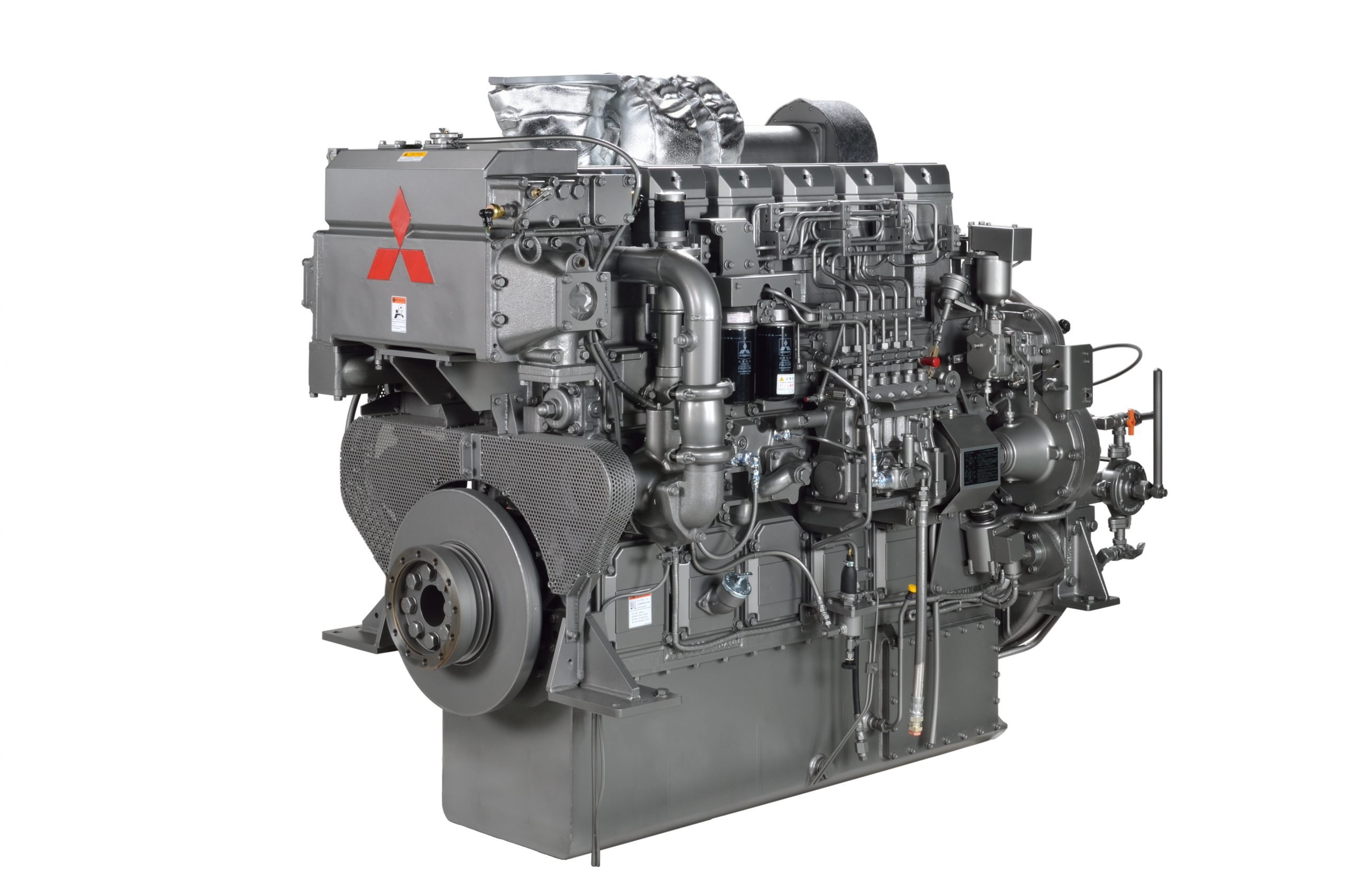
Mitsubishi S6R2-MPTK GenSet
The Mitsubishi S6R2-MPTK is a medium‑speed, six‑cylinder inline diesel generator set designed for auxiliary power on merchant vessels, delivering reliable electricity at 1500 rpm and 50 Hz.
Inspector Detail
✓ verified
▸
Common issues
- Injector wear causing smoke (black/white) and exhaust temperature spread across cylinders, leading to reduced efficiency, increased fuel consumption, and potential engine damage if left unaddressed.
- Turbocharger fouling (carbon buildup on turbine/compressor blades) resulting in reduced boost pressure, power loss, increased exhaust temperatures, and potential surging.
- Cooling water pump seal leakage, leading to coolant loss, potential engine overheating, and corrosion in the engine room. Often indicated by coolant drips or residue below the pump.
- Fuel system contamination (water or particulates) causing premature fuel filter clogging, erratic engine operation, and potential damage to the fuel injection pump and injectors.
- Abnormal engine vibrations or knocking noises, which can indicate issues such as worn bearings, incorrect fuel timing, misfiring cylinders, or loose engine mounts.
- Alternator/Generator AVR (Automatic Voltage Regulator) malfunction, leading to unstable voltage or frequency output from the genset, potentially damaging connected electrical equipment.
- Starting difficulties, often related to battery condition (low charge, sulfation), starter motor issues, faulty glow plugs (if fitted), or fuel supply problems (air in system, clogged filters).
Inspection checklist
- Visual inspection for oil, fuel, and coolant leaks around the engine block, piping, and connections. Pay close attention to the cooling water pump, fuel injection pump, and turbocharger connections.
- Check engine oil level and condition (color, presence of water/fuel). Inspect fuel and oil filters for signs of clogging or contamination (e.g., excessive pressure drop across filters).
- Monitor exhaust gas color (should be clear or light haze at load) and temperature spread across cylinders (typically within +/- 30°C at rated load). Significant spread indicates combustion issues.
- Inspect cooling system: coolant level, condition, hose integrity, and the cooling water pump for leaks or abnormal noise. Check for signs of scale or corrosion in the header tank.
- Listen for abnormal engine noises (knocking, rattling, whistling from turbo) and check for excessive vibration. Use a stethoscope to pinpoint noise sources.
- Verify proper operation of all engine safety devices: overspeed trip, low oil pressure shutdown, high water temperature shutdown. Test these periodically as per PMS.
- Check battery terminals for corrosion and electrolyte level (if applicable); verify charging voltage from the genset's charging alternator.
- Perform a load test (monthly for standby units, quarterly for prime movers) to ensure the genset can carry its rated load stably without excessive smoke, voltage/frequency fluctuations, or overheating.
- Inspect air filter element for cleanliness and integrity; ensure air intake is unobstructed and ducting is secure.
- Check V-belts for tension, cracks, fraying, and proper alignment. Ensure sufficient spare belts are onboard.
Service intervals
| Engine Oil & Filter Change | 250-500 hours or 6 months, whichever comes first (depending on oil analysis results and operating conditions). |
| Fuel Filter Replacement (Primary & Secondary) | 250-500 hours (primary) / 500-1000 hours (secondary) or annually, whichever comes first. More frequently with poor fuel quality. |
| Valve Clearance Adjustment | 1000-2000 hours or annually, whichever comes first. |
| Air Filter Inspection/Cleaning | 250-500 hours (clean as needed), Replace every 1000-2000 hours or annually. |
| Cooling System Flush & Inhibitor Change | 2000-4000 hours or every 2 years. |
| Injector Inspection/Overhaul | 3000-6000 hours (depending on fuel quality and performance, test opening pressure and spray pattern). |
| Turbocharger Inspection (axial/radial play, cleaning) | 2000-4000 hours or annually. |
Typical wear limits
| Crankshaft Deflection | Typically < 0.05 mm (0.002 inches) for an inline 6-cylinder engine, measured at each web. Exceeding this indicates bearing wear or foundation issues. |
| Piston Ring End Gap | Service limit often 1.0-1.5 mm (0.04-0.06 inches) for compression rings. Consult specific Mitsubishi manual for exact values. |
| Main/Connecting Rod Bearing Clearances | Service limit typically 0.15-0.20 mm (0.006-0.008 inches) for radial clearance. Excessive clearance leads to low oil pressure and knocking. |
| Valve Stem to Guide Clearance | Service limit often 0.15-0.25 mm (0.006-0.010 inches) for exhaust valves, slightly less for intake. Excessive clearance causes oil consumption and poor sealing. |
| Turbocharger Rotor Axial Play | Service limit typically 0.10-0.15 mm (0.004-0.006 inches). |
| Turbocharger Rotor Radial Play | Service limit typically 0.20-0.30 mm (0.008-0.012 inches). Excessive play indicates bearing wear and potential impeller/housing contact. |
Ranges are typical for this design class. Always confirm against the manufacturer documentation for your serial number.
Critical spares
- Full set of fuel filters (primary and secondary elements).
- Engine oil filters.
- Air filter element.
- Cooling water pump seal kit and/or complete pump assembly.
- Set of fuel injectors or nozzle tips (at least one spare set).
- V-belts for alternator and cooling pump.
- Turbocharger cartridge or repair kit (bearings, seals).
- Assorted O-rings and gaskets for common leak points (e.g., rocker cover, fuel lines, oil cooler).
Safety
- Rotating machinery (fan, belts, crankshaft pulley) poses entanglement hazards; always ensure guards are in place and engine is secured before working nearby.
- Hot surfaces (exhaust manifold, turbocharger, engine block, coolant lines) can cause severe burns; allow sufficient cooling time before maintenance.
- High-pressure fuel lines can spray fuel, leading to fire hazards or skin penetration injuries; always depressurize the fuel system and wear appropriate PPE.
- Electrical hazards from the generator (high voltage/current); ensure proper lockout/tagout procedures are followed during maintenance, and insulation resistance is checked regularly.
- Exhaust gases (CO, NOx) are toxic; ensure adequate ventilation in the engine room, especially during prolonged operation or testing, and check for exhaust system leaks.
Class survey
Class surveyors will typically verify the functionality of all engine safety devices (overspeed, low oil pressure, high water temperature shutdowns) and their alarm set points. They will conduct a thorough visual inspection for fuel, oil, and coolant leaks, and assess the integrity of the exhaust system for leaks or corrosion. The engine's mounting and foundation will be checked for security and signs of fatigue. The generator's insulation resistance, earth fault protection, and circuit breaker operation will be tested. Emergency stop functionality, both local and remote, will be confirmed. Logbooks and maintenance records will be reviewed to ensure compliance with planned maintenance schedules, manufacturer recommendations, and oil analysis programs. A load test may be required to demonstrate stable operation and rated output under simulated shipboard conditions, including voltage and frequency stability.
Components & Design
Component data being added…
Technical Data
🤖 Ask about this model
One free question — answered like a marine engineer. No account needed.
Common failures & inspection points
Service & Maintenance
Perform routine oil/filter maintenance, valve clearance checks and cooling system inspection according to Mitsubishi manual. Load-test standby units periodically.
Suppliers & Spare Parts
Direct links to manufacturer, datasheet, spare-parts portal and dealers — request access below.
📄 Request sourcing links & documentsCases, daily reports, timesheets and AI troubleshooting in the OceanSphere Marine app — free for 14 days.
Start free trial →Find manufacturers, repair shops and spare-part dealers in the Maritime Network — our global company directory.
Maritime Network →