D8-MP
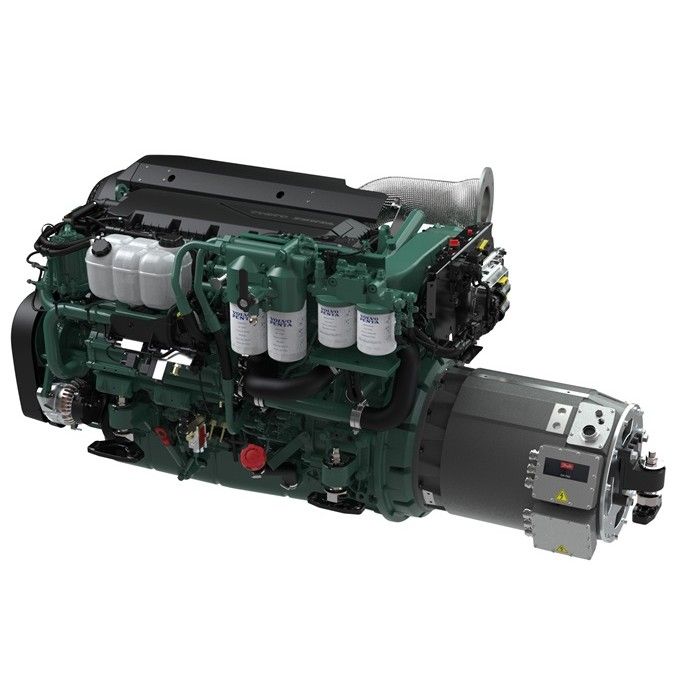
The Volvo Penta D8‑MP is a high‑performance V8 marine diesel engine designed for yachts and workboats, offering compact size with up to ~800 hp and integrated electronic control.
Inspector Detail
▸
Common issues
- Fuel system contamination (water, particulates) leading to injector and pump issues.
- Corrosion of heat exchangers, raw water piping, and electrical connections due to saltwater exposure.
- Premature wear of bearings, piston rings, and valve train components if maintenance intervals are exceeded or due to poor lubrication/filtration.
- Failure of electronic control unit (ECU) or sensors due to moisture ingress, vibration, or voltage fluctuations.
- Turbocharger bearing wear or imbalance, often indicated by excessive smoke or reduced power.
- Cooling system blockages or leaks, leading to overheating or reduced efficiency.
- Vibration-induced loosening of mounting bolts, pipe clamps, or electrical connections.
- Alternator or starter motor failure, particularly in humid or high-vibration environments.
Inspection checklist
- Check engine oil level and condition (visual for contamination, smell for fuel dilution).
- Inspect coolant level and condition; check for leaks around hoses, pump, and heat exchanger.
- Verify fuel system integrity: check for leaks at high-pressure lines, filters, and pump connections. Drain fuel pre-filter/water separator.
- Visually inspect exhaust system for leaks, cracks, and corrosion, especially at the manifold and turbocharger outlet.
- Check drive belts (alternator, raw water pump) for tension, cracks, and wear.
- Listen for abnormal noises (knocking, grinding, whistling) and observe for excessive vibration during operation.
- Monitor exhaust gas color (should be clear or light haze; black, white, or blue smoke indicates issues).
- Test engine safety shutdowns (overspeed, low oil pressure, high coolant temperature) if permitted and safe to do so.
- Inspect electrical wiring and connections for corrosion, chafing, or loose terminals.
- Examine engine mounts for signs of deterioration or excessive movement.
Service intervals
| Daily/Pre-start checks | Fluid levels, visual leaks, abnormal noises/vibrations. |
| 250-500 hours or Annually | Engine oil and filter change, fuel filters change, raw water pump impeller inspection/replacement. |
| 500-1000 hours or Annually | Air filter replacement, coolant system inspection, valve clearance check (initial check at ~500h, then as per manual). |
| 1000-2000 hours | Coolant change, turbocharger inspection, heat exchanger cleaning (freshwater side). |
| 2000-4000 hours | Injector inspection/service, heat exchanger cleaning (raw water side), vibration damper inspection. |
| 8000-12000 hours | Major overhaul (top end or full engine, depending on condition and manufacturer guidance). |
Typical wear limits
| Crankshaft deflection | Max 0.03-0.05 mm (refer to manufacturer manual for specific points). |
| Piston ring end gap | Max 1.0-1.5 mm (for top compression ring, varies by ring type). |
| Main bearing clearance | Max 0.15-0.20 mm (plastigauge method). |
| Connecting rod bearing clearance | Max 0.10-0.15 mm (plastigauge method). |
| Valve seat recession | Max 0.5-0.8 mm (depth below cylinder head surface). |
| Turbocharger axial play | Max 0.10-0.15 mm (refer to turbo manufacturer specs). |
| Turbocharger radial play | Max 0.30-0.50 mm (refer to turbo manufacturer specs). |
Ranges are typical for this design class. Always confirm against the manufacturer documentation for your serial number.
Critical spares
- Full set of engine oil, fuel, and air filters.
- Raw water pump impeller and gasket kit.
- Drive belts (alternator, raw water pump).
- Spare injectors (at least one, or a complete set for extended voyages).
- Engine oil pressure sensor and coolant temperature sensor.
- Assorted fuses and relays for engine control system.
- Gasket set for common maintenance tasks (e.g., valve cover, heat exchanger end caps).
- Fuel transfer pump (if external electric type).
Safety
- Risk of burns from hot surfaces (exhaust manifold, turbocharger, coolant lines) during and after operation.
- Danger from rotating machinery (belts, flywheel) when engine is running or being cranked.
- High-pressure fuel injection system can cause serious injury if leaks are present; never check for leaks with bare hands.
- Risk of fire from fuel or oil leaks contacting hot engine parts or electrical shorts.
- Potential for carbon monoxide (CO) poisoning from exhaust gas leaks in enclosed spaces; ensure proper ventilation and exhaust system integrity.
Class survey
Class surveyors typically focus on operational safety and compliance. This includes witnessing a satisfactory start and run under load, verifying the functionality of safety devices (overspeed trip, low oil pressure alarm/shutdown, high coolant temperature alarm/shutdown). They will inspect for fuel, oil, and coolant leaks, check exhaust system integrity, review engine room ventilation, and verify the condition of engine mounts and foundations. Maintenance records, oil analysis reports, and spare parts inventory will also be reviewed to ensure adherence to manufacturer and classification society requirements. Special attention is paid to fire prevention measures and emergency shutdown systems.
Components & Design
Component data being added…
Technical Data
🤖 Ask about this model
One free question — answered like a marine engineer. No account needed.
Common failures & inspection points
Service & Maintenance
Maintenance per manufacturer manual and classification society requirements. Annual inspection at class survey. Stock spare parts per manufacturer specification.
Suppliers & Spare Parts
Direct links to manufacturer, datasheet, spare-parts portal and dealers — request access below.
📄 Request sourcing links & documentsCases, daily reports, timesheets and AI troubleshooting in the OceanSphere Marine app — free for 14 days.
Start free trial →Find manufacturers, repair shops and spare-part dealers in the Maritime Network — our global company directory.
Maritime Network →