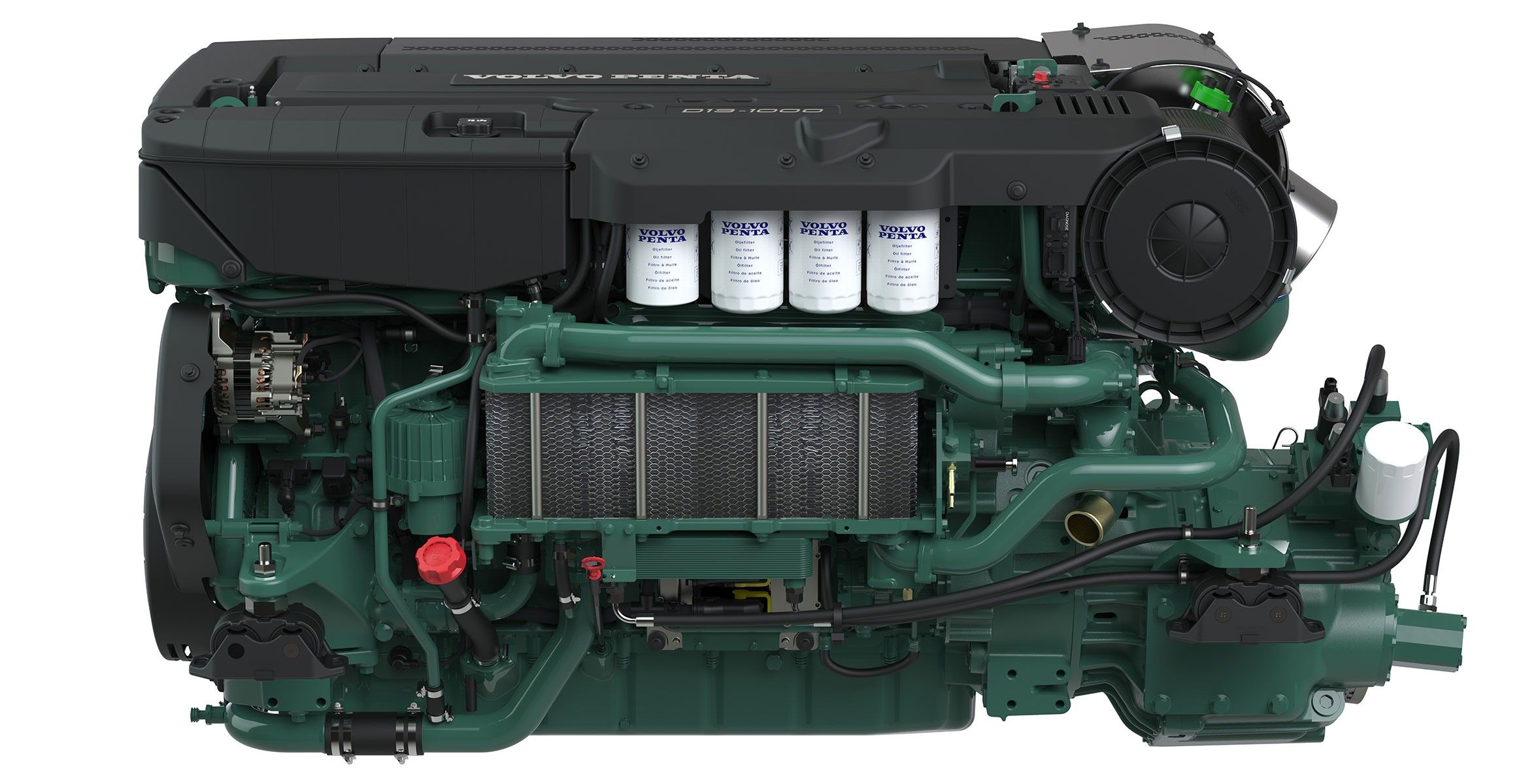
D13
The Volvo Penta D13 is a high‑performance V8 marine diesel engine, delivering up to ~1300 hp in a compact package and approved by DNV for yacht and boat installations.
Inspector Detail
✓ verified
▸
Common issues
- Fuel system contamination or filter blockage leading to power loss or erratic running, often due to poor fuel quality or extended filter change intervals.
- Cooling system inefficiencies, including raw water pump impeller wear, heat exchanger fouling, or internal corrosion, resulting in overheating.
- Electrical system faults: sensor failures (e.g., oil pressure, coolant temperature), wiring harness corrosion, or ECU malfunctions due to vibration or moisture ingress.
- Turbocharger bearing wear or compressor/turbine damage, indicated by excessive smoke, reduced power, or abnormal noise, often linked to oil supply issues or foreign object damage.
- Injector nozzle wear or clogging, leading to poor combustion, increased fuel consumption, smoke, and potential damage to cylinder components.
- Vibration-related issues: loosening of engine mounts, pipe clamps, or electrical connections, causing fatigue cracks or intermittent electrical faults.
- Corrosion of external components (e.g., exhaust manifold, heat exchanger end covers, electrical connectors) due to saltwater exposure and inadequate protection.
- Excessive engine oil consumption or blow-by, indicating piston ring wear, valve guide wear, or turbocharger seal failure.
Inspection checklist
- Visual inspection for oil, fuel, coolant, and exhaust leaks around the engine, piping, and connections.
- Check engine oil level and condition (color, viscosity, presence of water/fuel).
- Inspect coolant level and condition in expansion tank, checking for signs of oil or rust.
- Verify tension and condition of all drive belts (alternator, raw water pump); check for cracks or fraying.
- Examine fuel filters (primary and secondary) for signs of water or particulate contamination; note date of last change.
- Inspect air filter element for cleanliness and integrity; ensure housing is sealed correctly.
- Check exhaust system for leaks, cracks, and proper insulation; ensure exhaust gas temperature is within normal range (if instrumentation available).
- Assess engine mounts for signs of deterioration, cracking, or excessive movement/vibration.
- Verify all safety shutdown systems (low oil pressure, high coolant temperature, overspeed) are operational (where practical to test).
- Inspect electrical wiring and connections for corrosion, chafing, or loose terminals, especially in marine-exposed areas.
Service intervals
| Engine Oil & Filter | 250-500 hours or annually, whichever comes first |
| Fuel Filters (Primary & Secondary) | 250-500 hours or annually, whichever comes first |
| Air Filter Element | 500-1000 hours or annually, inspect more frequently in dusty environments |
| Raw Water Pump Impeller | 250-500 hours or annually, replace if signs of wear or cracking |
| Coolant (Engine) | 2000-4000 hours or every 2-4 years, depending on coolant type and condition |
| Valve Clearance Adjustment | 1000-2000 hours, or as per manufacturer's manual |
| Heat Exchanger Cleaning | 2000-4000 hours or every 2-4 years, depending on water quality |
| Injector Inspection/Test | 2000-4000 hours, or if performance issues arise |
Typical wear limits
| Crankshaft Deflection | Max 0.05 - 0.10 mm (depending on engine size and specific points, refer to manual) |
| Cylinder Liner Wear (Ovality/Taper) | Max 0.20 - 0.30 mm (measured at top ring reversal point) |
| Turbocharger Shaft Play (Axial) | Max 0.10 - 0.15 mm (new typically 0.05-0.08mm) |
| Turbocharger Shaft Play (Radial) | Max 0.25 - 0.35 mm (new typically 0.15-0.20mm) |
| Main/Con-Rod Bearing Clearances | Specific values in manual, typically 0.05 - 0.15 mm (check with plastigauge) |
| Injector Spray Pattern | Visual inspection for uniform, finely atomized cone; no dribbling or streaking. |
| Valve Seat Recession | Max 0.5 - 1.0 mm from new specification (requires cylinder head removal for accurate measurement). |
Ranges are typical for this design class. Always confirm against the manufacturer documentation for your serial number.
Critical spares
- Full set of filters (oil, fuel, air)
- Raw water pump impeller and gasket kit
- Complete set of drive belts (alternator, raw water pump)
- Common sensors (oil pressure, coolant temperature, fuel pressure)
- Assortment of fuses and relays
- Fuel transfer pump (low pressure)
- Injector O-rings/seals
- Engine oil and coolant (top-up quantities)
Safety
- Hot surfaces: Exhaust manifold, turbocharger, and other engine components can cause severe burns. Ensure proper insulation and warning labels.
- Rotating machinery: Belts, pulleys, and flywheel pose entanglement hazards. Always ensure engine is off and locked out before working near these components.
- High-pressure fuel: Common rail systems operate at extremely high pressures (up to 2000+ bar). Leaks can cause serious injury (diesel injection injury). Never inspect high-pressure lines with engine running.
- Electrical shock: High voltage from starter motor, alternator, and control systems. Ensure proper grounding and insulation, and disconnect batteries before electrical work.
- Fire hazard: Fuel and oil leaks on hot surfaces are a significant fire risk. Maintain a clean engine room and address leaks immediately. Ensure fire suppression systems are functional.
Class survey
Class surveyors will typically review engine logbooks and maintenance records to ensure adherence to manufacturer's schedules and class requirements. They will inspect the general condition of the engine, looking for leaks, corrosion, and proper securing of components. Critical checks include verification of safety devices (overspeed trip, low oil pressure, high temperature alarms/shutdowns), integrity of fuel and exhaust systems (leakage, insulation, fire prevention), condition of engine mounts, and functionality of remote emergency stops. They may also request a brief operational test to observe engine performance, exhaust emissions, and vibration levels.
Components & Design
Component data being added…
Technical Data
🤖 Ask about this model
One free question — answered like a marine engineer. No account needed.
Common failures & inspection points
Service & Maintenance
Maintenance per manufacturer manual and classification society requirements. Annual inspection at class survey. Stock spare parts per manufacturer specification.
Suppliers & Spare Parts
Direct links to manufacturer, datasheet, spare-parts portal and dealers — request access below.
📄 Request sourcing links & documentsCases, daily reports, timesheets and AI troubleshooting in the OceanSphere Marine app — free for 14 days.
Start free trial →Find manufacturers, repair shops and spare-part dealers in the Maritime Network — our global company directory.
Maritime Network →