D11
The Volvo Penta D11 is a high‑speed, four‑stroke marine diesel engine designed for yachts and small commercial vessels, notable for its compact size and integrated electronic control system.
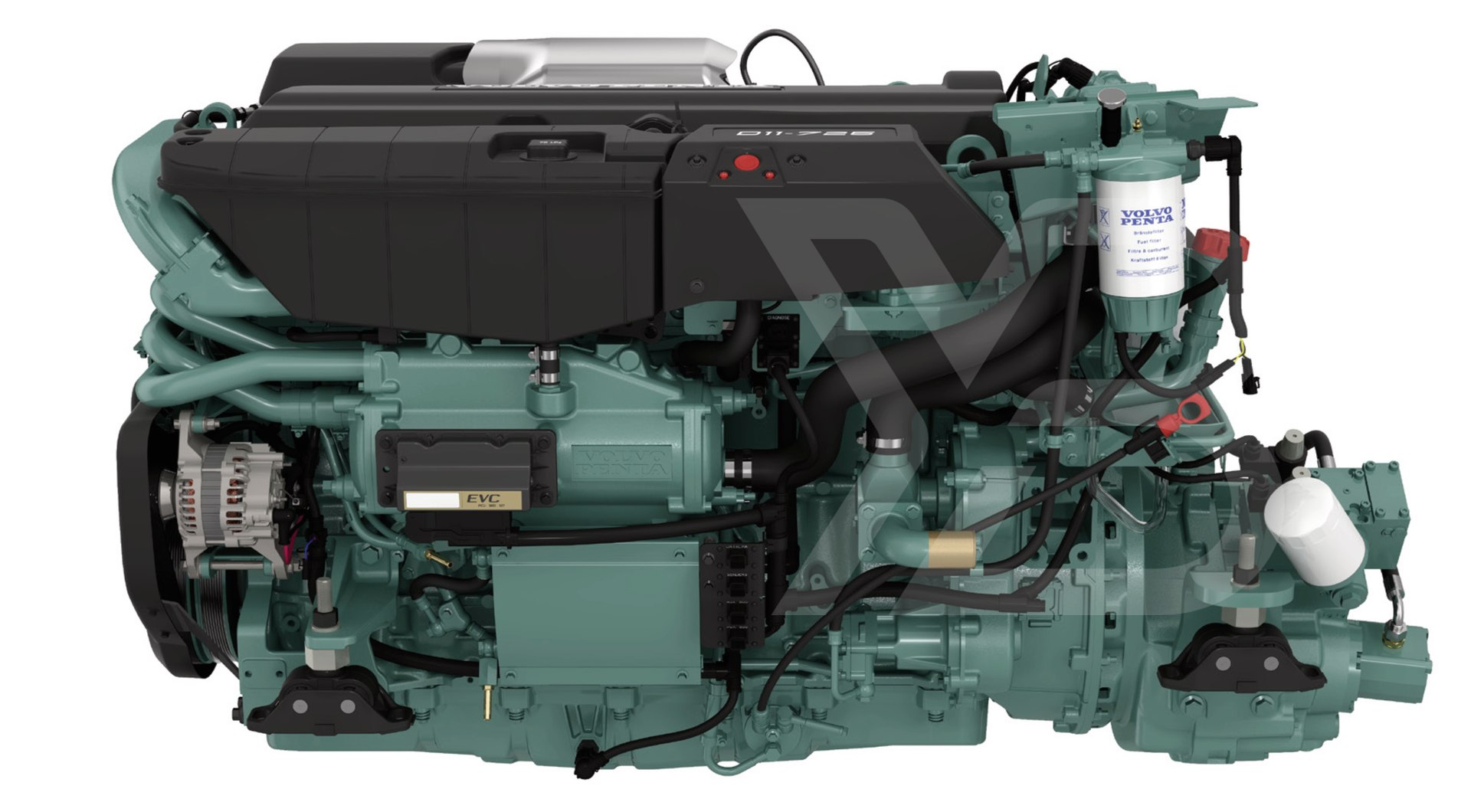
Inspector Detail
✓ verified
▸
Common issues
- Fuel system contamination or blockage (filters, injectors) leading to power loss or rough running.
- Cooling system inefficiencies: seawater pump impeller wear, heat exchanger fouling, or thermostat malfunction causing overheating.
- Lubrication system issues: oil leaks, degraded oil quality, or low oil pressure due to pump wear or blocked passages.
- Electrical system faults: loose connections, corroded terminals, sensor failures (e.g., temperature, pressure), or EVC system glitches due to moisture/vibration.
- Exhaust system leaks or blockages, leading to reduced performance or safety hazards (CO).
- Vibration-induced component fatigue or loosening of mounts and connections.
- Corrosion of external components, piping, and electrical connections due to saltwater/salt air exposure.
- Premature wear of belts (alternator, seawater pump) and hoses (coolant, fuel) due to age, heat, and vibration.
Inspection checklist
- Engine room cleanliness and absence of leaks (fuel, oil, coolant, exhaust). Check drip trays.
- Visual inspection of all hoses and belts for cracks, fraying, tension, and signs of chafing.
- Check fuel system: primary and secondary fuel filters for signs of water/contamination, fuel lines for leaks or damage.
- Inspect cooling system: seawater strainer for cleanliness, seawater pump for leaks, heat exchanger end caps for corrosion/leaks, coolant level and condition.
- Lubrication system: check oil level and condition, inspect for oil leaks around seals, gaskets, and filters.
- Electrical system: check battery terminals for corrosion, wiring harnesses for chafing, EVC unit for secure mounting and signs of moisture ingress.
- Exhaust system: inspect manifold, turbocharger, and exhaust piping for leaks, cracks, or excessive corrosion. Check exhaust gas temperature sensor.
- Engine mounts: inspect for deterioration, excessive movement, or signs of detachment.
- Run engine: listen for abnormal noises (knocking, grinding, squealing), observe exhaust color, check gauge readings (oil pressure, coolant temp, battery voltage, boost pressure).
- Verify functionality of emergency stop and safety shutdown systems (low oil pressure, high coolant temp).
Service intervals
| Engine Oil & Filter Change | 250-500 hours or annually, whichever comes first |
| Fuel Filter (Primary & Secondary) Replacement | 250-500 hours or annually, whichever comes first |
| Air Filter Replacement | 500-1000 hours or annually, more frequently in dusty environments |
| Seawater Pump Impeller Replacement | Annually or every 250-500 hours |
| Coolant Change | Every 2 years or 2000 hours (using Volvo Penta specified coolant) |
| Valve Clearance Adjustment | 1000-2000 hours |
| Drive Belt Inspection/Replacement | Annually or every 500 hours (replace as needed) |
| Heat Exchanger Cleaning | Every 2-4 years or 2000-4000 hours, depending on water quality |
Typical wear limits
| Cylinder Liner Wear | Visual scoring, step at top of liner, or out-of-roundness exceeding 0.05-0.1mm (requires specialized measurement). |
| Crankshaft Deflection | Typically not exceeding 0.03-0.05mm (requires specialized measurement). |
| Valve Clearance | Intake: 0.20-0.40mm, Exhaust: 0.30-0.50mm (check against manufacturer's specific values). |
| Bearing Clearances | Excessive play indicated by knocking sounds, abnormal oil pressure, or increased oil consumption (requires disassembly and measurement). |
| Injector Nozzle Condition | Poor spray pattern, dribbling, or incorrect opening pressure (requires bench testing). |
| Turbocharger Shaft Play | Axial play typically 0.05-0.15mm, radial play 0.10-0.20mm (excessive play indicates bearing wear). |
Ranges are typical for this design class. Always confirm against the manufacturer documentation for your serial number.
Critical spares
- Complete set of fuel filters (primary and secondary)
- Engine oil filter
- Seawater pump impeller kit (impeller, gasket, O-rings)
- Drive belts (alternator, seawater pump)
- Fuses (various ratings for engine and EVC system)
- Engine oil (sufficient for a top-up or emergency change)
- Coolant (pre-mixed, specified type)
- Spare sensors (e.g., oil pressure, coolant temperature, fuel pressure) - especially critical for EVC systems
Safety
- Fire hazard from fuel or oil leaks onto hot engine components or exhaust system.
- Carbon Monoxide (CO) poisoning risk from leaking exhaust systems in enclosed spaces.
- Burn hazards from hot engine surfaces, exhaust components, and pressurized cooling system.
- Entanglement risk from rotating machinery (belts, pulleys, flywheel) when engine is running or being turned over.
- Electrical shock hazard from exposed or damaged wiring, especially in a damp marine environment.
Class survey
Class surveyors will conduct an annual inspection focusing on the overall condition, maintenance records, and safety compliance. Key checks include: verification of maintenance logs and service history; functionality of all safety devices (alarms, automatic shutdowns for overspeed, low oil pressure, high coolant temperature); integrity of fuel lines, tanks, and shut-off valves; condition of exhaust system for leaks and proper insulation; security of engine mounts; proper operation of cooling system (seawater intake, strainers, pumps, heat exchangers); electrical system integrity and grounding; emergency stop functionality; and general engine room cleanliness and fire prevention measures. Load testing may be required periodically or if issues are suspected.
Components & Design
Component data being added…
Technical Data
🤖 Ask about this model
One free question — answered like a marine engineer. No account needed.
Common failures & inspection points
Service & Maintenance
Maintenance per manufacturer manual and classification society requirements. Annual inspection at class survey. Stock spare parts per manufacturer specification.
Suppliers & Spare Parts
Direct links to manufacturer, datasheet, spare-parts portal and dealers — request access below.
📄 Request sourcing links & documentsCases, daily reports, timesheets and AI troubleshooting in the OceanSphere Marine app — free for 14 days.
Start free trial →Find manufacturers, repair shops and spare-part dealers in the Maritime Network — our global company directory.
Maritime Network →