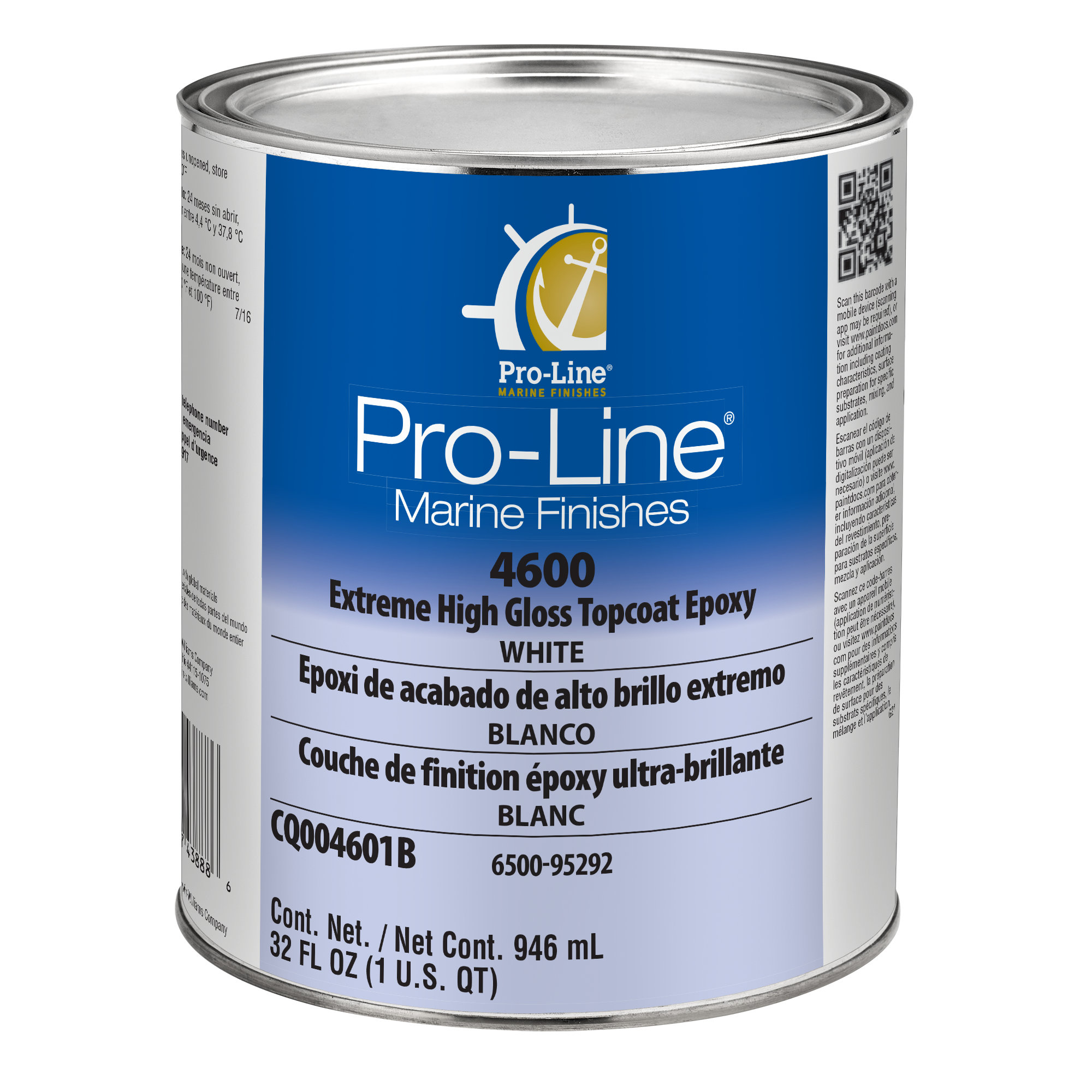
Pro-Line 4600
Sherwin-Williams Protective & Marine Pro-Line 4600 — Extreme high-gloss epoxy topcoat for marine topside applications above waterline.
Inspector Detail
▸
Common issues
- Overcoating window exceeded between coats, causing intercoat adhesion loss
- Application in unsuitable temperature/humidity/dew point conditions causing blushing or poor cure
- Gloss loss and chalking from UV exposure over time
- Blistering from moisture or salt contamination trapped under the film
- Colour mismatch or banding from batch variation if not box-batched correctly
Inspection checklist
- Visual survey for chalking, gloss loss, blistering, cracking or flaking
- Check DFT against the specified system build-up
- Inspect for rust breakthrough at edges, welds and high-wear areas
- Check for coating damage following recent hot work, mooring or fendering contact
- Confirm surface preparation standard used for any touch-up matches the system requirements
Service intervals
| Visual condition survey | at each drydocking/intermediate opportunity |
| Full topside repaint | condition-based, commonly 5-10+ years depending on exposure and maintenance touch-ups |
| Touch-up of localised damage | as found, ideally before corrosion undercuts the coating |
Typical wear limits
| Dry film thickness | apply per the manufacturer's current system data sheet for topside epoxy coatings of this class - do not assume a generic DFT figure |
Ranges are typical for this design class. Always confirm against the manufacturer documentation for your serial number.
Critical spares
- Same product line topcoat (Pro-Line 4600) and compatible primer/undercoat from the same manufacturer
- Manufacturer-specified thinner and additive
- Surface preparation abrasives/degreaser matching the manufacturer's application data sheet
Safety
- VOC/solvent exposure during application - ventilation and respiratory protection per SDS
- Surface preparation (blasting/grinding) generates dust and noise hazards
- Standard paint PPE (skin, eye, respiratory) during application and overcoating
Class survey
Coating condition of the hull/topsides is assessed qualitatively at drydocking and intermediate surveys. Surveyors look for breakdown, rust staining and mechanical damage rather than testing the coating itself.
Components & Design
Component data being added…
Technical Data
🤖 Ask about this model
One free question — answered like a marine engineer. No account needed.
Common failures & inspection points
Visual examination of coating surface for signs of chalking, fading, or discoloration under UV exposure
Dry film thickness (DFT) measurement using gage to verify coating meets specification (typically 50-150 microns depending on product)
Adhesion testing via cross-hatch and holiday detection to ensure paint bond integrity to substrate
Surface cleanliness and salt contamination assessment via salt-fog testing or visual inspection for blistering/peeling
Gloss retention evaluation using gloss meter; topside coatings should maintain 70%+ of initial gloss after service exposure
Mechanical damage inspection including chips, scratches, and impact marks exposing substrate
Surface preparation verification before recoating: removal of loose paint, salt deposits, and contaminants per SSPC-SP6 or equivalent
Cure verification through hardness testing (König hardness or pencil hardness minimum per specification)
Type-general inspection and maintenance points for this equipment category — not model-specific.
Suppliers & Spare Parts
Direct links to manufacturer, datasheet, spare-parts portal and dealers — request access below.
📄 Request sourcing links & documentsCases, daily reports, timesheets and AI troubleshooting in the OceanSphere Marine app — free for 14 days.
Start free trial →Find manufacturers, repair shops and spare-part dealers in the Maritime Network — our global company directory.
Maritime Network →