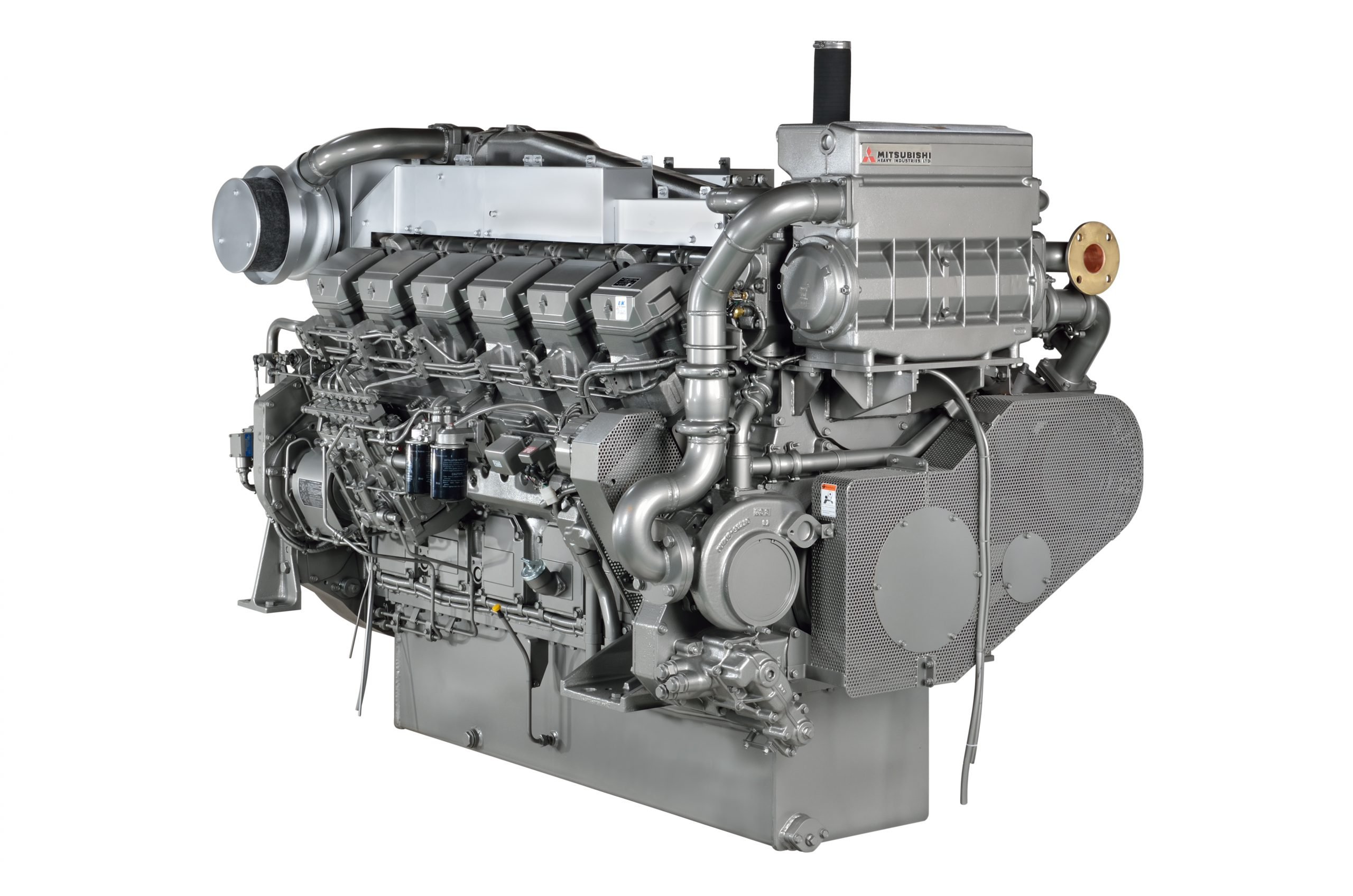
S12R-MPTK Gen-12cyl
Mitsubishi Heavy Industries Marine Machinery (MHI-MME) — S-series four-stroke high-speed (4-stroke, 170 mm bore × 180 mm stroke) and SU-series (240 mm bore) marine diesel engines — marine diesel, bore S-series (SAR): 170 mm; SU-series: 240 mm x stroke S-series (SAR): 180 mm; SU-series: 260-300 mm (variants) mm, S6R: 1,350-1,800 rpm | S12R: 1,200-1,800 rpm | S16R: 1,350-1,800 rpm (variants up to 1,800 rpm); S6U/S16U: 1,000-1,200 rpm rpm, S6R: 324-691 kW | S12R: 588-1,270 kW | S16R: 912-1,885 kW | S6U: ~1,260 kW | S8U: not verifiable | S16U: ~3,600 kW. Fuel: Marine diesel (Heavy Fuel Oil HFO, Marine Gas Oil MGO). Status: Active/In production — 4-stroke S-series (SAR and SU) and newer variants with IMO-T2, IMO-T3, EU-5 emissions certification. Verified, data sheet linked.
Engine Specifications
Inspector Detail
✓ verified
▸
Common issues
- Excessive cylinder liner wear due to poor fuel quality or inadequate maintenance
- Fuel pump malfunction causing low fuel pressure
- Turbocharger fouling or failure due to dirty or low-quality lube oil
- Crankshaft bearing wear or damage from misaligned or loose engine mounts
- Exhaust valve seat wear or damage from overheating or poor maintenance
- Low compression ratio due to worn or damaged piston rings or cylinder liners
- Oil leaks from cylinder head or engine block due to worn or damaged gaskets
Inspection checklist
- Cylinder head and valve condition
- Cylinder liner and piston condition
- Crankshaft and bearing condition
- Fuel system and pump condition
- Turbocharger condition and performance
- Lube oil quality and condition
- Cooling system condition and performance
- Exhaust system condition and performance
- Engine mounts and alignment
Service intervals
| oil_change | 400-600 hours |
| fuel_filter_change | 200-400 hours |
| air_filter_change | 100-200 hours |
| coolant_change | 2000-4000 hours |
Typical wear limits
| cylinder_liner | 0.5-1.0 mm wear limit |
| piston_ring | 0.2-0.5 mm wear limit |
| crankshaft_bearing | 0.1-0.2 mm wear limit |
Ranges are typical for this design class. Always confirm against the manufacturer documentation for your serial number.
Critical spares
- Cylinder liners
- Piston rings
- Crankshaft bearings
- Fuel pump
- Turbocharger
- Lube oil pump
- Cylinder head gasket
Safety
- High-pressure fuel system leaks or ruptures
- Hot surfaces or exhaust system components
- Rotating machinery or moving parts
- Electrical shock from faulty wiring or components
Class survey
Class surveyor typically checks engine performance, fuel consumption, and emissions, as well as inspecting critical components such as cylinder liners, piston rings, and crankshaft bearings for wear or damage
Components & Design
Component data being added…
Technical Data
🤖 Ask about this model
One free question — answered like a marine engineer. No account needed.
Common failures & inspection points
Measure piston ring gap and perform ring movement test in grooves; monitor abnormal smoke development
Inspect turbocharger for abnormal noise, measure charge pressure, check blades for damage
Review maintenance logbook, track operating hours, document exhaust color, monitor oil consumption
Spüllufttemperatur kontinuierlich überwachen (Sollwert: 50°C), Luftkühler-Entwässerung regelmäßig durchführen
Check injection timing, maintain fuel temperature at approximately 50 °C, test injectors for pressure loss
Type-general inspection and maintenance points for this equipment category — not model-specific.
Suppliers & Spare Parts
Direct links to manufacturer, datasheet, spare-parts portal and dealers — request access below.
📄 Request sourcing links & documentsCases, daily reports, timesheets and AI troubleshooting in the OceanSphere Marine app — free for 14 days.
Start free trial →Find manufacturers, repair shops and spare-part dealers in the Maritime Network — our global company directory.
Maritime Network →