Series 396 TB94 G-16cyl
MTU Onsite Energy Series 396 TB94 G-16cyl — Mechanical, 16 cyl × 165mm bore, 1800 rpm, MGO, 1520 kW.
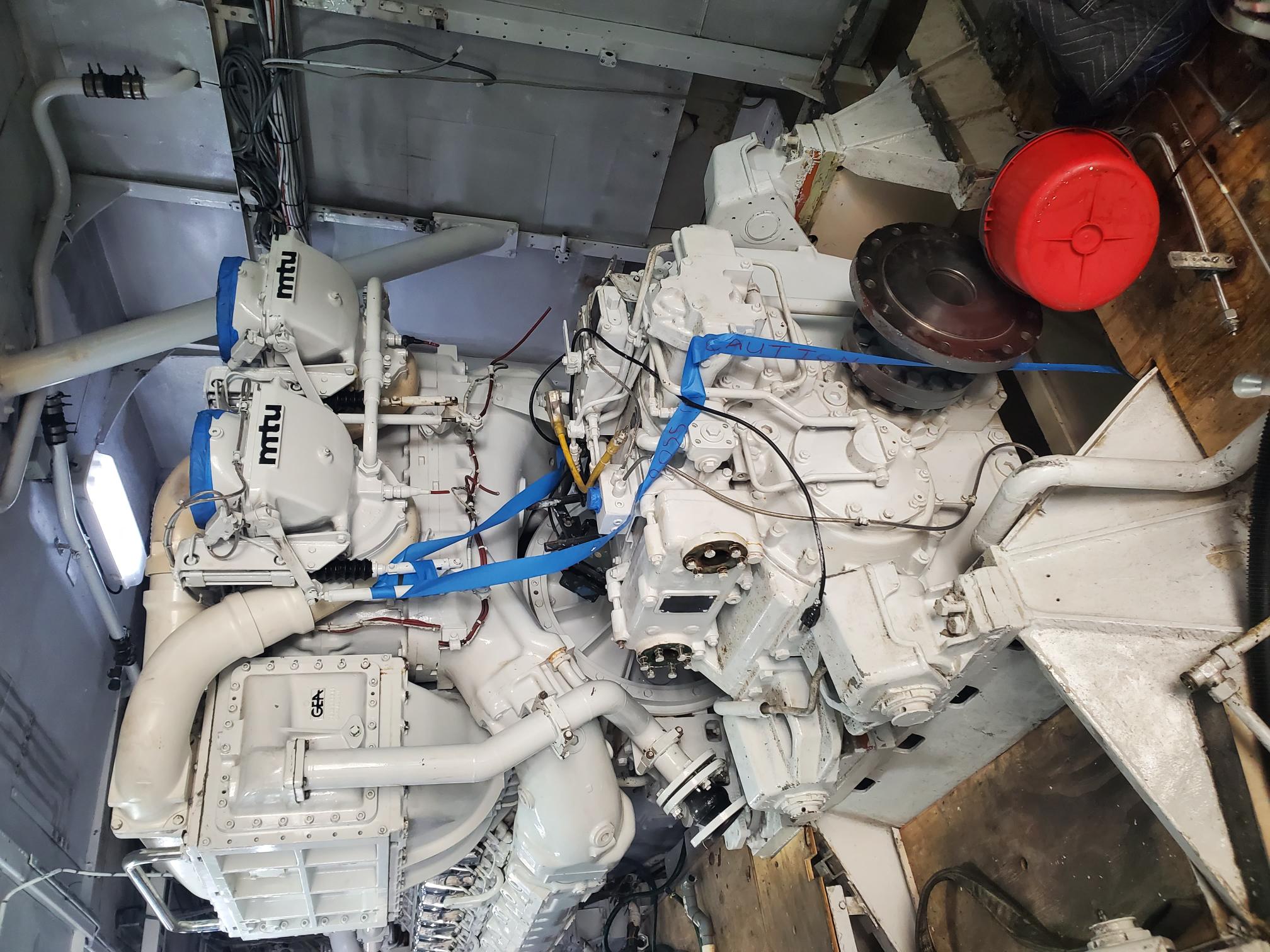
Engine Specifications
Inspector Detail
▸
Common issues
- Fuel injector nozzle fouling or wear, leading to poor combustion, increased exhaust temperature, and reduced power output. Common due to MGO quality variations or extended service.
- Turbocharger bearing wear (axial/radial play) or fouling on compressor/turbine blades, resulting in reduced boost pressure and black smoke. High RPM engines are susceptible.
- Lubricating oil leaks, particularly from rocker covers, oil pan gaskets, or turbocharger oil lines, often exacerbated by engine vibration or aging seals.
- Cooling system issues: Seawater heat exchanger fouling or corrosion, leading to high jacket water temperatures. Freshwater pump seal leaks or thermostat malfunctions.
- Governor instability or sluggish response, affecting engine speed control and load sharing, especially critical for generator applications.
- Vibration issues due to worn engine mounts, coupling misalignment, or internal engine imbalance, potentially leading to structural fatigue.
- Exhaust gas leaks from manifold joints, bellows, or turbocharger connections, posing fire hazards and reducing engine efficiency.
- Starting system failures: Worn starter motor, solenoid issues, or low starting air pressure/battery voltage.
Inspection checklist
- Visual inspection for any leaks (fuel, lube oil, cooling water, exhaust gas) around the engine block, piping, and connections.
- Check engine room cleanliness and presence of oil/fuel residues in drip trays or bilge areas.
- Verify all local gauge readings (lube oil pressure, jacket water temperature, boost pressure, exhaust gas temperatures per cylinder) are within normal operating parameters.
- Inspect fuel, lube oil, and air filters for signs of clogging or excessive contamination; check differential pressures across filters.
- Listen for unusual noises (knocking, rattling, whistling) and feel for excessive vibration on the engine block, turbochargers, and auxiliary components.
- Check exhaust gas appearance at the stack for any signs of black, white, or blue smoke, indicating combustion issues or oil burning.
- Confirm proper operation of the governor linkage, ensuring smooth and responsive speed control, and test emergency stop functionality.
- Inspect turbocharger for excessive axial/radial play in the shaft, and check for any signs of oil ingress or foreign object damage on compressor/turbine wheels.
- Examine engine foundation bolts and resilient mounts for tightness, cracking, or deterioration.
- Verify the integrity of all safety devices (overspeed trip, low lube oil pressure shutdown, high jacket water temperature shutdown) and their alarm setpoints.
Service intervals
| Lube Oil & Filter Change | 250-500 running hours (or annually, whichever comes first, based on oil analysis) |
| Fuel Filter Elements Change | 250-500 running hours (concurrent with oil change) |
| Air Filter Cleaning/Replacement | 500-1000 running hours (or as indicated by differential pressure) |
| Valve Clearance Check & Adjustment | 1000-2000 running hours |
| Fuel Injector Overhaul/Replacement | 3000-6000 running hours |
| Turbocharger Inspection/Overhaul | 6000-12000 running hours (depending on condition) |
| Cylinder Head Overhaul (Top Overhaul) | 6000-12000 running hours |
| Major Overhaul (Bottom End & Cylinders) | 18000-24000 running hours |
Typical wear limits
| Crankshaft Deflection | Max 0.05 - 0.08 mm (across adjacent main bearings) |
| Cylinder Liner Wear (Ovality/Taper) | Max 0.6 - 0.8 mm (from new dimension) |
| Piston Ring Gap (End Gap) | Max 1.0 - 1.5 mm (for top compression ring) |
| Valve Seat Recession | Max 0.5 - 1.0 mm (from cylinder head surface) |
| Turbocharger Shaft Play (Axial) | Max 0.15 - 0.25 mm |
| Turbocharger Shaft Play (Radial) | Max 0.3 - 0.5 mm |
| Fuel Injector Opening Pressure | Within +/- 5-10 bar of manufacturer's specification |
Ranges are typical for this design class. Always confirm against the manufacturer documentation for your serial number.
Critical spares
- Full set of fuel filter elements (primary and secondary)
- Full set of lube oil filter elements
- Set of fuel injector nozzles (or complete injectors)
- Assorted O-rings and gaskets for common leak points (e.g., rocker covers, fuel lines, oil lines)
- Turbocharger bearing repair kit (or complete cartridge if budget allows)
- Engine speed sensor and pressure/temperature sensors (lube oil, jacket water, boost)
- Starting motor brushes and solenoid
- Fuel pump elements (if applicable for mechanical injection system)
Safety
- Hot surfaces: Exhaust manifold, turbochargers, and exhaust piping can reach extreme temperatures, posing severe burn risks. Ensure insulation is intact.
- Rotating machinery: Exposed flywheel, coupling, and auxiliary drive belts present entanglement hazards. Ensure guards are in place.
- High-pressure fuel lines: Ruptures can spray atomized fuel, creating a fire hazard, especially on hot surfaces. Inspect for leaks and proper clamping.
- Electrical hazards: High voltage from generator output and starting system components. Ensure proper lockout/tagout procedures during maintenance.
- Noise levels: Engine operation generates high noise levels, requiring hearing protection in the engine room.
- Fire risk: Fuel or lube oil leaks onto hot surfaces are a significant fire hazard. Regular inspection and immediate repair of leaks are paramount.
Class survey
A class surveyor will typically focus on the engine's overall condition, cleanliness, and the integrity of its safety systems. Key checks include: verification of overspeed trip functionality (often witnessed), low lube oil pressure and high jacket water temperature shutdowns, and emergency stop operation. The surveyor will inspect the foundation bolts, engine mounts, and coupling for security and signs of distress. Exhaust system integrity, including insulation and bellows, will be checked for leaks and fire hazards. Fuel and lube oil piping, filters, and alarms will be examined for compliance and proper function. Starting air pressure and battery voltage for starting will be verified. Calibration status of critical gauges and sensors may be requested. Maintenance records, logbook entries, and oil analysis reports will be reviewed to assess the engine's historical performance and adherence to maintenance schedules. A load test might be requested to confirm stable operation under varying loads, especially for generator sets.
Components & Design
Component data being added…
Technical Data
🤖 Ask about this model
One free question — answered like a marine engineer. No account needed.
Suppliers & Spare Parts
Direct links to manufacturer, datasheet, spare-parts portal and dealers — request access below.
📄 Request sourcing links & documentsCases, daily reports, timesheets and AI troubleshooting in the OceanSphere Marine app — free for 14 days.
Start free trial →Find manufacturers, repair shops and spare-part dealers in the Maritime Network — our global company directory.
Maritime Network →