NA NA80
The Napier NA80 is a high‑capacity marine turbocharger designed for two‑stroke and four‑stroke main engines up to about 10 MW, providing boost pressure to improve combustion efficiency.
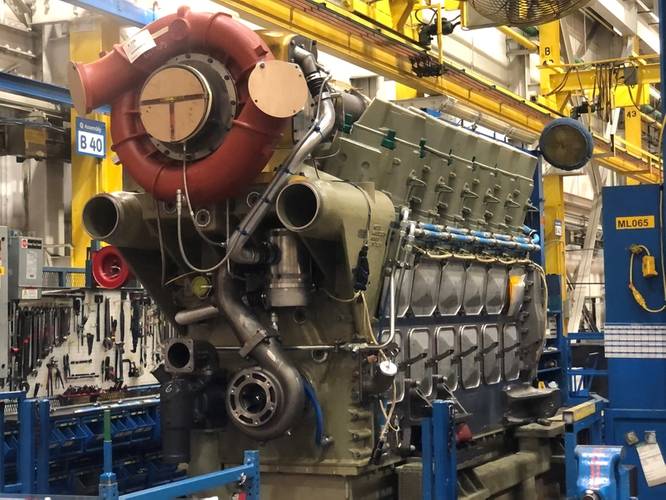
Inspector Detail
✓ verified
▸
Common issues
- Bearing wear or failure (journal and thrust bearings) due to lubrication issues, contamination, or excessive load.
- Compressor wheel fouling or erosion, leading to reduced efficiency and surge, often caused by dirty intake air or oil carry-over.
- Turbine wheel fouling, erosion, or foreign object damage (FOD) from exhaust gas impurities, poor combustion, or detached engine components.
- Oil leakage from bearing housings or seals, indicating seal wear, blocked drains, or excessive crankcase pressure.
- Rotor imbalance leading to excessive vibration, often caused by uneven fouling, blade damage, or bearing wear.
- Cracks in exhaust gas casings or diffusers due to thermal cycling and stress.
- Loss of performance (low boost pressure, high exhaust temperature before turbine) indicating internal fouling or damage.
Inspection checklist
- Check for oil leaks around bearing housings, air intake, and exhaust outlets.
- Perform 'bump test' to check axial and radial play of the rotor shaft. Compare against manufacturer's limits.
- Inspect compressor wheel for fouling, erosion, foreign object damage, and blade tip clearances (if accessible).
- Inspect turbine wheel for fouling, erosion, cracks, and foreign object damage (via inspection ports or by removing gas outlet casing).
- Verify condition of air filter elements; ensure they are clean and properly seated.
- Check security of all mounting bolts, pipe connections (air, exhaust, oil), and support structures.
- Monitor turbocharger speed, boost pressure, and exhaust gas temperatures (before and after turbine) for deviations from normal operating parameters.
- Inspect lubrication oil supply and drain lines for blockages or restrictions; check oil quality and level in dedicated sumps (if applicable).
- Listen for unusual noises or vibrations during operation; check vibration levels with a portable meter if available.
Service intervals
| Bearing inspection/replacement | 8,000 - 12,000 hours or 2 years |
| Rotor cleaning (water wash/manual) | 4,000 - 8,000 hours (depending on fuel quality and engine load) |
| Major overhaul (rotor removal, balancing, full bearing & seal replacement) | 16,000 - 24,000 hours or 4 years |
| Air filter replacement | 500 - 1,000 hours or as required by differential pressure |
| Casing inspection (internal) | 16,000 - 24,000 hours |
Typical wear limits
| Rotor axial play (thrust bearing) | New: 0.15 - 0.25 mm; Max allowable: 0.35 - 0.50 mm |
| Rotor radial play (journal bearings) | New: 0.05 - 0.10 mm; Max allowable: 0.15 - 0.20 mm |
| Compressor/Turbine blade tip clearance | Refer to OEM manual, typically 0.5 - 1.5 mm (visual check for rubbing marks) |
| Shaft journal diameter | Refer to OEM manual for specific wear limits, typically checked during major overhaul. |
| Bearing shell thickness | Refer to OEM manual for minimum thickness, typically checked during overhaul. |
Ranges are typical for this design class. Always confirm against the manufacturer documentation for your serial number.
Critical spares
- Complete bearing cartridge assembly (journal and thrust bearings)
- Oil seals and O-ring kits for bearing housing and casing sections
- Air filter elements
- Gasket set for major overhaul (e.g., turbine casing, compressor casing)
- Lubricating oil pump (if externally driven or dedicated to TC)
- Set of securing bolts and nuts for critical sections (e.g., exhaust casing)
Safety
- High surface temperatures of exhaust gas casings (up to 400-600°C) requiring proper insulation and warning signs.
- High rotational speeds (up to 15,000-20,000 RPM for NA80) posing a risk of rotor disintegration if overspeed or severe imbalance occurs.
- Pressurized air and exhaust gas systems; ensure all connections are secure before and during operation.
- Hot lubricating oil under pressure; risk of burns and fire in case of leaks.
- High noise levels during operation, requiring hearing protection in the vicinity.
Class survey
Class surveyors will typically review the turbocharger's maintenance records, including service reports, running hours, and any reported defects or repairs. They will visually inspect the external condition for leaks, corrosion, and security of mounting. Operational checks may include verifying boost pressure, exhaust gas temperatures, and alarm functions. For renewal surveys, opening for internal inspection of bearings and rotor condition may be required, especially if performance issues are noted or if the unit is approaching major overhaul intervals. Compliance with manufacturer's recommendations for maintenance and spare parts is a key focus.
Components & Design
Component data being added…
Technical Data
🤖 Ask about this model
One free question — answered like a marine engineer. No account needed.
Suppliers & Spare Parts
Direct links to manufacturer, datasheet, spare-parts portal and dealers — request access below.
📄 Request sourcing links & documentsCases, daily reports, timesheets and AI troubleshooting in the OceanSphere Marine app — free for 14 days.
Start free trial →Find manufacturers, repair shops and spare-part dealers in the Maritime Network — our global company directory.
Maritime Network →