Pedestal Crane
A pedestal crane is bolted to a fixed foundation welded into the ship's structure and slews around that single point, the design used for the sustained, repeated lifts of cargo and stores handling rather than the occasional lift a davit is built for.
Read more — Pedestal Crane explained ▾
What makes this type distinct
A pedestal crane's defining feature is the fixed vertical column, or pedestal, through which the slewing ring, hydraulic or electric drive, and all loads pass down into a reinforced foundation in the ship's deck structure. This differs from a knuckle boom crane's articulated arm geometry and from a gantry crane's travelling rail-mounted base: a pedestal crane slews on a single fixed point and its boom, whether telescopic, articulated or fixed-length, does the reach and luffing. On offshore supply and support vessels, pedestal cranes are frequently rated for both cargo transfer and personnel or basket handling, which brings a stricter certification regime than a straight cargo-only unit.

Main components
Pedestal and foundation
Welded steel column transmitting all crane loads into deck girders and structure specifically reinforced to take the overturning moment of a working crane, not just its static weight.
Slewing ring and drive
Large-diameter bearing allowing full or limited slew rotation, driven hydraulically or electrically, with a slew brake holding position against wind and vessel motion.
Boom
Telescopic, articulated (knuckle) or fixed lattice boom carrying the load block; telescopic booms give continuous reach adjustment, articulated booms fold compactly for stowage.
Winch and wire rope system
Main and auxiliary hoist winches, wire rope, and the load block or hook; offshore units add a heave compensation function to reduce load swing in a seaway.
Power pack and control station
Hydraulic power unit or electric drive package, with a cab or remote pendant control offering the operator sightlines over the working area.
Selection and sizing
The safe working load (SWL) at maximum outreach, not the nominal maximum SWL near the pedestal, is the figure that governs whether the crane can do the job, since capacity falls off sharply as the boom extends. Selection also depends on:
- Required outreach over the side and the deck layout it must clear.
- Duty cycle: continuous cargo handling stresses the drive and structure differently to occasional stores lifts.
- Personnel transfer rating, if the crane will move crew in a basket or transfer to another vessel, which requires a dedicated certification beyond standard cargo SWL.
- Motion compensation needs on vessels working alongside offshore structures in a seaway.
Regulations and class
Class societies certify lifting appliances under their own rules for cranes and lifting gear, with proof load testing before entry into service and periodic thorough examination thereafter, typically annual visual and functional checks with a full load test at longer intervals. Personnel lifting adds requirements drawn from offshore industry codes beyond baseline class rules, including redundant brakes and specific factors of safety on the wire rope and structure. Load charts, certificates and the examination record must be kept aboard and available for inspection.
Typical faults
| Fault | Consequence |
|---|---|
| Slewing ring bearing wear from continuous cargo cycles | Increased play, uneven slewing, eventual replacement requiring the crane out of service for an extended period |
| Wire rope fatigue and broken wires, especially at the boom head sheave | Reduced breaking strength, mandatory rope discard well before visible failure |
| Hydraulic cylinder seal leakage on luffing or telescoping rams | Loss of boom position holding, drift under load |
| Load moment indicator sensor drift | Operator working without an accurate overload warning, the root cause behind a large share of crane incidents |
What to look for in a supplier
- Full load charts for every configuration the crane will actually be used in, not just the maximum-capacity case.
- Class type approval and, if personnel lifting is required, the relevant offshore certification.
- Spares and service support for the specific hydraulic or electric drive package fitted, since crane downtime stops cargo or stores operations directly.
- Track record of the slewing ring and winch components under continuous duty, not just occasional-lift service.
Read the load chart at the actual outreach the lift needs, not the crane's headline SWL; more cranes are overloaded by working too far out than by lifting too heavy a single item.
Typical Manufacturers
2 manufacturers · 2 models
Liebherr
1
- Slew drive motor cavitation
- Boom luffing cylinder drift
- Anemometer signal loss
- Robust hydraulic drive provides smooth and precise lifting operations
- Compact pedestal footprint saves valuable deck space
- Integrated control console allows single‑operator operation
- Designed for marine environments with corrosion‑resistant components
- Relatively heavy compared with lighter, electric‑drive alternatives
- Boom length may be limited for very large cargoes
- Hydraulic system requires regular oil analysis and maintenance
- Known issues include slew drive motor cavitation and cylinder drift
NOV
1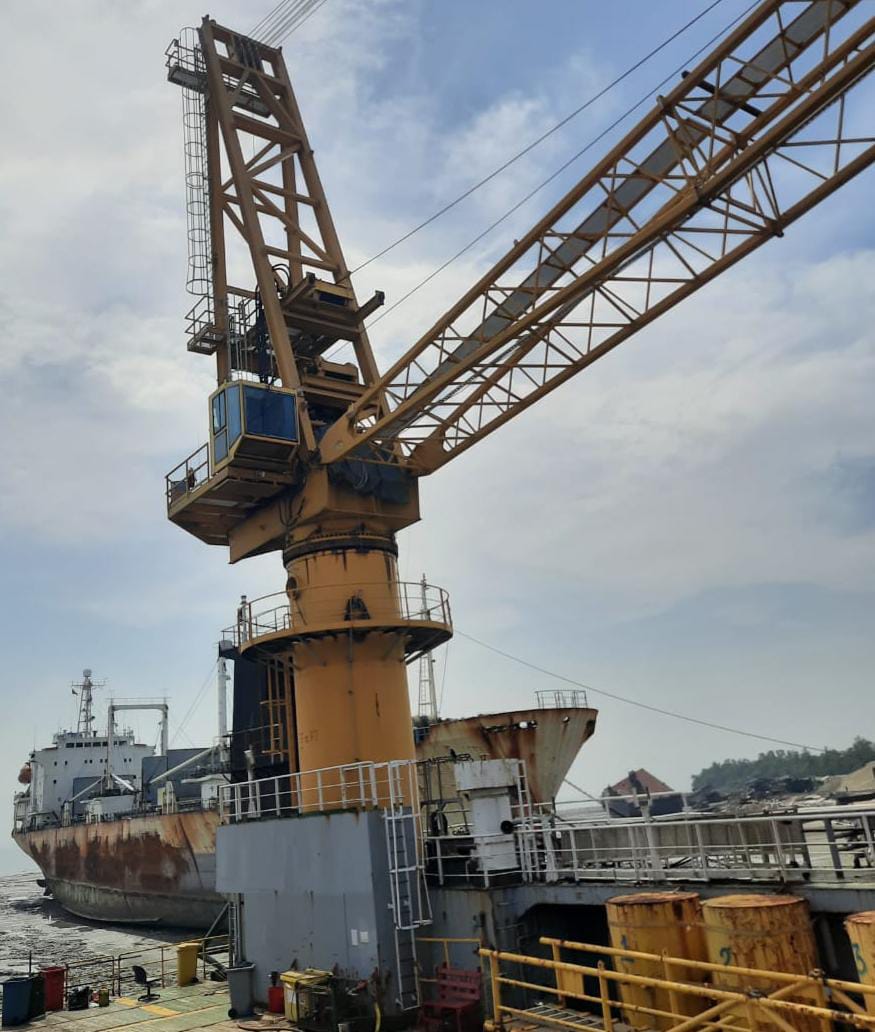
- Pedestal flange bolt fatigue
- Active heave compensator cylinder leak
- Crown block sheave bearing failure
- Active heave compensation maintains load stability in rough sea states, enabling safe lifts on moving decks.
- Compact pedestal footprint saves valuable deck space compared with jib or gantry cranes of similar capacity.
- Integrated load monitoring and hydraulic control panel simplify operator workload and improve safety.
- Proven OEM support network and documented service intervals (torque check every 500 hrs).
- High lift rating (≈45 t) suitable for anchor handling, rig equipment, and heavy cargo transfers.
- Pedestal flange bolt fatigue has been reported; requires diligent torque inspections.
- AHC cylinder leaks can lead to costly downtime if not serviced per schedule.
- Crown block sheave bearings may wear prematurely under high-cycle use.
- Higher hydraulic power demand than non‑compensated deck cranes.
- Maintenance complexity and parts inventory are greater due to the AHC subsystem.