Daihatsu DK-36
The Daihatsu DK-36 is a medium‑speed, four‑stroke L‑configuration diesel engine featuring common‑rail fuel injection and dual‑fuel capability (HFO/MGO) for main propulsion or auxiliary power.
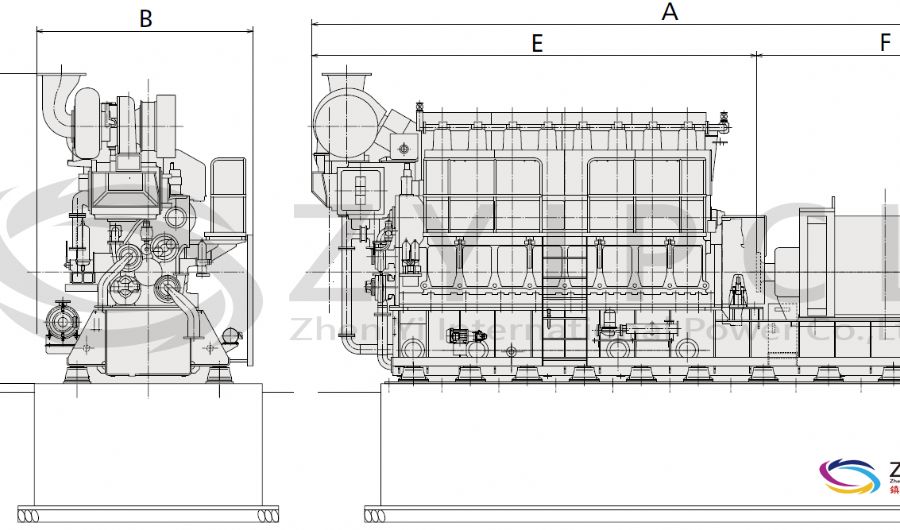
Engine Specifications
Inspector Detail
▸
Common issues
- Common rail injector fouling or dribbling causing exhaust temperature deviation between cylinders
- Turbocharger fouling on the compressor or turbine side reducing scavenge air pressure
- Cylinder liner and piston ring wear increasing lube oil consumption
- Exhaust valve burning or seat leakage
- Common rail high-pressure pump wear affecting rail pressure stability
- Charge air cooler fouling reducing available power
- Crankcase oil mist detector false trips or, conversely, failure to detect a genuine mist condition
Inspection checklist
- Exhaust gas temperature spread between cylinders
- Turbocharger speed and scavenge air pressure trend
- Cylinder liner bore measurement and wear pattern
- Piston ring gap and land clearance at overhaul
- Fuel injector condition (spray pattern, opening pressure) on removal
- Common rail pressure and leak-off flow check
- Crankcase oil mist detector function test
- Cylinder head valve clearance and seat condition
- Turbocharger bearing clearance
- Lube oil analysis (wear metals, TBN, water content)
Service intervals
| Lube oil sample analysis | typically every 500-1,000 running hours |
| Fuel injector inspection/overhaul | commonly in the 8,000-12,000 running hour range depending on fuel quality - confirm against Daihatsu's own maintenance schedule for the DK-36 |
| Turbocharger overhaul | typically every 12,000-24,000 running hours |
| Top overhaul (piston/liner/valve inspection) | commonly in the 12,000-16,000 running hour range for this engine class |
Typical wear limits
| Cylinder liner bore wear | typically renewed in the region of 0.3-0.5 mm diametral wear for this bore class, but confirm the exact figure against Daihatsu's maintenance manual for the DK-36 rather than treating this as fixed |
| Piston ring gap | typically on the order of 1.0-2.0 mm at running clearance for a bore of this size - confirm against the manufacturer's manual |
Ranges are typical for this design class. Always confirm against the manufacturer documentation for your serial number.
Critical spares
- Fuel injector assembly (per cylinder)
- Cylinder liner
- Piston ring set
- Exhaust valve and seat ring
- Turbocharger bearing/cartridge
- Common rail high-pressure pump element
Safety
- High-pressure common rail fuel system - residual pressure hazard even after shutdown
- Crankcase explosion risk if the oil mist detector is not kept in working order
- Hot exhaust manifold and turbocharger surfaces
- Rotating flywheel and coupling guards must be in place before running
- HFO handling requires heated fuel system precautions
Class survey
Falls under Continuous Survey Machinery for diesel engines; class typically reviews crankshaft deflection readings, running hours and overhaul history since the last major inspection, and oil mist detector test records at survey.
Components & Design
Component data being added…
Technical Data
🤖 Ask about this model
One free question — answered like a marine engineer. No account needed.
Common failures & inspection points
Type-general inspection and maintenance points for this equipment category — not model-specific.
Suppliers & Spare Parts
Direct links to manufacturer, datasheet, spare-parts portal and dealers — request access below.
📄 Request sourcing links & documentsCases, daily reports, timesheets and AI troubleshooting in the OceanSphere Marine app — free for 14 days.
Start free trial →Find manufacturers, repair shops and spare-part dealers in the Maritime Network — our global company directory.
Maritime Network →