Cat C32 ACERT Marine Propulsion
The Caterpillar C32 ACERT is a 12‑cylinder, 4‑stroke high‑speed diesel main engine delivering up to ~13 MW, known for its compact size and flexible fuel capability (diesel/MGO).
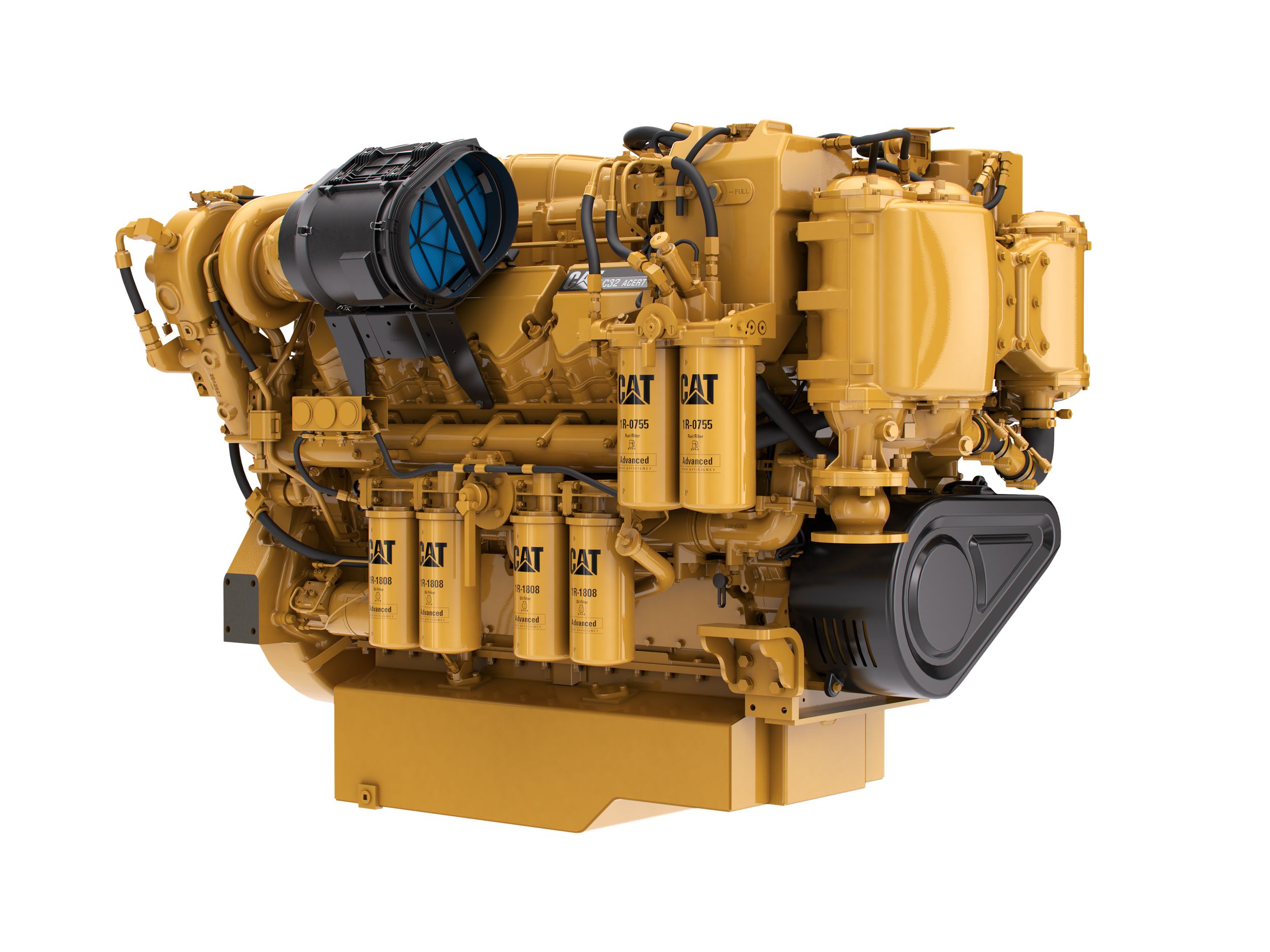
Engine Specifications
Inspector Detail
▸
Common issues
- Injector failure (clogging, poor spray pattern, leakage, especially with poor fuel quality)
- Turbocharger fouling (compressor and turbine side, leading to reduced boost and efficiency)
- Aftercooler contamination (fouling of cooling fins, corrosion, or internal leakage compromising charge air cooling)
- ECM sensor faults (leading to diagnostic codes, engine derating, or incorrect performance data)
- Cooling system inefficiency or leaks (raw water pump wear, heat exchanger fouling, hose degradation)
- Fuel system contamination or pressure issues (clogged filters, low fuel pressure from transfer pump wear, air ingress)
- Exhaust manifold cracks or bellows failure (leading to exhaust gas leaks and potential fire hazard)
- Excessive engine vibration (worn engine mounts, misalignment, or internal engine issues)
Inspection checklist
- Check engine oil level and condition (color, presence of water/fuel, smell).
- Inspect all accessible fuel, oil, and coolant lines for leaks, chafing, or signs of degradation.
- Verify cleanliness and integrity of primary and secondary fuel filters, oil filters, and air filters.
- Check drive belt tension and condition (alternator, seawater pump, etc.) for cracks or fraying.
- Inspect turbocharger for excessive axial/radial shaft play (with engine off and cool) and signs of oil leaks.
- Visually inspect aftercooler for external cleanliness and internal signs of leakage (e.g., coolant in air stream).
- Monitor engine instrumentation (oil pressure, coolant temperature, exhaust gas temperature, boost pressure) for abnormal readings during operation.
- Check engine mounts for signs of deterioration, cracking, or excessive compression.
- Inspect exhaust system for leaks, proper insulation, and integrity of expansion bellows.
- Verify functionality of engine alarms and emergency shutdown systems (e.g., low oil pressure, high coolant temperature).
Service intervals
| Engine Oil & Filter Change | 250-500 hours or annually (depending on oil analysis and duty cycle) |
| Fuel Filters (Primary & Secondary) | 250-500 hours or annually |
| Air Filter Element | 500-1000 hours or as needed (inspect frequently in dusty environments) |
| Coolant Sample & Additive Check/Replenish | 500-1000 hours or annually |
| Valve Lash Adjustment | 1000-2000 hours or every 1-2 years |
| Aftercooler Inspection & Cleaning | 1000-2000 hours or annually |
| Turbocharger Inspection | 1000-2000 hours |
| Fuel Injector Inspection/Test | 2000-4000 hours or as required by performance/diagnostics |
| Engine Mounts Inspection | Annually |
Typical wear limits
| Crankshaft Deflection | Maximum deviation typically 0.05 - 0.10 mm (check manufacturer's specific limits) |
| Main/Connecting Rod Bearing Clearances | Maximum allowable clearance typically 0.15 - 0.20 mm (check service manual) |
| Cylinder Liner Wear (Ovality/Taper) | Maximum allowable wear typically 0.20 - 0.30 mm (before reconditioning or replacement) |
| Piston Ring End Gap | Maximum allowable gap typically 1.0 - 1.5 mm (indicates ring wear) |
| Turbocharger Shaft Play | Max axial play 0.10 - 0.20 mm, max radial play 0.20 - 0.30 mm (check specific model limits) |
| Valve Seat Recession | Maximum allowable depth before reconditioning (typically 0.5 - 1.0 mm below cylinder head surface) |
Ranges are typical for this design class. Always confirm against the manufacturer documentation for your serial number.
Critical spares
- Full set of fuel filters (primary and secondary)
- Engine oil filters
- Air filter element
- Seawater pump impeller and gasket kit
- Drive belts (alternator, seawater pump)
- Spare fuel injector (at least one, or a matched set if common rail)
- Common ECM sensors (e.g., oil pressure, coolant temperature, boost pressure)
- Assorted O-rings and common gaskets (e.g., valve cover, fuel line seals)
Safety
- Hot surfaces: Exhaust manifold, turbocharger, and associated piping can reach extreme temperatures, posing burn risks.
- High-pressure fuel: The common rail fuel system operates at very high pressures (up to 2500 bar), requiring extreme caution during inspection or maintenance to prevent injury from fuel spray.
- Rotating machinery: Belts, shafts, and fans present entanglement hazards; ensure engine is secured and tagged out before working near these components.
- Electrical hazards: High voltage from alternator and battery banks; ensure proper lockout/tagout procedures are followed.
- Fire risk: Fuel or oil leaks onto hot surfaces (exhaust, turbocharger) can ignite; maintain a clean engine space and address leaks promptly.
Class survey
A class surveyor will typically check for: up-to-date logbooks and maintenance records (including oil analysis reports); overall engine room cleanliness and fire safety compliance; integrity of engine foundations and mounting arrangements; condition of exhaust system (lagging, leaks, bellows); integrity and proper functioning of fuel, lubrication, and cooling systems (piping, pumps, heat exchangers, alarms); functionality of all safety devices (overspeed trip, low oil pressure/high coolant temperature alarms and shutdowns); proper operation of remote control and monitoring systems; general operational performance under load (if practical); and compliance with relevant statutory and class regulations.
Components & Design
Component data being added…
Technical Data
🤖 Ask about this model
One free question — answered like a marine engineer. No account needed.
Common failures & inspection points
Service & Maintenance
Follow Cat C32 preventive maintenance schedule with frequent oil, filter, cooling-water and aftercooler checks.
Suppliers & Spare Parts
Direct links to manufacturer, datasheet, spare-parts portal and dealers — request access below.
📄 Request sourcing links & documentsCases, daily reports, timesheets and AI troubleshooting in the OceanSphere Marine app — free for 14 days.
Start free trial →Find manufacturers, repair shops and spare-part dealers in the Maritime Network — our global company directory.
Maritime Network →