8LEL35
The Hanshin 8LEL35 is a medium‑speed, 4‑stroke diesel main engine delivering 3 840 kW at 660 rpm, notable for its compact inline‑8 layout and fully mechanical fuel system.
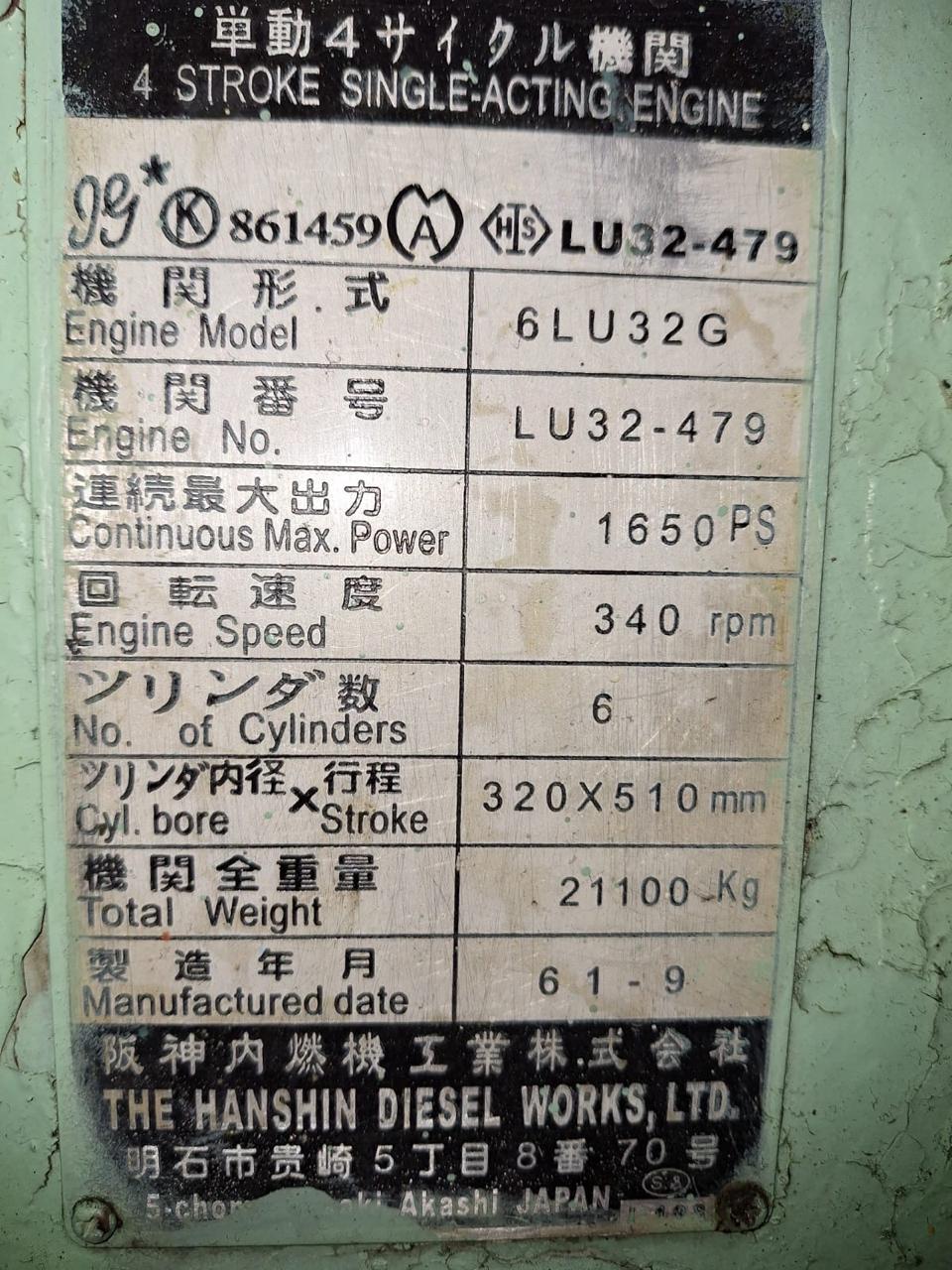
Engine Specifications
Inspector Detail
✓ verified
▸
Common issues
- Fuel injection system wear and clogging (injectors, fuel pumps) due to HFO operation and varying fuel quality, leading to poor combustion and increased exhaust temperatures.
- Exhaust valve burning and seat wear, often exacerbated by high thermal loads, poor fuel quality, and inadequate cooling or lubrication.
- Cylinder liner wear (scuffing, ovality, taper) from abrasive combustion byproducts, especially with HFO, and potential issues with lube oil distribution.
- Turbocharger bearing wear, fouling of compressor and turbine sides, leading to reduced efficiency, surging, and increased exhaust back pressure.
- Main and crankpin bearing wear due to lube oil degradation, contamination, or misalignment, potentially leading to excessive clearances and vibration.
- Cooling system issues: fouling of heat exchangers (lube oil, jacket water), leaks in piping, and corrosion, impacting engine thermal management.
- Governor malfunction: mechanical governors can become sluggish or inaccurate over time, affecting engine speed control and load response.
Inspection checklist
- Visual inspection for any leaks (fuel, lube oil, cooling water, exhaust gas) around the engine, piping, and connections.
- Monitor critical operational parameters: individual cylinder exhaust gas temperatures, lube oil pressure/temperature, jacket cooling water pressure/temperature, fuel pressure/temperature, and turbocharger RPM/boost pressure. Look for deviations or trends.
- Check engine room for abnormal noises, vibrations, or smells (e.g., burning oil, fuel, or exhaust).
- Inspect crankcase for abnormal oil mist, water ingress (via sight glasses or drain), or metallic particles in the sump oil (if safe and accessible).
- Verify fuel system integrity, including proper heating, filtration, and absence of leaks from high-pressure lines (check shielding).
- Observe exhaust gas condition from the stack for excessive smoke (color, density) indicating combustion issues.
- Confirm proper functionality of engine safety devices: overspeed trip, low lube oil pressure trip, high cooling water temperature trip, and remote/local stop mechanisms.
- Inspect engine foundation bolts for tightness and signs of movement or corrosion.
- Check general cleanliness of the engine and surrounding area, ensuring no combustible materials are near hot surfaces.
Service intervals
| Fuel Injectors (inspection/overhaul) | 3,000 - 6,000 hours |
| Exhaust Valves (overhaul/grinding) | 6,000 - 12,000 hours |
| Piston Overhaul (inspection, ring replacement) | 12,000 - 18,000 hours |
| Turbocharger (minor/major overhaul) | 12,000 - 24,000 hours |
| Fuel Pumps (inspection/overhaul) | 6,000 - 12,000 hours |
| Main & Crankpin Bearings (inspection/renewal) | 24,000 - 36,000 hours |
| Cylinder Liner Inspection (measurement) | 12,000 - 18,000 hours |
Typical wear limits
| Cylinder Liner Ovality/Taper | Max 0.6 - 0.8 mm (from new dimension) |
| Crankshaft Deflection | Max 0.05 - 0.08 mm (between adjacent webs, depending on manufacturer's specific limits) |
| Main Bearing Clearance | Max 0.35 - 0.45 mm (from new, measured with lead wire or plastigauge) |
| Crankpin Bearing Clearance | Max 0.30 - 0.40 mm (from new, measured with lead wire or plastigauge) |
| Exhaust Valve Seat Recess | Max 2.0 - 2.5 mm (from cylinder head face, before requiring renewal or reconditioning) |
| Piston Ring Groove Clearance (axial) | Max 0.25 - 0.35 mm (for top ring, before requiring groove machining or piston renewal) |
Ranges are typical for this design class. Always confirm against the manufacturer documentation for your serial number.
Critical spares
- Fuel Injector Nozzles (at least 2 per cylinder, or 1 complete set)
- Exhaust Valve Spindles & Seats (at least 1-2 sets)
- Piston Rings (1-2 sets per cylinder, especially top ring)
- Main & Crankpin Bearing Shells (at least 1 set of each size)
- Turbocharger Bearing Cartridge or complete repair kit
- Fuel Pump Plunger & Barrel (1-2 sets)
- High-Pressure Fuel Pipes (at least 1-2 spares)
- Assorted O-rings, gaskets, and seals for critical systems (fuel, lube oil, cooling water)
Safety
- Hot surfaces: Exhaust manifold, turbocharger, HFO lines, and steam lines pose severe burn risks. Ensure proper insulation and warning signs.
- High-pressure fuel lines: Rupture can lead to a fine spray of highly flammable fuel, creating an immediate fire hazard. Ensure proper shielding and regular inspection.
- Crankcase explosion: Accumulation of oil mist can ignite, leading to a violent explosion. Verify proper functioning of oil mist detectors and crankcase relief valves.
- Rotating machinery: Flywheel, coupling, and other rotating parts present entanglement and impact hazards. Ensure guards are in place and maintained.
- Starting air system: High-pressure air and potential for uncontrolled engine starts. Adhere strictly to starting procedures and ensure safety interlocks are functional.
Class survey
A class surveyor will typically focus on verifying the engine's structural integrity, operational safety, and compliance with statutory regulations. Key checks include: 1. **Documentation Review:** Scrutiny of engine logbooks, planned maintenance records, previous survey reports, and statutory certificates. 2. **Safety Device Testing:** Functional testing of overspeed trip, low lube oil pressure alarm/trip, high cooling water temperature alarm/trip, and main engine remote/local stop mechanisms. 3. **Crankcase Safety:** Inspection and functional test of oil mist detector, crankcase relief valves, and explosion doors. 4. **Fuel System Integrity:** Close inspection of high-pressure fuel pipes for proper shielding, leaks, and signs of wear. Verification of fuel oil supply/return lines for integrity and fire insulation. 5. **Lubrication & Cooling Systems:** Inspection of pumps, coolers, filters, and piping for leaks, corrosion, and proper operation. Lube oil analysis reports may be requested. 6. **Starting Air System:** Verification of starting air pressure, relief valve settings, non-return valves, and compressor functionality. 7. **Engine Foundation:** Visual inspection of holding down bolts for tightness, signs of movement, and corrosion. 8. **Exhaust System:** Inspection of exhaust manifold, bellows, and silencer for leaks, cracks, or damage. 9. **Operational Test:** Observation of the engine running at various loads, checking critical parameters, and response to control commands. 10. **Specific Measurements (Intermediate/Special Survey):** Crankshaft deflection measurements are often required. Cylinder liner wear measurements may be requested if performance issues are noted or as part of a planned maintenance review.
Components & Design
Component data being added…
Technical Data
🤖 Ask about this model
One free question — answered like a marine engineer. No account needed.
Suppliers & Spare Parts
Direct links to manufacturer, datasheet, spare-parts portal and dealers — request access below.
📄 Request sourcing links & documentsCases, daily reports, timesheets and AI troubleshooting in the OceanSphere Marine app — free for 14 days.
Start free trial →Find manufacturers, repair shops and spare-part dealers in the Maritime Network — our global company directory.
Maritime Network →