6LLU38
The Hanshin 6LLU38 is a medium‑speed, four‑stroke main propulsion engine delivering 3 780 kW at 480 rpm, featuring a six‑cylinder L‑type layout and mechanical fuel injection for heavy fuel oil.
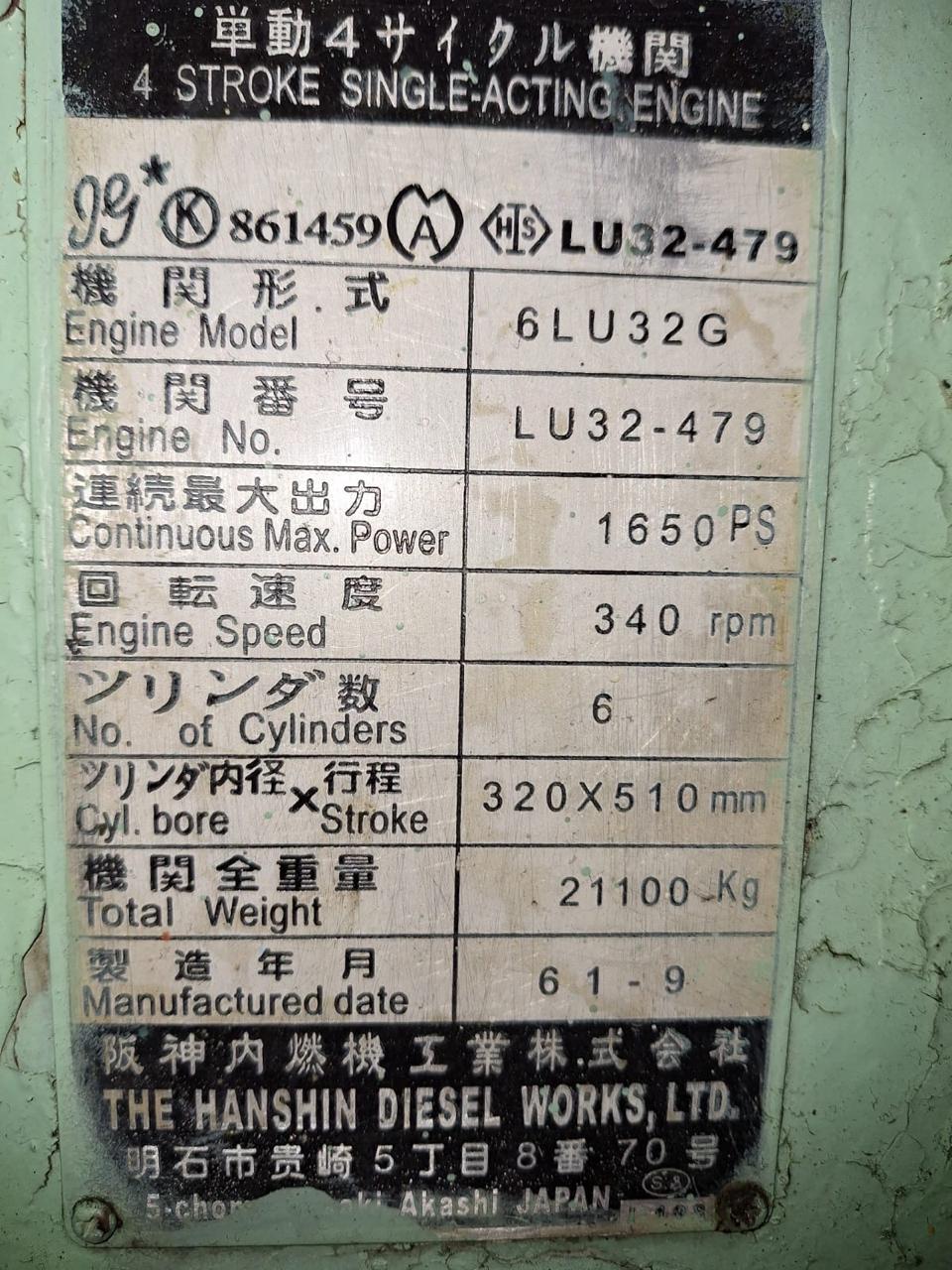
Engine Specifications
Inspector Detail
▸
Common issues
- Fuel injector nozzle choking, erosion, or carbon build-up due to HFO quality variations or improper atomization.
- Exhaust valve burning, seat wear, or sticking, leading to poor sealing and loss of compression.
- Cylinder liner scuffing or excessive wear, often caused by cold corrosion, poor lubrication, or abrasive particles in fuel/lube oil.
- Turbocharger bearing wear (axial/radial play) or fouling on the compressor/turbine side, reducing efficiency.
- Connecting rod and main bearing wear, often linked to lube oil contamination, degradation, or overloading.
- Fuel pump plunger and barrel wear, leading to reduced injection pressure and timing issues.
- Governor instability or 'hunting', affecting engine speed control and load response.
- Cooling water system fouling (jacket water side) or leaks, leading to localized overheating or reduced heat transfer efficiency.
Inspection checklist
- Verify all engine gauge readings (pressures, temperatures, RPM) against normal operating parameters and alarm setpoints.
- Inspect fuel injection system for leaks, abnormal knocking sounds, and ensure proper fuel heating and filtration.
- Listen for abnormal noises from the crankcase, cylinder heads, turbocharger, and fuel pumps.
- Check exhaust gas temperatures per cylinder for balance, indicating even combustion and valve condition.
- Inspect turbocharger for excessive axial/radial play (if accessible), signs of fouling, and proper lubrication.
- Check crankcase for abnormal mist/fumes, oil level, and signs of water ingress (e.g., from cooling water leaks).
- Verify functionality of all safety devices: overspeed trip, low lube oil pressure trip, high jacket water temp trip, and crankcase oil mist detector (OMD).
- Inspect cooling water system for leaks, proper flow, and heat exchanger cleanliness.
- Visually inspect engine for any oil, fuel, or water leaks, abnormal vibrations, and general cleanliness.
Service intervals
| Fuel Injectors (Inspection/Overhaul) | 500-1000 running hours |
| Exhaust Valves (Inspection/Grinding/Replacement) | 2000-4000 running hours |
| Fuel Pumps (Inspection/Overhaul) | 4000-6000 running hours |
| Piston Overhaul (Rings/Liner Inspection) | 8000-12000 running hours |
| Connecting Rod Bearings (Inspection/Renewal) | 8000-12000 running hours |
| Main Bearings (Inspection/Renewal) | 16000-24000 running hours |
| Turbocharger Overhaul | 12000-24000 running hours (depending on type/condition) |
| Major Overhaul (Full Engine Strip Down) | 48000-60000 running hours |
Typical wear limits
| Cylinder Liner Wear | Max allowable wear typically 0.6 - 0.8 mm on diameter at top ring reversal point (Hanshin specific might be 0.7mm). |
| Piston Ring Groove Wear | Max allowable increase in ring groove clearance typically 0.15 - 0.20 mm from new. |
| Connecting Rod Bearing Clearance | Max allowable increase typically 0.10 - 0.15 mm from new specification. |
| Main Bearing Clearance | Max allowable increase typically 0.15 - 0.20 mm from new specification. |
| Crankshaft Deflection | Max allowable difference between readings (e.g., top/bottom) typically 0.05 - 0.10 mm for this engine size. |
| Exhaust Valve Seat Recession | Max allowable recession into cylinder head typically 1.5 - 2.5 mm from new position. |
Ranges are typical for this design class. Always confirm against the manufacturer documentation for your serial number.
Critical spares
- Complete set of fuel injector nozzles/assemblies (at least 1 per cylinder).
- Full sets of fuel oil and lube oil filter elements (various stages).
- Exhaust valve spindle and seat ring (at least one complete set).
- Piston rings (one complete set per cylinder).
- Connecting rod bearing shells (one complete set).
- Main bearing shells (one complete set).
- Assorted gaskets and O-rings for common maintenance tasks (e.g., cylinder head, fuel pump).
- Turbocharger bearing cartridge or complete rotor assembly.
- Critical sensors (temperature, pressure) and safety device spares (e.g., OMD sensor).
Safety
- Crankcase Explosions: Risk from hot spots, bearing failures, or blow-by igniting oil mist. Ensure proper crankcase ventilation and functional oil mist detector (OMD).
- High Temperature Surfaces: Exhaust manifold, turbocharger, HFO lines, and engine block. Risk of severe burns and potential fire hazards.
- High Pressure Fuel Lines: Rupture of HFO injection lines can cause fire, severe injury, or spray into hot surfaces. Ensure double-walled piping where required and proper shielding.
- Rotating Machinery: Flywheel, shafting, and turbocharger. Risk of entanglement or impact injury during operation or maintenance.
- Hot HFO Handling: Risk of severe burns, fire, and toxic fumes during bunkering, transfer, or maintenance. Proper PPE and procedures are essential.
- Starting Air System: High pressure air can be dangerous if not handled correctly. Ensure proper isolation and depressurization before maintenance.
Class survey
Class surveyors typically focus on: 1. Review of engine logbooks, maintenance records, lube oil analysis, and fuel oil bunkering reports. 2. Verification of all safety devices (overspeed trip, low lube oil pressure, high jacket water temp, OMD, emergency stop). 3. Crankshaft deflection measurements to assess main bearing and crankshaft alignment. 4. Spot checks on main and connecting rod bearings if opened for maintenance. 5. Visual inspection of cylinder liners, pistons, and exhaust valves (if opened). 6. Inspection of the fuel oil system, including HFO treatment plant, heaters, filters, and double-walled piping. 7. General condition of the turbocharger, absence of leaks, abnormal vibrations, and proper securing of all components. 8. Review of engine performance data (power, specific fuel consumption, exhaust temperatures) over time.
Components & Design
Component data being added…
Technical Data
🤖 Ask about this model
One free question — answered like a marine engineer. No account needed.
Suppliers & Spare Parts
Direct links to manufacturer, datasheet, spare-parts portal and dealers — request access below.
📄 Request sourcing links & documentsCases, daily reports, timesheets and AI troubleshooting in the OceanSphere Marine app — free for 14 days.
Start free trial →Find manufacturers, repair shops and spare-part dealers in the Maritime Network — our global company directory.
Maritime Network →